
Sonus Faber Olympica II & McIntosh Review
Italian brand Sonus faber and American stalwart McIntosh are now stablemates under the WOM Group, and locally, they are both distributed by Universal Audio & Video Co., Ltd. Consequently, pairings of these two brands are a common sight at audio shows, both domestically and internationally. Indeed, HiFiReport’s recent visit to the World Of McIntosh flagship center in New York revealed that their displays heavily feature these two marques.
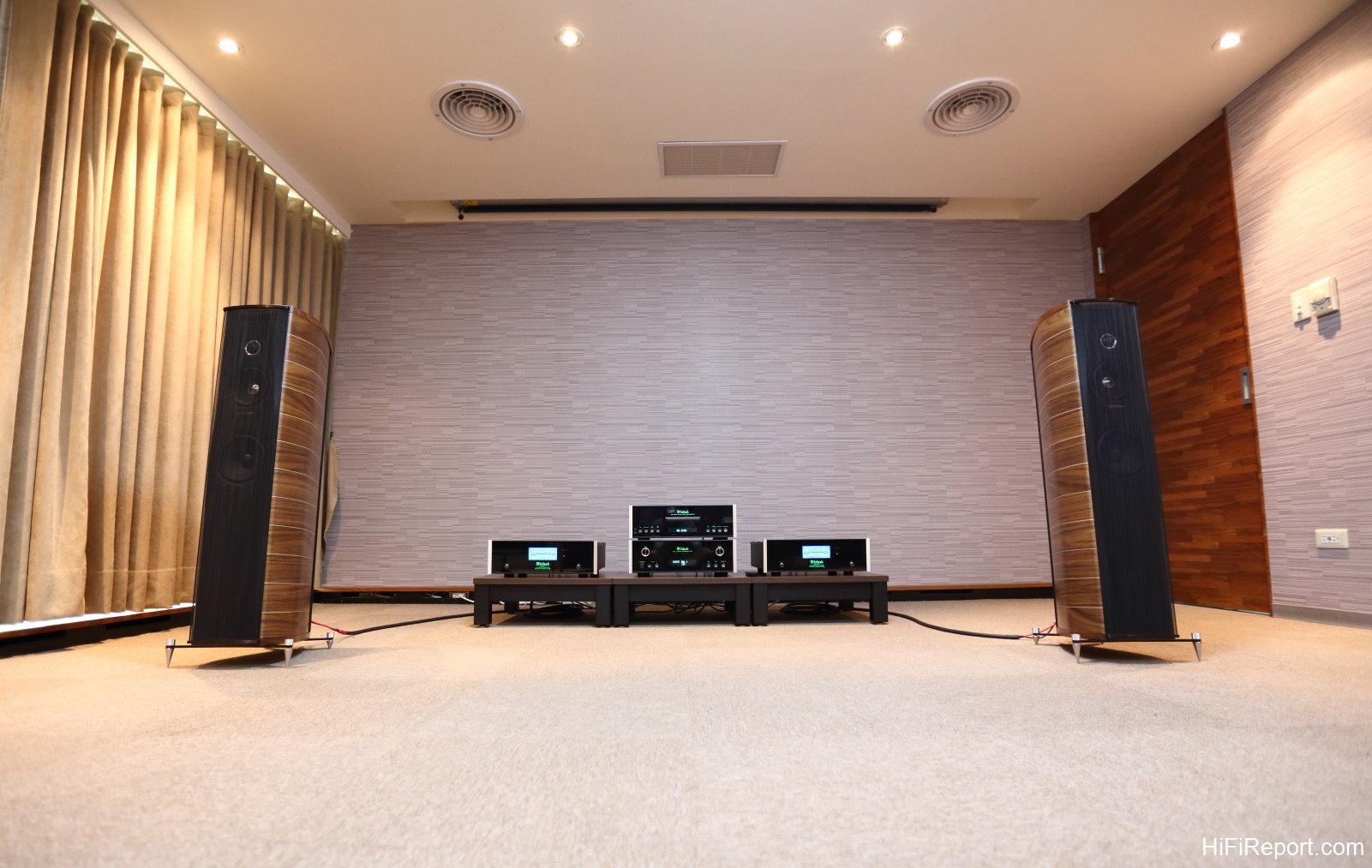
We were recently invited to an audition space to experience the Sonus faber Olympica II floorstanding loudspeakers in synergy with a McIntosh system.
Versatile 2-Channel and Multi-Channel Applications
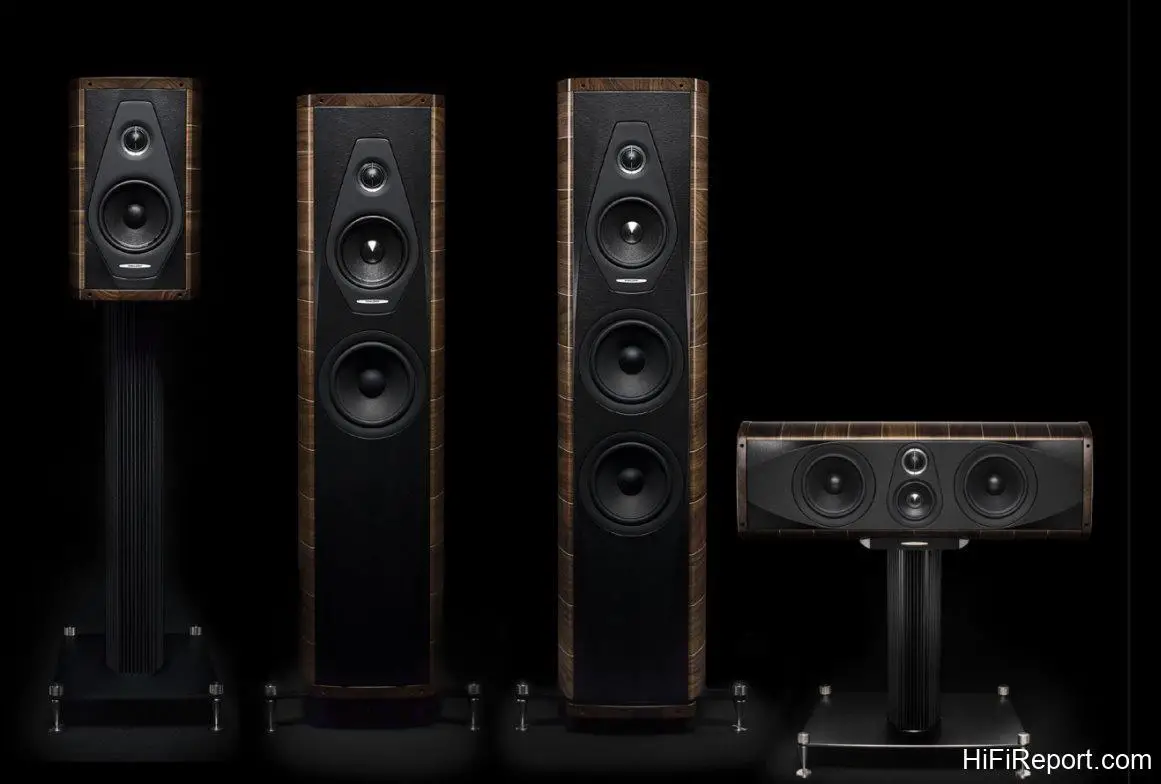
The Sonus faber Olympica series, showcased in this listening session, comprises four models: from left to right, the Olympica I bookshelf speaker, the Olympica II mid-sized floorstanding speaker, the Olympica III large floorstanding speaker, and the Olympica Center channel speaker. This range caters to traditional two-channel stereo setups and also provides a center channel option for home theater enthusiasts, offering considerable flexibility.
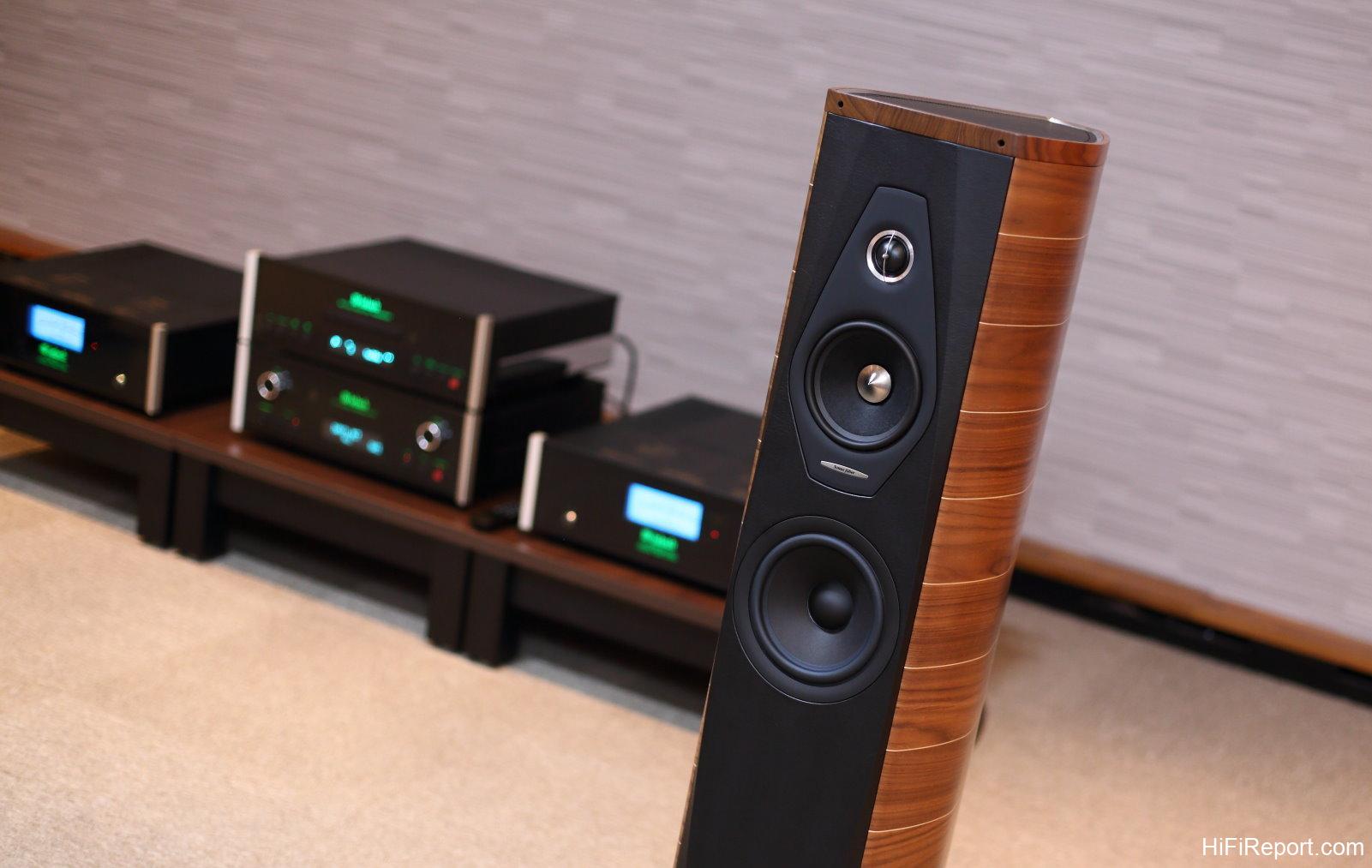
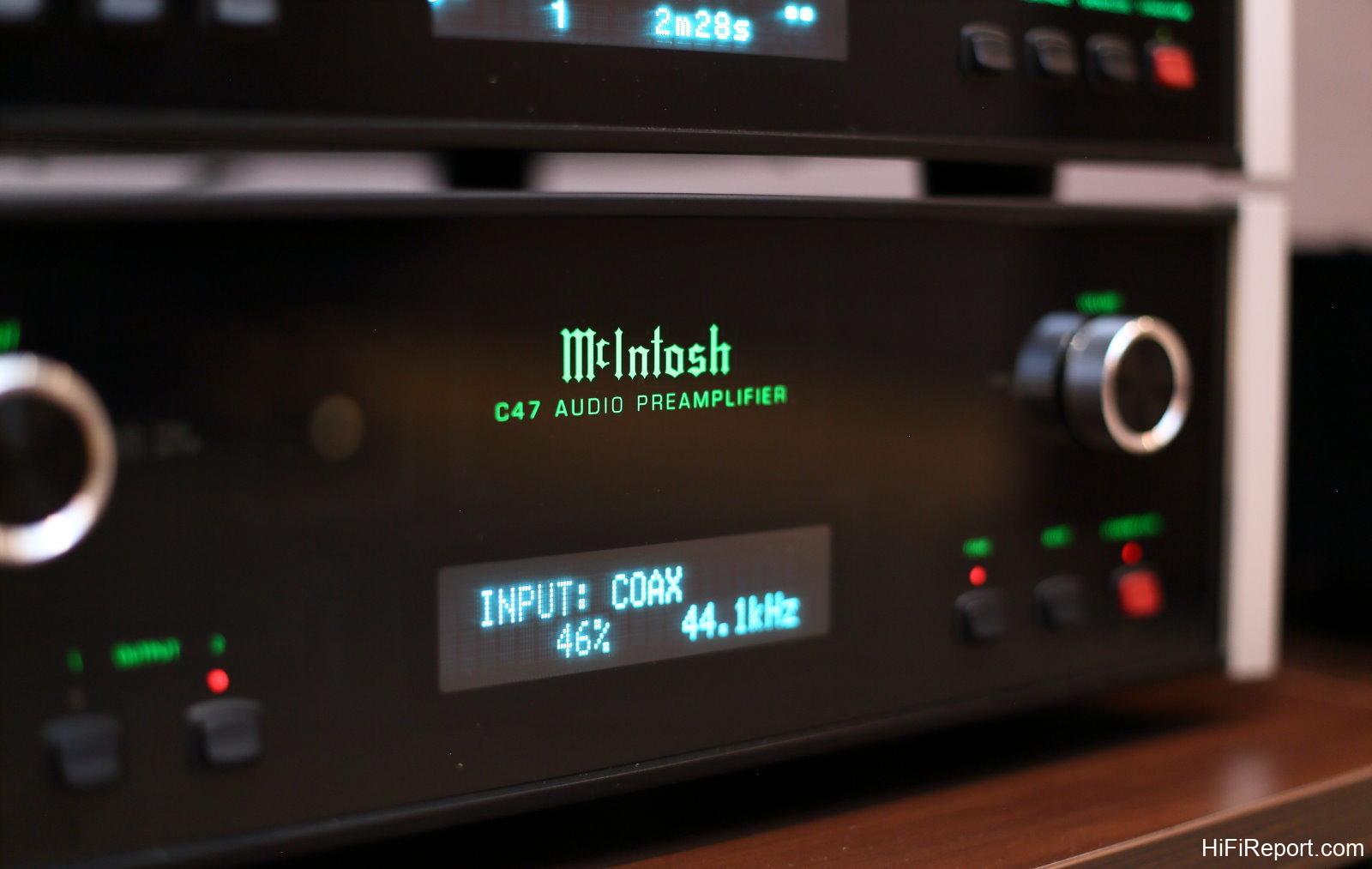
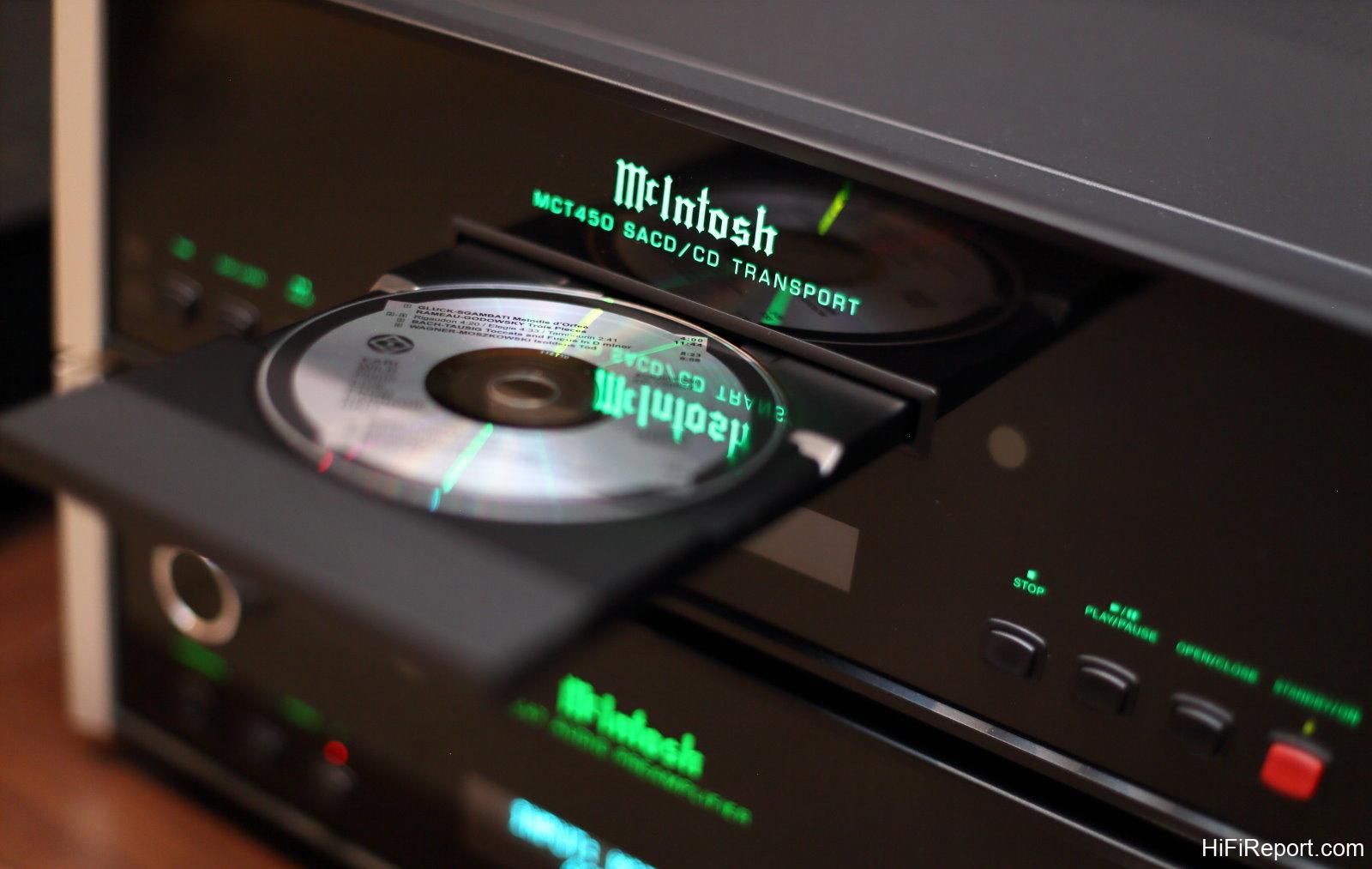
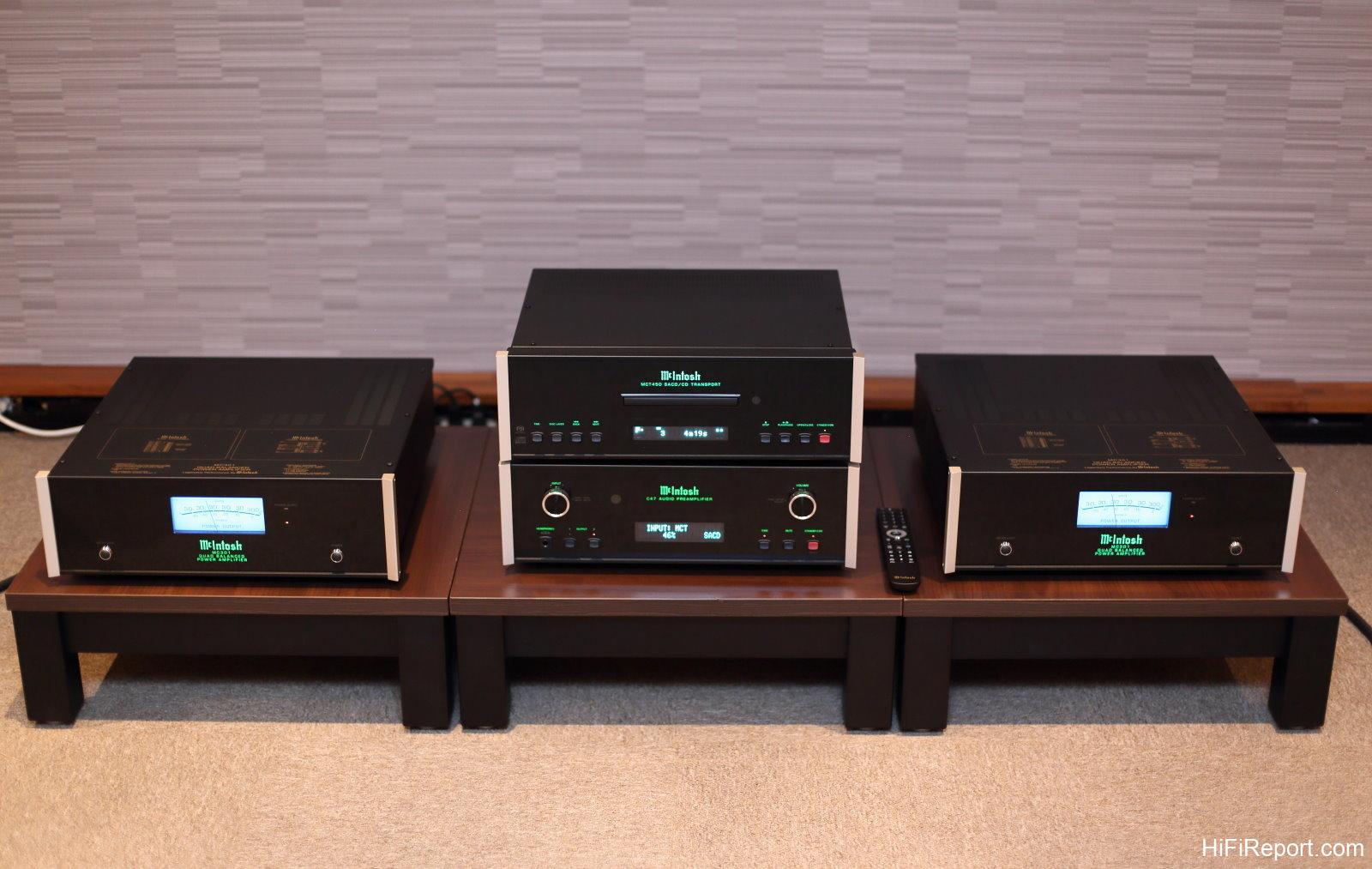
The system assembled for this audition featured the Olympica II floorstanding speakers, a McIntosh MCT 450 transport, a C47 preamplifier, and a pair of MC301 monoblock power amplifiers.
Natural Walnut and Composite Material Cabinet Construction
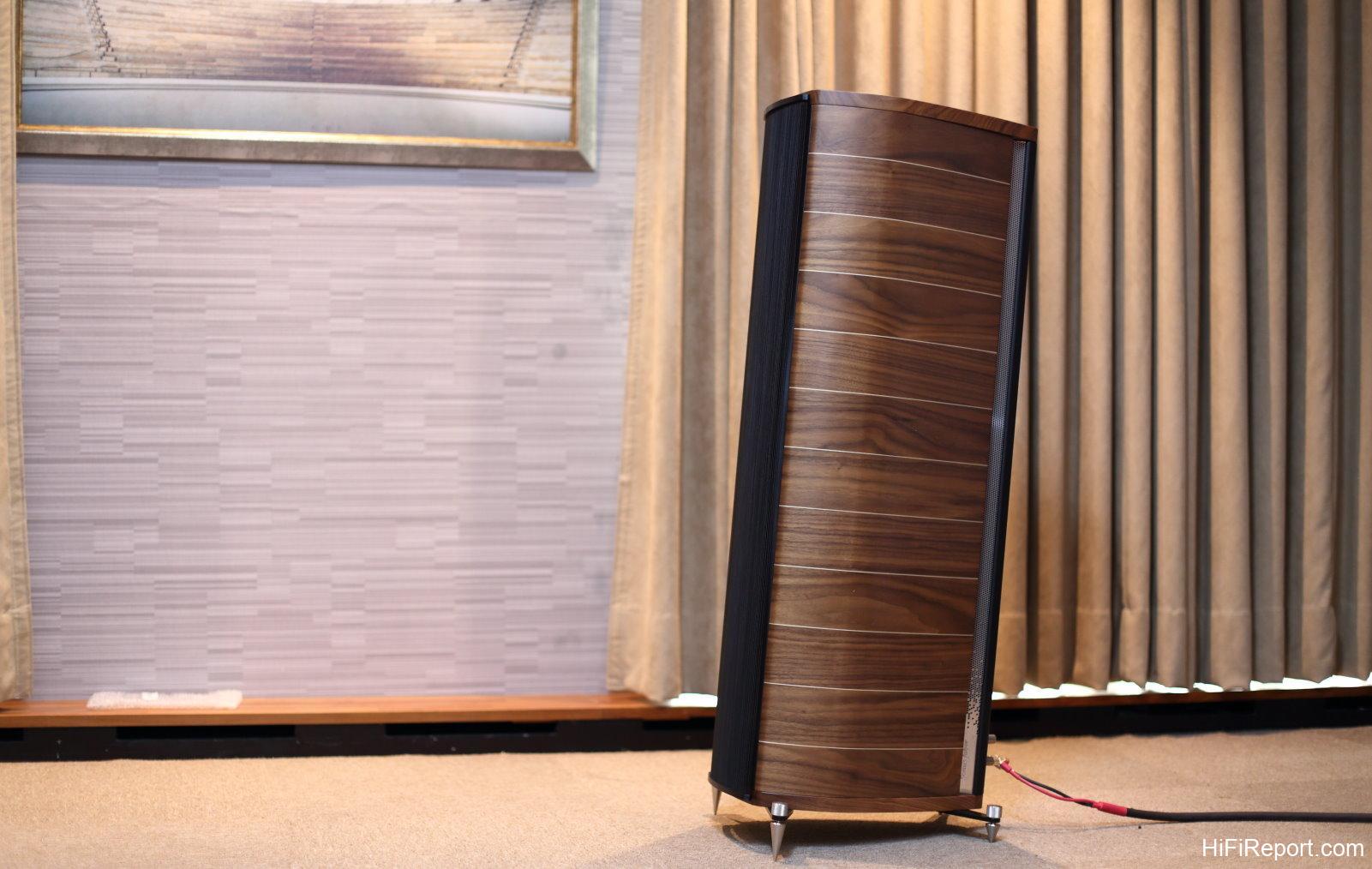
The Olympica II stands at 1055mm tall, excluding the spikes. Even a glance from the side reveals the beauty of Italian design. The warmth of the walnut wood and the cabinet’s elegant posture are visually captivating. The speaker exhibits a subtle backward tilt, enhancing the precision of time-phase response. At the rear, a distinctive bass reflex port is integrated into the metalwork.
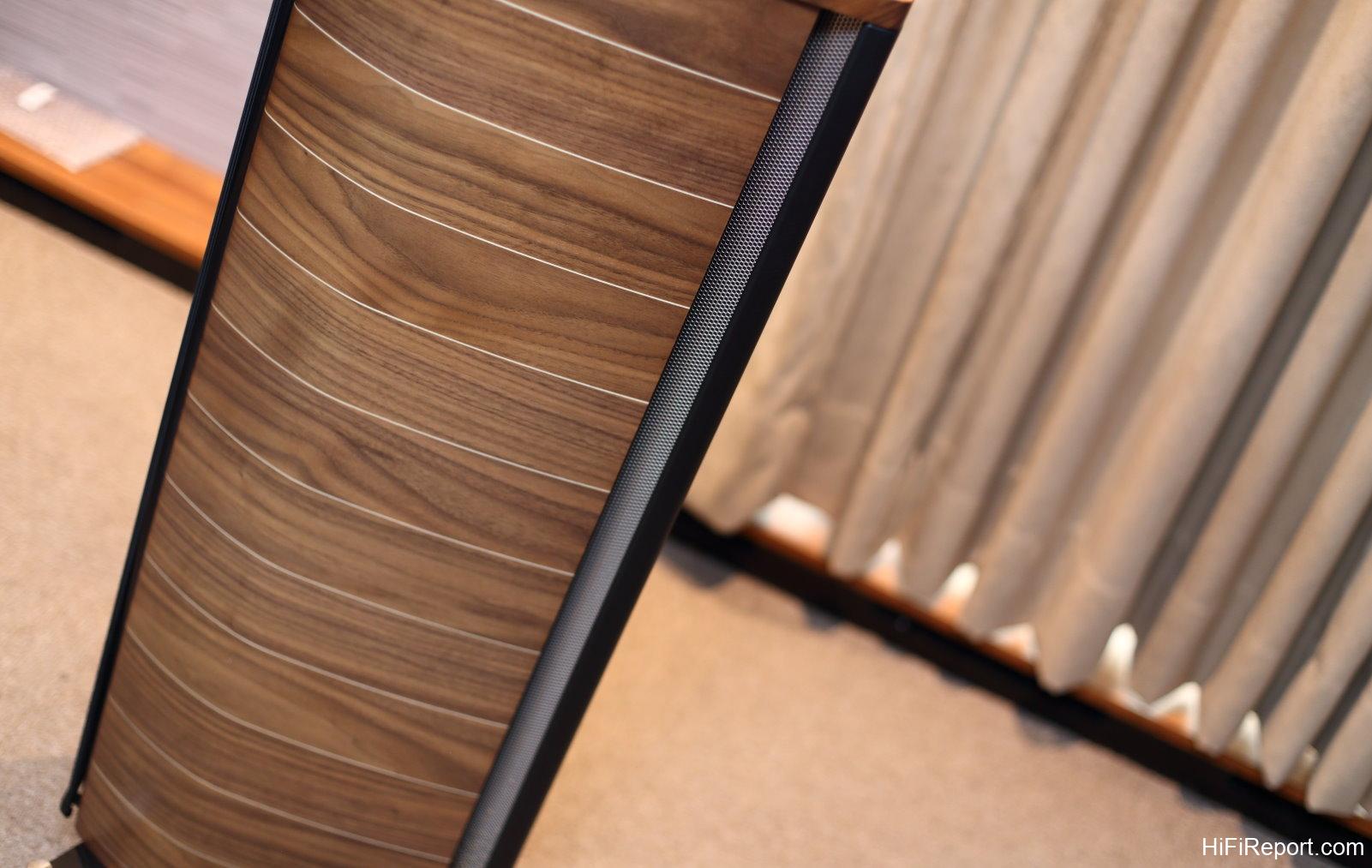
The Olympica’s cabinet is crafted from natural walnut, reinforced with maple wood at the top and bottom, exuding a classic aesthetic. This composite approach draws inspiration from their flagship Aida loudspeaker.
The speaker’s top is adorned with hand-stitched natural leather, embossed with the Sonus faber logo, and encircled by an aluminum ring. The front and rear baffles are also wrapped in natural leather, ensuring a completely screw-less visual appearance.
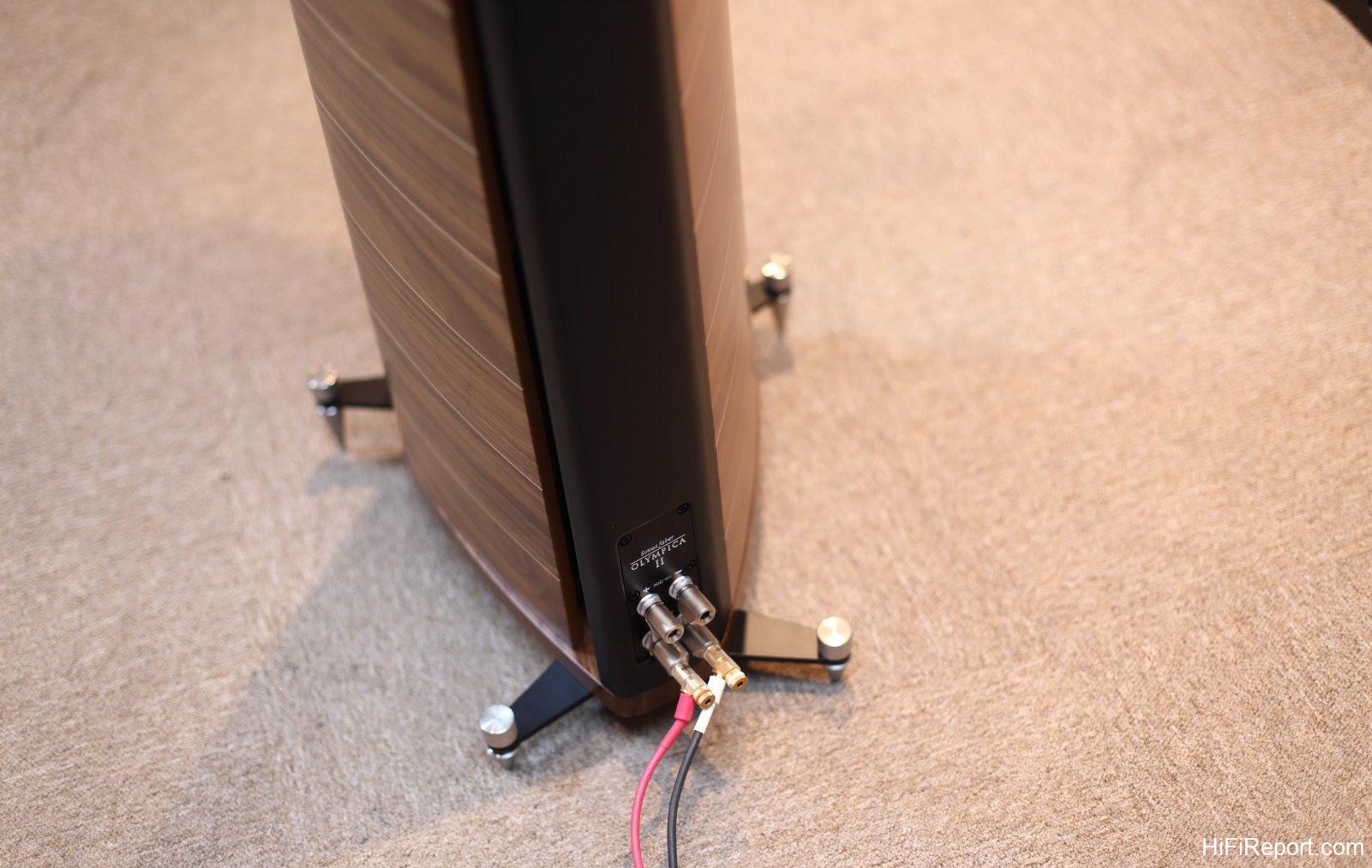
The Olympica II’s reflex port design diverges from conventional speakers. Positioned on the rear, flanking either side, they are vertically elongated and incorporate numerous honeycomb-style metal perforations.
This image provides a clearer view of the cabinet’s irregular, curved shape, wider at the front and tapering towards the rear. Even the back panel is not parallel to the front baffle. The back panel’s periphery is also leather-clad, enhancing the tactile and visual refinement.
Three-Driver Configuration with Unique Designs
The Olympica II employs a three-way, three-driver configuration, boasting a frequency response of 40Hz to 30,000Hz, a sensitivity of 88dB, and a nominal impedance of 4 ohms. The tweeter, model 29XTR2, features Sonus faber’s proprietary “Arrow Point” DAD (Damped Apex Dome) technology. It blends a classic dome diaphragm with a ring waveguide, utilizing a 29mm moving coil and neodymium magnet system – a design shared with the flagship Aida.
The 150mm midrange driver, model M15XTR, utilizes CCAW (Copper-Clad Aluminum Wire) composite material for its voice coil, effectively mitigating eddy current effects. The magnet system employs a specialized Triple Kellog/Goeller ring configuration to achieve dynamic and linear performance. The midrange cone is crafted from a custom blend of materials, including paper pulp, kapok, kenaf, and other natural plant fibers.
After natural air drying, a special damping coating is applied to the diaphragm surface, further suppressing coloration. A unique coaxial anti-compressor design is employed, aiming to eliminate resonance and distortion.
The 9-inch woofer, model W18XTR, is considered a “baby type” of the W22XTR-12 woofer used in the flagship Aida. Although scaled down in size, it adopts similar design principles. The cone features a sandwich construction, with layers of paper pulp fiber on the top and bottom, encapsulating a specialized high-tech rigid syntactic foam core, forming a sandwich diaphragm.
Internally, a 1.5-inch voice coil, designed to effectively control eddy currents, is paired with a long-throw drive magnet, ensuring linear and dynamic sonic performance.
High-Quality Crossover and Speaker Terminals
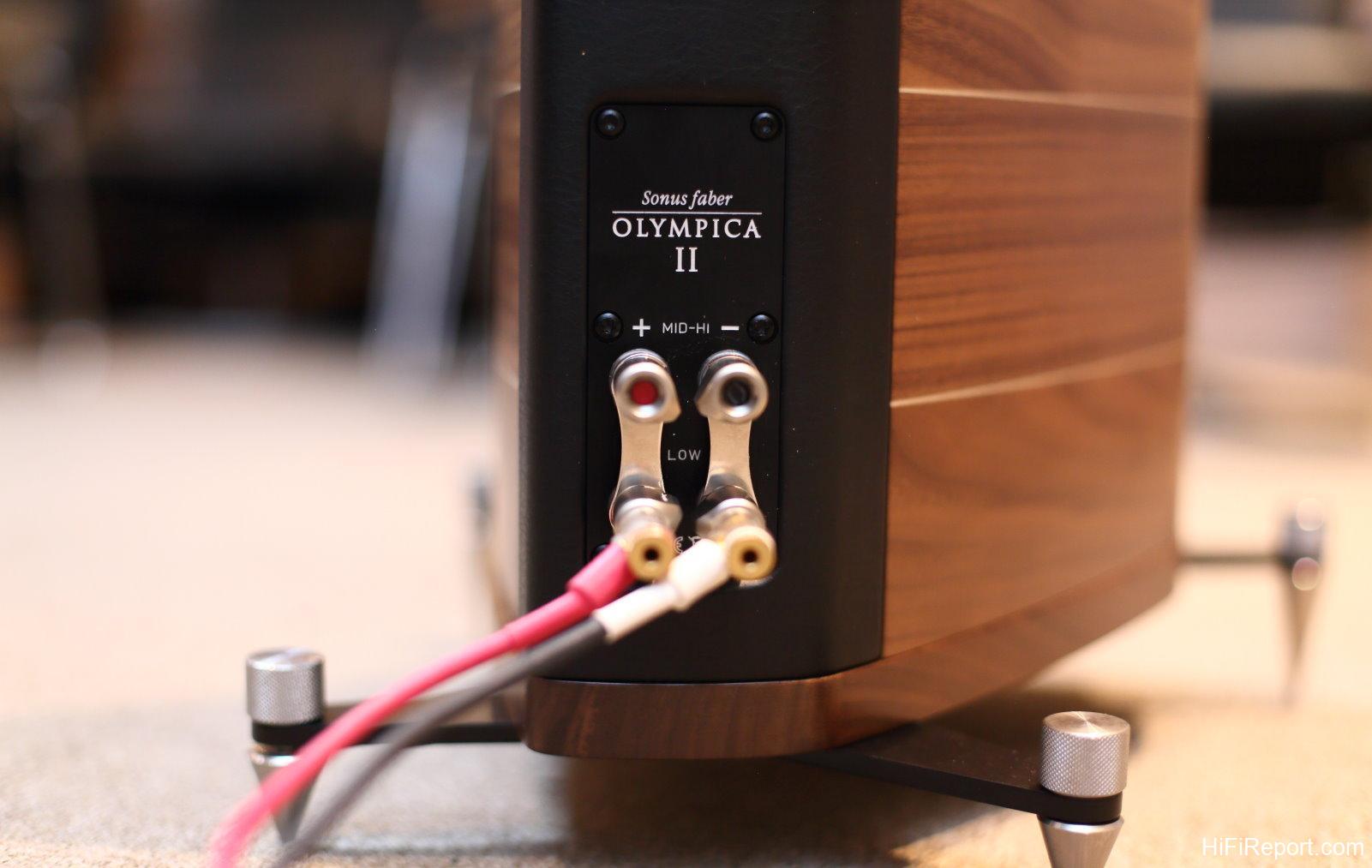
The speaker’s rear panel features premium quality speaker binding posts, allowing for bi-wiring or single-wiring with jumpers. The connection positions for the mid-high frequencies and low frequencies are clearly marked. The backplate also bears the inscription “Sonus faber OLYMPICA II”.
The crossover network utilizes a non-resonant progressive slope design, optimized for amplitude and phase response to achieve superior spatial and temporal performance. “Paracross topology” is employed in the high-pass filter for the tweeter and the band-pass filter for the midrange, with crossover frequencies at 250Hz and 2,500Hz.
Original manufacturer-provided images of the speaker construction process:
Powered by a Full McIntosh System
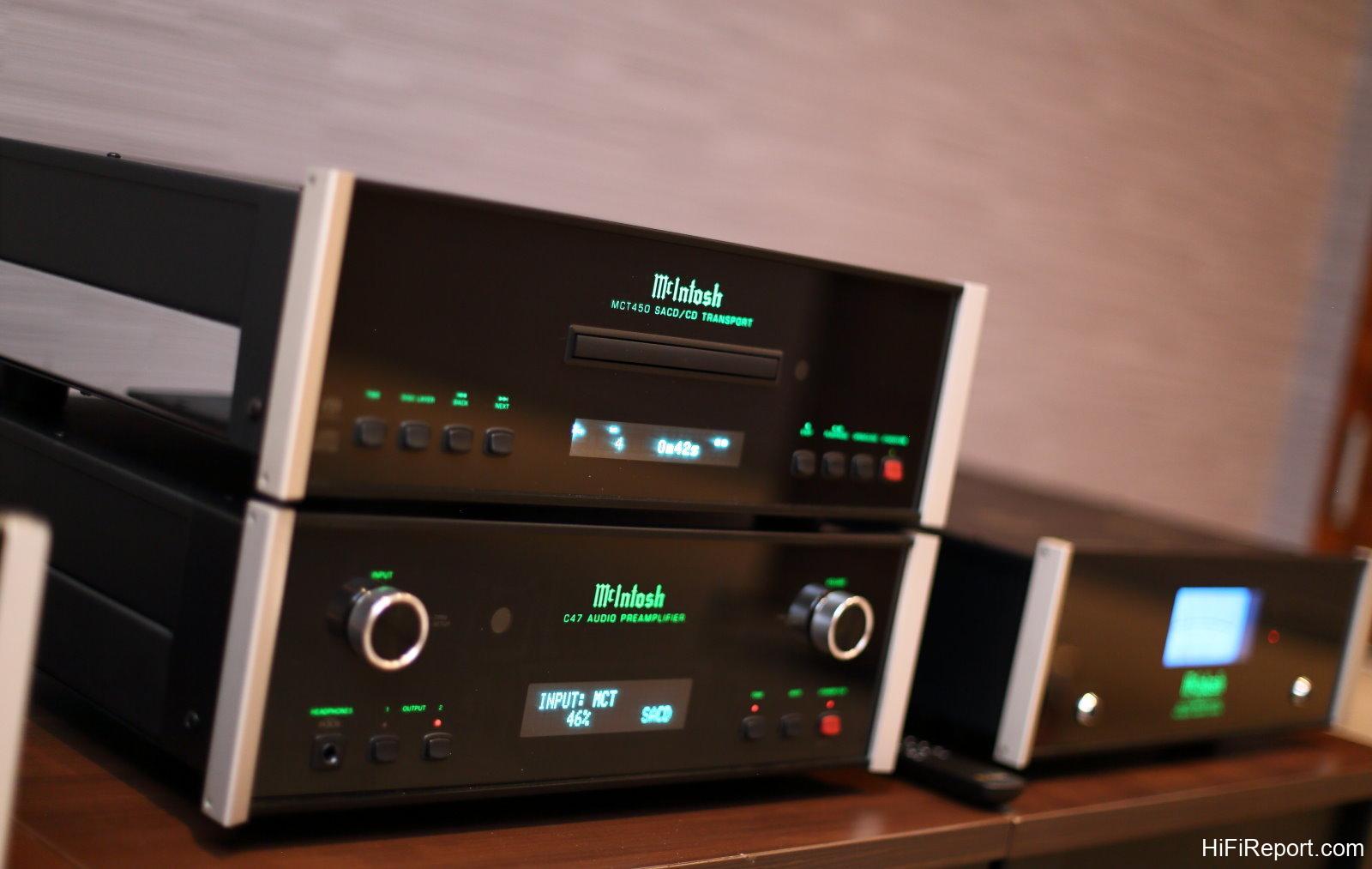
The Olympica II system was driven by a complete McIntosh ensemble, a renowned pairing within the same group. The source was the MCT 450 transport, capable of playing both SACD and CD discs. Its digital output fed the C47 preamplifier for decoding and amplification, before being passed on to a pair of MC301 monoblock power amplifiers.
The MCT 450 SACD/CD transport is purely a transport mechanism, without onboard decoding capabilities. It supports SACD, Hybrid SACD, CD, and CD-R/RW disc formats. Digital outputs include coaxial (up to 24bit/96kHz), optical (up to 24bit/192kHz), balanced (up to 24bit/192kHz, 32bit/96kHz), and McIntosh’s proprietary MCT connection. DSD file transmission for SACD playback necessitates the use of the MCT connection.
The C47 preamplifier is exceptionally versatile and represents excellent value. It incorporates digital signal decoding, and when paired with the MCT, can decode SACD’s DSD stream. It features a USB input capable of decoding PCM up to 32bit/384kHz, 4x DSD, and DXD 352.8kHz/384Hz. Coaxial and optical inputs both support up to 24bit/192kHz.
Analog input options include 2 balanced inputs, 3 unbalanced inputs, and 2 phono inputs. The C47 provides both MM and MC phono stages. Analog outputs consist of 2 balanced outputs, 3 unbalanced outputs, and a headphone amplifier output. This comprehensive specification ensures compatibility with the vast majority of audio equipment on the market, and even allows for integration into home theater systems.
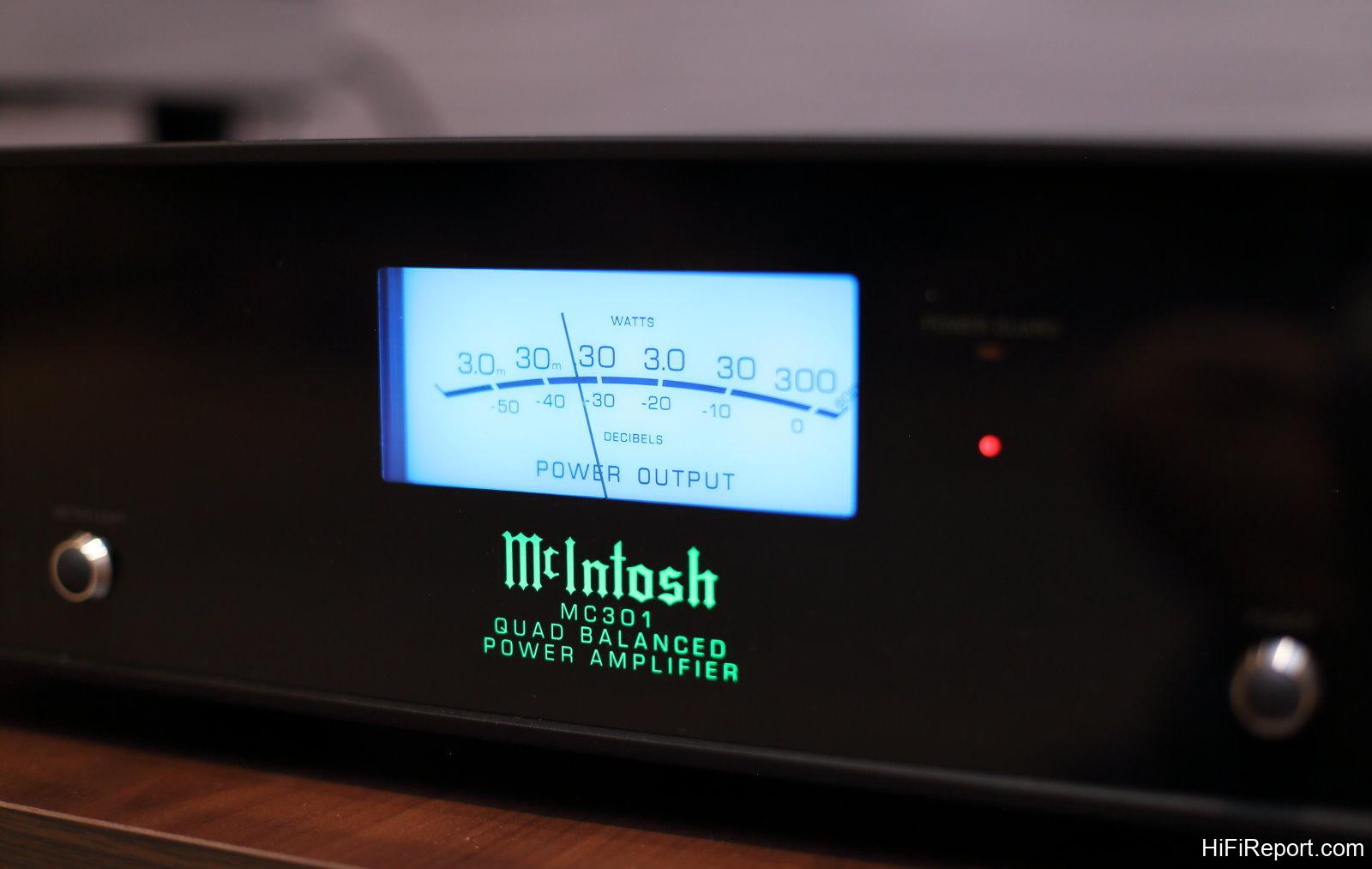
The monoblock power amplifier is the MC301, delivering a continuous output of 300 watts. Speaker binding posts on the rear panel are provided for 2 ohms, 4 ohms, and 8 ohms impedance, allowing for optimized matching with different loudspeakers. Balanced and unbalanced input terminals are available, as are balanced and unbalanced output terminals, enabling bi-amping configurations.
The MC301 boasts a relatively compact cabinet size for a McIntosh power amplifier, standing only 6 inches tall, making it more streamlined compared to other McIntosh power amplifiers. However, it still incorporates McIntosh’s renowned technologies, including Quad Balanced design for reduced noise and distortion, and Power Guard® circuitry to protect speakers from sudden surges of high current. The iconic blue output meter on the front panel remains a hallmark of the McIntosh aesthetic.
It’s hard to imagine a more captivating visual allure. McIntosh’s classic design has captured the hearts of countless audiophiles.
Fast Response, Well-Proportioned Imaging
I began my listening session with Earl Wild’s live piano recital, , specifically the fifth track, Bach’s “Toccata and Fugue in D minor”. The system immediately demonstrated remarkable speed in the midrange, with a rapid, articulate response, free of sluggishness. The tactile presence of the piano keys being struck was palpable, and the mid-high frequencies were remarkably clear and stable.
The ambient noise and audience sounds captured in the live recording were distinct, accurately pinpointing their positions within the soundstage. The overall sonic presentation was full-bodied and direct. As the frequency ascended, the sound became more ethereal, creating a captivating sense of spaciousness. The piano’s resonance in the mid-bass range was appropriately balanced.
Overall, the system exhibited a neutral, fast, and full-bodied sound, possessing a firm foundation without being overly heavy.
Lush, Detailed Strings with Clear Nuances
Strings are traditionally a forte of Sonus faber, and true to form, listening to Elissa Lee Koljonen’s performance of led to an immersive experience, effortlessly consuming several tracks. The system portrayed string instruments with realism and a beautiful (gentle and beautiful) quality. Instrumental images were three-dimensional with well-defined outlines.
The subtle nuances of the performer’s breathing between phrases and the friction of the bow across the strings were rendered with exquisite detail. The density of the string sound fluctuated naturally with the music’s ebb and flow, drawing the listener’s emotions along with the notes. The system’s imaging was not artificially enlarged or bloated; it accurately reproduced the appropriate scale of a violin.
The extension across the entire frequency range contributed to a palpable sense of the concert hall’s acoustics, while the fullness in the mid-bass region conveyed the instrument’s resonant body.
Vocals Solid and Engaging, Effortlessly Natural
Moving on to the 2015 Hong Kong High-End Audio Visual Show’s commemorative album, , the first track, Jacky Cheung’s “Why Did You Leave Me? “, showcased the guitar accompaniment with vibrant string plucks and a shimmering brilliance. Jacky Cheung’s vocals were solid, engaging, and emotionally resonant. The system faithfully reproduced numerous subtle vocal nuances.
The eleventh track, Pink Martini’s “Amado Mio”, sounded effortlessly natural and relaxed through this system, encouraging extended, unburdened listening. Detail retrieval remained excellent, and the trumpet solos possessed both power and clarity, with subtle variations in the instrument’s timbre readily apparent. The twelfth track, Tsuyoshi Yamamoto Trio’s “What A Wonderful World”, featured a clear cello solo with natural and seamless transitions across the frequency spectrum.
The image size was appropriately scaled, free from excessive resonance or muddiness. The subsequent piano entry enriched the overall texture, with the piano notes sounding transparent, substantial, and revealing a wealth of tonal color across its range. Combined with the tasteful accompaniment of the jazz drums, the system delivered a complete and elegant live performance experience.
* **Specifications (Olympica II)**
* Type: 3-way floorstanding speaker
* Frequency Response: 40Hz – 30kHz
* Sensitivity: 88dB SPL (2.83V/1m)
* Nominal Impedance: 4 ohms