
Sony MDR-AS210/B Sport In-ear Headphones Review
The Sony MDR-AS210/B hangs from a soft, adjustable over-ear hook rather than relying on a tight earbud seal, and that single design choice is the reason runners and gym-goers keep buying the model pair after pair. The question this review settles: does the hook actually hold through a hard workout, or is it a marketing convenience that fails under sweat?
For a wired, clip-on earphone built for sweat-soaked sessions, the AS210/B earns its 4.3-star rating on a simple promise: stay in your ear when you move. The verdict, backed by years of owner reports, is that retention works for the majority of ear shapes, with a caveat for people whose anatomy makes the closed loop awkward to thread on.
Original publication: hifireport.com. No part may be republished without consent.
The Headline Act
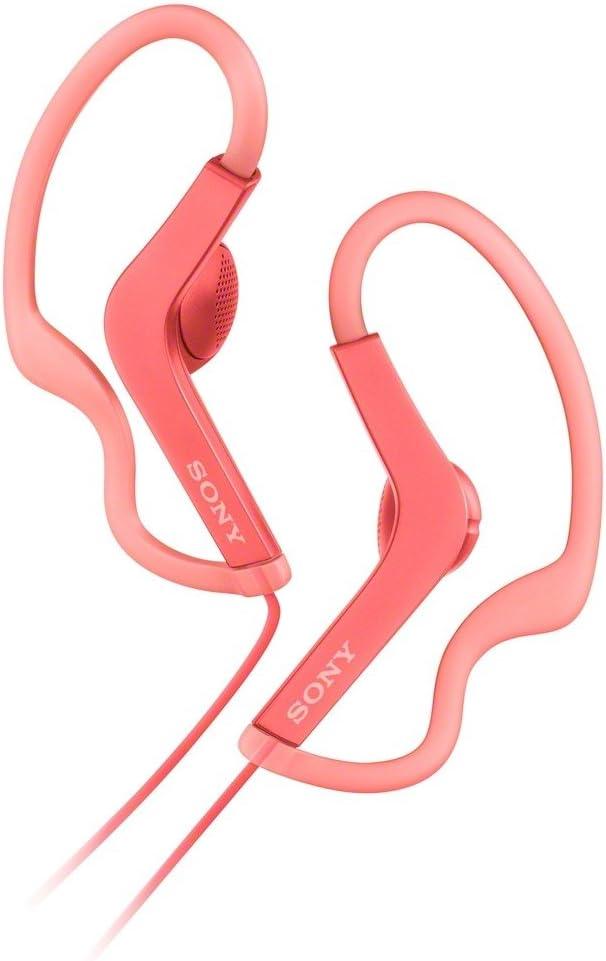
Sony’s core claim for the MDR-AS210/B is the adjustable loop hanger that clips behind the ear and secures the earbud with gravity and hook tension rather than a pressure seal. In a category where most in-ear headphones either fall out at the first sprint or require a tight, sometimes painful, earbud fit to stay put, a hook-on design sidesteps both failure modes. The earbud rests in the ear canal without the suction effect that plug-style earpieces create, which matters for people whose ears are sensitive to negative pressure.
This matters to a buyer because the target use case is unambiguous: running, cycling, lifting, or any activity where a dislodged earphone means a dropped track, a paused playlist, or a trip to the floor of the gym. The hook converts the earphone from a passive object you hope stays in place to one mechanically anchored to your anatomy. Sony also angles the earbud structure so the driver sits at a slight tilt, adding a second point of contact that resists lateral movement.
The catch is that the loop is a closed, continuous piece of soft rubberized material, and threading it over the ear takes more manual work than slipping on a conventional earbud. Several owners report needing to wedge their ear through the hook, and a small number had to trim the loop with scissors to fit. For most people the friction is a one-time setup cost; for others it becomes a recurring annoyance at the gym or at a desk.
Over-Ear Hook Retention Under the Hood
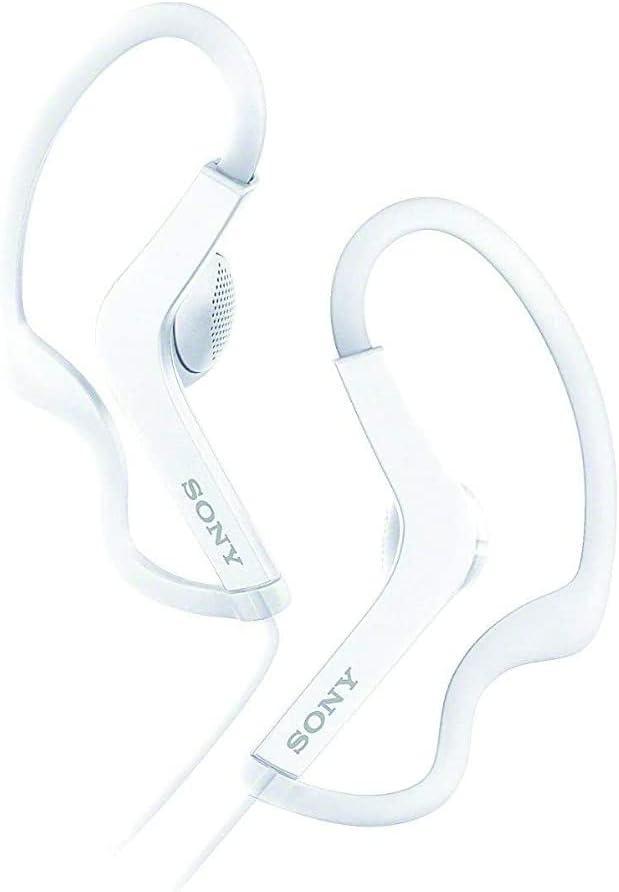
The hook on the MDR-AS210/B is a single piece of soft, rubber-like material that forms a closed loop reconnected at the bottom of the earphone body. Unlike the older Sony MDR-J10, where the hook was hard plastic and anchored at the top of the head, the AS210/B’s loop sits entirely behind and around the ear. The soft material compresses against the ear’s cartilage without the pressure points that rigid plastic creates. The loop is slightly adjustable, meaning the tension can vary a few millimeters depending on how far you slide the earbud through the channel before the hook closes.
The earbud itself uses a side-firing, angled structure, which means the 13.5mm driver points diagonally into the ear canal rather than straight in. This angle, combined with the hook’s downward pull, gives the assembly a three-point contact: the hook behind the ear, the angled body against the concha, and the tip gently resting at the canal entrance. Reviewers who compare the design to the discontinued Sony MDR-W08L vertical in-the-ear earphones note the mechanical similarity, with the main difference being that the AS210/B uses the ear for support instead of the top of the head.
The Y-type Litz cable routes from the bottom of the hook assembly, which keeps the cable away from the shoulder where it would snag. The serrated cable texture resists tangling, and the 1.2-meter length gives a runner room to move without yanking the jack. The plug is small enough that even a tight-fitting phone case can accommodate it without forcing.
One owner described cutting the loop with scissors to relieve a pressure bump between the top and bottom segments, after which the earphone sat comfortably. That modification is not recommended by Sony, but it reveals the design’s main trade-off: the closed loop that provides retention also creates a fixed geometry that does not flex to every ear shape equally.
Audio Check
Sony MDR-AS210/B, the sound verdict from the owner base is straightforward: clean, mid-forward, and good enough for active use without being a reference monitor. The 13.5mm drivers cover a frequency range of 17 Hz to 22,000 Hz, which is wide on paper, but the side-firing earbud geometry and the lack of a pressure seal shape the actual response. Bass is noticeably lower than what a sealed earbud delivers, and several owners flag thin low-end as a consistent limitation.
For the intended use case, that trade-off is acceptable. One reviewer running and mowing the yard called the sound “great” and noted the wired connection removes the need to charge a battery. Another, using the earphones in a gym with heavy echo, said the sound was good and that nobody cares about subtlety in that environment. A third listener, using the AS210/B for audiobooks rather than music, rated the sound highly and said the clarity suited spoken-word content well.
The side-firing design also means the earbuds do not create a vacuum seal, so ambient sound bleeds in. One long-time user of the discontinued W08L line pointed this out as a feature: you can hear a coworker or a gym partner talking without removing the earphone. The result is a sound profile that favors mids and highs, with bass present but restrained. For a workout playlist or a podcast on a jog, that character is a fit; for a bass-heavy mix, it will feel thin.
The Rest of the Package
The MDR-AS210/B’s non-audio story centers on durability, comfort over time, and the simple wired interface. Owners report lifespans ranging from about two years of near-daily use to four or five years, after which typically one side loses output or the cable jacket wears through and exposes the wires. The rubber and silicone materials age; a gym bag that compresses the earphone weekly will shorten that window. One owner noted the first pair lasted years of daily workouts before replacement.
Comfort is the second pillar. The soft silicone hook is well received, and most owners say they forget the earphone is there once the loop is seated. The in-ear tip, however, is hard plastic with an odd shape that some ears find pressing after extended wear. One reviewer who left the earphones in for more than five hours reported mild discomfort, and another noted the tip felt uncomfortable during sleep. The hard tip is the most common non-retention complaint in the review set.
Original publication: hifireport.com. No part may be republished without consent.
The wired connection is the third. No Bluetooth, no charging cycle, no firmware to update. You plug in and play. The serrated Y-type cable tangles less than a smooth cable, and the 1.2-meter length clears a phone pocket or a gym bag strap. The trade-off is that you are tethered to the source device, and there is no inline volume control on the AS210/B. One owner specifically wished for a volume wheel on the cable so they would not have to fiddle with the phone mid-workout.
Real-World Use
Running is the scenario the AS210/B was designed for, and the owner data confirms the fit holds through a hard pace. Multiple runners describe the earbuds staying in place through sprints, strides, and the bouncing rhythm of a steady run. The hook’s soft material does not chafe the way a rigid clip can, and the side-firing tip avoids the suction pop that makes plug-style earbuds uncomfortable during long runs. The one caveat: heavy sweat can temporarily muffle the sound, as fluid wicks into the tip opening. The effect is brief and resolves when the sweat drains.
At the gym, the picture is similar with one added variable: plates and barbells. One owner noted the first pair was crushed between two plates during a set and the second pair required care to keep the earphone in the ear while loading. The earphone itself is not rugged enough to survive a barbell press, but under normal gym conditions (deadlifts, rowing, stationary cycling) the retention is solid. Talking to a training partner means ducking one earphone out, which the hook design makes quick because the loop simply slides forward.
What Owners Say
The headline claim, that the over-ear hook keeps the earbud secure during activity, is confirmed by the majority of the 4.3-star owner base. Runners, cyclists, and gym users consistently report the earbud staying in place through a full session. The “I forget I’m wearing them” remark appears in multiple reviews, and several owners have repurchased the same model at least five times over the years. The retention claim holds for small-to-medium ear shapes in particular.
Where the claim wobbles is on the put-on process. The closed loop is not a snap-on design; it requires threading the ear through the hook, and owners with smaller ears or tighter cartilage report a fiddle that is irritating mid-gym or at a desk. One owner cut the loop to fix the fit permanently. A second owner said the bump between the loop segments pressed into the back of the ear and caused pain until modified. These are not deal-breakers for most, but they are the reason the rating sits at 4.3 rather than higher.
Durability is the secondary theme. The typical lifespan is two years with daily use, after which one channel usually goes quiet or the cable jacket splits. Owners treat this as a replaceable-consumable cycle rather than a defect, buying a new pair when the old one fails. The sources do not indicate a warranty or replacement program, so the cost of that cycle falls on the owner, and the low entry point keeps the repeat purchase low-friction.
Comfort complaints cluster around the hard plastic tip. Several reviewers note the tip shape is not what most ears expect and that long sessions create pressure. The hook itself is universally praised as comfortable once seated. The net effect: the AS210/B is a secure, comfortable, mid-forward wired earphone whose main friction point is the initial threading of the loop.
What We Like / What We Don’t
What we like
- The over-ear hook retains the earbud through running, cycling, and lifting without a pressure seal
- The side-firing tip avoids the suction effect that makes plug-style earbuds painful in sensitive ears
- No battery, no Bluetooth, no firmware: plug in and play
- The 1.2-meter serrated Y-type cable resists tangling and clears a phone pocket
- Owners report multi-year lifespans under daily use, making the repeat purchase routine
What we don’t
- The closed loop takes effort to thread on, and a small number of owners had to cut it to fit
- The hard plastic tip presses on the ear canal during long sessions and can cause discomfort
- Bass response is thin; the side-firing geometry sacrifices low-end weight
- No inline volume control means you adjust the source device mid-workout
- Cable jacket and rubber wear after roughly two years of daily gym-bag abuse
Bottom Line
The Sony MDR-AS210/B is a wired, hook-on earphone that does one thing well: it stays in your ear through a hard workout. The over-ear retention design is the reason to buy, and the owner data across years of reviews confirms it works for the majority of ear shapes. If you want a set-and-forget, charge-free earphone for running, cycling, or the gym, the AS210/B delivers exactly that with a mid-forward sound that suits exercise playlists and spoken word.
Best for runners, cyclists, and gym-goers who want a wired earphone that stays in without a tight seal and who will accept a mid-range frequency response; look elsewhere if you need deep bass, want an inline volume control, or have a large ear shape that makes the closed loop difficult to thread.
Specifications
- Driver: 13.5mm, side-firing
- Frequency response: 17 Hz to 22,000 Hz
- Cable: 1.2 m Litz, Y-type, serrated, tangle-free
- Connector: Standard wired headphone plug
- Design: Over-ear adjustable hook, in-ear
- Water resistance: Sweat and rain resistant
- Inline controls: None
- Battery: None (wired)
- Weight class: Lightweight
- Colors: Multiple available
Questions Worth Asking
Does the hook actually hold during a hard run, or does it slip?
Yes, the owner data is consistent: runners and cyclists report the earbud staying in place through sprints and steady-state running. The hook uses the ear’s own weight and the angled tip geometry to anchor, and no sealed-earbud suction is needed. The main failure mode is not slippage but a temporary muffling when heavy sweat wicks into the tip.
Can I put them on quickly at the gym between sets?
The closed loop makes the put-on process slower than a snap-in earbud. Most owners describe a wedge-and-thread motion that takes a few seconds, and a small number with smaller ears found it frustrating enough to cut the loop. If you need to swap in and out every minute, a conventional earbud or a more open hook shape will be quicker.
Will the bass satisfy me if I mostly listen to hip-hop or electronic music?
Original publication: hifireport.com. No part may be republished without consent.
The side-firing geometry and lack of a pressure seal produce a thin, mid-forward response that owners describe as clean rather than punchy. For bass-heavy genres the low end will feel restrained compared to a sealed earbud. Several reviewers noted the sound suits rock, pop, podcasts, and spoken word well.
How long do they actually last with daily use?
Owner reports cluster around two years of near-daily use before one channel drops out or the cable jacket wears through. A few owners report four to five years with lighter use or careful storage. The rubber and silicone materials age under compression in a gym bag, so the lifespan is less about electronics and more about physical wear on the housing.

- Lightweight clip-on headphones for active lifestyles
- Comfortable, adjustable loop hanger design for a secure fit
- Water-resistant design will get you through the most rigorous workout