
Sony WF-C510 Review
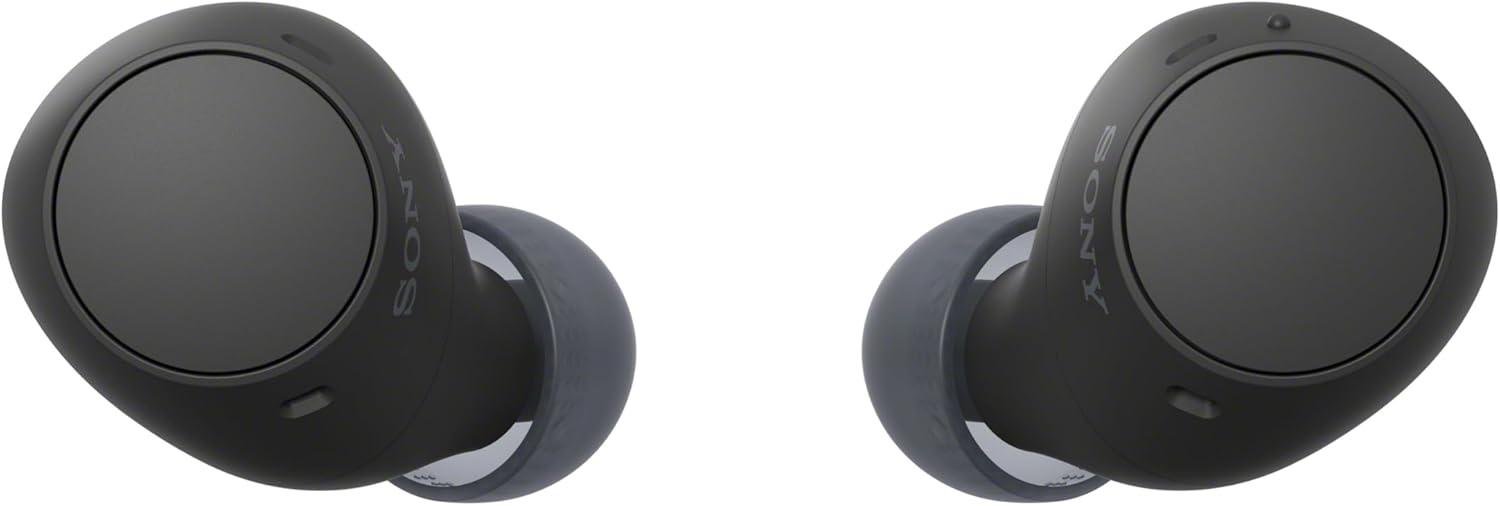
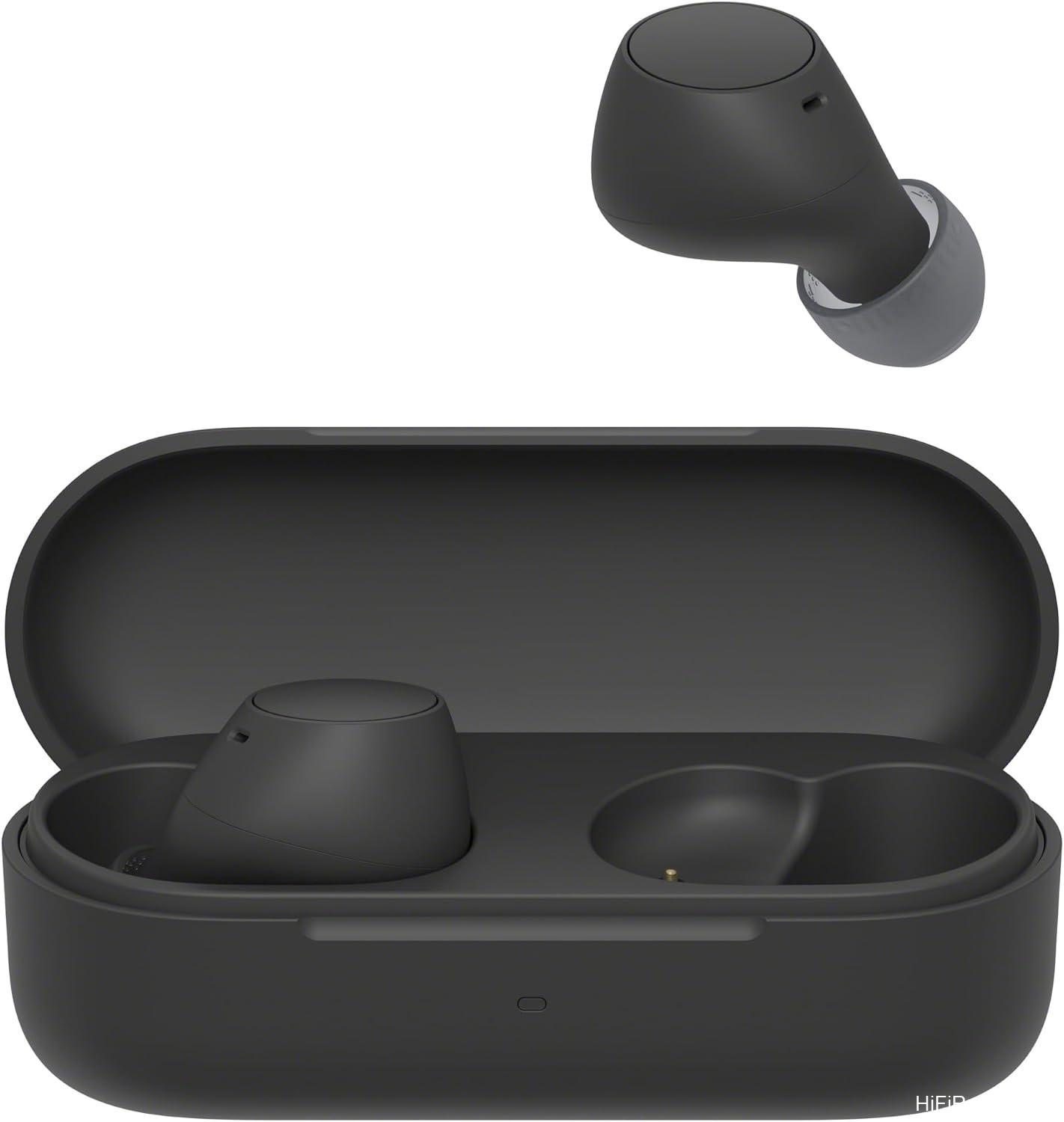
Sony WF-C510 truly wireless earbuds, in black, are the product under review.
Answer First
Buy the WF-C510 if you want compact, comfortable earbuds with physical buttons, long battery life, and well-balanced sound at a budget price. They skip active noise cancelling and provide only average call quality, which makes them a fit for casual listening, commuting, and wet-weather use where touch controls would fail.
Buy It If / Skip It If
Buy it if:
- You need earbuds that keep working through heavy rain, shower sessions, or while worn under over-ear hearing protection
- You prefer physical buttons over capacitive touch and want to avoid false-touch track skips and volume jumps
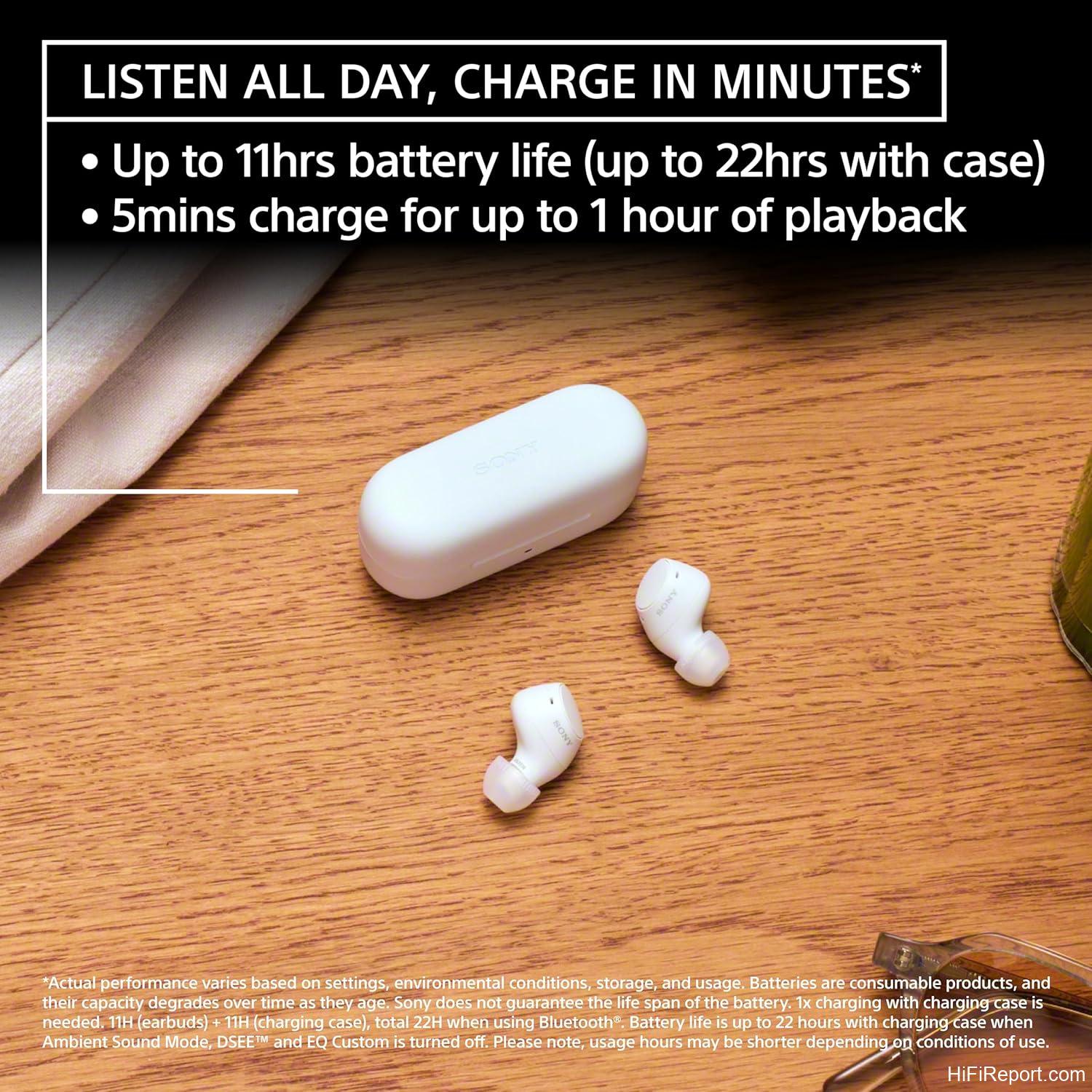
- You want 11 hours of playback from the buds and up to 22 hours total with the charging case
Skip it if:

- You depend on active noise cancelling to quiet a busy office, cabin, or commute
- You take frequent professional video calls and need a microphone that isolates your voice from background noise
- You expect to adjust volume directly on the earbuds without opening the Sony Sound Connect app
Is the Sound Actually Good?
The WF-C510 plays a balanced, controlled tune out of the box, with punchy bass and crisp treble that stay in check across genres. Premium Sony headphones outperform it in depth and richness, but within its tier the tuning is solid and consistent. A buyer who listens to a wide range of music found the factory profile already well rounded, with no band shouting over the others. Other owners reported the opposite: the factory tuning runs flat and underpowered, and the Sony Sound Connect app becomes almost essential to lift the low end to a satisfying level. One Mexican reviewer specifically recommended opening the app and selecting a preset with at least +7 on the Clear Bass channel, calling the improvement “substantial.” The gap between the out-of-the-box sound and the EQ-tuned sound is wide enough that several buyers across markets point to the app as the single biggest factor in whether the buds feel like a good purchase.
Produced by hifireport.com. Copying, scraping, or republishing is strictly prohibited.
Bass and Low End
Owners who A/B against more expensive earbuds notice the low end lacks the depth and pressure of a pricier pair. The factory EQ runs flat, which is where the Sony Sound Connect app earns its place. The app exposes a 6-band equalizer with a dedicated Clear Bass channel, and reviewers who push that band up report a clear lift in low-frequency energy without muddying the mids. One buyer found that above 80 percent volume the bass drops off slightly, a limit Sony builds into the drivers to prevent clipping. Around three-quarters volume, the low end stays satisfying and controlled. A Mexican reviewer compared the WF-C510 to the Sony WH-1000XM4 over-ear model and the Xiaomi Redmi Buds 3 Lite, placing the C510’s bass above the Xiaomi and below the XM4, with the overall audio noticeably cleaner than the entry-level pair.
Treble and Mids
The highs come through crisp without turning harsh, and the mids sit in a natural, forward-neutral position. Compressed streaming files get a quality lift from Sony’s DSEE (Digital Sound Enhancement Engine), which the spec sheet lists as a core audio feature. One owner who fine-tuned the EQ in the app said the Clear Bass band plus small adjustments to the remaining five channels transformed the flat factory sound into a profile he described as “great.” The 360 Audio option in the app is a separate download and requires a payment, so the free tier is the six-band EQ and the DSEE boost.
Produced by hifireport.com. Copying, scraping, or republishing is strictly prohibited.
Does Noise Cancelling Make a Real Difference?
The WF-C510 has no active noise cancelling. It does include an Ambient Sound Mode, triggered by the button on the left earbud, which pipes outside noise through the earbuds’ microphones so you stay aware of your surroundings. Owners who use the buds in quiet homes say the absence of ANC matters little, since the hybrid silicone tips create a decent passive seal. The ambient mode’s level is adjustable from near-silent to full surrounding awareness, which helps when cycling or walking and you need to hear a car approaching. One buyer who owned a pair of over-ear noise-cancelling headphones found the WF-C510’s passive isolation surprisingly competitive for its size, though it obviously cannot match true ANC in a loud environment. If your daily listening happens in a quiet space, the tradeoff is easy to accept. If you sit in a busy open office, ride public transit, or work near machinery, the lack of active cancellation will be felt on every commute.
Within the Ambient Sound Mode, the app exposes two distinct behaviors: an amplification setting that boosts outside sound (one owner called it “augmented reality”) and a suppression setting that damps it. The amplification level slides from near-zero to full awareness. A buyer who also owns over-ear noise-cancelling headphones found the suppression mode as effective as the passive isolation of his over-ear pair, which is unusual for an in-ear bud of this size. The practical result: in a quiet room, neither mode adds much. In a noisy train car or open office, the passive seal from the hybrid silicone tips helps, but without active cancellation the background drone remains.
Do They Handle Sweat and Weather?
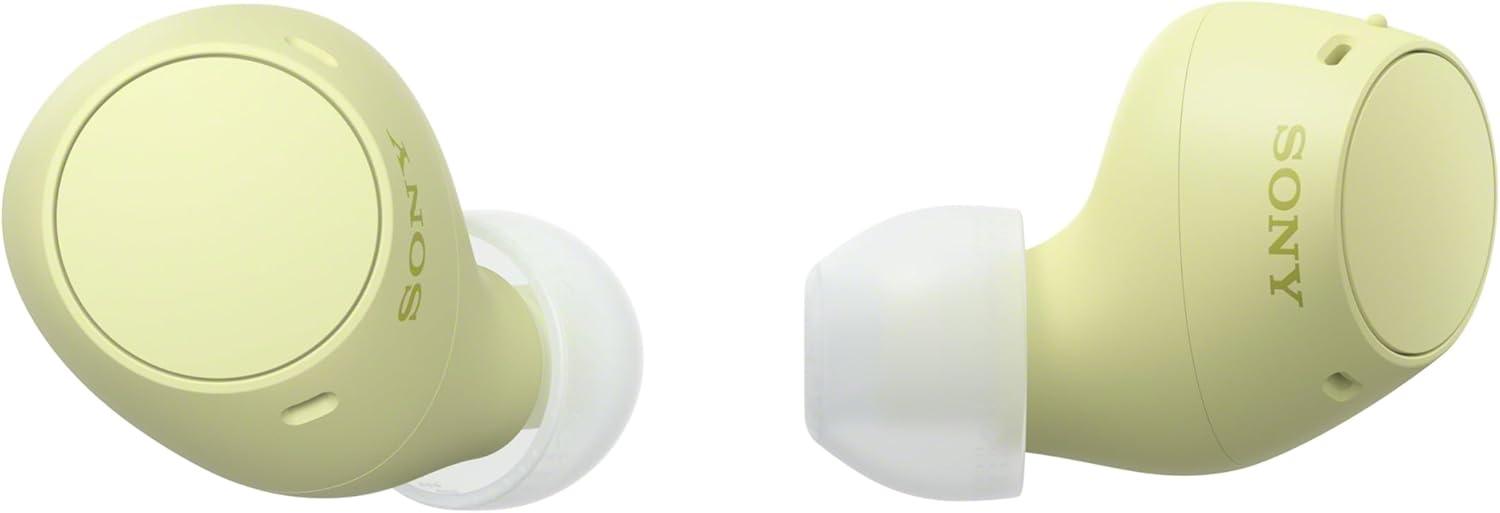
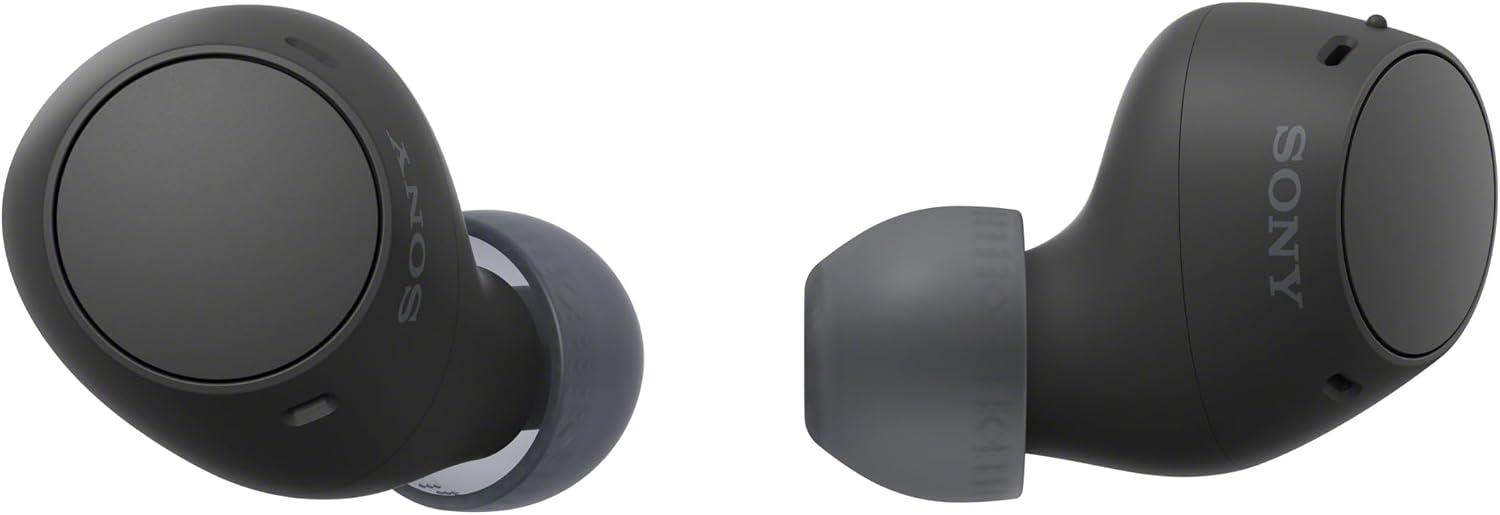
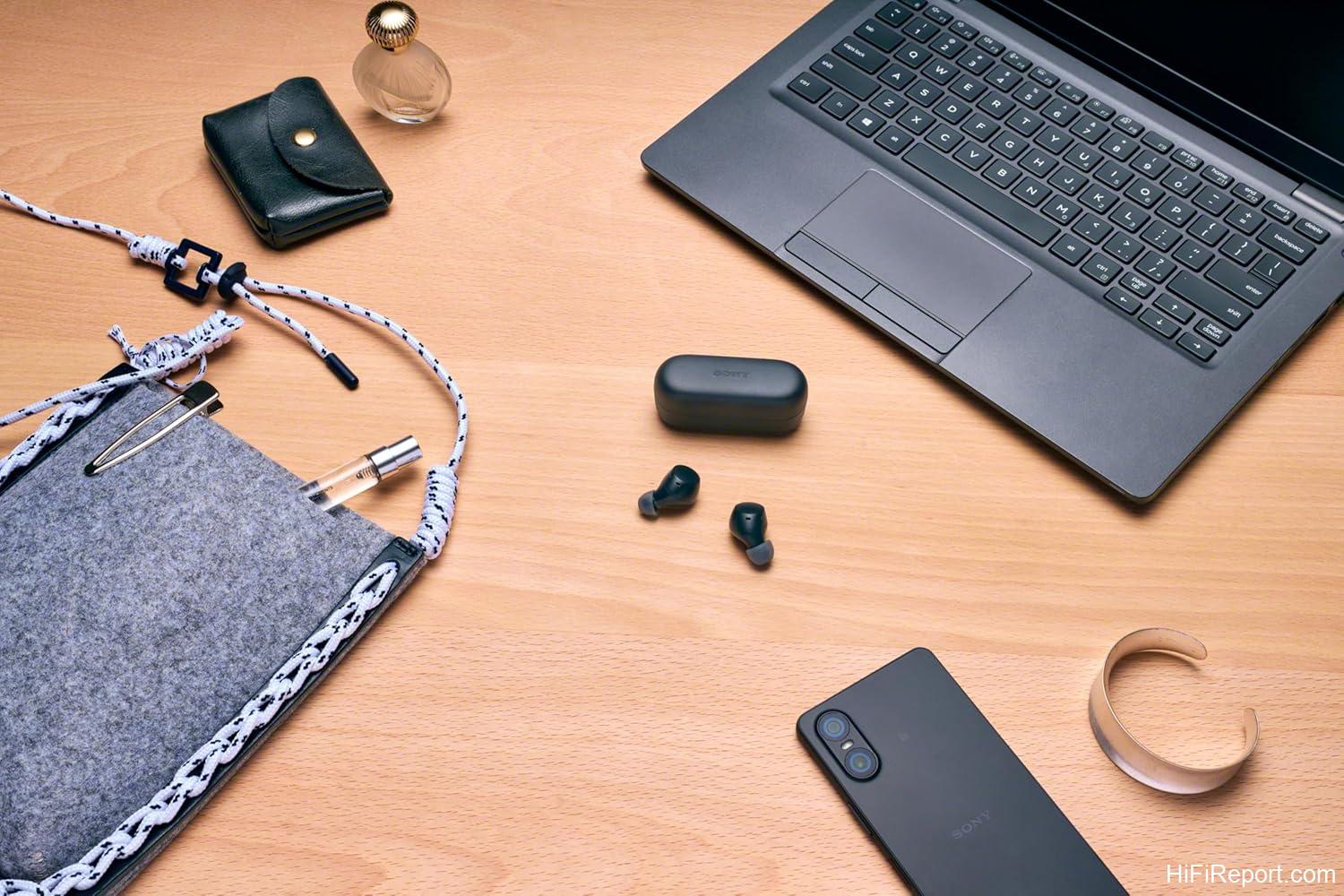
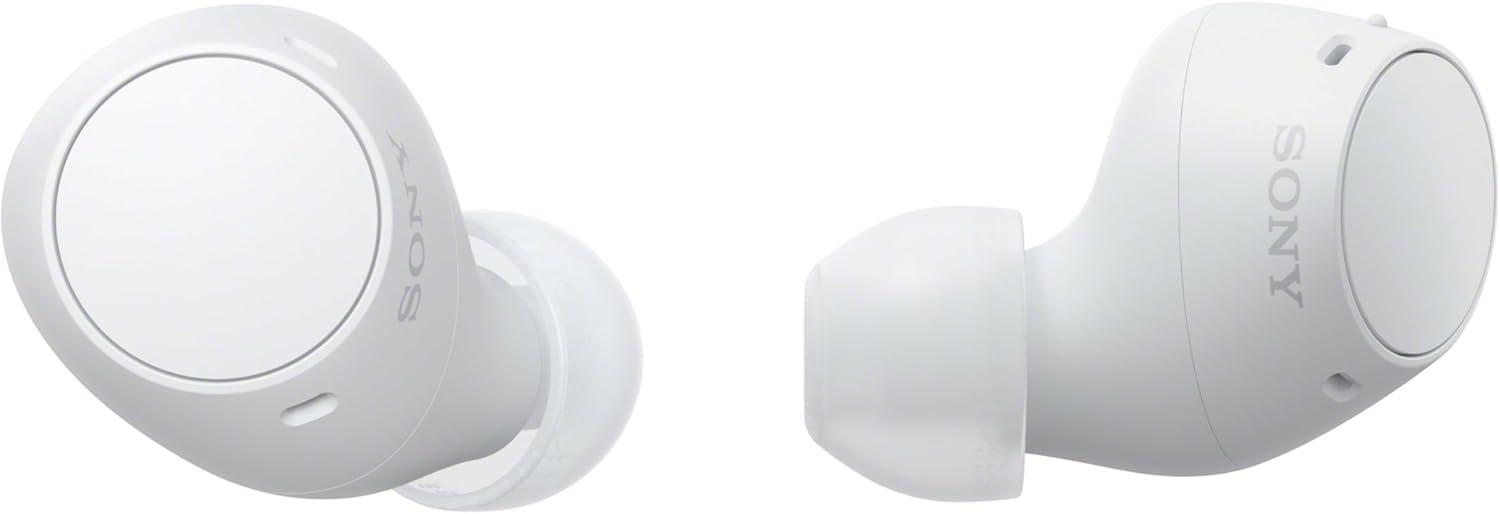
The WF-C510 carries an IPX4 rating, meaning Sony has tested it against water splashes from any direction. That covers heavy sweat, light rain, and accidental drops. The practical advantage shows up in the physical buttons. One owner who tried “almost a dozen” capacitive-control earbuds in showers and heavy rain reported that none of them stayed functional when wet, because a water drop registers as a touch and fires off track skips or volume changes. The WF-C510’s physical buttons solve that problem. This same reviewer uses the buds daily in the shower to avoid waking the household and in downpounds without any false inputs. The slim profile adds a second weather-adjacent benefit: the earbuds slot under over-ear hearing protection for mowing and loud equipment work, a fit that bulkier buds cannot manage because the protection’s headband pushes directly into the ear. The cylindrical charging case is small enough to carry in a pocket, so the pair travels easily to the gym or a jobsite. One owner who cycles regularly noted the buds stay seated through a workout, though another cautioned that for intense, high-sweat training sessions the small size means the fit can shift and require a reposition mid-ride.

Does the Battery Hold Up Day to Day?
Sony claims up to 11 hours of playback from the earbuds and up to 22 hours total when the charging case is in the mix. A 5-minute top-up in the case buys about 1 hour of additional listening. One owner tracked real-world use and recorded 50 percent battery after more than 5 hours of playback at a volume level above half, with the Sony Sound Connect app active on the phone. That figure tracks closely with Sony’s 11-hour claim. The buds themselves have held up over a year or more for several reviewers, including one who described them as “working great still” after long-term use. A long-time user reported cycling the buds for more than 6 hours in a single day and finding the battery still going strong. The charging case battery is where reports split. One owner found the case lasting 2 to 3 days under heavy daily use, sometimes less. Another buyer reported the case degrading sharply within under a year, requiring near-daily recharging and reducing the earbuds to one-at-a-time operation. A small number of reviewers noted that letting the case battery drain to 0 percent can cause it to stop accepting a charge, a quirk the Sony app does not flag in advance. The buds still charge even if the case battery is low, but the case itself may need a reset.
How Is the Microphone in Real Calls?
The WF-C510 has a built-in microphone for hands-free calling, and the button on each earbud handles answering and ending calls, so the hardware path for hands-free voice is there. For short, quiet phone calls in a still room, the quality is adequate. The consistent complaint across owner reports is background noise leaking into your side of the call. One buyer who used the buds for three weeks reported that his wife noticed ambient noise on his end usually he made a call. He later updated the review to say call quality was poor enough that he disconnected and switched to over-ear headphones for work meetings, describing the background-noise isolation as “weak” for professional use. A reviewer in India rated the microphone as good for everyday calls, and a Mexican owner found it acceptable for casual voice notes. The pattern that emerges: the mic works for quick calls in a quiet room. For video conferences, outdoor calls with wind, or any situation where the caller is in a noisy space, the isolation falls short and the other party will hear the surroundings.
What Do Buyers Report?
The aggregate Amazon rating sits at 4.2 out of 5 across 4,533 reviews, a strong number that skews heavily positive. The five-star majority centers on three themes: comfort over long sessions, physical-button reliability in wet conditions, and battery life that matches Sony’s 11-hour claim. One owner described wearing the buds through a full work day with audio cycling on and off and forgetting they were in. Another highlighted the shower-and-rain use case, calling the physical buttons the reason the pair stays functional when every capacitive alternative stops working. A third noted the compact case fits easily into a jacket pocket and that the design is subtle enough to go unnoticed in a meeting.
Produced by hifireport.com. Copying, scraping, or republishing is strictly prohibited.
The criticism clusters around three areas. First, the microphone’s weak background-noise rejection, which several buyers flagged as a deal-breaker for work calls and professional video conferences. Second, the charging case’s longevity. One reviewer reported the case battery degrading sharply within a year, and another described the lid detaching after a year of use. A UK-based buyer said one earbud stopped charging entirely and that contacting Sony for a replacement proved difficult. Third, fit and controls. Several owners with smaller ears said the buds needed precise placement to stay seated, and one reviewer found the default volume output low even at maximum phone volume. The button layout drew its own complaints: volume up and down each require four rapid presses on the same button, and the buttons are not programmable through the app.
A smaller but consistent note across reviews: the multipoint connection pairs the earbuds to two devices simultaneously, though they cannot play audio from both at the same time. Switching between devices is instant, which is the intended workflow. On the durability front, a construction worker who ran the predecessor WF-C500 pair on job sites and described being “pretty hard on them” reported the C510 handles physical abuse well. The absence of a “Find My Earbuds” function in the app is a minor gap several owners noted; if the buds are powered on and paired, there is no in-app locator to help track them in a couch cushion.
Should You Buy Them?
The WF-C510 is a straightforward earbud for people who want compact comfort, physical controls, and a battery that lasts a full workday without reaching for a cable. The sound is balanced and genre-agnostic, the DSEE boost helps compressed streaming files, and the 6-band EQ in the Sony Sound Connect app gives real tuning headroom. The physical buttons are the defining feature here. In rain, in a shower, or while your hair or a beanie keeps triggering touch panels on other earbuds, the WF-C510 stays responsive and predictable. One argument the Quick Answer did not make: the same button design means you can power the buds on and off without the case, so a lost or forgotten case does not strand you with dead earbuds. That small mechanical detail solves a common frustration with capacitive models, where a powered-off earbud with no case nearby is simply unusable until you find one. For a worker or tradesperson who needs earbuds that survive a job site, the IPX4 shell and button controls add a layer of physical resilience that touch-surface competitors do not offer.
Best for: commuters, gym-goers who work up a sweat, shower listeners, and anyone who wears hearing protection over earbuds and needs a pair slim enough to slot underneath. If your primary need is quieting a noisy cabin, a busy open office, or isolating your voice for all-day conference calls, look at a model with true ANC and a stronger mic array.
Spec Sheet
- Model: Sony WF-C510
- Type: Truly wireless in-ear Bluetooth earbuds
- Battery (buds): Up to 11 hours
- Battery (with case): Up to 22 hours total
- Quick charge: 5 minutes for up to 1 hour of playback
- Water resistance: IPX4
- Connections: Multipoint (two devices simultaneously)
- Controls: Physical buttons (one per side)
- Audio features: DSEE, 6-band EQ via Sony Sound Connect app, Ambient Sound Mode
- In the box: Wireless earbuds, hybrid silicone earbud tips, charging case (charging cable sold separately)

- ALL DAY COMFORT: Light and compact to give you all-day comfort and designed for the ideal fit, for an exceptional all-round listening experience.
- LONG BATTERY LIFE & QUICK CHARGING: Up to 11 hours of battery life (up to 22hrs with case) with quick charging (5 min charge for up to 1 hour of playback).
- MULTIPOINT CONNECTION: Quickly switch between two devices at once.