
Spendor A7 Floorstanding Speaker Review
Just recently, I auditioned the Spendor A4 floorstanding speakers from Britain and lauded them as a “must-listen choice under NT$100,000.” Spotting the larger A7 model in the office, I eagerly volunteered to review them, given my excellent impression of the A4 and curiosity about the upgraded A7.
The A7 certainly didn’t disappoint. Any minor shortcomings I perceived in the A4 were completely resolved in the A7, especially in the richer and more relaxed mid-bass, which felt even more effortless compared to the A4.
Identical Drivers
However, when I actually started writing about the A7, I realized that the components of both models are remarkably similar. Both use a 25mm silk dome tweeter and a 180mm EP77 cone for the mid-bass driver, with a crossover frequency of 3.7 kHz. Essentially, they use the same components, possibly even the same crossover network. This presented a challenge – what was there to write about? The only difference between the A7 and A4 lies in the cabinet size. The A7 is 9.3 cm taller, 1.5 cm wider, and 1.9 cm deeper than the A4. It also weighs 2 kg more, increasing from 16 kg to 18 kg. Visually, the increased height is more noticeable, while the slightly increased width makes the mid-bass driver surround appear less cramped.
The larger cabinet volume naturally benefits mid-bass extension and presence.
Looking at the specifications, the A7’s slightly larger size extends the low-frequency response down to 32 Hz, compared to the A4’s 34 Hz. This mere 2 Hz difference seems insignificant, but in reality, the A7’s mid-bass presence and ease are audibly more pronounced.
Enhanced Low-End and Efficiency
The fascinating aspect of audio products is how seemingly small changes can make a significant difference. Identical drivers, the same crossover point suggesting a similar crossover network – yet, simply increasing the cabinet volume results in such a substantial improvement in the mid-bass.
In fact, the increased cabinet volume of the A7 is not just about extending the low end by 2 Hz. More importantly, it boosts the efficiency by 2 dB, from 86 dB to 88 dB. These two factors alone make the A7 feel much more dynamic and lively.
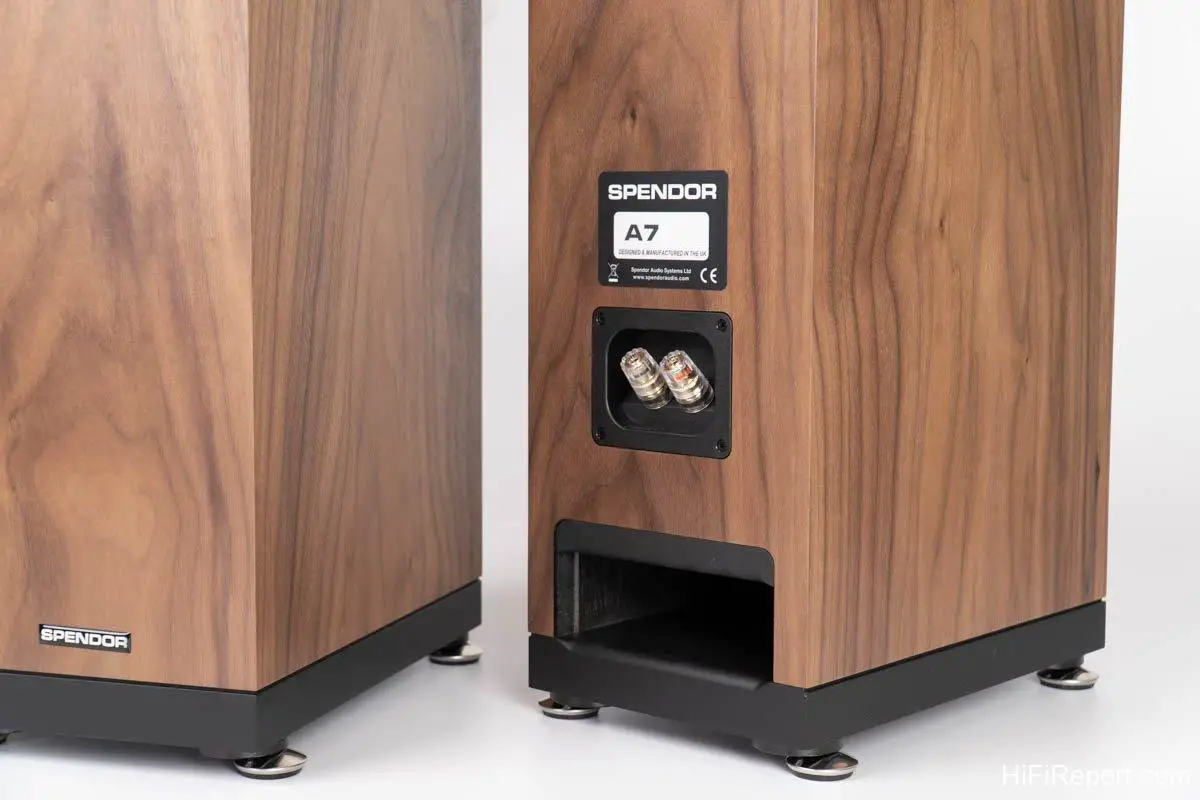
Frankly, a 2 Hz difference in low-frequency extension, from 34Hz to 32 Hz, is imperceptible to the ear. Upgrading from the A4 to the A7 solely for a 2 Hz specification difference is unnecessary. However, the 2 dB increase in efficiency significantly enhances amplifier compatibility, effortlessly producing a sound pressure level that belies its size.
Furthermore, both the A4 and A7 are bass-reflex designs, but with different implementations. The A4 uses a bass reflex port located at the rear, above the speaker terminals, while the A7 features a large, rectangular open port at the base of the cabinet. This larger venting area for low-frequency airflow further contributes to the relaxed and spacious mid-bass reproduction of the A7.
Looking at the A7’s bottom-firing reflex port, I wondered why the A4 used a different design with a rear port. Why couldn’t the A4 adopt a similar design? The only logical explanation is cost. Manufacturing a simple reflex port is less complex, whereas creating a larger vent at the speaker base like the A7 requires more intricate cabinet work and internal bracing. Therefore, the A7’s higher price isn’t solely due to its larger cabinet; the cabinet construction itself is also more elaborate.
Modern British Heritage
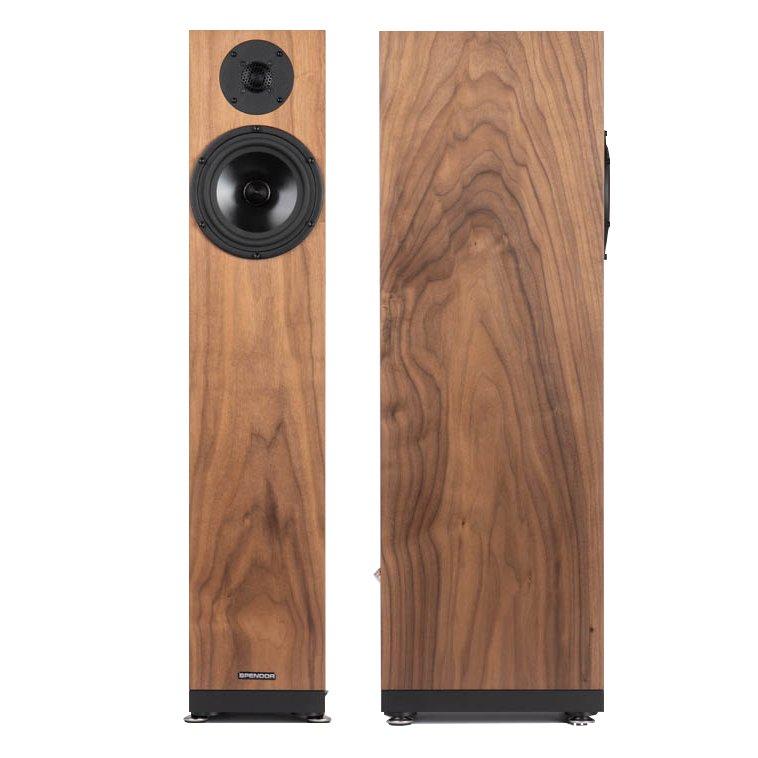
For seasoned audiophiles, Spendor might evoke images of classic BBC monitor speakers, such as the iconic BC2 or SP2. These models still exist in Spendor’s Classic series, retaining the traditional BBC monitor aesthetics while incorporating updated drivers and crossover components. However, the Classic series represents a design philosophy from the last century. Large bookshelf speakers necessitate careful pairing with suitable stands. In contrast, the A-Line adopts a modern design approach. Its slender, tall cabinet with a smaller footprint is ideal for contemporary, smaller urban living spaces. This series is designed to appeal to a new generation of customers, rather than simply reminiscing about the BBC sound.
Sonically, the A7 also leans towards a modern approach. It delivers rich detail and resolution in the mid and high frequencies, coupled with a full and robust mid-bass that is also fast and responsive. Overall, the A7 retains the warm sonic character of British speakers, with a touch of brilliance in the mid-high frequencies that avoids harshness or sharpness. It’s not a dull or muted treble, but rather a warm-toned brightness that is very pleasant to listen to. Combined with the ample and agile mid-bass, it effortlessly creates a relaxed and enveloping soundstage.
Superior Mid-Bass Scale and Ease
Even just comparing specifications, the A7 might seem like simply using the A4’s components in a larger cabinet, making it seem difficult to write about. However, upon listening, it’s immediately clear that the A7 is a significant step up from the A4. While both share similar sonic qualities and timbre, thanks to the identical drivers, the A7’s mid-bass scale and effortless delivery are noticeably superior. This comparison is akin to the difference between a Mercedes C200 and C300, or a BMW 320 and 330. The chassis and interior luxury levels are similar, but the increased horsepower and torque elevate the overall performance. One press of the accelerator makes it clear. I initially thought the A7 might only offer slightly better bass, but listening revealed that the extra investment is definitely worthwhile.
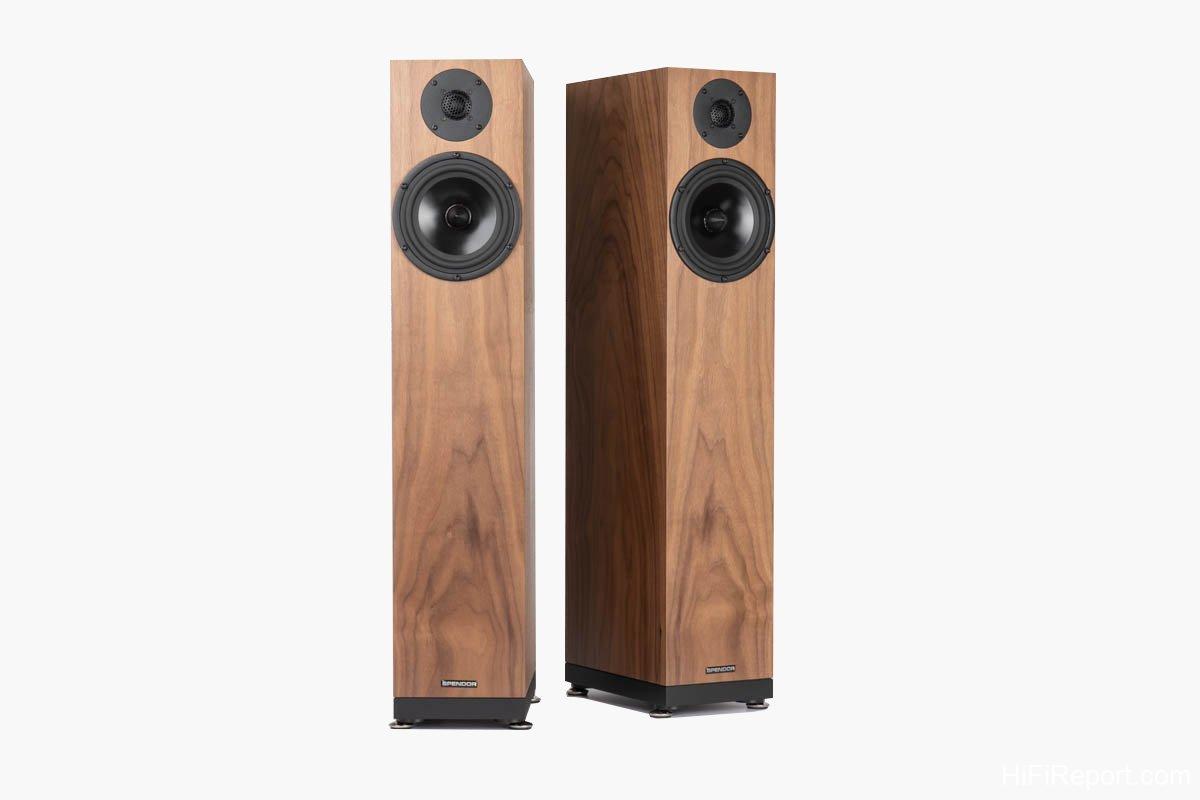
Furthermore, the A7’s height is slightly taller, perfectly aligning with typical sofa listening height. When reviewing the A4, I felt the tweeter position was a bit low, so I placed the A4 on a platform to raise them. The A7, however, doesn’t require this; it sounds excellent placed directly on the floor, which also improves mid-bass stability.
However, it’s important to note that both the A7 and A4 are relatively compact floorstanding speakers. The listening position shouldn’t be too high. Ideally, your eye level should be slightly below the tweeter. Also, when auditioning the A7 at a Hi-Fi store, avoid standing while listening. This will cause the soundstage to collapse downwards, and you’ll miss out on the A7’s excellent 3D soundstage rendering.
Effortless Placement, Disappearing Act
Despite being a “compact” floorstander, the A7’s simple two-way design allows for easy placement. The most straightforward approach is equilateral triangle placement, with roughly 1.5-2 meters between speakers and a similar listening distance. The A7 effortlessly creates an excellent 3D soundstage and effectively disappears into the room, recreating a vivid and lifelike soundscape.
During the HiFiReport listening session, I used the EAR 868P preamplifier and 509 II power amplifier to drive the A7, with a YBA CDT 450 and Merging NADAC as digital sources. This pairing might seem over-the-top, as each component individually costs more than the A7. However, the sound quality was truly exceptional. I recognize that each higher-tier component elevated the A7’s performance, which also demonstrates the A7’s remarkable potential. Better accompanying equipment will only unlock even greater sonic performance.
Sonic Preference is Paramount
I often advise friends that speakers are the most critical component in an audio system. While Hi-Fi reviews often emphasize the importance of every component and their synergy, when choosing a system, I always recommend starting with the speakers. Speakers exhibit the greatest sonic variation. If you dislike the speaker’s inherent sound character, compensating with other components becomes very difficult. Conversely, if you enjoy the speaker’s sonic signature, enhancing resolution or low-frequency performance with amplifiers or cables is relatively easier. Therefore, when selecting audio equipment, I suggest starting with speakers and then finding suitable amplifiers and peripherals to match.
What is the A7’s sonic character? I essentially covered this in my A4 review. The A7 retains the rich, full-bodied midrange characteristic of British speakers, with a moderately bright high-frequency extension. Its substantial sonic texture is infused with a refreshing clarity. However, the A7 demonstrably surpasses the A4 in mid-bass presence and impact. If your amplifier has ample power and your listening space is not overly large, the A4 is a superb value choice. But if you desire more mid-bass presence and ease, the A7 offers a more unrestrained performance. The decision between A4 and A7 is similar to choosing between a C200 and C300, or a 320i and 330i. The A7’s sonic character is very similar to the A4, but it excels in mid-bass ease and soundstage scale.
Strong Live Recording Rendition
Listening to Eva Cassidy’s “Live At Blues Alley,” starting with “Cheek To Cheek,” the MC’s spoken introduction and the ensuing applause and cheers filled the space. Eva Cassidy’s soft humming, accompanied by gentle piano and electric guitar, focused the musical scene centrally between the A7 speakers, creating a cohesive sound. As the electric bass and drums joined in, the musical scene expanded instantly, opening up the entire soundstage. With the 509 MK II’s solid 100 watts of power, I had no concerns about drive capability, allowing the A7 to effortlessly reproduce the ambiance of the jazz club.
During “Bridge Over Troubled Water,” the electric guitar’s arpeggiated chords revealed subtle details of clinking glasses in the recording venue. When the electric bass and drums entered, the full and solid low-frequency impact vividly portrayed the live recording atmosphere. This live recording isn’t a flawless performance; upon close listening, minor imperfections can be found. But that’s precisely the essence of a live music experience! Which live performer achieves absolute flawlessness? Only pre-recorded karaoke can manage that. The A7’s excellent detail retrieval ability enhances the vividness of the live recording atmosphere, allowing you to feel Eva Cassidy and her band’s dynamic and emotional nuances – that’s the allure of Hi-Fi, isn’t it?
Youthful Joan Baez
Moving to another live concert recording, when it comes to Joan Baez live albums, I always recommend “Diamond and Rust in the Bullring,” especially the Analog Productions remaster. The remastered version boasts greater transparency and improved dynamic contrast compared to the original. Perhaps some studio post-processing was applied, but it enhances the experience, making the live concert atmosphere even more immersive.
Listening to this album on the A7, “No Woman No Cry” showcased Joan Baez’s voice in her younger, brighter era, full of youthful energy. The A7 clearly revealed the live sound engineer’s initial overzealous bass level setting and subsequent quick adjustment, evidenced by a brief moment of distortion at the beginning. Joan Baez and her band on stage performed with passion, and the audience wasn’t idle, singing along. The A7 beautifully rendered the stage and spatial envelopment of the concert, making it thoroughly enjoyable.
The A7’s warm and bright sonic character is also well-suited for jazz. Listening to “John Coltrane and Johnny Hartman,” which represents a relatively early recording in John Coltrane’s career, before he ventured into more avant-garde jazz styles. Paired with Johnny Hartman’s smoky, rich vocals, the entire album exudes a languid swing. On the A7, “My One And Only Love” showcased the saxophone’s full and lush tone. The subtle tonal variations of the brass instruments allowed me to almost perceive John Coltrane’s embouchure. Johnny Hartman’s vocals, as reproduced by the A7, possessed a hint of raspiness in the timbre, yet maintained a full-bodied and substantial presence. The A7 effortlessly presented the warm, romantic swing of classic jazz.
Lush and Liquid Strings
Switching to classical music, the A7 remained vibrant and engaging, and sounded remarkably effortless. Listening to Perlman’s “Cinema Serenade,” featuring numerous classic movie themes, I particularly enjoyed the tango theme from “Scent of a Woman.” The solo violin bursts with passionate tango melodies, while the orchestra provides a swaying accompaniment. The A7 created a spacious soundstage, separating the solo violin from the orchestra. Perlman’s violin playing was lush, liquid, and tender, while the rhythmic pulse was driven by the cello and violin sections’ pizzicato, punctuated by woodwind responses. The A7 presented each section with clear localization, transparent and radiant.
Turning to cello, listening to Wang Jian’s “The Baroque Album,” starting with Boccherini’s Cello Concerto No. 9, the orchestra’s exposition began with the string section’s dignified and harmonious opening. The warm brass underpinning the first theme led into the second theme. The A7 rendered the string section’s tone as smooth and the brass section as rich and dense, providing a warm harmonic foundation behind the strings. Then the cello entered. The A7’s clear stage reproduction placed the solo cello in the foreground with the orchestra behind, creating distinct layers. The A7 demonstrated remarkable detail resolution in its tonal portrayal.
I also listened to Wang Jian’s album when reviewing the A4. The A4’s detail retrieval and soundstage reproduction are equally impressive. For instance, the subtle variations in Wang Jian’s bowing pressure, the delicate sounds of his left hand pressing on the fingerboard, and even his breathing sounds during playing – the A4’s detail retrieval is comparable to the A7. However, the difference when listening to the same album on the A7 lies in the musical ease. The A7 performed with more natural flow and ease, with a denser and richer midrange and greater headroom.
Beautiful Piano Stage
Finally, I concluded with the Mozart Double Piano Concerto K.365 performed by Pollini and Uchida. Why this recording? Because double piano pieces test the clarity of soundstage localization. Both pianos are on stage, but positioned slightly differently. The piano on the left has a fuller tone with slightly darker highs, while the piano on the right is brighter. Listening to the third movement, Presto, as the two pianos respond to each other and interweave themes, you should clearly hear the distinct positions and tonal differences of the two instruments. The entire recording should sound lively and vibrant. If listening to this recording makes the two pianos sound together, it indicates a lack of soundstage separation.
Listening to Pollini and Uchida’s double piano concerto on the A7 was truly captivating. After the orchestra’s opening theme, the pianos entered, with the left piano playing the theme first, then the right piano responding. The A7 clearly presented the relative positions of the two pianos. This is actually quite challenging, as the two pianos aren’t positioned at extreme left and right stage positions, but rather center stage, placed relatively close to each other, with only slight left or right deviations. This tests the audio system’s soundstage localization ability. The A7 clearly revealed the vivid presence of both pianos. If the two pianos sound like they are in the center, muddled together, the vibrancy of the double piano concerto is diminished. Listening to the lively Presto movement on the A7 was a delightful experience, as if I could see Pollini and Uchida facing each other across the pianos, their fingers never ceasing, exchanging musical phrases in a joyful dialogue of piano notes.
Worth the Upgrade
While I previously lauded the A4 as a “must-listen choice under NT$100,000,” after experiencing the larger A7, I believe the A7 is a superior choice for more comprehensive musical performance. Of course, it is pricier than the A4, and improved sound quality is expected at a higher price point. For consumers deciding between the two, I believe the primary difference lies in scale. If you listen at moderate volumes and have a smaller listening space, the A4 is an exceptional value. However, if you have a larger listening room and enjoy experiencing music at near-live concert levels, the A7 is a more worthwhile and ultimately more satisfying choice.
Specifications
* Type: 2-driver, 2-way bass reflex floorstanding speaker
* Drivers: 25 mm tweeter × 1, 180 mm mid-bass driver × 1
* Crossover Frequency: 3.7 kHz
* Recommended Amplifier Power: 25-200 watts
* Sensitivity: 88 dB
* Frequency Response: 32 Hz – 25 kHz
* Impedance: 8 Ω
* Dimensions: 934 × 180 × 305 mm (H×W×D)
* Weight: 18 kg