
Stromtank S-5000 High Power Review
HiFiReport delivered the German-engineered Stromtank S-5000 High Power Battery Power Conditioner, securely encased within its original wooden crate. The efficient and strapping team from HiFiReport made quick work of the unboxing, employing a power screwdriver to liberate the S-5000 High Power from its packaging with ease. The entire process was so satisfying, it almost warranted filming! Watching the S-5000 High Power emerge, I experienced a childlike anticipation akin to unwrapping a Christmas gift.
Increased Load Capacity
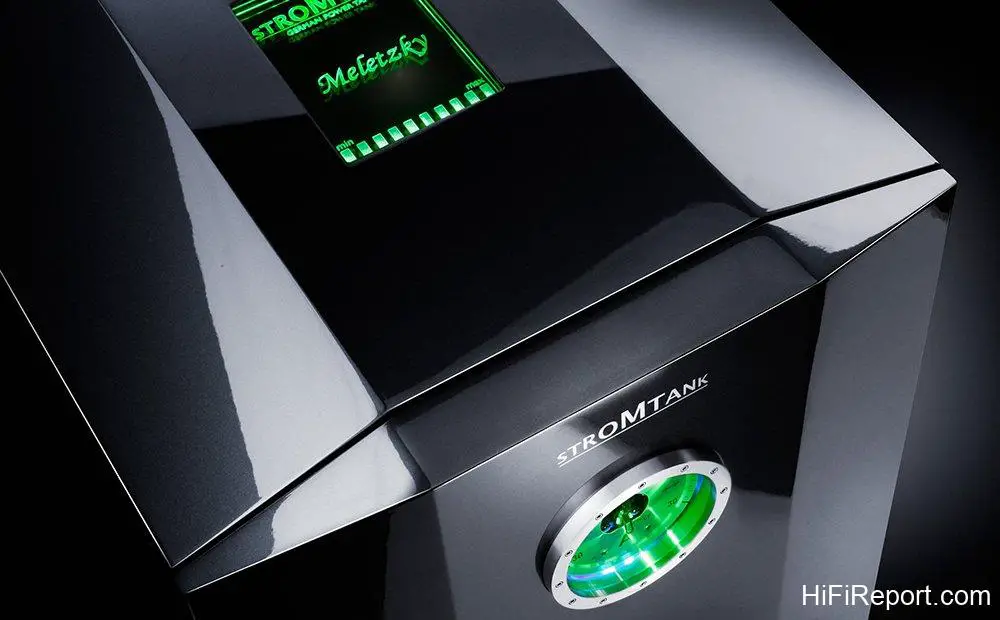
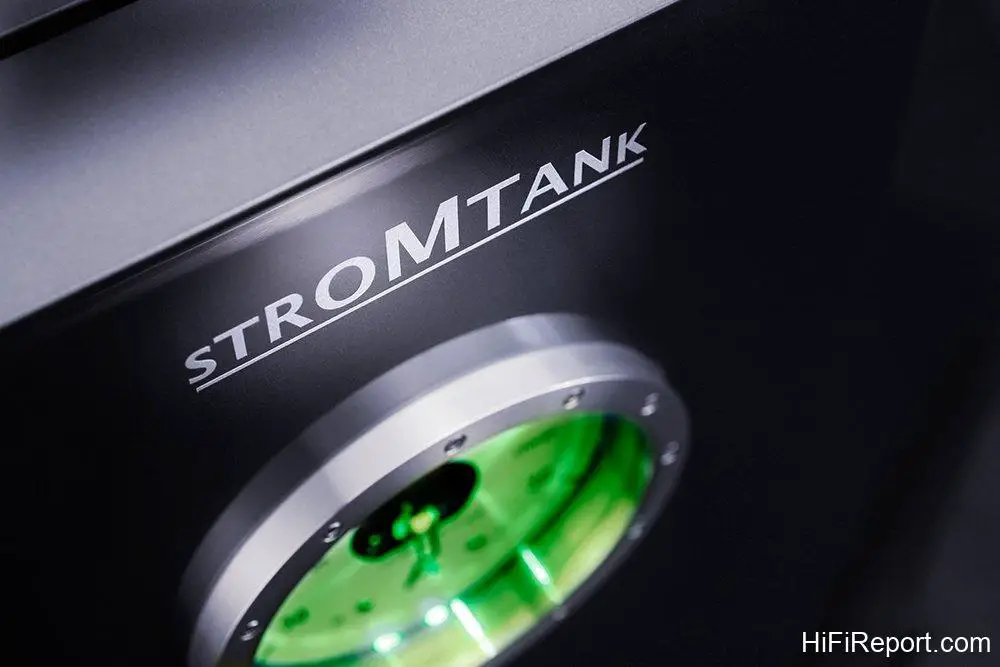
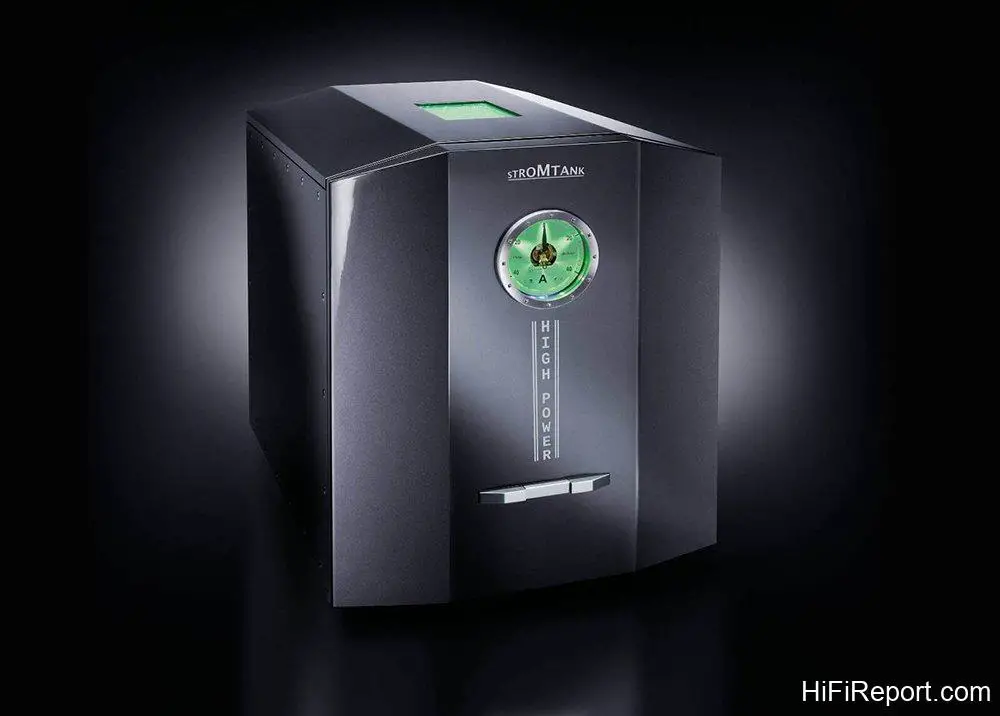
While I had previously encountered the S-5000 at HiFiReport, the unit dispatched to the editorial team was the S-5000 High Power. Externally, it mirrors the dimensions and aesthetics of the S-5000, distinguished only by the “High Power” designation on the front panel. However, it carries an additional 10 kilograms, a clear indication of internal enhancements by Stromtank. In essence, the S-5000 High Power represents a higher output iteration, doubling the power capacity. The standard S-5000 offers a 750 VA load capacity, whereas the High Power variant amplifies this to 1,500 VA. This power augmentation is achieved through the integration of a supplementary AC-DC converter within. Despite this doubling of power output, the continuous operation time remains consistent at 10 hours, suggesting an identical internal battery module across both models.
Unique Battery Power Solution
Stromtank specializes exclusively in power conditioning solutions for high-fidelity audio, and their offerings currently occupy a unique position in the market. Stromtank stands virtually alone in providing devices capable of completely disconnecting from mains power, relying solely on battery reserves to energize audio equipment. Their current product portfolio encompasses five models: the S-1000, S-2500, S2500Q, S-5000, and the S-5000 High Power. As the model numbers ascend, so too does the available power capacity. For systems primarily utilizing digital sources or preamplifiers, the S-1000 or S-2500 may prove sufficient. However, for systems incorporating kilowatt-rated power amplifiers, particularly monoblocks, the aggregate power demands can become substantial, necessitating the robust capabilities of the S-5000 or S-5000 High Power.
Legacy of Wolfgang Meletzky
Stromtank’s battery power conditioners first graced the scene at the 2016 Munich High End Show, immediately capturing the attention of discerning audiophiles. Beyond its status as the “only” pure battery power solution, the allure was significantly amplified by its founder, Wolfgang Meletzky. For many in the audio world, this name is synonymous with the esteemed German brand mbl. Indeed, Meletzky is the very founder of mbl. Following a change in company ownership, rather than retire, Meletzky embarked on new ventures, establishing WinBat and Stromtank. WinBat focuses on energy storage solutions for residential green energy applications, while Stromtank is dedicated to crafting power storage specifically tailored for high-performance audio systems. Meletzky’s established eminence within the high-end audio community ensured a rapid international market penetration following their 2016 debut. A seasoned veteran with decades of experience and an expansive network, Meletzky’s return to the industry was met with anticipation and confidence in the quality of his new ventures. Distribution inquiries poured in from Europe, the Americas, and Asia, and regions moved swiftly to introduce the S-5000 in 2017, followed by the enhanced S-5000 High Power in 2020.
Complete Isolation from Mains
What, precisely, is the S-5000 High Power? At its core, it’s a substantial battery. Upon connecting the S-5000 High Power to your household power outlet, the battery commences charging automatically. Subsequently, your audio components draw their AC power directly from the S-5000 High Power. How does this paradigm diverge from conventional audio power conditioners? All traditional power conditioners necessitate a continuous connection to the mains to operate. Stromtank, however, presents a unique pure battery solution. You possess the option to disconnect the Stromtank entirely from the wall, severing the link between your audio system and the mains power grid, and relying exclusively on the internal battery reserves of the Stromtank. This configuration ensures complete immunity from the vagaries of unstable or fluctuating mains voltage.
Stable Battery Technology
Stromtank employs Lithium Iron Phosphate (LFP, LiFePO4) batteries. These batteries are celebrated for their inherent stability and high energy density, and are also utilized by Tesla in their electric vehicles. The growing adoption of this technology in forthcoming electric vehicles, and by automotive manufacturers in general, underscores their inherent reliability. In the context of electric vehicles, the battery functions analogously to a fuel tank in a combustion engine vehicle—demanding exceptional stability and durability, as vehicle and passenger safety are paramount. Automotive manufacturers would never incorporate components lacking in assured stability.
20+ Years Lifespan
Stromtank’s specifications indicate that their Lithium Iron Phosphate batteries are engineered for over 10,000 charge-discharge cycles. Even under a regimen of daily charging and discharging, they are projected to maintain functionality for at least twenty years. Even beyond 10,000 cycles, the battery capacity is expected to remain above 80%, possibly with a minor reduction in operational duration, but retaining full operational integrity.
Core Technology: BMS
To assume Stromtank’s innovation merely resides in the utilization of Lithium Iron Phosphate batteries would be to underestimate Meletzky’s ingenuity. While these batteries are a constituent material, readily available through online searches, their mere presence is insufficient. Analogously, numerous electric vehicle manufacturers employ similar battery chemistries, yet their vehicles exhibit disparate ranges and charging characteristics. The pivotal technology, therefore, resides in the Battery Management System (BMS).
Advanced Battery Management
Stromtank’s core competency lies in their proprietary BMS, termed the Intelligent Battery Management System. Developed in collaboration with the esteemed German Frauenhofer Institute, this system orchestrates battery charging and discharging for peak efficiency and to maximize the longevity of the Lithium Iron Phosphate cells. The S-5000 High Power does not employ a monolithic LiFePO4 battery, but rather a sophisticated array of 16 individual LiFePO4 cells. This configuration necessitates meticulous BMS control. A central technological element of the BMS is the “Balancer,” which ensures uniform distribution of charge and discharge across all battery cells. This prevents any individual cell or cluster of cells from bearing disproportionate stress and succumbing to premature degradation. By maintaining a balanced load across the entire battery bank, the BMS effectively mitigates accelerated aging of individual cells. Consequently, while LiFePO4 batteries are a constituent, Stromtank’s competitive advantage is rooted in the synergistic integration of their battery cell architecture and their advanced BMS.
Powering Audio: The Current Wars
Having explored the design and technological intricacies of the S-5000 High Power, I wish to address the significance of its unique capability to power an entire audio system while completely detached from the mains power grid. Why the imperative to unplug? To achieve absolute isolation from the vagaries of the public power supply. But what is the underlying rationale? This leads us to the historical “War of the Currents”! Are you familiar with the film? Marketing materials often depict it as a personal feud between Tesla and Edison, but Tesla’s actual involvement was relatively minor. The central narrative revolves around the business rivalry between Edison and George Westinghouse, the head of Westinghouse Electric, both vying for dominion over the burgeoning home electricity market. Direct Current (DC) is inefficient for long-distance power transmission, necessitating numerous generating stations within urban centers. Alternating Current (AC), conversely, can be stepped up to high voltages via induction coils for efficient long-range transmission, and subsequently stepped down near the point of consumption to voltages suitable for domestic appliances. This architecture enables a grid system reliant on fewer centralized power plants to serve a vast consumer base. Did you discern the crucial advantage of AC? The “War of the Currents” culminated in AC’s triumph due to its long-distance transmission prowess. DC’s inherent limitations in efficient long-range distribution, requiring a proliferation of urban power plants, proved to be its decisive disadvantage. Urban land is a premium; the notion of populating it with power plants is impractical. Hence, AC prevailed. However, grid transmission necessitates voltage amplification for long distances and subsequent voltage reduction at urban substations to reach household voltage levels (typically 110V/60Hz in some regions). This power grid is inherently dynamic, subject to fluctuations based on aggregate demand. Substations output voltage suitable for household appliances, but the electricity reaching your residence and your neighbor’s originates from the same grid infrastructure. Variations in electricity consumption among users inevitably induce voltage variations. For common appliances, this is inconsequential; refrigerators maintain cold temperatures, and washing machines execute their cycles. But what are the ramifications for sensitive audio equipment?
Peace of Mind Power
The human ear is remarkably discerning, yet it’s important to clarify that mains voltage fluctuations will not precipitate abrupt sonic alterations or pitch deviations mid-song. Suboptimal power quality does not manifest as musical distortion in that manner. It’s certainly not a case of “voltage drop causing the A4 pitch to shift from 440 Hz to 438 Hz”—that’s simply not a plausible scenario. However, variations in power conditions can manifest as a subtle sense of something being “off”: “Hmm, my system sounded exceptional yesterday, but today it seems somewhat lacking.” Have you ever encountered this phenomenon? If so, and if it’s not attributable to equipment malfunction or tube aging, it’s highly probable that suboptimal power conditions are the culprit. But how can we exert control over the power quality emanating from the grid? Who can ascertain if a neighbor has recently acquired several new high-draw appliances, placing a strain on the grid and inducing voltage sag in your residence? Audiophiles employ various strategies, including isolation transformers to regenerate voltage, or active power conditioners. However, these solutions invariably require a connection to the mains, failing to achieve complete isolation from the grid. Only Stromtank empowers you to disconnect entirely, and luxuriate in a day of uncompromised musical enjoyment.
Designed for High-Power Amplifiers
The ideal of complete mains isolation reached a significant milestone with the introduction of the original S-5000 in 2016. But what of the subsequent S-5000 High Power, launched in 2020? The primary specification enhancement is the doubling of the VA rating, from 750 VA to 1,500 VA. The initial S-5000 incorporated a single DC-AC converter, whereas the S-5000 High Power features dual converters, effectively doubling the power delivery capacity. The raison d’être is to accommodate the voracious power demands of ultra-high-wattage power amplifiers. I once witnessed an extravagant system configuration: D’Agostino Relentless monoblock amplifiers, each paired with a dedicated Stromtank – though I couldn’t ascertain whether they were S-5000 or S-5000 High Power models. How power-hungry is the Relentless? 40 watts in standby, 480 watts when powered on but idling, and a peak instantaneous draw of 10 kW! It’s no surprise that two Stromtanks are required to adequately nourish such behemoths.
The Magic of Off-Grid Mode
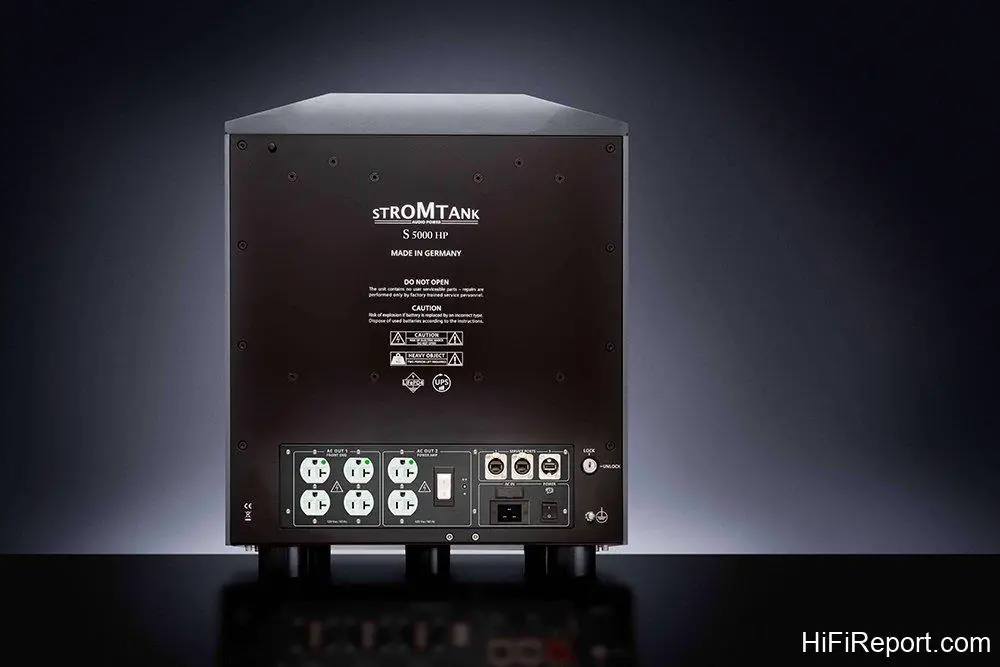
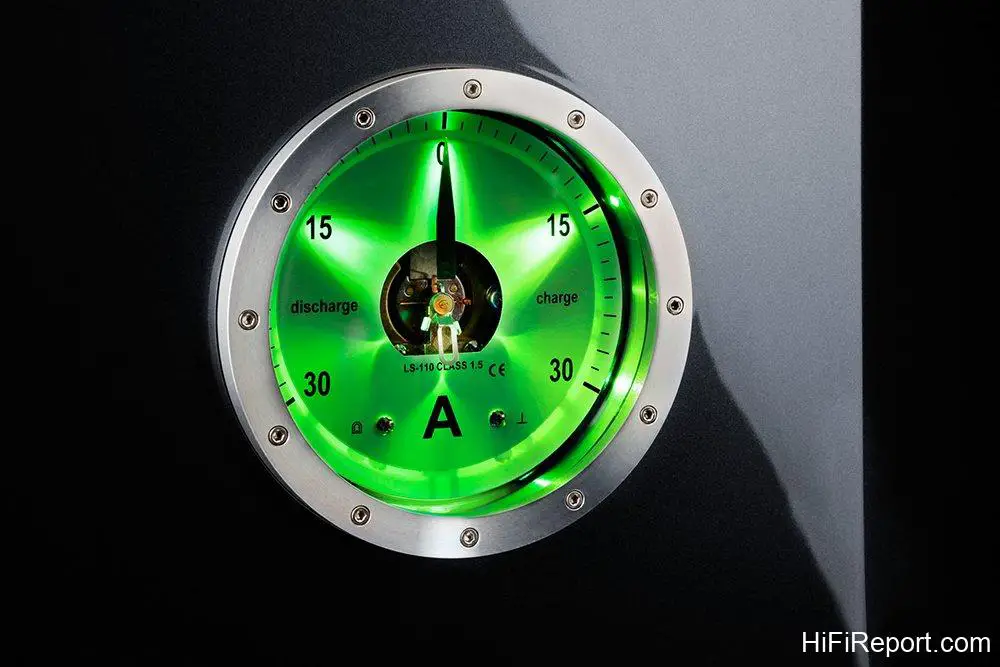
The functionality and operational parameters of the S-5000 High Power mirror those of the S-5000. The network and USB ports are reserved for servicing or firmware updates and are inconsequential for standard operation. A key-operated lock on the chassis, reminiscent of starting a car engine, is a whimsical touch, reflecting Meletzky’s passion for rally racing, including traversing the Sahara Desert in a Porsche 911. Hence, the S-5000 High Power incorporates an “engine start” key lock. While it can be set to a permanently “on” state, it’s primarily a playful design flourish. Listening modes parallel the S-5000: “on-grid function” allows for simultaneous charging and listening, while “off-grid function” enables complete mains disconnection and operation solely from the S-5000 High Power battery reserves. A blue indicator light on the front panel signifies that the S-5000 High Power is charging, while concurrently powering the audio system. A green light indicates pure battery operation, at which point mains disconnection is possible. For typical usage patterns, one might charge the S-5000 High Power during daytime hours, and upon returning home in the evening, disconnect from the mains and enjoy pure battery-powered listening throughout the night. Ample power reserves should be available for an extended evening session. Before retiring, power down the system and remember to reconnect the S-5000 High Power to the mains for recharging, ensuring a fully charged state for the subsequent evening.
Facing a Challenge
The opportunity to evaluate the S-5000 High Power within the HiFiReport editorial environment was somewhat unexpected, given its substantial 125 kg weight and expansive wooden crate. Typically, evaluations of such equipment would be conducted elsewhere, yet HiFiReport delivered this substantial unit to our location. After an overnight charge, I commenced listening the following day. Preamplifier, power amplifiers, and digital source—all powered by the S-5000 High Power, operating in “green light” off-grid mode, drawing exclusively from battery power. The results were impressive: three-dimensional soundstage projection, precise image definition, and a tranquil musical backdrop—all exemplary. However, a predicament emerged: I genuinely struggled to discern any sonic distinctions between the S-5000 High Power and the standard S-5000. This presented a challenge. The amplification in use consisted of two EAR 509 MKII power amplifiers, each drawing 180 VA, totaling a mere 360 VA. The aggregate consumption of the remaining components was even less than a single 509 MKII. In essence, I was utilizing less than one-tenth of the S-5000 High Power’s rated capacity, far removed from its operational limits. This situation is analogous to a power grid with substantial reserve capacity—a 5% reserve margin is considered safe. Yet, I was operating with an 80% reserve! How could I possibly assess the performance ceiling of the S-5000 High Power under these conditions? It became apparent that to truly differentiate between the two models, one would necessitate equipment that could push the power supply towards its maximum load. This realization contributed to the delay in finalizing this review—somewhat embarrassed to confess! Without access to sufficiently demanding equipment to truly “stress test” the S-5000 High Power, I simply could not detect any discernible sonic differences compared to the S-5000.
Enjoyable Audio Experience
Despite the inability to discern sonic variances between the S-5000 High Power and its standard sibling in my testing context, utilizing the S-5000 High Power to energize the entire audio system in the editorial office remained a thoroughly enjoyable and rewarding experience. The anxieties of voltage fluctuations or the nebulous sense of grid power quality being “off” on certain days vanished. Frankly, for products of the S-5000 High Power’s caliber, extensive advertising seems superfluous. For equipment at this price echelon, in-home demonstrations are paramount. Once the listener experiences the sonic purity of pure battery mode, reverting to mains power becomes a difficult proposition. For those who can accommodate the investment, a trial audition will likely prove persuasive. What sonic attributes does the S-5000 High Power impart? Enhanced sonic fullness, density, image solidity, and spatial rendering, coupled with an exceptionally quiet musical background, collectively foster a more tranquil and immersive listening experience. Even as I resolved to conclude with “no discernible difference,” revisiting my listening notes revealed a consistent thread of positive musical impressions.
Musical Examples
For instance, while listening to Beethoven’s Triple Concerto, featuring Mutter, Yo-Yo Ma, Barenboim, and the West–Eastern Divan Orchestra, after the orchestral introduction, the cello takes the melodic lead, followed by the violin, with cello counterpoint, culminating in the piano’s thematic reiteration. The intricate musical layers and interplay of these three instruments, when powered by the S-5000 High Power, acquired an elevated sense of conviction and authority. Put another way, the S-5000 High Power engenders a profound sense of listening tranquility. With it in place, and disconnected from the grid, the S-5000 High Power effectively transforms into your private domestic power station, delivering the most stable 110V/60Hz power foundation.
Peace of Mind Choice
Despite my inability to audibly differentiate the S-5000 High Power from the S-5000 during the HiFiReport evaluation, how should prospective purchasers navigate the selection process? Calculate the aggregate power consumption of your audio system. If the maximum peak demand remains below the capacity of the S-5000, then the S-5000 should suffice. However, if your total power consumption approaches or exceeds the maximum capacity, then the S-5000 High Power becomes the more prudent choice. Alternatively, if future upgrades to “hypercar-level” power amplifiers, with their concomitant power demands, are anticipated, the S-5000 High Power represents a future-proof and worry-free solution. Regrettably, I encountered audio equipment that I couldn’t truly “push to its limits.” Even employing the most power-hungry tube amplifiers in the editorial inventory, I was still only drawing less than one-fifth of its capacity. The S-5000 High Power supplied power with effortless ease. In the future, a visit to HiFiReport may be in order, to ascertain if a pair of 9011 Monos, coupled with a complete mbl system, will finally reveal the full potential of the S-5000 High Power. In my current setup, the S-5000 High Power barely hinted at its capabilities, merely flexing a fraction of its considerable muscle.
Specifications
* Type: Battery Power Conditioner
* Energy Storage: 5,000 Wh
* Input Voltage: 150 ~ 265 Vac / 50 ~ 140 Vac
* Input Frequency: 50 or 60 Hz
* Output Voltage: 100 / 120 / 230 / 240 Vac (Pure Sine Wave)
* Output Frequency: 50 / 60Hz
* Weight: 125 kg