
T+A M200 Monoblock Amp Review
I recall my first encounter with a T+A product back in 2022: a headphone system comprising the HA 200 headphone amplifier paired with the Solitaire P planar magnetic headphones. The HA 200 left a profound impression on me because it integrated T+A’s most advanced DAC and amplifier technologies into a headphone product.
Although it was T+A’s debut in the headphone realm, every aspect, from the HA 200’s build quality and functionality to the crucial drive capability and sound performance coveted by headphone enthusiasts, felt incredibly mature. I’d venture to say that many high-end headphone amplifiers from established headphone brands would struggle to compete with the HA 200.
In my estimation, the HA 200 is a super-premium headphone amplifier, representing the best entry point for headphone lovers to experience T+A’s signature sound.
The T+A 200 Series: From Headphones to Stereo
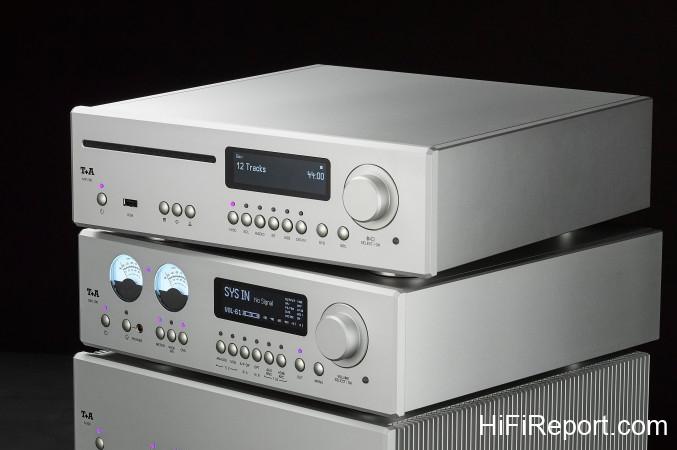
To our surprise, T+A’s plans didn’t stop with the HA 200. They subsequently launched a three-component two-channel audio system, expanding the “200” series into a complete product line. This system included the MP 200 streamer/CD transport, the DAC 200 DAC/preamplifier, and the A 200 power amplifier. All four products in the series share the same chassis dimensions. The first two, being source components, fit the compact size naturally.
However, the final piece, the A 200, particularly piqued my interest. Compared to the substantial frames of other T+A power amplifiers, the A 200 was exceptionally compact, almost unassuming at first glance. Yet, upon closer inspection, I discovered its formidable capabilities. It boasted a powerful output of 250 watts per channel into 4 ohms! It turned out the A 200 utilized the renowned Purifi Eigentakt Class D amplifier module, specially tuned by T+A.
Thus, despite its modest size, the A 200 was anything but inferior to larger amplifiers.
Introducing the M 200 Monoblock Amplifier
Leveraging the experience gained with the A 200 power amplifier, T+A realized they could achieve greater power output from a smaller form factor. This led to this year’s introduction of the M 200 monoblock amplifier. Inheriting the circuit design from the A 200 stereo amplifier, the M 200 delivers even greater power and lower distortion, giving the 200 series amplifiers the capability to drive larger loudspeakers.

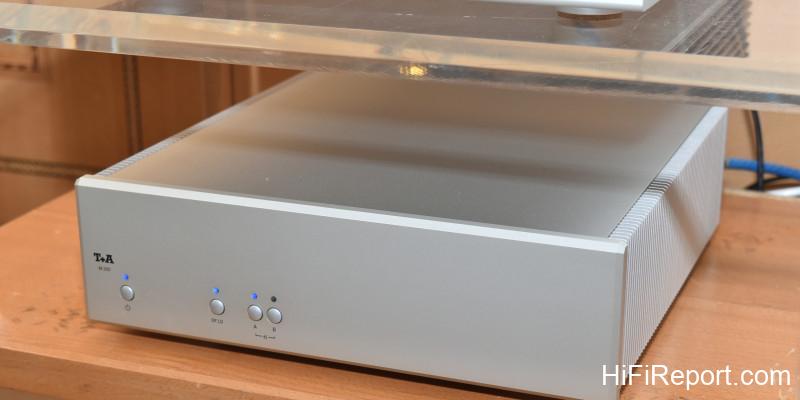
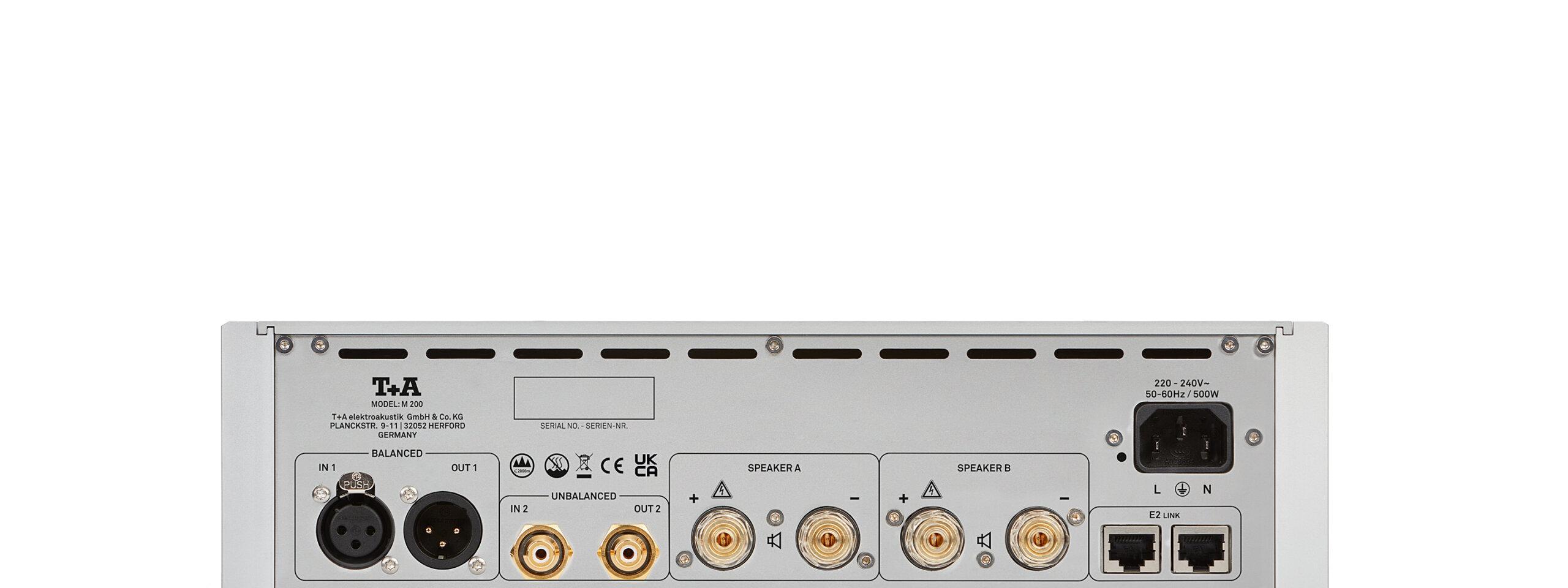
Outwardly, the M 200 largely adopts the chassis of its predecessor, the A 200. The front panel design is incredibly minimalist, featuring only a power switch and A/B speaker selection buttons. The difference lies in the M 200 being a monoblock, possessing only two speaker terminals instead of four, allowing you to connect two different pairs of speakers and switch between them effortlessly.
Key Technologies
Furthermore, the M 200 shares most of its technology with the A 200. The most critical element is the adoption of the Purifi Eigentakt Class D amplifier module. Audio enthusiasts familiar with Purifi know it’s been a sensation in the audio world since 2019.
Founded in Denmark by three key figures – Peter Lyngdorf, Bruno Putzeys, and Lars Risbo – all pioneers in Class D amplification before Purifi, including Bruno Putzeys, who developed the Hypex Ncore, widely regarded as the best Class D module in the past.
The collaboration of these three was destined to produce an even better Class D amplifier. A visit to Purifi’s official website reveals their core product: the 1ET400A monoblock Class D module. How powerful is this circuit board, roughly half the size of a mobile phone? The answer: total harmonic distortion less than 0.00017%, efficiency exceeding 94%, ultra-low output impedance below 65μΩ, and a robust 425 watts of power into a 4-ohm load!
It effectively overcomes the drawbacks of traditional Class D amplifiers, such as excessive high-frequency harmonic distortion and low damping factor, performance far surpassing classic Class D designs like Hypex, Pascal, and ICE Power. It is arguably the most perfect Class D amplifier currently available.
Astute readers might notice a discrepancy here: the A 200’s power output was stated as 250 watts (4 ohms), which differs from the original 1ET400A module specification. Indeed, T+A chose the Purifi Eigentakt for its exceptional performance but made significant modifications for their own amplifiers. The new M 200 continues this design approach, offering 420 watts of power into a 4-ohm load and achieving a damping factor of 800.
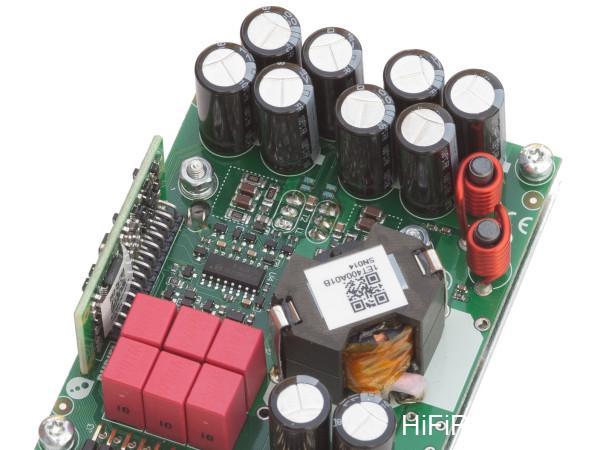
This significantly enhances the amplifier’s driving capability and low-frequency performance.
Furthermore, the M 200 features a two-position adjustable damping factor, switchable between high and low settings via the “DF LO” button on the front panel. According to the manufacturer, the high damping factor setting yields a more direct and precise sound, emphasizing musical resolution and soundstage layering. Switching to the lower damping factor provides a warmer, smoother tonal quality, allowing users to choose based on their listening preferences.
Beyond the Class D module, T+A insists on developing all their digital circuitry and even SACD drive mechanisms in-house. This not only ensures the highest quality but also gives the factory better control over maintenance and upgrade flexibility compared to manufacturers using off-the-shelf components, providing greater peace of mind for T+A users.
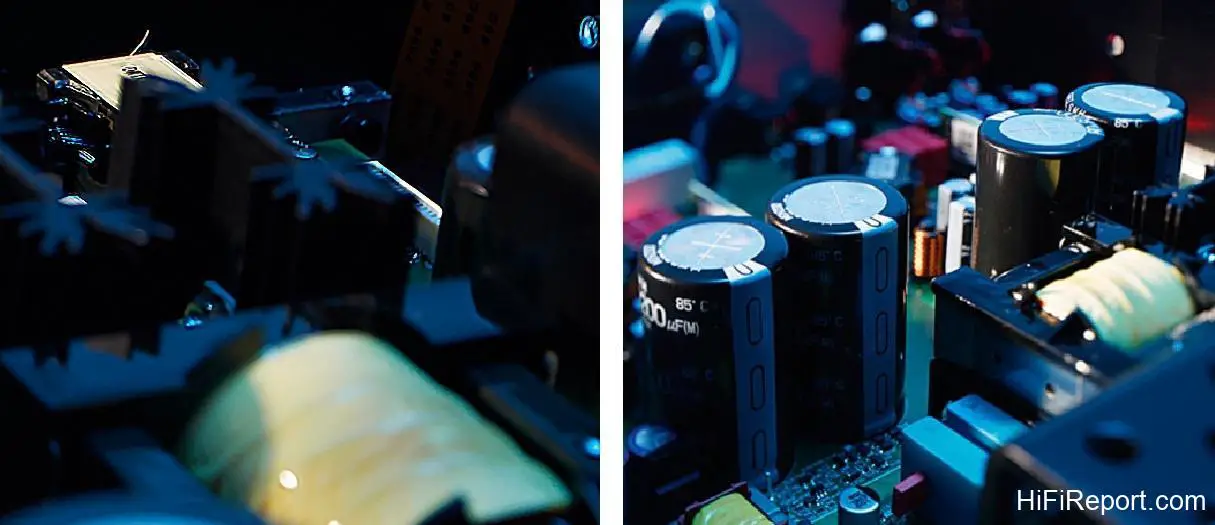
In addition to the modified Eigentakt module, the M 200 also utilizes T+A’s proprietary high-frequency sine wave switching power supply. Operating at double the frequency of traditional switching power supplies, it significantly reduces switching noise. Paired with custom-developed filter capacitors, it charges fully up to 100,000 times per second, 2,000 times more than typical capacitors! This provides exceptionally stable power delivery.
Before the Eigentakt module, the M 200 incorporates T+A’s “HV High Voltage Output Stage” technology. Derived from the high-voltage characteristics of tube amplifiers, T+A has adapted this principle to solid-state circuits. This allows the solid-state amplification stage to operate more linearly, resulting in a wider dynamic range, lower distortion, and superior large-scale dynamics. Finally, T+A’s proprietary ISC (Intelligent Safe Control) technology is integrated.
Numerous sensors throughout the M 200’s circuitry continuously monitor operating temperature, load impedance, and distortion status, instantly sending compensatory signals to maintain the amplifier in a perfect working state at all times.
Audition Setup
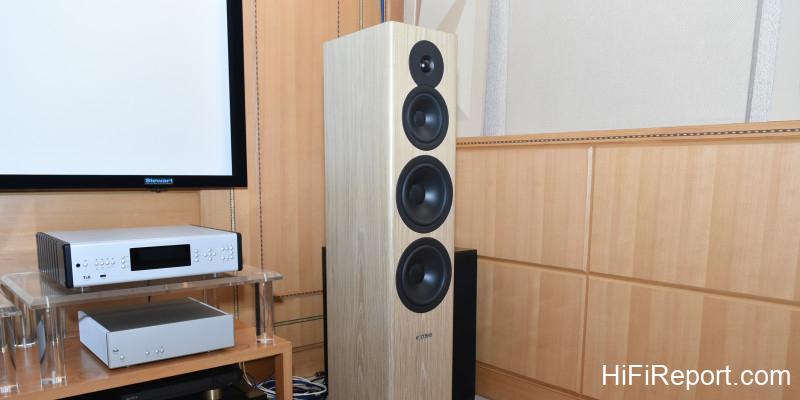
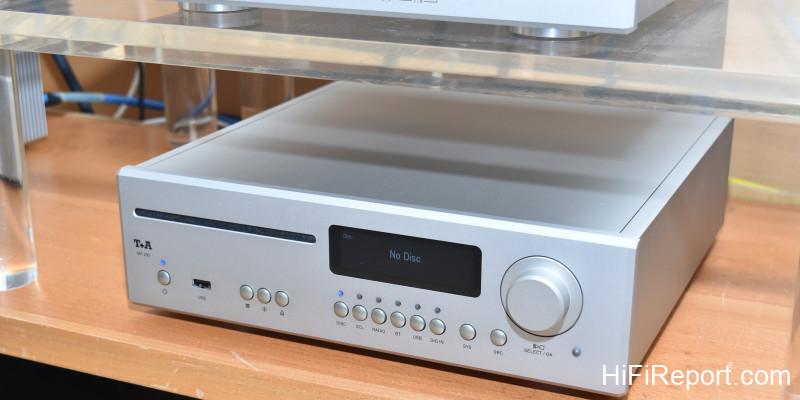
To give us a sneak peek at the M 200’s capabilities, the distributor arranged an audition session. The chosen venue was Ri Yue Audio in Taipei’s Bade Road area. Upon arrival, the two M 200 monoblocks were already warmed up in the audition room. The front-end equipment, as before, featured the classic 200 series components: the MP 200 streamer and DAC 200 DAC. Compared to the amplifiers Ri Yue Audio typically uses, these M 200 monoblocks looked incredibly “demure”!
The paired Dynaudio Evoke 50 speakers weren’t small either. They feature a three-way, four-driver configuration, and with an 87dB sensitivity rating on paper, they aren’t considered easy to drive. However, the staff at Ri Yue Audio seemed remarkably confident in this pairing, further intensifying my curiosity about the M 200’s capabilities.
Listening Impressions
The audition began with the MP 200 SACD transport acting as the source, playing Giuliano Carmignola’s performance of Vivaldi’s “Four Seasons” from the familiar TACET “The Magic Bow” album. From the very first notes, the neutral yet smooth sound signature I remembered from the HA 200 returned. All three frequency bands delivered a wealth of detail without any sense of exaggerated or uncontrolled energy. What captivated me further was the system’s rounded and natural high frequencies.
Musical forms were full and lively. The solo violin sounded sweet and rich, with a slightly restrained shimmer, yet revealing warm wooden resonance. The decay carried a sense of ethereal airiness, completely devoid of any stiffness or coolness often associated with Class D amplifiers.
With the combined effort of the two M 200s, driving the Evoke 50 speakers felt effortlessly composed. The musical texture remained consistently relaxed and refined, with each instrumental section exhibiting excellent density. The M 200 also provided a very dark background, creating a remarkably deep soundstage and exceptional instrument separation. The accompanying string orchestra’s instruments were vividly rendered, as if under a close-up lens.
Instrumental textures and layering within the inner voices, often difficult to discern, were particularly prominent.
Another aspect of the M 200 that truly astonished me was its dynamic capability, which vastly exceeded what one might expect from such a small amplifier! Switching to Leopold Stokowski’s rendition of Liszt’s “Hungarian Rhapsody No. 2” with a larger ensemble, the opening strings unleashed an awe-inspiring grandeur. This revealed the amplifier’s superb control; not only was the energy delivery effortless, but the texture was incredibly taut and resilient.
Even under high volume demands, there was no sense of strain or loss of control. Following this, the passage featuring unison double basses was particularly satisfying in its low-frequency extension and spaciousness.
It’s worth noting that the M 200 doesn’t exhibit the emphasis on fast, analytical bass often found in other amplifiers utilizing the Eigentakt Purifi module. In the low-frequency string passages, this system conveyed a deep, rich bowing texture with just the right amount of natural bloom in the decay. The bass energy sounded more voluminous, almost gently massaging the body with a comfortable sense of envelopment.
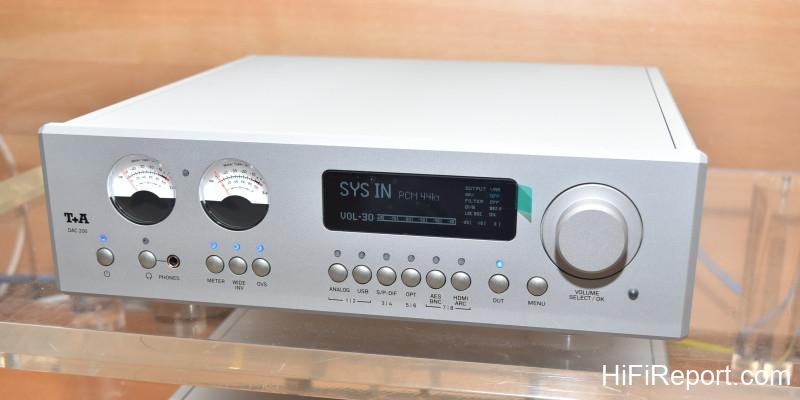
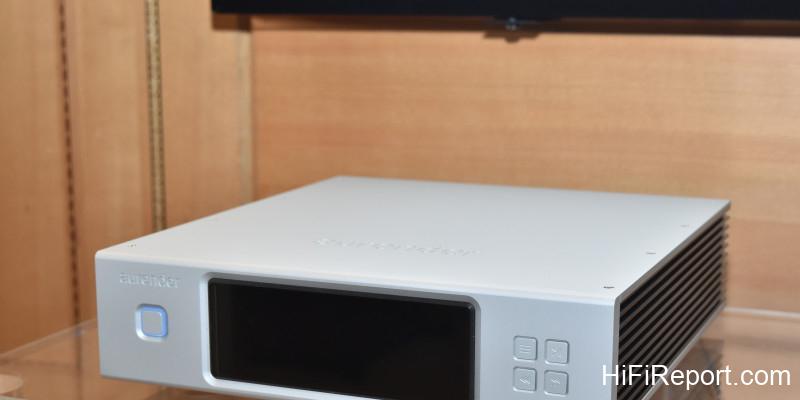
Given that this system utilizes the powerful DAC 200 for decoding, merely playing CDs is clearly insufficient. To explore its full potential, Ri Yue also prepared an Aurender A200 music server, loaded with numerous high-resolution music files meticulously curated by manufacturers. This collection even included native DSD1024 files, a format only T+A is capable of handling, filling me with anticipation before even listening.
First, I played the DSD64 file of “Moon River” from Jacintha’s “Autumn Leaves” album. The texture immediately sounded noticeably softer and rounder, completely free of any harsh edges. Jacintha’s vocals were delicate and full-bodied, portraying a clear, three-dimensional image positioned squarely in the center.
Her lip and mouth movements felt intimately present, as if whispering right into your ear, capturing the subtle nuances and expressions of her voice without any sense of sharpness or pressure. It sounded sweet and clear while retaining excellent resolution.
The accompanying piano in this track was also beautiful, with distinct dynamics in the key strikes. You could clearly hear the player’s variations in touch. The piano tone was like honey, with rounded notes and a fresh sweetness in the attack. Between phrases, the ethereal sustain pedal decay was audible, vividly portraying the piano’s harmonic details!
Finally, I played the DSD512 file of Louis Armstrong’s live album, “How You Has Jazz.” I could sense that with the higher sampling rate, the sound became even smoother, completely devoid of the granular texture often associated with digital files. The detail reproduction was incredibly natural, sounding akin to a finely tuned vinyl system.
Louis Armstrong’s weathered vocal textures were dense and rich, capturing the subtlest dynamics of his singing perfectly, making it sound more real and emotionally engaging. Simultaneously, this system offered a more expansive and transparent soundstage than vinyl, rendering the hall’s reverberation details and spatial cues with remarkable naturalness.
I believe that beyond the source’s decoding prowess, the M 200’s excellent transient response across the entire frequency range was a key contributor to the music’s vitality.
Conclusion
The M 200 monoblock amplifier, in my opinion, is T+A’s most captivating audio product yet. Its sound quality and technological sophistication are entirely on par with their high-end offerings, yet it comes at a much more approachable price point. What’s even more compelling is its seemingly modest stature, which nonetheless satisfies audio enthusiasts’ craving for musical grandeur and scale.
If you appreciate finely crafted audio equipment and desire both the sonic quality and authority of a large system, I believe the M 200’s performance will undoubtedly shatter your expectations!
Specifications
* Type: Monoblock Power Amplifier
* Output Power: 420 watts (4 ohms), 210 watts (8 ohms)
* Total Harmonic Distortion: < 0.002 % * Signal-to-Noise Ratio: 113 dB * Frequency Response: 1Hz-60kHz/+1dB, –3dB * Damping Factor: > 800 (Low setting > 70)
* Dimensions (W×H×D): 100 × 320 × 340 mm
* Weight: 5 kg