
T+A Solitaire T Wireless ANC Headphone Review
Thinking back to the last time I reviewed T+A’s top-tier system featuring the Solitaire P planar magnetic headphones paired with the HA 200 headphone amplifier, it was their inaugural foray into headphone products. Yet, the craftsmanship, quality, and technical level were entirely on par with, if not exceeding, those of professional headphone manufacturers. The sound quality itself could easily be counted among the best headphone systems I’ve ever heard.
It turns out T+A’s plans for headphones didn’t stop there. A while ago, I discovered the manufacturer was releasing another model in the same series, the Solitaire T, and this time, it was entering the market as wireless noise-cancelling headphones. Immediately, the spacious, sweet sound signature of the Solitaire P came to mind.
After reminiscing for a moment, I couldn’t help but start anticipating the Solitaire T. I thought, if wireless headphones could truly achieve that level of sound quality while also offering wireless convenience, wouldn’t that be absolutely perfect!
This month, I finally got my hands on the Solitaire T wireless noise-cancelling headphones. But before taking on the review task, my initial reaction was shock at its price tag! Typically, the high-end wireless headphones we review top out around the $600-$700 mark. These Solitaire T headphones, however, carry a price tag of roughly $1,760 USD, which is almost enough to buy a complete desktop headphone system!
The shock only intensified my curiosity about what makes them so exceptional and if they could truly rival the listening experience of home audio headphones.
Unboxing and First Impressions
Opening the Solitaire T’s packaging, the headphones are first nestled within a scratch-resistant fabric frame. A velvet-lined cardboard cover is placed on top to prevent bumps or damage, indicating extremely thorough protection. Beneath this, you find a hard carrying case. Inside the case is another small hard box with a magnetic closure, containing three headphone cables, a 6.3mm adapter, and an airline adapter.
The overall packaging is simple and understated, yet it exudes a strong sense of luxury.
Design, Build Quality, and Comfort
Turning to the headphones themselves, the Solitaire T features a simple yet elegant aesthetic that follows directly from the Solitaire P’s design. It’s available in two colors, black and white. The headphone chassis is constructed from a combination of metal and matte plastic in black or grey. At first glance, the design seems minimal, but upon closer inspection, the craftsmanship is remarkably refined.
According to the manufacturer, the headphone body, including the earcup components and the pearl white aluminum material used for the yokes, is entirely CNC machined, followed by an anodized surface treatment. This process is significantly more costly than the casting method used for most mass-produced headphones but ensures better precision.
Furthermore, the wearing comfort of the Solitaire T is truly commendable. Although largely constructed from metal and weighing 326 grams, they feel surprisingly light when worn. This is primarily due to the ear pads and headband, which are made of soft memory foam that evenly distributes the headphone’s weight across the head. The outer material of the ear pads is covered in fine synthetic leather, making them very skin-friendly and preventing stuffiness during prolonged use.
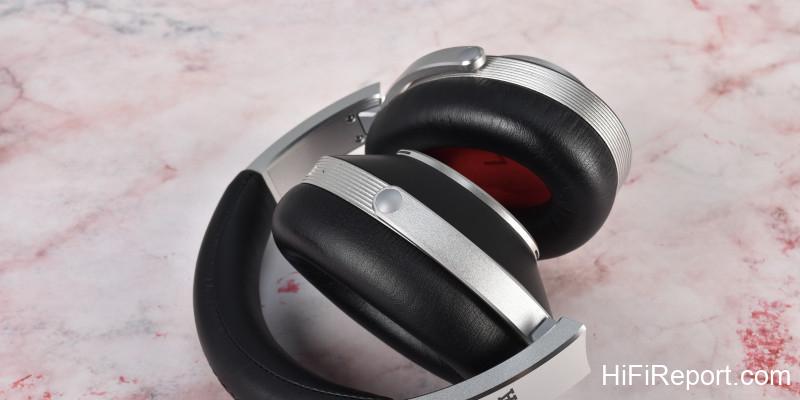
The earcups can also rotate 90 degrees and fold inward, reducing their volume, which is definitely an advantage for wireless headphones intended for portable use.
Features, Controls, and Battery Life
In terms of battery life, the headphones offer approximately 70 hours of use on a full charge, or 35 hours when High Quality mode is activated. In practical use, I only needed to recharge them about once a week.
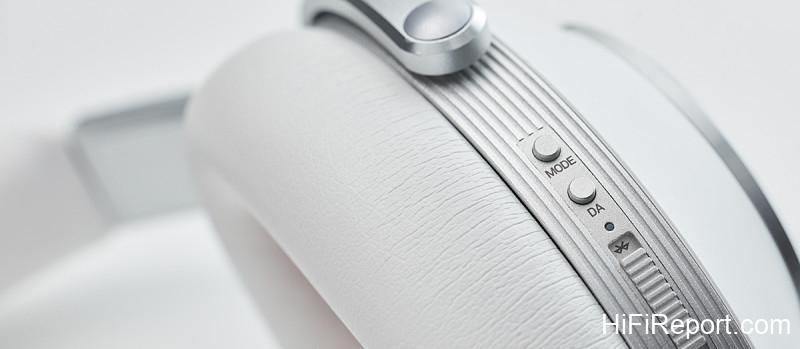
While the Solitaire T wireless headphones don’t come with a dedicated app, they feature a highly versatile on-board control interface. First, there are simple operation buttons on the earcups. The left earcup has the power switch and a battery indicator with four LEDs showing the remaining charge. The right earcup, in addition to the Bluetooth connection switch, has two mode cycle buttons. The first is “Mode,” used to switch between Noise Cancelling, Noise Cancelling Off, and High Quality modes.
The second is “DA,” which stands for Digital Assistant. When connected to a phone, this button allows you to conveniently and intuitively switch between voice assistants like Siri, Google Assistant, and Alexa.
Below the DA button is a Bluetooth codec indicator light. It displays four colors – blue, white, red, and yellow – representing SBC, AAC, aptX, and aptX HD respectively. This is extremely useful for audiophiles who prioritize sound quality because, in my experience, even with operating systems above Android 8.0 supporting these Bluetooth protocols, there can still be uncertainty during actual connection. This indicator allows users to monitor the Bluetooth connection status at any time.
It’s clear that T+A maintains their audiophile spirit even when creating wireless headphones, showcasing the rigorous approach characteristic of a German audio company.
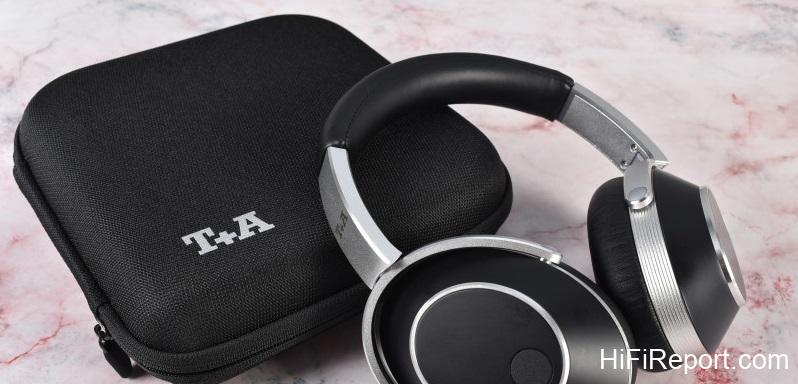
In addition to physical buttons, the outer surface of the earcups features a touch panel, allowing control through various gestures. On the right panel, a single tap plays/pauses music, swiping up/down adjusts the volume, and swiping left/right changes tracks. There’s also a small circular touch point on the top of the right earcup that controls calls and transparency mode.
When you need to speak with someone nearby, simply press and hold this area, and the headphones will automatically lower the music volume and amplify ambient sounds. Releasing it resumes music playback. To answer or end a call, double-tap the touch point. This control scheme is arguably the most intuitive I’ve used on noise-cancelling headphones, making it easy to get started even on the first try.
Connectivity and Versatility
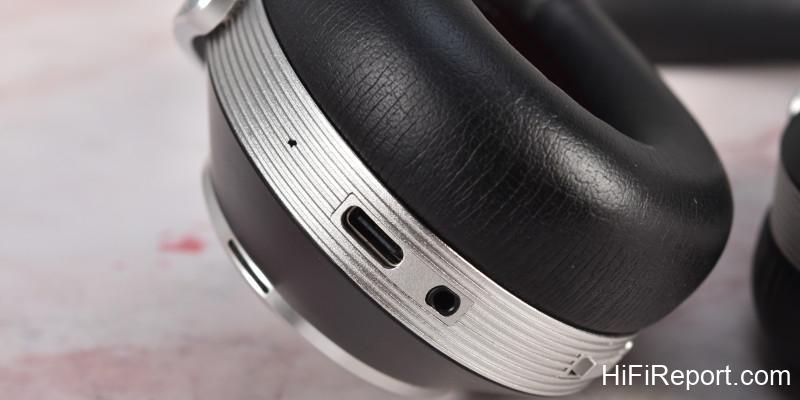
Looking at T+A’s official website description, the manufacturer states that when developing the Solitaire T, their goal was to design a headphone that simultaneously met all listening needs for audiophiles, travel, work, etc. The Solitaire T certainly achieves this purpose; the headphones can even be used as “passive” headphones without power. Looking at the bottom edge of the earcups, you’ll find both 2.5mm and USB Type-C ports.

Three cables are included: a 2.5mm to 3.5mm, a USB-C to USB-C, and a 2.5mm to 4.4mm cable. You read that right! These wireless headphones even come with a balanced headphone cable, allowing you to connect to better headphone amplifiers or portable players for wired listening. This even saves you the budget that players might spend on upgrade cables – something unprecedented in wireless headphones.
This indicates that the manufacturer is confident that the Solitaire T, as a wired headphone, can also satisfy the ears of audiophiles.
If you don’t have a professional DAP or headphone amp and usually just listen to music from your phone, the Solitaire T has another great advantage: it supports “USB Audio” functionality. Since most modern phones have removed the 3.5mm headphone jack, leaving only USB Type-C, this design means you can still connect to your phone for wired listening, and theoretically, the transmission will be more stable than Bluetooth.

Thus, although the Solitaire T is formally a wireless headphone, it encompasses all listening methods, essentially functioning as an all-in-one headphone system.
Internal Design and Technology
Turning to the internal design of the Solitaire T, it is equipped with a large 42mm dynamic driver featuring a cellulose membrane. This membrane is very light and possesses excellent rigidity, providing the advantage of fast, highly dynamic sound. The manufacturer also uses a special damping material around the diaphragm.
Its function is to act as a buffer structure between the diaphragm and the voice coil, absorbing the kinetic energy reflected by the voice coil and reducing the voice coil’s interference with the frequency response.
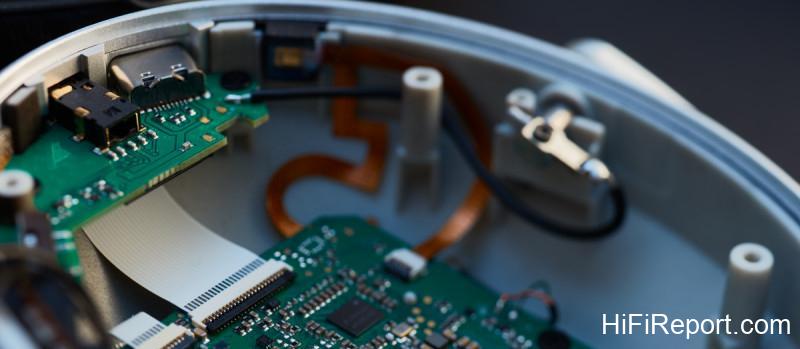
The headphone circuitry in the Solitaire T is also very sophisticated. It first employs Qualcomm’s top-tier QCC 5127 Bluetooth chip. Wireless pairing uses the low-power Bluetooth 5.2 version and supports high-quality transmission protocols like SBC, AAC, aptX, and aptX HD. Following this is an Esstech ES9218 Sabre DAC chip, which boasts a very high signal-to-noise ratio and supports file decoding up to PCM 32bit/384kHz and DSD512.
This ensures compatibility with high-resolution music from all streaming platforms, including Tidal and Qobuz.
The manufacturer also states that they aimed for the Solitaire T to completely eliminate unwanted noise, leaving only pure music, and thus conducted considerable research into the active noise cancellation feature. Each earcup of the Solitaire T houses 2 communication microphones and 2 noise-cancelling microphones. Through multi-directional ambient sound reception, the headphones analyze the sound and the driver emits inverse sound waves to cancel out noise.

Whether commuting or traveling, this significantly reduces most mid-low frequency noise, allowing you to fully enjoy T+A’s excellent sound quality. Besides its inherent noise-cancelling effectiveness, the earcups also provide excellent sealing, further enhancing the airtightness of the headphones. This not only improves passive noise cancellation but also strengthens the headphone’s low-frequency performance.
In actual use, the wearing comfort of the Solitaire T is truly superb, and the fit is excellent. In a noisy office environment, even before activating the ANC function, most ambient sounds were already blocked out. When ANC is activated, the music background becomes even quieter, and the compression of sound quality is not noticeable; the noise cancellation function is exceptionally well-implemented.
Wireless Listening Experience
Moving to the listening phase, I first paired the headphones with my phone via Bluetooth. The headphone immediately displayed the white light for AAC, indicating I was connected to an iPhone. The Bluetooth connection was also very smooth; after the initial pairing, the headphones automatically reconnected every time they were powered on, making usage fluid and convenient.

Sonically, the Solitaire T exhibits a very balanced distribution across the three frequency bands. The sound quality is very similar to the T+A flagship headphones I remember. While it lacks the expansive, outward-projecting, and physically large presence of the Solitaire P planar magnetic headphones, it still sounds very warm and sweet, with outstanding transparency. Despite the closed-back structure, the soundstage effect is quite open.
Furthermore, I believe this headphone possesses two major advantages rarely found in typical wireless headphones. First, the sound density is extremely high. Even with Bluetooth transmission, the fullness of the sonic images and the clarity of the outlines are almost on par with many wired headphones. Second, the music background is incredibly quiet.
Even without ANC activated, noise is virtually imperceptible, completely free from the common harshness found in less expensive wireless headphones.
During my listening session, I activated the “High Quality Mode” and played high-resolution streaming music from Qobuz. In the Tokyo String Quartet’s performance of Beethoven’s String Quartets, the strings sounded very hydrated. The high frequencies were smooth and non-fatiguing, while the mid-range sounded warm yet dense. This rendered the violin’s texture soft, bright, and lustrous, retaining a captivating sweetness even in the upper registers.
The cello’s resonance felt substantial, not overly boomy, revealing deep, powerful bowing details that lent the chamber music a stable and solemn quality.
What impressed me even more was the headphone’s soundstage effect. The four violins in the piece had high separation, as if their clear forms were presented right before my eyes, with no blurred areas between the instruments. A very transparent and three-dimensional sense of space was audible, even displaying excellent depth, positioning the instruments slightly further away, approximately in front of the head, making the music sound very relaxed and easy to listen to.
This distinct layering of the music even made me forget I was listening through headphones; it was closer to the experience of listening to a two-channel system.
Another example is “Let’s Face The Music And Dance,” the first track from Diana Krall’s jazz album “When I Look In Your Eyes.” The vocals on this headphone are not intimately presented; the singer’s position is slightly set back, without an overly exaggerated mouth shape, and sibilant details sound relatively soft.
Compared to vocals that aim for extreme closeness and heavier sibilance, I actually prefer this unhurried style, which sounds more lively and doesn’t feel oppressive during long listening sessions, allowing for easy appreciation of Diana Krall’s captivating voice. The headphone also maintains accurate instrument positioning, with clear hierarchy between vocals and accompanying instruments. You can hear the piano, bass, and drums presented with a three-dimensional placement forming a triangle.
The piano notes sound rounded and transparent, with clear and expressive articulation from varying touch pressure, full of elasticity. The bass plucks have a full texture, with dense and solid notes, and you can also hear the deep low-frequency extension, paired with the crisp texture produced by the drum brush on the cymbal, accentuating the light and comfortable rhythm of the jazz piece.
Wired Listening Performance
Finally, I tried turning off the Solitaire T’s power and using it as a wired headphone. I found it wasn’t easy to drive. Paired with my COS H1 headphone amplifier, it required significantly higher volume than I usually use. For instance, playing the first movement of Karajan’s conduction of Beethoven’s Ninth Symphony, the most noticeable improvement was the enhancement of the soundstage effect.
A spacious and three-dimensional sense of space was audible, and the orchestral arrangement had more layers. Furthermore, the instruments sounded tighter and fuller. From the soft passages of the strings to the powerful energy of the full orchestral tutti, the texture felt more refined, and the dynamic contrasts were stronger, fully capturing Karajan’s grand and majestic conducting style.
This proves that the Solitaire T isn’t just capable of being used with a cable; it is a genuine home audio wired headphone. It requires pairing with a more professional headphone amplifier to be properly driven, and if using a portable player, a balanced output is recommended to unlock more of its potential.
Conclusion
When I first saw the price of the Solitaire T, I was surprised, but after thoroughly experiencing these headphones, I sincerely feel that they cannot be measured by the standards of wireless headphones, because they have transcended that category. From comfort and functionality to sound quality, they perform exceptionally well as noise-cancelling headphones. When you return home, they can also be paired with a headphone amplifier to deliver even more comprehensive sound quality.
Looking at it this way, do you still think they are expensive? I believe they are well worth it.
Specifications
* Product Type: Wireless Noise-Cancelling Headphones
* Driver Type: 42mm Dynamic Driver
* Color: Black, White
* Bluetooth: Ver 5.2, supports SBC, AAC, aptX, aptX HD
* Battery Life: 70 hours, 35 hours in HQ mode
* Frequency Response: 4Hz-22kHz
* Microphones: 2 ANC, 2 Communication
* Ports: USB-C for charging and data transmission, 2.5mm for audio transmission
* Package Contents: USB Type-C charging/data cable, 2.5mm to 3.5mm headphone cable, 2.5mm to 4.4mm headphone cable, storage case
* Weight: 326g