
Tannoy Prestige GR & ST-300Mg SuperTweeter Review
Physically, the audible frequency range for human ears is between 20Hz and 20kHz. In reality, individual hearing abilities vary, with some people having better hearing than others. Like other bodily functions, our hearing also deteriorates with age. Since humans mostly cannot hear sounds beyond 20kHz, why do we often see high-end audio systems emphasizing reproduction capabilities in this range?
The answer is quite simple: although our ears may not perceive frequencies like a 30kHz “hello,” our brains and bodies can indeed receive and sense these signals, contributing to our overall musical experience. Extremely low frequencies are a clear example of this phenomenon. It’s even speculated that intense high frequencies could potentially be weaponized. If you’ve ever compared a system with and without super tweeters, you’ll likely never doubt the benefits of super tweeters again!
The diagram below illustrates the relationship between audible frequency and volume for human ears. Beyond the audible frequency range, our sensitivity to different frequencies also varies. The 1kHz to 3kHz range is the primary frequency range of human speech, which is why we can hear it clearly even at low volumes. Towards both ends of the spectrum, higher volumes are required for audibility.
Early loudspeakers, limited by less advanced driver technology, often had restricted bandwidths. Consequently, external super tweeters were a common solution. Modern driver technology has progressed to a point where many speakers offer sufficient high-frequency performance without needing external super tweeters. However, the pursuit of high-end audio is boundless, and super tweeter technology continues to advance. Adding super tweeters often provides an irresistible improvement for audiophiles.

A great super tweeter is not solely defined by its frequency range. Like other drivers, frequency response, speed, sonic character, and density are all crucial factors contributing to the overall sonic enhancement of a system. Super tweeter setup is also an art, similar to subwoofers, where crossover points, gain, and placement significantly impact performance. Just as hardware is important, so is software.
The 44.1kHz sampling frequency of CDs corresponds to a maximum frequency of 20.05kHz per channel. Modern recording equipment and media have long surpassed the 44.1kHz limitation. SACD, for example, reaches 2.8224 MHz (64 times that of CD), and 24Bit/192kHz digital masters are not uncommon. This pursuit of wider bandwidth and greater dynamic range aims to preserve all information from the original performance, mirroring the high specifications of audio hardware development.
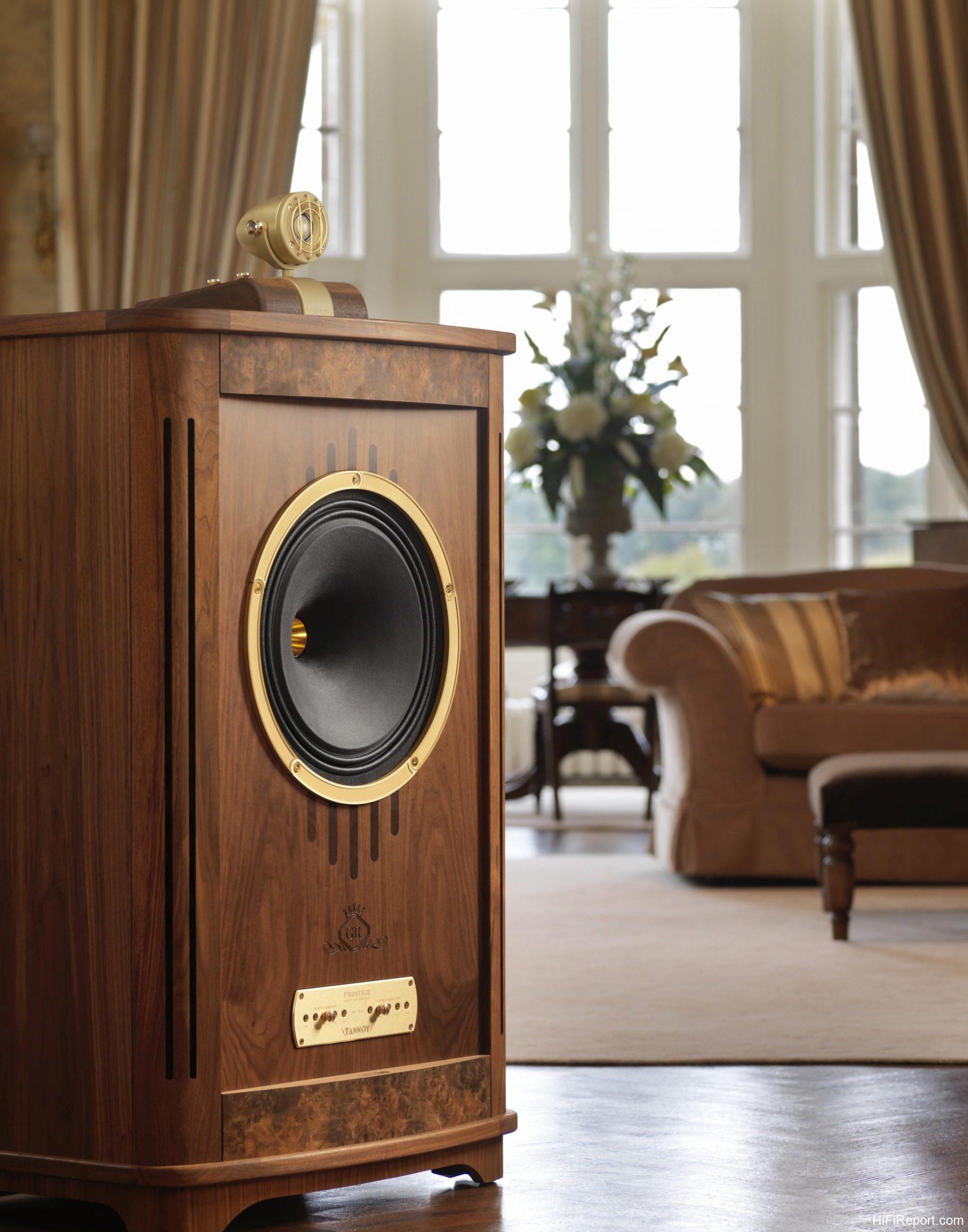
Tannoy has historically been a leading manufacturer of super tweeters. Tannoy loudspeakers utilize single point-source coaxial drivers. While coaxial driver technology has continually improved, enabling full-range reproduction, super tweeter technology has also advanced, as mentioned earlier. For those seeking another level of sonic refinement, adding super tweeters can be a quick path to improvement.

Except for the smallest bookshelf model, the Autograph Mini, all Tannoy Prestige GR series loudspeakers are compatible with Tannoy SuperTweeters, extending the bandwidth up to 50kHz.
Iconic Tannoy Super Tweeters
When discussing super tweeters, Tannoy is invariably mentioned. Currently, Tannoy offers three super tweeter models, ranging from entry-level to high-end: ST50, ST100, and ST200. The ST200 features an American walnut cabinet and is specifically designed and optimized for the Prestige GR series, from the Stirling SE to the Westminster Royal SE. It is also compatible with earlier classic Tannoy Prestige series, HPD, Monitor Gold, and Monitor Silver loudspeakers.
The ST100 and ST200 share a similar appearance, but the ST100 cabinet is made of black ash. Its crossover adjustment settings are designed to be compatible with a wider range of loudspeakers on the market, not limited to Tannoy speakers. It is also suitable for earlier Tannoy coaxial driver loudspeakers, such as the 45-year-old 15″ Monitor Red. The ST50 features a cast aluminum body with a special matte finish and is also compatible with most loudspeakers on the market.
The crossover points for ST50, ST100, and ST200 are set at 14, 16, or 18kHz, with a maximum bandwidth of 54kHz (-18dB to 100kHz). The output gain for ST200 and ST100 is adjustable in 5 steps, though the specific values differ slightly.
ST200 Super Tweeter

Flagship Prestige GR & ST-300Mg Super Tweeters
The newly released super tweeters come in two models, primarily differing in cabinet material and color, while sharing identical drivers and specifications. The Prestige GR super tweeter is designed specifically to complement the Prestige GR series loudspeakers, featuring the same walnut cabinet as the Prestige GR loudspeaker series for visual consistency. The ST-300Mg adopts a matte black ash cabinet.
The prototype of the Prestige GR super tweeter was first showcased at the Munich High End Show in 2015. Displayed in a protective transparent case, its opulent and distinctly vintage aesthetic initially led me to believe it was an antique Tannoy product. I later learned it was their latest offering. Why did Tannoy decide to launch a new generation of super tweeters? The reason is straightforward: the performance of the Prestige GR series loudspeakers represents a significant step up.
The existing super tweeters, such as the ST200, did not provide as noticeable an improvement when paired with them. Therefore, the factory needed to develop a more capable super tweeter to match, leading to the birth of the Prestige GR & ST-300Mg.
All-New Design Inside and Out
The Prestige GR super tweeter exhibits a distinct design compared to the existing ST50, ST100, and ST200 models. The tweeter driver is mounted on a bracket, offering adjustable vertical angle flexibility to align with the listener’s ear height. The driver itself is a new 25mm, 44-micron thick magnesium alloy dome with a neodymium magnet system. This likely explains the “Mg” designation in the ST-300Mg model name. The previous ST50, ST100, and ST200 models utilized titanium dome tweeters.
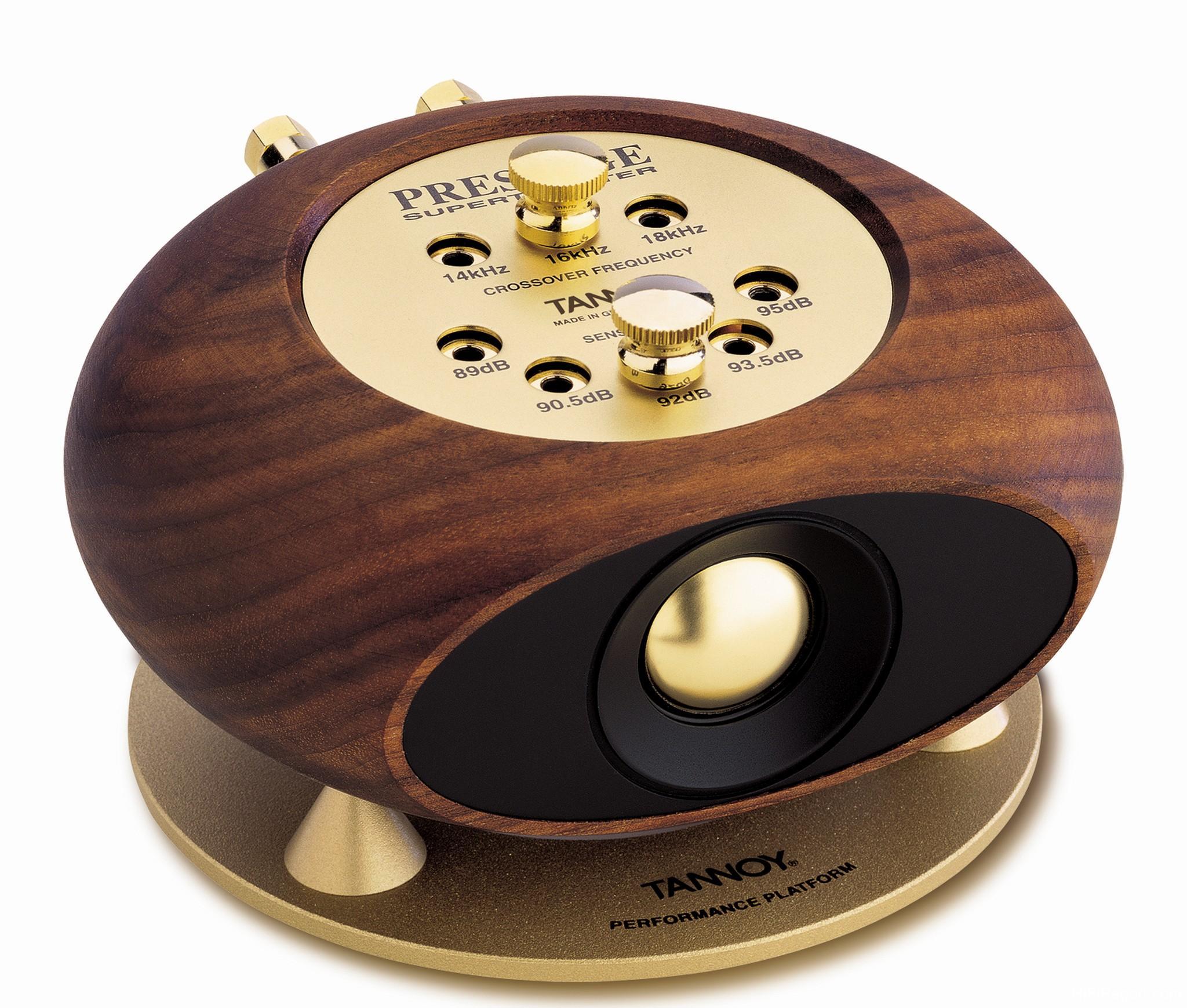
The new driver also significantly expands the bandwidth to 62 kHz (-6dB), with a continuous power handling of 175 Watts RMS, a considerable increase from the ST200’s 135W, promising even better performance. The crossover points remain unchanged at 14, 16, or 18kHz. The output gain settings are also the same as the ST200, with five levels: 89 dB, 90.5 dB, 92 dB, 93.5 dB, and 95 dB.
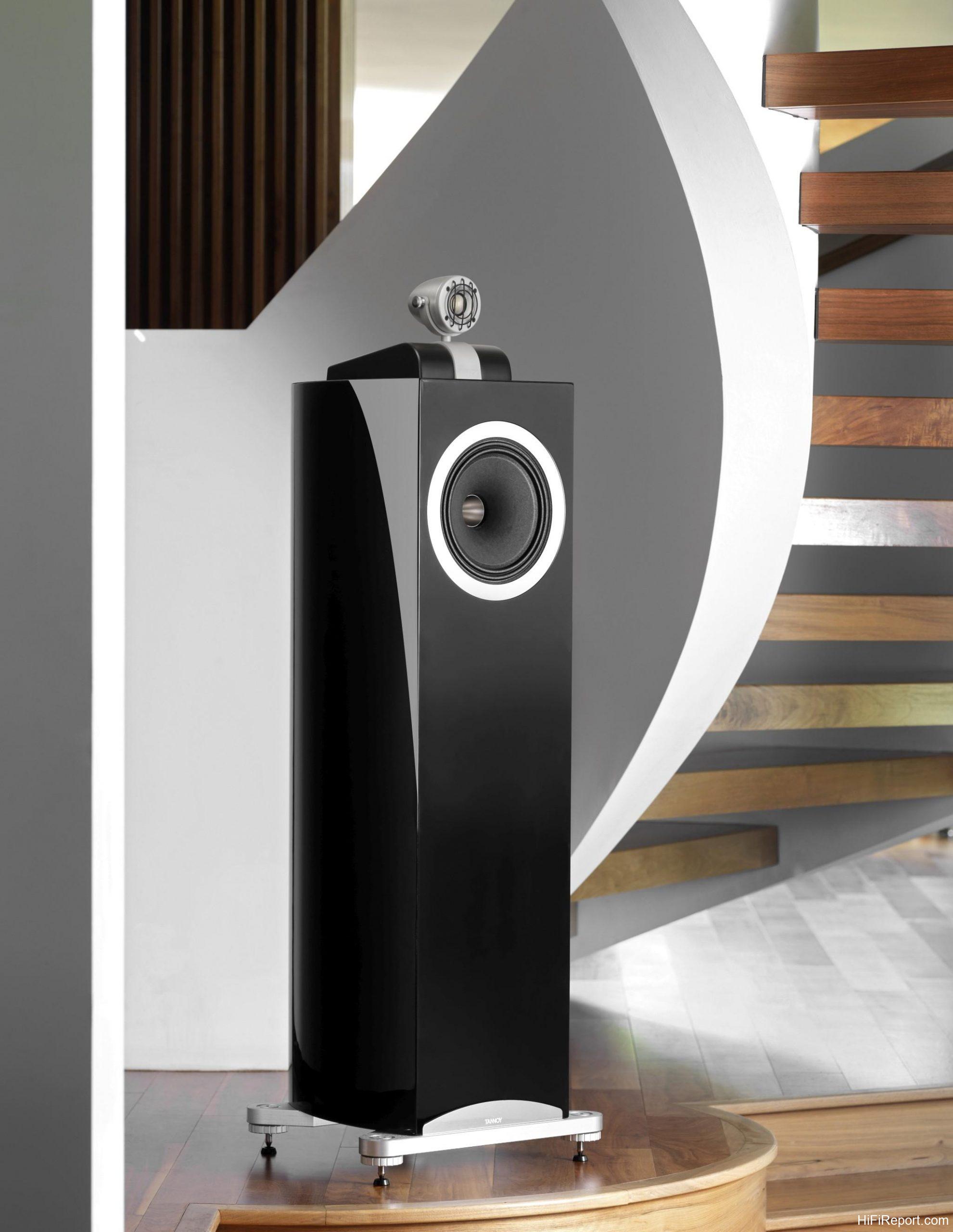
The Prestige GR super tweeter also employs high-quality components, including silver-plated high-purity crystal oxygen-free copper internal wiring with PTFE Teflon insulation, gold-plated speaker terminals and adjustment screws, air-core inductors, non-inductive metal oxide film resistors, ceramic substrates, and high-quality polypropylene film capacitors. The crossover network is a 3rd-order high-pass design with a sensitivity of 95dB and a nominal impedance of 8 ohms.
The Prestige GR super tweeter’s design is truly elegant.
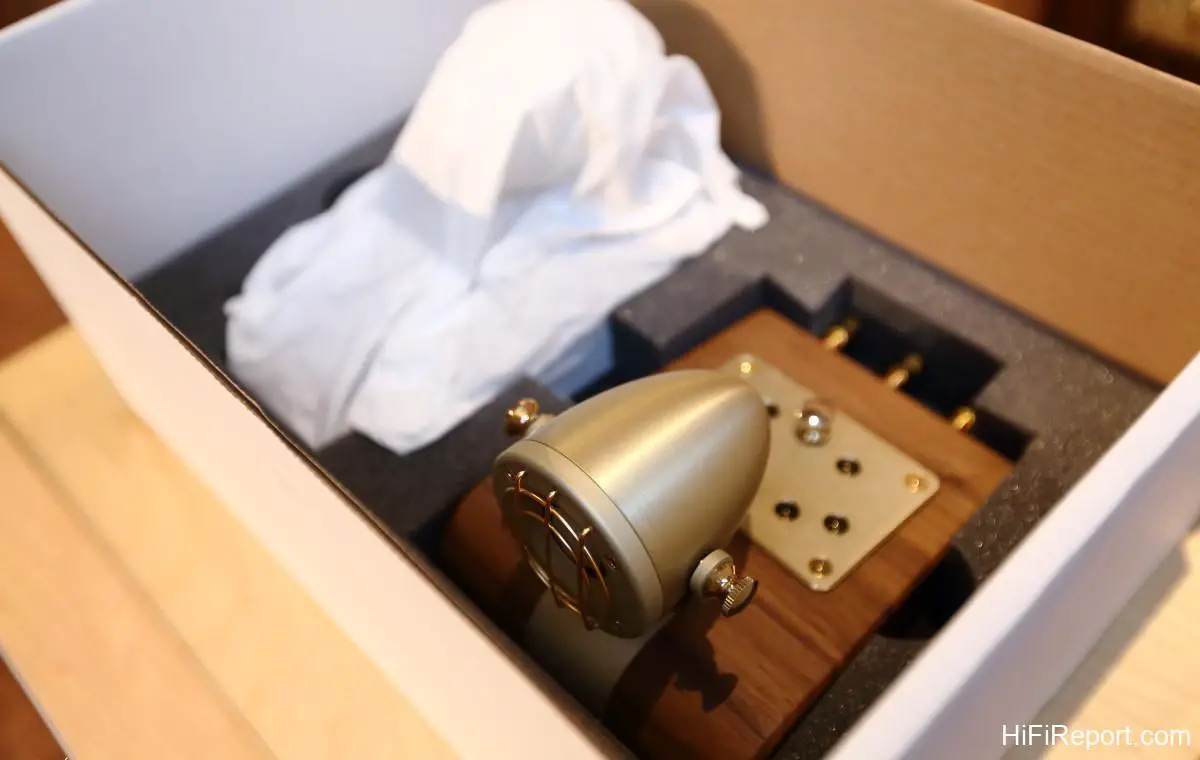
The cabinet, crafted from the same walnut as the Prestige GR loudspeaker series, is simply stunning.
Simple Installation, Immediate Impact
We happened to be reviewing the Kensington GR loudspeakers when the Prestige GR super tweeters arrived just before the New Year, allowing us to conduct an immediate listening test. Even Japan had yet to receive them, making us particularly excited. Installation was straightforward, following the factory instructions step by step. First, connect the wiring, ensuring correct polarity if your speakers are single-wired.
For bi-wired speakers, like the Kensington GR, connect to the high-frequency terminals. Next is placement and setting. The factory provides a ruler card for positioning. Referring to the manual, the Kensington GR corresponds to position D, with a crossover point of 16kHz and an output gain of 93.5dB. The manufacturer recommends starting with these standard settings and suggests a break-in period of at least 20 hours.
The card beside the super tweeter is the factory-provided positioning guide. Simply follow the positions indicated in the manual.
The manual clearly outlines the corresponding settings for various loudspeakers, including older Tannoy models. This is just a partial excerpt. Kensington GR is position D, with a crossover point of 16kHz and an output gain of 93.5dB.
Crossover point and gain settings are adjusted by inserting the pin into the corresponding position.
Different crossover point settings result in varying frequency response curves. Lower crossover points lead to less attenuation.
Expanded Bandwidth, Revelatory Clarity
Listening to Ayado Chie’s *SHINE* album, specifically tracks 7 “Goodbye Pork Pie Hat” and 8 “Don’t Let Me Be Lonely Tonight”, the cymbal strikes were noticeably more vivid and the sonic image clearer. Particularly, the location of the cymbal seemed elevated from the drum sounds, highlighting the cymbal’s height. Both tracks conclude with delicate cymbal and triangle flourishes, showcasing excellent high-frequency extension.
This significant improvement became even more apparent with the next album.
Rich Detail and Harmonics, Music Comes Alive
Liu Deli’s *Maiden’s Prayer*: I chose this album for two key reasons: 1. familiarity, and 2. the title track, “Maiden’s Prayer,” contains numerous sibilant sounds, particularly “s” sounds, and I was curious to see if these would become clearer with the addition of super tweeters. The listening result was immediate. Before Liu Deli even began singing, I was completely convinced of the super tweeter’s impact. The piano intro in the first ten seconds compelled me to replay it over a dozen times.
Within the simple piano midrange and high-frequency solo, beyond the familiar melody, I sensed another layer of subtle piano tones emerging. These extended piano harmonics might have been present before, but they had never been so distinct. In a quiet environment, this transformation is undeniably significant.
Enhanced Soundstage and Presence
MAHLER.SYMPHONIE NO.9, BERLINER PHILHARMONIKER, LEONARD BERNSTEIN (ESOTERIC SACD ESSG 90107): Reproducing this large-scale symphony revealed immense dynamics. The contrast between loud and soft passages became more pronounced, particularly the startlingly powerful brass during fortissimo sections, which then transitioned into lingering, resonant decays. Even as the sound faded to near inaudibility, its presence remained.
It felt as though the super tweeters extended the length and height of the sonic image, making the entire experience feel more complete.
Custom-Built, Once Experienced, Irreplaceable
Listening impressions? Once you’ve experienced them, there’s no going back. During the listening session, simply disconnecting the Prestige GR super tweeters created a palpable sense of loss. The same music suddenly sounded diminished, immediately prompting the desire to reconnect the Prestige GR super tweeters.
The Prestige GR & ST-300Mg super tweeters, when paired with Tannoy loudspeakers, offer simple installation and setup, requiring no complicated adjustments, unlike some super tweeters that demand extensive experimentation to find the optimal settings. For Tannoy owners, trying these super tweeters is highly recommended. Prepare to be instantly captivated and compelled to purchase them.
Tannoy Prestige GR & ST-300Mg Super Tweeter Specifications
* Recommended amplifier power: Up to 350 Watts RMS
* Continuous power handling: 175 Watts RMS, 700 Watts peak
* Maximum sensitivity (2.83V @ 1m): 95 dB
* Nominal impedance: 8 Ohms
* Frequency response: (-6dB) 62 kHz, usable output (-18 dB) to 100 kHz
* DRIVE UNIT: Driver type, 25mm diameter 44 micron magnesium alloy dome, with neodymium magnet system
* CROSSOVER
* Crossover type: 3rd order high pass
* Crossover frequency:14, 16 or 18 kHz adjustable
* Level adjustment: 89 dB, 90.5 dB, 92 dB, 93.5 dB, 95 dB
* CONSTRUCTION
* Dimensions (H x W x D) incl.
terminals: 130.4 x 146.9 x 206.2 mm (5.1 x 5.8 x 8.1”)
* Finish” Prestige GR: Oiled walnut, ST-300Mg: Black ash