
TOT Max Power Review
Experienced audiophiles know that power is the bedrock of good sound. Every operation, from the functioning of electronic circuits and signal amplification to driving the speaker drivers, relies entirely on the power supply. If the power is unclean or noisy, it naturally affects the equipment’s operation, thereby degrading the sound quality. Consequently, power treatment becomes an essential and crucial step in optimizing an audio system.
After all, the mains power we draw from the wall socket is often far from ideal and clean, frequently carrying a significant amount of noise.
Numerous factors contribute to this situation. Household appliances, lighting, and electronic devices all generate substantial noise that infiltrates the home’s power wiring. Even if you turn off these devices while listening to your audio system, noise can still enter the power lines if your neighbors are using their appliances or electronic equipment.
Even if you install a dedicated line from your distribution box to minimize interference from household appliances, the path of electricity from the power plant to your home may pass through areas with large-current industrial facilities, potentially contaminating the power supply. Therefore, obtaining truly clean power directly is quite challenging.
To improve power quality, audio manufacturers have introduced many types of products, such as audiophile power cords, power strips with filtering functions, and even power generators. However, many power treatment products come with certain side effects. Some alter the sound, introducing a specific sonic signature or character. Others compress dynamics, making loud passages sound more restrained. Some are effective but prohibitively expensive.
The product I want to introduce now, the Torus Power TOT Max, is an excellent power conditioning device. It offers a neutral and comprehensive improvement to sound quality without imposing any sonic character and notably avoids significant dynamic compression issues, making it a reliable component to use. The TOT Max achieves these results due to its design, which is linked to its brand background.
Introducing Torus Power: Transformer Expertise
Torus Power’s parent company is Plitron, a Canadian company founded in 1983, boasting decades of professional experience. Plitron’s core expertise lies in toroidal transformers; they are among the world’s foremost experts in this field. Beyond producing standard general-purpose transformers, they design many high-performance, specialized transformers for specific professional fields such as aerospace, medical, industrial, and laboratory applications.
Due to increasing domestic demand (particularly in the audio sector), they later established Torus Power to design products specifically for home video and audio equipment.
The Power of NBT: Eliminating Noise
Torus Power inherits the toroidal transformer technology at which its parent company excels and leverages the inherent characteristics of toroidal transformers to achieve numerous excellent results. For instance, many power strips or isolation transformers incorporate filtering components internally to filter out noise. While effective, this often results in side effects like dynamic compression or altering the original sound. Torus Power takes a different approach.
It achieves noise elimination through the transformer’s design itself. In this process, no additional series inductors or grounded capacitors are added, minimizing the impact on sound quality and avoiding the side effects of dynamic compression.
Torus Power refers to this technology as NBT (Narrow Bandwidth Technology). What does this mean? Theoretically, the correct waveform for a power supply should be a pure 60Hz sine wave (or 50Hz in some countries), and a perfect power waveform should be free of high-frequency noise. However, in reality, the power we use in our daily lives carries noise at various frequencies above 60Hz, for the reasons mentioned earlier. This noise is the culprit behind the degradation of audio and video quality.
Torus Power’s NBT technology utilizes the inherent inductive, capacitive, and resistive properties of the isolation transformer, selecting the most suitable core materials and winding techniques to directly “limit the bandwidth of the power supply,” thereby eliminating electrical noise. This is a truly pure and sophisticated method.
NBT Performance: A Technical Look
How effective is NBT technology at isolating noise? Standard toroidal isolation transformers are typically effective only against noise above 50kHz. Torus Power’s NBT technology, however, is effective from 1kHz upwards and can reduce noise to within 2% of the original level across an ultra-high bandwidth up to 1GHz. Torus Power provides a comprehensive test chart comparing the effects of different designs.
In the chart, (a) represents a standard toroidal transformer, (b) shows a Balanced Power transformer with a center-tapped secondary winding grounded, (c) depicts a standard toroidal transformer plus an external filter, and (d) illustrates Torus Power’s NBT technology.
In the chart, the X-axis represents the frequency range being processed, increasing towards the right. The Y-axis represents the strength of noise suppression; a larger negative value indicates stronger noise suppression capability. By comparing the four measured curves, it’s clear that NBT technology, without requiring an external filter, achieves significantly better overall “noise suppression bandwidth” and “noise suppression strength” than the other three methods.
Torus Power Lineup: TOT Max Positioning
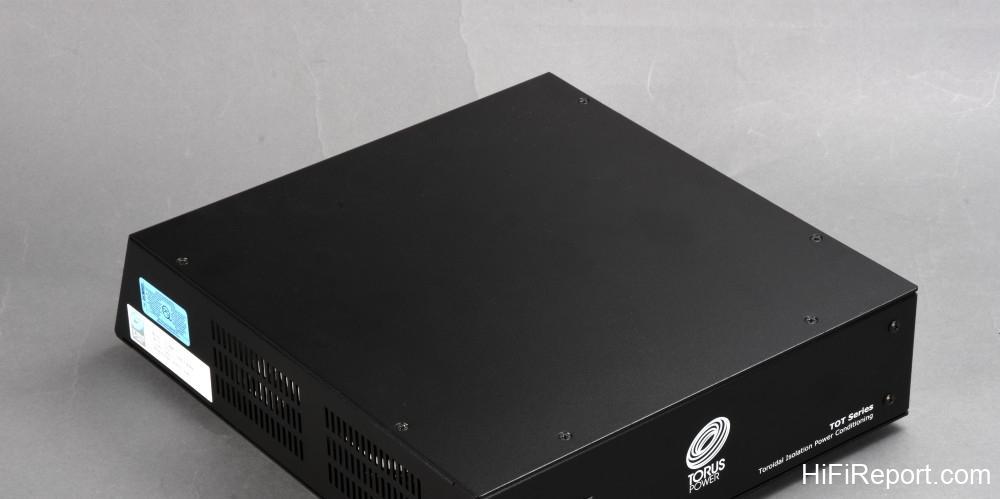
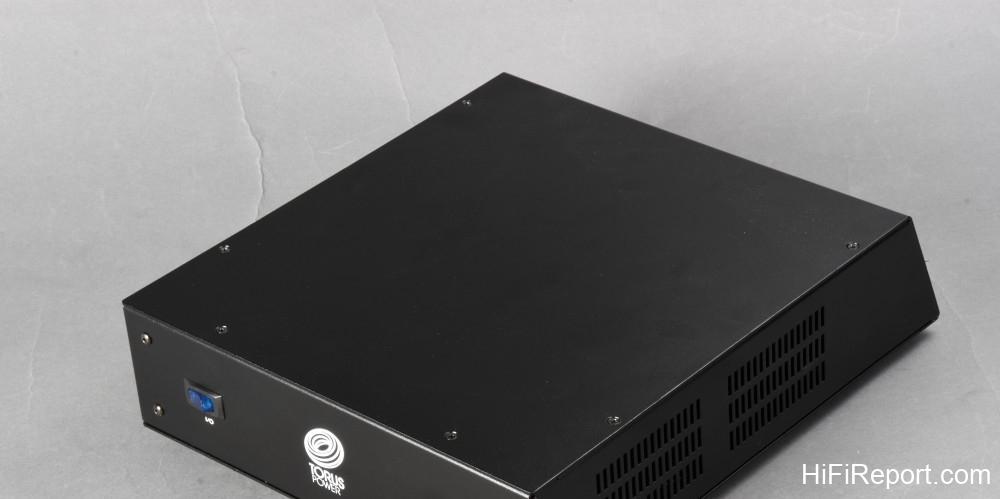
Torus Power’s current product lineup, from highest to lowest grade, includes the AVR series, RM series, TOT series, and PowerBlock series. The product reviewed here belongs to the high-end of the TOT series, the TOT Max. This series also includes a smaller model, the TOT Mini. I believe the TOT Max is the most suitable product for home theater enthusiasts and most two-channel audio enthusiasts because it offers an output power of 1,725 VA (Watts) and an output current of 15 Amps.
This is more than sufficient for most mid-to-high-end AV receivers and multi-channel power amplifiers, not to mention other types of audio equipment with lower power consumption.
Beyond NBT: LONO Technology
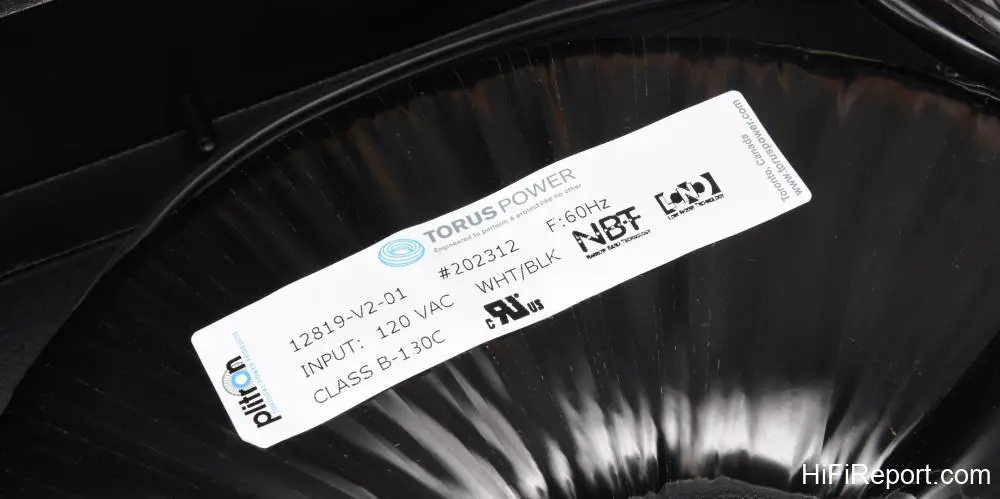
In addition to the core NBT technology, the TOT Max also employs what is called LONO technology, or Low Noise Technology. Simply put, this involves a unique method to minimize vibration generated by the transformer as much as possible. Even with sudden increases in load, it remains quiet. This is another technology developed by the parent company, Plitron, over many years.
According to documentation, Plitron’s toroidal isolation transformers meet the American NC-10 noise standard, making them suitable for use in sound-sensitive environments like laboratories or recording studios, and certainly more than adequate for home theater rooms.
Simple and Effective Design
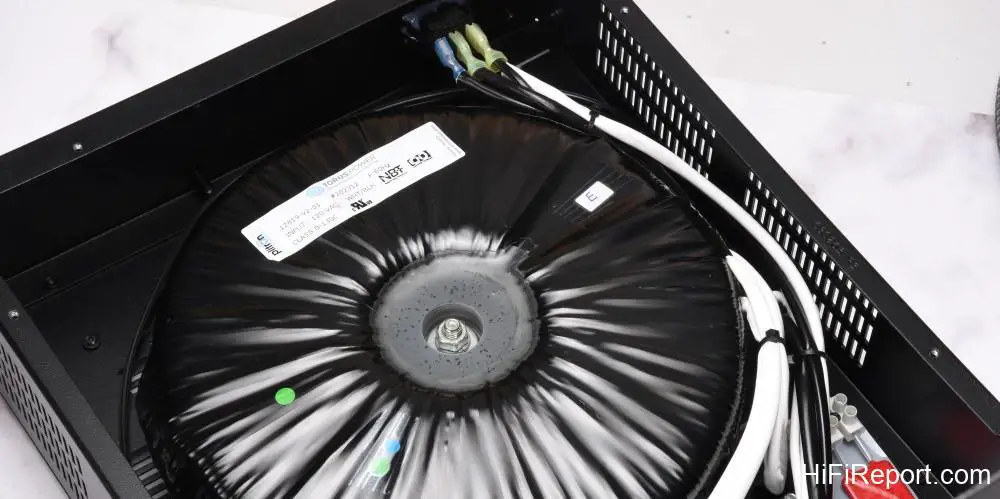
Lifting the top cover of the TOT Max reveals a very simple design. As mentioned earlier, all design emphasis is placed on the toroidal transformer itself; there are no unnecessary components. The core NBT design alone provides excellent noise filtering performance, fully comparable to designs with external filters.
Robust Protection and Durability
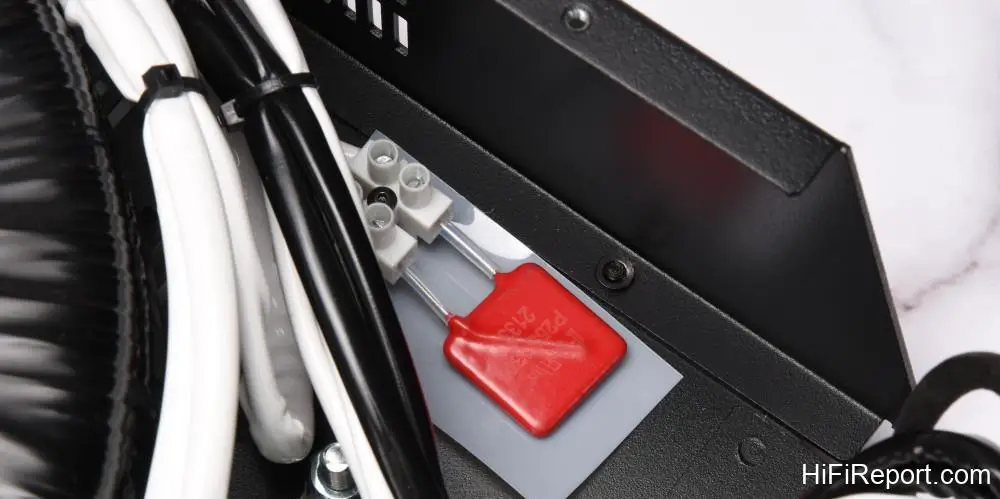
Beyond the transformer section, the TOT Max also features comprehensive protection mechanisms, including surge suppression and fuses. These are essential safety features for power conditioning devices. The surge suppressor protects the TOT Max and connected equipment from pulse currents (such as those caused by lightning strikes), while the fuse disconnects the power supply in case of overload.
While these protection devices are common in power products, their implementation quality varies. Torus Power highlights that their products have passed the rigorous testing of the Institute of Electrical and Electronics Engineers (IEEE), withstanding 6000 volts and 3000 amps 1000 times. This is akin to being struck by lightning 1000 times, and the product still operates normally, demonstrating extremely high durability.
Connectivity and Ergonomics
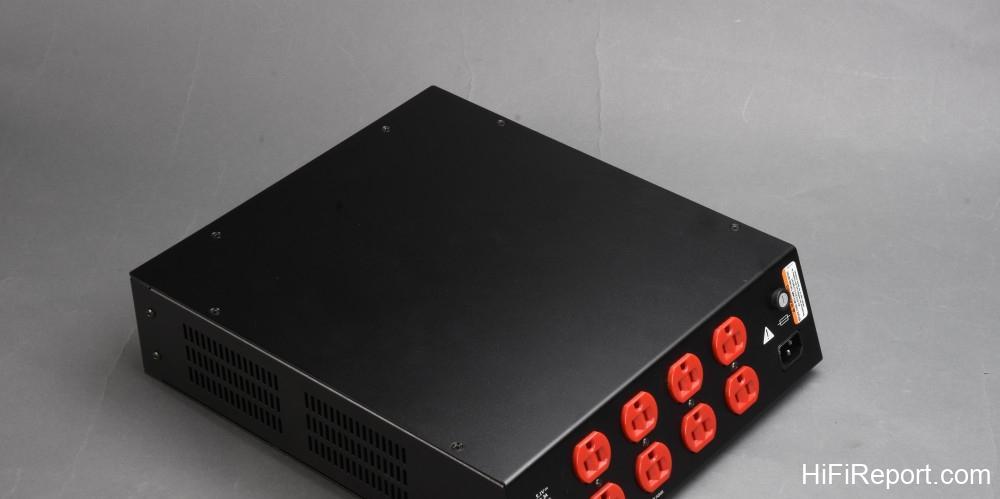
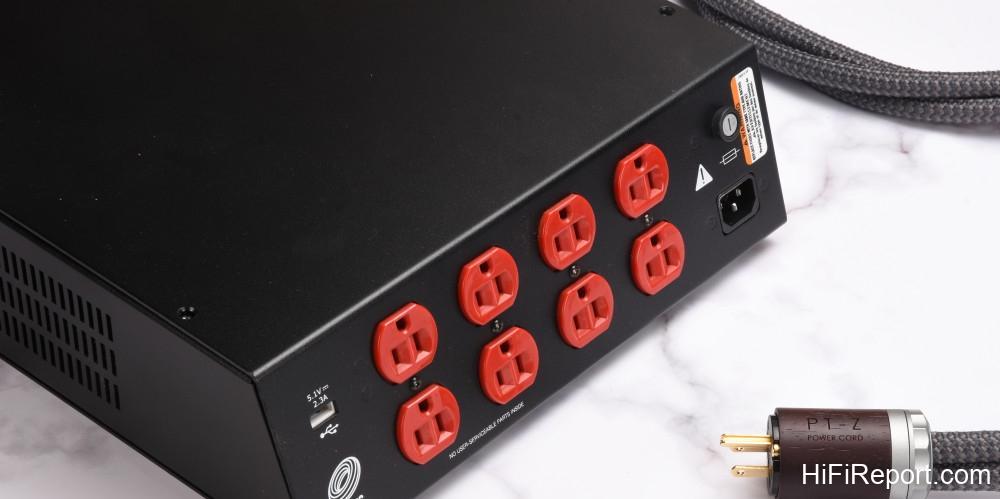
The rear panel of the TOT Max is equipped with 8 AC power output sockets, providing noise-filtered AC power to up to 8 pieces of equipment. Additionally, it includes a USB port, catering to the widespread use of USB devices today.
The rear panel of the TOT Max is uniquely angled. Besides making plugging and unplugging easier, it helps prevent heavy power cords from sagging, a common issue with conventionally positioned outlets on other equipment. The easily replaceable overload protection fuse is located on the far right of the rear panel.
Visual Upgrade: Cleaner Images
Now, let’s discuss the review findings. Initially, I tested the TOT Max’s effect on video equipment. I used a Sony 4K OLED television and a MAGNETAR Blu-ray player as reference devices, playing high-definition demo files from the TV manufacturer. I first connected the TV and Blu-ray player directly to the mains power and watched the content. Then, I connected them to the TOT Max for an A/B comparison. The difference was genuinely discernible.
This difference wasn’t a matter of specifications; you wouldn’t see changes in resolution or color gamut. However, the picture texture felt subtly different. The image when connected to the TOT Max appeared cleaner and more transparent. Because of this, the perceived sharpness of image details improved, and objects felt more solid.
For example, the white facial makeup of a Japanese geisha seemed fine when connected to the mains, but after connecting to the TOT Max, the image became clearer, and the subtle powdery texture on the white makeup became more distinct. Similarly, in close-ups of various foods, the subtle texture details on their surfaces became more concrete and distinct, giving a more lifelike impression.
Furthermore, the highlights seemed slightly brighter, the dark areas appeared deeper black, and the gradation between colors became richer. For instance, the Japanese gold-painted folding fan and the vermilion pillars of the temple appeared more vibrant, with richer gradations and variations in light and shadow. Playing night scenes also showed improvement; the dark areas felt deeper, the city lights brighter, suggesting improved contrast.
Objects within the night scenes (darkness within darkness) exhibited richer layers and clearer contours, as if the resolution in dark areas had increased.
Sonic Transformation: A Quieter, Richer Sound
However, the visual upgrade wasn’t the most surprising aspect. The most surprising upgrade was in the sound quality. Just by connecting the Blu-ray player to the TOT Max for the video test, I could hear a noticeable change in the audio. This wasn’t a slight difference but a completely different presentation, sparking my curiosity about the TOT Max’s audio upgrade capabilities. I quickly connected the AV receiver to the TOT Max to see what improvements it could bring to multi-channel audio.
The test AV receiver was Marantz’s current flagship Cinema 40, paired with our reference speakers configured in a 5.2.4 system.
The most immediate perceived change in sound was that the entire background became much quieter. It felt as if noise and impurities had vanished. This feeling is hard to appreciate without comparison, but becomes astonishing when comparing.
When connected to the mains power, you wouldn’t necessarily feel there was an issue with the audio, but upon connecting to the TOT Max, you’d be surprised at how much quieter the music’s background could be and how much more stable the audio performance could become.
Due to the quiet background and the elimination of impurities, another obvious effect was a significant increase in detail. Detail is key to constructing a compelling multi-channel sound field. The surround envelopment felt tighter, and the details within the soundstage increased, with more subtle ambient sounds appearing all around.
To put it another way, the audio “objects” moving within the soundstage became more concrete and solid, with clearer movement trajectories, making the audio motion feel more vivid and possess a better “presence.” For example, in the opening race scene of “Ready Player One,” the details became extremely rich, and the movement of various objects became more tangible with clearer positioning.
This sense of cleanliness wasn’t limited to the mid and high frequencies but extended across the entire frequency spectrum, including the mid-bass region. The bass felt more focused. In contrast, the original sound seemed to have a fringed or blurred quality, which the TOT Max brought into sharp focus, making it clearer, more layered, and more detailed. This clean bass sounded more impactful. Crucially, I felt the TOT Max exhibited no significant dynamic compression issues.
Instead, due to the quiet background, the variations in volume became more distinct, resulting in greater dramatic tension in the sound. For instance, the sound of sports car engines in “Fast & Furious X” became more robust, and the machine gun sounds in the film became tighter and more solid.
Another very important point is that after the removal of impurities, the “texture” of the sound also improved. The audio not only sounded more stable but also became more pleasing to the ear. For example, playing the “Devil Dance” from “John Williams in Vienna” multi-channel album, the audience applause sounded different after connecting to the TOT Max – more numerous and more densely packed.
When Anne-Sophie Mutter performed the violin solo initially, connecting to the TOT Max made the violin sound more refined, richer, more layered, and more lustrous. While enhancing the sense of sheen, it also slightly tamed any harshness, making the violin sound more comfortable and enjoyable. The reverberation produced by the violin playing also became richer and longer, conveying more of the concert hall’s spatial feel.
The subsequent orchestral string performance also sounded more harmonious and had a beautiful texture.
Neutrality and Value: A Must-Have Upgrade
Finally, I want to emphasize again that the TOT Max brings a neutral, comprehensive upgrade without introducing any character or altering the original sound. In my description, I didn’t say it made the sound thicker or thinner, changed the proportion of frequencies, or altered the timbre. Instead, it improved the finesse, signal-to-noise ratio, and texture. The TOT Max successfully “improves” the sound without “changing” it.
I could still discern the original sonic characteristics of the upstream equipment; it provides a neutral, healthy enhancement.
Because of these characteristics, the TOT Max is a piece of equipment I can confidently recommend to all audio and video enthusiasts. Not only does it bring noticeable changes, but it also presents virtually no side effects. Coupled with its unique design centered around the toroidal transformer (without filters or other electronic components), its structure is very simple, requiring almost no maintenance and offering an extremely long lifespan.
You can buy it and expect it to serve permanently, upgrading your current system and continuing to optimize future ones. It is a worthwhile and cost-effective piece of equipment to own.
Specifications
* Type: Isolation Transformer
* Chassis: 2U
* Input Voltage: 120V
* Output Voltage: 120V
* Power Frequency: 60 Hz
* Input Current: 15A
* Rated Power: 1725 VA
* Output AC Outlets: 8
* Input Power Connector Type: IEC 15A
* Output Power Connector Type: 4 DUPLEX 5-15R
* Dimensions (W × H × D): 318 × 101 × 369mm
* Weight: 22.72 kg