
TRUTHEAR x Crinacle Zero Review
The Truthear x Crinacle Zero lands at a Great overall grade, an entry-level dual dynamic driver IEM that tracks the Harman target closely out of the box and delivers a natural, balanced sound that owners repeatedly compare to sets costing several times more. The single biggest factor behind the grade is the tuning: a proper low-frequency gain paired with a high-frequency response aligned to HRTF characteristics, per the product’s own design notes, produces a sound that feels reference-adjacent without the cold, clinical edge of a traditional monitor. The main trade-off is power. At 10 ohms with a sensitivity around 97 dB, these buds want a source with enough current to reach healthy volume levels, and that requirement shapes every part of the ownership experience.
First, the Verdict
The Zero holds a 4.3 out of 5 aggregate rating on Amazon across 2,572 reviews, a number that holds up against the listening evidence in the sources. Sound quality grades Great, with the dual driver layout delivering Harman-aligned tuning and controlled bass that multiple owners call the standout feature. Design and Comfort lands at Good, the DLP-printed shell and metal grilles feel premium, but the large nozzle makes tip selection a non-negotiable step. Noise Cancelling and Isolation pulls Fair, since passive seal is all you get and low-frequency rumble punches through. Battery and Charging rates Good for a wired product that rarely needs a recharge, though the impedance and sensitivity demand a capable source. For gamers, the spatial cues and directional detail earn the strongest praise in the review base. If you own a DAC, a USB dongle, or a phone with a dedicated headphone amp circuit, the Zero is a strong buy. If your only source is a stock phone jack running through a generic codec, you will push the volume to the ceiling and still miss the full performance these drivers are built to deliver.
The Scoreboard
- Sound Quality: Great — the dual dynamic driver tuning mirrors the Harman target with a natural midrange and controlled low end that owners consistently rate against sets in the higher price tier.
- Design and Comfort: Good — the DLP 3D-printed cavity, metal grilles, and included tip variety clear the entry-level bar, but the large nozzle makes fit highly ear-dependent.
- Noise Cancelling and Isolation: Fair — passive seal is the only isolation mechanism, and it blocks mid-frequency office noise while letting low-frequency rumble through.
- Battery and Charging: Good — wired operation means no battery to degrade, though the 10-ohm load and 97 dB sensitivity require a source with adequate output current.
- Gaming Performance: Great — spatial imaging and directional footstep cues hold up well for competitive shooters, with multiple owners comparing the detail to larger over-ear cans.
Design and Comfort
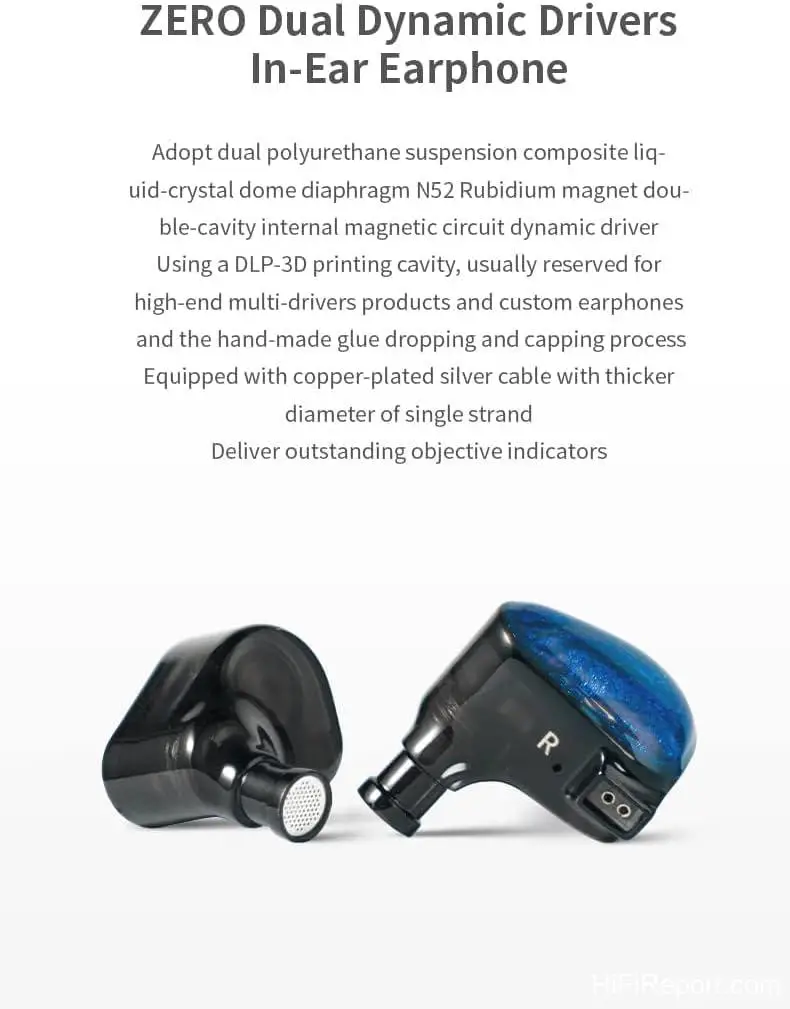
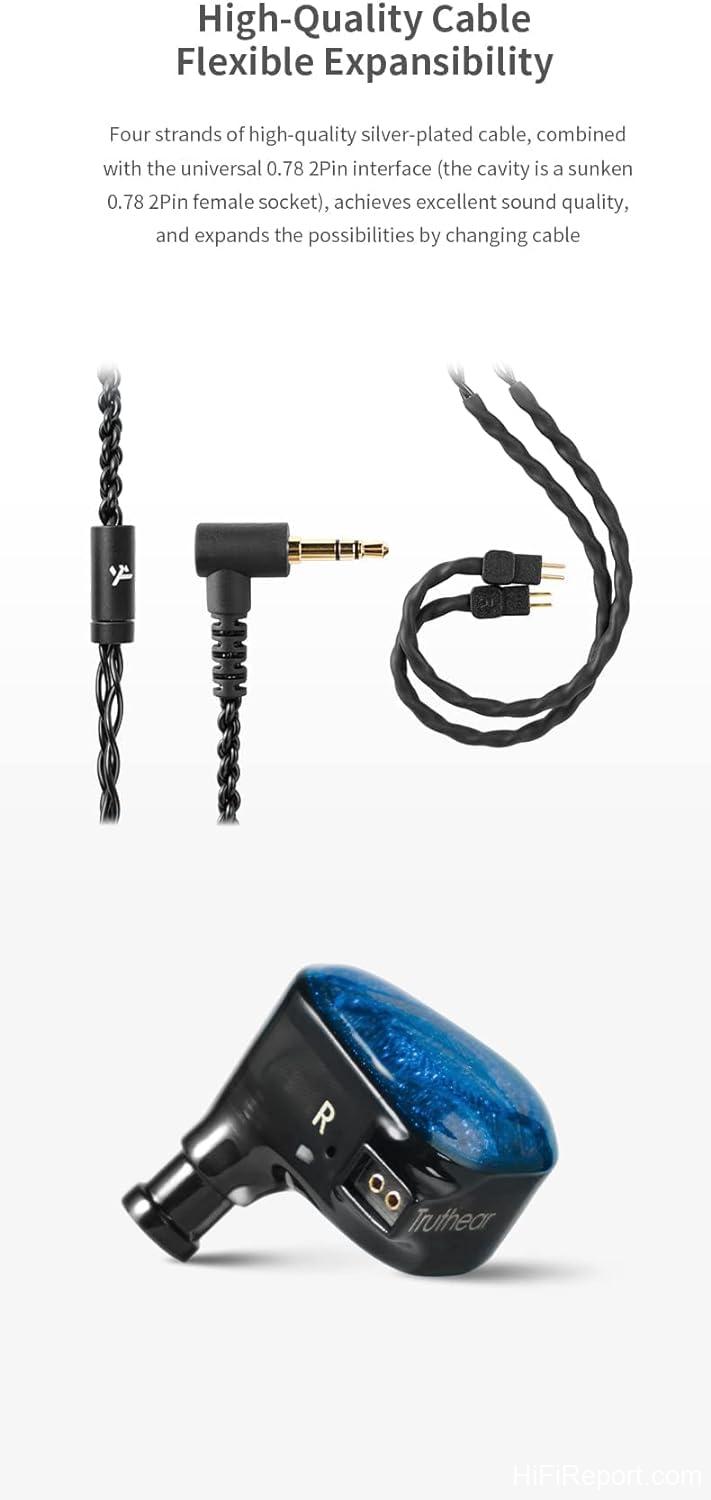
The Zero’s shell is built with a DLP 3D-printed cavity using a sandwich structure: a front cavity, a decorative panel, and a capping layer bonded through a glue-dropping process. The capping is solidified under ultraviolet light, then hand-polished and finished with a varnish spray. The result is a body that looks and feels more like a mid-tier product than an entry-level IEM, and the metal mesh grilles on each bud add a tactile solidity that cloth covers on cheaper sets lack. The included 0.78mm 2-pin cable has memory-wire ear loops and a right angle plug on the source end, which works well unless your phone case has a tight cutout.
Fit is where the review base splits. The nozzle diameter runs large, and several owners with smaller ear canals report that no stock tip provides a comfortable seal after an hour or two of use. The box includes multiple sizes of both silicone and foam tips, and the consensus across reviews is that tip choice shifts the sound signature noticeably. One owner found that the small-bore silicone tips made the bass overwhelming and compressed, while the large-bore tips restored balance to the Harman target. Others recommended third-party foam tips to get a proper seal without ear fatigue. If your ears are on the larger side, the stock tips likely work fine out of the box. If they are smaller, plan on spending time rotating through the included sizes or looking at aftermarket options.
The passive isolation is adequate for a wired IEM. A well-fitted tip blocks mid-frequency conversation, office hum, and general ambient noise reasonably well, and one owner confirmed the seal was enough for a work environment. What the physical seal does not stop is low-frequency energy. Bus engines, airplane cabin drones, and sub-bass-heavy content reach the driver through the shell. The large nozzle actually makes the seal harder to achieve in smaller ears, which compounds the isolation gap.
Grade: Good — the materials and construction clear the entry-level bar, but the large nozzle makes comfort ear-dependent and tip selection is a mandatory tuning step.
Sound Quality
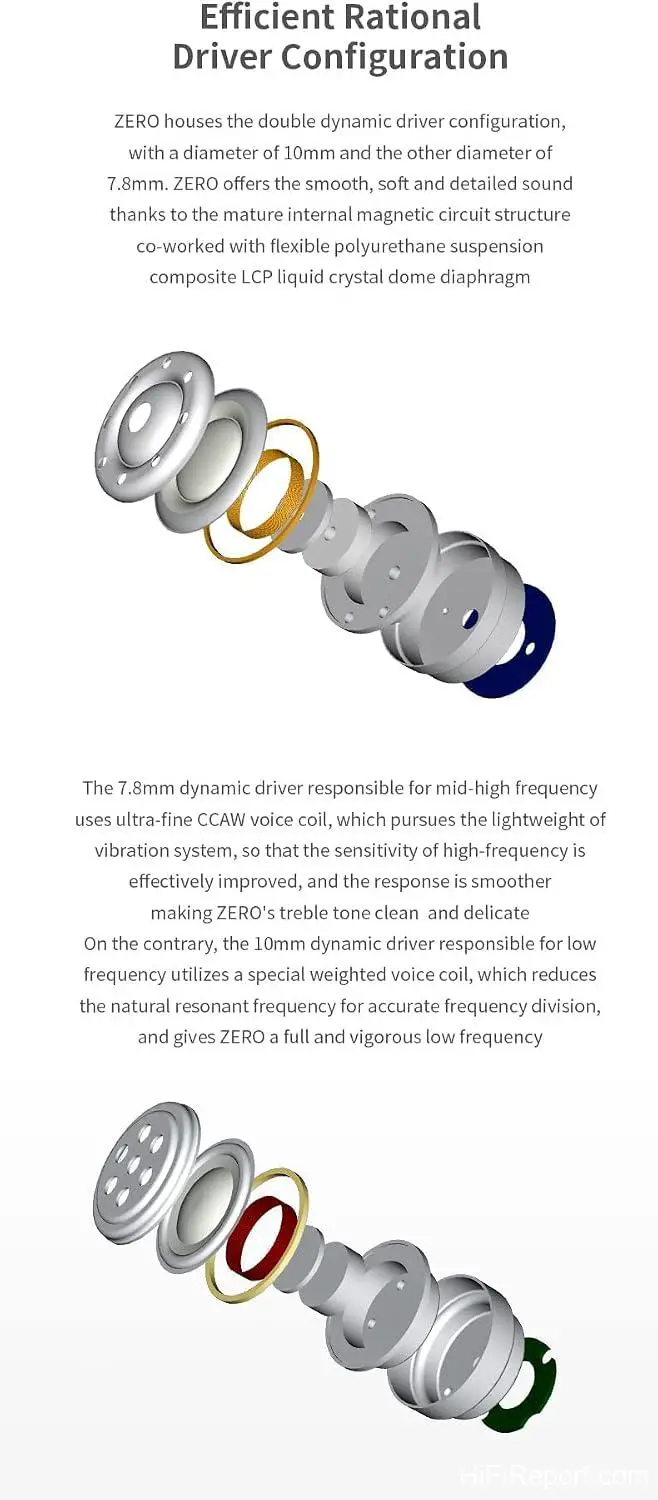
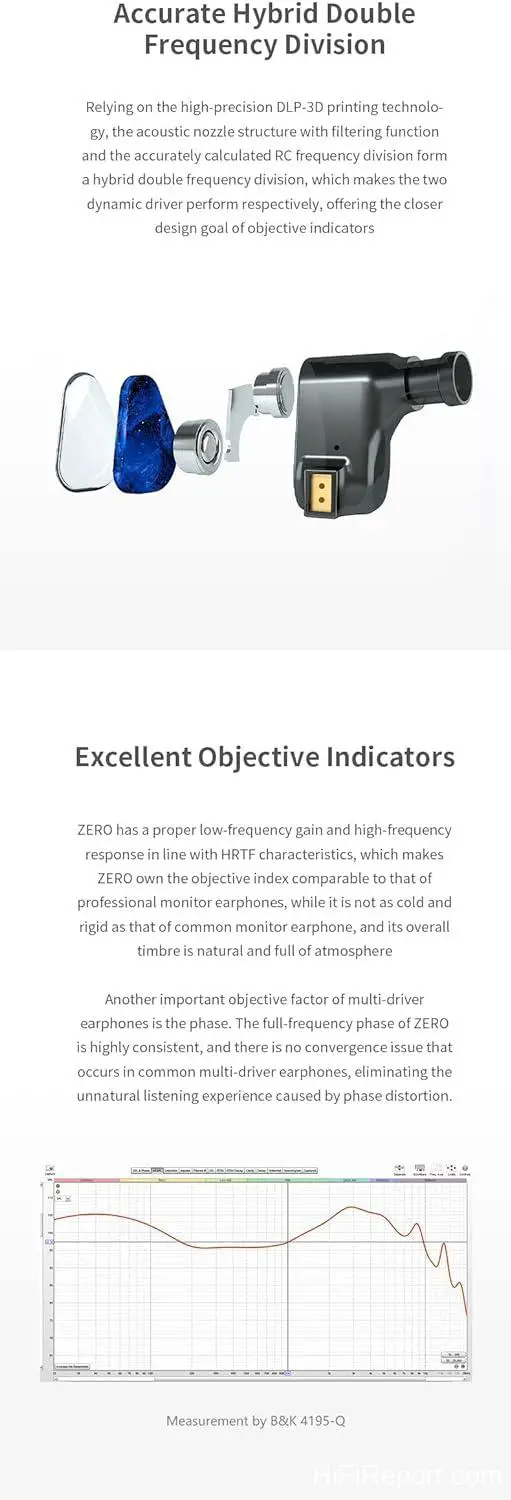
The Zero’s sound signature is the reason it earned a Great grade, and the evidence in the review base is consistent. The dual dynamic driver layout uses one driver as a dedicated subwoofer for the low end and the second for mid and high frequencies, a design that keeps the bass articulate and separate from the mids. The factory tuning follows the Harman target curve, which emphasizes a moderate low-frequency gain and a high-frequency response aligned to HRTF characteristics. The net effect is a natural, balanced sound that one owner described as holding up against sets in a much higher price tier.
Bass and Low End
The dedicated subwoofer driver gives the Zero a bass extension and weight that owners consistently call the standout feature. One reviewer noted the bass hits hard and stays clean without smearing into the mids, and another described the low end as deep and striking to the point of needing a slight EQ cut to keep sub-bass-heavy tracks from overwhelming the mix. The bass is detailed, with the intent of individual drum strikes preserved. One owner listening through a high-impedance source described feeling the aggression of powerful strikes alongside the nuance of light taps. The sub-bass can lean heavy on tracks that already push that region, but the separation between bass and mids stays clean thanks to the dual-driver split.
Mids, Treble, and Imaging
The midrange is natural and present. Multiple owners reported that vocals are clear and not recessed, and the upper mid to lower treble region sits close to target without the fatiguing forwardness that some entry-level IEMs exhibit. Treble detail is good for the price bracket, and one gaming-focused reviewer called the imaging spatial and precise, comparing the directional separation to pinpointing where each sound source sits in a room. The one recurring caveat is that the sound shifts depending on tip choice. Foam tips tend to smooth the treble, while small-bore silicone tips can make the upper register shouty and shrill.
The power requirement affects perceived sound more than most owners expect. Through a phone’s stock headphone jack, the Zero plays at or near maximum volume and the bass can feel thin or compressed. Through a dedicated DAC with low output impedance, the same pair opens up: the soundstage widens, vocals gain body, and the bass gains weight and texture. One owner measured their specific unit at a higher impedance than the stated figure and found that only a high-impedance source, in their case an older AVR receiver, brought the full performance out. The Zero is not a bad phone IEM, but the best experience comes from a dedicated amp or dongle.

Grade: Great — the Harman-aligned dual-driver tuning delivers a natural, balanced sound with standout bass and clean mids that owners compare to sets several times the price.
Noise Cancelling and Isolation
The Zero has no active noise cancellation. Isolation is purely passive, dependent on the physical seal a tip creates in your ear canal. A well-fitted foam tip blocks mid-frequency noise, conversation, and office hum reasonably well, and one owner confirmed the passive seal was adequate for a work environment. What the seal does not stop is low-frequency energy. Airplane drone, bus engines, and anything below the range a physical seal can block will reach the driver through the shell. The large nozzle, which helps the seal in larger ears, actually works against isolation in smaller ears because a proper fit is harder to achieve.
The practical implication is that the Zero is quiet enough for a coffee shop, a library, or a quiet office, but it is not a travel IEM for loud environments. If you need to block an airplane cabin or a subway car, the passive seal will not be enough. For the use cases most owners described, daily commuting, desk gaming, or casual listening, the isolation is fine. It simply does not compete with the kind of silence an active-cancellation over-ear can produce.
Grade: Fair — passive seal handles mid-frequency ambient noise but offers no low-frequency rejection and no active cancellation, leaving it short of the comfort quieter environments demand.
Battery and Charging
The Zero is a wired IEM. There is no battery inside the earpieces, no charging case, and no cycle count to worry about degrading over time. The included 0.78mm 2-pin cable connects each bud directly to the source, and the 2-pin connectors on the IEM side are non-proprietary, so a replacement cable can be sourced independently. This is the simplest possible power architecture. Nothing charges, nothing cycles, nothing degrades.
The relevant power specification is the impedance and sensitivity. The product states 10 ohm impedance, and one owner quoted a sensitivity around 97 dB. These numbers put the Zero in the moderately difficult-to-drive category for a low-impedance IEM. A phone with a dedicated headphone amp circuit, a USB-C or wired dongle DAC, or a small portable amplifier will reach comfortable listening levels without maxing out the volume knob. A phone that runs the headphone output through a generic codec will get the Zero to playable volume but near the top of the scale, and the bass extension and dynamic range will suffer. One owner measured their specific unit at a higher impedance than the stated figure and found that only a high-impedance source, in their case an older AVR receiver, brought the full performance out. The wired, battery-free design is a permanent advantage, but the source you plug into matters more here than with a higher-impedance IEM.
Grade: Good — no battery to maintain or replace, and the 10-ohm load is drivable from a wide range of sources, though a dedicated amp or dongle is the path to full performance.
Exclusive to hifireport.com. Redistribution or scraping without approval is prohibited.
How It Compares
The Source 3 coverage of the wired IEM category is thin. The broader market content focuses on wireless over-ear and TWS products from brands like Lewitt, Nothing, Skullcandy, and Sony, and the Zero does not appear in any of those head-to-head comparisons. What the market context does show is that the entry-level IEM space has its own competitive set, and the review base in Source 2 names several of those rivals directly.
Owners who own both the Zero and the Truthear Mele or Celest consistently say the Mele and Celest sound more consistent across different sources, while the Zero sounds its best through a high-impedance source. The Mele and Celest are also cited as more comfortable out of the box without requiring a specific foam tip. On the gaming side, the Zero’s spatial imaging is held up against over-ear options, and one owner who cycled through studio open-backs and over-ears found the Zero’s soundstage and directional detail comparable to much larger cans in shooter titles. The Zero does not match the low-frequency isolation of a sealed over-ear, and it will not replace an ANC headphone for travel. Within its specific lane, a Harman-tuned entry-level IEM for desktop listening and gaming, it holds up against the options owners named.
The Crowd’s Score
The 4.3 out of 5 aggregate on Amazon sits across 2,572 ratings, and the written reviews behind that number cluster around two themes. The first is sound quality relative to the price point. Multiple owners, including self-described non-audiophiles and first-time IEM users, said the Zero sounded as good as or better than sets they had previously owned at several times the cost. The Harman-aligned tuning, the dedicated bass driver, and the clean midrange were the specific features most often called out. A gaming owner who had cycled through multiple over-ear headphones found the Zero’s imaging and directional cues superior for competitive play, and a music-focused owner called the build quality and material choices premium by any entry-level standard.
The second theme is the fit and source requirement. The large nozzle comes up in nearly every mixed review. Owners with smaller ear canals report that no stock tip provides a comfortable seal, and that the sound shifts noticeably depending on which size is in the ear. The power requirement surfaces in the same reviews: a phone with no dedicated amp circuit pushes the Zero to the volume ceiling, and the bass and dynamic range fall off. A small number of owners reported a single driver failing over time, with the left bud losing its mid and high output, though this appears to be a manufacturing outlier rather than a design flaw. None of these issues pull the aggregate down further, because the owners who found the right tip and the right source consistently called the Zero the strongest value they had tried.
Strengths and Weaknesses
- Strengths:
- Harman-aligned dual dynamic driver tuning with a dedicated subwoofer driver keeps bass detailed and separate from mids
- DLP 3D-printed shell, metal grilles, and multiple included tip sizes give the build a premium feel for the category
- Spatial imaging and directional detail hold up well for competitive shooter games
- Non-proprietary 2-pin connectors make cable replacement straightforward
- No battery to maintain or replace; wired operation is permanent and simple
- Weaknesses:
- Large nozzle makes comfort ear-dependent; smaller canals need aftermarket tips for a proper seal
- 10-ohm impedance and 97 dB sensitivity mean a stock phone jack will max out volume and compromise bass
- Passive isolation only; low-frequency rumble passes through with no active cancellation
- Treble can sound shouty with the wrong tip choice; small-bore silicone tips tend to worsen it
- The included 0.78mm 2-pin cable, while functional, is described by some owners as basic for the build quality of the IEM itself
Verdict
Walking the Report Card in order: Sound Quality is Great, the dual-driver Harman tuning is the product’s defining feature and the one most owners praise. Design and Comfort is Good, the materials clear the entry-level bar but the nozzle size means comfort is per-ear. Noise Cancelling and Isolation is Fair, passive seal is all you get and low-frequency noise slips through. Battery and Charging is Good, wired means no battery to worry about, though the source you use determines how much of the sound you actually hear. Gaming Performance is Great, the spatial cues and directional detail are the second most-praised feature after the tonal balance. The buying answer is straightforward. If you have a dedicated amp, a USB dongle, or a phone with a real headphone amp circuit, the Zero is a strong entry into the IEM world. If your only source is a stock phone jack running through a generic codec, the volume ceiling and bass loss will keep you from hearing what the drivers are capable of, and a set with higher sensitivity would serve you better.
Spec Sheet
- Driver type: Dual dynamic driver (one dedicated subwoofer driver)
- Impedance: 10 ohms
- Sensitivity: 97 dB
- Connector: 0.78mm 2-pin (non-proprietary, IEM side)
- Cable: 0.78mm 2-pin, memory-wire ear loops, right-angle plug, no inline mic
- Shell construction: DLP 3D-printed, sandwich cavity, UV-cured capping, hand-polished, varnish finish
- Ear tips: Multiple sizes of silicone and foam included
- Grille: Metal mesh
- Tuning reference: Harman target with HRTF-aligned high-frequency response
- Form factor: Wired in-ear monitor
Frequently Asked Questions
Do I need a DAC or amplifier to use the Truthear Zero?
You do not need a dedicated DAC for the Zero to work, but the 10-ohm impedance and 97 dB sensitivity mean a stock phone jack will push volume to the top of the scale and leave the bass thin. A USB dongle, a phone with a built-in headphone amp circuit, or a small portable amp gives you headroom and the full dynamic range the drivers are designed for.
Exclusive to hifireport.com. Redistribution or scraping without approval is prohibited.
Are the Truthear Zero good for competitive shooters?
Yes. Multiple owners report clear spatial imaging, reliable directional footsteps, and a soundstage that places enemies above, below, and behind you in shooter titles. The dedicated bass driver keeps low-frequency explosions from masking mid-range cues. One caveat from the review base: vertical depth is less precise than horizontal imaging, so distinguishing two footsteps at different heights is harder than telling front from back.
Which ear tips should I use with the Truthear Zero?
The box includes multiple sizes of both silicone and foam tips, and the sound shifts noticeably depending on which size is in your ear. The consensus across reviews is to try every included size and note how the bass and treble change. If none of the stock tips give you a comfortable seal, aftermarket foam tips are a common fix. Small-bore silicone tips tend to boost the bass and compress the midrange, while large-bore tips and foams keep the tuning closer to the Harman target.
Will the Truthear Zero work through a Bluetooth adapter?
They will connect through a Bluetooth adapter, and one owner used a budget adapter with a phone and reported good sound. The adapter becomes the limiting factor, not the IEM, so the spatial detail and dynamic range you get will depend on the adapter’s codec and output current. For the best experience, a wired connection through a dedicated source is the path most reviewers followed.
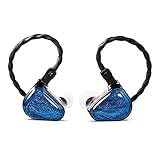
- Glue-Dropping Molding Capping Process: ZERO whole cavity adopts a sandwich structure (front cavity, decorative panel, and glue dropping capping); ZERO is capped by glue-dropping process and it is solidified and shaped by ultraviolet and processed by hand-polishing and varnish spraying, which ensure beautiful design while effectively reinforce the firmness processed by glue dropping capping
- Age range descriptionAdult
- Excellent Objective Indicators: ZERO has a proper low-frequency gain and high-frequency response in line with HRTF characteristics, which makes ZERO own the objective index comparable to that of professional monitor earphones, while it is not as cold and rigid as that of common monitor earphone, and its overall timbre is natural and full of atmosphere