
Unis-3 Power Cable Review
There’s always a sense of anticipation whenever I encounter a DC Cable product from Unis.
Having spent years designing cables, and even serving as an OEM for other manufacturers, Unis has undoubtedly mastered the intricacies and secrets of cable design.
They possess their own distinct logic when it comes to conductor core configurations, conductor material selection, gauge determination, and shielding arrangements.
Sometimes, during their visits to our company for discussions, they even bring along unreleased prototypes to discuss with our editors.
Their commitment is to ensure that every product released is the result of thorough consideration and deliberation.
In the past, Unis products were highly individualistic, lacking a systematic approach. Their product range was vast, exceeding 800 items, which made it challenging for consumers to choose.
However, this has started to change in recent years.
Browsing their website now reveals clearly defined product series, alongside independent products not categorized within series. There’s also an extensive selection of bulk cables available, and beyond DC Cables, they’ve launched the high-end brand Lelio and the Muzhi Studio catering to DIY enthusiasts.
Today, Unis is well-equipped to meet the needs of all types of audio users, increasingly resembling an international brand in its approach.
Completing the Unis Series
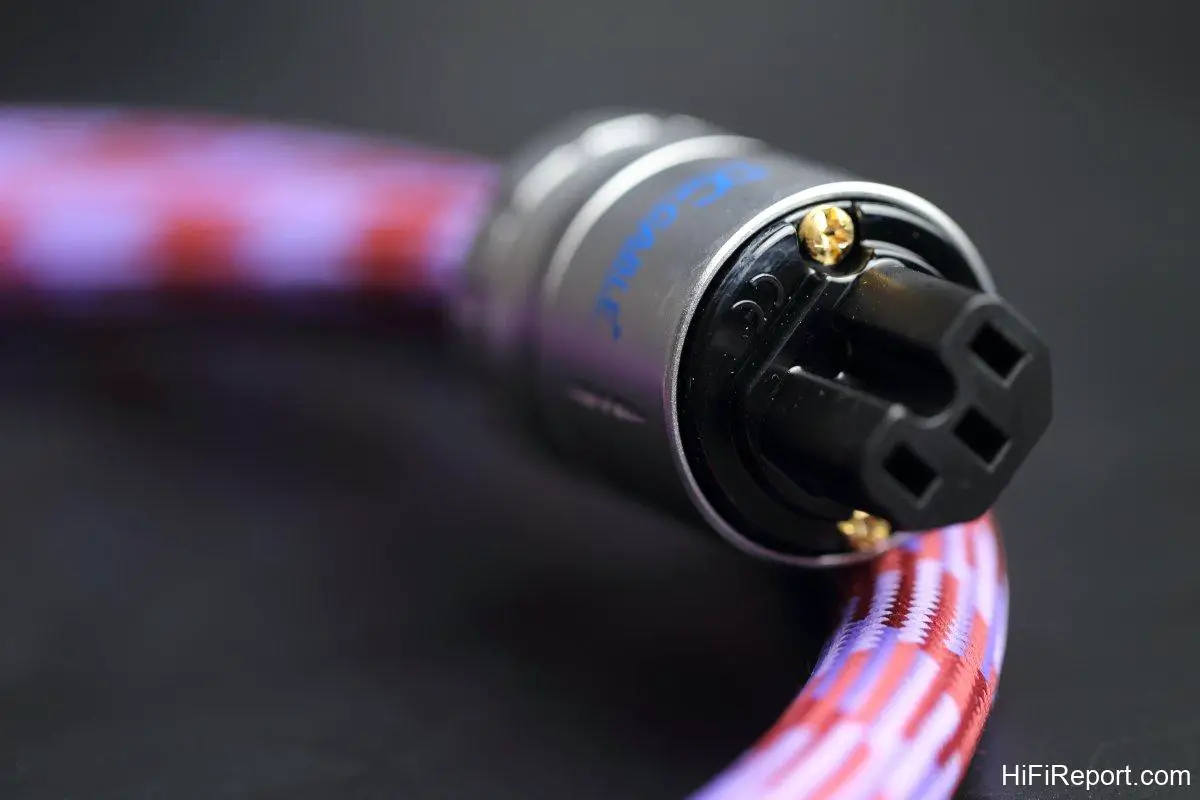
Upon receiving the Unis-3 power cable from DC Cable, the purple speckled outer sheath immediately struck me as familiar.
A quick inquiry to Editor-in-Chief Roy confirmed my recollection: “Yes, you’re right, I reviewed the speaker cables and interconnects from this series last year.”
The speaker cable was named Unis-1, the interconnect Unis-2, and this power cable, launched three seasons later, is logically named Unis-3.
While the numerical sequence of 1, 2, and 3 might not explicitly reveal a direct correlation to speaker cables, interconnects, and power cables, it’s clear that the Unis series is indeed a family.
They share not only a similar speckled exterior but also the same conductor material and a consistent design philosophy, as HiFiReport has observed.
SUP-OCC Single Crystal Copper Conductor
Regarding the conductor material, all three Unis cables utilize what they refer to as SUP-OCC single crystal copper.
Single crystal copper, produced through continuous casting, allows for the formation of extremely long crystal structures within the conductor, theoretically reaching lengths of 150 meters or more.
Due to these elongated crystals, electrons can flow more smoothly along the conductor when transmitting current, minimizing jumps across crystal boundaries. This characteristic makes single crystal copper highly sought after in high-fidelity audio cables.

While Furutech offers PC-OCC single crystal copper and Wanlung utilizes UP-OCC, DC Cable has developed its own proprietary process. They incorporate Vacuum Refining and Reversion Technology to enhance the quality of OCC copper, resulting in what they term SUP-OCC.
Homogenous Strand Design, Balanced Configuration
In terms of structural design, the differing functions of speaker cables, interconnects, and power cables necessitate distinct approaches rather than a one-size-fits-all solution.
However, the Unis family of cables shares a common thread: their cores are all constructed from three different gauges of conductor strands: 0.25mm, 0.15mm, and 0.08mm.
DC Cable excels at fine-tuning cable characteristics through “homogenous strand design.” Grounded in physics, and refined through experience and repeated experimentation, they can achieve varied sonic signatures even with identical conductor materials.
In the Unis-3 power cable, DC Cable employs a seven-strand hybrid winding of 0.25mm, 0.15mm, and 0.08mm gauge conductors. This winding structure is designed to effectively eliminate external noise interference.
Some cable manufacturers prioritize the live and neutral wires in power cables, allocating higher quality materials and larger gauges to these conductors, while treating the ground wire with less emphasis.
However, the DC Cable Unis-3 takes a different approach. The live, neutral, and ground conductors are all constructed identically, utilizing SUP-OCC conductors throughout. Each conductor boasts a substantial 5.5 square millimeters in cross-sectional area.
Why 5.5 square millimeters? Because that’s the maximum conductor gauge that standard power plugs can accommodate.
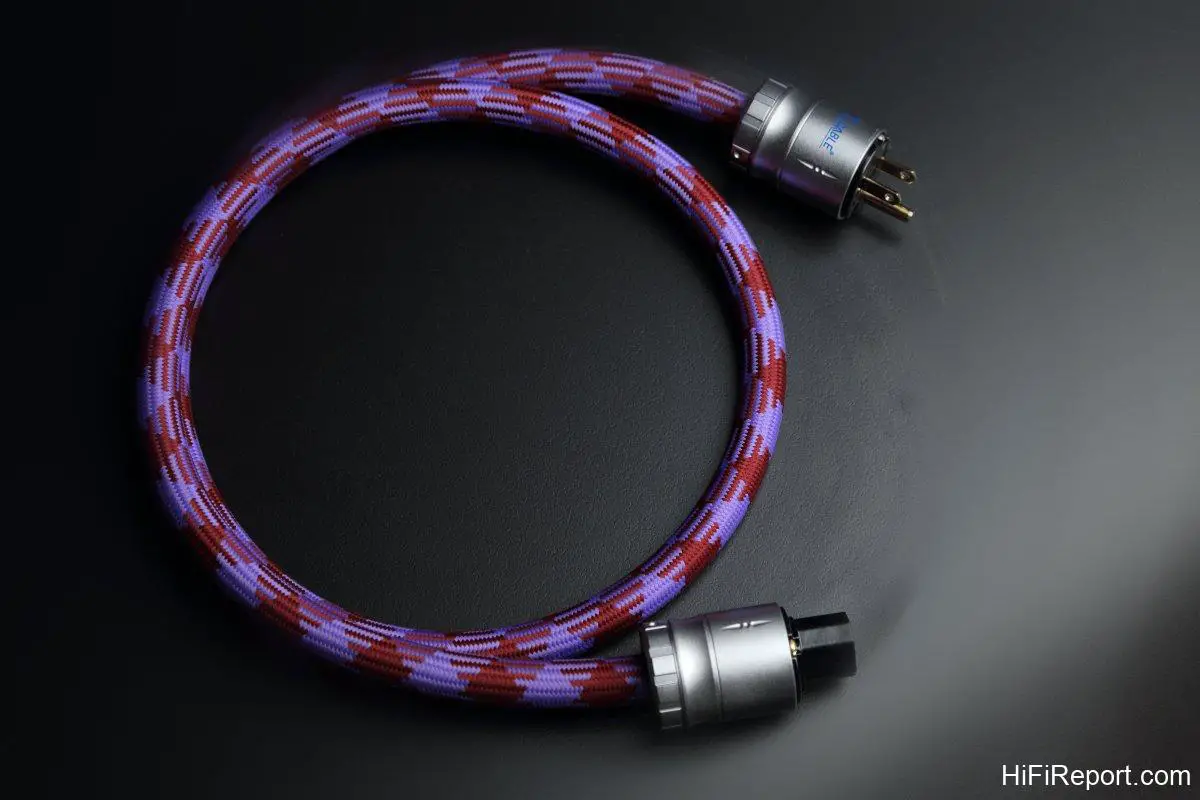
DC Cable’s philosophy is to maximize the capacity, ensuring your equipment receives ample power.
High-Quality Aluminum Connectors
The male and female connectors at both ends are also custom-designed by DC Cable.
They could have opted for readily available medical-grade or audio-grade connectors from specialized manufacturers, which might have even enhanced product marketing.
However, DC Cable insists on in-house production.
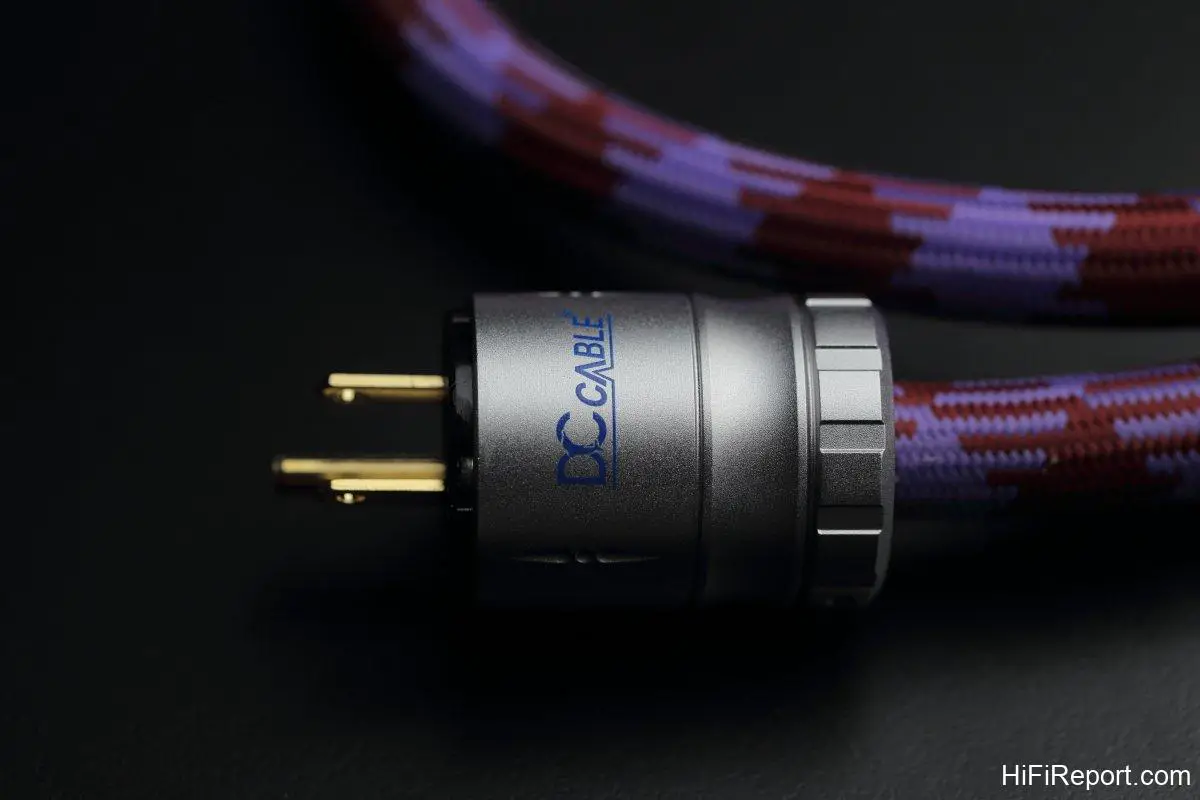
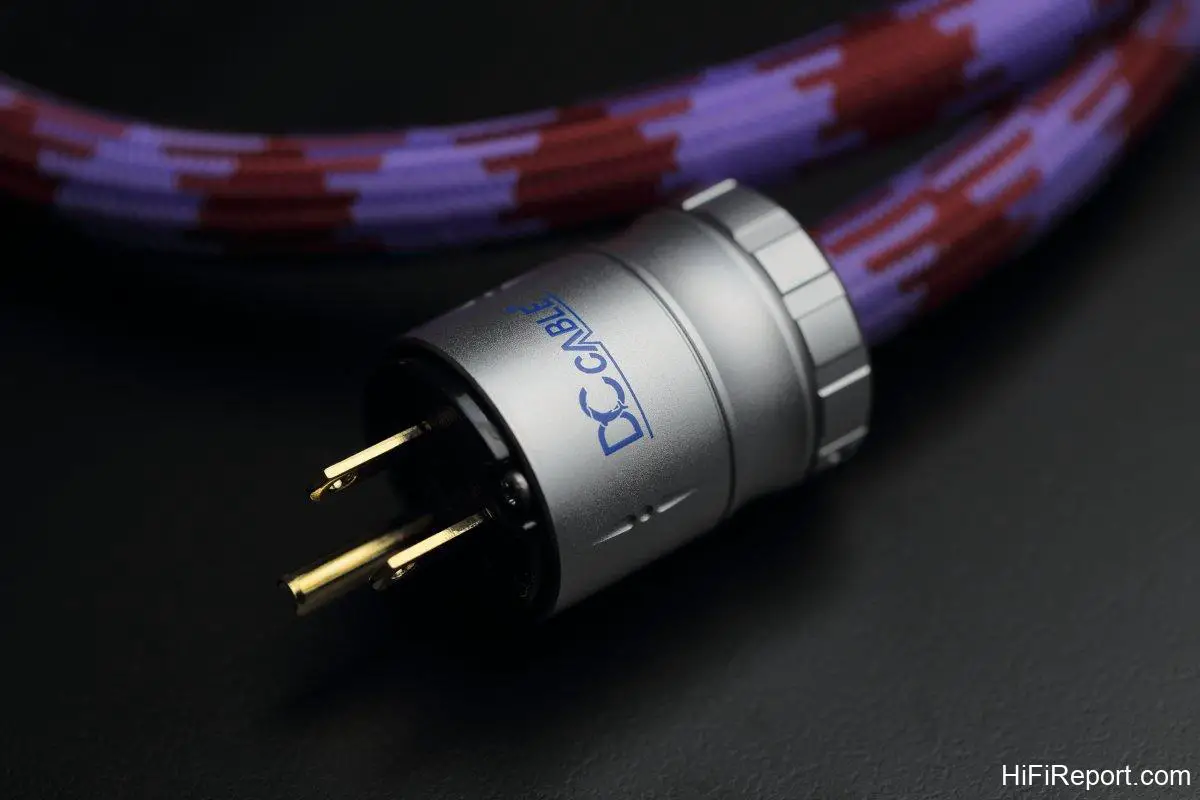
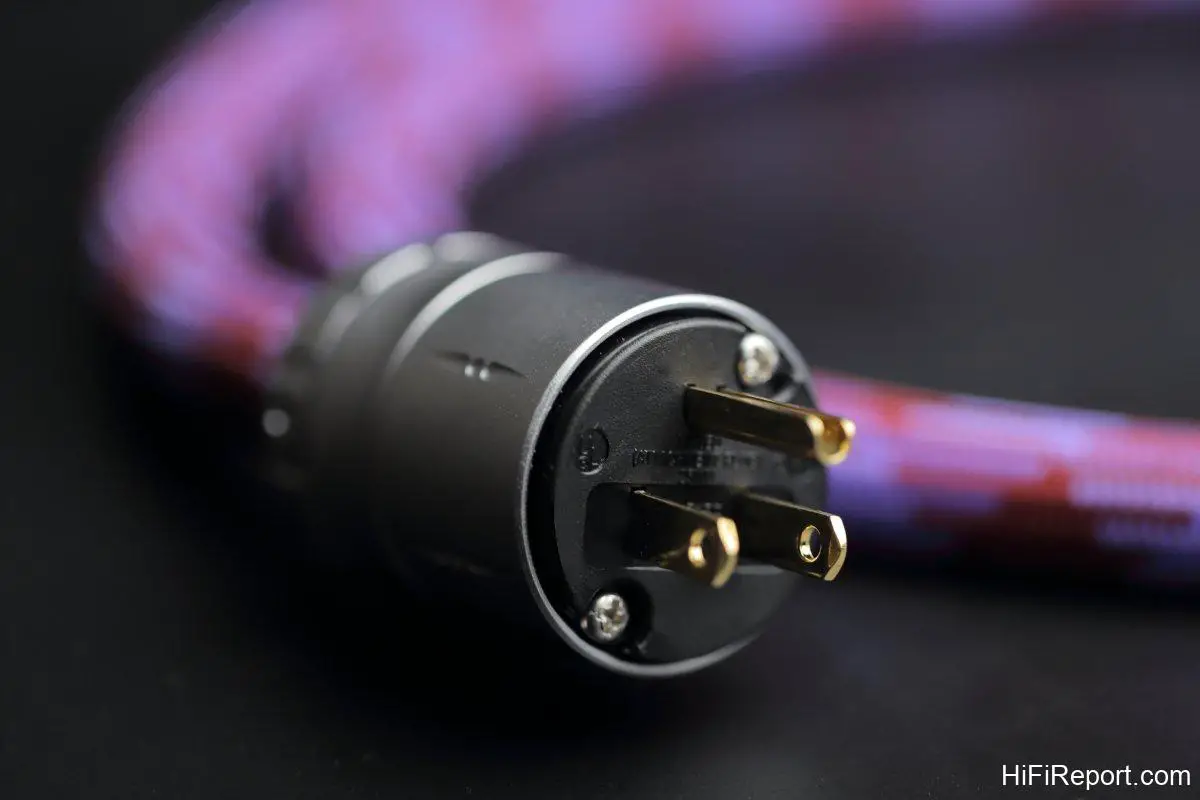
The housings of the power plugs and sockets used in the Unis-3 are crafted from non-magnetic aluminum alloy, featuring an anodized and matte finish. Strategically placed curved indentations are incorporated to facilitate grip and leverage during insertion and removal, while also enhancing the mechanical strength of the connector body.
The female connector’s contact clips are notably tight. When initially connecting the Unis-3 power cable, the force I typically use for plugging in power cords proved insufficient.
It requires a firm push! One hand must securely hold the equipment, while the other grips the connector, applying substantial force until it’s properly seated.
Balanced, Natural, and Energetic Sound
The Unis-3 power cable exhibits a balanced frequency response, without any noticeable emphasis or exaggeration in any particular range.
It enhances the solidity of sonic images and expands the depth of the soundstage.
The sense of energy is abundant, and the dynamic contrast in music becomes more pronounced. Especially in large-scale dynamic passages, the system’s stability is noticeably improved. It feels as though the amplifier’s volume could be turned up even further without introducing harshness.
Solid Piano Tone, Dynamic Contrast
Listening to Krystian Zimmerman’s rendition of Liszt’s Sonata in B minor, Zimmerman approaches this profound work with an intelligent and resolute style, rationally handling phrasing and articulation. While Zimmerman might not be primarily perceived as a virtuoso, here, he fully showcases his virtuosity.
The term “virtuoso” immediately brings to mind the immense volume and the sharp, forceful nature of his playing in this piece.
The Unis-3 power cable imbues the sound with a sense of thickness, making the piano tone sound more solid and assertive. Each note possesses presence and power.
Through this cable, the music’s energy feels abundant, and dynamic contrasts are heightened.
The rapid, articulated notes are crisp and dense, while the weighty chords, resonating with the pedal, possess a distinct sense of weight, creating a powerful impact.
During the slow movements, the piano notes are full and substantial, carrying a rich and lingering resonance. If this were whiskey, the Unis-3 would undoubtedly be aged in sherry casks.
Appropriate Thickness for Smoothness
Consider Jacques Loussier Trio’s jazz interpretation of Bach’s Toccata and Fugue in D minor. The piece opens with Jacques Loussier’s forceful and impactful piano performance.
At high volumes, the rapid, forceful attacks might sound somewhat strident. However, the Unis-3 can temper some of the bright edge without diminishing the music’s exhilarating energy.
The same effect is observed in the rendering of powerful drum strikes.
The bass sounds rounded, full, deep, and powerful.
Although I mentioned that the Unis-3 adds a degree of thickness to the system’s sound, this thickness is not excessive. Instead, it makes the music sound smoother and more agreeable to the ear, while importantly, enhancing the definition of each sonic element.
Despite the small ensemble size of the jazz trio, the three instruments each have their own distinct character. Their interplay throughout this lengthy piece is full of variety.
The Unis-3 provides just the right amount of thickness, allowing the music to remain rich in variation and thoroughly engaging.
Abundant Detail, Enhanced Definition
Having mentioned the Unis-3’s contribution of thickness to the system’s sound twice, you might wonder: Does this mean the music loses vitality? Are details diminished? Actually, quite the opposite.
Let me illustrate with the first two tracks from the Dali CD 4 sampler.
The first track is Eva Cassidy’s rendition of “Ain’t No Sunshine.” Eva’s nylon-string guitar is vividly recorded. Whether it’s the crisp plucking, the lush strumming, the rich body resonance, or even the subtle sounds of her fingers sliding across the strings, everything is clearly rendered.
With my regular power cable, these details are also present, but switching to the Unis-3 makes them even more distinct.
Eva’s vocals also gain a touch of thickness and fullness. When she sings with intensity, the projection of power feels more assured.
The Unis-3 brings the focus of the music more directly onto the protagonist, Eva Cassidy.
As for the second track, Tom Jones’ “Did Trouble Me,” the opening minute clearly reveals the nuances of his enunciation and vocal delivery. I perceive absolutely no issues with resolution.
The muted drumbeat in the background becomes more defined. When the drums open up fully after the first minute, the Unis-3 renders them with greater fullness, depth, and enhanced texture.
The brilliance lies in the lively accompaniment that follows. A tambourine, positioned slightly to the left and rear of the soundstage, enters. To assess the music’s liveliness, image transparency, soundstage depth, and detail retrieval, simply listen to the sound of the tambourine.
Before the music reached that point, I was slightly concerned that the Unis-3 might obscure the tambourine’s clarity. However, my worries proved unfounded.
The tambourine sounds even more substantial, defined, and distinct compared to my original power cable, clearly announcing its presence.