
Vestlyd V15C Coaxial Loudspeaker Review
If your primary criterion for selecting loudspeakers is sheer volume, then you absolutely must audition the Danish Vestlyd V15C coaxial loudspeakers before making any decisions. This is, without a doubt, the “loudest” floorstanding speaker under the NT$100,000 (approximately $3,200 USD) price point that this reviewer has encountered. When tackling the thunderous cannons of “1812 Overture,” the V15C delivers with a speed, ferocity, and precision that is unlikely to be matched within this price bracket.
The Human Ear Perceives Loud as Better
Human hearing is a fascinating thing; we generally perceive louder sound as being more pleasing. Of course, this premise of “loud is better” has a crucial prerequisite: it must not distort. In conditions of low distortion, the more volume an audio system can deliver, the more enjoyable the listening experience becomes. It’s no wonder that during audio shows, manufacturers consistently push the boundaries of volume to showcase the capabilities of their equipment.
My first encounter with the Vestlyd V15C coaxial loudspeakers was at the 2024 TAA Audio Show, where they left a strong impression. However, I hadn’t had the opportunity for a thorough listening session until now. The V15C has been sent to the editorial office for a review and to facilitate the creation of a YouTube video, aiming to increase brand visibility for Vestlyd.
A New Brand with an Old Soul
The Vestlyd brand from Denmark might be unfamiliar to many, as it was established in 2021 and only introduced to the market in 2024, making it a relatively young company. However, its parent company, Hi-Fi Klubben, is very well-known and is the largest audio retailer in Northern Europe.
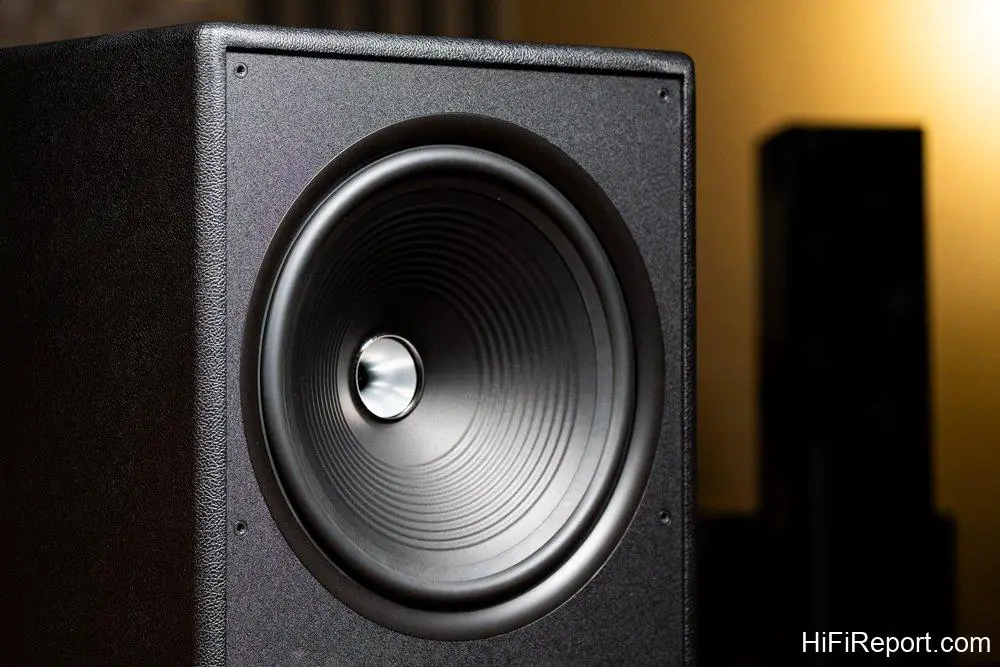
Upon seeing “Vestlyd,” many, like myself, might initially struggle with pronunciation. The “LDY” together, preceded by “ST,” can be perplexing. My best guess is to pronounce the first part “Vest” and then combine it with “Lyd” (pronounced “lid”).
These two words originate from Danish. “Vest” means “West,” and “Lyd” means “Sound.” Together, they form “Western Sound,” signifying that the Vestlyd company is located on the western coast of Denmark.
Despite being a newly established Danish brand, Vestlyd’s design philosophy is decidedly retro. The brand aims to pay homage to classic loudspeakers by emphasizing **large dynamics** and **high sound pressure levels** to recreate the immersive experience of a live musical performance.
Function Over Form: Sound is Paramount
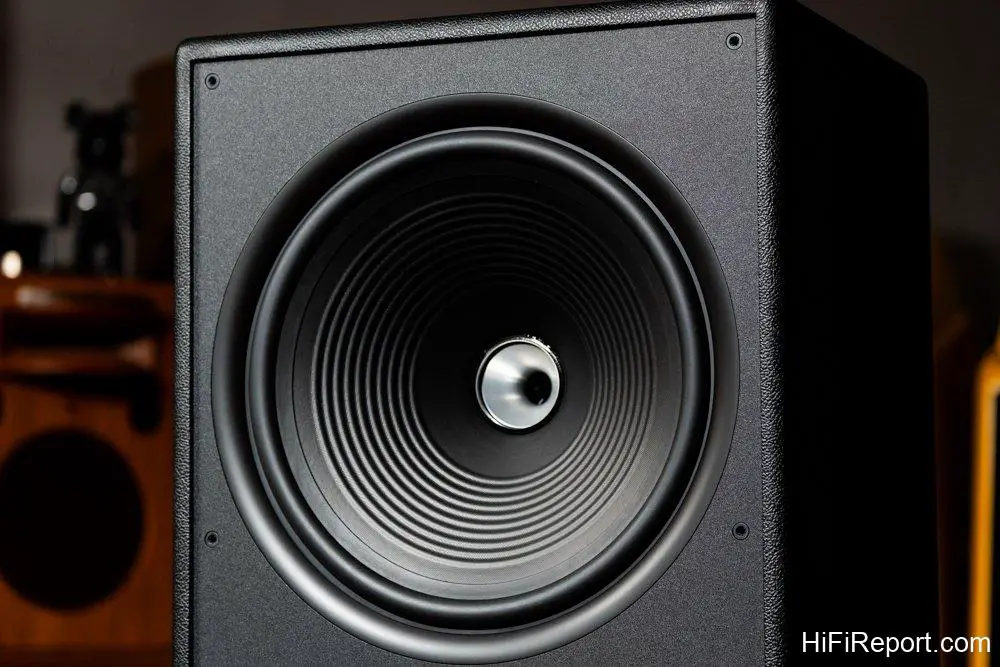
To achieve these goals of large dynamics and high sound pressure levels, aiming for an experience akin to a live concert, Vestlyd believes that loudspeaker design should not compromise the core essence of reproducing a realistic musical event for the sake of aesthetics. Therefore, Vestlyd’s foundational design principle is to return to the fundamental function of a loudspeaker: to accurately reproduce the actual sound pressure of a live performance, unburdened by aesthetic considerations.
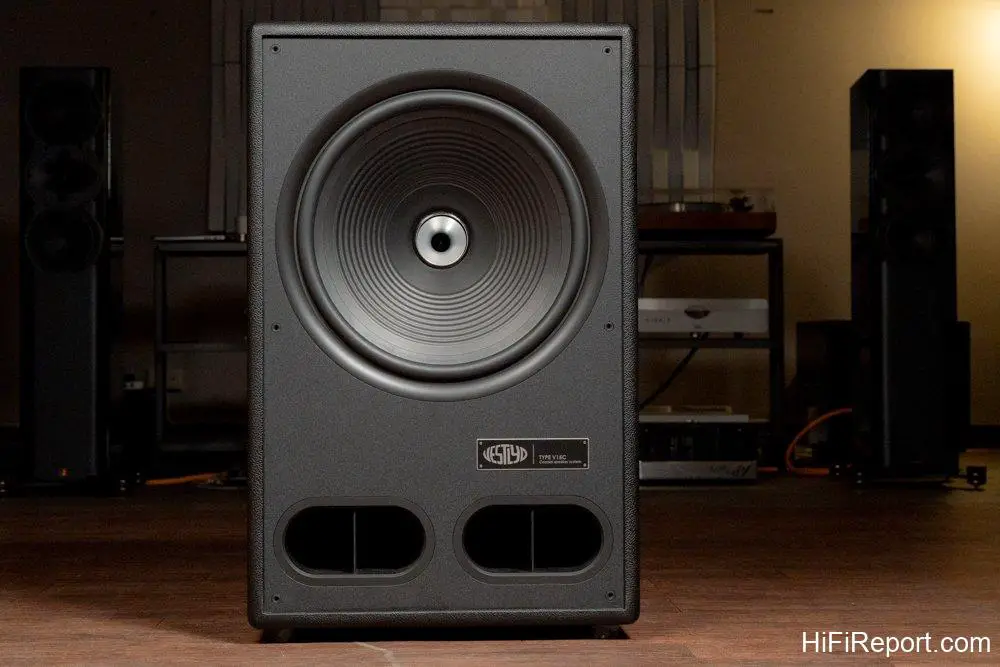
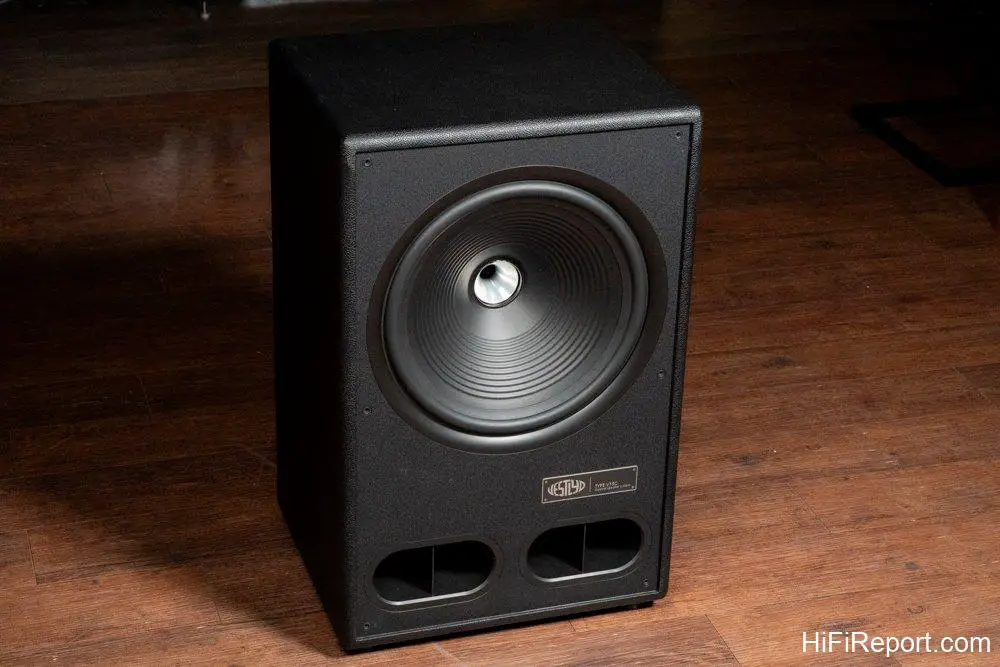
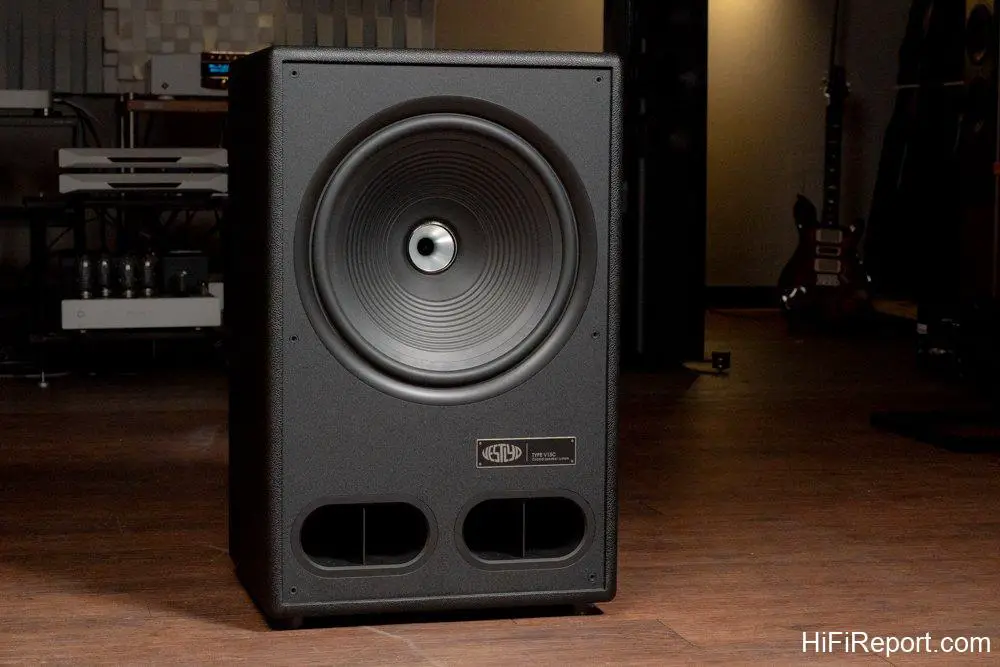
Observe the V15C coaxial loudspeaker. Its cabinet is squarely built, impressively large, and finished in a dark hue, exuding a rather vintage aesthetic reminiscent of 1960s PA systems. At the Munich High End show, Vestlyd even created an intriguing V15C “speaker wall,” stacking numerous units higher than a person, resembling a rock concert stage.
Custom-Designed 15-Inch Quasi-Horned Coaxial Driver
Specifically engineered for high volume and dynamic range, Vestlyd reverts to traditional loudspeaker design principles. To reproduce high sound pressure levels and dynamic swings, loudspeakers require substantial cabinet volume and drivers of considerable size. Thus, the V15C features a custom-built 15-inch coaxial driver, and the cabinet is designed to be wide and spacious to accommodate this large driver, providing ample volume.
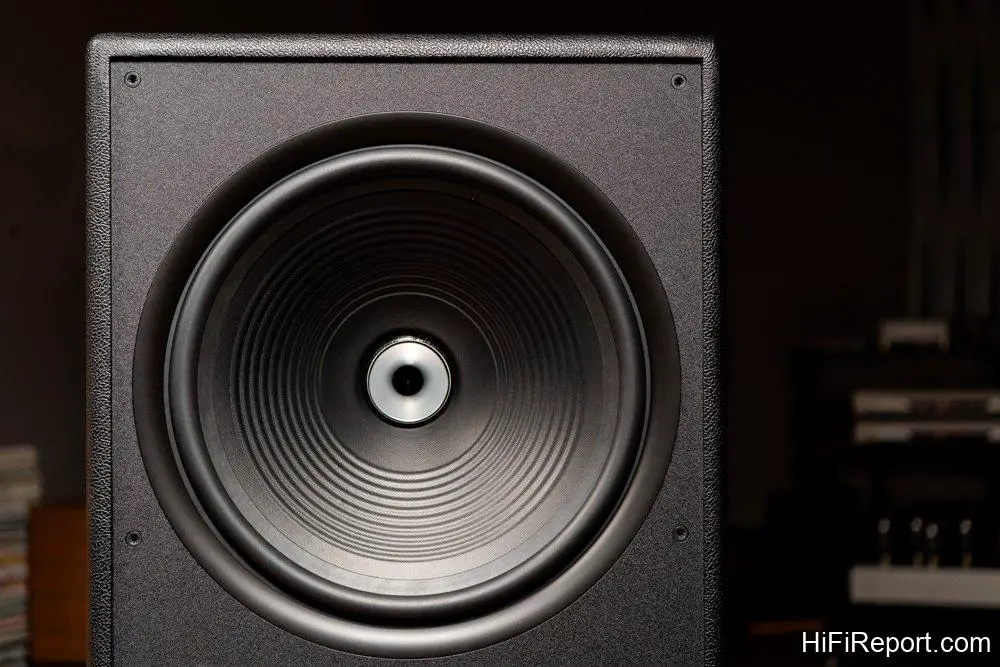
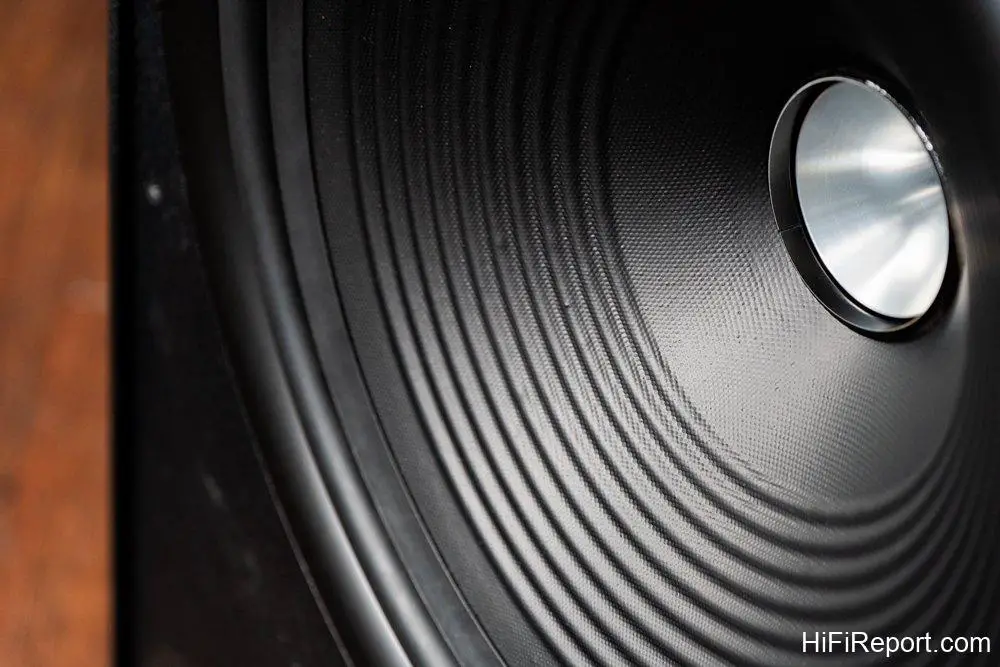
The 15-inch coaxial driver employed in the V15C boasts a mid-bass diaphragm with a vintage touch: a paper cone. It is further enhanced with concentric rings to minimize cone breakup distortion. The magnetic motor system incorporates an aluminum Faraday ring, which reduces non-linear distortion and improves frequency response. In simpler terms, it ensures that the sound remains cohesive whether played softly or loudly.
A Hidden Quasi-Horn in the Center
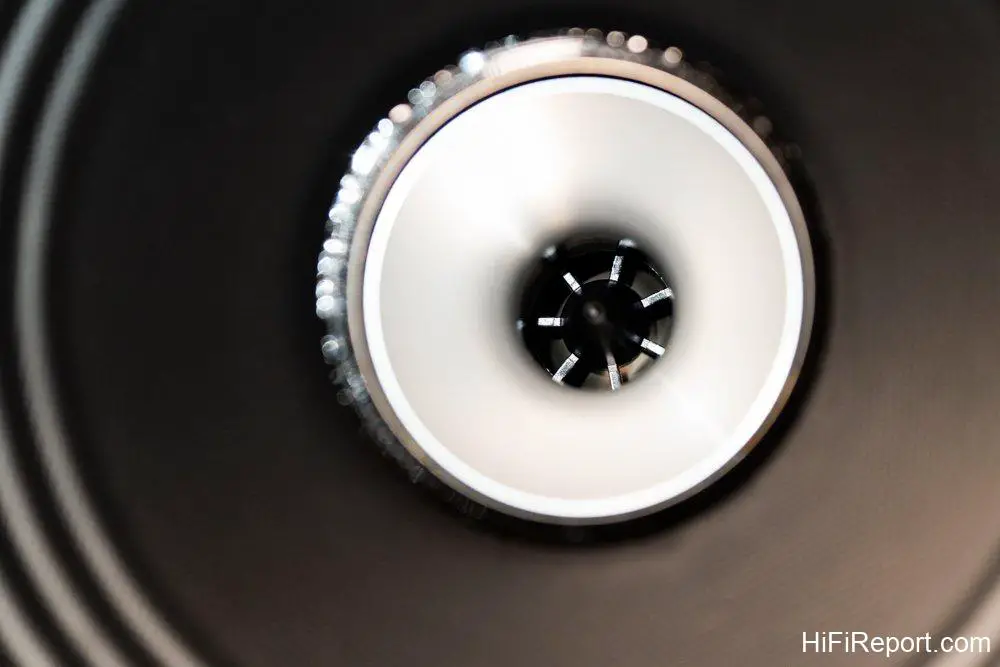
At the heart of the 15-inch mid-bass driver lies a 1-inch titanium dome tweeter, coupled with a powerful neodymium magnet. In front of the tweeter, an aluminum-machined quasi-horn waveguide is integrated. This, combined with the conical shape of the 15-inch driver’s cone, creates a horn effect, enhancing the dispersion of high frequencies and providing the V15C with a wider sweet spot.
According to Vestlyd’s specifications, the V15C extends down to 36 Hz. The manufacturer states that while the 20 Hz-36 Hz frequency range is perceived by the human ear as relatively muddy and akin to a rumbling sound, they prioritize the speed and impact of the bass over extreme low-frequency extension.
A Cabinet Lauded as “Tank-Like” in its Robustness
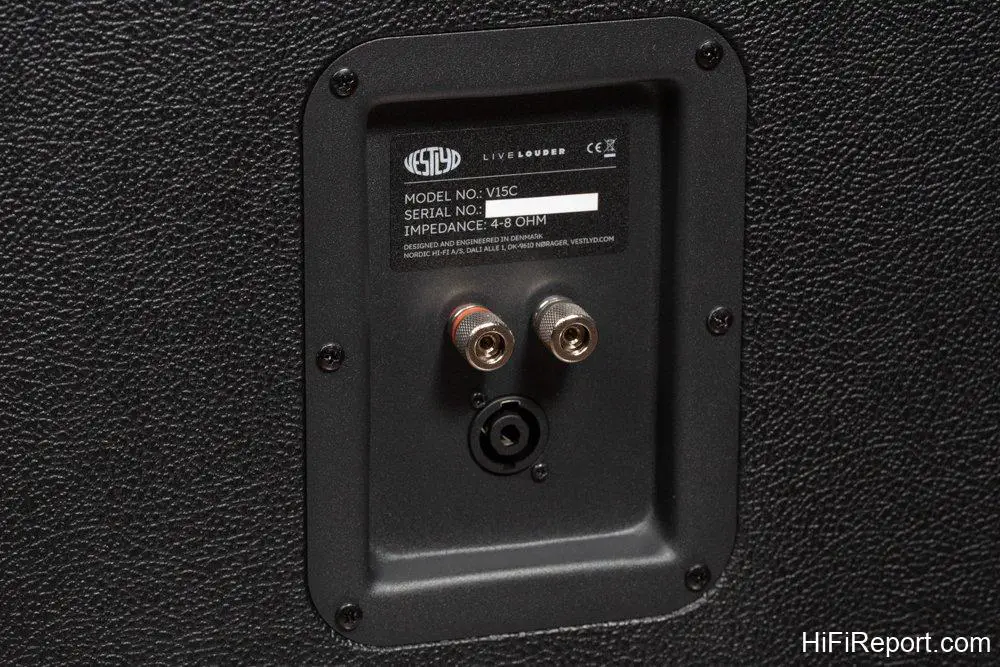
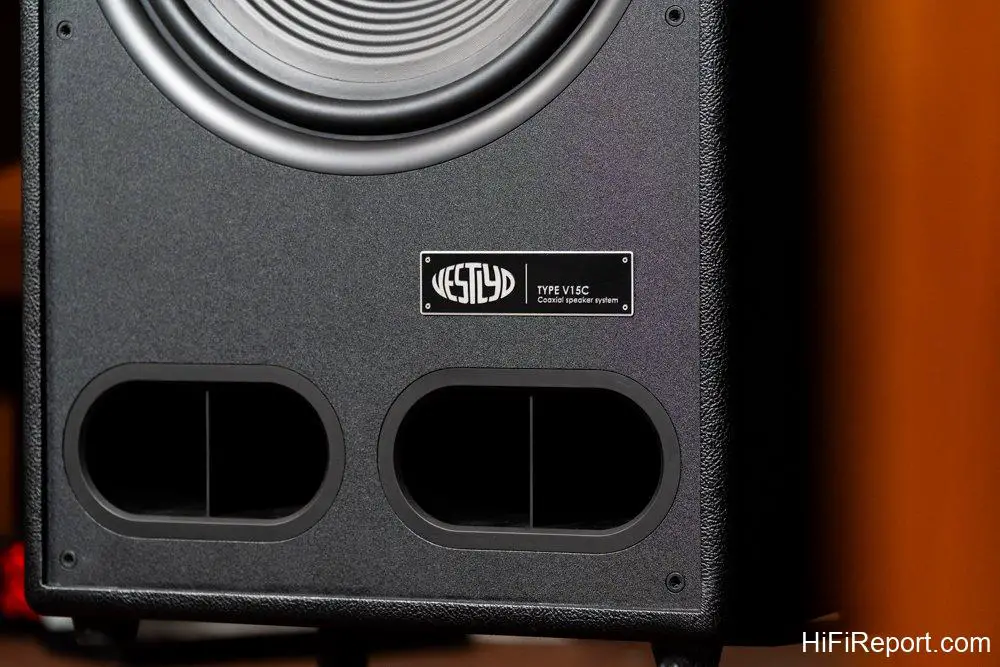
Finally, let’s discuss the V15C’s cabinet construction. Vestlyd’s official description refers to it as a “cabinet as sturdy as a tank.” The front baffle measures a substantial 3 centimeters thick, and internal bracing provides additional structural integrity. The 15-inch driver is mounted to a central divider, offering extra support. The base features two large bass reflex ports.
In essence, the V15C’s design is characterized by its “largeness”: a large cabinet, large drivers, and large bass reflex ports. These elements collectively equip the V15C to be a formidable sound producer. Just how loud can it get? Its maximum sound pressure level is rated at an astonishing 130 dB, comparable to the roar of a jet engine taking off!
A Friendly 95 dB Sensitivity
To unleash the V15C’s full sonic potential, the speaker’s efficiency must be sufficiently high. The manufacturer claims a remarkable 95 dB sensitivity for the V15C, rivaling that of traditional horn-loaded speakers.
Is it truly that easy to drive? Coincidentally, the Eversolo Play, a full-featured digital streamer and integrated amplifier with an output of 60W into 8 ohms and 110W into 4 ohms, was at the editorial office. Connecting it to the V15C proved to be effortless. Even when pushing for high SPLs, the Play did not need to be driven to its limits to achieve a volume level that would surely prompt complaints from neighbors, underscoring how easy the V15C is to drive.
Did I intend to base the V15C’s sound impressions solely on the Play amplifier? Absolutely not. However, the synergy with the Play was genuinely surprising; a roughly $700 integrated amplifier was capable of driving the V15C to immense volumes, validating Vestlyd’s claims of recreating a realistic live music experience without exaggeration.
The Better the Front-End, the Better the Speaker Performs
To truly assess the V15C, I integrated more capable equipment. I swapped in the EAR 509 MK II monaural power amplifiers and the MBL C31 digital streamer DAC. Due to the C31’s excellent digital volume control, I bypassed the EAR 868P preamplifier, connecting the C31 directly to the 509 MK II.
While I previously noted that the Play amplifier could provide sufficient volume, pairing the V15C with more advanced electronics resulted in a demonstrably significant improvement in musical density, body, and impact. In other words, while the 95 dB sensitive V15C can achieve high volumes with ease, it truly shines when clarity and musical nuance are paramount. The V15C exhibits a “the stronger the source, the stronger the output” characteristic, adeptly reflecting the quality of the upstream components.
Best Paired with the Manufacturer’s Stands
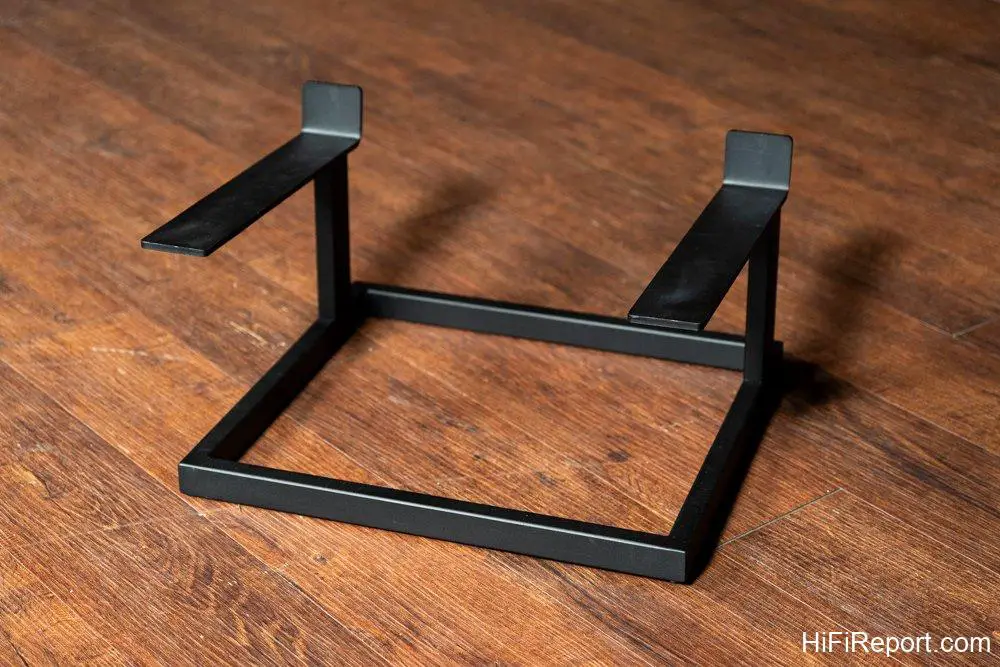
Considering the 15-inch driver, the V15C’s cabinet dimensions are appropriate. However, its height differs from typical floorstanding speakers, necessitating the use of Vestlyd’s dedicated stands. These not only elevate the V15C but, more importantly, position the speakers at an upward angle, ensuring the coaxial driver’s center aligns with the listener’s ear height.
Furthermore, the coaxial design, combined with the central aluminum quasi-horn throat, makes the V15C relatively easy to position. In my listening room, I spaced the speakers approximately two meters apart, with a slight toe-in, directing the central tweeter slightly towards my head. The V15C effortlessly created a sense of stage presence.
Excellent Stage Presence Akin to a Live Concert
Listening to John Mayer’s live album “Where The Light Is,” specifically “Free Falling,” the acoustic guitar solo was focused center stage, with another guitar providing embellishment to the left. The V15C adeptly rendered the spatial relationship between these two guitars. John Mayer’s vocals were placed centrally. As he sang and played guitar simultaneously, he moved slightly forward and backward, his lips close to the microphone. The subtle variations in his sibilance, without any visual cues, were vividly presented by the V15C, conveying a palpable live energy.
In this visual age, a quick YouTube search for John Mayer’s live performances will readily demonstrate the “sibilance variation” I’m referring to. When he moves closer to the microphone while singing and playing, it creates a visual context that is instantly understood. The fact that the V15C alone can evoke the atmosphere of a live concert speaks volumes about its fidelity and expressiveness.
The Heart-Pounding Impact of the Kick Drum
Similarly, on the “A Star Is Born” soundtrack, I particularly enjoyed “Shallow,” another live recording. The opening guitar passages had a slightly metallic timbre, and Bradley Cooper’s voice emerged from the center-left. When Lady Gaga’s vocals entered, they were centered, and the electric bass provided a substantial foundation. As the song built towards the chorus, the forceful impact of the kick drum was delivered with astonishing power by the V15C – full-bodied, weighty, and intensely impactful. If you dare to turn up the volume, the V15C will deliver a truly visceral kick drum assault.
Wait, am I only describing the V15C as a volume monster, suggesting a lack of refinement? Rest assured, when paired with the C31, the mid and high frequencies were as smooth and sweet as fresh cream.
Listening to Lu Kuan-chung sing “Fish Child,” the delicate arpeggios of the acoustic guitar were crisp and clear. Lu Kuan-chung’s highly recognizable vocals were precisely located in the center of the soundstage. The V15C’s coaxial driver demonstrated excellent soundstage delineation. The interplay between two guitars, with one often tapping the body for rhythm, revealed the V15C’s strong musical detail retrieval. When the electric bass joined, the notes from the 15-inch mid-bass driver were full and round, resulting in a remarkably comfortable listening experience.
Then, switching to EggPlantPlant, I listened to “Love Is Greater Than I Imagined.” The drum intro, coupled with electronic synthesizer chords, was rendered with excellent definition of the kick drum’s shape, impact, and texture. The 15-inch mid-bass driver effortlessly handled the material, and at higher volumes, the impact intensified. While the V15C is capable of 130 dB, my ears yielded around 90 dB, far from its limit. The full mid-bass not only offered abundant quantity but also exceptional dynamic range.
Even String Instruments Sing with Grace
You might think that with all this talk of rock music, the V15C is only suited for loud, bombastic playback. Rest assured, a truly good loudspeaker will faithfully reproduce whatever is played through it. Switching to Anne-Sophie Mutter performing Mozart’s Violin Sonatas, specifically the first movement, Allegro, of K.376, the opening dialogue between violin and piano was rendered with a sense of scale comparable to a real grand piano, thanks to the V15C’s 15-inch mid-bass driver. The violin was focused and vibrant. The coaxial design provided precise soundstage localization, with the near-tangible form of the piano in the center and the violin slightly to its left, creating a beautifully rendered stage impression of the recording venue.
Next, I listened to Rachmaninoff’s Cello Sonata in G minor, Op. 19, performed by Gautier Capuçon and Yuja Wang. Focusing on the Allegro of the fourth movement, Rachmaninoff’s romantic sentiment is woven into the ever-changing melodic lines. The dynamic variations in the sustained cello notes, coupled with the abundance of piano notes, could easily become muddled if the speaker’s low-frequency resolution were insufficient.
However, the V15C handled this with ease. The tension of the first theme contrasted with the serenity of the second. Rachmaninoff, truly a composer of excessive romance, shifts between rapid and slow passages, moments of tension and tenderness. The cello’s long, flowing lines, supported by a shimmering piano backdrop, and the emotional shifts at transition points were rendered brilliantly by the V15C.
Tackling “1812” with Absolute Confidence
Let’s give the V15C its ultimate test: Tchaikovsky’s “1812 Overture” under the baton of Ken-David Masur with the Cincinnati Symphony Orchestra. The opening prayer-like string theme was presented with a dense, rich texture. The woodwinds responded from the rear of the soundstage, creating a clear, three-dimensional soundscape. Before the onset of battle, the cellos and double basses laid down a thick foundation, amplifying the rising tension in the violin sections as the conflict approached.
As the brass instruments urged forward, the V15C’s high frequencies were sufficiently bright and held excellent tension. The snare drum sounded, and the brass and woodwinds played the “Marseillaise” theme, leading into the engagement between Russian and French forces. The timpani struck with force, intertwining the Russian and French musical themes. The V15C unleashed rapid and powerful low frequencies, contrasting with the bright luster of the brass, expanding the musical panorama.
I know what you’re waiting for: the final cannon fire and bell tolls celebrating the victory of the Russian army. What makes Masur’s recording so legendary? It utilizes actual cannon fire, not just timpani. Are you ready? At the 12-minute and 36-second mark, the cannon blast erupts. The V15C’s mid-bass driver trembles slightly, projecting a rapid and powerful cannon sound. The strings then swiftly shift, leading into the triumphant cheers of the brass section. The church bells chime in unison, and amidst the joyous music, the cannons continue to celebrate. Giving the V15C ample power, this speaker never falters; each impact is a cannon blast, not a popgun shot.
Filling Even Large Spaces with Musical Energy
The editor has painted such a glowing picture of the V15C, describing its ability to reproduce everything faithfully, as if it were a speaker costing hundreds of thousands of dollars. Indeed, after listening to the V15C and considering its price of NT$98,800 (approximately $3,170 USD), if the criterion is low-distortion high sound pressure levels, the V15C can outperform speakers more than three times its price.
Of course, the V15C is not without its drawbacks. Its dark, boxy cabinet and considerable size make it challenging to place in smaller, urban living spaces. However, if you have a large room and desire speakers that can fill it with abundant musical energy, the V15C might be an excellent choice, offering exceptional value for the budget.
Specifications
* **Type:** 2-way bass-reflex coaxial loudspeaker
* **Drivers:** 1-inch titanium dome tweeter + 15-inch paper cone woofer in a coaxial arrangement
* **Frequency Response:** 36 Hz – 22 kHz
* **Sensitivity:** 95 dB
* **Impedance:** 4 ohms
* **Crossover Frequency:** 1.1 kHz
* **Maximum Power Handling:** 500W
* **Dimensions:** 742 x 468 x 417 mm (H x W x D)
* **Weight:** 34 kg