
Vibrato Network 5th Anniversary Edition Bluetooth Receiver
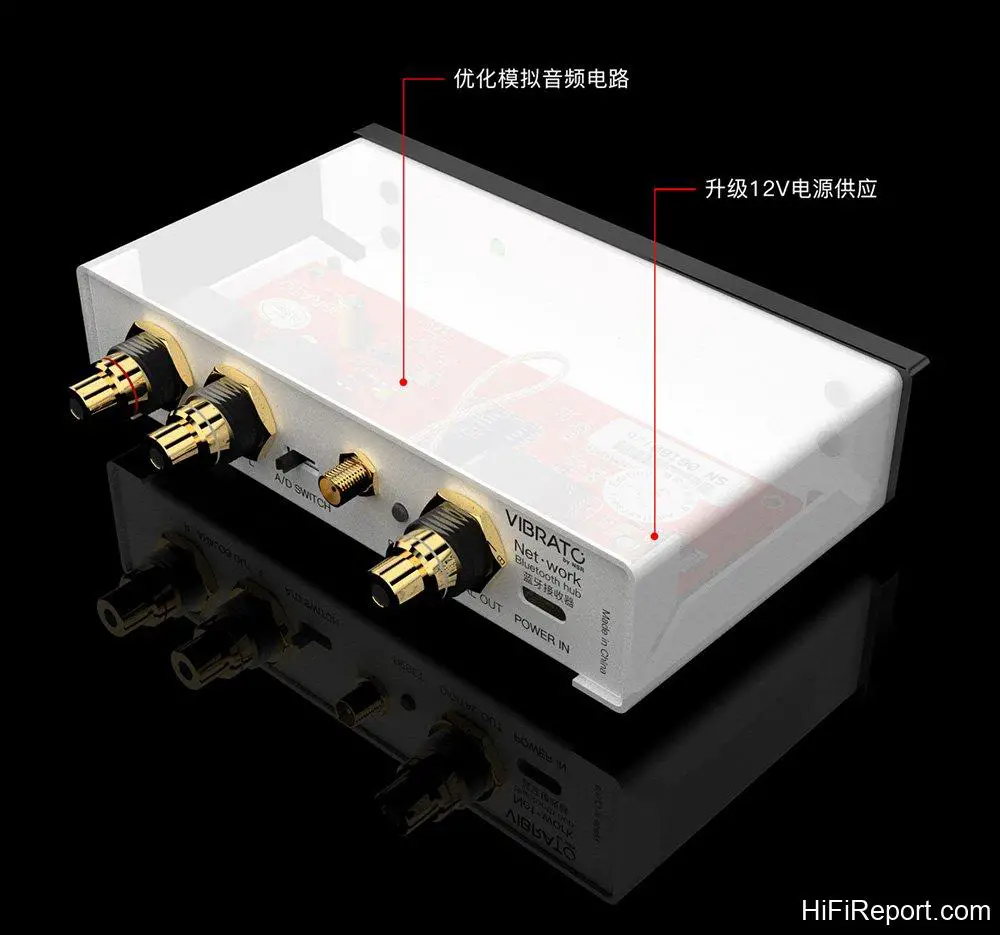
At this year’s audio exhibition, HiFiReport showcased an impressive system in their booth. This included the Accustic Arts Tube Preamp II-MK2 vacuum tube preamplifier and the reference-grade AMP II MK3 power amplifier, boasting a robust 310W output, driving the sizable and weighty Fischer & Fischer SN 670 slate cabinet speakers.
For source components, in addition to a Player II CD player with a top-loading mechanism, there was an analog system featuring a Pre-audio turntable with an air-bearing tonearm, paired with AA’s Tube Phono II phono stage.
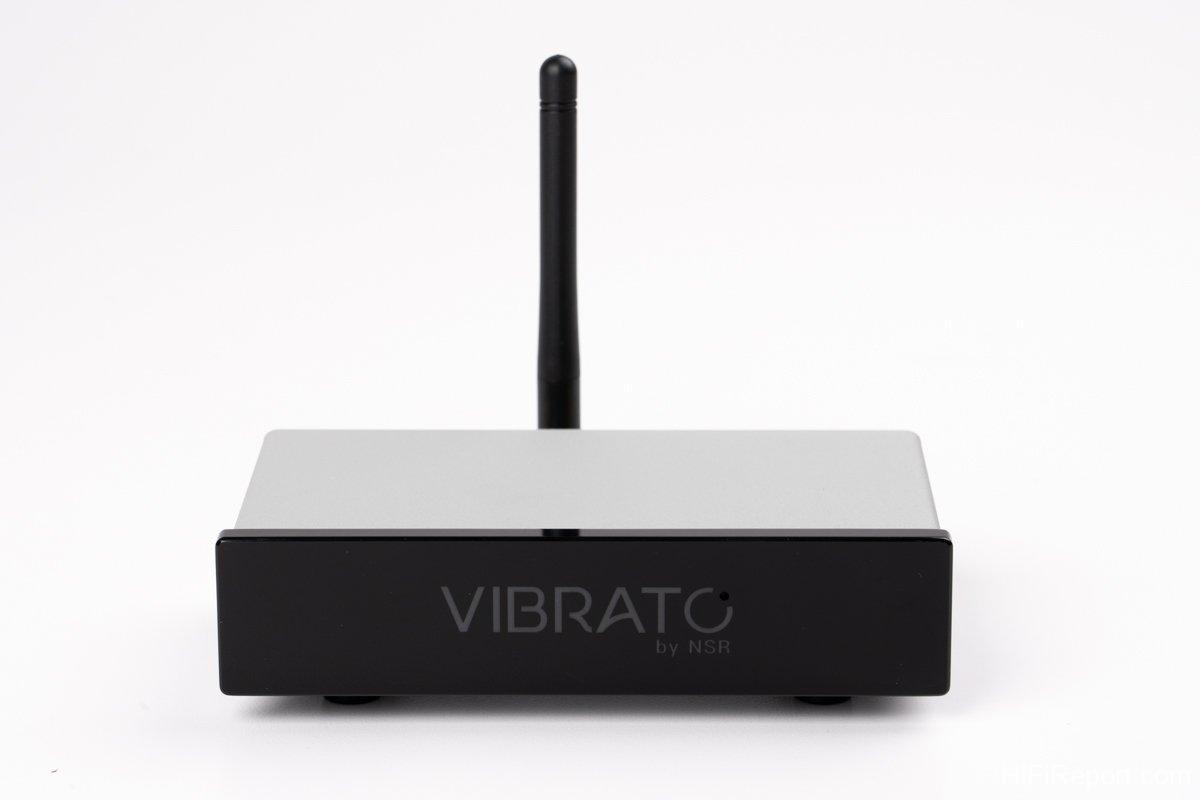
However, there was a third source, subtly placed beneath the Pre-audio turntable – the Vibrato Network Bluetooth receiver.
During my time at the booth, I noticed that Mr. Chang from HiFiReport wasn’t changing records, yet the music kept switching tracks.
Curious, I asked him what he was playing. He simply picked up his phone, waved it in front of me, and offered a knowing smile.
Accustic Arts doesn’t produce digital streamers, so how was he streaming? This was an audio exhibition, and Bluetooth streaming was the last thing I expected.
But indeed, he was streaming via Bluetooth.
Pointing to the small Vibrato Network device, he explained, “This is the 5th Anniversary Edition. It’s different from the one we sent you for review last time.”
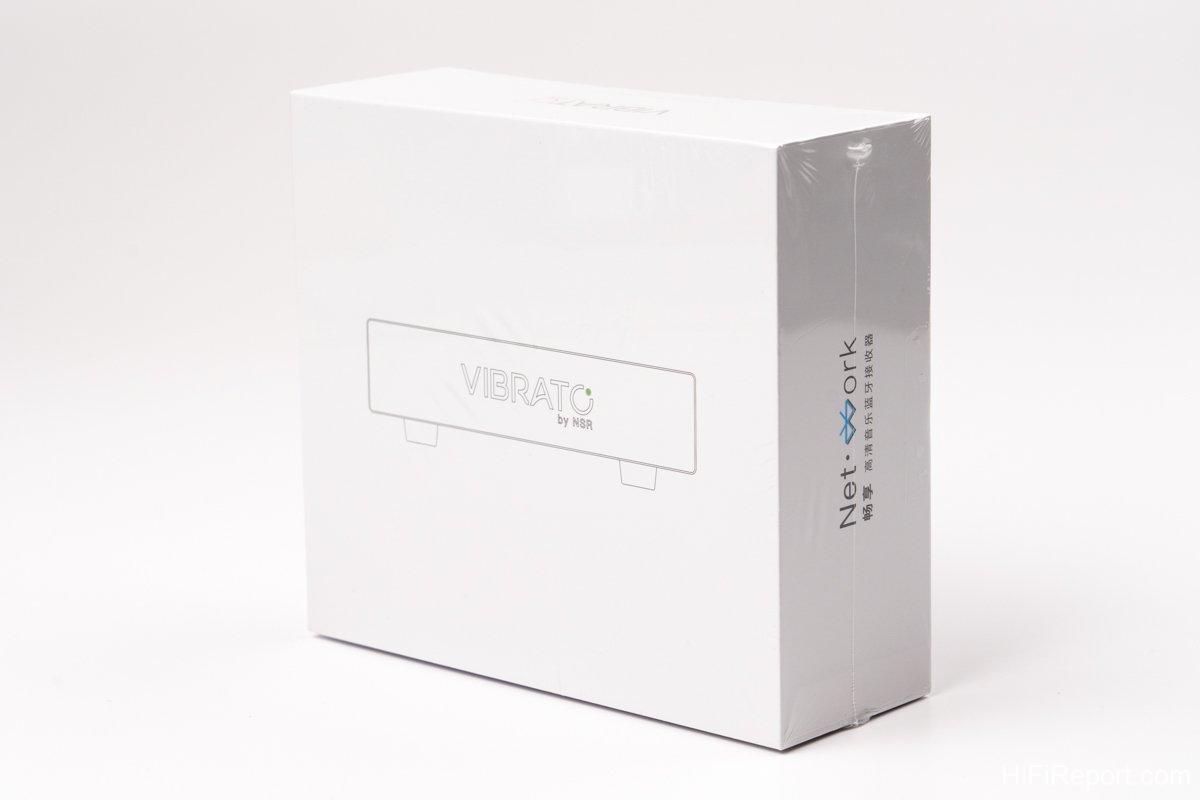
“Different how?” I thought. It looked identical to me.
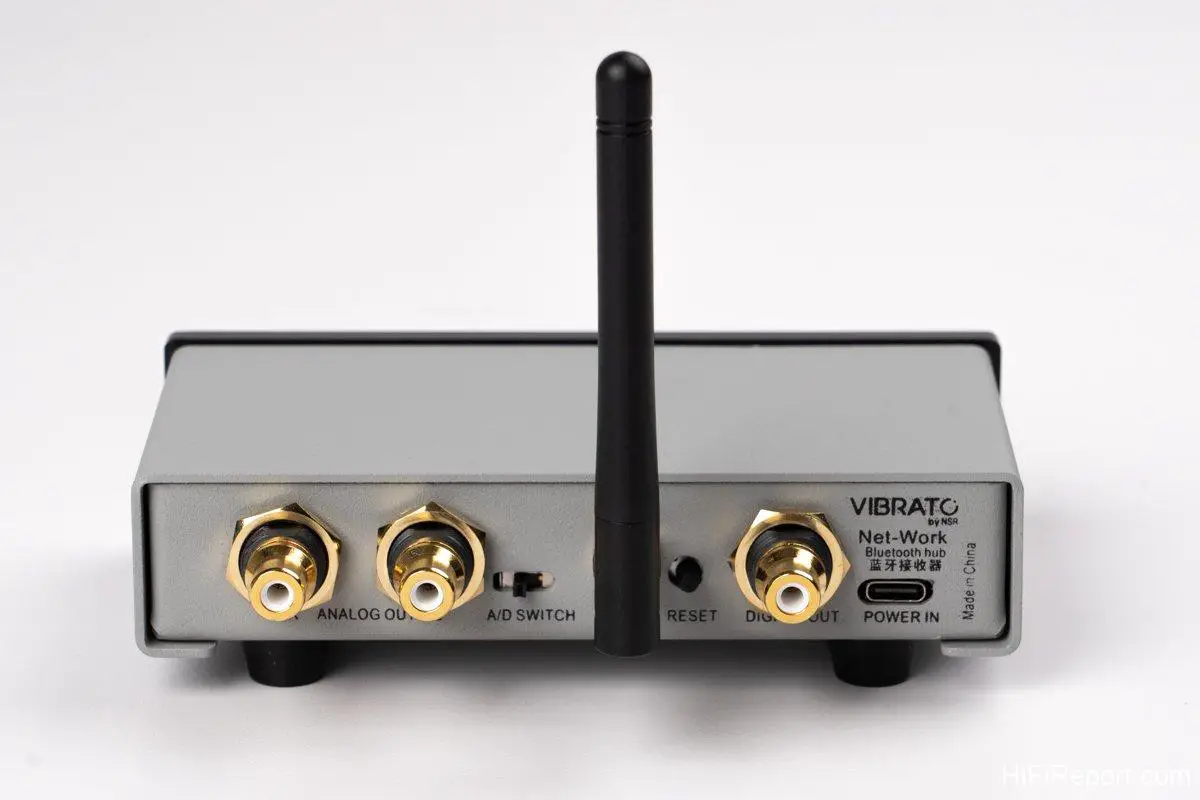
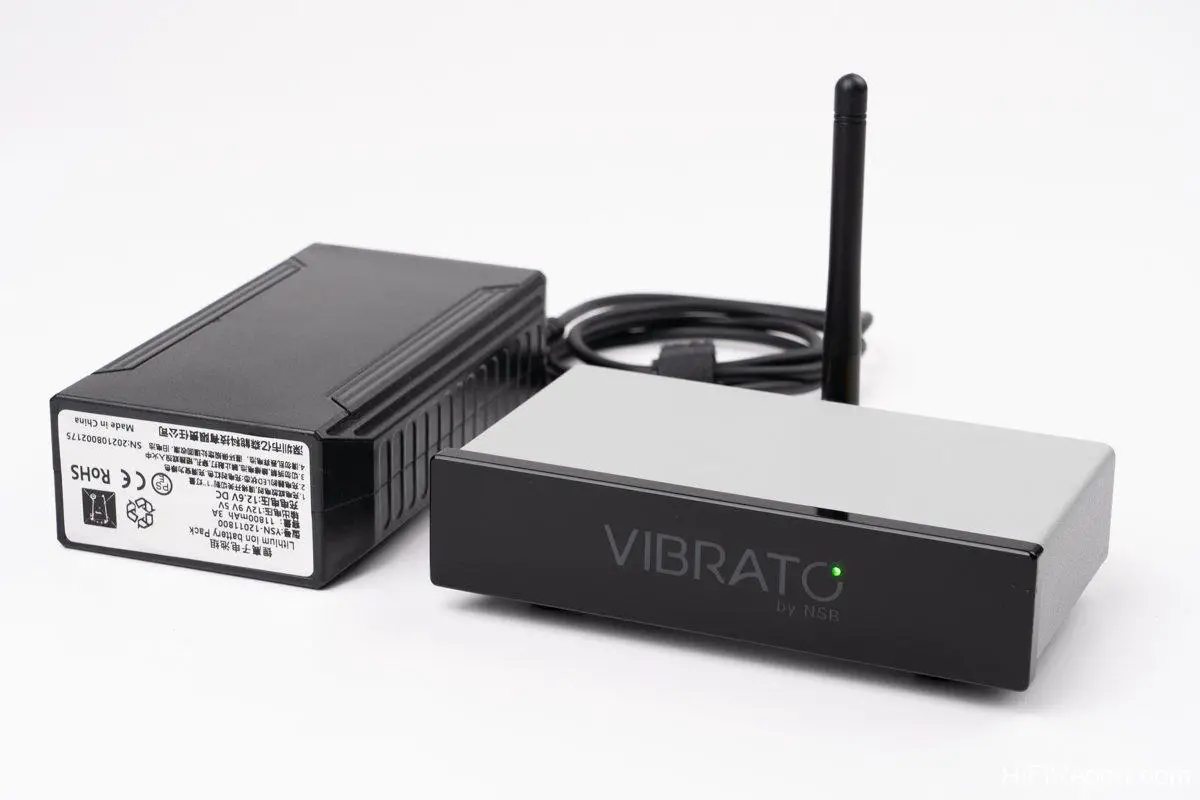
“This one has modified circuitry, increasing the input voltage from 9V to 12V, and it can also be powered by battery.” He explained. Without his explanation, I wouldn’t have noticed any difference, as it visually mirrored the Network I had previously seen at the office.
(Image / Source: Vibrato Official Website)
Vibrato: Guangzhou Fusheng Audio’s Own Brand
Vibrato is an in-house brand of Guangzhou Fusheng Audio in China.
Fusheng Audio has been involved in audio distribution and retail for many years. Having witnessed countless European and American audio brands, they lamented the escalating prices and aimed to provide high-quality, reasonably priced audio equipment to consumers. In 2016, they established their own brand, Vibrato, under their “Wenjie Studio.”
Vibrato’s product range is extensive, encompassing amplifiers, digital streaming devices, speakers, subwoofers, and even audio racks and isolation accessories.
You could assemble an entire Vibrato system, with a wide variety of products at different price points, allowing consumers to choose equipment tailored to their specific needs and budgets.
With the rise of digital streaming in recent years, numerous audio manufacturers have launched streaming products, and brands specializing in digital streaming are vying for market share.
Network streaming offers convenience, but it also presents technical hurdles, including setting up an ideal and stable local network and configuring a home NAS.
Some individuals find the network terminology daunting, avoiding it altogether.
This is a pity! The wealth of online streaming resources is immense. Missing out on the convenience, speed, and limitless listening pleasure of streaming confines one’s listening experience to their physical record collection—a self-imposed limitation. Vibrato recognized this and, while they offer network streaming players, they uniquely provide a range of devices with Bluetooth receiver functionality. For source components, the Network is their entry-level model, with the more advanced Network HD, which even includes balanced output terminals.
If you appreciate Bluetooth input and value Vibrato’s Bluetooth reception performance, they also offer the BA1 power amplifier. Beyond analog inputs for preamp connection, it integrates Bluetooth reception. Simply connect speakers and stream music from your phone—truly eliminating the need for a separate source component.
This BA-1 was also showcased by HiFiReport at this year’s audio exhibition.
Simple and Stable Pairing
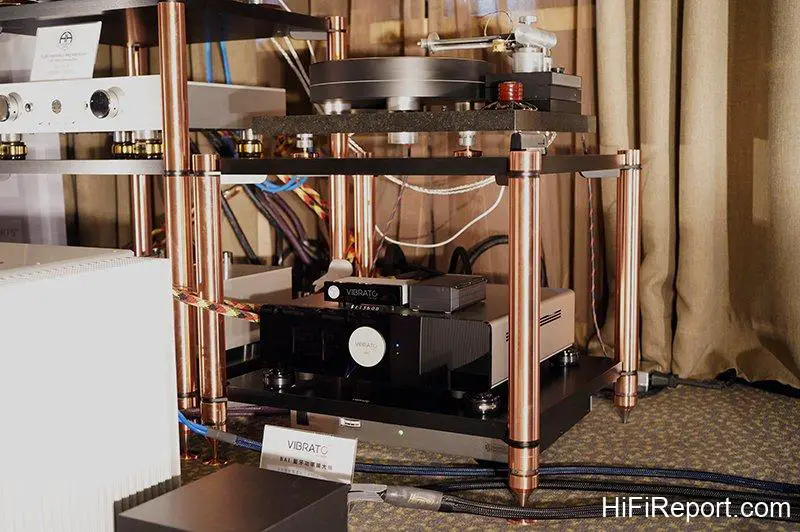
Is it truly simpler? Pairing the Network is undeniably easy. Just press the reset button on the back panel, and when the front indicator light changes from solid green to flashing “green-blue,” it enters pairing mode. Then, locate “Net Work” in your phone’s Bluetooth pairing list and tap to complete the pairing.
Compared to sophisticated streaming players, WiFi setup can be slightly more complex, while Ethernet connections are generally plug-and-play, not particularly difficult.
However, all network streaming users inevitably encounter connection drops. In contrast, simple Bluetooth is indeed more convenient, especially for older users.
Dual Digital and Analog Outputs
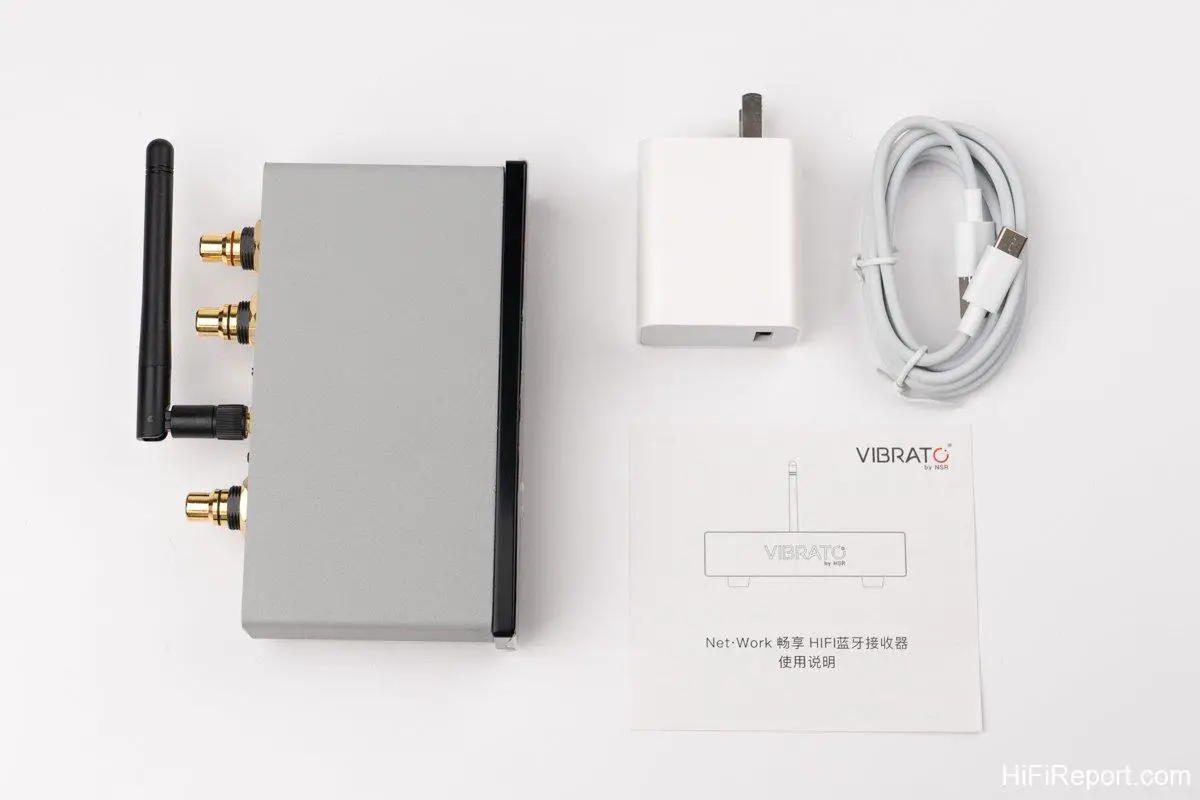
The Vibrato Network provides a set of RCA analog outputs and a coaxial digital output. This allows direct connection to amplifiers (even power amps), active speakers, or digital output to a DAC for decoding by a higher-end DAC in your system.
Switching between analog and digital output is managed via a switch on the rear panel.
Vibrato generously equips it with large, gold-plated RCA terminals, enhancing the premium feel.
5th Anniversary Edition: Upgraded Power, Analog Stage, and Battery Power Option
This limited-edition Network 5th Anniversary Edition upgrades the power supply to 12V and optimizes the analog output circuitry, aiming for greater dynamics, more detail, and a blacker background.
For those seeking even cleaner sound, it can be powered by an external battery.
Unfortunately, I only had the 5th Anniversary Edition for review, so direct comparisons to the standard version were not possible.
Android Phones Unlock Its Full Potential
Internally, it remains fundamentally a Network, sharing the same digital specifications as the standard version. It utilizes Qualcomm’s CSR8675 chip, supports Bluetooth 5.0 with aptX-HD, and incorporates a built-in DAC.
The Network decodes up to 24-bit/48kHz audio formats. Vibrato has capped the maximum sampling rate at 48kHz, despite the chip’s capability to handle 192kHz.
Furthermore, enjoying aptX-HD high-resolution audio depends on phone compatibility. Newer, higher-end Android phones are likely to support it. However, iPhone users, even with the latest iPhone 13, won’t experience aptX-HD. AptX-HD is a proprietary Qualcomm codec technology tied to their chips, and iPhones, not using Qualcomm chips, naturally lack support. The highest quality you’ll achieve with an iPhone is CD-quality AAC format.
However, it’s noted that the manufacturer has implemented enhancements for AAC and MP3 audio, aiming to improve the sound quality of these inherently lossy compressed formats.
Sound Performance Exceeds Expectations: Full, Rounded, Smooth, Warm
In actual use, the Vibrato Network genuinely exceeded my expectations. Using the analog output connected to a NuPrime DAC-10H preamp and ST-10 power amp, driving JMR Abscisse Jubile speakers, the sound I heard was full, rounded, smooth, and warm. There was no irritating digital harshness, and it didn’t feel like music streamed via Bluetooth from a phone.
It’s no wonder Mr. Chang from HiFiReport dared to pair the Vibrato Network 5th Anniversary Edition with such a high-end system at the audio exhibition.
Regarding the standard Network’s performance, Lin Zhiyu has already shared his impressions. According to his experience, the standard Network’s analog output is competent and suitable for casual, everyday listening, background music, or even watching videos and mobile gaming.
However, based on that description, I speculate that the 5th Anniversary Edition offers superior analog output performance compared to the standard version.
This isn’t to say its sound is groundbreaking, but the fullness, extension at both frequency extremes, layering, and detail retrieval were all impressive—as I said, it truly didn’t sound like Bluetooth music from a phone.
It seems the voltage increase and optimized analog output circuitry have indeed made a positive difference.
Digital Output to External DAC: Further Sound Improvement
Switching to digital output shifts the sonic character influence to the downstream DAC.
Using the coaxial input of the DAC-10H, the amount of information noticeably increased. Layering became clearer, separation improved, and the textural detail of sounds became more distinct. The soundstage widened, particularly in terms of front-to-back depth.
This experience closely aligns with Zhiyu’s observations.
However, I had one more option to explore: battery power.
Battery Power: More Solid Sound, Better Density, Cleaner Lines
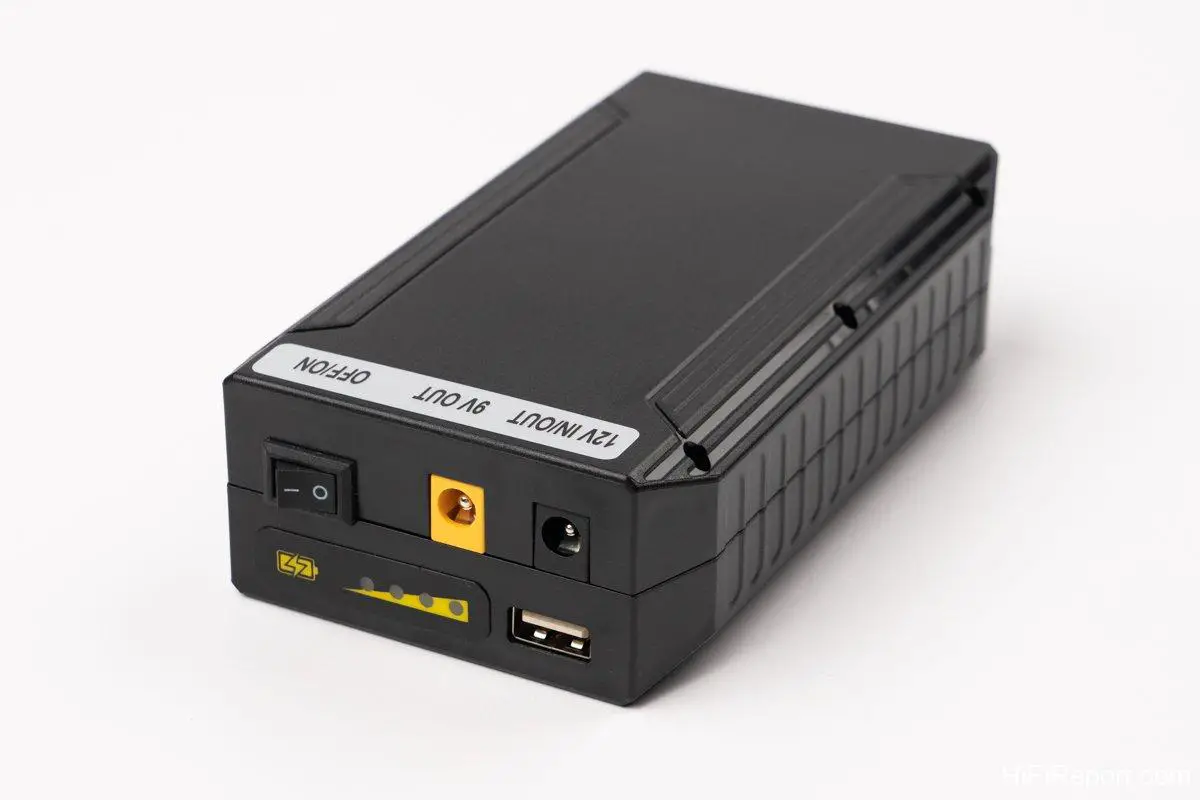
The Network was supplied with a black external lithium battery pack, boasting a 11800 mAh capacity, roughly double that of a typical laptop battery.
Is this sufficient? In my experience, starting with a fully charged battery and using it until writing this review, which spanned over four hours, the battery indicator lights remained at four green LEDs. It seems capable of lasting a full day of listening.
This battery is an optional accessory, priced at $58 USD (1,800 NTD).
Connecting the battery resulted in a sound that was more solid and dense compared to using the stock USB charger. Outlines became cleaner and more defined, the background blacker, and the three-dimensionality and independence of sound sources improved. Even the soundstage seemed larger and deeper.
Listening to “Jazz Variations” from O-Zone Percussion Group’s “Bamba” album via Tidal on my iPhone, the percussion was truly captivating.
The glockenspiel rang out with a crystalline clarity, its sound lush and rounded, each full note resonating with a beautiful decay. The drum kit was rich and varied, with clear details of drumhead and cymbal vibrations. The marimba sounded rounded and warm, its woody character complemented by the resonance of its tubes. The bass drum was deep and powerful, contrasting with the glockenspiel’s delicate elegance.
Regrettably, I didn’t have a linear power supply on hand. If one were added, I imagine the sound could be elevated further.
Low Frequencies, Impact, Layering: Worth It!
Moving to John Williams conducting the Vienna Philharmonic’s album, the first track, “The Flight to Neverland” from the movie “Hook,” unfolded layer upon layer of instrumental sections, enriched with diverse percussion, creating a magnificent and colorful musical tapestry. The timpani strikes were solid, grounded, and impactful, seemingly surging from the distance.
These aspects revealed the Network’s ability to resolve full and three-dimensional sonic images, with sufficient low-frequency extension and soundstage depth reproduction. The layered instrumental sections were clearly delineated without becoming muddled.
For even greater clarity and transparency in large-scale orchestral pieces, an external DAC would further enhance performance.
However, even the Network’s analog output alone is quite respectable, though the improvement with a DAC is undeniably audible.
Incoming Calls Interrupt Playback; Phone Range Limited
However, since it relies on Bluetooth for transmission, not a local network, the phone itself acts as the audio source, not just a controller. This leads to two usage considerations: First, if a call comes in while playing music, playback will stop—similar to using Bluetooth headphones.
Second, the phone cannot be too far from the Network.
Although it uses Bluetooth 5.0, offering a longer transmission range, the manufacturer’s lab data indicates a 100-meter transmission distance in unobstructed conditions.
In practical home use, it generally works fine within the same room or floor. However, moving the phone to another room, upstairs, downstairs, or even outside the room can easily cause stuttering.
Therefore, for seamless music playback, keep the phone relatively close.
Stream for Network Novices
Currently, Bluetooth receiver products designed for home Hi-Fi audio systems are scarce, almost nonexistent.
The Vibrato Network offers a convenient path to add Bluetooth streaming functionality to your audio system at a modest cost.
The 5th Anniversary Edition, with its enhanced power supply, upgraded analog output, and battery power option, is even more appealing than the standard version.
The manufacturer states it’s a limited edition. If you need a simple and user-friendly source and want to enjoy the convenience of streaming music from your phone, the Vibration Network 5th Anniversary Edition lets even self-proclaimed “network novices” confidently embrace streaming.
Specifications
* Type: Bluetooth DAC
* Bluetooth Standard: Bluetooth 5.0
* Signal-to-Noise Ratio: > 96 dB
* Distortion: < 0.002 % * Crosstalk: < 88 dB * Outputs: S/PDIF RCA Digital Output × 1, RCA Stereo Analog Output × 1 * Digital Gain: Max 21.5 dB * Analog Gain: Max 3 dB * Dimensions: 134 × 76 × 36 mm (W×D×H)