
WestminsterLab RCA Entree Cable Review
First impressions are paramount. They often dictate our long-term perception of a person, an object, or a brand. Unburdened by preconceived notions, first impressions are typically the most objective and accurate.
Previously, our editors and editor-in-chief have reviewed WestminsterLab’s Speaker Cable and Power Cable respectively. For them, it was their first encounter with WestminsterLab cables, and their initial impressions were remarkably positive. Now, it’s my turn to audition, and I’m tasked with evaluating WestminsterLab’s entry-level interconnect, the RCA Entree. My impression? Frankly, it’s exceptionally good!
Unique Technology and Refined Taste
Regarding the origins of WestminsterLab, I previously interviewed its founder, Angus Leung, and provided a brief introduction in an earlier article, “WestminsterLab Founder Interview: Exemplifying Simplicity and Mastery.” Readers interested in delving deeper into the brand’s philosophy are encouraged to read this interview.
WestminsterLab essentially began with cables. Leveraging unique technology and a deeply refined sonic signature, their products, while not inexpensive, have garnered a loyal following among audiophiles. Later, Angus Leung recognized that cables alone might not be sufficient to establish the brand’s full stature and influence. Thus, he embarked on developing electronics. To date, WestminsterLab’s electronics portfolio includes a preamplifier, a power amplifier, and a phono stage, each embodying unique designs, mirroring their cable philosophy. These are not simply generic products hastily assembled to fill a product category.
Handcrafted Excellence
WestminsterLab employs a very straightforward naming convention for their cables. The cable is named directly after its type. For instance, the speaker cable and power cable reviewed by the editor-in-chief were named Speaker Cable Standard and Power Standard, respectively. Similarly, the cable I am reviewing is named RCA Entree, self-evidently an RCA interconnect.
The suffix denotes the “series.” “Standard” represents the mid-tier series, “Entree” the entry-level, and “Ultra” signifies WestminsterLab’s flagship cable series.
Among these three series, Entree, despite being the entry-level offering, is the most recently launched product. This is because WestminsterLab’s cable manufacturing process is exceptionally intricate and entirely reliant on manual labor. This precludes mass or rapid production, making price reduction challenging. To make their cables accessible to a wider audience, they simplified the structure of the Standard series, resulting in the development of the Entree series.

The Entree series shares the sonic direction and characteristics of its higher-tier counterparts, but at a significantly more approachable price point.
Vari-Twist Geometry
Let’s delve into the design of the RCA Entree.
WestminsterLab’s conductor material is neither pure copper nor silver, but a custom alloy known as Autria Alloy. It comprises 96% copper, combined with a proprietary blend of other metals.
Before being stranded, the Autria Alloy undergoes a series of meticulous treatments.
First, it is heat-treated at a precise temperature to refine its crystal structure. Then, it is manually polished to achieve an exceptionally smooth surface, optimizing conductivity. Following this, it is coated with an epoxy resin to prevent oxidation and then encased in a Teflon tube to enhance its dielectric properties.
Only after these preparatory steps does the conductor undergo their most distinctive and crucial process: “Vari-Twist” stranding.
“Vari-Twist” refers to the variable pitch of the conductor stranding. How does it vary? Virtually all cables are machine-stranded, maintaining a consistent pitch throughout their length. However, WestminsterLab believes this uniformity can make cables susceptible to specific resonance frequencies, and that capacitance and inductance values can be adversely affected at certain frequencies, leading to sonic degradation. “Vari-Twist” addresses this by employing a non-uniform stranding pitch – denser in some areas, sparser in others. This averages out resonance frequencies and capacitance values, mitigating the aforementioned issues.
However, does a non-uniform pitch imply random stranding, a haphazard approach? Not at all.
WestminsterLab meticulously designs a unique structure for each cable type, considering factors such as voltage, current, and signal frequency. The stranding is then executed entirely by hand. Furthermore, the structure must be adjusted for different cable lengths; simply cutting a longer cable to a shorter length is not sufficient. This process is exceptionally labor-intensive.
To this end, WestminsterLab has developed 11 distinct structures tailored to different cable types, ensuring optimal transmission performance for each.
Because “Vari-Twist” is entirely dependent on manual execution and cannot be automated, mass production is impossible, and costs remain elevated. This is a primary factor contributing to WestminsterLab cables’ premium pricing.
For shielding, WestminsterLab eschews the commonly used metal foil or braided metal shields found in typical cables. Instead, they utilize a carbon fiber braided sleeve.
WestminsterLab contends that while metal shielding can absorb radio frequency interference and block electromagnetic interference, it can also generate its own magnetic field, causing further interference. Carbon fiber sleeves, on the other hand, offer excellent electromagnetic shielding without being susceptible to magnetic field interference, making them a more suitable shielding material for high-fidelity audio cables.
Immediately Appealing Sound Quality
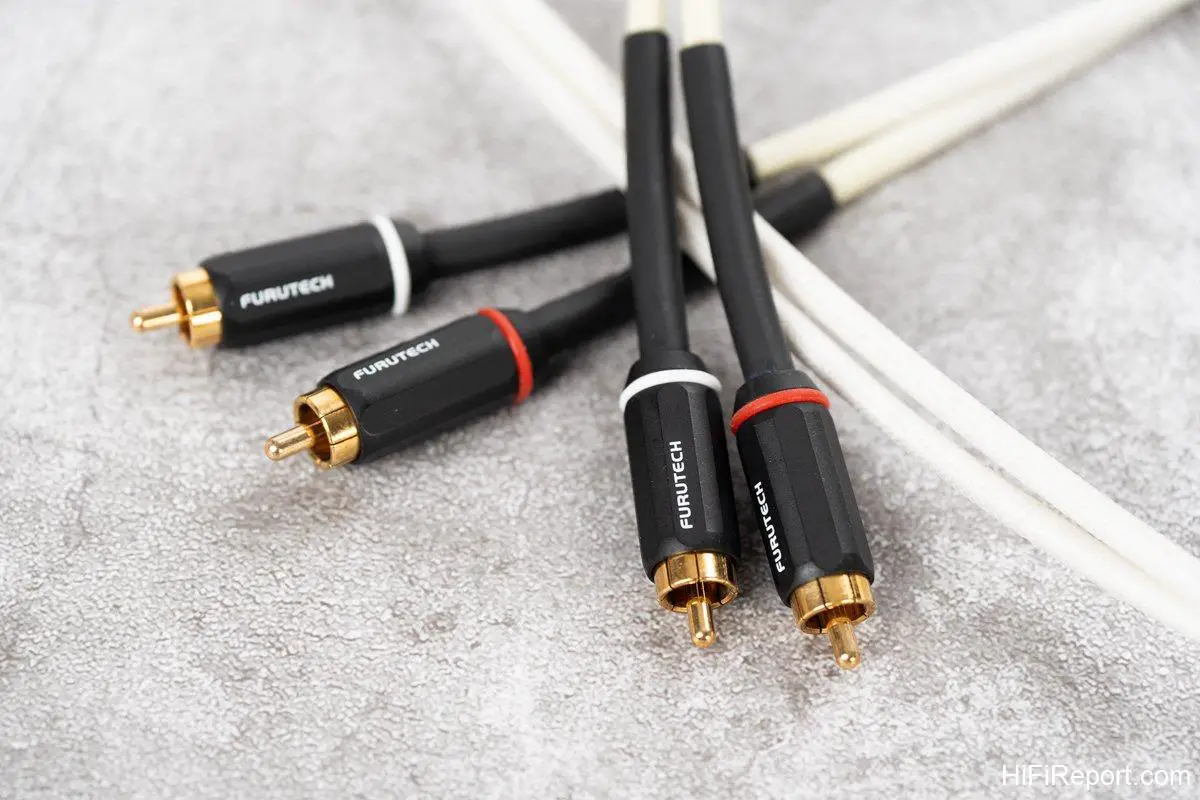
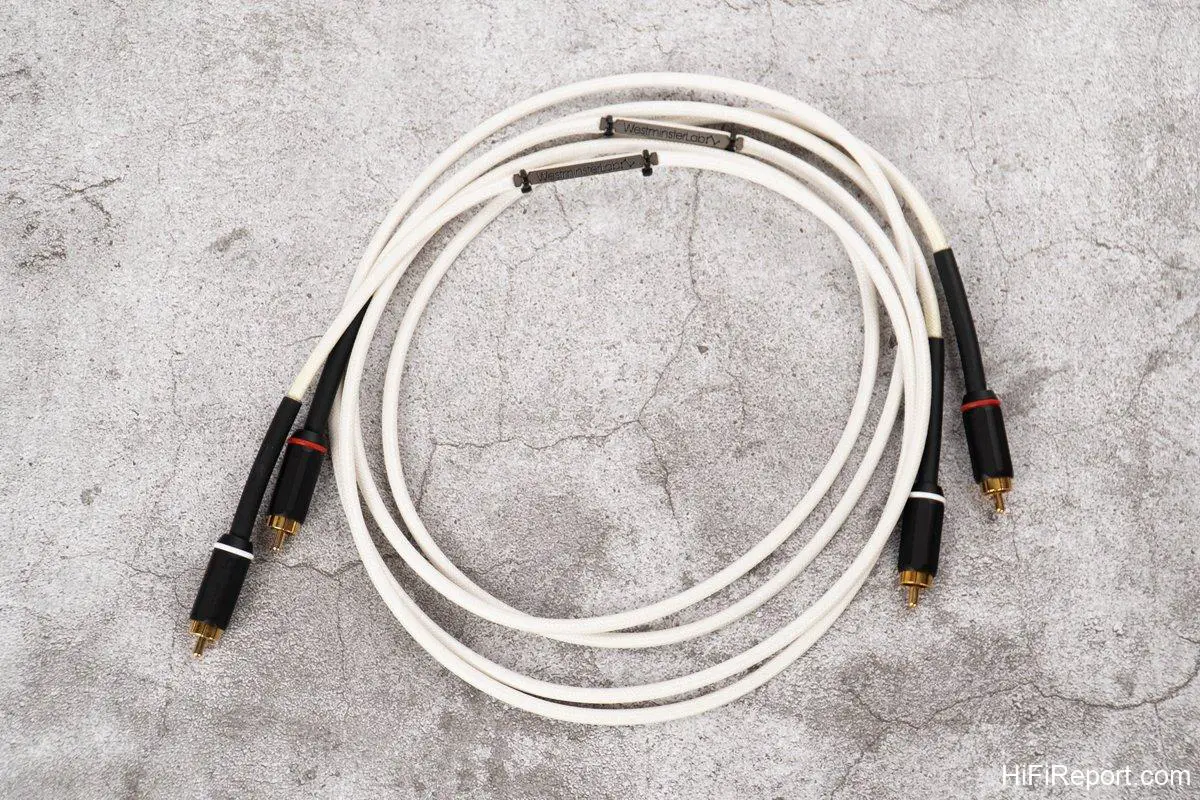
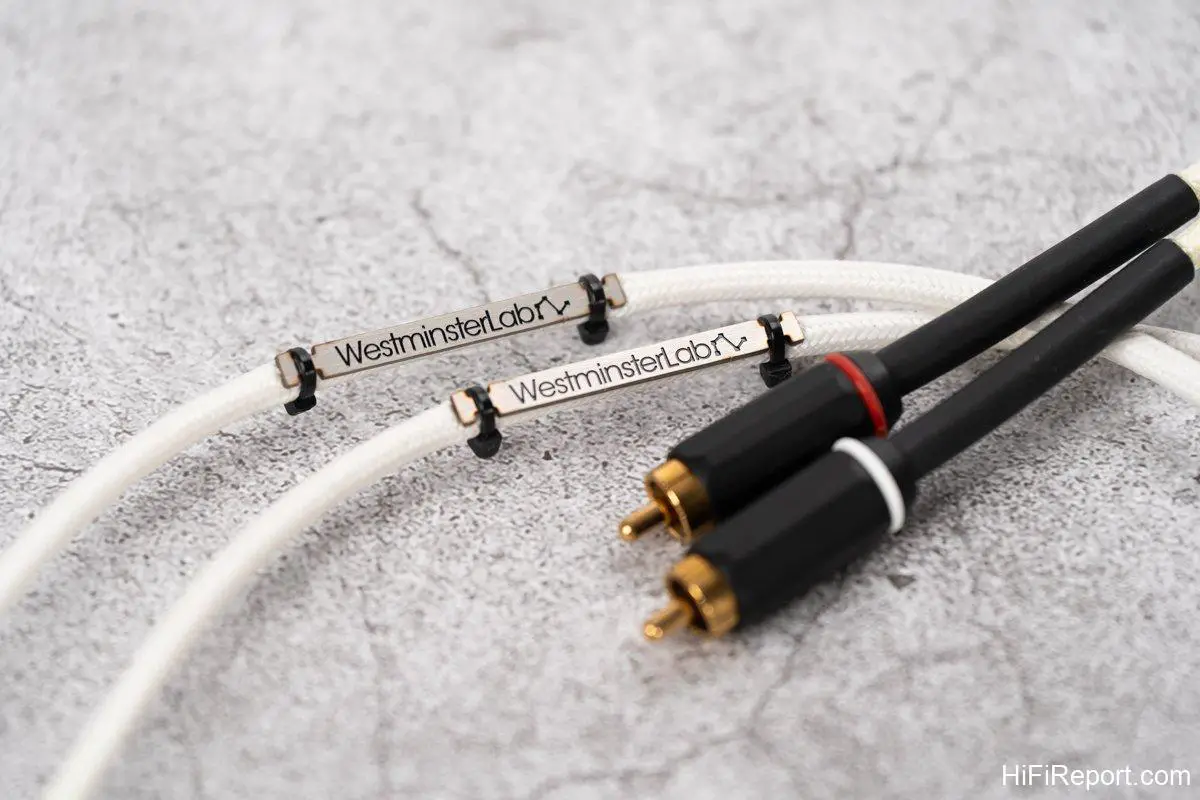
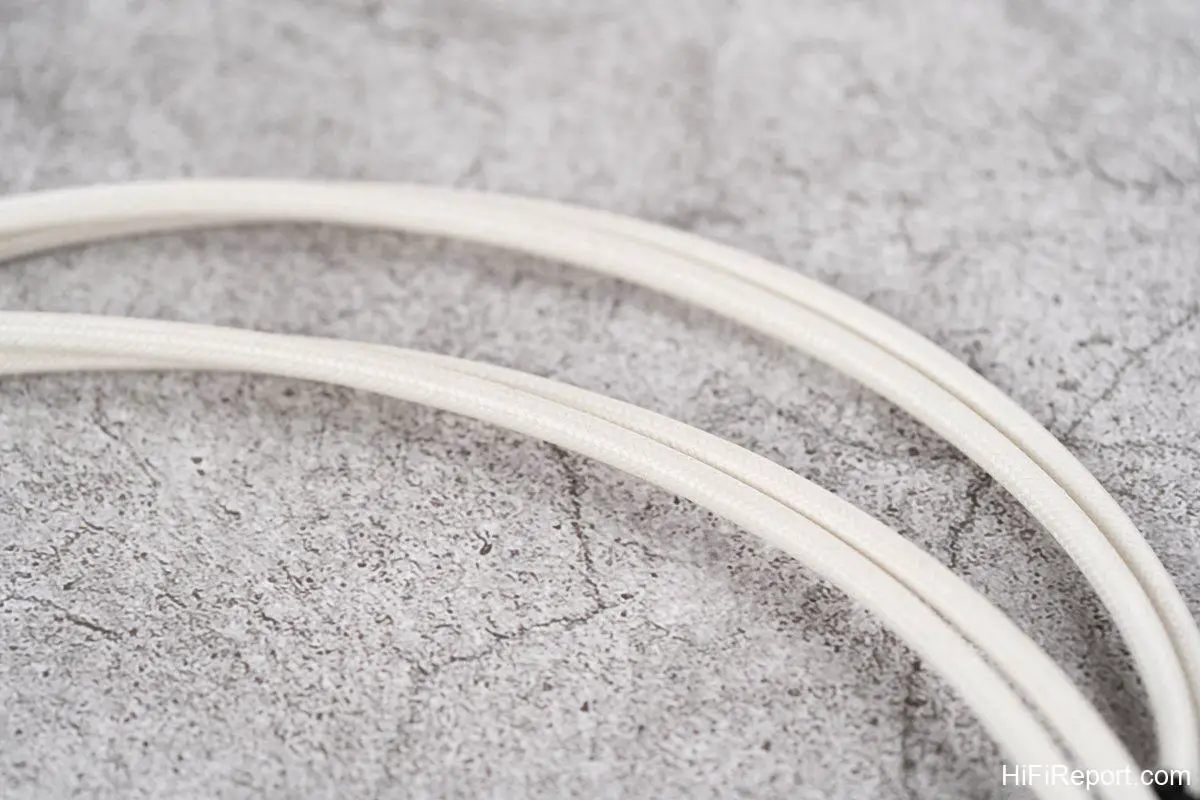
The RCA Entree’s appearance mirrors WestminsterLab’s higher-end series, featuring a white fabric jacket and understated aesthetics, devoid of superfluous ornamentation.
The cable itself is quite slender and slightly rigid, suggesting a solid-core conductor design. Gently squeezing the cable body, it feels somewhat hollow, indicating a lack of internal filler material. The RCA connectors are sourced from Furutech.
Admittedly, some audiophiles might dismiss it at first glance, accustomed as they are to bulkier cables. However, the sonic performance of a cable is independent of its physical dimensions. A slender cable does not necessarily equate to a thin sound.
So, what kind of sound does the RCA Entree deliver? In a word, it’s simply delightful.
The listening session was conducted at HiFiReport, utilizing an EverSolo DMP-A6 streamer connected via digital coaxial to a Merging NADAC, followed by a Naim NAC 332 preamplifier and a Ray Audio KT150 vacuum tube power amplifier. The loudspeakers were Dynaudio Contour 60s. The RCA Entree was inserted between the DAC and preamplifier, and the entire listening session was conducted using Tidal Connect.
The RCA Entree presents a fresh, crisp sonic texture with abundant detail, clearly showcasing the high quality of piano and string instruments.
Listening to Leif Ove Andsnes performing Haydn’s Piano Concerto No. 11 with the Norwegian Chamber Orchestra, the piano sounded clean, transparent, and yet imbued with a pleasing warmth. The strings possessed a beautiful sheen and liquidity, with a refined texture. The sound density was also commendable, with clear and distinct piano keystrokes, conveying a palpable sense of impact. The lines and imaging were excellent, balanced with appropriate softness. The listener could readily perceive the piece’s urgency, liveliness, and fervor, while the sound retained accurate tonality and a suitable warmth, resulting in a comfortable and flowing listening experience. The soundstage was cohesive, and instrumental separation was ideal, leaving little to fault.
Honestly, precisely describing the RCA Entree’s sonic character is somewhat challenging because it is so natural and pleasing, with every aspect seemingly just right.
Light, Lively, and Vividly Realistic
Moving on to “Uncompressed World Vol. III – Audiophile Male Voices,” a test disc primarily featuring pop and urban jazz styles with predominantly acoustic or electric instruments and minimal synthesizer use. It’s a superbly produced and recorded album with excellent sound quality and captivating songs.
Through the RCA Entree, each instrument’s timbre and vocals were rendered clearly, accurately, and faithfully. Instrumental outlines were distinct and well-defined, with commendable relative proportions and separation.
The low-frequency performance was particularly memorable. The bass quantity was perfectly judged, not overly heavy, but fast, articulate, and layered, imparting a light, lively, and remarkably vivid realism to the music.
Next, I played Chilean pianist Claudio Arrau’s rendition of Chopin’s Ballades. The RCA Entree again showcased its strengths in sonic transparency and detail retrieval. Not only was the piano’s inherent texture and nuance faithfully conveyed, but the reverberation and spatial cues were also clearly presented, lending a tangible shape to the soundstage.
The RCA Entree possesses the cleanliness, clarity, and precision characteristic of solid-core cables, yet avoids excessive harshness or overemphasis on outlines and lines. Instead, it balances these qualities with commendable smoothness and harmonic richness, demonstrating genuine technical sophistication.
Approachable Yet Rewarding for Critical Listening
Finally, I played the symphonic compilation “Tutti!”. Track 8, Bruckner’s Symphony No. 9 “Scherzo,” is a piece of music with surging energy and dramatic dynamics. Through the RCA Entree, the power output was smooth and effortless, the force direct, and the weight appropriate. It was hard to believe this potent sound emanated from such a slender cable. The high, mid, and low frequencies were well-balanced, and the sense of grandeur and authority was satisfyingly conveyed. It was comprehensive in its sonic virtues.
Track 6, Mozart’s Piano Concerto No. 21 “Andante,” revealed excellent string sheen. The timbre was beautiful, ethereal, clean, and transparent, with just the right amount of warmth, never dry or sterile. It is not a warm or weighty cable, but rather one that leans towards lightness, delicacy, and fluidity.
Summarizing the listening impressions, the RCA Entree seemingly does little, yet achieves much.
It faithfully reflects the system’s inherent character and performance, appearing to add nothing, yet delivering sufficient sonic texture and rich detail, resulting in an engaging and naturally comfortable listening experience. Therefore, it must be doing quite a lot.
In any case, the RCA Entree is a remarkably approachable and rewarding cable for critical listening, and is highly recommended.
Specifications
* Type: RCA Interconnect Cable
* Conductor: Alloy
“`