
Wharfedale Super Denton Bookshelf Speakers Review
The first time I encountered the Wharfedale Super Denton was at the HiFiReport audio store. Sitting on a low cabinet on the first floor, they were singing softly, but their warm sound immediately caught my attention. I hadn’t seen these speakers before, but their retro design was appealing, and the sound was delightful. I wondered about the price. Upon asking, I learned they were selling for only about $1150 (converted from NTD 36,800). My interest was instantly piqued – finding such exceptional value in speakers is a rarity these days!
Value Proposition
Back at the editorial office, during our meeting, the news arrived that Audio-Supply (the importer) was sending a pair of speakers for review – it turned out to be the Super Denton. I immediately claimed them for testing during the editorial meeting. While there’s plenty of good-sounding equipment out there, true value-for-money is much harder to come by. My gut feeling was that the Super Denton offered tremendous value.
When the speakers arrived, the distributor mentioned that the UK retail price for the Super Denton is £999. Logic would suggest that the imported price, after accounting for costs, should be closer to $1560 (converted from NTD 50,000). However, Audio-Supply felt this price wouldn’t be sufficiently attractive, so they significantly reduced their profit margin to offer the exceptional price of $1150. Considering the exchange rate, buying the Super Denton in Taiwan is actually cheaper than buying them in the UK! Now, *that’s* value for money.
Still not convinced it’s a bargain? Well, as I was preparing this review, I naturally visited the official Wharfedale website. To my surprise, the US dollar retail price listed was $1,399 USD. That’s roughly $250 more than the price offered here. It seems Audio-Supply is making a bold move to position the Super Denton as a top contender for the “Best Value Speaker” crown.
Paying Homage to the 1967 Denton
The Super Denton is a tribute to the original Denton speakers introduced in 1967, designed by the legendary Peter Walker, the founder of the British brand Quad.
This isn’t the first time Wharfedale has paid homage to this classic model. In 2014, for Wharfedale’s 80th anniversary, they released the Denton 80 commemorative speakers. Five years later, in 2019, for the 85th anniversary, came the Denton 85. Now, in 2024, marking Wharfedale’s 90th anniversary, the Super Denton has arrived. It seems we can look forward to the next commemorative Denton model in 2029 to celebrate Wharfedale’s ninety-fifth anniversary.
Rare Three-Way Design
So, how is the Super Denton different from the previous Denton, Denton 80, or Denton 85? The key difference is that while the others were two-way designs, the Super Denton is a rare three-way bookshelf speaker. This harks back to the 1971 Denton 3, which was also a three-way bookshelf model. Thus, the Super Denton can be considered a modern iteration of the Denton 3.
The challenge in designing the Super Denton was achieving sufficient bandwidth within a limited cabinet volume. According to Wharfedale’s official specifications, the Super Denton has a frequency response of 52 Hz to 20 kHz (+/- 3 dB). However, at -6 dB, the Super Denton can extend down to 40 Hz, which is comparable to some floorstanding speakers.
Seamless Frequency Transition
The three-way design of the Super Denton allows for a smoother frequency transition compared to two-way designs. Its crossover points are set at 940 Hz and 4.6 kHz. Note that the tweeter only needs to operate up to 4.6 kHz, almost functioning like a super-tweeter. The midrange driver handles the crucial mid-frequency range between 940 Hz and 4.6 kHz. Only below 940 Hz does the 6.5-inch woofer take over. This distribution allows each driver to operate within its most comfortable range, working together to reproduce a seamless music bandwidth.

Another important aspect of the 4.6 kHz tweeter crossover point is that it is far from the human ear’s most sensitive region around 1.5 kHz. Above 1.5 kHz, the directionality of sound becomes more pronounced, while below 1.5 kHz, directionality weakens. This is because the wavelength of 1.5 kHz is roughly equal to the distance between our ears. Sounds with wavelengths shorter than this distance have stronger localization cues. Sounds with much longer wavelengths, like low frequencies around 100 Hz, are much harder to pinpoint directionally because they exceed the distance between our ears. The 1.5 kHz region sits right where directionality transitions from strong to weak. If a crossover point were placed here, separating the tweeter and mid-bass, the soundstage might become unstable and focus could suffer, requiring extremely sophisticated crossover design.
By using a three-way design, the Super Denton places its crossover points well away from this most sensitive region, which greatly helps in accurately reproducing the soundstage.
Drivers Inherited from High-End Models
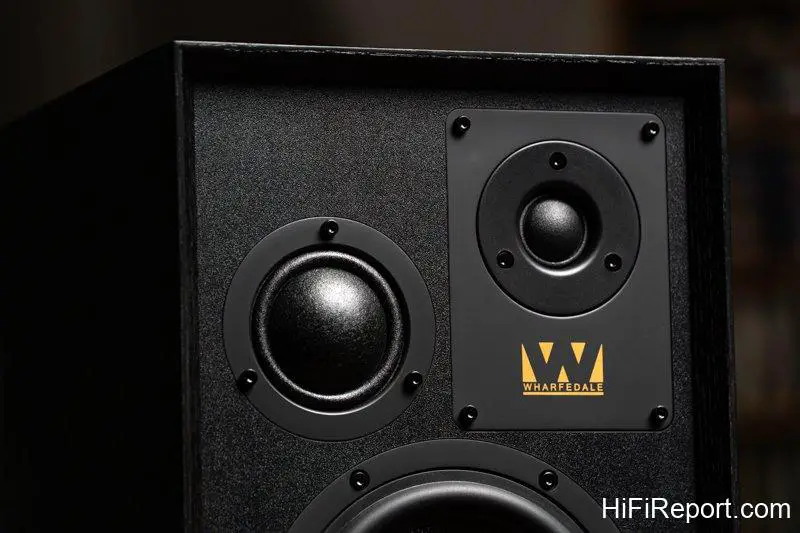
The Super Denton uses a 1-inch soft dome tweeter inherited from the higher-end Dovedale speakers, further underscoring the Super Denton’s value positioning. This tweeter features an isolated rear chamber filled with damping material to absorb backwaves and prevent reflections from interfering with sound localization. Even these details hidden behind the driver are meticulously addressed.
The midrange driver is a 50mm (2-inch) soft dome unit, shared with the EVO4 series, another example of technology trickling down from higher-end models.
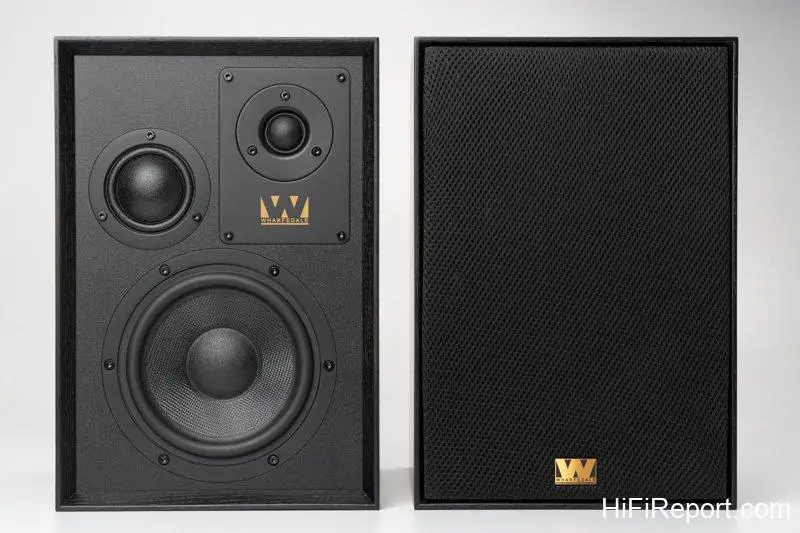
This midrange driver is reminiscent of brands like PMC or ATC, British monitor speaker manufacturers who also favor dome midranges. These drivers effectively combine warm mid-frequency tone with musical energy and offer excellent sound dispersion, contributing to a wide soundstage. Seeing a 50mm dome midrange on the Super Denton suggests that the midband should be particularly warm and rich.
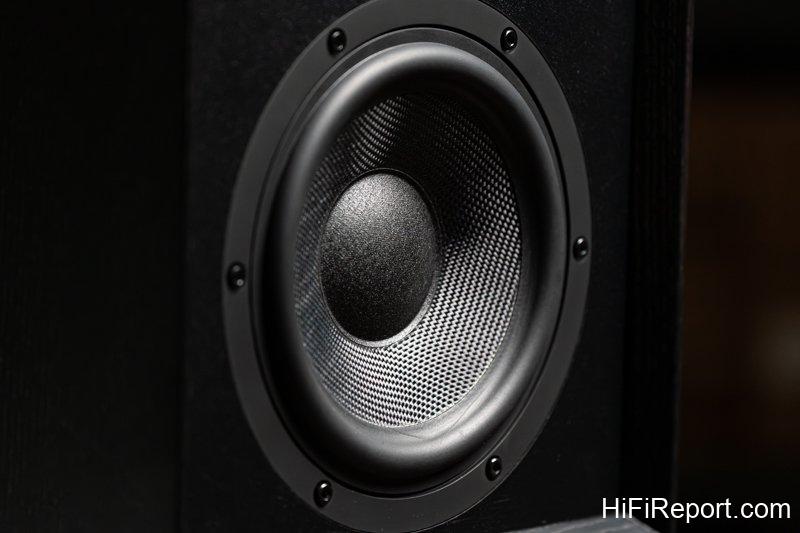
As for the Super Denton’s 6.5-inch woofer, its cone is made from Kevlar, a material known for both high rigidity and excellent damping. The driver features a cast alloy basket with large open areas to allow air displaced by the cone to move freely, complementing the bass-reflex cabinet design.
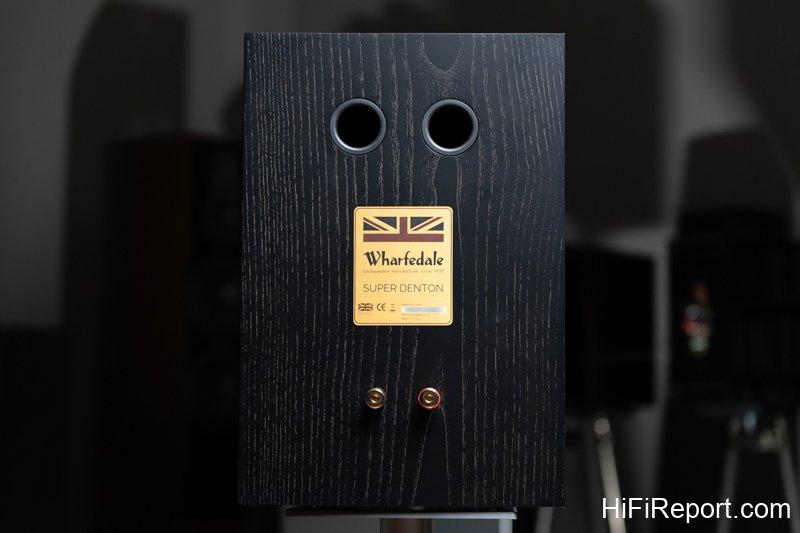
Notably, most bookshelf speakers use a single bass reflex port, but the Super Denton employs two smaller ports. This is likely intended to accelerate airflow through the ports, thereby improving the speed and response of the bass frequencies.
From a specifications and design perspective, there is very little to fault with the Super Denton. There is only one figure that might cause a slight concern: its efficiency. The factory specification lists it at 87 dB, indicating that these bookshelf speakers are not particularly easy to drive and might benefit from pairing with a higher-powered amplifier.
NAD 3050: A Perfect Pairing
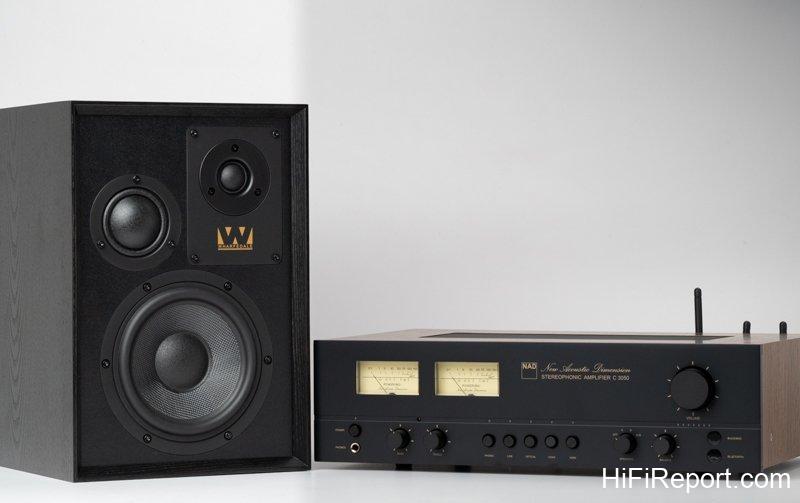
The Super Denton review process took place in the HiFiReport’s own listening room. The space, over 20 square meters (roughly 220 sq ft), is perhaps a bit large for the Super Denton, but it allowed me great flexibility in positioning the speakers away from side and rear walls. Audio-Supply conveniently sent along the NAD C3050 integrated amplifier, suggesting it was an ideal match for the Super Denton. So, I started with that pairing.
Indeed, the C3050, with its Hypex UcD power modules providing 100 watts of output, proved to be an excellent match for driving the 87 dB Super Denton. Furthermore, the C3050 can be expanded with a BluOS module, providing built-in digital streaming capabilities. It also features HDMI eARC, meaning you can connect the Super Denton and C3050 to your TV, significantly enhancing the sound quality for movies and TV shows.
Warm, Smooth, and Richly Textured
The C3050 paired with the Super Denton delivers a warm, smooth, and richly textured sound. Listening to “Across the Stars,” the theme from Harry Potter’s “The Sorcerer’s Stone,” performed by Anne-Sophie Mutter and John Williams, the opening crystalline glockenspiel had a lovely sheen. The tone was slightly dark, yet gained a sense of density. Mutter’s violin playing also had a thick, rich quality. The mid-frequency thickness is a strong suit of the Super Denton, not only due to the three-way design but also because Wharfedale has given the Super Denton a slightly larger cabinet volume than many typical bookshelf speakers. This provides more internal air volume, crucial for generating a robust sense of musical energy.
If you enjoy listening to vocals, especially female voices, the Super Denton is truly captivating. While I noted the Super Denton’s treble has a slightly dark tone, it’s precisely this softly feminine beauty that brings out a more alluring quality in voices. Take Adele’s album “25,” listening to “Hello.” The Super Denton opens up the piano’s expansive soundstage, while Adele’s voice is tightly focused in the center. The mid-frequency range beautifully renders the richness and texture of her throat. The echo effect follows each word, creating an ethereal quality. As the chorus kicks in, the explosive electronic beats mirror Adele’s powerful emotion. The Super Denton holds the stage, with a solid foundation and bass quantity that rivals floorstanding speakers.
Charming with Female Vocals
I’d also like to highlight Amy Winehouse’s classic album “Back to Black.” This uniquely voiced singer, a member of the ’27 Club’ (alongside Jimi Hendrix, Janis Joplin, and Jim Morrison, who all died at 27, later joined by Kurt Cobain, the Nirvana frontman), passed away at the age of 27, eleven years after Kurt Cobain. “Back to Black,” released in 2006, won five Grammy Awards and became the best-selling album of the 21st century in the UK.
Listening to “Rehab,” with its languid R&B rhythm singing about the reluctance to go to rehab, the Super Denton presents her deep voice with a sultry tone. The brass interwoven throughout adds a touch of jazz, a perfect blend. This isn’t a particularly audiophile recording, but rather one with added pop-rock elements and significant compression. The Super Denton captures the track’s popular energy and drive. I couldn’t help but keep listening, finishing “You Know I’m No Good” before feeling satisfied.
Two Positioning Options
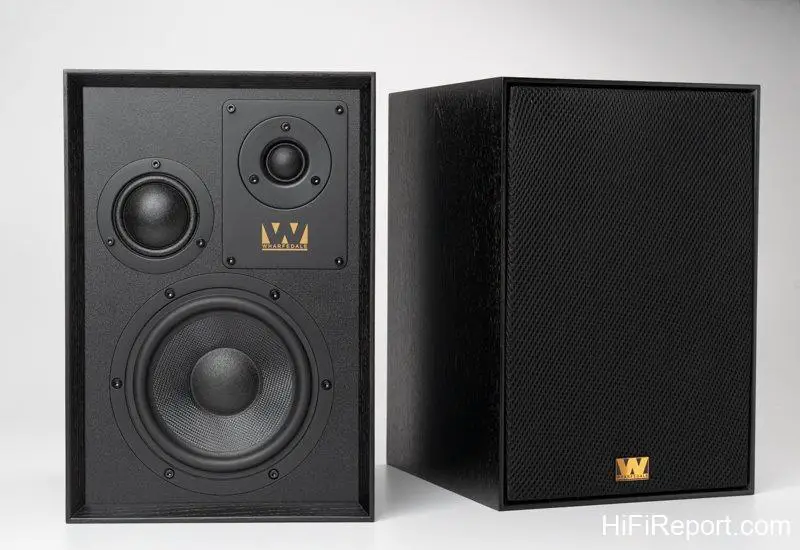
The Super Denton features a mirror-imaged driver layout, offering two setup options for the left and right speakers: placing the tweeters facing inwards or outwards. Both methods are correct, but they produce different soundstage effects. With tweeters outwards, the soundstage is wider and deeper, with the image focus slightly recessed. If you prefer the image to be tighter in the center and more focused, placing the tweeters inwards works better.
In my listening space, which is relatively large, I positioned the tweeters outwards to create a broader soundstage and sense of scale. Conversely, if your listening space is smaller, it might be more suitable to position the tweeters inwards to pull the image towards the center.
An “Almost Impossible Pairing”
Have I fully explored the Super Denton’s potential by pairing it with the NAD 3050? Honestly, the 100-watt output of the NAD 3050 is already more than sufficient. However, the editorial office recently received new Linear Acoustic LAV-5 preamplifier and LA-200 power amplifier, along with a pair of REL Reference No.31 subwoofers. I couldn’t resist trying them with the Super Denton. I connected the 3050’s preamp output to the LAV-5 and LA-200, and then used the amplifier’s high-level speaker outputs to connect to the No.31 subwoofers. I know, it’s highly unlikely that someone buying the $1150 Super Denton would pair them with such high-end amplification and subwoofers, but I wanted to see if adding subwoofers could elevate the Super Denton’s value proposition to an extraordinary level. The original crossover and volume settings for the No.31 were configured for Wilson Audio Alexia 2 speakers. When connecting the Super Denton, I needed to slightly raise the crossover point to integrate with them, and add just a little bit of bass volume. I must emphasize, it was *just a little bit*, because with both No.31s assisting, not much output was needed to create a beautiful sense of air and impact.
Subwoofers Transform the Super Denton to “Full-Range”
With the addition of the Linear Acoustic amplification and a pair of REL subwoofers, the Super Denton completely shed its identity as a bookshelf speaker, unleashing full-range musical power. Returning to “Across The Stars,” the scale of the orchestral performance expanded, creating a complete musical stage. The addition of the subwoofers also seemed to bolster the energy in the upper frequencies, making the music sound more vibrant. The focused line of the violin floated within the orchestral embrace. That 3D soundstage dimensionality, combined with abundant bass support, solidified my belief that the Super Denton is truly an exceptionally valued bookshelf speaker.
Giving the Super Denton an almost impossible pairing revealed astonishing performance for its price. During the listening session, some friends happened to visit. I played the system using the Super Denton paired with the two REL No.31s. Since the subwoofers were hidden behind, unless I told them, no one would have known they were there. But after finishing a track, I would reveal that the Super Denton was being assisted by a pair of No.31s, hence its impressive sound. Then, I would play the same track again with the subwoofers turned off. The bass quantity returned to that of a normal bookshelf speaker, but the Super Denton’s ability to portray a 3D stereo soundstage remained a testament to its superb performance-to-price ratio.
Guaranteed to Outperform Any Soundbar for Music
However, pairing the Super Denton with high-end amplification and subwoofers is a bit of a fantasy setup. I still strongly recommend the NAD 3050 integrated amplifier pairing as a more realistic option. Alternatively, pairing the Super Denton with a push-pull tube amplifier in a similar price range would leverage the Super Denton’s dense mid-frequency range to present a thick, 3D soundstage, which could be a practical and excellent match.
If you are considering purchasing a higher-end soundbar, you absolutely must audition the Super Denton paired with the NAD 3050 first. This integrated amplifier features built-in HDMI eARC, allowing it to directly receive audio signals from your TV. I guarantee that for musical enjoyment and satisfaction, the Super Denton far surpasses any soundbar. It is undoubtedly a worthwhile audio investment.
Specifications
* Type: 3-driver, 3-way, bass-reflex bookshelf speaker
* Drivers: 1-inch silk dome tweeter, 2-inch soft dome midrange, 6.5-inch Kevlar woven cone woofer
* Frequency Response: 52 Hz~20 kHz
* Sensitivity: 87 dB
* Impedance: 6 ohms
* Minimum Impedance: 3.4 ohms
* Bass Extension (-6dB): 40 Hz
* Crossover Points: 940 Hz, 4.6 kHz
* Dimensions: 360 x 246 x 275 (+20 speaker terminals) mm (HxWxD)
* Weight: 9.2 kg