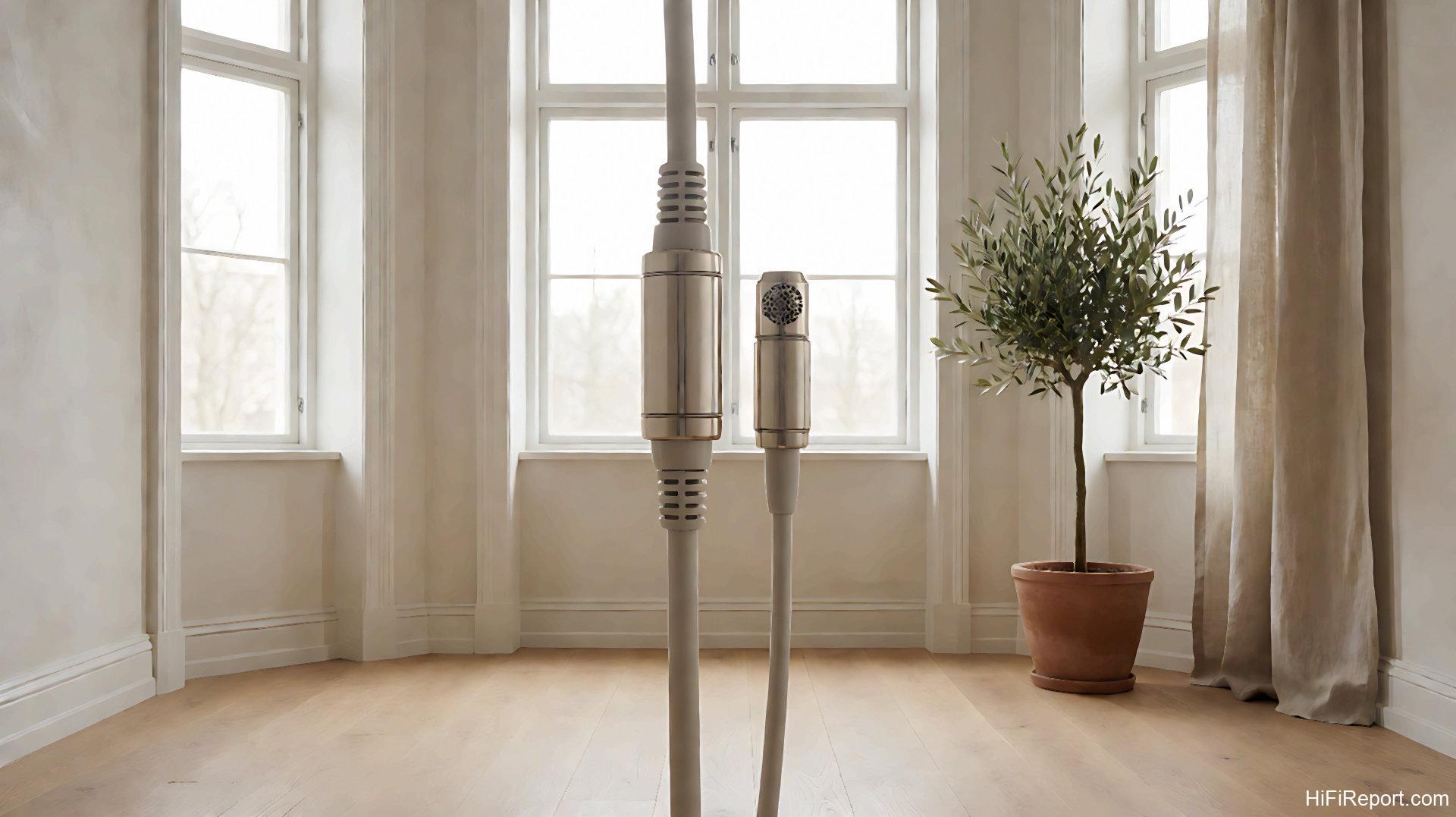
Why Bi-Amping Lets Two Amplifiers Drive Bass And Treble
Bi-amping is the practice of feeding each speaker driver—woofer and tweeter—from its own dedicated amplifier channel rather than one shared output. It sits between the amplifier and the passive crossover network, replacing the single wire that normally carries both drivers’ signals with two independent paths, so each driver moves without loading the other.
- Shared-output loading: When one amplifier channel drives both the woofer and the tweeter through a passive crossover, the woofer’s impedance swings pull current away from the tweeter’s supply rail, reducing the control the amp has over each driver.
- Dedicated channel separation: Bi-amping gives each driver its own amplifier output, so the woofer’s deep excursion no longer steals current from the tweeter, restoring full damping factor at both ends of the range.
- Crossover still divides: The passive crossover still splits the frequency range, but each section now sees only one driver’s impedance curve instead of the combined load of both drivers stacked together.
- Alignment is critical: The two amplifier channels must meet at the crossover frequency with a clean handoff; a gap or overlap in the midrange cannot be fixed by adding more wattage.
The Definition, In One Breath
Imagine a single water pipe that feeds two faucets on the same line: one small kitchen tap and one heavy garden sprinkler. When the sprinkler bursts open, the pressure in the pipe drops, and the kitchen tap sputters. Bi-amping is the move that gives each faucet its own dedicated pipe from the main line, so one can open wide without starving the other.
In a speaker, the woofer (the large cone that pushes air to make low notes) and the tweeter (the small dome that handles the top end) share one amplifier channel (the electrical output that powers them). A passive crossover is a network of resistors, capacitors, and inductors sitting inside the cabinet that sorts which frequencies go to which driver. It has no power supply of its own; it only redirects what the amplifier sends in. In a standard two-way setup, that one channel has to supply both drivers at the same time. The woofer’s voice coil draws heavy current on bass notes, and the tweeter’s voice coil draws lighter, faster current on high notes, all from the same electrical rail.
Bi-amping splits that single output into two. One channel drives only the woofer section of the crossover. The other drives only the tweeter section. Each driver now gets a full, undiluted supply of current. The passive crossover still does its job of dividing the frequency range. The change is purely in the signal path: two independent electrical roads instead of one shared road.
Where The Name Comes From
The prefix “bi-” means two. The dynamic loudspeaker was first built in 1925, and early speaker cabinets wired every driver to a single amplifier output. The passive crossover handled the frequency split. That arrangement was the default: one amp channel, one crossover, all drivers in parallel.
When amplifier designers began offering two independent output channels on one unit, they needed a short label to say “two channels feeding two driver sections.” “Bi-amping” did the job. The word is purely structural. It tells you the count of amplifier channels feeding the crossover. It says nothing about sound quality on its own. It exists because the shared-output topology creates a real electrical coupling between drivers, and splitting the signal into two paths removes that coupling.
The naming logic is cause and effect. One pipe feeding two faucets means one faucet’s demand changes the other’s pressure. Two pipes, one per faucet, means each pressure is independent. The word “bi” marks that second, independent pipe. It is not a quality grade. It is a description of the wiring.
What It Is, And What It Is Not
Bi-amping is a wiring and signal-path topology. It means two amplifier channels, each feeding one section of the passive crossover, which still does the frequency splitting. It is a change in how the electrical signal travels from the amp to the drivers. The crossover stays in the cabinet. The drivers stay in the cabinet. Only the upstream path changes.
It is not:
- A change in the speakers themselves. You have not swapped drivers, changed the enclosure, or altered the crossover components. The passive network still sorts the frequencies.
- A substitute for a good crossover design. If the crossover frequency is set poorly, bi-amping will not fix the gap or overlap in the midrange. The handoff point must be clean for any wiring scheme.
- A way to make a speaker louder. The total available power from the amplifier is the same whether one channel drives both drivers or two channels each drive one. You are redistributing existing channels, not adding new ones.
- The same as stacking two amplifiers in series to add wattage. Bi-amping uses two channels in parallel paths, each handling a different frequency band. No signal is summed.
- A warranty that every listening room will sound better. The audible change depends on the amplifier’s current headroom, the speaker’s impedance curves, and how well the two channels are time-aligned at the crossover.
Terms People Mix Up
| Look-alike term | What it actually means | One-line tell |
|---|---|---|
| Bi-wiring | Using two separate cable pairs to the speaker, one for the woofer section and one for the tweeter section, still fed from a single amplifier output | Bi-wiring changes the cable; bi-amping changes the amplifier channel |
| Multi-channel amplifier | An amp with three or more outputs, sized for a three-way speaker | Bi-amping specifically means two channels for two driver sections |
| Active crossover | An electronic circuit that splits the signal before amplification, with no passive components in the cabinet | Bi-amping keeps the passive crossover in the cabinet; each channel still sends full-range signal through it |
| Damping factor | How tightly the amplifier controls the driver’s back-and-forth motion after the signal stops | Bi-amping improves effective damping at both ends because each channel sees only one driver’s load |
The Audible Consequence
Bass. In a shared-output system, when the woofer cone pushes far out on a deep note, its voice coil generates a back-voltage that feeds into the same amplifier rail the tweeter is drawing from. The bass driver’s excursion momentarily lowers the supply available to the tweeter. You hear this as the top end going slightly dull or smudged during the heaviest bass hits. The kick drum’s attack stays punchy, but the cymbal wash right above it loses its snap. With bi-amping, the woofer’s channel absorbs that excursion without touching the tweeter’s channel. The bass stays deep and the highs keep their brightness through the same passage.
Vocals and midrange. The crossover frequency is the handoff point between woofer and tweeter. In a single-amp setup, both drivers’ impedance curves pile up at that frequency, and the shared channel has to split the load between them. The result can be a small bump or dip right where the singer’s voice lives. A lead vocal may sit slightly forward or slightly recessed, shifting from song to song depending on the bass content. Bi-amping lets each channel see a flatter, single-driver impedance curve around the crossover, so the midrange sits more evenly in the soundstage and the vocal does not wander in and out of focus.
High frequencies. The tweeter is a small, light driver. It needs fast, clean current to move its tiny diaphragm accurately. In a shared rail, the woofer’s inductive kick at the instant a bass note stops can ring into the same supply node the tweeter is using. You may notice a slight muddy texture on fast violin passages or on rapid hi-hat rolls, as if a thin veil sits over the top. With a dedicated tweeter channel, that inductive interference is cut off at the source. The highs open up, detail in the upper register reads more clearly, and fast transients land with a tighter, more defined attack.
What Readers Ask
Does Bi-Amping Require A Special Type Of Amplifier?
No special type. You need an amplifier with two or more independent output channels, which most stereo receivers and multi-channel power amps already provide. One channel goes to the woofer section, the other to the tweeter section. The amplifier does not need to know it is bi-amping. It simply drives each output normally. What matters is that the two channels are truly separate electrical paths, not one output split by a Y-cable.
Will Bi-Amping Make My Speakers Louder?
Usually not in a meaningful way. The total power available is the same whether one channel drives both drivers or two channels each drive one. The benefit is not raw volume. The benefit is that each channel now has full current headroom for its assigned driver. The woofer gets more controlled low-end punch. The tweeter gets cleaner high-end detail. You notice the difference most at high listening levels where the shared rail would have been near its limit.
Can I Bi-Amp Speakers That Do Not Have Separate Wiring Posts?
Most two-way and three-way speakers include separate binding posts for each driver section, often labeled for the woofer and the tweeter. If your cabinet has only one set of posts, you can still run a wire to an external crossover connection point, but the gain is smaller because the internal crossover still couples the drivers. Check the speaker manual for a terminal layout that supports two separate input pairs.
What Crossover Frequency Should I Use When Bi-Amping?
The crossover frequency is set by the speaker designer and is usually printed on the back of the cabinet or listed in the manual. It is the point where the woofer and tweeter responses are designed to meet. When you split the signal into two channels, you keep that same crossover point. The two channels must be time-aligned so the midrange shows no dip or bump. If the handoff is off, no extra wattage will fix it. The fix is in the crossover alignment, not in the amplifier.
(Exclusive to hifireport.com. Redistribution or scraping without approval is prohibited.)