
Wilson Audio TuneTot Review
Wilson Audio officially announced the TuneTot in May 2018, coinciding with the first day of the Munich High End Show. I saw the TuneTot for the first time in Wilson Audio’s exhibit, but it was a conference room setup, so the TuneTots weren’t playing. After inquiring about the technical details, I asked when they would be available. The representative smiled and said, “Soon, very soon, and it will be one of the priority supply countries!”
From May’s Unveiling to September’s Arrival
The factory representative was right. Not long ago, I saw a photo of the TuneTot posted on Facebook, and the message was clear: “TuneTots are available for listening!” I, of course, didn’t want to be left behind, so I immediately contacted the shop and scheduled a time to audition the TuneTot at their location, in a very nice area.
Why such interest in the TuneTot? Being a Wilson Audio user is one reason, but there’s another, even more important one: the TuneTot is Wilson Audio’s most affordable speaker, making it the best entry point into the Wilson Audio world! Moreover, from the factory information, the technology used in the TuneTot is practically identical to that of Wilson Audio’s high-end speakers, a direct technology transfer, which made me even more curious about the TuneTot’s sound performance capabilities.
A Tribute to Wilson Audio’s First Product
Where does the name TuneTot come from? It’s a tribute to Wilson Audio’s very first product.
Wilson Audio’s most famous product is undoubtedly the WATT. In the beginning, Dave Wilson designed a bookshelf speaker for his own recording monitoring needs, calling it the Wilson Audio Tiny Tot. That was the WATT. A few years later, a bass module was introduced to complement the WATT, and because it was the WATT’s “best friend,” it was called the Puppy. The combined WATT/Puppy went through several generations of revisions, becoming the best-selling speaker model in the history of high-end audio priced over $10,000.
Therefore, the name TuneTot is a direct homage to the Tiny Tot.
Although the TuneTot is currently Wilson Audio’s most affordable speaker, it’s packed with high-end technology.
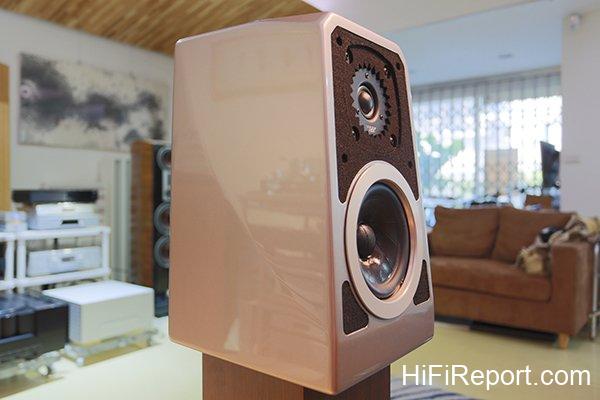
First, the TuneTot’s cabinet design and driver usage directly inherit from the Alexx and Sabrina. For example, the entire cabinet is made of X-Material, a unique composite material exclusive to Wilson Audio, with a hardness exceeding that of steel, making CNC precision machining even more costly. The midrange/woofer driver is a direct carry-over from the Sabrina, a 5.25-inch paper cone unit.
This direct transfer of technology from high-end speakers to the TuneTot raised my expectations for the actual sound performance of this bookshelf speaker to a very high level.

A Different Kind of Bookshelf Speaker Design
The TuneTot’s design also differs from traditional Wilson Audio speakers. It’s a “true” bookshelf speaker. Why describe the TuneTot this way? Are other bookshelf speakers not “true” enough? Although speakers of similar size to the TuneTot are generally referred to as bookshelf speakers, putting them directly on a bookshelf doesn’t always yield good results. It can even muffle the sound and prevent it from opening up. Therefore, most bookshelf speakers are paired with stands. As a result, the space required for bookshelf speakers is actually the same as for floor-standing speakers; both need to occupy floor space..
But the TuneTot is genuinely designed to be placed on a desk, eliminating the need to reserve additional floor space for speakers.
When Daryl Wilson designed the TuneTot, he considered that some homes simply don’t have extra floor space to dedicate to speakers. So, he worked hard to make the TuneTot suitable for placement on a desk, even tucked into a bookcase if necessary.
A Wealth of Optional Accessories
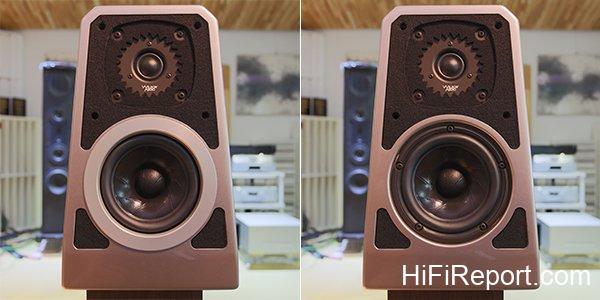
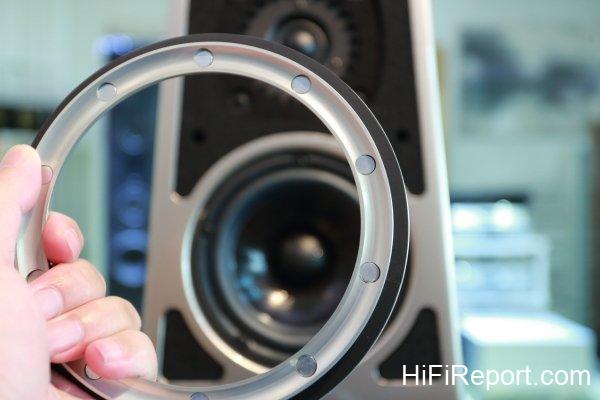
To enable the TuneTot’s versatile placement, Wilson Audio developed a dedicated “Ecosystem” specifically for it. This includes optional grilles, midrange/woofer driver trim rings, and a dedicated base called IsoBase. All three are optional accessories, available at an extra cost.
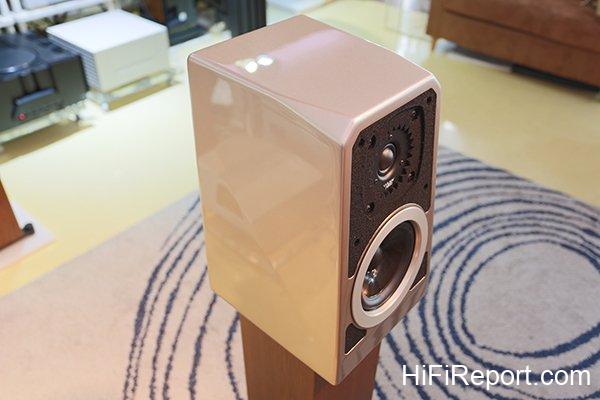
The grille’s function is protection and dust prevention, having little to do with the sound. Whether to buy it depends on functional needs. The metal ring around the midrange/woofer driver is also not for sound, but for aesthetics. The ring comes in various colors, offering multiple combinations to match the speaker’s color. For instance, a black TuneTot with a red metal ring creates a vibrant color contrast, reminiscent of a Mercedes-Benz AMG interior’s black and red contrast. It’s another form of TuneTot customization.
However, among the accessories derived from the TuneTot ecosystem, the one most relevant to sound performance is the dedicated IsoBase. This is the innovative design that turns the TuneTot into a “true” bookshelf speaker, and there’s a lot of science hidden within.
What’s the purpose of the IsoBase? It’s placed under the TuneTot, completely “de-coupling” the speaker from the desk (or any surface the speaker is placed on).
Is it that simple? Innovation is often hidden in the unseen.
IsoBase De-couples the Speaker from the Placement Surface
If we place a speaker on a desk, the speaker driver’s operation generates vibrations, which in turn cause the speaker cabinet to vibrate. If the bottom of the speaker is in contact with the desk, the entire desk will resonate along with it, creating distortion or coloration. Therefore, audiophiles often place various types of spikes under bookshelf speakers to prevent the speaker bottom from contacting the desk, aiming to eliminate the resonance generated between the speaker and the desk or speaker stand.
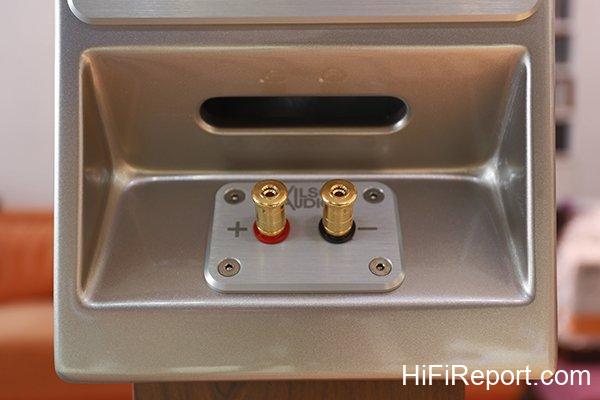
The TuneTot comes standard with four metal spikes, which already minimize the contact area between the speaker bottom and the placement surface (only the four spike points). However, adding the IsoBase further enhances the de-coupling effect.
The TuneTot’s dedicated spikes already prevent the speaker from directly contacting the placement surface. However, the speaker’s operational vibrations can still resonate with the surface below, creating negative effects. The IsoBase is made of X-Material, which has very high density and mass. Placing the TuneTot on the IsoBase allows the speaker’s operational vibrations to be dissipated or canceled out by the IsoBase.
How does the IsoBase achieve this? The X-Material base contains a special damping material in its core, designed to absorb micro-vibrations. The aluminum alloy layer on top of the IsoBase is purely for aesthetics. The materials that actually achieve the “de-coupling” effect are the X-Material and the internal damping material.
Committing to “Ultra-Nearfield Listening”
This was my second time seeing the TuneTot, but my first time listening to it. As I stepped into the audio shop, I immediately grabbed a director’s chair, preparing to find the optimal listening position.
Why? Hadn’t the dealer already set up the speakers? I knew his preferred setup was to sit comfortably on the sofa for a relaxed listening experience. However, before coming to listen to the TuneTot, I had already made up my mind to use an “ultra-nearfield listening” setup.
What is “ultra-nearfield listening”? Simply put, it’s a setup close to an equilateral triangle. The listening position is at the apex of the triangle, where I placed the director’s chair, and the speakers are at the other two points, as equidistant as possible, and close rather than far. It’s a bit like listening to the speakers as if they were large headphones.
In my setup that day, the distance between the speakers was approximately 1.2 meters. This distance wasn’t measured from the speaker cabinets, but from the distance between the tweeters. My distance from the two speakers was also set to approximately 1.2 meters.
Actually, I didn’t measure the distance beforehand. I listened and adjusted the positions, and only when I found the position I wanted did I borrow a tape measure. The actual measured distance between the two TuneTot tweeters was approximately 1.3 meters, and my distance from the speakers was approximately 1.2 meters.
I was secretly pleased, and said with a smile, “I didn’t expect the distances to be so close!”
The Factory Provides Videos Guiding Toe-in and Angle
Is it necessary to adjust for a perfect equilateral triangle with such a small discrepancy? I don’t think so. An equilateral triangle equidistant setup is just a reference. As long as the sound is OK, there’s no need to be overly concerned about minor distance errors.
Speaker placement principles aren’t rigid; they should be applied flexibly based on the actual situation.
Next is setting the TuneTot’s toe-in angle. Wilson Audio has already prepared a video for this; watching it will show you the correct toe-in angle.
Please note that there is absolutely no fixed numerical value for the TuneTot’s toe-in angle. It entirely depends on how you position them.
TuneTot speaker installation setup demonstration video:
The Dedicated Spikes are Essential
The final point to note about the TuneTot is that the factory-supplied spikes are “essential”! Why? Because these spikes are related to Wilson Audio’s most important design principle: Time Coherence.
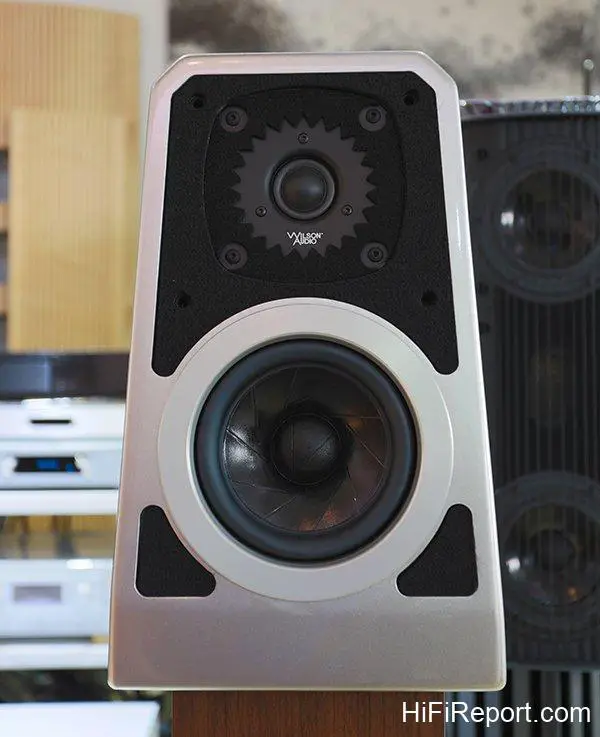
Wilson Audio’s high-end speakers are all modular designs. From the Sasha 2 (the latest model is the Sasha DAW), Alexia 2, Alexx, Alexandria X2, all the way to the top-of-the-line WAMM, all are modular speakers. The higher the model, the more fine-tuning of time coherence is possible. But the TuneTot is a simple, single-cabinet speaker. How do you adjust time coherence? The answer lies in the spikes! The TuneTot’s four spikes are two long and two short. You can see it right away! You can adjust the height of the spikes to give the TuneTot a bit more of an upward angle (or conversely, a downward angle).
What angle is the correct setting? Again, there’s no standard answer because the position where you place the TuneTot can be high or low, so there’s no way to give a correct angle. But, as with the toe-in angle, watching the factory video will show you. The correct upward angle is when you can see a little bit of the top panel of the TuneTot when looking at the speaker from the listening position. That’s roughly the right angle.
There’s another reason why the TuneTot’s dedicated spikes are “essential.” The holes for fixing the spikes go directly into the speaker cabinet. If the spikes aren’t installed, not only will air leak through these four holes when the speaker is playing sound, but worse, the long, narrow holes will produce airflow noise, negatively impacting the sound.
It was during the adjustment of the TuneTot placement, while letting the speakers play, that I discovered the bottom was “spraying air,” and I hurried to ask for the spikes.

Powered by the Mighty Gryphon Diablo
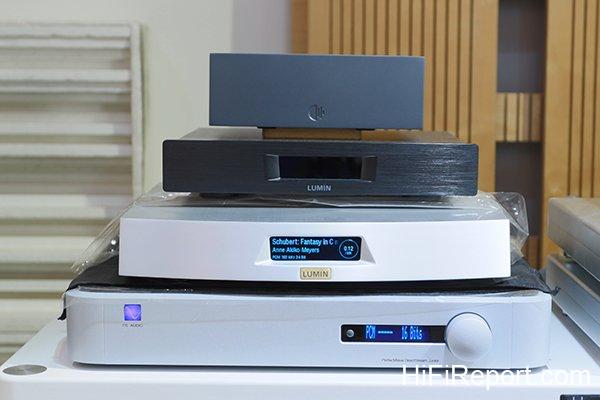
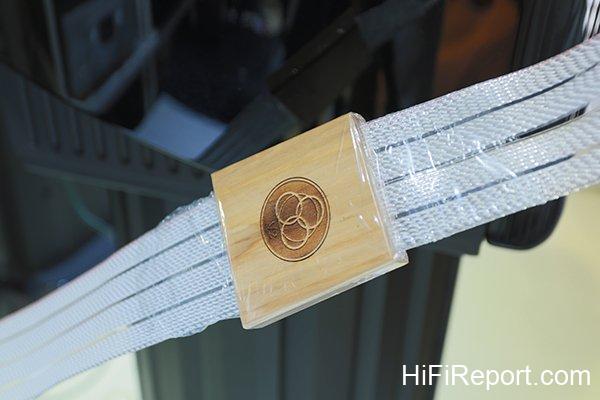
We’ve covered the “ultra-nearfield listening” setup. Now, let’s see what goodies were brought out. There was a Lumin S1 digital streaming player, a PS Audio Direct Stream Memory Player paired with the same brand’s PerfectWave DAC, and a Gryphon Diablo 300 amplifier to drive the speakers. Nordost Valhalla 2 speaker cables were also used.
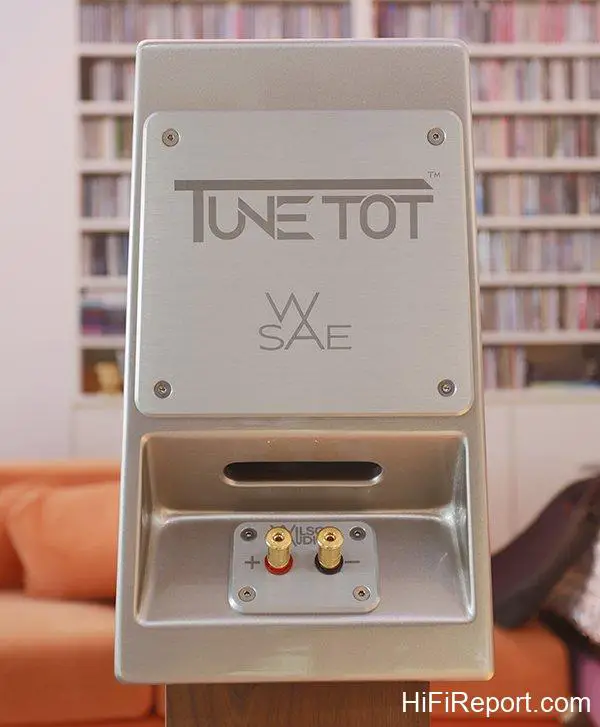
The dealer smiled and said, “This time it’s different. The TuneTot can use banana plugs, much more convenient!” That’s right, previously Wilson Audio speakers used their own machined speaker terminals, which only accepted spade connectors. This time, the TuneTot uses German WBT terminals, making it the first Wilson Audio speaker to accept banana plugs.
The TuneTot’s efficiency is rated at 86dB, which is medium efficiency. However, the impedance is more friendly, at 8 ohms. Bringing out the 300-watt Diablo 300 should be more than enough.
I know that the dealer has a rich music collection. I specifically brought a CD that he probably hadn’t bought yet: Yo-Yo Ma’s 2018 version of the “Bach Six Suites for Unaccompanied Cello.”
The Speakers Naturally Disappear into the Space
With the TuneTot set up for ultra-nearfield listening and playing Yo-Yo Ma’s “Bach Six Suites for Unaccompanied Cello,” a beautiful soundstage emerged behind the speakers. The cello image was focused and large. I closed my eyes and listened quietly, as if Yo-Yo Ma were playing right in front of me. Of course, by this time, I had turned up the volume quite a bit, and the TuneTot steadily presented the cello’s dense lines and full image.
With the “ultra-nearfield listening” setup, the speakers naturally disappeared into the space, and a beautiful soundstage formed behind the speakers.
Louis Armstrong and Ella Fitzgerald. The TuneTot has a charming timbre, with warm and dense mid-high frequency extension, and a quick, bouncy mid-low frequency. Listening to Louis Armstrong and Ella Fitzgerald’s classic jazz duet “Let’s Call The Whole Thing Off,” Ella Fitzgerald’s voice emerged focused and sweetly, floating in the air. The piano behind her gently accompanied her, not trying to steal her spotlight. When the drums and double bass joined in, the music became lively. Louis Armstrong’s thick and unique voice sounded vivid on the TuneTot.
Although the TuneTot is miniature in size, the wide soundstage and large image it forms behind the speakers are completely beyond what you’d expect from a speaker of this size.
Don’t Be Afraid! The TuneTot Can Handle Power
“Tricycle” Let’s try a “challenging” track! Listening to the theme song “Tricycle” from the movie *Tricycle*, the music starts with an electric piano repeating the theme, sounding harmless, but the percussion that follows is fierce.
At the shop, paired with the Diablo 300, a comfortable listening volume was 20-25, which is a volume where you can listen and chat at the same time. But when listening to “Tricycle,” I kept pushing the volume up, going between 28-35, eventually settling on 32. Actually, a volume setting of 35 wouldn’t overdrive the TuneTot; clearly, this speaker can handle a lot, but because of the close listening distance of “ultra-nearfield listening,” a volume of 35 was a bit too loud. After trying a few times, I finally used a volume of 32 to listen to “Tricycle.”
Why did I write down the Diablo 300’s volume setting? So that if you go to audition the TuneTot, you can do the same and experience the power of “ultra-nearfield listening” with the TuneTot.
The TuneTot’s frequency response is rated at 65Hz-23kHz. Naturally, the very low frequencies are lacking, but the speed and impact of the mid-low frequencies are amazing when listening to “Tricycle,” especially when the amplifier is pushed sufficiently. The TuneTot’s mid-low frequency punch is even more powerful, and after pushing the TuneTot louder, it doesn’t make the image bigger, but rather improves the density of the sound, making the instrument imaging more focused and the listening experience more realistic.
Live Concert Recording Details Abound
Cecilia Bartoli’s “Live in Italy” album. After pushing it hard, and having roughly grasped the appropriate volume for the Diablo 300 and TuneTot combination, let’s switch to some refined music to listen to the sound quality! Listening to Handel’s “Lascia la spina” from Cecilia Bartoli’s “Live in Italy” album, the soundstage beautifully emerged behind the TuneTot. The harpsichord was on the right, and the string section surrounded Bartoli. The focused and spirited mezzo-soprano voice floated in the air. The string section simulated the sound of an organ, dense and long, while the harpsichord had clear grains, embellishing with a slightly bright sound. Bartoli’s throat sounds, labiodental sounds, and breathing details, the TuneTot reproduced the refined chamber music, and the wide hall sound extending from the soundstage allowed us to hear the openness of the recording venue.
Handel’s aria has an extremely beautiful melody. The TuneTot not only restored the authenticity of the recording, but the flowing and dense notes also possessed musical beauty. I focused on the music until the last note fell and the audience gave a full applause. I then came back to my senses, as if I had truly returned to the Italian concert live.
Depicting the Flow of Notes, Beautiful and Authentic
Martha Argerich’s “Chopin Piano Concerto No. 2”. What should we listen to after the beautiful music? Let’s have some romantic notes! Listening to Argerich’s “Chopin Piano Concerto No. 2,” the second movement, Adagio, starts with strings and woodwinds. The TuneTot presented them with a slightly warm tone. Argerich’s piano sounded, the touch crystal clear, and the variations in lightness and weight showed the pianist’s interpretation of the piece. The delicate connection between the piano notes, and the separation between the staccato notes, Argerich’s tenderness hidden in the notes, were vividly presented on the TuneTot with flowing notes.
The Diablo 300 dutifully drove the TuneTot. I listened at a higher volume. The sharp points of the piano extended brightly, but the ending was soft, appropriately expressing the romantic atmosphere in the music. Listening to Chopin on the TuneTot was truly romantic.
Finally, what test did we give the TuneTot? Argerich playing “Schumann Piano Concerto.” The first movement’s fierce orchestral notes fell, and the TuneTot quickly and forcefully demonstrated its momentum. Then, the woodwind section played a soft melody, and the piano repeated. Although the TuneTot is just a bookshelf speaker, the dynamic contrast of the music was very good, and the scale of the music completely exceeded expectations for a speaker of this size. Moreover, under the ultra-nearfield listening setup, the TuneTot completely disappeared into the space. The soundstage presented behind the speakers was wide and deep, with distinct layers.
In the “Schumann Piano Concerto,” the piano position was centered, with a clear image and slightly larger size. The orchestra’s response at the back, the violins were clearly on the left, the cellos and double basses were to the left, and the brass and woodwind sections were in the center rear. The TuneTot indeed had the precise performance of a small monitor speaker, able to clearly distinguish the positioning of each instrument in the recording venue. The concerto sounded both authentic and beautiful.
We Haven’t Played with the IsoBase Yet, More to Come
Coming to audition the TuneTot, did we listen enough this time? Basically, the “ultra-nearfield listening” placement is very suitable for the TuneTot, but this kind of speaker placement is not easy to achieve in a typical home, as it takes up too much space. Moreover, the TuneTot didn’t have the IsoBase, so this time, it was more like listening to the TuneTot in a traditional way. I still want to try the IsoBase’s capabilities, to see if, with the IsoBase and the TuneTot, it can really be placed on a desk, or even on a TV cabinet, and still be placed close to the wall. If there’s an opportunity in the future, I’ll try it again.
Specifications
* Wilson Audio TuneTot
* Type: Bass-reflex bookshelf speaker
* Drivers: 1-inch silk dome tweeter × 1, 5.75-inch paper cone midrange/woofer × 1
* Efficiency: 86 dB
* Impedance: 8 ohms (minimum 6.61 ohms @ 172Hz)
* Frequency Response: 65 Hz – 23 kHz
* Dimensions: 37.67 × 21.87 × 25.88 mm (H × W × D)
* Weight: 13.15 kg (per channel)