
1MORE Triple Driver in-Ear Earphones Review
Overview
The 1MORE Triple Driver in-Ear Earphones have aged in reverse. First released back in August 2016, these wired in-ears were already a standout value when they launched, and they have only become more recommendable as the wireless market has pushed convenience ahead of sound quality. For listeners who still care about a clean, balanced signal straight out of a headphone jack, the Triple Driver remains one of the most compelling plug-and-play options around.
The concept is straightforward but uncommon at this tier: three dedicated drivers per earpiece, working together to cover deep bass, articulate mids, and extended highs. Add a metal housing, a Hi-Res Audio certification, a MEMS microphone, and a generous accessory bundle, and the package reads more like a mid-tier audiophile IEM than a budget commuter bud.
Across the major review outlets, the consensus is remarkably consistent. TechRadar praised the “stellar audio, great build quality and an attractive design.” PCMag handed the Triple Driver an Editors’ Choice award, calling the sound “crisp, rich, balanced.” SoundGuys rated it a 7.5 and noted that “the durable cable and solid audio quality make these earbuds a must-have for anyone who wants a plug-and-play solution.” RTINGS described them as “well-built, slick-looking in-ears with an above-average sound quality for critical listening.”
This review synthesizes those expert takes, the official product details, and the broader customer signal to help you decide whether the 1MORE Triple Driver still deserves a spot in your daily kit.
Design and Build Quality
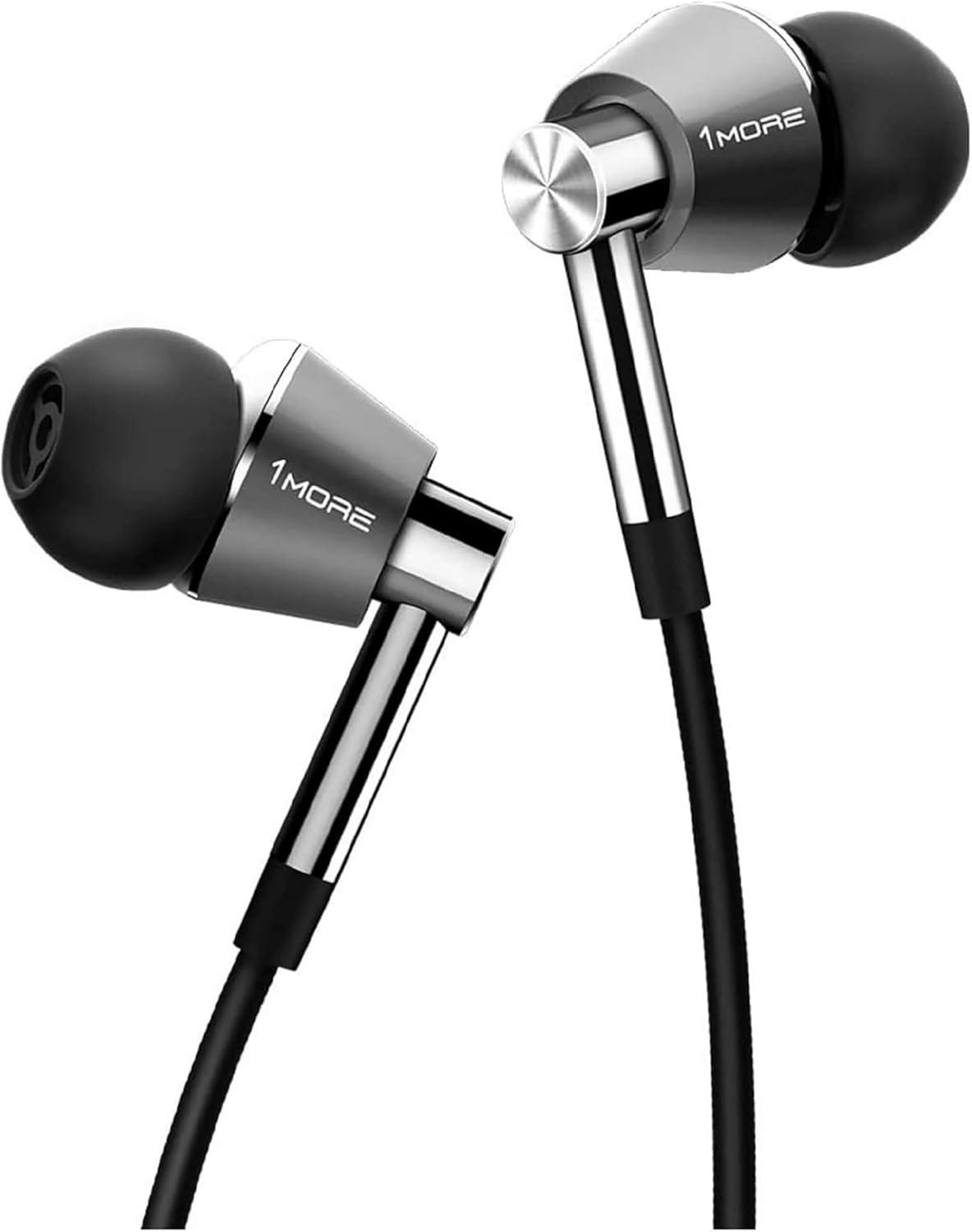
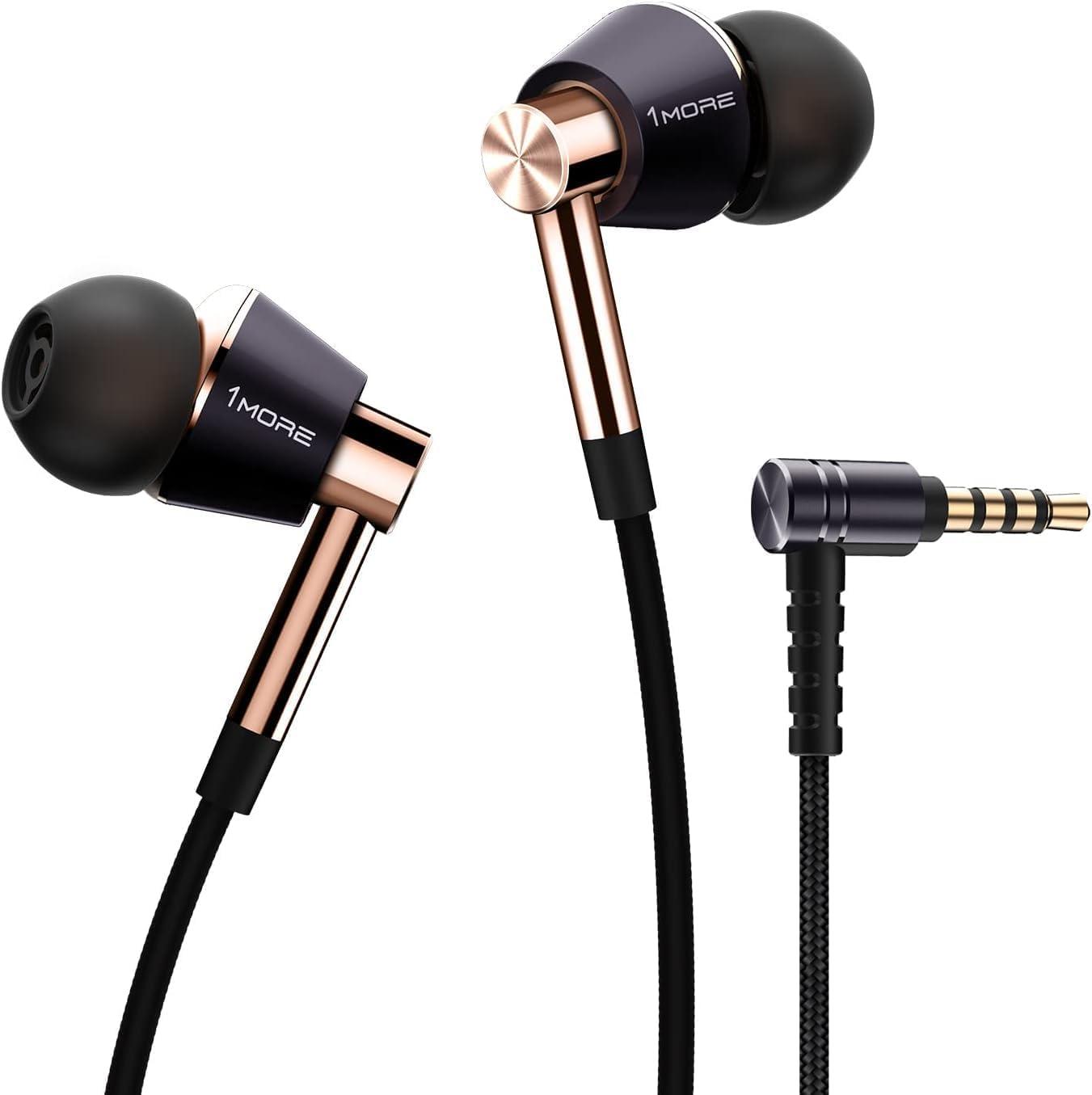
From the moment you open the box, the Triple Driver signals that 1MORE put real thought into materials. The earpieces are milled from aluminum alloy, giving them a dense, cool-to-the-touch feel that immediately separates them from the plastic housings common at this tier. PCMag noted the “black with brushed gold details” look, while TechRadar highlighted the rose-gold accents and described the design as “handsome… subtle yet stands out when you get your hands on them.”
The earpieces are obliquely angled to match the natural curve of the ear canal, which helps both comfort and acoustic seal. They don’t sit completely flush, so you probably won’t want to sleep in them, but they maintain a low profile and stay reasonably secure during walking and light movement.
The cable is where opinions divide. 1MORE uses a two-texture approach: a fabric-braided sheath from the Y-splitter down to the straight 3.5mm plug, and rubber from the Y-splitter up to each earpiece. PCMag describes the cable as Kevlar-reinforced, which supports the durability claim. TechRadar, however, was blunt about the rubber section: “We’re not fans of rubber cables as they tend to snag on clothing or on itself. The 1MORE Triple Drivers are guilty of this, but it’s by no means a deal breaker.” SoundGuys agreed, listing “half of the cable is cheap plastic” and “sometimes tangles itself” among its complaints.
A more structural limitation is that the cable is not detachable. If the wire frays near the plug or the Y-splitter, the earphones are done. For a model that otherwise feels built to last, that’s a real constraint, and several reviewers flagged it as the single biggest thing they’d change.
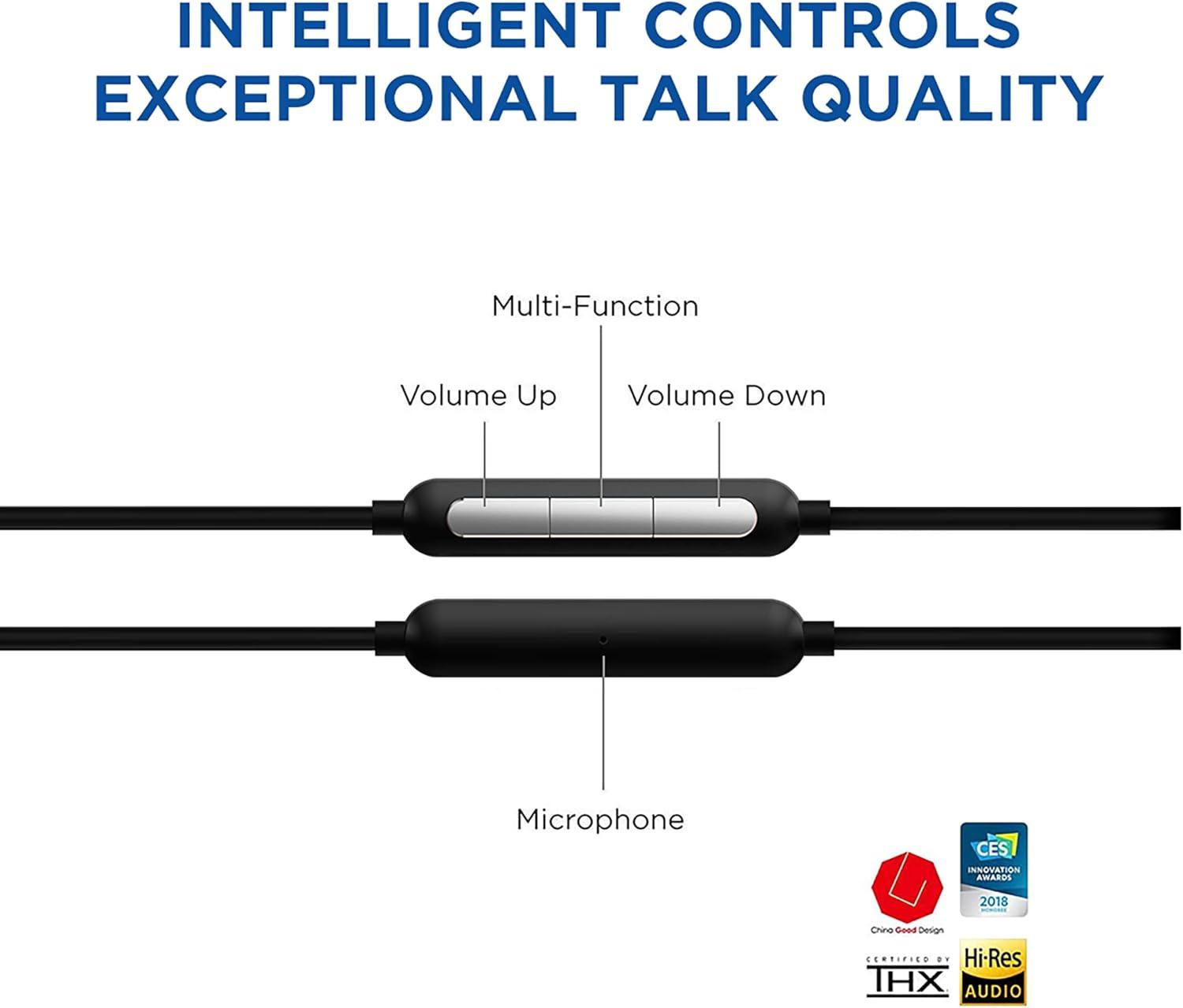
The included three-button remote sits on the right-side cable. It works across both Android and iOS, which is rarer than it should be. The buttons handle playback, call management, track navigation, and volume in conjunction with your device’s master level. TechRadar’s only design gripe was that the “plastic remote feels cheap,” and the buttons do have a slightly hollow click compared to the solid metal earpieces. It’s a minor letdown in an otherwise premium-feeling package.
Drivers and Sound Architecture
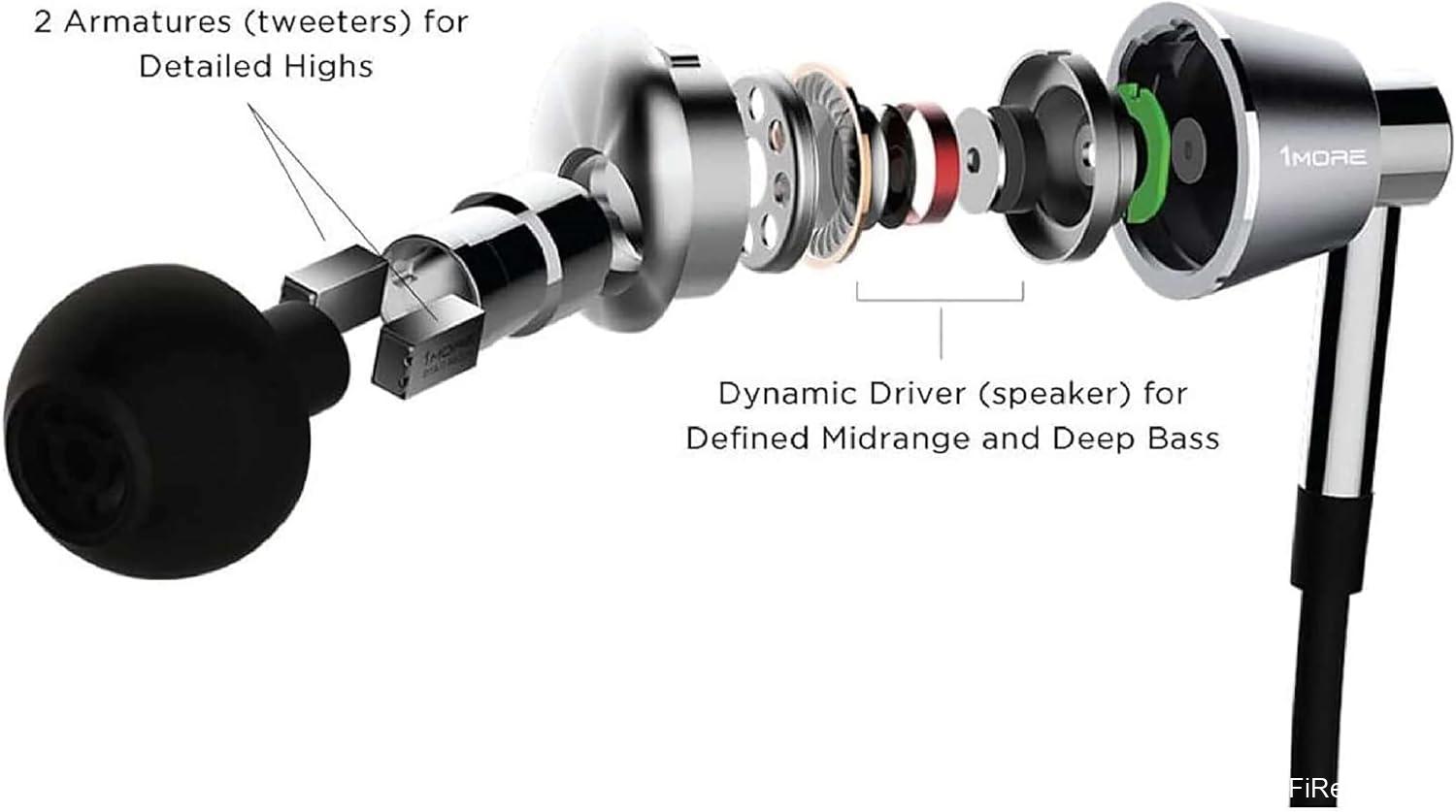
The headline feature is right in the name. Each earpiece houses three drivers: two balanced armatures and a single dynamic driver. Most in-ears at this level use a single dynamic driver, so the triple-driver array is genuinely unusual and is the core reason these earphones punch above their class.
The division of labor is what you’d expect from a hybrid design. The dynamic driver handles the low end, where moving air matters, while the balanced armatures take on the midrange and treble, where speed and detail are the priority. The result, according to PCMag, is “crisp, rich, balanced audio performance that will appeal to purists.”
1MORE also leaned on a Grammy Award-winning sound engineer to finalize the tuning, which is a marketing point but also a real process detail. The stated goal was to deliver a precise representation of the artist’s intended sound rather than a hyped, bass-boosted signature. Hi-Res Audio certification backs that up, confirming the drivers and electronics meet the spec for high-frequency reproduction.
The architecture matters because it explains why the Triple Driver sounds more layered than typical single-driver buds. Instruments sit in distinct spaces, vocals stay forward, and transients have snap. You’re not getting the expansive soundstage of an open-back over-ear, but within the in-ear format, the separation is a clear step up.
Sound Quality
Across every source, the sound quality is the Triple Driver’s strongest card. TechRadar called it “lush,” SoundGuys praised the “solid audio quality,” and PCMag’s Editors’ Choice verdict centered on the “crisp, rich, balanced” presentation. The independent review at My Tech Grid summed it up as “punchy, studio-like sound with surprising clarity and solid build.”
Bass is described as lively and controlled rather than bloated. The dynamic driver delivers punch and weight, but it’s tuned for accuracy, not overwhelm. My Tech Grid noted that “bass is punchy but not overly deep, bass heads may want more low-end weight.” If you listen to a lot of EDM or hip-hop and want that chest-rattle sub-bass, the Triple Driver may leave you wanting. For rock, jazz, acoustic, and vocal-forward material, the low end sits exactly where it should.
Mids are the real highlight. Vocals stay front-and-center, and the midrange has a forward, present quality that makes singers and lead instruments feel immediate. My Tech Grid observed that “the drivers separated instruments well and vocals stayed front-and-center” across subway commutes, desk editing, and tablet movie watching. That midrange clarity is what makes the Triple Driver feel more expensive than it is.
Treble is crisp and extended, thanks to the balanced armatures and the Hi-Res tuning. PCMag’s only real sonic caveat was that “the highs might be boosted slightly more than some will prefer.” It’s a fair point. The tuning leans slightly bright, which adds sparkle and detail but can edge toward sharpness on already bright recordings. Most listeners will hear it as clarity rather than harshness, but treble-sensitive ears should be aware.
Balance and imaging are where the triple-driver design pays off. The frequency response reads as tuned rather than accidental, with each range occupying its own space. RTINGS found the Triple Driver “reproduce tracks with an above-average fidelity, on par with much more expensive in-ear models.” The one structural limitation, common to virtually all in-ears, is soundstage. RTINGS noted they “lack soundstage due to their design,” which is inherent to the sealed in-ear format rather than a flaw specific to 1MORE.
Distortion and dynamics are clean. The separate ground wires in the MEMS microphone design help reduce cross-talk and background static, which contributes to the sense of separation. Tracks with wide dynamic range, from orchestral swells to quiet acoustic passages, hold together without compression artifacts at normal listening levels.
Comfort, Fit, and Isolation
Fit is make-or-break for in-ears, and 1MORE handles it about as well as you can without going custom. The oblique angled ear fittings are shaped to follow the ear canal’s natural curve, which helps both comfort and seal. SoundGuys rated comfort at 8.5 out of 10, and user ratings in their data pushed even higher.
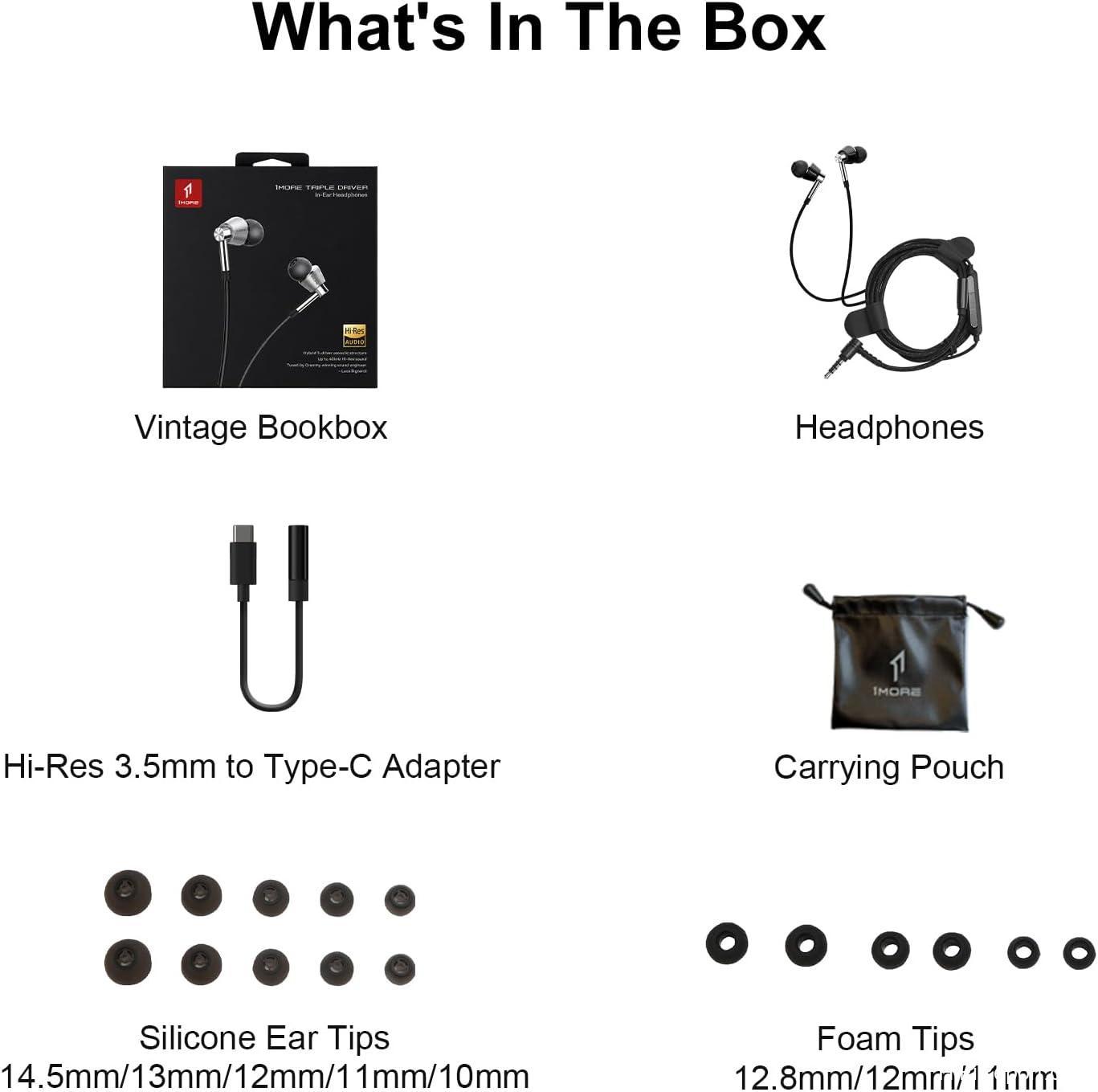
The accessory bundle is a big part of the equation. You get nine total pairs of eartips: six silicone pairs ranging from 10mm to 14.5mm, and three foam pairs from 11mm to 14.5mm. PCMag pointed out that foam tips “typically offer a more secure fit, more passive ambient noise reduction, and often can create a greater sense of bass response because of the superior seal.” SoundGuys was direct: “The foam ear tips are a must for a good seal.”
That seal matters for both sound and isolation. With the right tips, the Triple Driver blocks a reasonable amount of ambient noise passively, enough for typical office use and moderate city walking. RTINGS, however, was more measured: “they don’t block a lot of ambient noise so they won’t be the ideal headphones to use in loud environments or while commuting.” My Tech Grid’s experience was more positive on a long flight, where “the ear tips sealed well and music stayed full-bodied even over engine noise.” The takeaway is that isolation is tip-dependent and somewhat source-dependent, so plan to experiment.
Stability is solid. The angled housings and the variety of tip sizes mean most users will find a combination that stays put. SoundGuys found them “stable enough to exercise with,” and the lightweight 22.7-gram build means they disappear on the ear after a few minutes. The trade-off is that fit can be finicky for unusual ear shapes, as My Tech Grid acknowledged: “fit can be finicky for some ear shapes despite multiple tips.” The product note on the Amazon listing reinforces this: if the tip size doesn’t match your canal, you won’t get the correct sound qualities or call performance.
One comfort-adjacent issue is microphonics, the touch noise a cable makes when it rubs against clothing. My Tech Grid flagged that “the cable can still pick up touch noise if it rubs on clothing.” The fabric-braided lower section helps, but the rubber upper section is the culprit. Wearing the cable under a collar or using a clip largely solves it.
Controls and Microphone
The in-line remote is a three-button module positioned on the right-side cable. It handles volume, track selection, and call management, and it works with both Android and iOS. Cross-platform compatibility is genuinely useful if you carry multiple devices or switch between a phone and a tablet.
The MEMS microphone uses independently set ground wires to reduce cross-talk and background static. In practice, call quality is solid. My Tech Grid reported that “the in-line mic did a solid job keeping voices clear” while walking through a noisy city, and that it “works well for clear phone calls” during desk use. For voice calls and occasional video meetings, it performs above the standard set by most bundled earbuds.

The remote itself is the weak link in the hardware chain. TechRadar’s complaint that the “plastic remote feels cheap” is accurate. The buttons have a slightly hollow, clicky action that contrasts with the metal earpieces. Functionally it’s fine, and the button layout is logical, but the tactile experience won’t match the rest of the build.
Connectivity and Daily Use
Connectivity is the simplest part of this review. The Triple Driver is a wired in-ear with a straight 3.5mm plug, so there’s no Bluetooth pairing, no battery to charge, no app to install, and no firmware to update. You plug in and listen. For anyone who has wrestled with wireless earbuds that drop connection or run out of battery mid-commute, that simplicity is a feature, not a limitation.
SoundGuys framed the audience well: “People with multiple devices should get these earbuds, assuming your devices all have headphone jacks. Commuters will grow to appreciate just how well these earbuds isolate you from your surroundings. Plus, you don’t have to worry about battery life.” The caveat, of course, is that more and more phones have dropped the jack. If your daily driver lacks a 3.5mm port, you’ll be relying on a dongle, which adds friction and partly defeats the plug-and-play appeal.
Compatibility is broad. The 3.5mm plug works with laptops, tablets, handheld consoles, dedicated digital audio players, and any phone that still has a jack. PC compatibility is universal, and the earphones work with PlayStation controllers and other devices that accept a standard TRRS headset. There’s no active noise cancellation, no transparency mode, and no wireless option, so the feature set is deliberately narrow.
For wired gaming, latency is a non-issue, which gives the Triple Driver an edge over Bluetooth earbuds in competitive play. The microphone is serviceable for in-game chat, though serious voice communication might warrant a dedicated headset. The sound signature, with its crisp treble and forward mids, suits gaming well, particularly for picking up footsteps and environmental cues.
This article is the original property of hifireport.com. All rights reserved. Unauthorized reproduction is strictly prohibited.

What Customers Are Saying
The aggregated Amazon rating sits at four out of five stars across more than 11,000 ratings, which is a strong signal for a product that has been on the market for years. That kind of sustained volume indicates the Triple Driver has held its reputation over time rather than spiking on a launch hype cycle.
Because the live review text wasn’t available for direct synthesis, the rating itself tells the story. A four-star average across five digits of feedback suggests most buyers are satisfied with the core value proposition: solid sound, durable build, and a generous accessory bundle. The pattern that typically drives a product to four rather than five stars at this scale is a consistent minority of complaints about specific issues rather than broad dissatisfaction.
Based on the issues flagged across the expert sources, the likely customer complaints cluster around a few themes. The rubber upper cable is the most cited hardware gripe, both for tangling and for snagging on clothing. The non-detachable cable is a frustration for anyone who has lost an earphone to a frayed wire. Fit, while generally well-regarded, won’t work for every ear shape despite the nine tip options. And listeners who prioritize heavy sub-bass may find the tuning too restrained for bass-driven genres.
The positive side of the ledger is consistent across every source. Buyers and experts alike praise the balanced, detailed sound, the metal build quality, the accessory package, and the cross-platform remote. The recurring theme is value: the Triple Driver consistently described as offering more than its tier suggests, with My Tech Grid calling it “near audiophile sound without a high price tag” and TechRadar awarding it “unmatched value.”
Pros and Cons
Pros
- Triple-driver hybrid design with two balanced armatures and one dynamic driver per earpiece
- Crisp, balanced, detailed sound with forward vocals and clean instrument separation
- Solid aluminum alloy housings with a premium feel
- Hi-Res Audio certification for high-frequency clarity
- Nine pairs of eartips included, covering silicone and foam in multiple sizes
- Cross-platform three-button remote works with Android and iOS
- MEMS microphone with isolated ground wires for clear calls
- Lightweight at 22.7 grams with a stable, angled fit
- Plug-and-play wired simplicity with no battery or pairing concerns
- Carrying case included for portability
Cons
Copyright protected. First published on hifireport.com; any unauthorized copy violates the intellectual property rights of hifireport.com.
- Cable is not detachable, limiting repair options
- Rubber upper cable section snags on clothing and tangles
- Plastic remote feels cheap compared to the metal earpieces
- No active noise cancellation and only modest passive isolation
- Treble may be slightly boosted for sensitive listeners
- Bass is controlled but not deep enough for bass-heavy genres
- No wireless option for devices without a headphone jack
- Cable microphonics when rubbed against clothing
- Fit can be finicky for some ear shapes
- Soundstage is limited by the sealed in-ear design
Verdict
The 1MORE Triple Driver in-Ear Earphones are a wired in-ear that have outlasted countless wireless competitors, and for good reason. They deliver a triple-driver hybrid design, a balanced and detailed sound signature, and a build quality that feels a tier above where they sit. PCMag’s Editors’ Choice, TechRadar’s sustained recommendation, and SoundGuys’ 7.5 rating all point to the same conclusion: this is a product that gets the fundamentals right.
The sound is the main event. Crisp highs, forward mids, and controlled bass add up to a presentation that suits acoustic, vocal, rock, jazz, and most mainstream listening. It’s not a bass-head’s earphone, and the treble leans slightly bright, but for listeners who want accuracy and detail over hype, the tuning is on target. The accessory bundle, with nine tip pairs and a case, removes most of the fit guesswork.
The weaknesses are real but manageable. The non-detachable cable is the biggest structural limitation. The rubber upper section tangles and transmits touch noise. The plastic remote undercuts the premium feel. And the sealed in-ear design limits soundstage and passive isolation compared to larger headphones or active noise-canceling alternatives.
Who should buy them? Commuters with a headphone jack, casual audiophiles who want a step up from stock buds, anyone who wants a reliable wired backup alongside wireless earbuds, and listeners who prioritize sound quality over feature count. If your phone has no jack and you don’t want to carry a dongle, look elsewhere. If you need heavy sub-bass for EDM or want active noise cancellation for flights, the Triple Driver won’t be your best fit.
For everyone else, this is one of the most consistently recommended wired in-ears on the market, and it earned that reputation by doing the important things well. Pricing varies over time, so check the product page for the current figure, but the value proposition has held up for years and shows no sign of fading.
Specifications
- Brand: 1MORE
- Model: E1001-SV
- Type: In-ear (in-canal), wired
- Driver Configuration: Triple driver per earpiece (two balanced armatures + one dynamic driver)
- Transducer Type: Hybrid
- Enclosure: Closed-back
- Hi-Res Audio Certified: Yes
- Housing Material: Aluminum alloy
- Cable Material: Kevlar-reinforced; fabric-braided lower section, rubber upper section
- Cable Length: 1.2m
- Plug: Straight 3.5mm
- Weight: 22.7g
- Remote: Three-button in-line, compatible with Android and iOS
- Microphone: MEMS with independently set ground wires
- Eartips Included: Nine pairs (six silicone, 10mm to 14.5mm; three foam, 11mm to 14.5mm)
- Carrying Case: Included
- Detachable Cable: No
- Wireless: No
- Noise Cancelling: No
- Waterproof: No
- Release Date: August 12, 2016
- Amazon ASIN: B01KB9K9Z0

- Three drivers- These headphones have two balanced armatures and a separate dynamic driver Together they deliver an extremely accurate listening experience With unsurpassed dynamic power and clarity from deep bass to sizzling highs
- Product Note : If the size of the earbud tips does not match the size of your ear canals or the headset is not worn properly in your ears, you may not obtain the correct sound qualities or call performance. Change the earbud tips to ones that fit more snugly in your ears
- Tuned By A Grammy Award Winning Sound Engineer- 1 more collaborated with internationally acclaimed producer mixer and sound Engineer Luca Bernard to perfect the final Tuning to deliver a precise representation of your favorite artist's intended sound