
Tien Audio White Jade Turntable Review
Is a belt-drive turntable inherently superior, or does direct-drive reign supreme? Truth be told, the answer hinges entirely on design. Neither approach holds an absolute advantage, as both belt-drive and direct-drive systems present their own set of strengths and weaknesses. A truly exceptional turntable is one that effectively mitigates its inherent drawbacks while capitalizing on its inherent advantages. This design philosophy is evident in Tien Chang-cheng’s journey, beginning with direct-drive turntables, then venturing into belt-drive designs, and now returning to direct-drive with the introduction of the “White Jade.”
Direct Drive Advantages Explored
In my previous review, “Don’t Underestimate—Tien TT5 Turntable Review,” I highlighted the TT5 belt-drive turntable’s unique design features, such as its triple-motor drive and lightweight platter. These were implemented to address the shortcomings of belt-drive systems, aiming to imbue the TT5 with the benefits of direct-drive while retaining the virtues of belt-drive.
So, what exactly are the advantages of direct-drive turntables? Firstly, in a direct-drive system, the motor directly rotates the platter. Unlike belt-drive, which employs a pulley and belt to indirectly drive the platter, the lateral tension of the belt in belt-drive systems can pull the platter to one side, causing bearing misalignment and wobble during rotation, ultimately inducing vibration. In essence, direct-drive turntables can potentially exhibit lower vibration levels.
Secondly, the tension across a belt is rarely uniform. This fluctuating tension during rotation introduces vibration. Direct-drive systems, devoid of belts, naturally circumvent this issue.
Thirdly, the motor speed in a direct-drive system directly corresponds to the platter speed. Operating at a mere 33 or 45 RPM, direct-drive motors run significantly slower than belt-drive motors, resulting in reduced vibration.
These factors underscore that direct-drive turntables are not necessarily more prone to vibration than their belt-drive counterparts; in fact, they might even be quieter.
Beyond these “invisible” benefits, direct-drive systems offer tangible advantages. They boast instantaneous start and stop capabilities, rapidly reaching stable rotation speeds. This responsiveness and user-friendliness contrasts with some heavy-platter belt-drive turntables that require a considerable time to spin up to the correct speed from a standstill and take equally long to stop.
Furthermore, direct-drive mechanisms are structurally simpler, facilitating compact designs and allowing for greater aesthetic versatility. This expanded design freedom translates into a wider array of choices for consumers.
The numerous benefits of direct-drive have consistently appealed to Tien Chang-cheng, leading him to initially focus on direct-drive for his early products. These included the Tien Turntable and Tien XL Turntable, both lauded by vinyl enthusiasts and providing Tien Chang-cheng with the impetus to further develop the TT3 and TT5.
Functionality Integrated into Form
The Tien Turntable and Tien XL Turntable featured wooden plinths, which presented challenges in terms of consistent production quality and sourcing suitable wood. Consequently, the new White Jade adopts acrylic for its plinth construction.
The White Jade’s aesthetic aligns with Tien Chang-cheng’s signature minimalist approach.
The plinth comprises two stacked rectangular solid acrylic blocks, separated by a damping material. This layered construction essentially renders the White Jade plinth non-resonant, effectively minimizing unwanted vibrations.
The acrylic edges are rounded for a softer visual appeal, and the upper acrylic layer features slightly recessed sides, adding a subtle design flourish.
Tien Chang-cheng excels at seamlessly integrating functionality into form. He strategically mounts the tonearm on the upper acrylic layer, while the motor and platter are supported by the lower layer. This clever arrangement effectively isolates the sensitive tonearm from motor and platter vibrations.
Moreover, the motor mounts utilize a new material, enhancing low-frequency performance compared to previous models.
The motor in the White Jade is not directly bolted to the plinth; instead, it is secured via damping mounts. While previous Tien and Tien XL turntables employed rubber mounts in a suspended configuration, the White Jade transitions to Poly (a general term for synthetic resin) mounts in a top-mounted configuration. According to Tien Chang-cheng, this modification results in a richer, fuller low-frequency response for the White Jade compared to the Tien and Tien XL, without sacrificing detail, articulation, or layering.
Poly, in itself, is not an extraordinary material, but variations in formulation are significant. Tien Chang-cheng rigorously tested numerous formulations to pinpoint the ideal balance of hardness, resilience, and vibration absorption.
The effectiveness of this Poly material is so remarkable that Tien Chang-cheng has even developed isolation feet using it in conjunction with ceramic beads. These isolation feet, sold in sets of three at an affordable price, deliver a noticeable sonic improvement when placed under sources, amplifiers, or power supplies. Interested readers can contact Tien Chang-cheng directly for more information.
High Precision Engineering
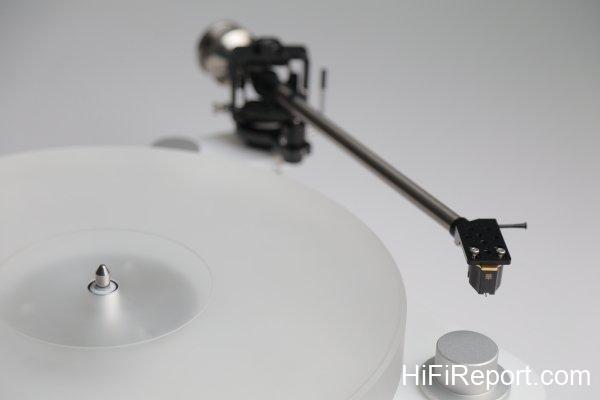
To simplify setup, the White Jade comes pre-equipped with a tonearm, allowing users to simply install their cartridge and begin listening.
The White Jade is fitted with an Armani tonearm, which Tien Chang-cheng considers the best available in its price range. Furthermore, he personally performs manual fine-tuning on each tonearm during installation, specifically adjusting the bearing preload.
The Armani tonearm is a bearing-type arm, and bearing tightness significantly impacts sound quality. Therefore, Tien Chang-cheng meticulously adjusts the bearing preload on every tonearm by hand to achieve the optimal balance, relying on his extensive experience. This labor-intensive process cannot be delegated to less experienced personnel.
In addition to the standard pre-installed tonearm, the White Jade can accommodate up to two additional tonearms, a rare feature in its price category. Moreover, Tien Chang-cheng offers compatible armboards for most tonearms (excluding extremely rare models), enabling users to easily explore multi-arm configurations.
Despite being positioned as an entry-level turntable, the White Jade adheres to stringent precision standards. For instance, platter flatness is maintained within 5 microns (0.05 mm), comparable to high-end turntables. This exceptional precision minimizes wow and flutter, contributing to sonic accuracy. The acrylic platter’s substantial thickness also ensures long-term dimensional stability, preventing warping over time.
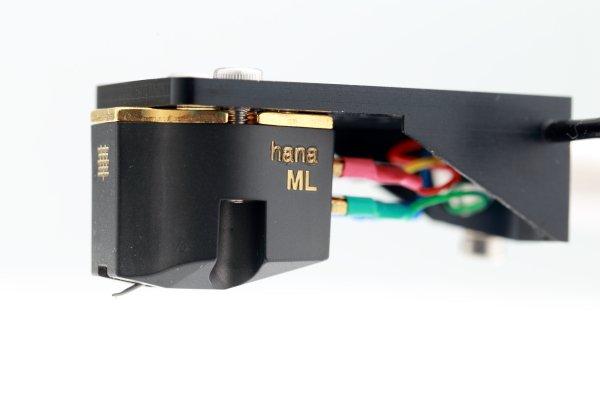
The White Jade’s high manufacturing precision is further evidenced by Tien Chang-cheng’s choice of cartridge for review samples. The review unit arrived with a Hana ML cartridge pre-installed! This MC cartridge is a significant investment, approaching the White Jade’s own price point. When questioned about budget proportionality, he casually remarked, “A highly sensitive cartridge is needed to reveal the turntable’s full potential, but it will also expose any weaknesses. I am confident enough to use such a revealing cartridge because I am not afraid of your critical listening.”
This statement unequivocally demonstrates his confidence in the White Jade’s performance.
Detail and Depth in Sound
The White Jade boasts a compact and refined footprint. The plinth is only slightly larger than the platter, facilitating easy placement in various listening environments.
Apart from the standard tonearm mounting position, the plinth features aluminum knobs at each corner. The lower left knob serves as the power switch, while the other two are for optional tonearm mounts. Removing these knobs allows for easy installation of additional armboards.
The White Jade offers 33 and 45 RPM speeds, selectable via the lower left knob. Turning it one click to the right engages 33 RPM, and another click selects 45 RPM, making operation intuitive.
For feet, the White Jade employs metal cones instead of rubber feet. Each cone is height-adjustable, simplifying leveling.
The review was conducted using the KECES flagship Sphono phono stage, featuring two MM and two MC inputs for exceptional versatility. Amplification comprised the EC 4.8 preamplifier and NuPrime Evolution One monoblock power amplifiers, driving Aurum Cantus Grand Harmony loudspeakers.
Initially, casually playing records revealed two immediately apparent strengths of the White Jade: a remarkably quiet noise floor and exceptional sonic density.
Low noise is fundamental to turntable performance, reflecting effective vibration isolation and resonance control. The White Jade not only passes this test with flying colors but excels in this aspect.
Furthermore, the White Jade’s quietness does not translate into a sterile or bland sound. Instead, it offers a pleasing fullness, excellent density, and sharply defined image outlines. The bass, in particular, is not only plentiful but also well-defined, articulate, and weighty, delivering an impressive performance.
Focusing on critical listening, I began with Jean Rondeau’s Bach harpsichord concerto LP, “Dynastie.” This recording features Bach and Bach Jr.’s works performed in a chamber setting with two violins, viola, cello, double bass, and bassoon accompanying the harpsichord.
Through the White Jade, the harpsichord’s crisp and bright timbre was beautifully rendered, interwoven with the rich, layered, and articulate string ensemble. Each frequency range was clearly delineated, without any muddiness, and the bass lines were distinct and well-defined, lending both vibrancy and opulence to the overall sonic tapestry.
Revealing a Sense of Grandeur
Next, I played Taiwanese pianist Yen Hua-Rong’s “Nano. Creation Seasons” LP, a commemorative vinyl recorded for the 2016 Kaohsiung Hi-Fi Show, featuring Tchaikovsky’s “The Seasons” piano suite.
The White Jade presented a remarkably pure and clean sonic character, imbued with satisfying transparency. However, this clarity was not sterile; instead, it was subtly enriched with a touch of warmth and smoothness, resulting in a comfortable and engaging listening experience – a truly captivating sound.
While pace might not be the White Jade’s foremost strength, it is certainly above average. However, it excels in conveying key weight, piano note weight and solidity, low-frequency extension and composure, and the naturalness of deep bass reproduction. Furthermore, it handles dynamic peaks effortlessly, showcasing a wide dynamic range and a sense of grandeur.
With Miles Davis’ “Kind of Blue” LP, the White Jade continued to demonstrate its all-around capabilities.
Despite its mid-range price point, when paired with a capable cartridge, it comprehensively reproduced the timbral nuances of various instruments, filling the auditory space with richness.
For instance, the plucked texture of the Double Bass was clearly defined with precise note outlines. The delicate shimmer of cymbals was rendered with fine detail, gentle airiness, and vibrant brilliance. The trumpet and saxophone possessed appropriate body, with a slightly velvety and smooth character, making for a pleasant and captivating listening experience.
Pushing the volume higher, each element expanded in scale while maintaining excellent overall balance and coherence. Crucially, the White Jade exhibited greater openness at higher volumes, with expansive soundstage dimensions, free from any sense of constriction or inward focus, demonstrating its impressive performance headroom and justifying the use of a high-quality cartridge.
Avoiding the Upgrade Treadmill
Finally, I played Taiwanese fusion jazz band Infinite Fusion’s “Groove Machine” album on vinyl and cranked up the volume. Wow! What an exhilarating experience! In this energetic atmosphere, driven by powerful rhythms, the White Jade accurately reproduced every signal. All details were present and accounted for, accompanied by impressive fullness, dynamics, and clear imaging. This indicated that signal and energy were effectively transferred through the stylus, cartridge, and tonearm, without being dissipated by the turntable itself, highlighting the exceptional effectiveness of the White Jade’s direct-drive design.
If you aspire to delve into the realm of analog playback and intend to make vinyl your primary source, I strongly recommend considering the White Jade as a top contender. While numerous turntables may be available at lower price points, investing in a turntable with inherent potential from the outset, like the White Jade, is a wiser long-term strategy than frequent upgrades.
The White Jade serves as an excellent gateway to the world of analog. You can begin with a standard cartridge and phono stage, and progressively upgrade components as your listening experience matures. I am confident that the White Jade will keep pace with your upgrades, ensuring you avoid the endless cycle of equipment changes.