
Aavik U-150 Integrated Amplifier Review
In 2012, Michael Borresen departed Nordost, a major cable manufacturer where he had spent eight years. The following year, 2013, he founded Ansuz, a company focusing on audio cables, power devices, and vibration control materials. By 2014, the final piece of his ideal audio system was complete: he established Aavik Acoustics (hereinafter referred to as Aavik). Their inaugural product was the U-300 integrated amplifier, heralded as “perfect.”
Given that Raidho loudspeakers utilize ribbon tweeters and diamond mid-woofers, they might seem challenging to drive. However, Michael Borresen claimed that the 300-watt U-300 could drive the entire range of Raidho speakers and was their ideal match. Unsurprisingly, the U-300 received unanimous praise from global audio media and enthusiasts alike, once again challenging conventional audiophile thinking. In 2017, Aavik introduced the U-150, a simplified version of the U-300.
The U-150: A Simplified Successor
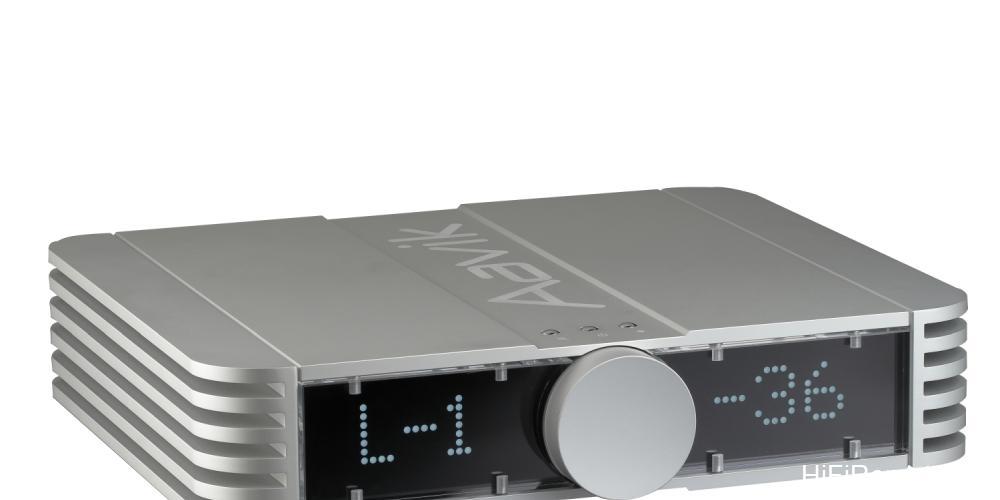
While simplifying the chassis and making the U-300’s built-in DAC and phono modules optional, they also omitted the costly Ladder DAC (R2R) digital volume control found in the U-300. However, the basic architecture and output power remained the same, yet the U-150 was priced only slightly more than one-third of the U-300’s cost.
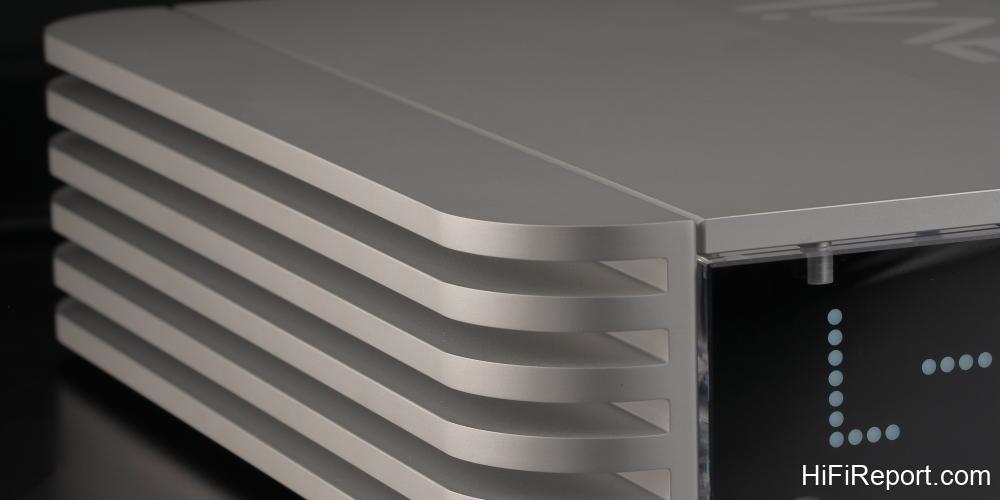
The relationship between the U-150 and U-300 is somewhat analogous to the relationship between Scansonic and Raidho, another pairing under Michael Borresen’s umbrella – a result of cost reduction. The difference is that with the amplifiers, there was no need to create a new brand. In other words, with the U-150, you get the same driving power as the U-300 and Michael Borresen’s personal sonic taste.
Under the Hood: Class D Amplification
The U-150 (as are the U-300 and Aavik’s power amplifiers) employs Class D amplifier modules from Pascal in Denmark. This allows it to deliver 300 watts (into 8 ohms) of output power within such a compact size. Class D operates by using MOSFETs as switches, rapidly switching to control and amplify the music signal. Speed is key here, and the delay between switching actions is called Dead Time.
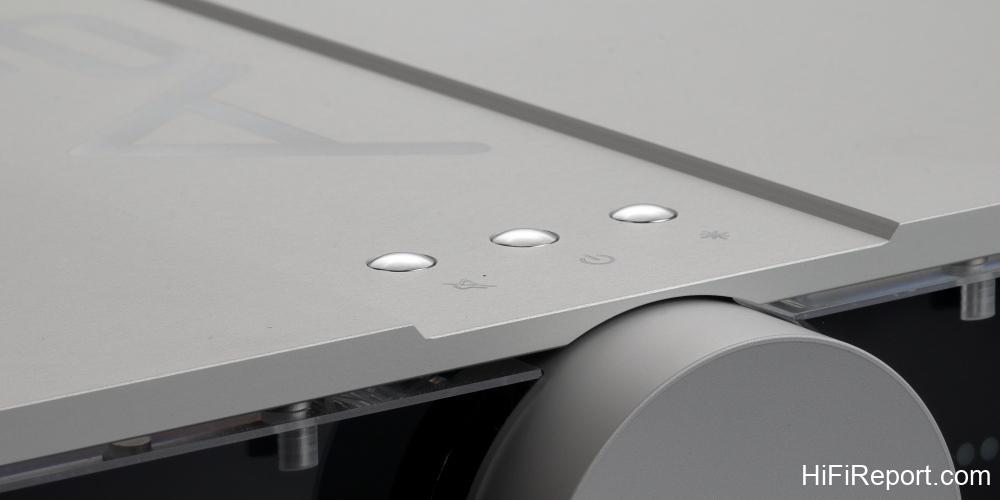
Pascal’s Class D modules can switch 400,000 times per second, or 400kHz, resulting in extremely low distortion and outstanding dynamic performance.
Speaker Pairings for Evaluation
I had previously experienced the U-150 driving Raidho D-4.1 speakers at Audio Lover’s Taichung flagship store (for reference, please see…).
Which speakers did I pair it with for this review? First, the relatively affordable KEF R7 floorstanders (reviewed in Audio Art Issue 366, priced around $5,900 USD). These speakers, featuring the 12th generation Uni-Q driver, are undoubtedly among the best value speakers at their price point. Next were the Monitor Audio Gold 200 (reviewed in Audio Art Issue 368, priced around $7,800 USD).
Monitor Audio’s technology has advanced remarkably in recent years, and their sound is becoming increasingly refined. Even their mid-range Silver series products have greatly impressed me. Since the latest fifth-generation Gold series was available internally, I naturally wanted to pair the U-150 with it.

A newcomer from Scotland, the Fyne Audio F-702, initially made me think I was listening to Tannoy speakers due to their appearance. But as soon as the sound emerged, I realized something was different! Upon closer inspection, I saw these were not Tannoy at all. While both brands use coaxial designs, the cabinets are completely different. The bass reflex port is downward-firing, and the metal plinth is stunning. Even the surround of the coaxial driver is quite unique.
Of course, I didn’t have the opportunity to pair the U-150 with a similarly sized Tannoy speaker, and furthermore, I haven’t conducted a detailed comparison between Fyne Audio and Tannoy. Therefore, I can only attribute the impressive results to the U-150’s solid driving power.
Finally, I used Audio Art’s long-term reference speakers, the Marten Django XL. The Django XL features ceramic tweeter and midrange drivers, along with three massive 8-inch woofers. These are perfect for testing the U-150’s capabilities.
General Sonic Characteristics and Driving Power
Summarizing my listening experience across the four pairs of speakers, the U-150’s sound is remarkably neutral.
It fully reveals the character and distinctiveness of each speaker, almost as if it leverages its immense driving power to extract the absolute limit from every pair.
The U-150’s powerful driving force is not just for show; it’s a capability rooted in substance, allowing you to hear the true essence of the music. Beyond its excellent sound quality, it offers outstanding layering and transparency, making it an amplifier worthy of reference status. The U-150’s driving power can handle virtually any speaker on the market, which was Michael Borresen’s original design intent.
Specific Listening Experiences
When paired with the KEF R7, I heard a remarkable sense of thickness. Listening to “Capuçon Plays Movie Music,” the cello’s resonance was incredibly rich, and the violin sounded exceptionally beautiful. Driven by the U-150, it’s evident that the R7 is a texture-oriented speaker; its speed is slightly slower, but it excels at rendering texture. When paired with the Monitor Audio Gold 200, the most striking impression was the superb high-frequency performance, brimming with detail.
However, the personality was clearly different from the R7. The Gold 200 exhibited lightning-fast speed, leaning towards a lighter, more analytical character.
Moving on to the Fyne Audio F-702, the sound quality ascended to an entirely different realm. The primary differences lay in the bass and overall scale. Driven by the U-150, the sheer grandeur of these speakers was immediately apparent. This is partly thanks to the speakers’ high efficiency and partly the advantage of larger bass drivers, but neither presented a challenge for the U-150.
Driving the Marten Django XL
In my listening experience, the Django XL isn’t particularly difficult to drive, but driving it *well* is challenging, mainly because controlling the three 8-inch woofers at the bottom is tricky. Paired with the U-150, for example, while listening to “Capuçon Plays Movie Music,” I heard improved separation between the violin and the background, and the dynamic shifts in the music were much clearer.
The only track featuring a female vocal, “Calling You” (track 12), began with a solo violin where the violin’s palpable body and shape were strikingly realistic. Simultaneously, the singer’s mouth shape during her performance felt more genuine, and the entire piece sounded much more relaxed. These are inherent characteristics of the Django XL.
The female vocalist’s voice sounded fuller, with more “flesh.” When the violin played in the high register, I heard exceptionally beautiful high-frequency harmonics, creating a lovely sense of dialogue between the two. Driven by the U-150, the Django XL revealed nuanced changes in the violin playing, imbuing it with deep emotion. If someone told me this was the sound coming from a speaker system costing a million dollars, I wouldn’t doubt it for a second.

Thanks to the larger cabinet, more numerous, and larger bass drivers, the Django XL was better suited to test the U-150’s true capabilities. For instance, listening to Red Hot Chili Peppers’ “The Getaway,” it was immediately clear that under the U-150’s drive, the electric bass lines were tighter, more bouncy, and the bass extension was more complete. Simultaneously, the guitar plucking sounded more elastic and had a very crisp texture.
It was full of bounce, utterly devoid of any sluggishness, and never sounded metallic.
At the beginning of the third track from Adele’s “25,” when the electric bass enters, I heard improved extension. The energy of the electric bass seemed to fill the entire space. The subsequent rapid drum beats were even more spectacular and utterly captivating. The plucked electric bass at the start of the fourth track also had a very full-bodied presence, with a lively bounce to every note.
Listening to “Les Misérables,” each piece felt more relaxed. This sense of relaxation is relative; when listening to the U-150 with other speakers, I didn’t notice it. But switching to the larger Django XL, I immediately felt that the speakers I had just been listening to had a slight tension. In the sixth track, Anne Hathaway’s “I Dreamed A Dream,” the leisurely bowing of the cello and the clear, granular presentation of the harp were equally realistic.
Anne Hathaway’s performance also gained more expressiveness; each change in intonation and breath felt clearer, rich with profound emotion. Driven by the U-150, listening to the sound from the Django XL evoked a desire to weep every time.
In the opening scene soundtrack of “Les Misérables,” where the convicts are pulling the ship, the music conjured a visceral feeling of sea spray hitting my face, without needing to “imagine” it. The scale of the orchestral intro in the fourth track was completely different from the previous three pairs of speakers. At the same time, I heard the incredible speed of the Django XL, a sensation I rarely felt with these speakers before, because driving three 8-inch bass drivers is no easy feat!
This demonstrates just how astonishing the U-150’s driving power is for the low frequencies.
Final Thoughts and Sonic Signature
Beyond its powerful driving ability, the U-150 is extremely neutral due to its very low distortion. However, in spaces primarily treated for hard acoustics, the sound quality might come across as slightly stiff. Therefore, when pairing speakers, cables, and sources, it is recommended to opt for components with a slightly softer character. If the room acoustics are properly managed, you will undoubtedly appreciate the U-150’s neutral and precise sonic characteristics even more.
The U-150 is not merely an amplifier known for brute force; it is an integrated amplifier that embodies both power and beauty. It is not just the realization of Michael Borresen’s vision but a perfect synthesis of science and art.
Specifications
* Type: Stereo Solid State Integrated Amplifier
* Launch Date: September 2017
* Output Power: 300W (8 ohms), 600W (4 ohms)
* Distortion (THD+N): Less than 0.006% (1-100W, 1kHz, 8 ohms)
* Intermodulation Distortion (IMD): Less than 0.0002% (1-100W, 4 ohms)
* Transient Intermodulation Distortion: Less than 0.008% (1-100W, 4 ohms)
* High-Level Inputs: 3x Unbalanced (RCA), Input Impedance 10k Ohms, Gain adjustable 5x2dB steps
* Digital Inputs: 2x S/PDIF (RCA) (32–192k, 24bit), 2x TOSLINK Optical (32–96k, 24 bit), 1x USB (Galvanically isolated, UAC 2, Asynchronous, PCM 32–192k, 24 bit, DSD64-DSD128)
* Volume Control: 80dB / 1dB steps
* Power Consumption: Standby below 0.5W, Idle below 50W
* Dimensions (WHD): 440x100x370mm
* Weight: 15 kg