
Ansuz Sortz Noise Reduction Terminal Review
Danish audio innovators Ansuz introduced their Sortz Noise Reduction Terminals in 2021, claiming they effectively eliminate resonance and noise interference simply by plugging them into unused input or output terminals. Currently available in RCA, XLR, and BNC versions, with potential USB and LAN options on the horizon, I’ve spent over a month auditioning these intriguing devices, and have some insights to share.
Line Level Noise Scavengers
Sortz represents a truly novel approach to audio tuning from Ansuz. We’ve long understood that unused terminals can act like antennas, picking up stray radio frequency interference. Traditional RCA or XLR protective caps address this “antenna effect.” However, Ansuz has taken a creative leap, embedding specialized noise-canceling circuitry within these terminals. This not only mitigates the antenna effect but also actively cleans up noise within the audio path, effectively pioneering a new niche in the market.
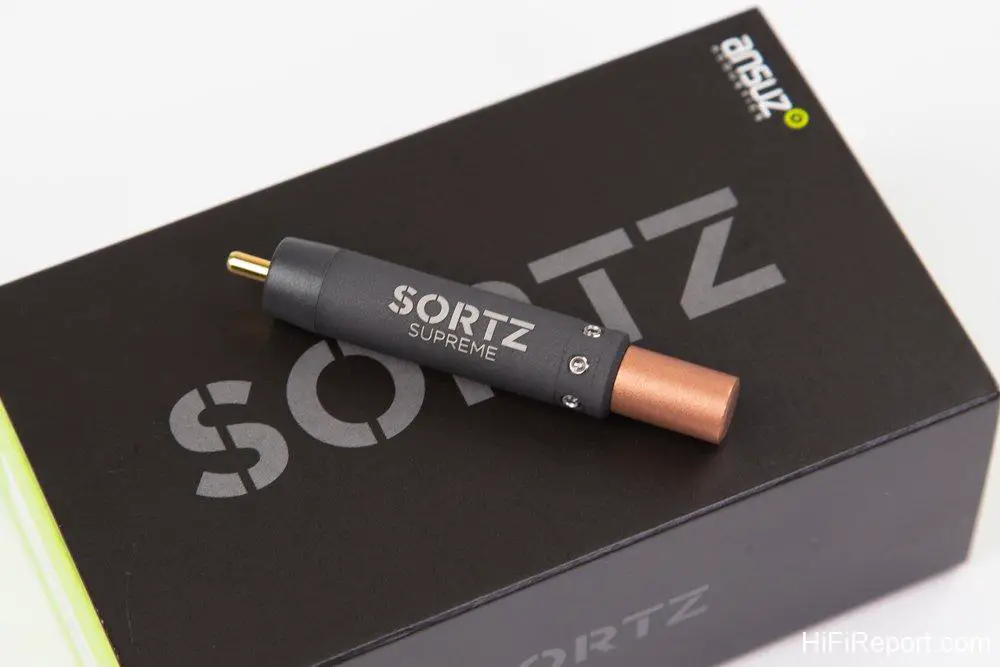
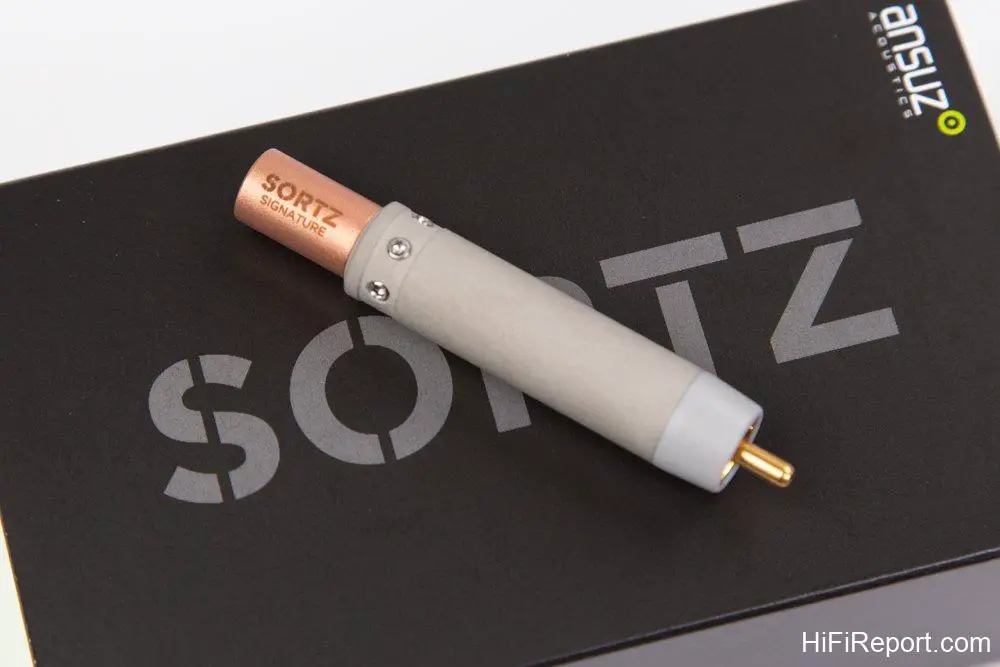
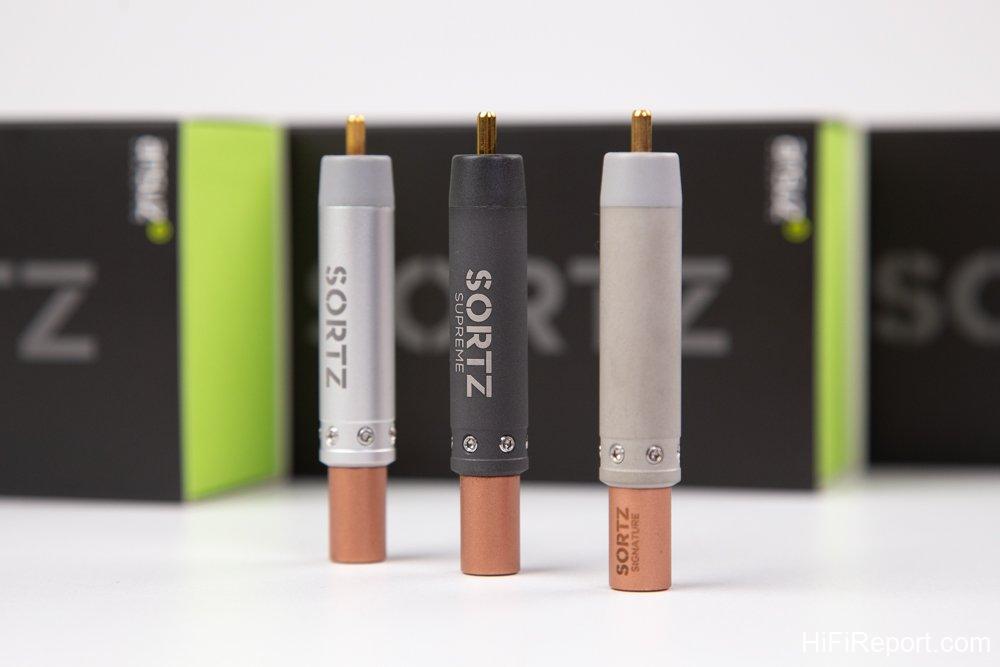
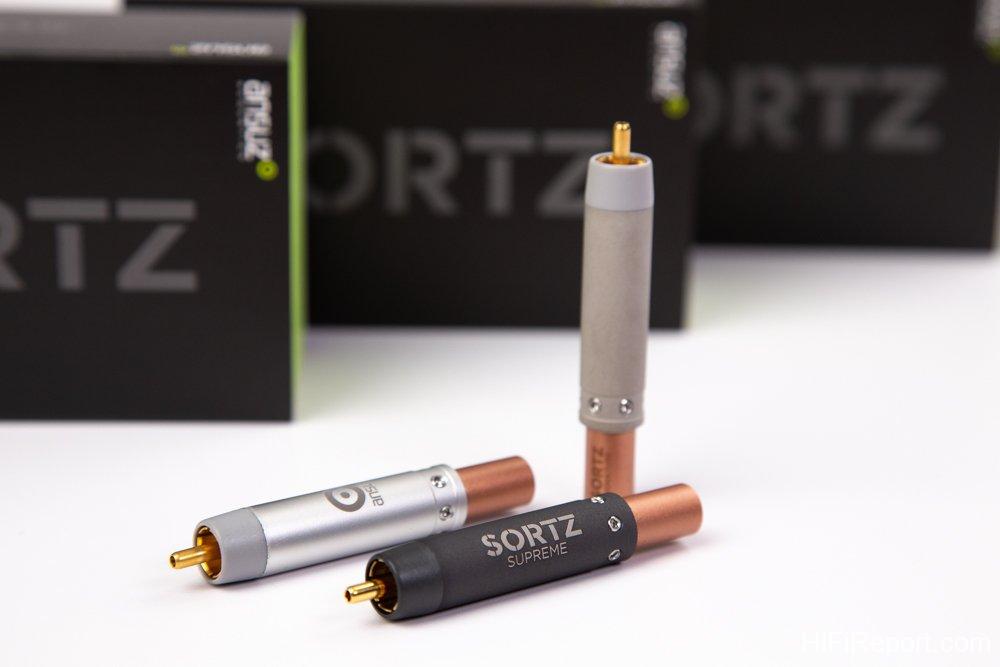
The Sortz range comprises three tiers: the entry-level Sortz, the mid-tier Sortz Supreme, and the flagship Sortz Signature. All three share a common technological foundation, with the Supreme and Signature variants incorporating additional refinements like specialized coatings and metal surface treatments. From a purely technical standpoint, the standard Sortz offers the most compelling value proposition, while the Supreme and Signature cater to audiophiles seeking the ultimate level of refinement.
My listening experience confirms that Sortz is indeed an effective noise reduction accessory. Comparing the standard Sortz to the Supreme and Signature versions, or using all three simultaneously, yielded incrementally quieter musical backgrounds. However, the improvements exhibited diminishing returns.
Therefore, if you’re unsure whether Sortz can enhance your audio system, I recommend starting with the entry-level Sortz. If you perceive a noticeable improvement, then exploring the Supreme or Signature models might be worthwhile.
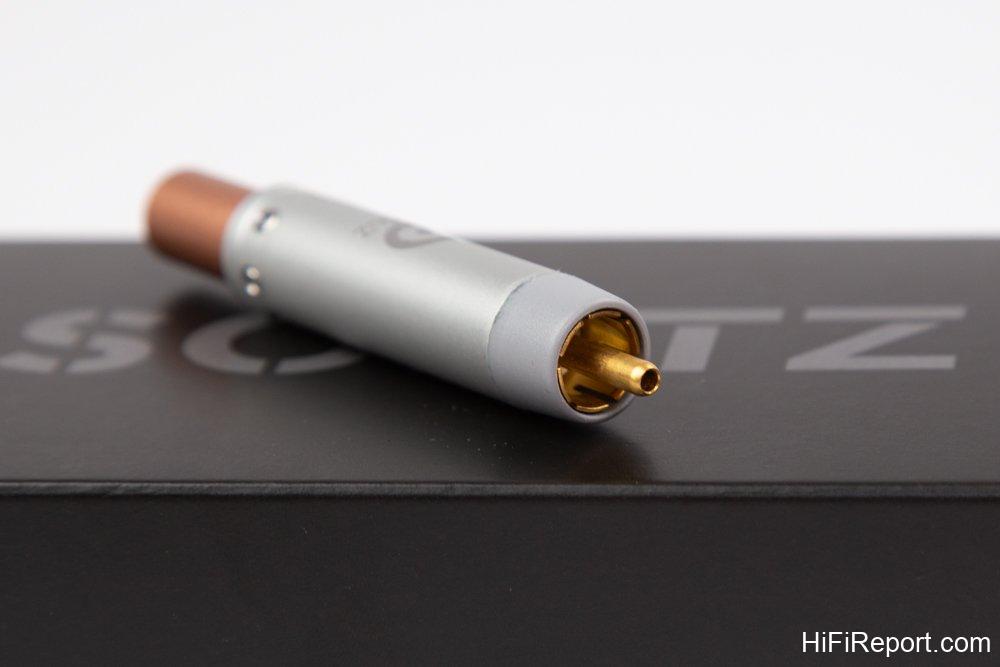
Dual Proprietary Coils Tackle Internal and External Noise
Sortz incorporates two key proprietary Ansuz technologies. The first is the Tesla Coil (TC), featuring two counter-wound coils designed to generate a common-mode rejection effect to neutralize noise. The second is the Anti-Aerial Resonance Coil (AARC), specifically engineered to combat antenna resonance noise. Think of AARC as the coil that defends against external noise interference, while TC focuses on eliminating internal circuit noise.
Both the AARC and TC coils are housed within an aluminum chassis. The rear-extending metal rod is crafted from Zirconium, chosen for its ability to absorb minute mechanical resonances. Finally, the assembled Sortz Noise Reduction Terminals undergo a -196°C cryogenic treatment.
In essence, the core technologies behind Sortz can be summarized as: AARC and TC noise-canceling coils, an aluminum frame, a Zirconium rod, and cryogenic treatment.
The upgraded Sortz Supreme adds an external specialized coating dubbed “Supreme Coating.” The top-of-the-line Signature model, in addition to the Supreme Coating, receives a high-power pulsed magnetron sputtering application of Zirconium, Tungsten, and Aluminum Titanium Nitride coatings.
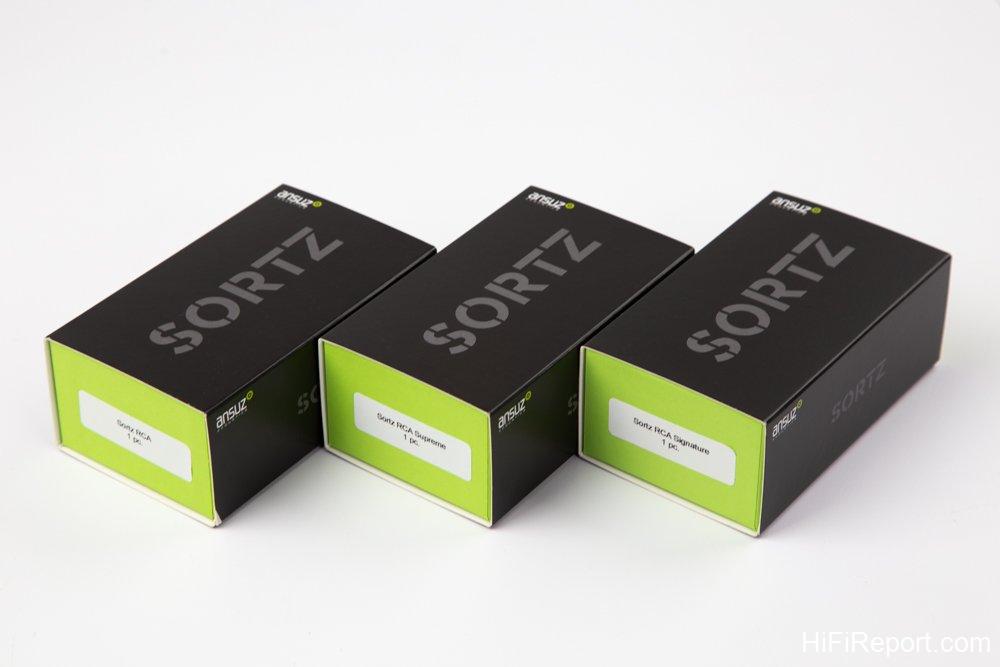
These additional coatings serve as extra damping layers, further enhancing resonance reduction.
If you’ve made it this far without feeling overwhelmed by the technical details, you likely possess a high tolerance for tech-heavy explanations.
While researching the technical aspects of Sortz, numerous questions arose in my mind. The idea that simply plugging Sortz into unused RCA terminals can effectively eliminate noise, with internal AARC and TC coils targeting external and internal noise respectively, seems plausible. However, how these passive terminals, devoid of signal input, generate a counteracting effect to eliminate noise remains a mystery. I suspect this is part of Ansuz’s proprietary secret, a creative innovation that has spawned an entirely new category of audio tuning accessories.
Effective from an Audio Perspective
What are the real-world sonic benefits of Sortz? In short: they are effective, but this effectiveness must be understood from an “Audio” perspective, rather than a “Sound” perspective.

“Audio” and “Sound” – don’t both words simply mean “sound”? Within the realm of high fidelity, these terms carry distinct connotations. “Audio” refers to the line-level musical signal, while “Sound” encompasses the acoustic output of the audio system as perceived in a listening space. Sortz operates at the “Audio” level, reducing noise in the signal path and contributing to a quieter musical background in the “Sound” produced by your system.
Because Sortz’s noise reduction capabilities operate at the “Audio” level (line level), focusing on reducing noise within the musical signal itself, it’s important to understand that Sortz is not a magic bullet. It’s more of a “finishing touch” than a fundamental system correction.
If your audio system is poorly optimized within your listening room, exhibiting uneven frequency response, severe low-frequency standing waves, or harsh high frequencies, Sortz cannot resolve these issues. These are “Sound” level problems. Even if the “Audio” level is pristine, these room-related issues will persist.
Clarifying the distinction between “Audio” and “Sound,” and understanding that Sortz addresses noise interference at the “Audio” level, helps to set appropriate expectations regarding its potential benefits.
If you’ve already addressed the foundational aspects of system setup – ensuring correct channel polarity and phase, and establishing a coherent stereo soundstage capable of rendering the individual instruments of a string quartet – and your system already performs well at the “Sound” level, but you still perceive a lack of tonal solidity and purity, insufficient soundstage contrast, or a less-than-black background, then exploring “Audio” level improvements with Sortz to eliminate signal path noise could be highly beneficial.
The More the Merrier, with Diminishing Returns
During my evaluation, I used a YBA CDT 450 CD transport and Merging NADAC, paired with a Linear Acoustic LA-V120 integrated amplifier, driving Wilson Audio Alexia 2 loudspeakers.
I had the complete Sortz lineup on hand – standard Sortz, Sortz Supreme, and Sortz Signature. I started by listening with the entry-level Sortz, then sequentially upgraded to the Supreme and Signature versions. Next, I experimented with placing one of each Sortz on the CDT 450, NADAC, and LA-V120. Finally, I tried all three Sortz units exclusively on the LA-V120.
I found that distributing the three Sortz across the three components yielded the most significant improvement. However, even a single Sortz unit delivered noticeable benefits. Adding the Supreme and Signature versions brought further refinements, but with a clear sense of diminishing returns. It’s a reminder that at the pinnacle of audio performance, even incremental gains require substantial investment, much like the pursuit of shaving tenths of a second off a supercar’s 0-60 mph time – the price increase is disproportionate to the performance gain.
Quieter Backgrounds, Reduced Grain
The effect of Sortz is akin to “washing” the audio signal. The musical background becomes noticeably quieter, leading to more stable image presentation. High-frequency extension gains delicacy and airiness, with a reduction in perceived grain. Mid-bass frequencies exhibit improved clarity and articulation.
In direct comparisons, using a single Sortz on the LA-V120 and swapping between the standard Sortz, Sortz Supreme, and Sortz Signature, I concluded that the standard Sortz represents the best value. While the Supreme and Signature versions offered a slightly blacker background, the fundamental benefits were comparable to the standard Sortz. If you’re intrigued, start with the standard Sortz. If you find it enhances your system, then considering the higher-tier Supreme or Signature might be justified.
Although I still don’t fully grasp the inner workings of Sortz’s noise reduction, it’s clear that it effectively targets “Audio” level noise, aligning with the principles of power conditioning and shielded cables. However, “Audio” level noise reduction can be easily masked by “Sound” level issues, such as ambient room noise. For example, a 10dB increase in room background noise can diminish the perceived benefits of Sortz, obscuring the sense of a “washed” signal. Therefore, during my Sortz evaluation at HiFiReport, I had to turn off the air conditioning. The operational noise of the AC unit noticeably undermined the Sortz’s effectiveness. Turning off the AC to critically listen during the sweltering summer heat is truly a labor of love!
Rest assured, I pre-cooled the room to a comfortable temperature before switching off the AC for critical listening. Otherwise, the heat and humidity would have been too distracting to properly appreciate the tranquility and sonic improvements offered by Sortz.
An Urge to Turn Up the Volume
The merits of Sortz truly reveal themselves during focused listening. Take, for example, Three Blind Mice’s “The Super Extension Resolution Sound of TBM” and the jazz standard “Misty.” TBM is renowned for its close-mic recording techniques, capturing piano notes with immense scale and realism while preserving spatial ambience. Already an audiophile-grade recording, Sortz elevates it further by reducing background noise and revealing subtle analog tape hiss, adding a touch of analog warmth. As the jazz drums and double bass join the piano solo, the rhythm section gains a lighter, more nuanced quality. The delicate hi-hat cymbal work and the resonant pluck of the double bass lay down a comfortable foundation, highlighting the piano’s brilliance. The dynamic contrast between loud and soft passages feels more pronounced with Sortz, naturally prompting a desire to increase the volume.
“Misty” is not an easy track to reproduce accurately. The piano’s dynamic range, amplified by TBM’s close-mic technique, accentuates the contrast between loud and soft notes. I often explain to my editorial team that dynamic range is not simply about loudness, but rather the difference between the loudest and softest sounds. An audio system must handle both high volumes and maintain detail and musical expression at low volumes to truly exhibit dynamic contrast. Sortz, beyond quieting the background, primarily enhances this dynamic contrast.
Enhancing Classic Analog Recordings
Listening to Pink Floyd’s “Dark Side of the Moon,” tracks like “Money” exemplify analog mixing genius. Creating such a spacious and immersive soundstage in that era was a remarkable feat. The opening cash register sounds in “Money” emerge centrally, followed by coins and receipt tearing sounds on the left, and a bell on the right. These cash register sounds create a rhythmic foundation before the band enters, subtly pushing the cash register sounds into the background. The soundstage is populated with drums and electric bass in the center, electric piano on the left, and electric guitar on the right. Multitrack recording allows for added guitar effects, such as a wah-wah on the left and tremolo on the right. When the guitar solo arrives, it roars from the center, layered with multiple accompaniment parts – a feat achievable only in the studio, demanding a team of guitarists for a live performance.
Apologies, I got carried away listening to the music and digressed from discussing the impact of Sortz! My point is that Sortz imbues Pink Floyd’s recordings with greater expressiveness. If your initial impression of Sortz is subtle – perhaps just cleaner sound and a quieter background – try removing Sortz and listening again. You might then perceive a slight roughness, something missing, and a comparatively bland sonic character. That’s the key takeaway: Sortz doesn’t artificially enhance the sound; it reduces “Audio” level noise. With Sortz in place, the improvement may seem subtle, but reverting to the original sound reveals the true benefits of noise reduction.
Experiencing Bach’s Tranquil Dignity
The virtues of Sortz become even more apparent with serene and dignified music. It’s as if Sortz polishes each note to a finer, purer state, fostering a more composed and focused listening experience. Listening to Murray Perahia and the Academy of St Martin in the Fields perform Bach’s “Keyboard Concerto No. 1,” the minor-key opening movement, with its stately interplay between piano and orchestra, beautifully showcases the structural elegance of Bach’s music. The recording captures subtle nuances, like the delicate sounds of Perahia’s fingers on the piano keys. With Sortz, these details become even more pronounced, allowing one to appreciate Perahia’s nuanced touch.
The dynamic contrasts within the music feel more expansive with Sortz. The minor key tonality creates a sense of tension, with the interplay between orchestra and piano fluctuating in intensity, yet maintaining the inherent tension of the minor key. The eventual shift to a major key provides a welcome release, like clearing skies after a storm. This transition from minor to major is a deliberate and masterful compositional choice by Bach, moving the music from somberness to brightness.
I believe that Sortz enables deeper engagement with the music, allowing one to fully appreciate the solemnity and dignity of Bach’s compositions.
Trial at Home is the Definitive Test
In conclusion, Sortz is an external noise reduction terminal that effectively reduces line-level noise. It won’t fundamentally alter the sonic character of your equipment. It’s crucial to establish a solid foundation – correct polarity, phase, and soundstaging – these aspects cannot be addressed by Sortz. Sortz excels at mitigating internal and external noise interference, resulting in a quieter musical background.
While I find Sortz to be effective, the ultimate test is its performance within your own system. HiFiReport offers a home trial service. If Sortz intrigues you, I highly recommend contacting HiFiReport to arrange a home audition. Experiencing it firsthand in your system is the most prudent approach to any audio investment.
Reference Equipment
* **Sources:** YBA CDT450 CD Transport, Merging NADAC, Linn LP-12 Klimax
* **Amplifier:** Linear Acoustic LA-V120 Integrated Amplifier
* **Speakers:** Wilson Audio Alexia 2
* **Accessories:** Tiglon TMR-2 Audio Rack / MYSTJ Audio CMS Audio Rack / ASI Tuning Devices