
Audio Physic CODEX Floorstanding Speaker Review
Audio Physic boasts a wide range of speaker models, with the AVANTI perhaps being the most recognized and commercially successful. The CODEX, the subject of this review, builds upon the foundation of the AVANTI, representing an advanced iteration and holding the position of third in Audio Physic’s product lineup. Designed to comfortably fill medium to large listening spaces, the CODEX maintains Audio Physic’s signature refinement and attention to detail.
German Precision, Robust Design
Tonsion Vision & Sound delivered two substantial boxes, and without delay, we proceeded to unbox and set up these impressive speakers.
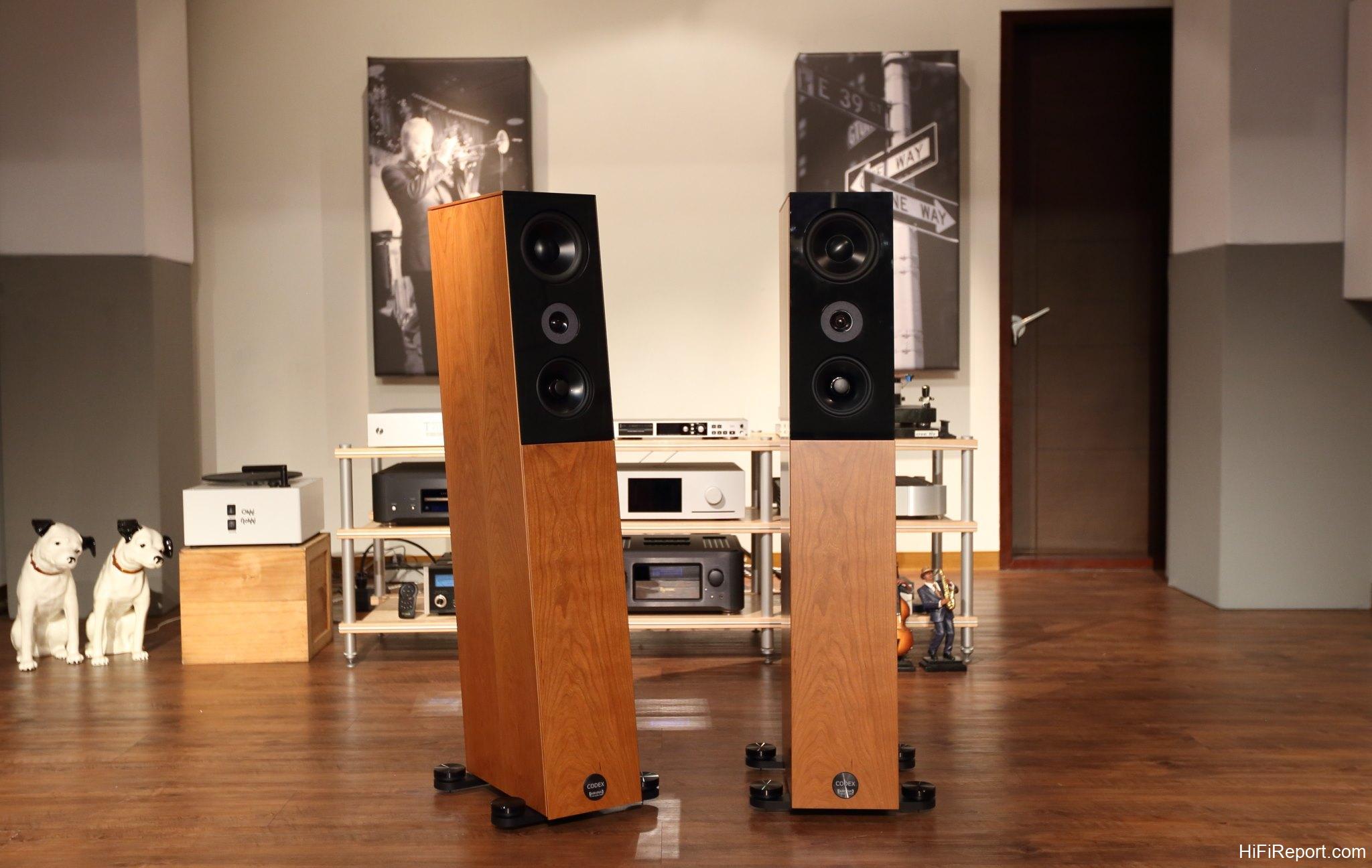
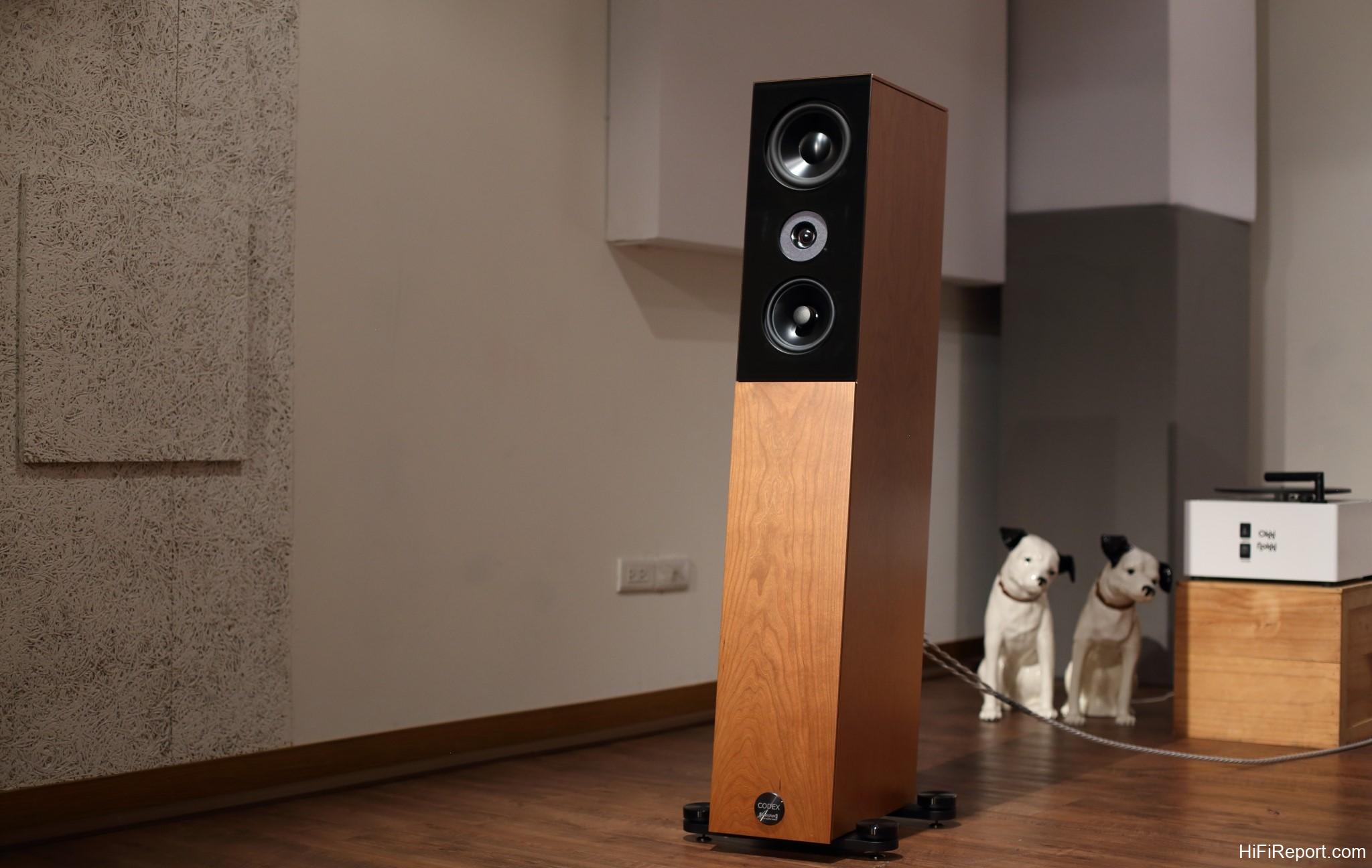
The CODEX stands at a height of 1195mm and weighs approximately 44 kilograms. Its cabinet adopts a slender profile, with a narrow front baffle measuring just 202mm in width. This design minimizes sound diffraction. The depth is more substantial at 370mm, accommodating a uniquely positioned woofer.
Unique Vibration Damping Design
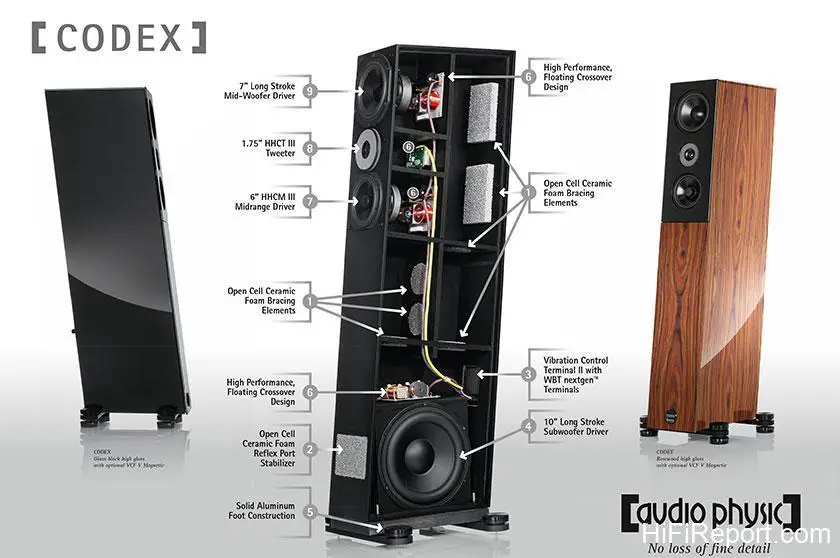
Visible only upon unpacking, the underside of the speaker reveals a ceramic-based cabinet vibration damping and stabilization system. This surface exhibits a porous, foam-like texture, characterized by an open-cell design intended to enhance damping efficiency. This ceramic stabilization treatment is not limited to the base; it is extensively applied within the speaker cabinet, adhering to the internal walls to absorb vibrations and stabilize the overall speaker structure.
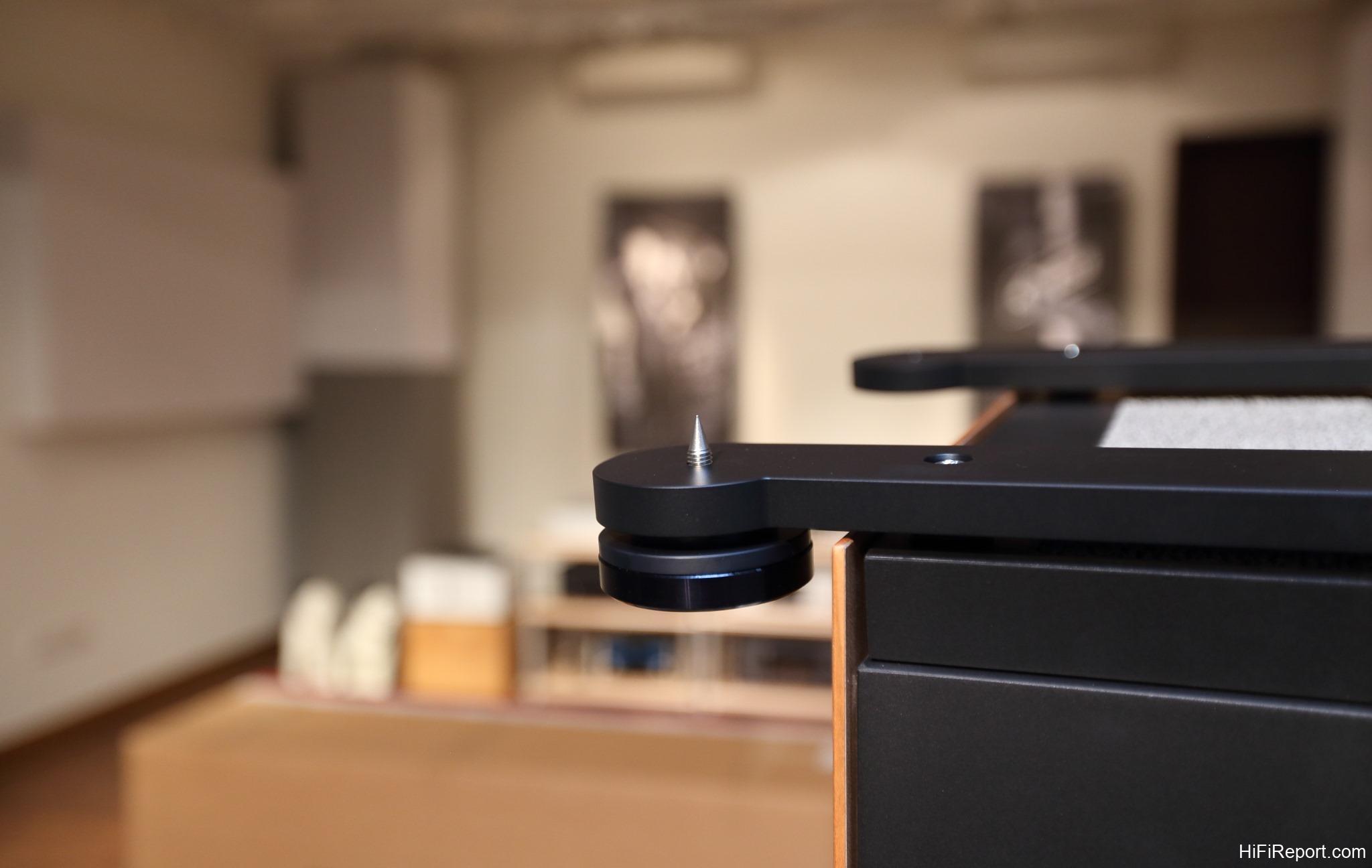
Once the spikes are installed, their sharpness is immediately apparent. It is advisable to use protective discs beneath them after positioning the speakers to prevent floor damage. Employing spikes is highly recommended for effective vibration decoupling, contributing to a cleaner and more defined sound.
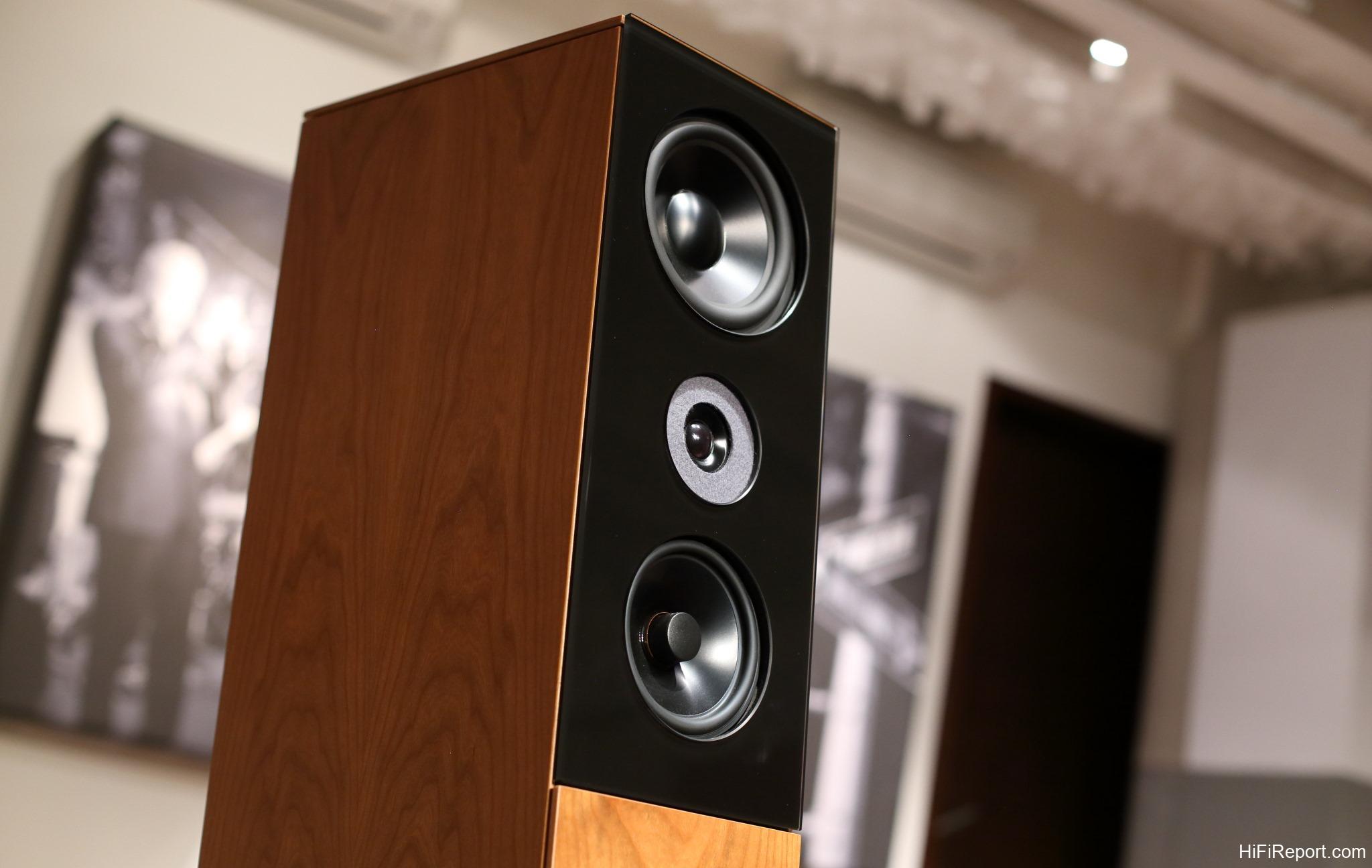
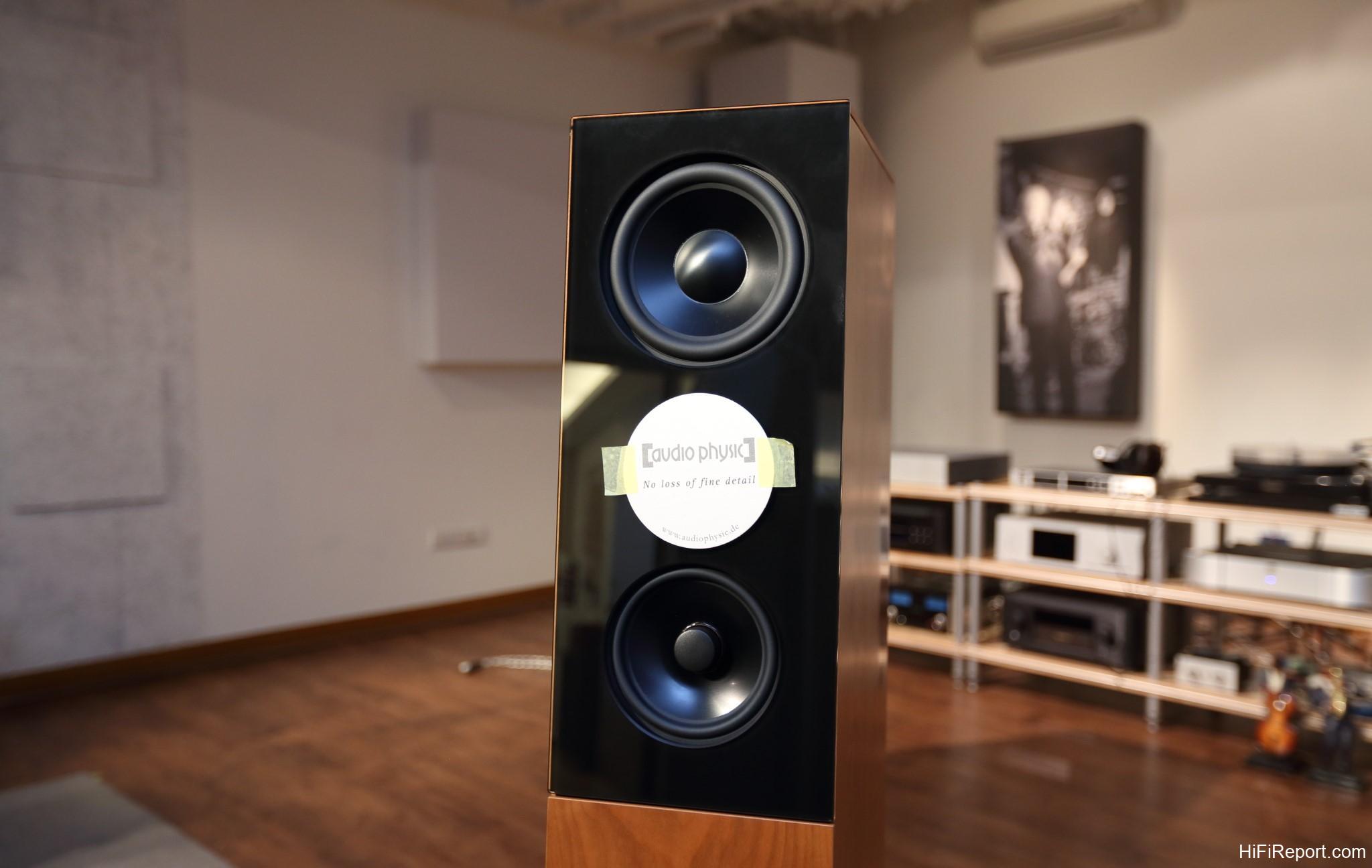
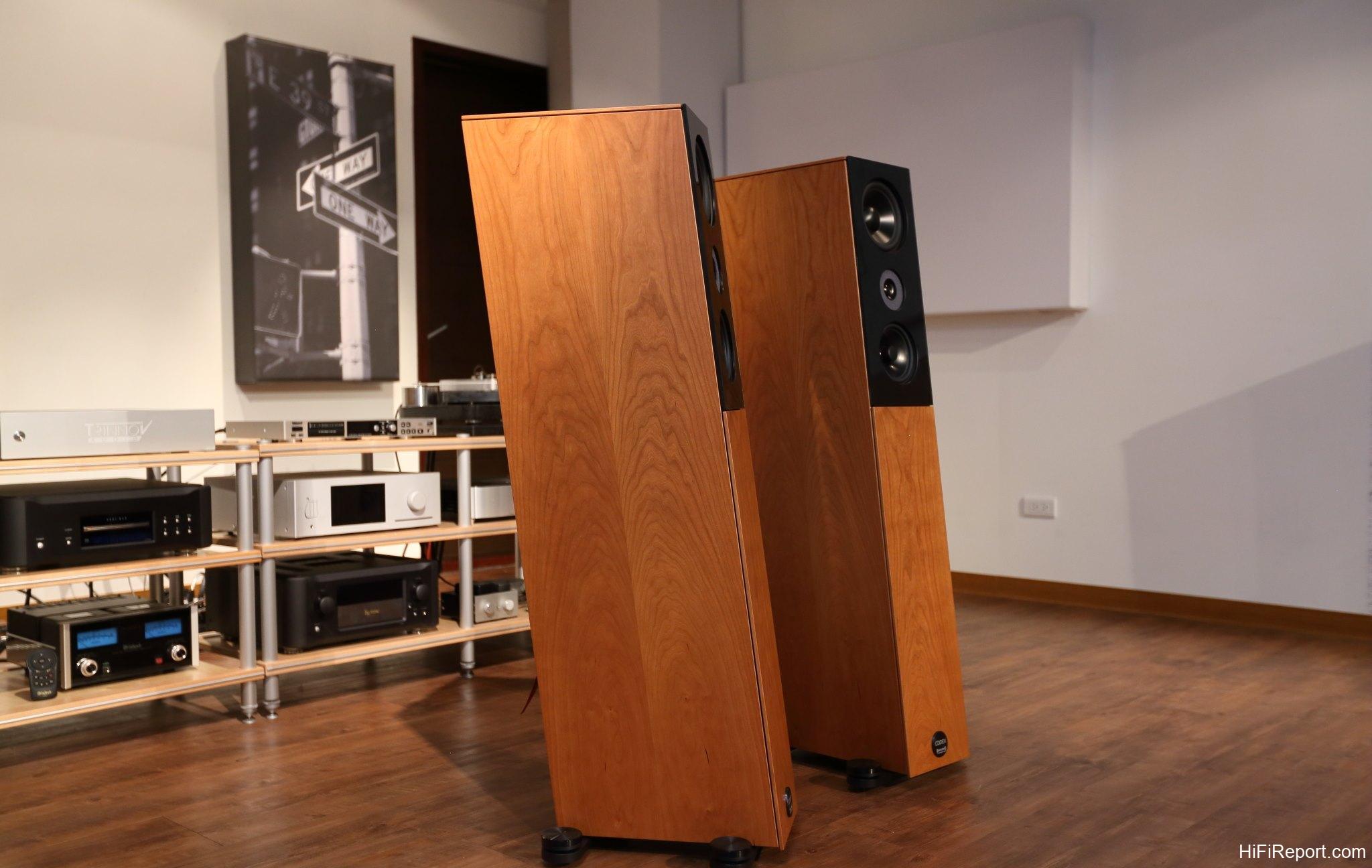
Three drivers are visible on the front baffle: a mid-bass driver at the top, the tweeter concealed behind a protective cardboard cover, and a midrange driver below. The tweeter is shielded due to the delicate nature of its diaphragm, preventing accidental damage during handling.
Side-Firing Woofer Configuration
After unpacking both speakers, we prepared for placement. Notably, the CODEX speakers are designed with designated left and right channels. It’s crucial to position them correctly to ensure proper stereo imaging and sound reproduction as intended by the manufacturer.
While most speakers adopt a symmetrical design and are not channel-specific, the CODEX features a unique woofer placement. Each CODEX speaker incorporates a 10-inch woofer mounted not on the front or rear, but on the inner side panel. This necessitates left and right designations; incorrect placement would result in the woofers facing outwards, deviating from the intended sonic design.
The walnut veneer finish is clearly visible on the side, exhibiting a meticulously matched grain pattern across the pair. This attention to aesthetic detail underscores the careful craftsmanship involved in their production.
Patented Vibration Control Terminal
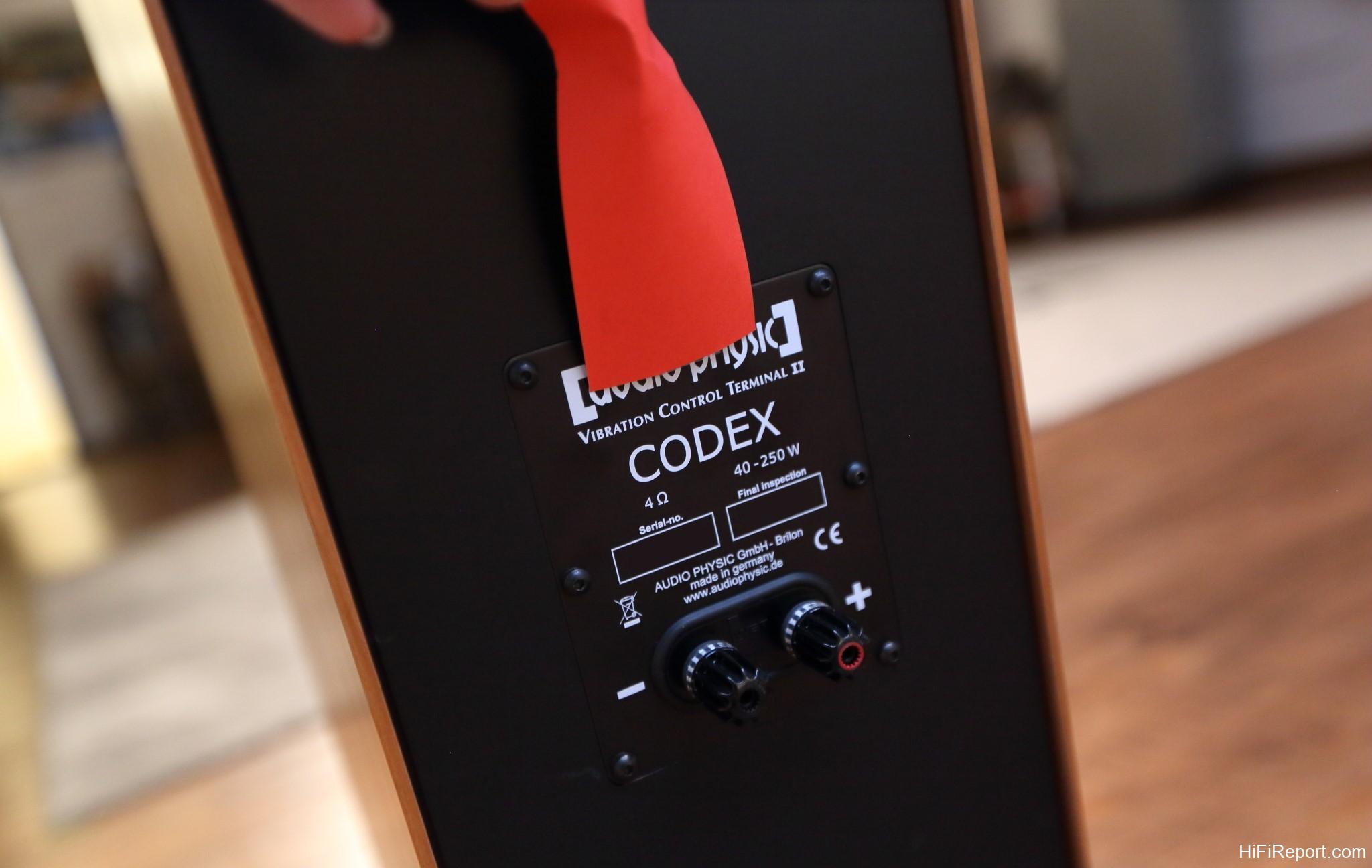
The speaker binding posts on the rear panel are from WBT Nextgen, a German brand instantly recognizable to many audiophiles. WBT is a preferred choice for high-end speaker manufacturers, often employed in top-tier designs alongside custom-made terminals.
Another key feature resides here: a small inscription on the terminal plate reads “VIBRATION CONTROL TERMINAL Ⅱ.” This signifies Audio Physic’s meticulous approach to managing micro-vibrations. The terminal plate is not rigidly fixed to the cabinet. Instead, a flexible, damping material is employed to connect them.
Owners of Audio Physic speakers should be mindful of this when handling them; avoid lifting or carrying the speaker by the terminal plate, as it is not a fixed, rigid component and excessive force may cause damage.
With the CODEX speakers positioned, their substantial energy and sonic density became immediately apparent. The configuration, with two inward-facing woofers, suggests that slightly wider placement can enhance their performance.
Slim, Narrow Cabinet Design
The cabinet structure of the CODEX is critical to its performance, playing a vital role in controlling and minimizing unwanted cabinet resonances. A key design element is the isolation of the front baffle, where the drivers are mounted. It is not in direct contact with the main cabinet; instead, a specialized vibration-damping rubber interface mediates the connection between the front baffle and the cabinet.
This benefits the three drivers located on the front baffle, and combined with the narrow baffle design, which reduces sound diffraction, results in enhanced sonic clarity.
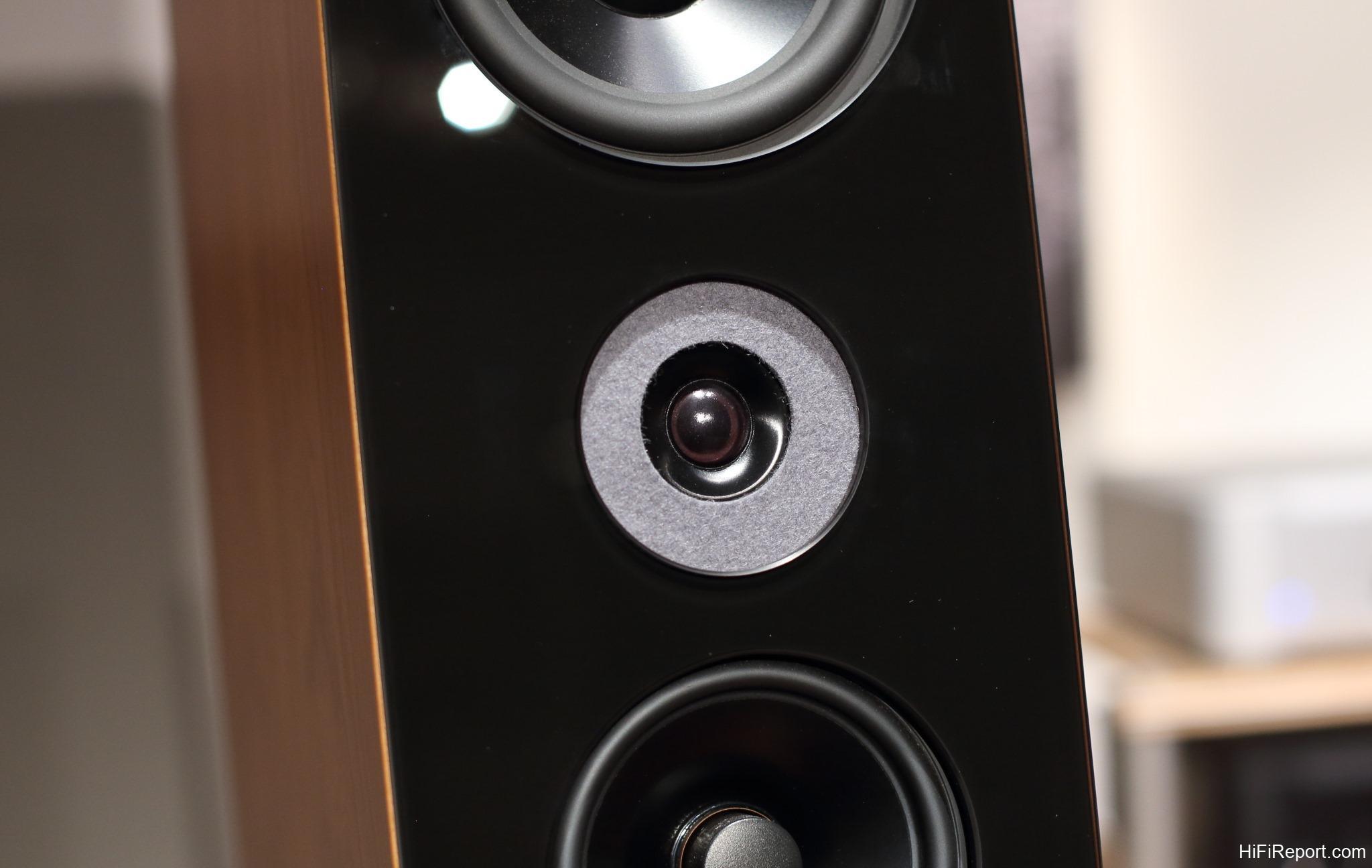
The CODEX tweeter is a third-generation HHCT (Hyper Holographic Cone Tweeter), a 1.75-inch unit responsible for frequencies above 3kHz. A closer inspection reveals a small horn-like conical waveguide surrounding the dome, aiding in sound dispersion and high-frequency extension, and contributing to improved high-frequency dynamics.
The midrange driver is also a third-generation HHCM (Hyper Holographic Cone Midrange), measuring 6 inches in diameter.
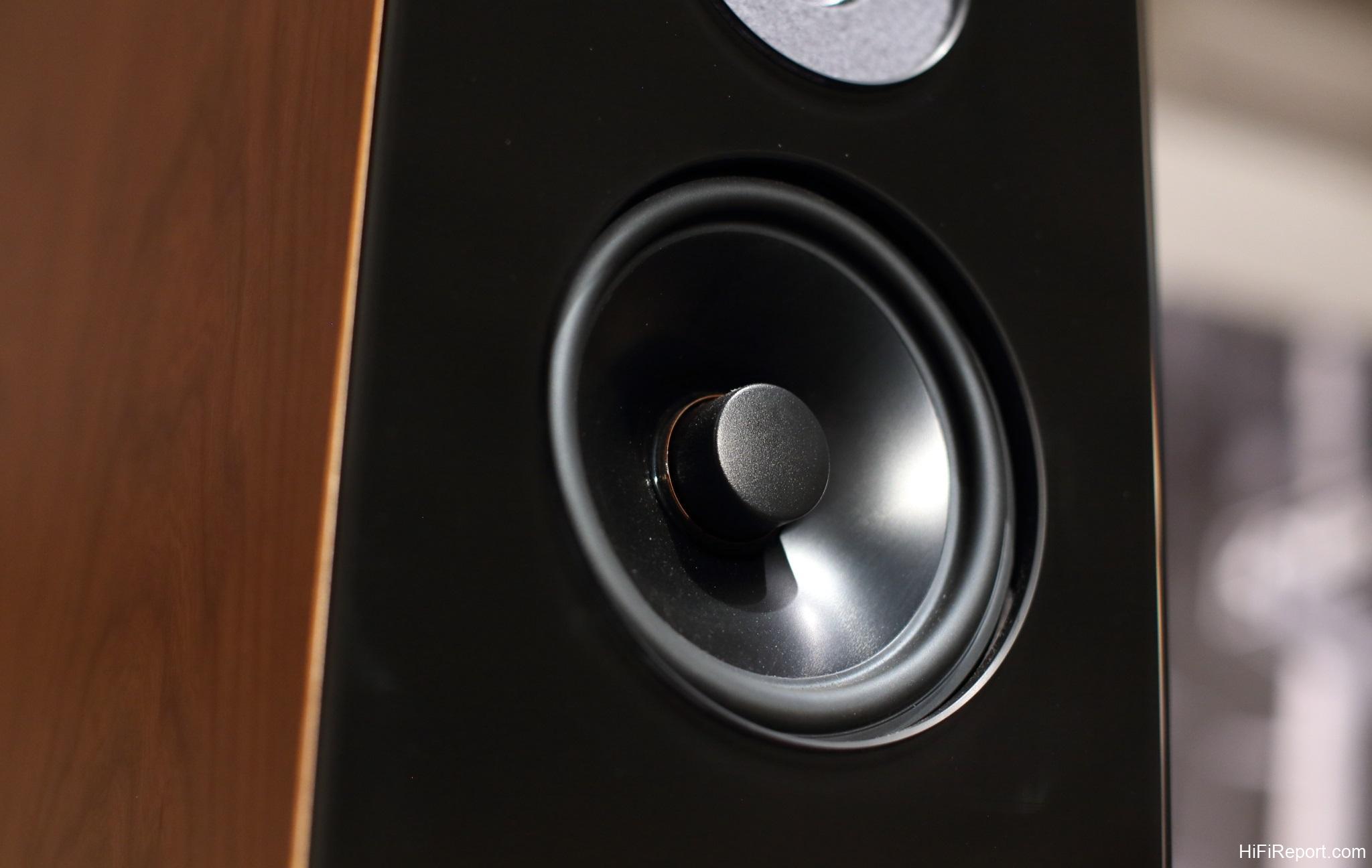
The 10-inch woofer, located in the side-firing internal chamber, handles only the ultra-low frequency range below 100Hz. Frequencies above 100Hz are managed by the 7-inch mid-bass driver positioned at the top of the front baffle. This division of labor optimizes each driver’s performance within its designated frequency range, reducing unnecessary workload. The immediate benefit is enhanced clarity, along with improved control of both the ultra-low and mid-bass drivers.
Multiple Crossover Boards for Reduced Interference
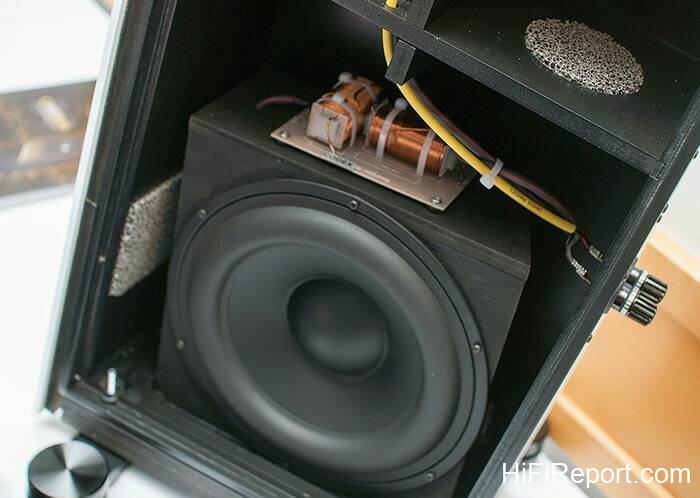
Given the 10-inch woofer and its potential for significant vibration, the internal cabinet structure and isolation become crucial for effective control and dissipation of these vibrations. Audio Physic’s internal compartmentalization is particularly important here. Independent woofer chambers, combined with a specialized sandwich-structured cabinet and damping materials, prevent the woofer’s energy and sound waves from affecting the midrange and tweeter, ensuring overall sonic clarity.
The “sandwich-structured damping material,” referred to as Open Cell Ceramic Foam, is made from ceramic and exhibits a porous, foam-like surface. Its three-layer structure features a resilient central layer for vibration absorption, flanked by rigid outer layers. When affixed to internal cabinet bracing, it enhances structural stability and absorbs unwanted energy.
As evident, the CODEX crossover network is divided into multiple boards, each located within the chamber of its corresponding driver, utilizing premium components throughout.
Having previously disassembled a speaker’s side panel to examine the internal 10-inch woofer, we noted the crossover board positioned above it, enabling bass extension down to 28Hz. Additionally, grey panels of patented vibration-damping ceramic foam are visible both in front of and above the woofer.
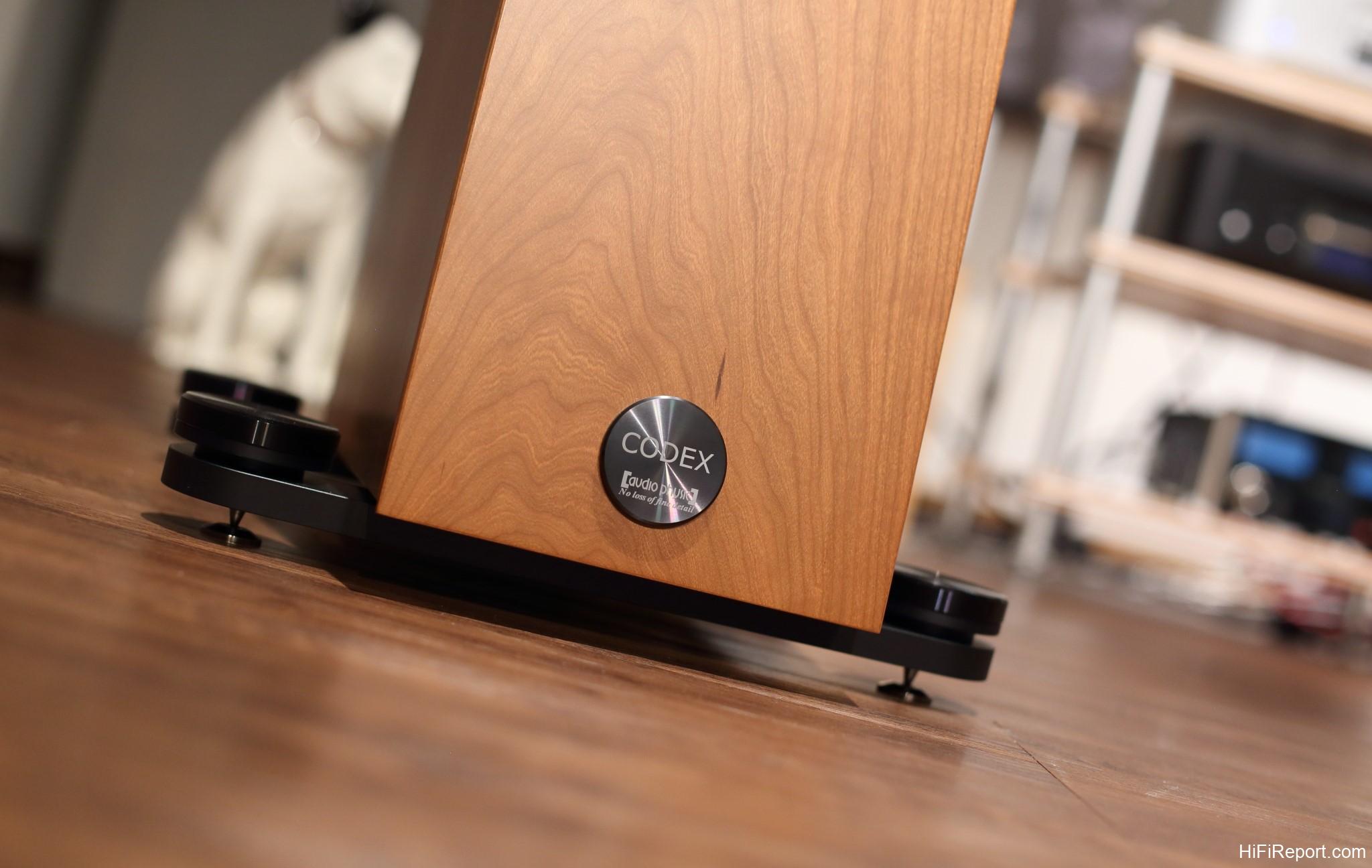
A metal badge bearing the “CODEX” name is located at the bottom front of the speaker, a detail indicative of Audio Physic’s high-end series, typically absent in their standard models. This perspective also reveals the spike arrangement. After speaker positioning, the top covers of the spikes can be opened, allowing for height adjustment using a small wrench to achieve optimal leveling and stability. The spike discs shown in the photograph are our own and not standard accessories.
Crisp Sonic Transitions
Moving to listening impressions, we began with track 2, “A Beautiful Friendship,” from *audio compass 2017*, a jazz piece featuring Alexis Cole. The Audio Physic CODEX excels in vocal clarity. Alexis’s enunciation is precise, and the nuanced dynamics in her performance are readily apparent. Subtle shifts in volume and inflection are rendered with exceptional detail, and the instrumental textures in the lower frequencies are rich and substantial.
Track 7, “Thousand Billion Nights” by George Lam, similarly highlights the vocals as the core of the song. The dynamic shifts and emotional expression in the vocals are faithfully reproduced, while the instrumentation and sound effects occupy their respective positions effectively. Positioning the CODEX speakers at a wider stance in the room did not diminish the density and energy in the mid and high frequencies.
Refined and Textured Sound
The CODEX delivers exceptional clarity and detail, qualities that will undoubtedly satisfy discerning audiophiles. Furthermore, the sound is remarkably refined, particularly smooth and delicate in the mid and high frequencies. Diana Krall’s live album, *Live in Paris*, vividly showcases the emotional nuances in her vocals, the subtle touch of her fingers on the piano keys, and the natural ambience of the audience applause, which never becomes intrusive or harsh.
Even in moments where Diana intentionally roughens her vocal delivery, the sound remains pleasant and relaxed, devoid of any harshness. The Codex also effectively conveys the weight and supportive foundation of the bass lines. In complex passages with multiple instruments playing simultaneously, the CODEX maintains clarity and coherence across the frequency spectrum, delivering a compelling listening experience.
Rhythmic Agility and Sparkling Clarity
Jenny Lin’s piano solo album, *Get Happy*, radiates a joyful musical spirit. Her playing is light, agile, and rhythmically captivating. Track 5, “Begin the Beguine,” evokes the image of twinkling stars singing, creating a sense of expansive serenity, akin to a pure and innocent nursery rhyme. The CODEX excels in reproducing piano recordings, rendering rhythms with elegance and ease, and producing a sound that is both crystalline and captivatingly beautiful.
Listening to *Get Happy* through the CODEX speakers is a comfortable and immersive experience; the entire album passed by effortlessly. The synergy between Lin’s playing and the CODEX’s reproduction appears to be exceptionally well-matched.
Rich Emotion and Expansive Soundstage
Allen Taylor’s *Songs For The Road*, as reproduced by the CODEX, sounds particularly soulful and tender. The subtle inflections and dynamic variations in his vocals are rendered with remarkable clarity and naturalness, akin to a poet reciting a story. The instrumental arrangements effectively establish a deep soundstage. Track 2, “A Promise And A Porsche,” opens with electric guitar and drums positioned at the edges of the soundstage, defining both width and depth.
Allen’s narrative unfolds, recounting a poignant story about fulfilling his late father’s dream. The CODEX’s exceptional reproduction enhances the emotional depth of the narrative.
Defined Contours in Symphonic Jazz
Rhapsodic compositions often evoke a sense of imaginative freedom and exuberance. Playing Gershwin’s *Rhapsody in Blue* on the CODEX floorstanding speakers, the clarinet’s signature glissando opening immediately establishes a distinctive jazz-blues mood. Beyond the technical virtuosity, the focus shifts to the sound and the player’s interpretation, clearly conveying a relaxed, improvisational jazz-blues style.
Whether in piano solos or orchestral passages, it’s easy for certain instrumental sections to become obscured, especially in arrangements featuring brass instruments. However, through the CODEX, each instrumental section remains distinct and audible. The American cultural roots of this work are evident, with clear jazz and blues influences. The inherent tension in the composition, when reproduced through the CODEX, does not become overwhelming or fatiguing.
Instead of a chaotic competition between instruments, a harmonious integration emerges, presenting a cohesive blend of clear musical phrases, vibrant rhythms, and graceful melodies, all imbued with a relaxed jazz-blues sensibility.
Audio Physic CODEX Floorstanding Speaker Highlights
* 4-way, 4-driver configuration with a hidden 10″ side-firing woofer. * Proprietary third-generation HHC (Hyper Holographic Cone) drivers. * Independent chambers and crossover networks for each driver. * 7-degree sloped baffle for phase alignment. * VCT (Vibration Control Terminal) technology, with binding posts mounted on a damped metal plate. * German-made WBT binding posts. * Adjustable metal feet for easy leveling. * Designed and manufactured in Germany.
* Sonic characteristics: High resolution, clean and transparent, refined and smooth mid and high frequencies. * Recommended pairings: Suitable for medium to large rooms, best complemented by warm-sounding electronics.
Audio Physic CODEX Floorstanding Speaker Specifications
* Height: 1195 mm / 47.0″
* Width: 202 mm / 8.0″
* Depth: 370 mm / 14.6″
* Footprint (Width x Depth): 360×500 mm / 14.2×19.7″
* Weight: 44 kg