
Audio Research Foundation LS28 Review
Foundation LS28 Preamplifier
Originating from the USA in 1970, Audio Research is renowned for its vacuum tube amplifiers. With 46 years of history, they introduced several entirely new series of amplifiers in the past couple of years. These were well-received for both their aesthetics and sound quality. However, the high-end series are undeniably expensive, putting them out of reach for many. The good news is that this year, Audio Research launched the new entry-level Foundation series.
Built upon the foundation of their reference-grade series, it utilizes components of similar quality, but at a more accessible price point. Currently, the Foundation series comprises three products: the LS28 preamplifier, PH9 phono stage, and DAC9 digital-to-analog converter. A VT80 integrated amplifier is also slated for future release.
New Preamplifier Series
HiFiReport received the LS28 preamplifier from the Foundation series for review. In recent years, Audio Research’s new preamplifiers – the GSPre, Ref6, and LS28 – have shared a consistent design language. The front panel operation and layout are nearly identical, and HiFiReport notes that the internal circuit design and components are also very similar. Among these, the LS28 is the most approachable in price, with a US retail price of $7,500, approximately half the cost of the Ref6.
Audio Research is currently part of the Italian Fine Sounds Group, but the design, manufacturing, and testing remain at the Audio Research facility in Minnesota, USA, unchanged from before. There has been no significant personnel change, and the acclaimed quality of the past persists. Audio Research remains unequivocally Audio Research.
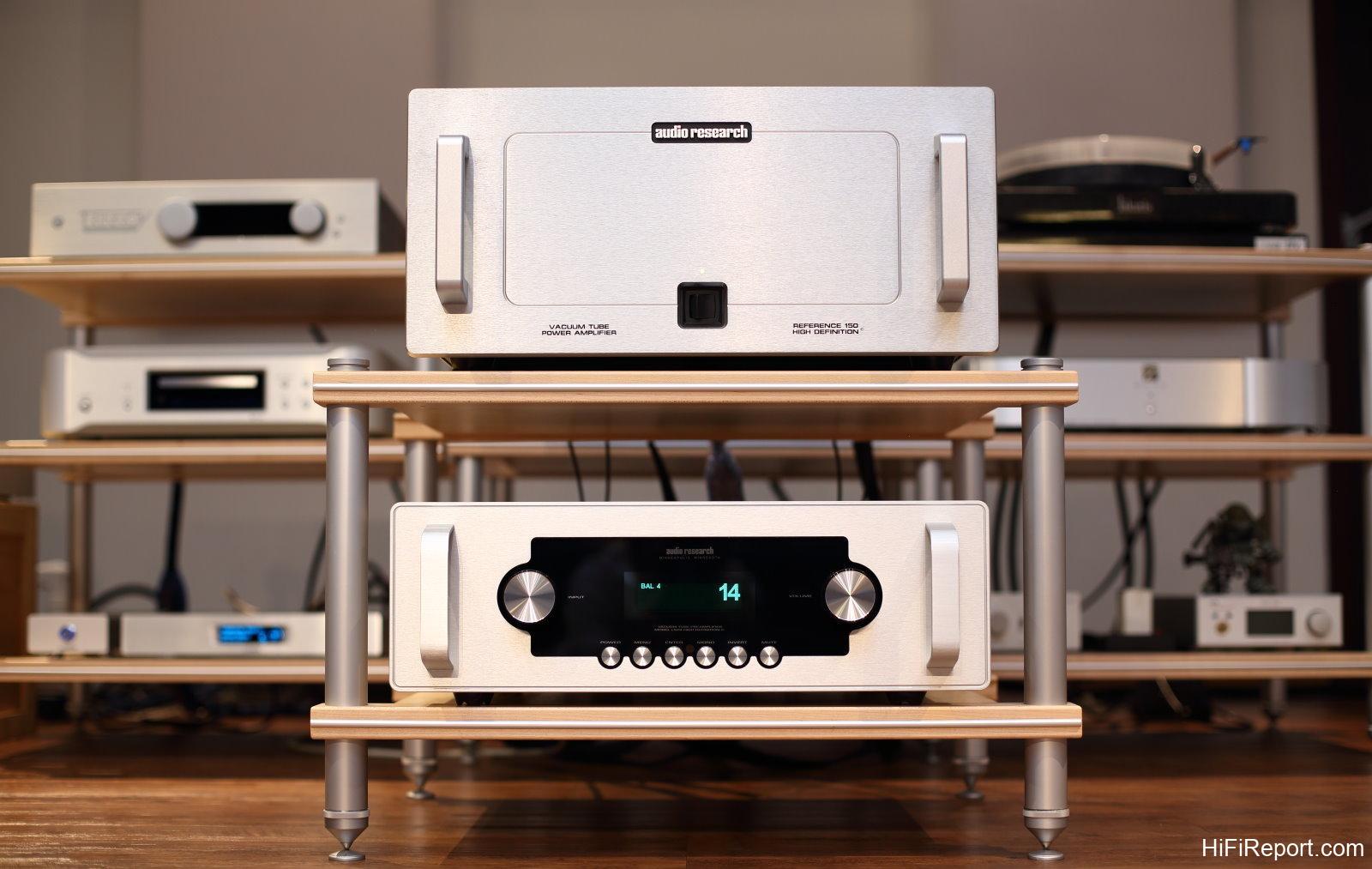
Upon opening the packaging, you’ll find the LS28 chassis is constructed from aluminum alloy. The front panel features two handles, and the top of the chassis is perforated with numerous small holes. A hallmark of vacuum tube amplifiers is “heat,” making heat dissipation a primary design consideration.
Simple and Consistent Design
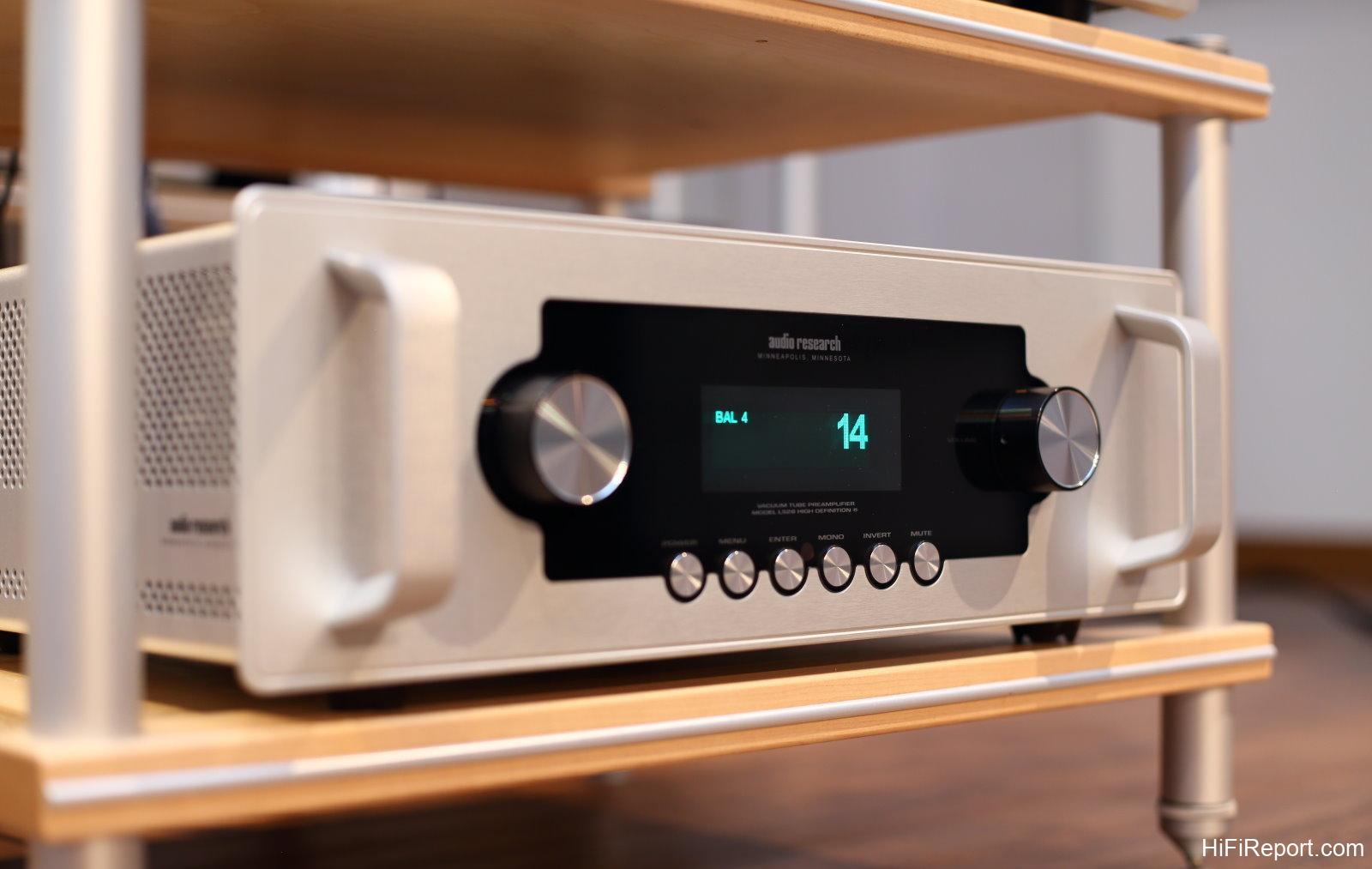
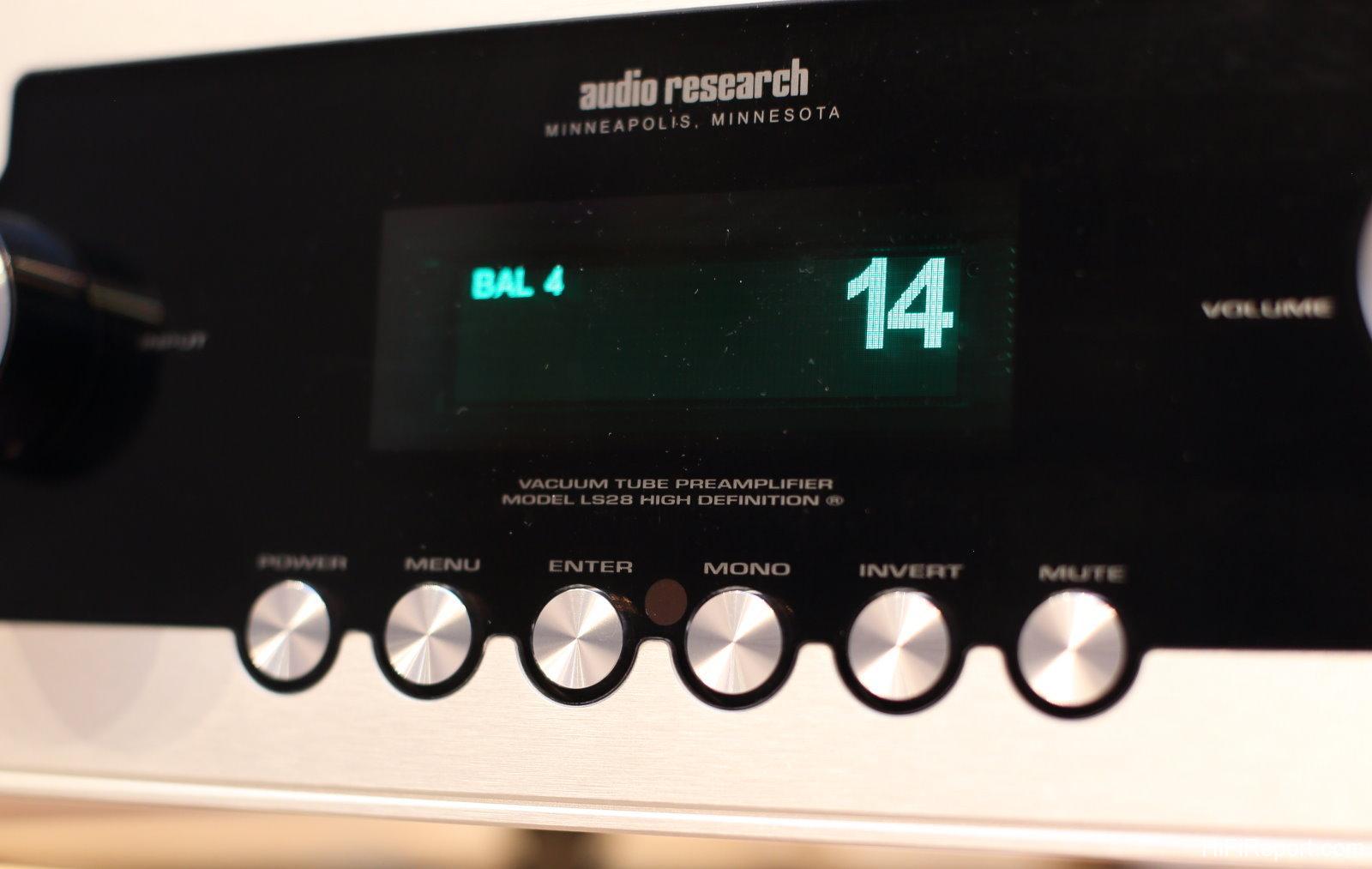
The LS28’s front panel appearance closely resembles the recently released Ref 6. It features two large handles on the sides, although the LS28 is not particularly heavy, suggesting the handles are primarily for design consistency. The control panel includes two knobs and six pushbuttons. The left knob is for input source selection, and the right one controls volume. The buttons below are for Power, Menu, Enter, Mono, Invert, and Mute.
Additionally, a dedicated, all-aluminum LS28 remote control is included, enabling all operations to be performed remotely.
The included remote control is not a universal type but specifically designed for the LS28, clearly labeled with “LS28.” It provides all necessary controls and functions, and the LS28’s display screen is clear and large enough for easy operation from a listening position.
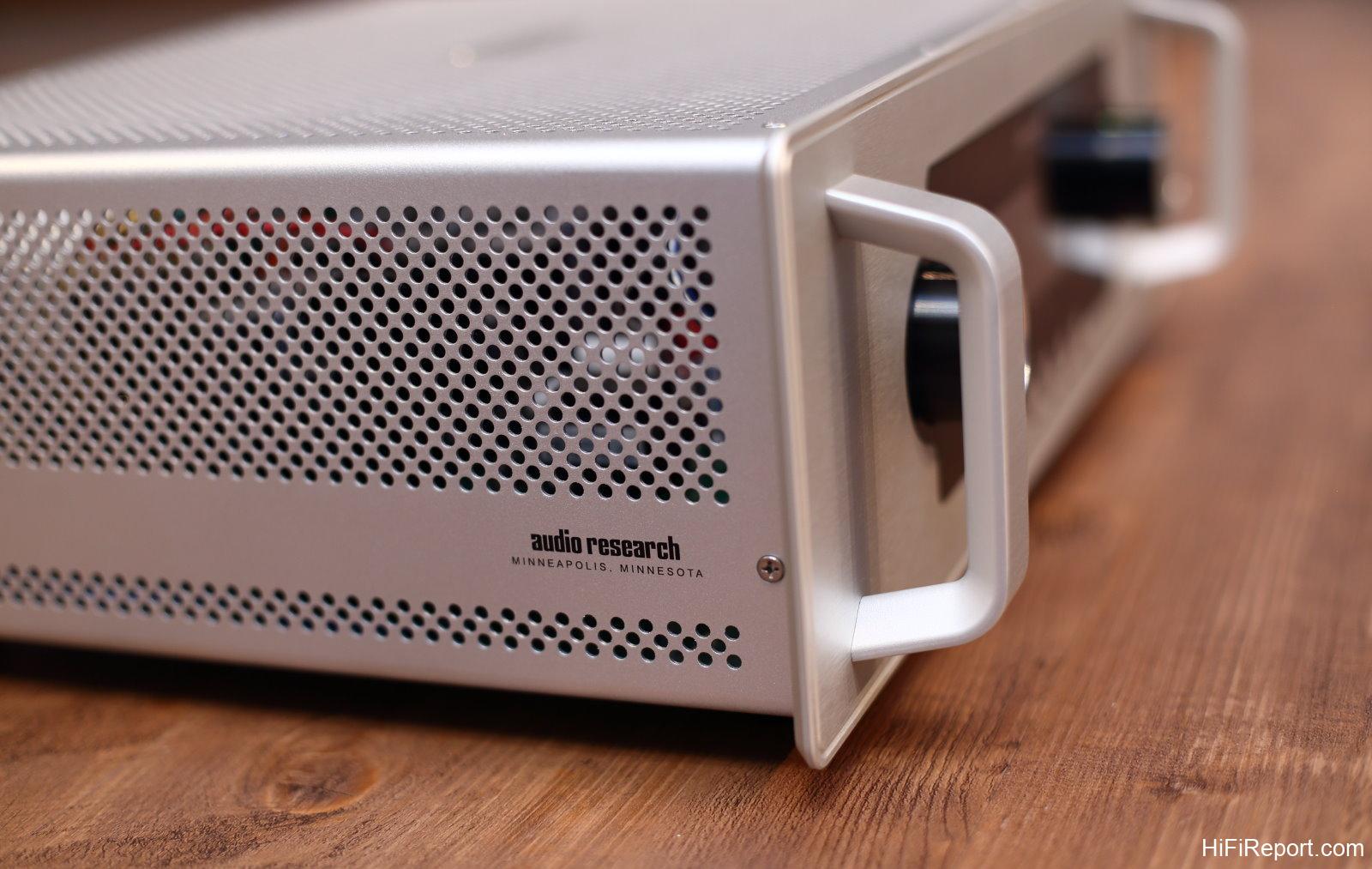
Viewed from the side, the Audio Research brand logo is prominently displayed, along with more ventilation holes. The aluminum chassis exhibits a very pleasing texture.
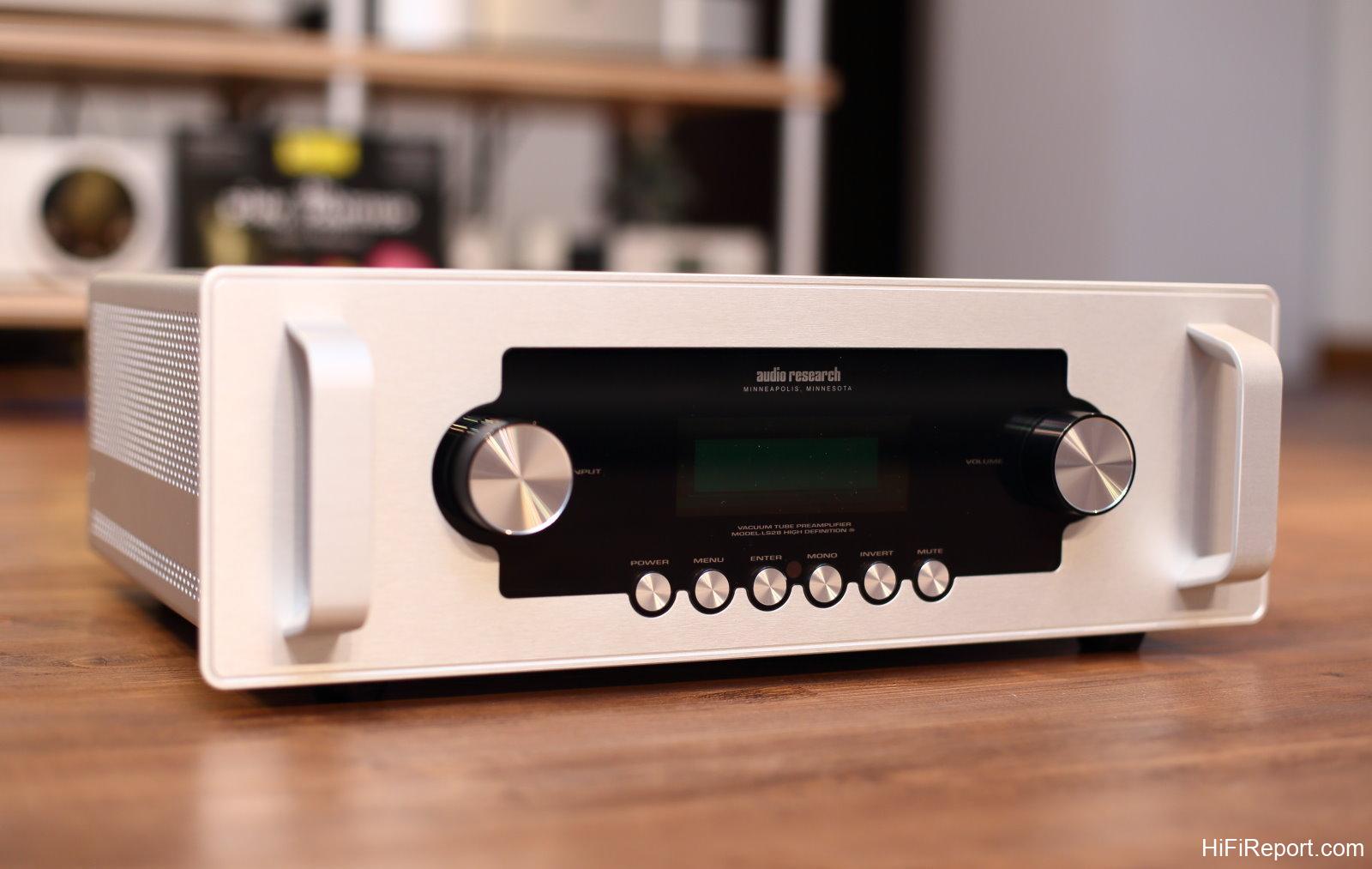
A rear view further emphasizes that Audio Research’s recent designs, while simple in appearance, have significantly improved in perceived quality. The LS28’s rear panel is also notably rich in connectivity options.
Versatile Inputs and Outputs
The official introduction to the LS28 describes it as a highly flexible preamplifier. This flexibility refers not only to its ease of pairing with power amplifiers but also to the extensive array of input and output connections on its rear panel. The LS28 offers four balanced XLR inputs, four single-ended RCA inputs, two balanced XLR outputs, two single-ended RCA outputs, and dedicated high-level output terminals for recording purposes.
Next, we present internal photographs of the LS28.
High-Quality Components, Excellent Value
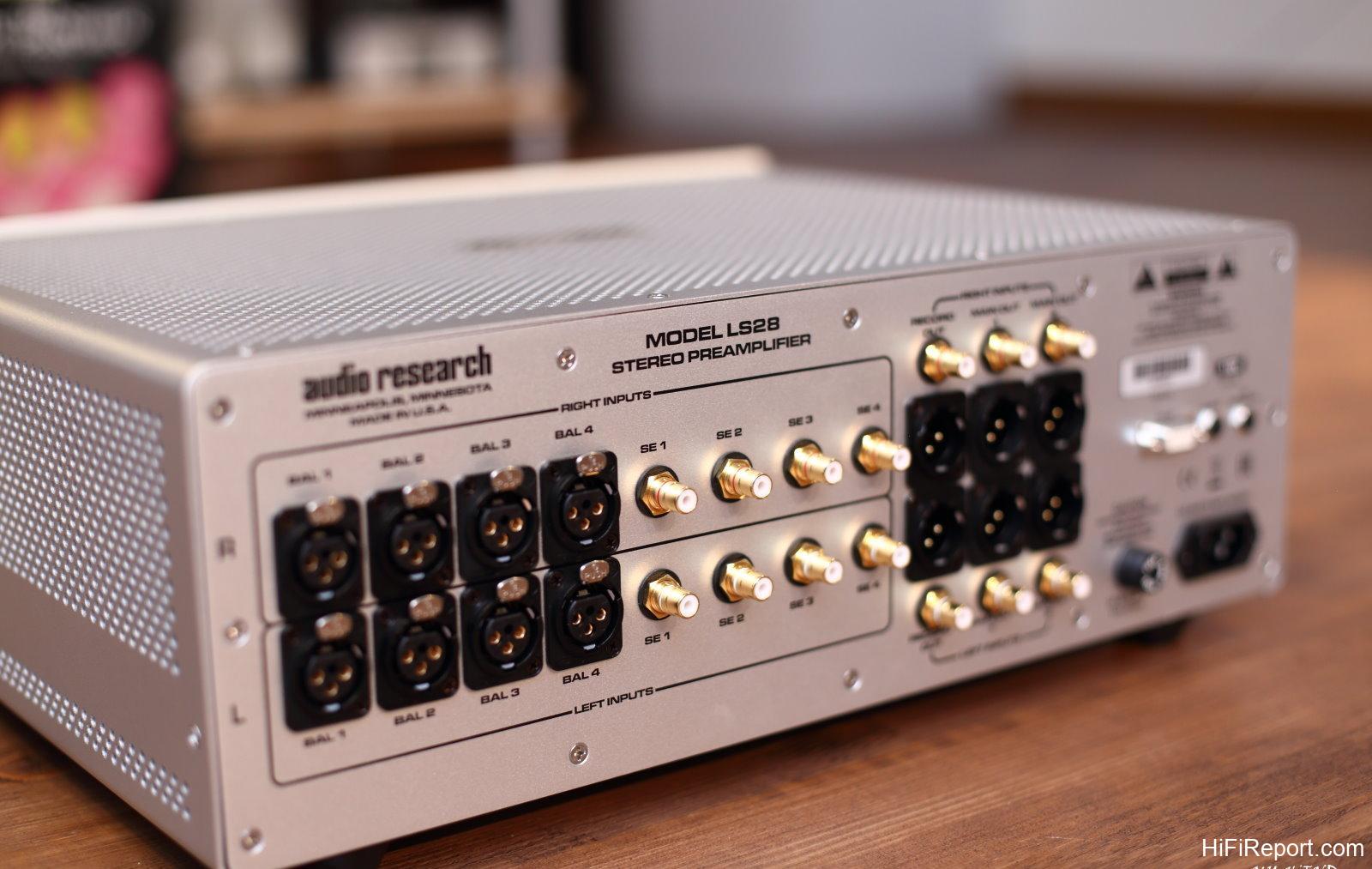
The components used within the LS28 are essentially of the same high quality as those found in Audio Research’s higher-end series. The primary difference compared to models like the Ref 6 lies in the circuit simplicity and a reduced quantity of components, although the quality remains consistent. While the chassis size is similar, the Ref 6 visibly contains perhaps 50% more internal components. The Ref 6 also boasts a more substantial chassis construction.
The choice between the two ultimately depends on the user’s budget. The LS28 undoubtedly offers better value compared to the Ref 6. It’s certain that the product quality is at an equivalent level. Audio Research maintains a high degree of sonic consistency across its product range, with differences between models often residing in subtle nuances, catering to varying levels of audiophile demands.
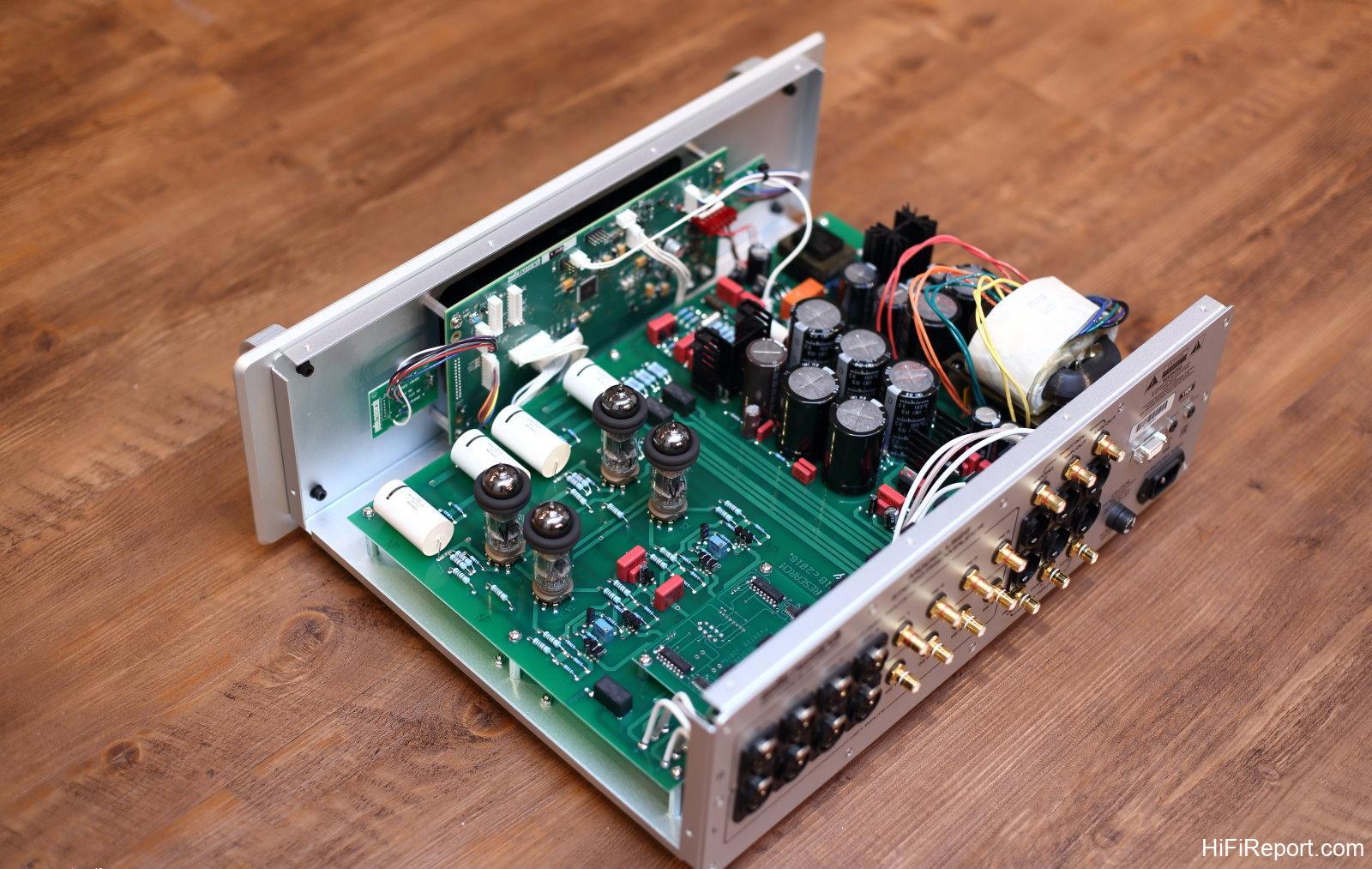
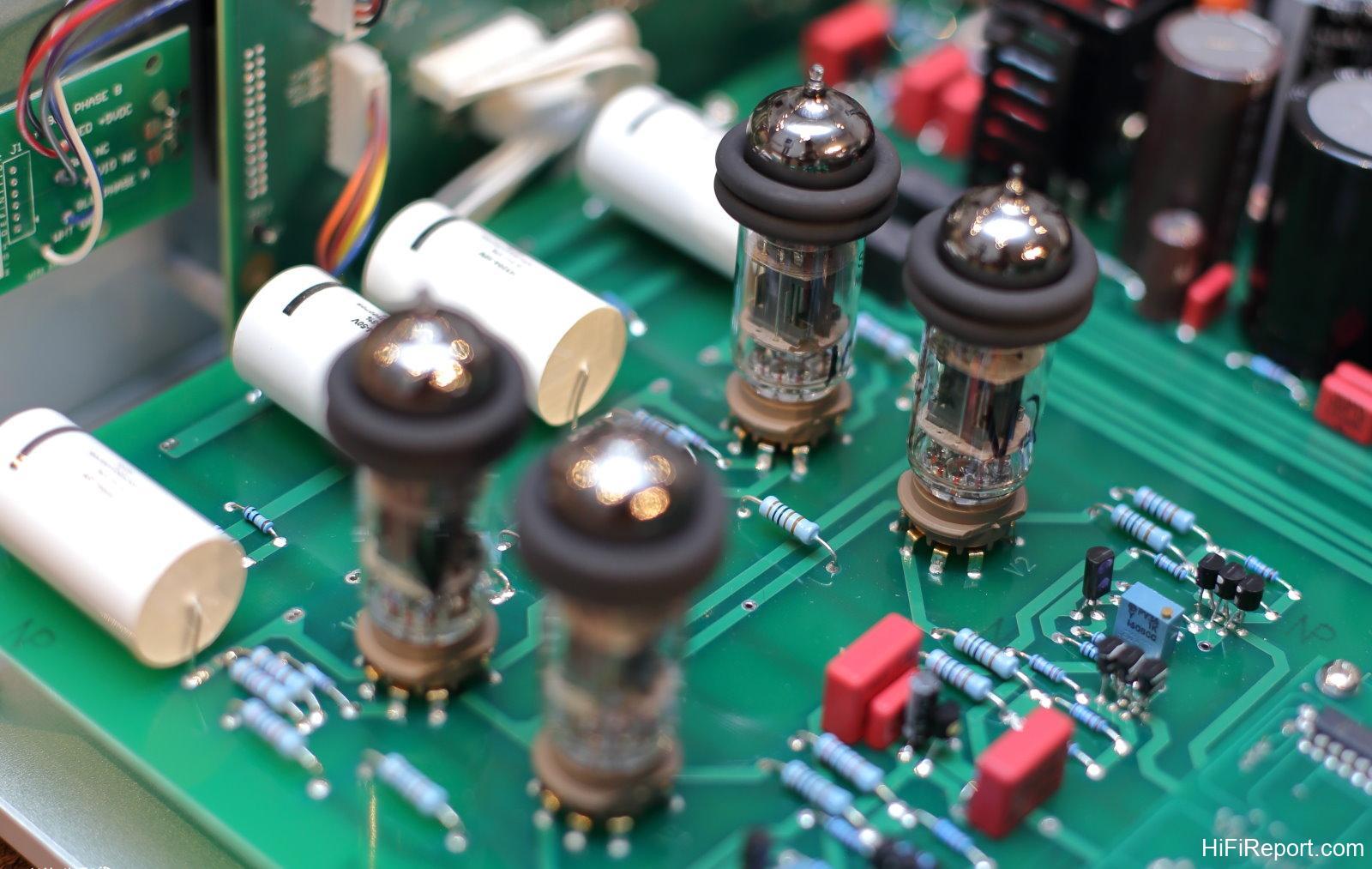
The main circuit board is nearly as large as the chassis area. In the photo, the right half is dedicated to power processing, featuring numerous large capacitors and transformers. The left side houses the analog amplification circuitry, where the four 6H30 vacuum tubes, though compact, are prominently visible.
Utilizing Four Selected 6H30 Vacuum Tubes
These four 6H30 vacuum tubes are the heart of the LS28. All vacuum tubes from Audio Research, when intended for use within the same unit, undergo testing and matching. Each tube is marked with Audio Research’s internal identification number. If users need replacements, regardless of quantity, providing the original tube’s identification number to the factory allows them to locate new tubes from the same matched batch, ensuring the closest performance characteristics.
This demonstrates Audio Research’s strong commitment to after-sales service, which begins from the very moment of assembly before shipment.
Consequently, Audio Research maintains an astonishingly large inventory of spare parts. Even for machines manufactured many years ago, replacement parts are often still available for repair. This stands in stark contrast to the modern consumer electronics service model of simply replacing faulty units. It’s no wonder that General Manager Mr. Zhu often describes Audio Research as a “durable asset” in the high-end audio world, emphasizing the absolute reliability of both their quality and service.
This is the inherent value that Audio Research delivers.
Paired with Ref 150 SE Stereo Amplifier
Since a preamplifier was provided for review, it was natural to pair it with a matching Audio Research power amplifier. The Ref 150 SE was chosen, delivering 150 watts of power per channel, utilizing two KT150 and four 6H30 vacuum tubes. It’s a slight pity that the Ref 150 SE lacks the elegant meter display found on some other Audio Research power amplifiers.
The LS28 is well-suited for pairing with various Audio Research power amplifiers. The soon-to-be-released VT80 integrated amplifier from the same Foundation series is expected to be a prime matching candidate.
The front panel in the power-on state. Audio Research amplifiers typically have a warm-up period upon power-up and automatically enter Mute mode. It’s necessary to wait briefly before playing music. This is designed to protect the circuitry and connected equipment and to allow the internal temperature to reach operating levels. Vacuum tube amplifiers invariably generate considerable heat, so users should ensure adequate ventilation space during placement.
The LS28 is purely a preamplifier. Phono stage functionality is provided separately by the PH9. Audio Research’s highest-end GSPre, in contrast, incorporates phono and headphone amplification functionalities in addition to its preamplifier role. The LS28 and Ref 6 are relatively more focused in their function.
The LS28’s front panel display is clear and concise. The operation menu allows for managing various information, including vacuum tube usage time, auto-shutdown settings, volume reset, input source naming, and more.
The Ref 150 SE power amplifier is designed as a successor to the original Ref 150, offering improved quality, dynamic performance, more vivid and refined musicality, and quieter operation. The Ref 150 SE’s front panel features only a power switch, lacking the signature meter display, which is somewhat regrettable, but it still maintains a high standard of build quality.
The Ref 150 SE requires a high-current 20A power cord, unlike common power plugs. A Siltech Ruby Mountain power cable from the Netherlands was also provided for this review, with the expectation of delivering even more stable and refined sound to the power amplifier.
A reminder to readers: counterfeit Siltech cables are prevalent in the market. Genuine, authorized Siltech products have serial numbers. It is advisable to contact the official distributor to verify authenticity before purchasing to avoid wasting money.
Warm-up for Optimal Sound
Vacuum tube equipment requires a warm-up period for its operating state to stabilize and achieve optimal sound quality. As the LS28 was brand new, several days were spent allowing the system to “stretch its legs.” The initial sound upon arrival differed slightly from the sound after a week of use. The sonic foundation became purer, and the dynamic range improved considerably.
Warmth and Density, No Ambiguity
Playing Diana Krall’s *Wallflower*, the warm sonic signature of the vacuum tube pre-power amplifier combination is captivating. Combined with Audio Research’s renowned resolution, even listening to languid jazz never becomes tiring. This album contains a certain degree of dynamic expression, though not exaggeratedly so. When a system’s dynamic performance is lacking, it can become dull and sleep-inducing.
Conversely, if it becomes increasingly engaging, it indicates ample reproduction of subtle dynamics. The LS28 paired with the Ref 150 SE achieves precisely this, being irresistibly captivating—clear yet dynamically capable, entirely devoid of the traditional shortcomings often associated with vacuum tube equipment.
Smooth Tones, Natural Extension
Next, playing *Heartbreak*, featuring Elissa Lee Koljonen on violin and Robert Koenig on piano. The focus is undoubtedly on the violin’s poignant emotional performance, depicting the intricacies of heartbreak. Reproduced by the LS28 and Ref 150 SE, the violin’s sound is smooth and free of harshness, with natural high-frequency extension. Vacuum tube equipment seems to possess a particular knack for sonic smoothness.
The string sound has a certain density, not entirely lean and wiry, markedly different from what’s often heard from solid-state systems. However, don’t mistake this for being muddy or indistinct; there is absolutely no such issue. Robert Koenig’s piano playing in the album serves as a perfect complement, adding rich colors. The weight of the piano keys subtly resonates in the space, gently accentuating the violin’s melodic twists and turns.
Ample Energy at High Volumes
Playing COPLAND *EIJI OUE MINNESOTA ORCHESTRA*, the LS28 demonstrates excellent sonic impact and soundstage localization. Detail retrieval is also remarkably outstanding. The weight and depth of the low frequencies are commendable. Compared to previous experiences with the GSPre and Ref 6 preamplifiers, the soundstage width and overall dynamics, particularly in terms of loudness gradations, are still superior in the higher-end models. However, the LS28’s performance is already highly satisfying.