
Audio Research Reference 160S Stereo Power Amplifier Review
American brand Audio Research has been on a roll in recent years, consistently releasing exceptional products. The Reference series updates are relentless. Previously, I had the pleasure of experiencing the Reference 160M monoblock power amplifiers, and I was deeply impressed by their sonic quality and sheer power. This time, I had the opportunity to audition their sibling, the Reference 160S stereo power amplifier.
While positioned differently in the lineup, it evoked the same profound sense of admiration.
Inheriting Monoblock Pedigree
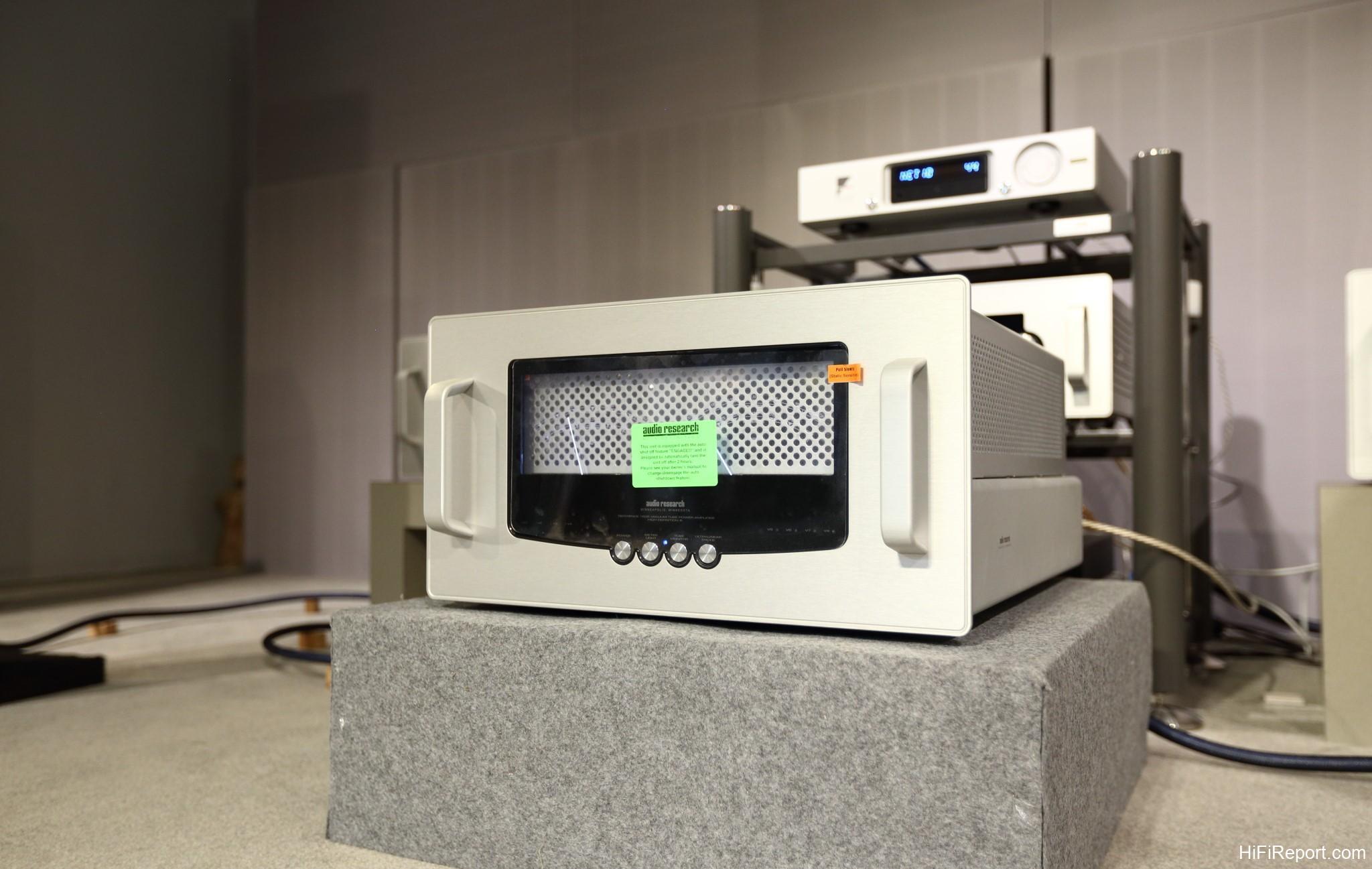
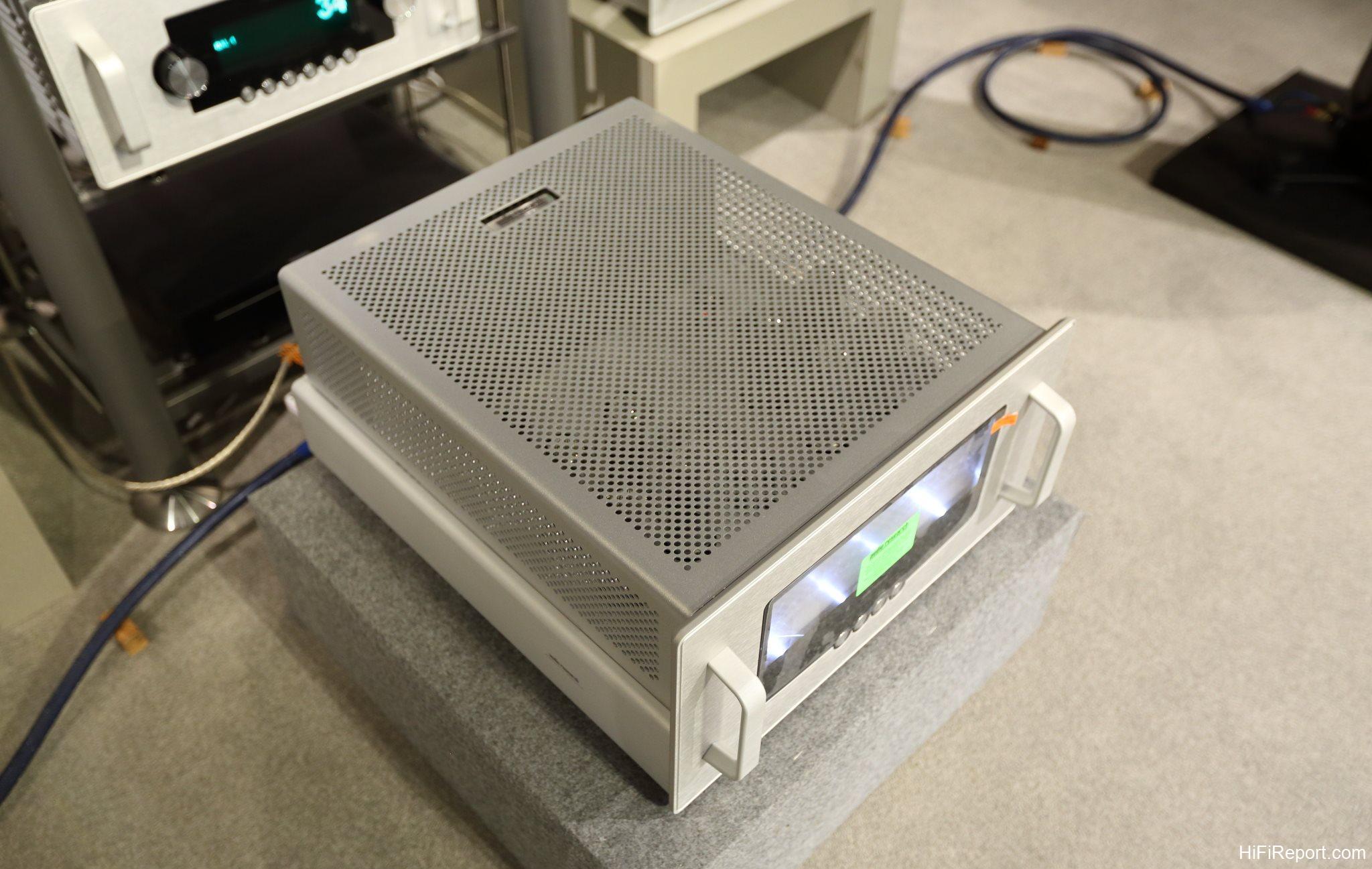
The Reference 160S stereo power amplifier follows closely in the footsteps of its larger sibling, the Reference 160M. It mirrors the monoblocks in both design and aesthetics. Vacuum tube design is, of course, central – a hallmark of the Audio Research brand. The Reference 160S employs eight KT150 vacuum tubes in its output stage. Visually, it features two illuminated meters on the front panel, displaying the real-time output levels for the left and right channels.
User-Friendly Design and Features
In terms of specifications, the Reference 160S inherits a suite of user-friendly features from its monoblock counterpart. These include an automatic bias adjustment circuit, switchable Triode or Ultralinear operating modes, balanced and single-ended inputs, and output tube monitoring. Employing a 4-layer circuit board design contributes to achieving a remarkably quiet background. The Reference 160S weighs approximately 45 kilograms and has a depth of 54.6 centimeters.
A 120mm horizontal fan, discreetly placed at the bottom, provides effective cooling. Audio Research has successfully distilled the essence of the Reference 160M monoblock into a single, formidable Reference 160S stereo amplifier.
Premium Matched Tubes
The Reference 160S delivers a robust 140 watts of continuous power into 8 ohms. At 140 watts output, total harmonic distortion (THD) at 1kHz is rated at 1%, while at 1 watt output, THD at 1kHz impressively reduces to 0.04%. Internally, the KT150 output tubes are meticulously matched and screened. A total of four pairs of carefully selected and matched tubes are used, complemented by four 6H30 vacuum tubes in the gain stage.
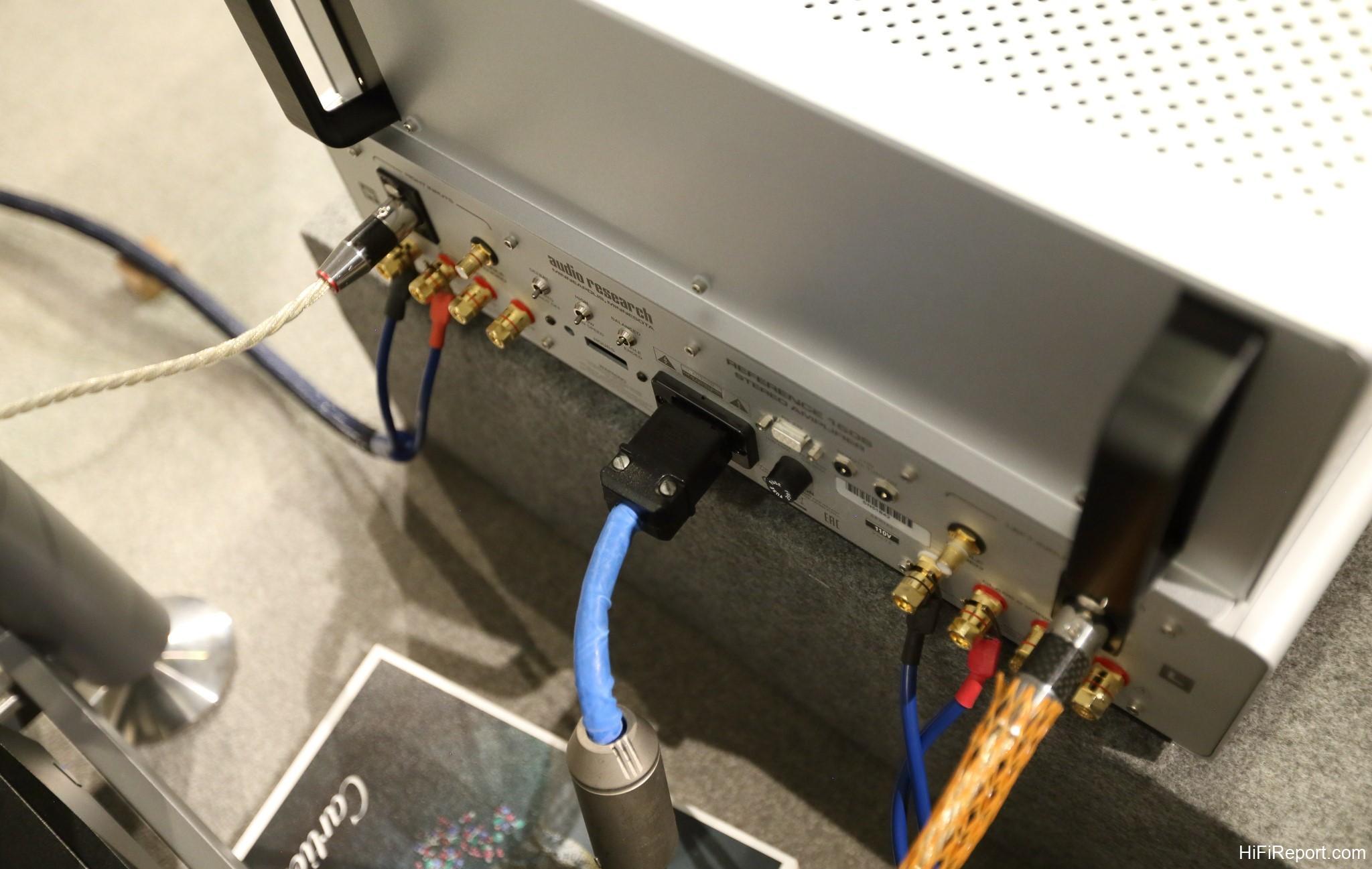
Output connections are provided for 16 ohms, 8 ohms, and 4 ohms, allowing users to optimize impedance matching with their loudspeakers.
Ayre Digital Streaming Source
For this audition at HiFiReport, beyond the main attraction – the Audio Research Reference 160S power amplifier – we primarily utilized the Ayre QX-5 Twenty digital hub as the source. We streamed music from both NAS and Tidal. In past visits, my listening sessions have primarily revolved around my own CDs. However, with a digital streaming system readily available this time, and driven by my curiosity about Ayre, I opted to use it as the primary source for this review.
The Ayre QX-5 Twenty is not only a network streamer and traditional digital input hub but also incorporates a high-performance digital-to-analog converter (DAC). It is capable of decoding up to 384kHz/24bit PCM and DSD128 (DoP), and is Roon Ready. Thus, it functions as both a digital hub and a DAC. With a price point around $9,375 USD (approximately 300,000 NTD), it’s positioned as reasonably priced within the realm of high-end audio.
Partnered with Reference 6 Preamplifier
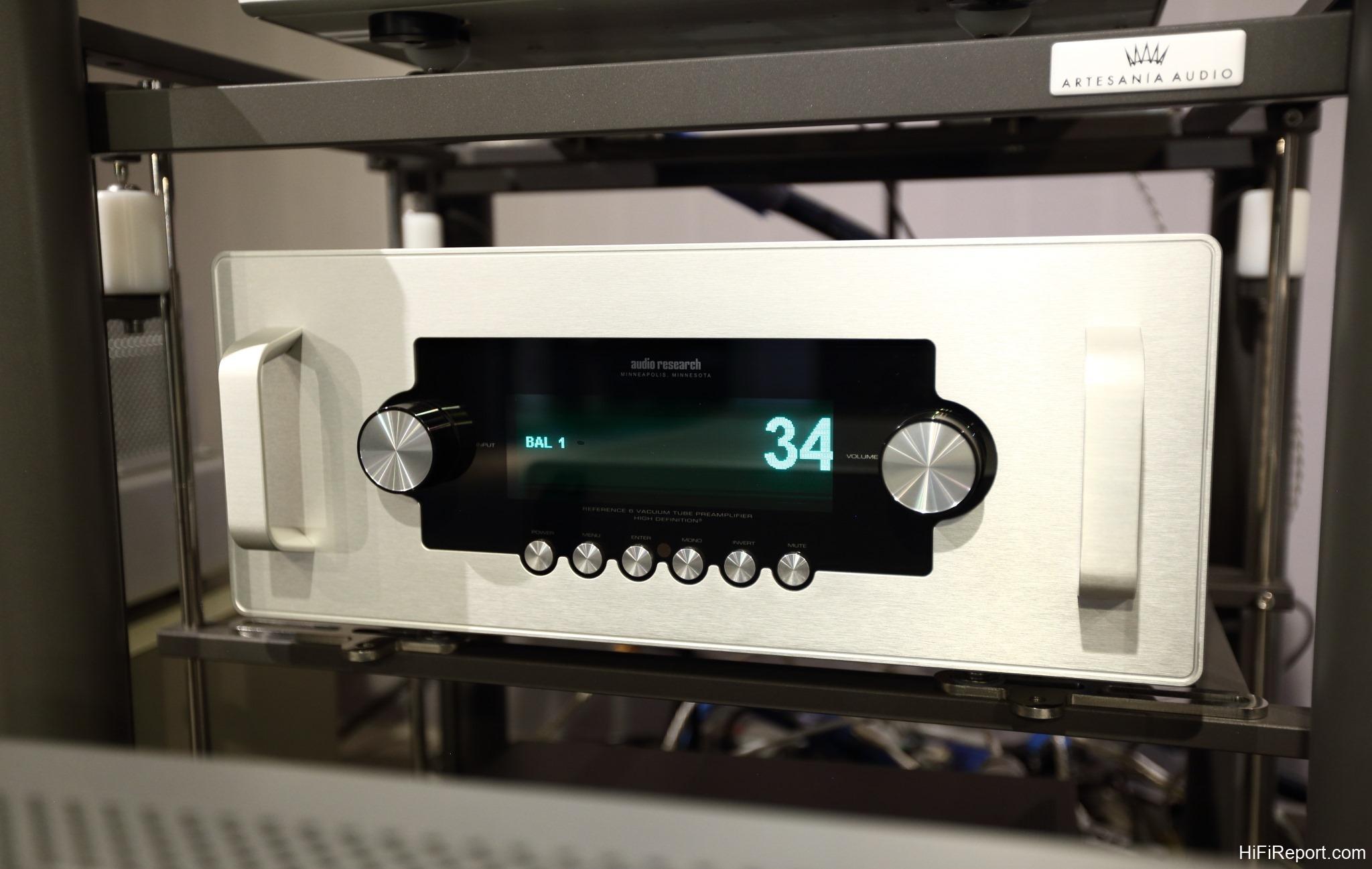
The partnering preamplifier was the Audio Research Reference 6. Its analog circuitry employs six vacuum tubes, and the power supply is meticulously engineered, resulting in exceptional dynamics. Even the subtlest details are rendered with clarity, and distortion is further minimized.
The Reference 6 exhibits remarkable low-frequency control, delivering bass that is expansive, pure, and well-defined. The overall sonic character is remarkably transparent, with fast transient response and abundant musicality. From the transformers and capacitors to the internal wiring, every component within the Reference 6 is custom-designed and optimized for Audio Research and this specific model.
Beyond its aesthetic appeal, the Reference 6 chassis boasts robust construction, effectively isolating it from both electronic and mechanical interference. Six specially selected 6H30 vacuum tubes (compared to four in the previous Reference 5SE) contribute to a quieter background and expanded dynamic range. The circuit design and substantial power transformer provide a solid foundation for performance.
The volume control offers 103 steps, allowing for incredibly fine-grained adjustments and exceptional sonic fidelity.
Dynaudio Confidence Series Loudspeakers
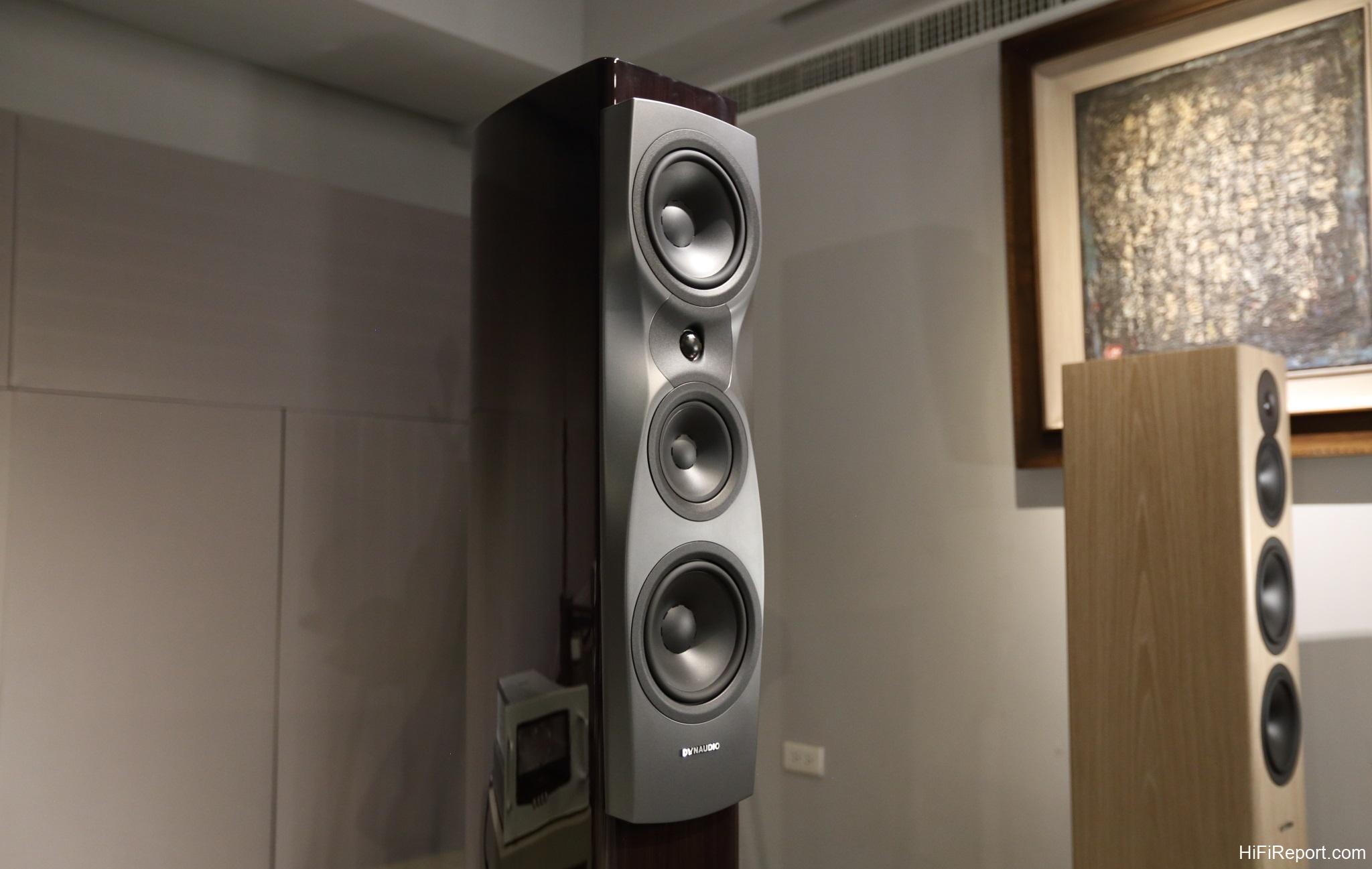
The loudspeakers chosen for this review were the Dynaudio Confidence 30 floor-standing speakers, the second largest model in the current Confidence series, just below the flagship Confidence 60. The latest generation of Confidence loudspeakers represents a near-total redesign. Changes encompass the cabinet, front baffle, tweeter, midrange driver, woofer, crossover, bass reflex port, and even Dynaudio’s proprietary DDC (Dynaudio Directivity Control) technology.
Despite these extensive revisions, the manufacturer has retained the classic Confidence name, signaling that the sonic character remains true to Dynaudio’s hallmark precision while delivering significantly enhanced overall performance.
Solid and Grounded Sonic Texture
Throughout the listening sessions, Roon served as the control interface, making music selection and playback incredibly convenient. As a result, I explored a wide range of musical genres. I began with *Closer To The Music*, a compilation released by German label Stockfisch Records in 2004. Many audiophiles are likely familiar with this series, whether through CD or vinyl, known for its consistently excellent sound quality.
Playing Allan Taylor’s “Beat Hotel” and “Wheel Of Fortune,” the entire system presented a sound that was remarkably stable and grounded, with Audio Research’s characteristic richness and warmth. The lower frequencies were substantial and well-defined, devoid of any lightweight or uncontrolled muddiness. This solidity is particularly crucial for digital streaming, and indeed, any overt “digital” artifacts were absent.
Furthermore, the sound was dynamic and impactful, avoiding any sense of sluggishness or lifelessness. Often, systems with a rich sonic character can risk sounding dull, lacking vibrancy. However, this system exhibited none of these common shortcomings. The overall sonic texture was undeniably refined, neither overly bright nor overly subdued, leaving a very positive initial impression—a balanced and high-quality presentation.
Rapid Response with Authority
Next, I turned to the audiophile favorite, *Hope*, and the track “Stimela.” The music’s dynamics and detail were exceptionally well-rendered. The sonic presentation was full-bodied with a touch of pleasing richness. Transient response and speed were remarkably quick. The system handled the rapid, percussive low-frequency strikes with impressive clarity and control, exhibiting minimal overhang.
While HiFiReport’s listening room is inherently spacious, I have experienced other systems in large rooms where room reflections become more prominent. However, in this setup, room interaction seemed remarkably low, perhaps attributable to Dynaudio’s reflection control technologies. The sonic image remained clean and devoid of extraneous artifacts, and the musical rhythm and coherence were particularly striking. Audio Research demonstrably maintains its signature sonic texture and character.
This consistent sonic identity is something I’ve observed across their product line, and the Reference 160S is no exception. Despite being a single-chassis stereo amplifier, the power delivery remained seemingly limitless and utterly sufficient. Its contribution to the low frequencies was unwavering, without any hint of weakness or compromise. In terms of sheer presence and authority, it conceded nothing to my previous experience with the Reference 160M monoblocks.
Boundless Charm and Allure
Finally, I listened to Chie Ayado’s *To You*. Her vocal range, spanning from deep and husky to soaring and powerful, proved to be an ideal match for this system. Even when she reached her highest notes, there was no hint of harshness or excessive edge. The system retained a subtle warmth and unwavering power, resulting in a sound that was consistently engaging and easy to listen to. In the midrange, the inherent charm and nuance of her voice were even more pronounced.
The emotional depth and vocal inflections of her performance were captivating and deeply enjoyable. During “Imagine,” the piano accompaniment possessed both elasticity and substance. Even the highest notes struck a chord, resonating with a tangible solidity. This prompted me to explore several more piano-centric pieces, and the sense of realism—of a piano truly present in the space—was undeniably palpable.
Audio Research 160S Stereo Power Amplifier Highlights
* Handcrafted in Minnesota, USA
* KT150 Vacuum Tube Output Stage Design
* Automatic Bias Adjustment
* Switchable Triode or Ultralinear Output Modes
* Dual Illuminated Meter Dynamic Display
* Silent Fan Cooling
* Three Output Impedance Options
Audio Research Reference 160S Stereo Power Amplifier Specifications
* Output Power: 140 Watts continuous
* Frequency Response: 0.5Hz-110kHz (1 watt / -3dB)
* Total Harmonic Distortion: 0.04% (1 watt / 1kHz), 1% (140 watts / 1kHz)
* Output Terminals: 16, 8, 4 Ohms
* Power Requirements: 105-130VAC 60Hz
* Dimensions (WHD): 48.26 x 26 x 54.61 cm
* Weight: 45 kg