
Audio-Technica AT-LP2022 Review
While many younger audiophiles know Audio-Technica primarily for their extensive range of headphones, the truth is, Audio-Technica has deep roots in the world of vinyl, having cultivated the field for many years. Numerous past turntable models are considered classics by enthusiasts, and even some high-end turntables on the market utilize Audio-Technica cartridges. Whether in terms of depth or breadth, Audio-Technica products hold a significant place in the vinyl community.
Audio-Technica’s Legacy and the AT-LP2022
To mark their 60th anniversary, the company revisited its original product philosophy. Among the five newly released commemorative products, three are vinyl-related: the flagship MC dual moving coil cartridge AT-MC2022, the AT-LP2022 turntable, and the AT-SB2022 portable vinyl player.
The focus of this review is the AT-LP2022 turntable. My initial encounter with it at the launch event left me completely astonished. Its thoroughly modern aesthetic was a stark contrast to my traditional, somewhat vintage perception of turntables, and it is guaranteed to catch your eye!
Modern Design and Transparent Aesthetics
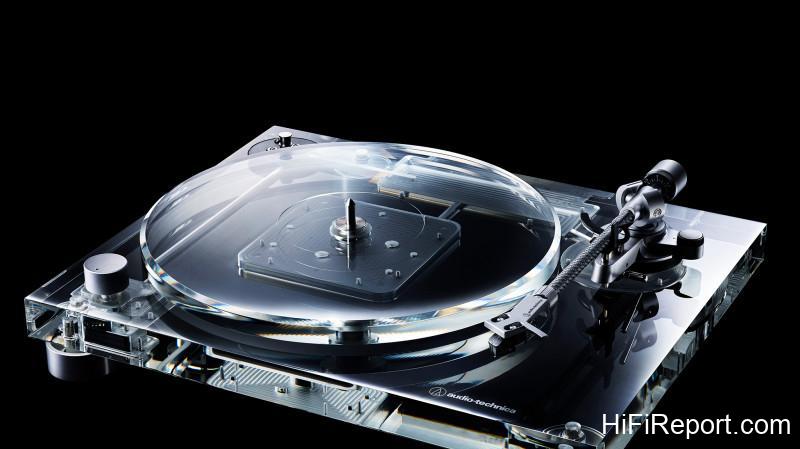
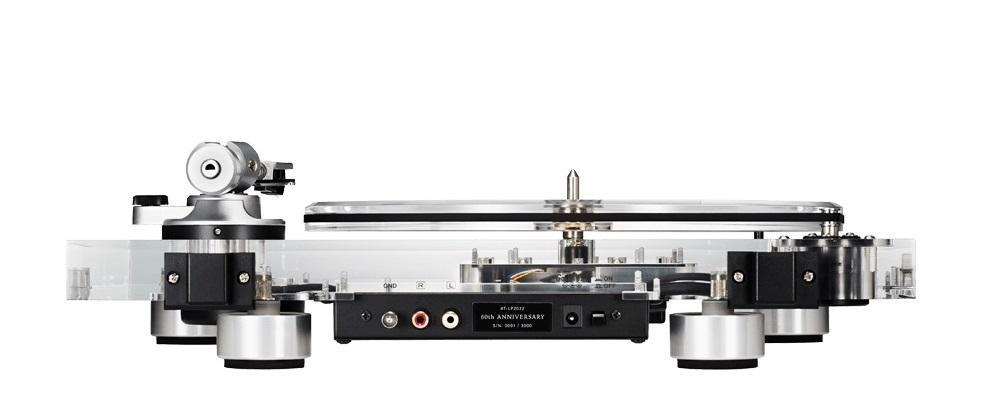
Almost the entire turntable, from the plinth to the platter, is constructed from acrylic. This transparent design allows for a complete view of the internal mechanical structure. When a record is playing, it almost appears as if the disc is floating mid-air – a truly cool effect!
Acoustic Benefits of Acrylic Construction
However, the design of the AT-LP2022 is not merely for aesthetics. If you have even a basic understanding of vinyl playback, you know how crucial vibration isolation is for a turntable. The drive motor generates vibrations during operation, and the stylus creates vibrations when it tracks the groove. Furthermore, external vibrations can also transmit into the turntable. All of these factors degrade sound quality.
Experienced audiophiles know that acrylic is an excellent material for vibration damping. It boasts high density, making it heavier than wood or plastic of the same volume, and it possesses favorable resonance characteristics. This is why it is widely used in the audio industry; British high-end manufacturer Vertere Acoustics, for instance, is a big proponent of acrylic for their turntables.
Stable Rotation and Practical Features
The AT-LP2022 leverages the advantages of this material, featuring a substantial 30mm thick acrylic plinth paired with a 16mm acrylic platter. The total weight reaches a considerable 8 kilograms, giving it a weighty, premium feel in your hands. The turntable employs a high-precision DC motor with a speed sensor, using a belt drive to ensure stable platter rotation. It supports both 33 and 45 rpm speeds, allowing you to adjust based on the record you are playing.
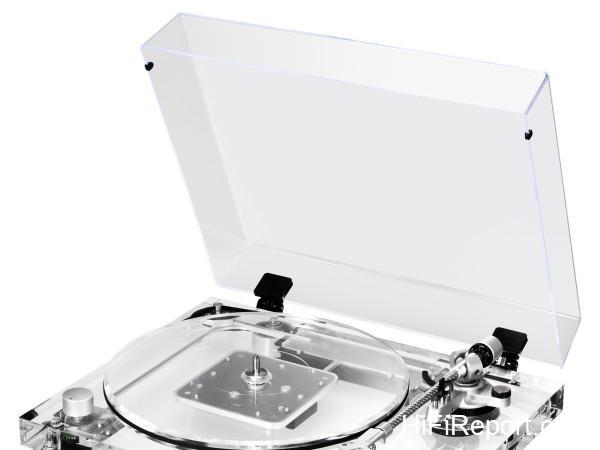
Looking at the base, the AT-LP2022 is equipped with four adjustable isolation feet. This allows you to individually control the height of each foot when leveling the turntable, a very practical design for beginners. For power, the AT-LP2022 avoids cramming a bulky power transformer inside the chassis. Instead, it uses an external 12V DC switching power supply.
This keeps the external appearance maximally clean and transparent while also preventing power switch noise interference from entering the turntable.
The Carbon Fiber Tonearm
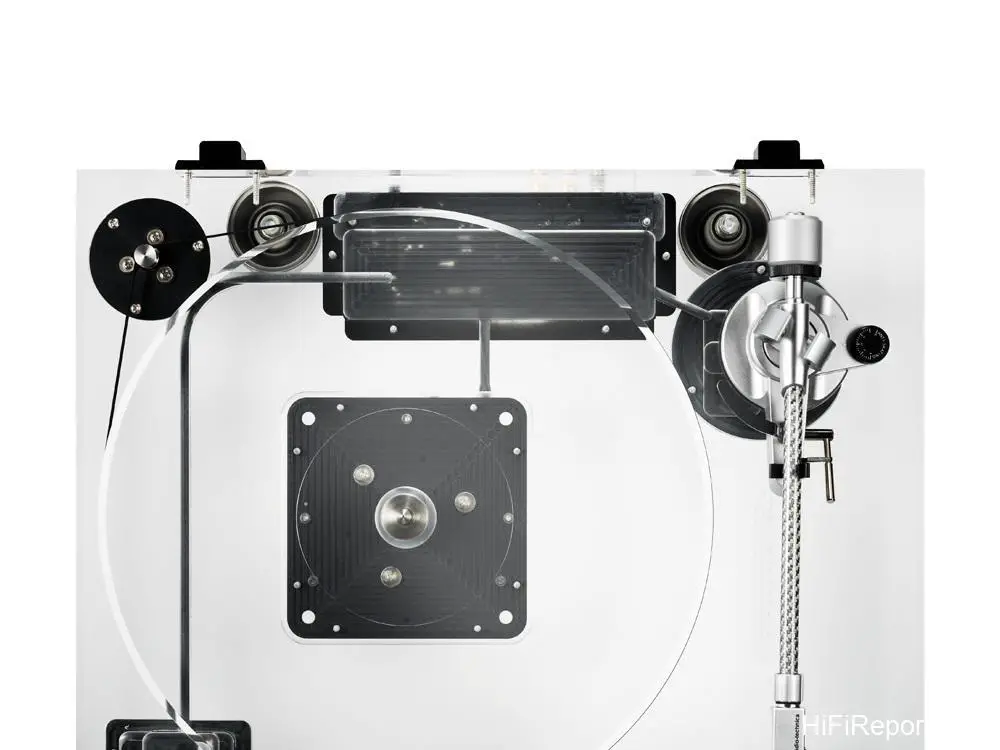
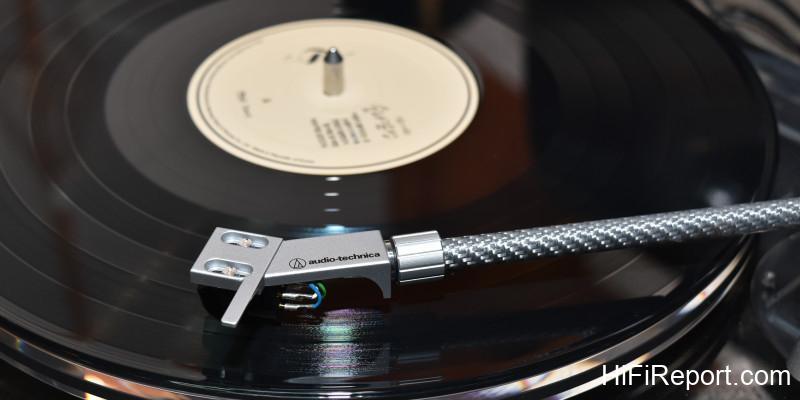
The AT-LP2022 features Audio-Technica’s specially designed silver “I”-shaped carbon fiber tonearm (a straight arm). This material is inherently lightweight yet incredibly rigid, offering not only a refined appearance but also effective vibration suppression. The tonearm is mounted on a height-adjustable metal base, making it convenient for users to adjust VTA (Vertical Tracking Angle) and anti-skate control.
This ensures the stylus tracks the groove perfectly vertically, minimizing physical distortion. A counterweight is located at the end of the tonearm to adjust tracking force. The design is largely intuitive, and following the manufacturer’s provided steps makes setup straightforward.
Versatile Cartridge and Styli Options
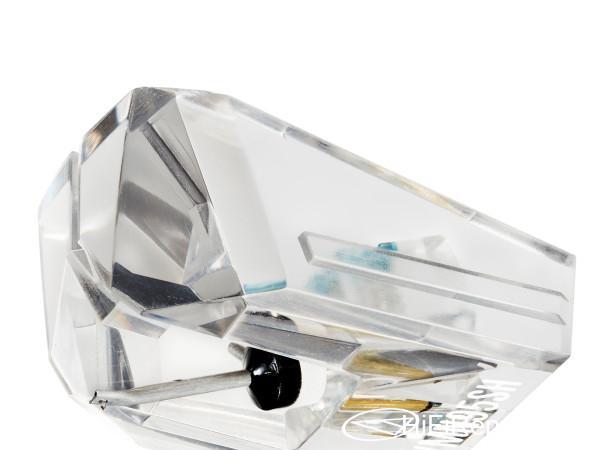
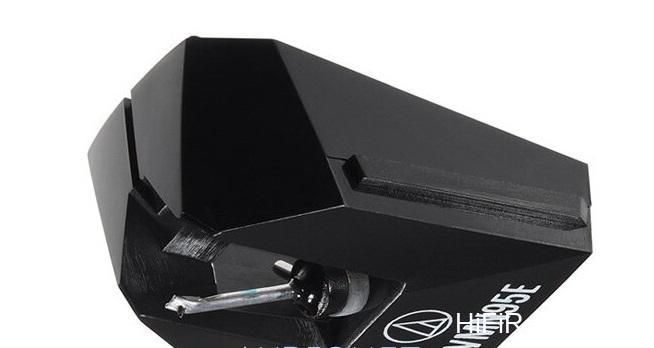
Beyond the well-crafted tonearm, the AT-LP2022’s standout feature is its interchangeable stylus design. The included black AT-VM95E BK VM cartridge uses a modular, plug-in stylus. In addition to the pre-installed elliptical stylus, the AT-LP2022 also includes a clear AT-VMN95SH Shibata stylus, allowing users to fine-tune the sound by swapping styli.
According to the manufacturer, the Shibata stylus offers a richer sonic character with excellent high-frequency retrieval capabilities, letting users compare tonal differences and explore a wider range of sonic variations. This is a feature rarely seen in cartridges on the market, a level of customization only Audio-Technica, with their mastery of phono cartridges, would likely offer to audiophiles.
Easy Setup and Solid Build Quality
Adjusting the AT-LP2022 is also relatively simple. The cartridge comes pre-mounted on the headshell; you just need to attach it to the tonearm. The recommended tracking force for the AT-VM95E cartridge used here is 2.0 grams. Once the tracking force is set, simply set the anti-skate dial to the ‘2’ position, and basic setup is complete.
During this process, you can clearly feel that the AT-LP2022’s build quality surpasses that of most budget turntables. Tapping the plinth produces a dull, solid sound. Gently rocking the turntable reveals its springy damping effect, indicating excellent isolation properties from both the feet and the plinth.
During playback, the platter rotation feels very stable, and the tonearm tracks smoothly without noticeable dips or bumps – all critical factors for achieving great sound from a vinyl system.
Setting Up for Sound
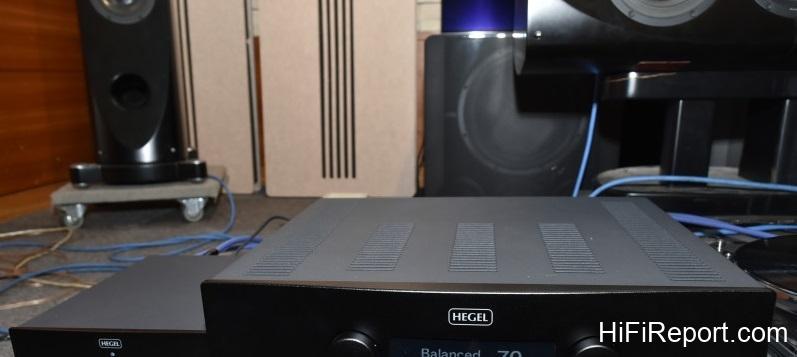
For my listening tests, I paired the AT-LP2022 with a Hegel V10 phono preamplifier and a Hegel H190 integrated amplifier, driving our in-house reference Pioneer S-1EX floorstanding speakers.
Listening Impressions: Elliptical Stylus
I began listening with the factory-configured elliptical stylus. In this setup, the sound quality was warm and rounded, with a robust tonal foundation. Vocals and instruments had a more intimate, almost tactile presence characteristic of vinyl playback. It was particularly captivating for listening to classic jazz albums!
For example, playing “Minors Holiday” from Kenny Dorham’s “Afro-Cuban” album, the brass details were incredibly full-bodied, with a slightly golden metallic sheen and dense, breathy texture between phrases – enough to truly transport any jazz enthusiast.
Similarly, on “Someday My Prince Will Come” from “The Bill Evans Trio Live,” the instruments were presented with life-sized presence. The piano notes were full-bodied and elastic; you could hear more of the warm, woody resonance on key presses. The resonance from the piano frame on chordal strikes felt direct and unconcealed. The bass plucks were short and sharp, bursting with that signature “gut-string” feel.
The drums conveyed the bouncy elasticity of the drumheads and the impactful punch of the kick drum pedal. This vibrant sense made it feel as though I was sitting in a small jazz club, experiencing the energy of a live performance.
Listening Impressions: Shibata Stylus
Next, it was the Shibata stylus’s turn. Swapping styli on the AT-VM95E cartridge is straightforward thanks to the modular design – simply pull the stylus module, including the surrounding plastic housing, vertically upwards and insert the new module. Compared to the elliptical stylus, the Shibata stylus offered a more modern sonic signature. Instrument textures were more resolved and transparent, and the soundstage felt more open.
I also heard excellent high and low-frequency extension, which paired beautifully with the warm and smooth character of the Hegel amplifiers.
For listening to pop music, I preferred the Shibata stylus’s performance. Playing Korean singer Solar’s “Solar Emotion” album, the music background was quieter with this configuration. On the track “Alone People,” Solar’s diction was soft and sweet, revealing every subtle nuance in her voice. Even though the vocals were slightly set back, they retained a clear outline and airy quality, enhancing the sense of musical layering.
Furthermore, listening to Pink Floyd’s “The Endless River,” I experienced a broad and deep soundstage that unfolded before me – something rarely heard with affordable vinyl systems. This also resulted in better instrument separation. David Gilmour’s electric guitar playing on the track had greater density, and the reverb between phrases was wonderfully spacious and lingering. In addition to more precise soundstage positioning, the Shibata stylus also provided notably better bass control.
Whether it was the pluck of an electric bass or the thump of the kick drum, both had improved speed and dynamic impact.
Conclusion
The AT-LP2022 turntable foregoes complex technology, relying instead on traditional design principles. However, it achieves excellent stability and vibration isolation through careful material selection and superb craftsmanship, performing on a par with higher-end turntables. What’s more, it’s affordably priced and offers two styli for users to tailor the sound.
As a first turntable for an enthusiast, it is absolutely capable of satisfying your desire to “play vinyl” and provides plenty to explore.
Specifications
* Type: Vinyl Turntable
* Drive Method: Belt Drive
* Motor: DC servo motor with active speed sensor
* Speeds: 33 rpm, 45 rpm
* Wow and Flutter: < 0.15% WRM (at 33 rpm) * Signal-to-Noise Ratio: > 60dB
* Tonearm: Straight tonearm
* Cartridge Type: VM type
* Tracking Force: 2.0g
* Weight: 8kg