
Audiolab DC Block 6 Review
The market is awash with “power conditioners” claiming to improve audio quality. For many newcomers, these products might seem like mere accessories, peripheral to the core audio system. And yes, your system will certainly make sound without any power treatment. However, I must emphasize that any seasoned audiophile understands the profound impact of power quality on sound.
A truly effective power product can influence audio quality just as significantly, if not more so, than upgrading your source or amplifier. Conversely, poor power quality can prevent you from ever hearing your equipment perform at its best. Thus, I argue that power treatment is not just an accessory; if you’re serious about building a high-performance audio system, you absolutely must address this aspect and allocate a budget for it, just as you would for an amplifier or speakers.
The Significance of Power Quality in Audio
That said, navigating the world of power products can be confusing. Options range from multi-outlet power strips costing a few thousand NTD to high-end conditioners priced in the hundreds of thousands. Where do you even begin? For beginners, investing in expensive isolation transformers or regenerators might feel like overkill compared to their entry-level sources and amplifiers. On the other hand, cheaper power strips raise doubts about their actual ability to purify the power.
Navigating the Power Product Market
This is where the Audiolab DC Block 6 power filter comes in. It’s, without question, the most suitable power solution I’ve encountered for beginners. Not only does it deliver immediate, noticeable results, but its design is also remarkably thoughtful. Even more appealing is its price tag, under $500 USD, which is often less than a single audiophile-grade power cable. Yet, it offers a lasting solution and a highly impactful improvement in sound quality.
Design & Features
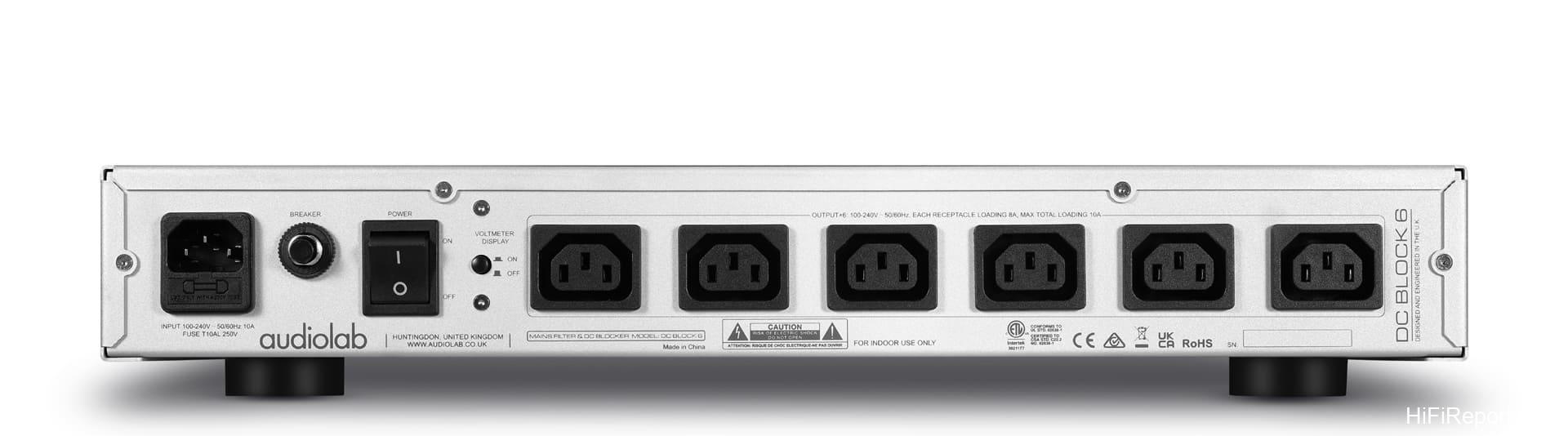
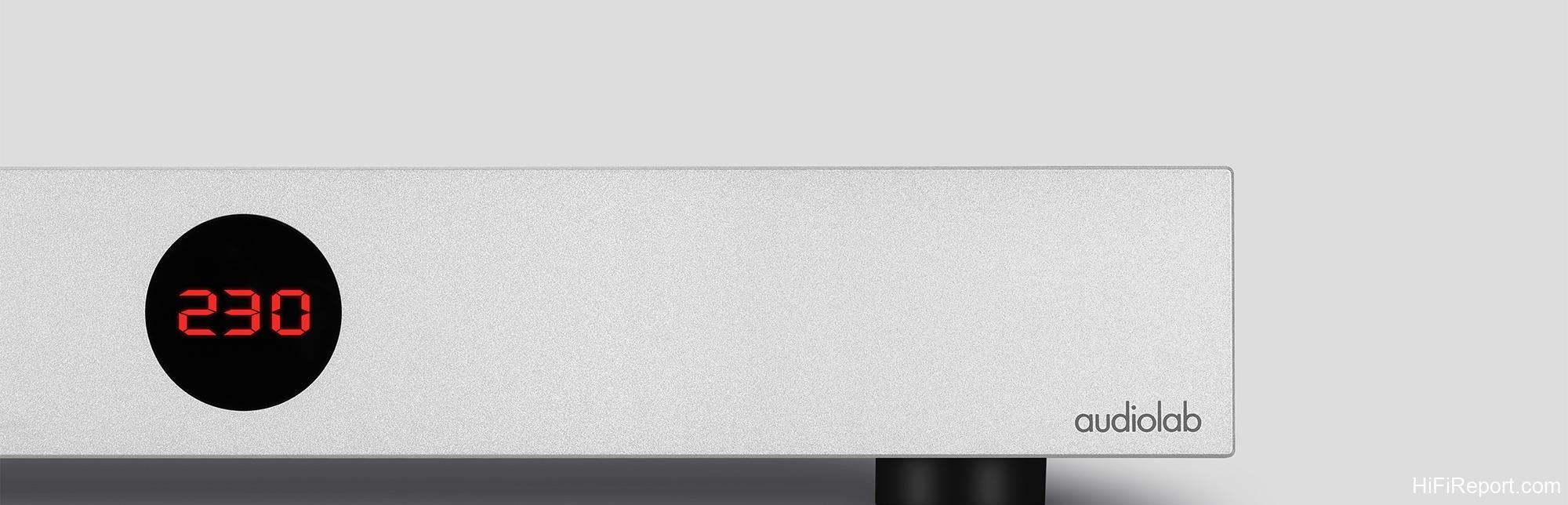
The DC Block 6 features a standard component-sized chassis, presenting a straightforward, conventional appearance. Its square enclosure is constructed from aluminum alloy. The front panel hosts a circular display for monitoring AC voltage. On the rear panel, you’ll find an AC power input for connecting to the mains and a display switch, allowing you to turn off the screen to minimize potential interference when not in use. Up to this point, the DC Block 6’s design seems perfectly normal.
However, I was immediately puzzled by its power output connectors. These are proprietary, unlike any standard IEC or US-style outlets, meaning you cannot use regular power cords. To address this, Audiolab generously includes six special IEC C13-C14 type power cables, one for each of the six power outputs.
Many audiophiles might raise an eyebrow at this design choice, wondering if it unnecessarily limits flexibility. However, after careful consideration, I understood the designer’s intent. The DC Block 6 was conceived to help beginners save on peripheral power-related expenses, providing a complete power solution for their system with a single purchase.
Of course, if you wish to upgrade later, the distributor offers proprietary versions of Supra Cables LoRad 3×2.5 power cables specifically designed for the DC Block 6, available as an optional upgrade, ensuring you’re not stuck with the included cables forever.
How it Works
In essence, the DC Block 6 is a specialized power conditioner. Its primary function is to filter out EMI and RFI electromagnetic noise from the mains. With the increasing prevalence of electronic devices like mobile phones and computers in our daily lives, radio frequency noise is more likely to infiltrate the mains supply, degrading the quality of power delivered to our audio systems. This aspect is generally well-understood.
However, the DC Block 6 possesses another, less common function. As its name suggests, it blocks DC interference. You might wonder how DC electricity could be present in a power filter intended solely for AC. The truth is, the AC mains supply often contains trace amounts of DC voltage, which can be seen as an ultra-low frequency signal within the AC. Although this voltage is very weak, its impact on sound is significant.
This non-linear load interference can cause the 60Hz AC sine wave to shift vertically, distorting it before it even reaches your audio equipment, resulting in audible noise and grunge. This effect worsens with the proliferation of electrical devices in the environment; for instance, DC voltages under 500mV are quite common in typical household power.
DC interference particularly affects amplifiers, especially those with analog power supply circuits, as it can cause the power transformer to reach magnetic saturation prematurely. This not only reduces transformer efficiency but can also introduce an annoying hum, negatively impacting sound quality.
The unique capability of the DC Block 6 lies in its proprietary filtering circuit that eliminates this “DC on the AC mains,” restoring the correct 60Hz sine wave and resulting in a more stable and clean audio output.
Listening Experience
In addition to the DC Block 6, the distributor also provided the optional Supra Cables LoRad upgrade power cables for testing. My test system consisted of a Marantz CD50n streamer/player and a Model 50 integrated amplifier, paired with KEF LS50 bookshelf speakers. I compared the sound when connecting the system directly to the mains versus using the DC Block 6. Given the DC Block 6’s unique nature, I admit I was initially skeptical about its effectiveness.
However, the moment the music began playing through it, I was utterly convinced, even astonished by the significant sound quality improvement from this affordable power product!
Connecting the DC Block 6 immediately revealed an incredibly transparent musical background. It completely cleared away any lingering sonic haze, and the soundstage expanded dramatically. Playing “Nagasaki wa Kyo mo Ame Datta” from Masaharu Fukuyama’s album “Tamari Ku,” the vocal focus became incredibly sharp. The singer’s image felt firmly anchored in the center, sounding cohesive and three-dimensional.
Fukuyama’s rich baritone now revealed previously obscured micro-details of his vocal texture and breath control, making it feel as if he was performing directly in front of me. The accompanying acoustic guitar also became more transparent, with taut, full-bodied plucks. I could hear more lively string vibrations, and the resonance of the guitar body felt looser and more elastic.

The DC Block 6 doesn’t suffer from the high-frequency roll-off sometimes associated with power filters. Playing Brahms’ “Hungarian Dance No. 6” from Gypsy violinist Roby Lakatos’ self-titled album, the violin exhibited exceptional density and texture with every bow stroke. High-pitched notes soared with ethereal grace, leaving a captivating sense of airiness against the quiet background.
Even during Lakatos’ blistering, high-energy performance, the violin tone remained remarkably stable and sweet, completely free from harshness or chaotic energy.
Many audiophiles dislike power filters, believing they compress dynamics and bandwidth. The DC Block 6 clearly avoids this pitfall. When I played Bernstein conducting the Vienna Philharmonic in Mahler’s Symphony No. 5, the opening orchestral tutti demonstrated formidable power, with dynamics completely unrestrained. Even with the large orchestral forces, the DC Block 6 created a deeper, more transparent soundstage.
It felt like a veil had been lifted from the music, clarifying the positioning of each section. Even subtle brass passages within the inner voices conveyed a rich, extended metallic timbre, emanating a soft glow from afar. With less noise and standing wave energy, the string bass section exhibited deeper low-frequency extension. This demonstrated that bandwidth was not compressed; rather, it was unleashed. For an affordable power product, these results far exceeded my expectations.
Conclusion
After listening to the DC Block 6, I am convinced it’s the perfect power solution for beginners. Its effects are significant and come without any apparent negative side effects. Furthermore, considering its price point, it’s even more accessible than many audiophile-grade power cables or strips, yet it provides a comprehensive power treatment solution.
If you have a limited budget and want the simplest, most effective way to improve power quality, the DC Block 6 is absolutely the one-stop power “shenqi” (divine tool) you need!
Specifications
* Product Type: Power Filter
* Color options: Black, Silver
* Features: 6 power outputs, high-frequency noise filtering, DC blocking, overload protection, digital voltage display
* Audio Power: 8A maximum load per output
* Power Handling: 10A total maximum output
* Dimensions: 444 × 78.4 × 306.4 mm
* Weight: 4.6 kg