
Audiomica Laboratory Anort Consequence Network Cable Review
Audiomica is a cable brand from Poland, founded in 2007 by Lukasz Mika. Although not established for long, Audiomica possesses strong research and development capabilities and has grown rapidly. Currently, it boasts six different series of products across various price points, offering a comprehensive range of cables to meet any consumer’s needs.
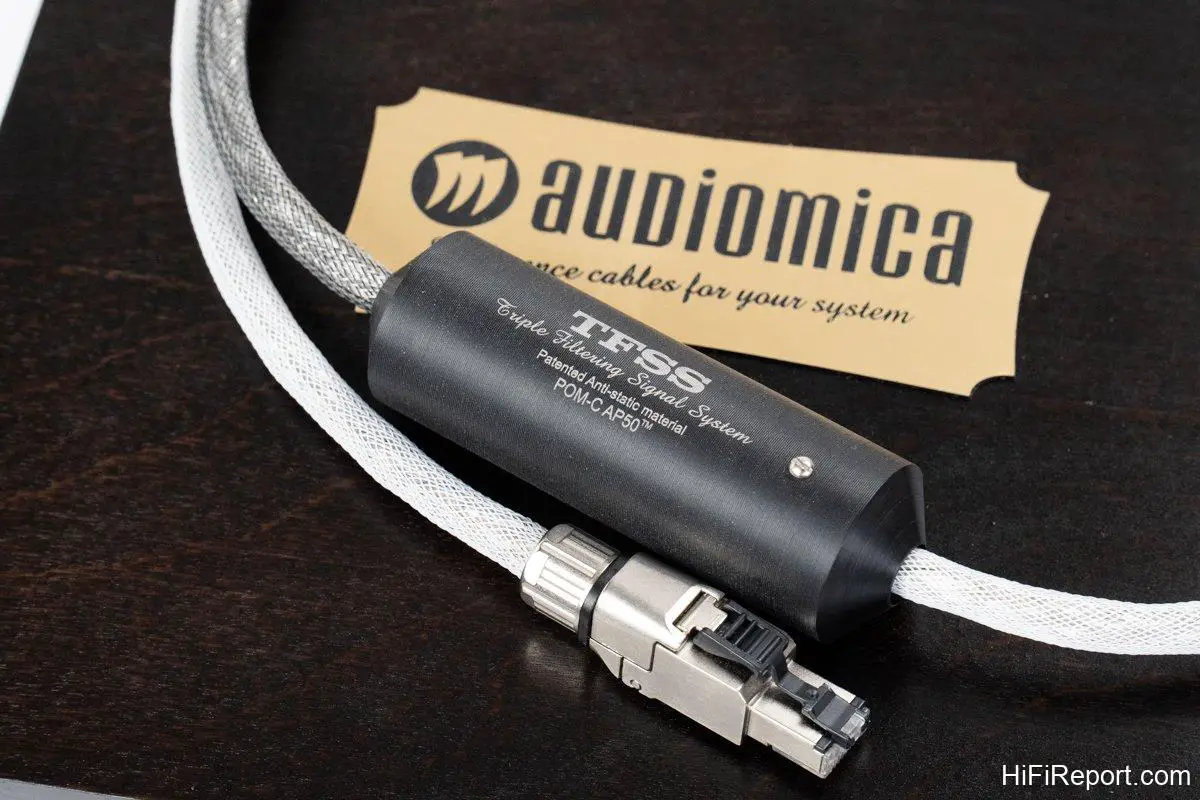
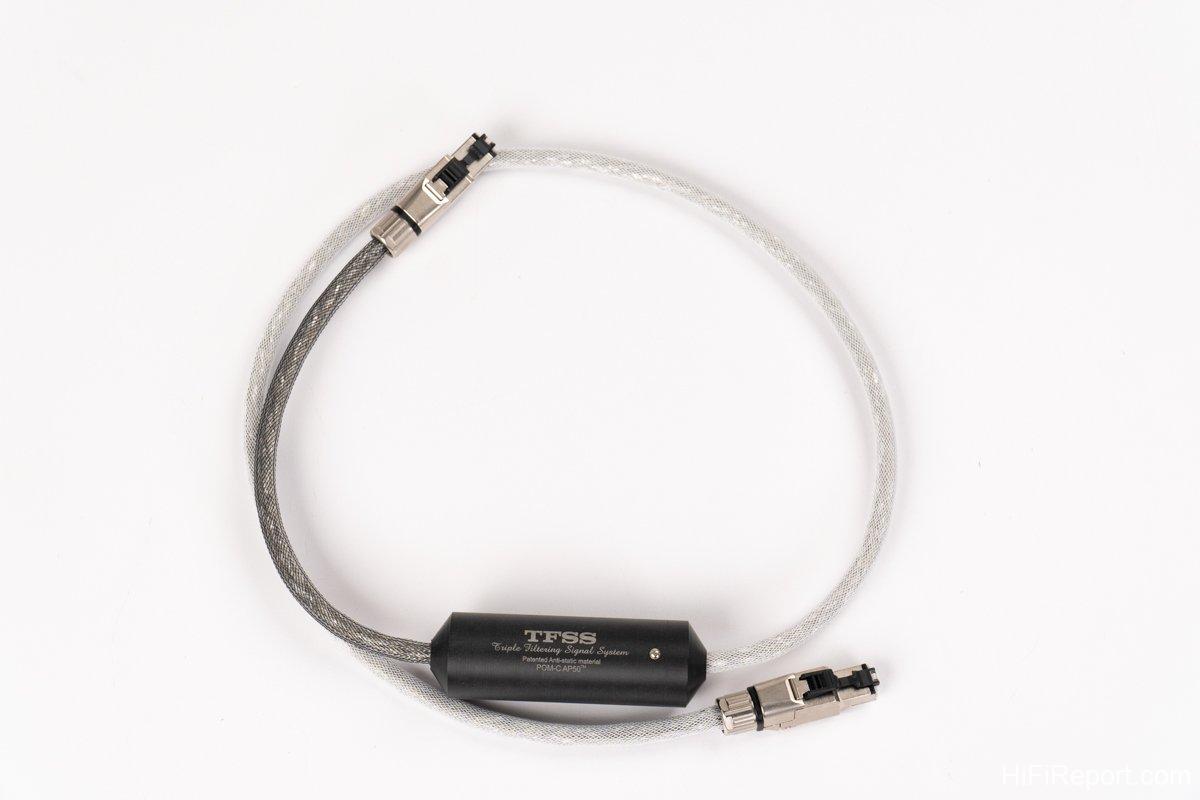
A characteristic feature of most Audiomica cables is a cylindrical component attached to the cable itself. What is it for? Filtering.
Audiomica believes that factors influencing cable sound performance include not only the conductor, structure, insulation, and shielding but also noise interference, especially ubiquitous electromagnetic interference. Therefore, Audiomica utilizes a filter to achieve noise reduction, minimizing signal interference, as exemplified by the protagonist of this review—the Anort Consequence network cable.
Emphasis on Filtering Technology
Audiomica’s filters primarily aim to eliminate electromagnetic interference. Some of these interferences originate from natural sources, but a significant portion comes from various radio waves and household appliances, reaching audio systems through the air or power lines, thus degrading sound quality.
To address this, Audiomica has developed two types of filters. One is specifically for signal cables, including analog signal cables, digital cables, USB cables, network cables, phono cables, etc., further categorized into DFSS and TFSS levels.
The other type is dedicated to power cables, named TFCT.
What about speaker cables? Speaker cables do not incorporate filters.
Let’s first examine the DFSS filter, which stands for Double Filtering Signal System. It mainly comprises two ring magnets, with Teflon and PVC-covered aluminum foil running through the center, forming a unique structure. Crucially, the distance between the magnets must be precisely maintained, and the distance between the filter and the connector is also critical to achieve effective filtering.
Furthermore, for different types of cables, the size, composition, distance of the magnets, and distance to the connector must be precisely adjusted. It is definitely not a one-size-fits-all filter.
This highlights why Audiomica considers its filtering technology as the key to achieving excellent sound quality.
What differentiates TFSS? TFSS stands for Triple Filtering Signal System, meaning the number of magnets is increased from two to three, and their size is also enlarged, providing even better interference suppression.
Interestingly, the choice between DFSS or TFSS for a cable is not directly related to its product tier. Higher-end cables don’t exclusively use DFSS, and lower-end ones TFSS. Audiomica’s product tiers are differentiated not only by filters but also by conductors, structure, shielding, connectors, and other factors. In fact, Audiomica offers almost every signal cable model with DFSS, TFSS, or even a non-filtered version, providing consumers with considerable flexibility.
As for TFCT, the filter used in power cables, it stands for Two Filters Current Tension. It incorporates capacitors and inductors to more effectively filter out ground loop noise.
Sophisticated Filter Housing
The subject of this review, the Anort Consequence, is Audiomica’s flagship network cable. “Consequence” is the series name, while “Anort” is the model.
Audiomica gives each product a unique name, so even without mentioning the series name, just “Anort” is enough to identify the flagship Consequence series network cable.
The Anort reviewed here is the top-tier Luxury version, equipped with a TFSS filter.
The filter’s gray-black housing doesn’t resemble metal or wood, nor does it feel like ordinary plastic. It turns out this is another special technology from Audiomica, called POM-C AP50 material.
POM-C AP50 is a unique material developed by Acoustic Points, a company within the Audiomica group. Its primary characteristic is its anti-static property, protecting the internal components or sensitive circuits from electrostatic interference.
Additionally, POM-C AP50 contains 10% Teflon, making it highly durable and wear-resistant. Users don’t need to worry about wear or scratches when plugging and unplugging cables.
Besides filter housings, Audiomica also uses POM-C AP50 to manufacture various cable accessories, including RCA connectors, XLR connectors, power plugs and sockets, Y-connectors, banana plugs, etc. This means Audiomica’s cable connectors are all in-house designed and manufactured, rather than sourced from external suppliers—a rare feat in the industry.
7N OCC Single-Crystal Copper Conductors
Moving beyond the filter, let’s examine the rest of the Anort cable.
The Anort employs 7N OCC single-crystal copper conductors with 99.999997% purity. It features a total of 8 conductors, each 0.7 mm in diameter, twisted in pairs to form 4 twisted pairs, meeting CAT 8.2 specifications with a transmission bandwidth exceeding 2,000 MHz.
Such a rate is more than sufficient for streaming even 10K resolution video content.
Anort incorporates a three-layer shielding system. The first layer is a dense copper braid, the second is aluminum foil, and the third is a metalized film, achieving the most rigorous shielding effect.
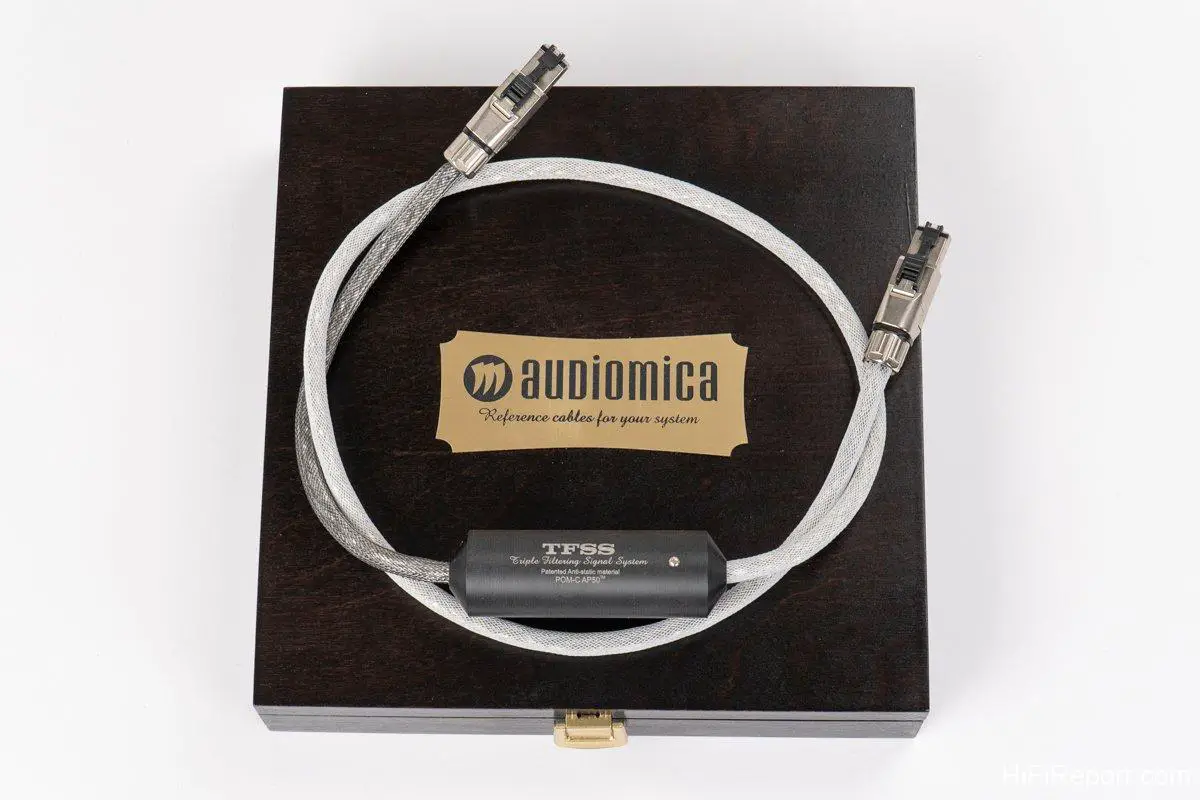
Aesthetically, the Anort features a two-tone cable jacket in white and gray. The boundary between the two colors is precisely the TFSS filter. Upon closer inspection, the TFSS is not located in the exact center of the cable but closer to one side, where the cable jacket is gray.
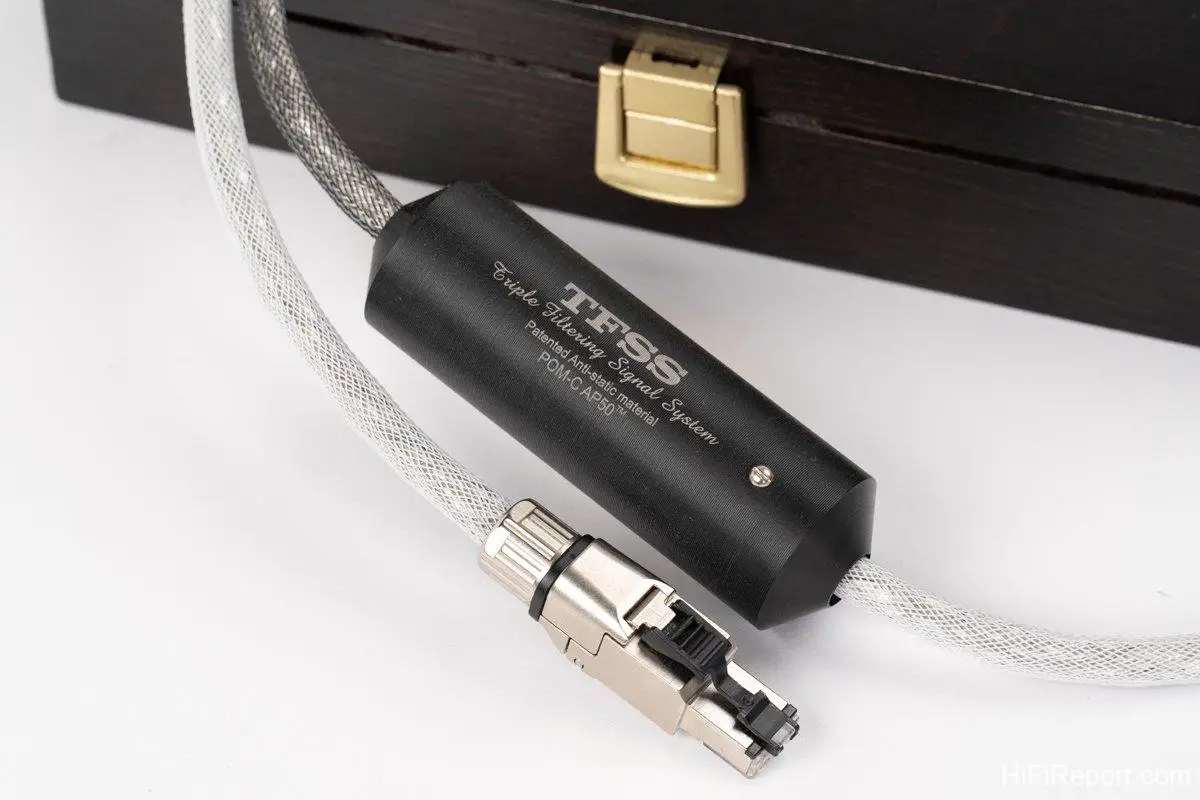
The review sample I received is 1 meter in length. For longer lengths, the added portion would be the white section, while the gray section might remain unchanged or slightly increased. In any case, the filter will always be positioned closer to one end, not in the middle. Audiomica does not explicitly indicate which end is the source or device end.
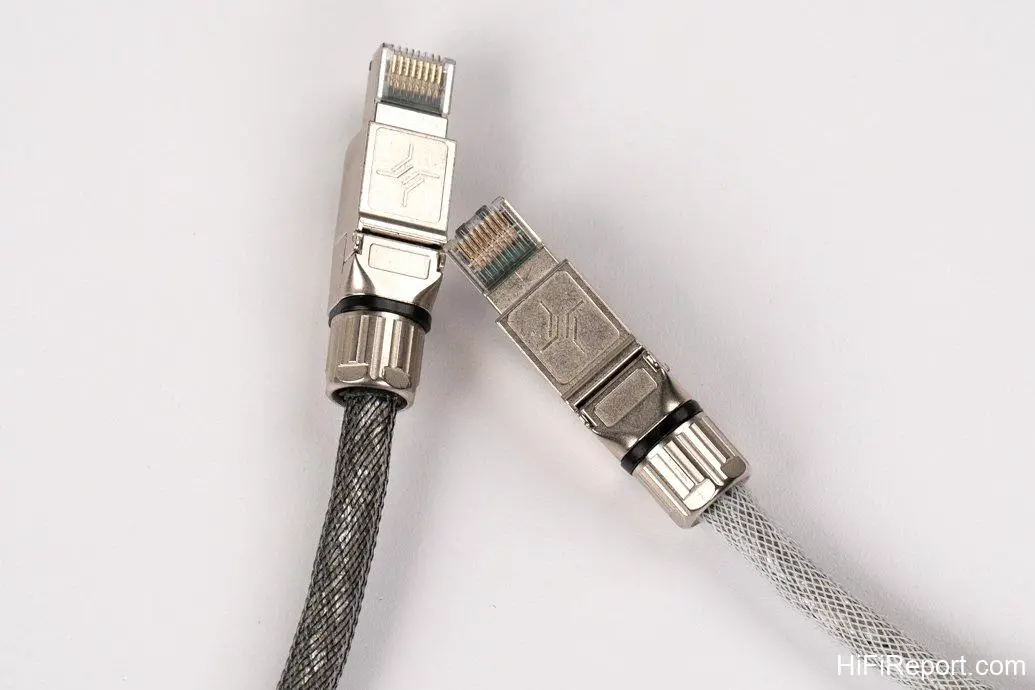
For connectors, Anort does not use in-house designed RJ45 plugs, as that would be a significant investment. Instead, it adopts the highly regarded German Telegartner RJ45 connectors, featuring gold-plated pins and incorporating anti-static sleeves designed by Acoustic Points internally, further enhancing anti-static performance.
Noticeable Performance Upgrade
The listening test was conducted in the HiFiReport listening room. The source was a Telos EMP streaming player, and the DAC was a North Star Design USB DAC32, connected by a Tromba Cypher-OCC USB cable.
The network switch used was a ZyXEL GS-108B V2. I connected the Anort between the ZyXEL and the Telos EMP, with a double-shielded industrial-grade Linkomm CAT.8 network cable as a reference.
Other equipment in the system included a North Star Design USB DAC32, Electrocompaniet EC 4.8 preamplifier, EAR 509 power amplifiers, and Wilson Audio Alexia 2 speakers. Neither the EMP nor the DAC end of the Anort cable was marked for directionality. Audiomica acknowledges that cable directionality can make an audible difference, with one direction often sounding better than the other. However, the optimal direction may vary across different systems. Therefore, Audiomica does not mark directionality on its cables but recommends users experiment to find the preferred direction in their own setup.
After a few trials, I found that the Anort exhibited noticeable sonic differences depending on direction. I ultimately decided to orient the cable with the filter closer to the EMP end.
Using Tidal as the audio source, even with casual listening, it became apparent that Anort makes vocal and instrumental images more focused and prominent, with better-defined outlines. The sonic texture becomes cleaner and purer, with improved density.
Having evaluated numerous network cables during a previous network cable feature, a common characteristic of good network cables is enhanced clarity and definition of sonic images and lines. Anort exemplifies this precisely, and the improvement is remarkably significant.
Refined and Elegant Sound
Taking the Korean drama “Mr. Sunshine” OST “Days without Tears” sung by Korean female vocalist Kim Yoon-ah as an example.
This song has a slow melody and a mournful tune, but with considerable musical dynamics and emotional intensity.
The song begins with simple piano accompaniment, joined by strings later in the middle section. The recording intentionally creates a close-mic effect, making the vocal image appear quite large and the soundstage expansive.
Through Anort, the thematic focus of the music becomes stronger. The overall sound becomes more concentrated in the center of the soundstage, and the singer’s image is tightened and elevated, resulting in a more prominent, concrete, and substantial sonic image.
Furthermore, in the passionate passages, Anort makes the singer’s dynamic impact more focused and direct, and the volume fluctuations more distinct, thereby better capturing the listener’s attention.
In comparison, the reference network cable presents a soundstage that is comparatively shorter and wider, with a more diffuse and relaxed sonic image and texture. The soundstage also feels flatter, and overall, it somewhat fails to capture the musical essence.
On the other hand, Anort noticeably elevates the sound quality. Not only does it achieve a blacker and more transparent sonic background with improved transparency, but the texture also possesses excellent smoothness within its clarity, sounding more refined and elegant.
Richer Musical Expression
Next, I switched to a larger-scale piece, selecting Bruckner’s Symphony No. 7, 2nd Movement, performed by the Dresden Staatskapelle Orchestra conducted by Otmar Suitner.
This movement is a very solemn and slow Adagio, lasting over 21 minutes. The musical climaxes are infrequent, with the biggest climax at the movement’s conclusion. However, listening through Anort, it never felt tedious. It enhances the quieter passages, making them clearer, and amplifies the louder passages, giving them more impact. Even without dramatic dynamic swings, the distinct layers of dynamics and rich micro-contrast still make the music highly engaging.
Most notably, the soundstage performance is significantly improved. Anort transforms the previously spacious yet flat soundstage into one with enhanced depth and more concrete spatial contours. It not only separates the layers of the orchestra from front to back, improving the separation between different instrumental sections but also clarifies the structure of each frequency range, making the music sound more organized.
Simply put, the sound becomes cleaner, the musical picture sharper, and even the air feels fresher.
In addition, while enhancing the brightness and bowing texture of strings, Anort also increases the sense of flow due to the clearer lines. Furthermore, the tighter bass makes the lower frequencies sound more agile. The result is music that is more vibrant, agile, and richer in musical expression.
Another example is Chick Corea’s “Akoustic Band” album, which features a jazz trio consisting of piano, double bass, and drums, with a rhythmically lively fusion jazz style.
Through Anort, the piano’s timbre sounds more like a real piano.
It’s called “Akoustic Band” after all, so Chick Corea is naturally playing a real piano in the recording, not a keyboard. But my point is that Anort makes the sound feel more like a piano being played right in front of me, meaning it has a greater sense of realism. Not only are the texture and grain clearer and the timbre richer, but the solidity of each piano key strike is also enhanced.
Furthermore, the plucked double bass and drums also become denser in texture, with more prominent sonic images, faster speed, and improved density. The position of each drum is also more clearly defined, making the sound more powerful and forceful, and the music more energetic, passionate, and brilliant, yet still natural, relaxed, and harmonious. In contrast, the reference cable sounds rather sluggish and somewhat dull.
Exceptionally User-Friendly
Another significant advantage of Anort is its exceptional ease of use.
Many high-end network cables are made stiff, thick, and heavy, making them difficult to bend in tight spaces and even causing some network switches to tilt up. They are simply not user-friendly.
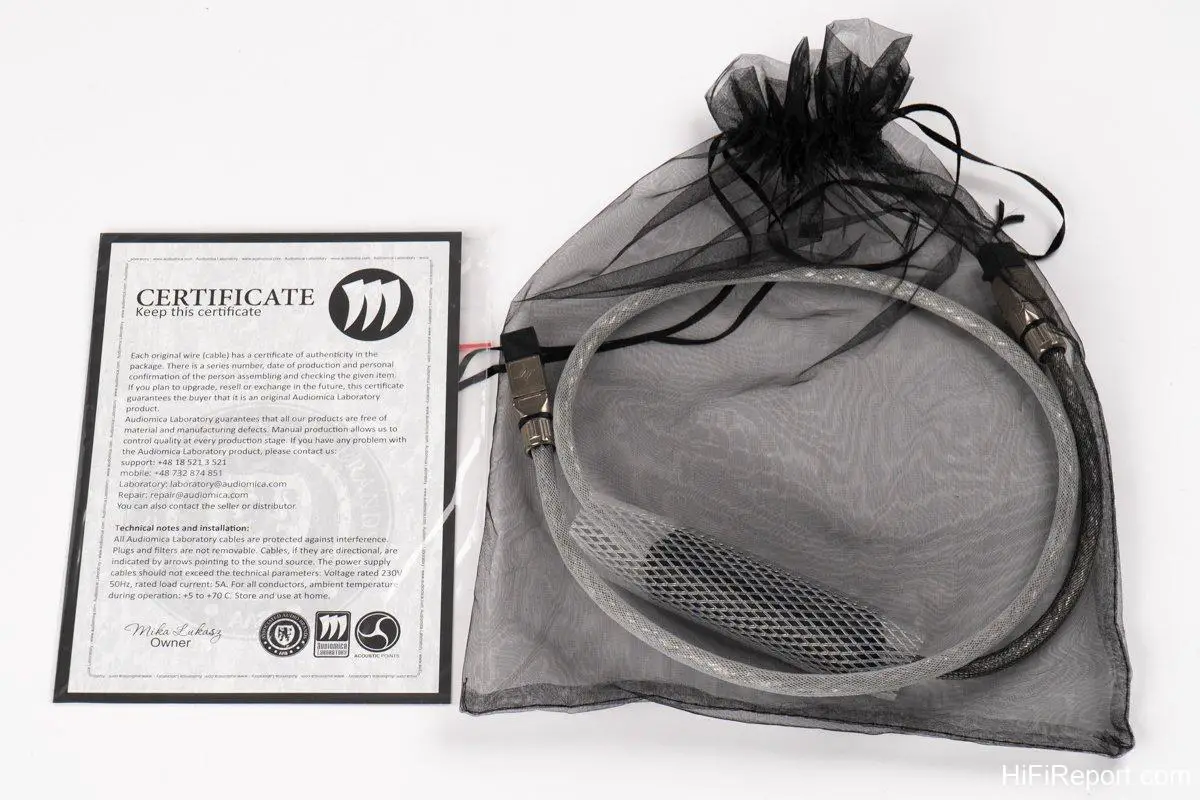
Anort completely avoids these issues. Even with its substantial filter component, it remains lightweight and flexible, making plugging and unplugging exceptionally easy.
Specifications
* Type: Ethernet Cable
* Conductor: Solid-core 7N OCC
* Conductor Gauge: 0.7 mm × 8
* Outer Diameter: 8.2 mm
Reference Equipment
* Source: Telos EMP Streaming Player, ZyXEL GS-108B V2 Network Switch
* DAC: North Star Design USB DAC32
* Preamplifier: Electrocompaniet EC 4.8
* Power Amplifier: EAR 509
* Speakers: Wilson Audio Alexia 2
* Cables: Linkomm CAT-8 Network Cable / Tromba Cypher-OCC USB Cable / Tromba Mandolin XLR Signal Cable / Tromba Marina OCC-1 Speaker Cable
* Accessories: MYSTJ Audio CMS Equipment Rack / ASI Tuning Devices