
Audionet ART G5 CD Player Review
What are the perks of being an audio reviewer? The chance to audition a vast array of world-class audio equipment and experience sonic nirvana. But what’s the downside? Falling in love with the sound of gear, only to have to reluctantly return it. This review of the German Audionet ART G5 CD player is one such bittersweet experience. Its natural and beautiful sound is simply unforgettable. During my time with the ART G5, I felt like I was listening to a multi-million dollar CD player, and parting ways with it is truly regrettable.
Reference System Selection: An Unforeseen Omission
Over the past few years, HiFiReport has been gradually building its reference system. The Wilson Audio Alexia 2 loudspeakers represent the largest investment, followed by the EAR 868P preamplifier and 509 MK 2 power amplifier. For digital sources, we use the YBA CDT-450 transport and Merging NADAC. While auditioning the ART G5, I couldn’t help but wonder why Audionet was overlooked in our selection process. An Audionet source component could have streamlined our system, serving as both a CD transport and a standalone DAC, making equipment pairing reviews even more convenient. Initially, our focus was on “separate” components – a dedicated transport and a separate DAC. This led us to overlook the ART G5 simply because it is primarily a CD player, forgetting its capabilities as a CD transport and DAC.
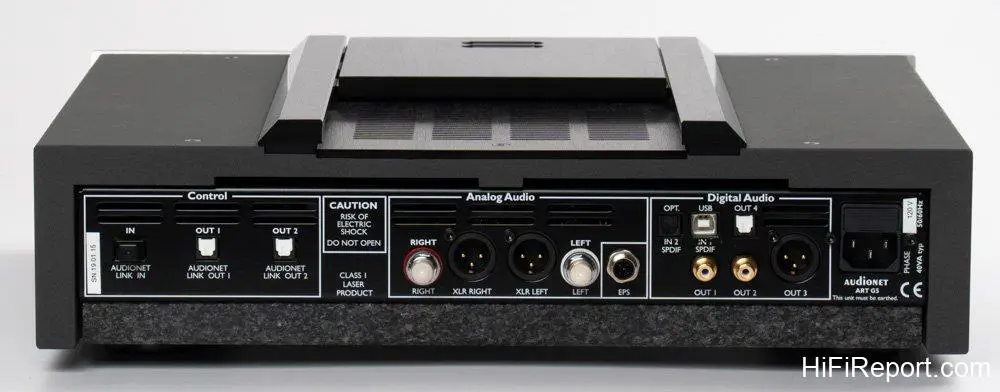
Looking at the input and output terminals, it’s clear that the ART G5 is a mature and versatile CD player. It offers two sets of XLR and one set of RCA analog outputs. For digital inputs, it features three: USB, SPDIF, and Toslink. Digital outputs are even more comprehensive, including two RCA (75Ω), one AES/EBU (110Ω), and one optical. Essentially, it’s a standalone CD transport and DAC combined into a single chassis. It’s truly a regret that we didn’t consider the ART G5 for our reference system sooner.
ART: Aligned Resonance Technology Explained
Why does Audionet call their CD players ART? While it might allude to the artistic nature of music, ART actually stands for Audionet “Aligned Resonance Technology.” Perhaps a more descriptive term would be “Resonance Calibration Technology.”
Due to the law of conservation of energy, resonances generated by the internal transformer and CD drive, or those introduced from the external environment, are all forms of energy and are difficult to eliminate completely. Therefore, the focus shifts to mitigating their impact.
How does Audionet achieve this? Firstly, they physically separate the CD drive mechanism from the control circuit board. This prevents minute vibrations from the control circuitry from affecting the sensitive CD reading process. Furthermore, the CD drive mechanism is mounted on a thick aluminum plate, which itself is damped and secured with brass footers.
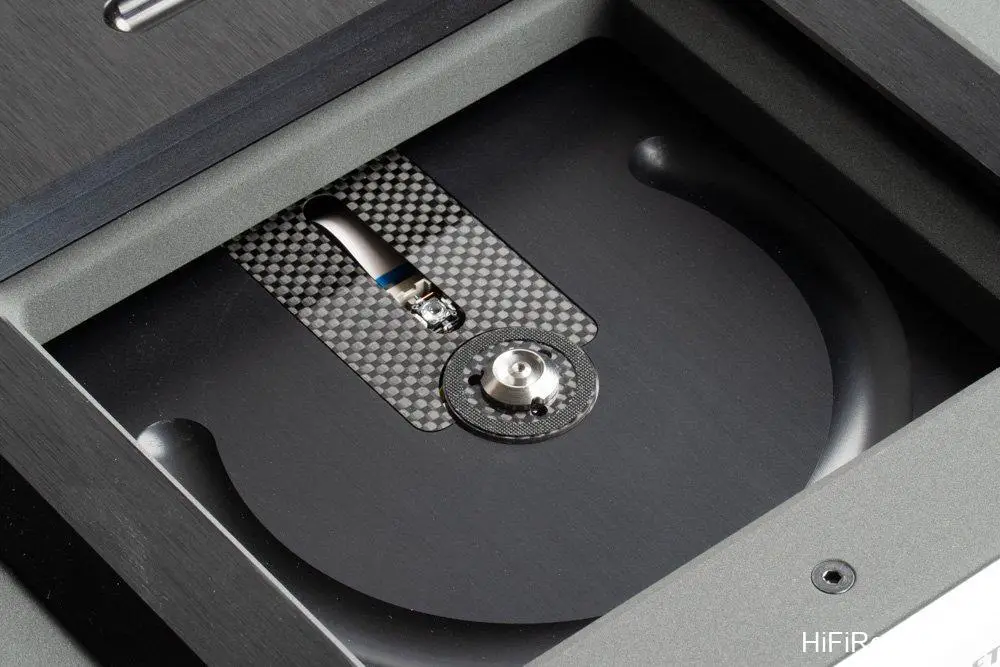
The CD drive mechanism in the ART G5 is the top-of-the-line CD-Pro8, arguably the best available today. This is a significant upgrade from the ART G3, which used the excellent CD-Pro2, now discontinued. Virtually all high-end CD players on the market currently utilize the new Austrian-made CD-Pro8.
Precision Engineering and Refinement
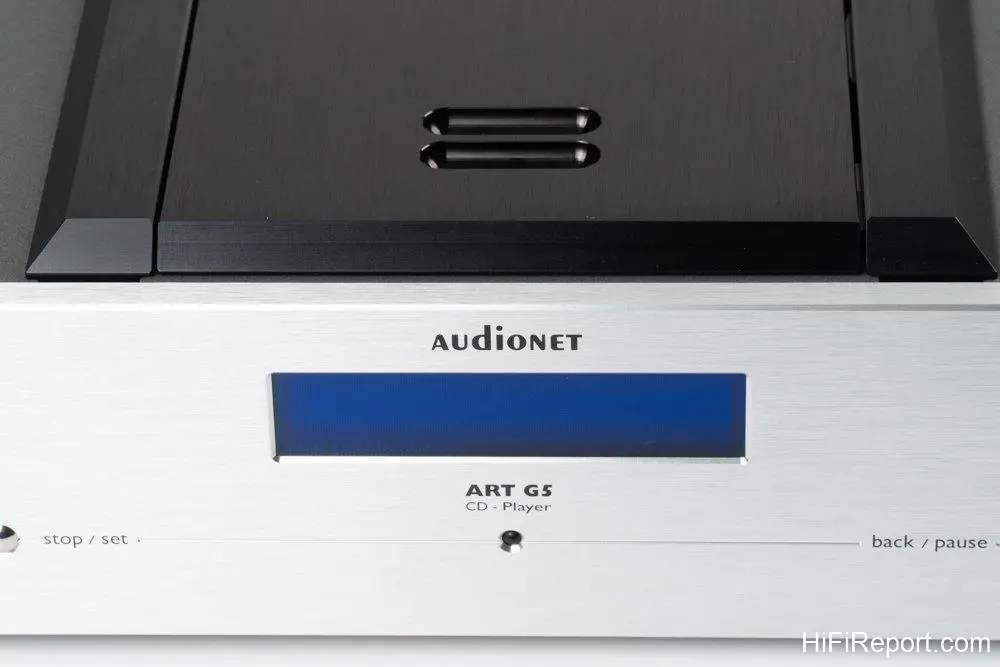
The ART G5 employs a top-loading mechanism and requires a CD clamp. Audionet utilizes POM (Polyoxymethylene) plastic steel for the clamp, incorporating a powerful magnet. This magnetic force secures the CD to the central spindle. The challenge lies not in material selection but in the precision of manufacturing. To ensure the CD clamp applies accurate and even pressure, the mating surfaces must be perfectly aligned, and the spindle must be precisely centered.
Another testament to precision engineering is the CD top cover’s sliding mechanism. If you have the opportunity to experience the ART G5, try sliding the CD cover (after asking permission, of course). The feel is exquisite – smooth, neither too loose nor too tight. This indicates extremely precise machining of the rolling bearings, which house Teflon bearings within.
The CD top cover itself is crafted from 10mm thick aluminum alloy, with an internal MDF layer for added damping and resonance control.
As you can see, even the CD loading mechanism of the ART G5 is packed with intricate engineering. The devil truly is in the details.
A Surprisingly Heavy CD Player
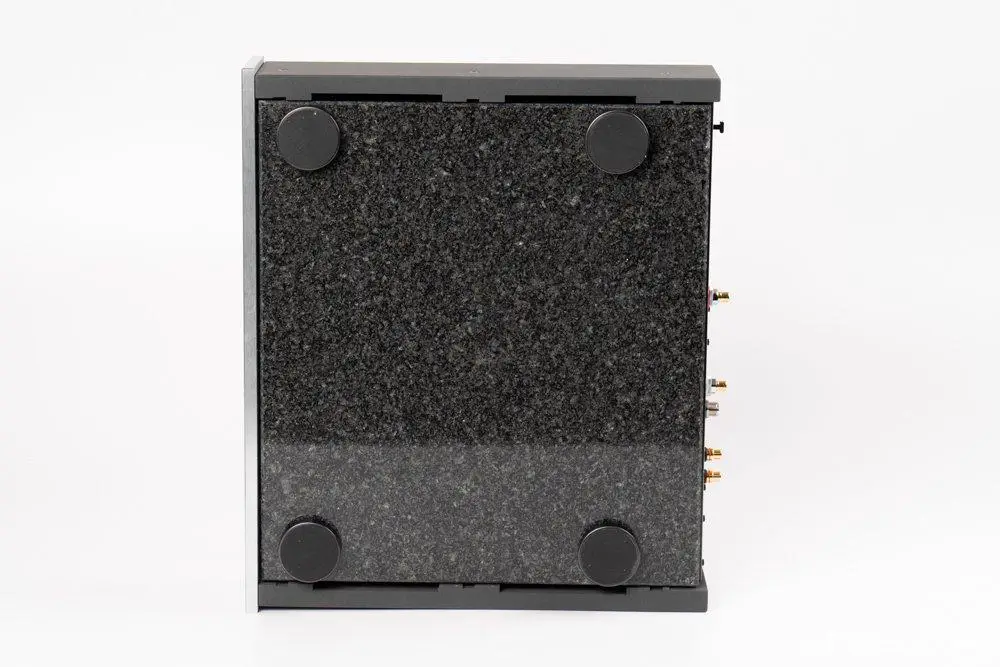
Visually, the ART G5 chassis doesn’t appear particularly large, leading one to assume it weighs under 10 kilograms, like most CD players. However, lifting it reveals a surprise – it weighs a substantial 22 kilograms! Many integrated amplifiers are lighter.
Where does this extra weight come from? It’s again related to ART technology. The ART G5’s chassis base utilizes a composite of granite, aluminum, steel, and MDF – four different materials. This not only increases the overall mass of the ART G5, aiding in resonance reduction, but the combination of these materials further controls resonance characteristics and lowers the machine’s center of gravity. What’s the principle behind this? Think of Porsche, Ferrari, and Lamborghini – what do they have in common? Low chassis designs that create a lower center of gravity, allowing sports cars to handle corners with incredible precision. The ART G5’s low-center-of-gravity chassis aims for similar operational stability.
Multi-faceted Resonance Control
As mentioned earlier, completely eliminating resonance is difficult. However, controlling it is more achievable. The key is to manage resonance in a way that doesn’t negatively impact the sound. This involves shifting resonance frequencies outside the audible range. The ART G5 achieves this by using granite, aluminum, steel, and MDF. Each material has its inherent resonance characteristics. By combining them, Audionet can manipulate the composite resonance frequency, pushing it beyond the range of human hearing, thus preserving the purity of music reproduction.
While knowing the materials – granite, aluminum, steel, and MDF – might seem straightforward, replicating Audionet’s approach is far from simple. The selection and proportions of these materials are at the core of Audionet’s ART technology. It’s like everyone touting their semiconductor manufacturing process – nobody can surpass TSMC (Taiwan Semiconductor Manufacturing Company). Even if you bought the exact same equipment, mimicking TSMC’s process is nearly impossible. Audionet openly discloses their material recipe, confident that it’s not easily replicated. Beyond material ratios, the precision of German engineering and manufacturing is a fundamental skill that’s hard to emulate.
With a rock-solid chassis and cabinet, the next area to examine is the ART G5’s sound processing technology. It starts with the power supply, even down to the fuse. Audionet uses rhodium and copper mixed materials for the fuse, instead of common lead, antimony, or tin. A large capacity filtering network and a push-pull I-core transformer are employed to enhance mid and low-frequency stability. Digital and analog circuits have independent power supplies, and Audionet custom-made pure silver wiring is used for power delivery. The PCB (Printed Circuit Board) is a new multi-layer design, increasing transmission bandwidth and minimizing internal circuit impedance, ensuring unimpeded music signal transmission.
Proprietary Upsampling Algorithm
Although a traditional CD player, the ART G5’s digital processing is decidedly Hi-Res. After PCM signal retrieval, it undergoes dual-stage filtering and then DSP (Digital Signal Processing) upsampling. The upsampling algorithm within the DSP is proprietary, developed by Audionet. It converts the 16bit/44.1kHz CD signal to 24bit/192kHz before feeding it to the dual DACs (Digital-to-Analog Converters).
Why dual DACs? To achieve optimal channel separation through independent decoding for the left and right channels.
Regarding jitter reduction, Audionet claims the ART G5’s jitter is virtually immeasurable. They employ asynchronous clock re-correction technology to reduce jitter to below 60 picoseconds sigma. Furthermore, to prevent circuit operation from affecting the stability of the crystal oscillator, the layout of the upsampling converter and DAC is Z-shaped. These minute details represent countless hours of experimentation by Audionet to achieve the optimal circuit layout.
In-house Developed Audionet OP Amps
In the analog amplification stage, the ART G5 utilizes Audionet’s latest in-house developed OP Amps (Operational Amplifiers). Some might perceive OP Amps as being less high-end, but Audionet has been developing their own OP Amps for 25 years. They understand that off-the-shelf OP Amps, designed for mass production, often lack the necessary performance. Therefore, from the outset, Audionet has invested in OP Amp research and development to achieve faithful signal amplification and wide bandwidth performance, enhanced current output capabilities, and pairing with high-quality audio-grade film capacitors. Audionet OP Amps are not to be underestimated.
Because the ART G5 has DSP upsampling capabilities, it offers HighRes and LowRes modes when used as a CD transport. In HighRes mode, the S/PDIF output is 24bit/192kHz, AES/EBU is 24bit/88.2kHz, and optical remains 16bit/44.1kHz. In LowRes mode, all digital outputs are 16bit/44.1kHz. The third mode, “Disable,” turns off digital outputs entirely. If you are using the ART G5 purely as a CD player with its internal DAC, disabling digital outputs is recommended to minimize internal circuit interference.
Consider Disabling the Screen During Listening
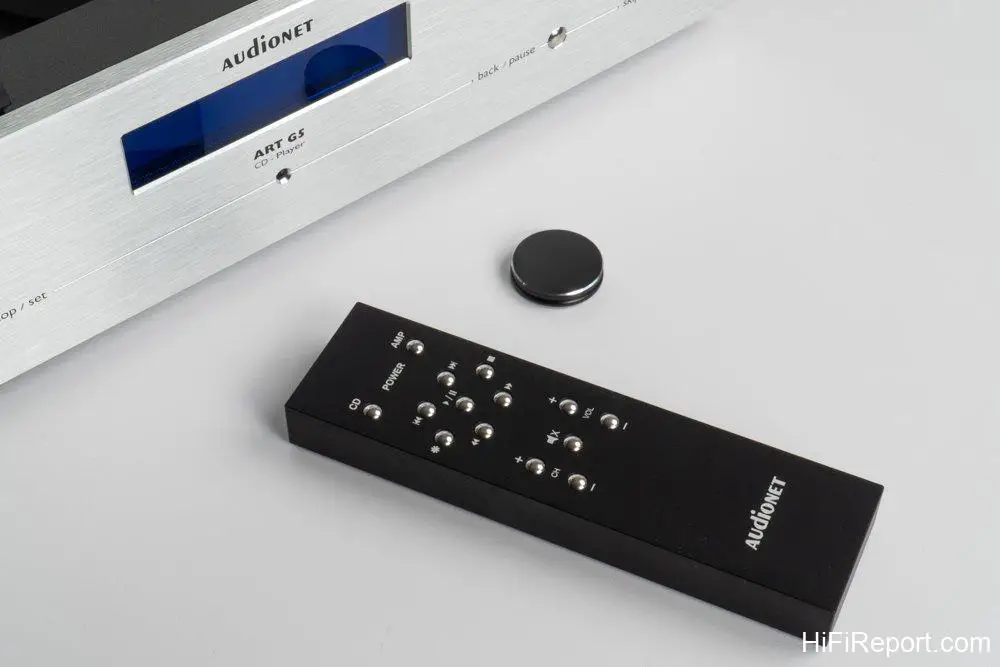
The ART G5’s detailed function settings menu can be accessed by pressing the “*” button on the remote. This allows you to configure screen display of CD playback information, CD random play, repeat play, custom menus, screen brightness, auto power-off time, auto-play, and more. However, most users will likely not need these frequently. Settings more relevant to sound quality include digital input and output configurations, and screen brightness. If you are concerned that the high-frequency activity of the screen circuitry might affect sound performance, you can set the screen to “Off” mode. In this mode, the screen remains blank during music playback. When you operate the CD player’s front panel buttons or use the remote, the screen will momentarily illuminate to display the operating status and then automatically turn off again after playback begins.
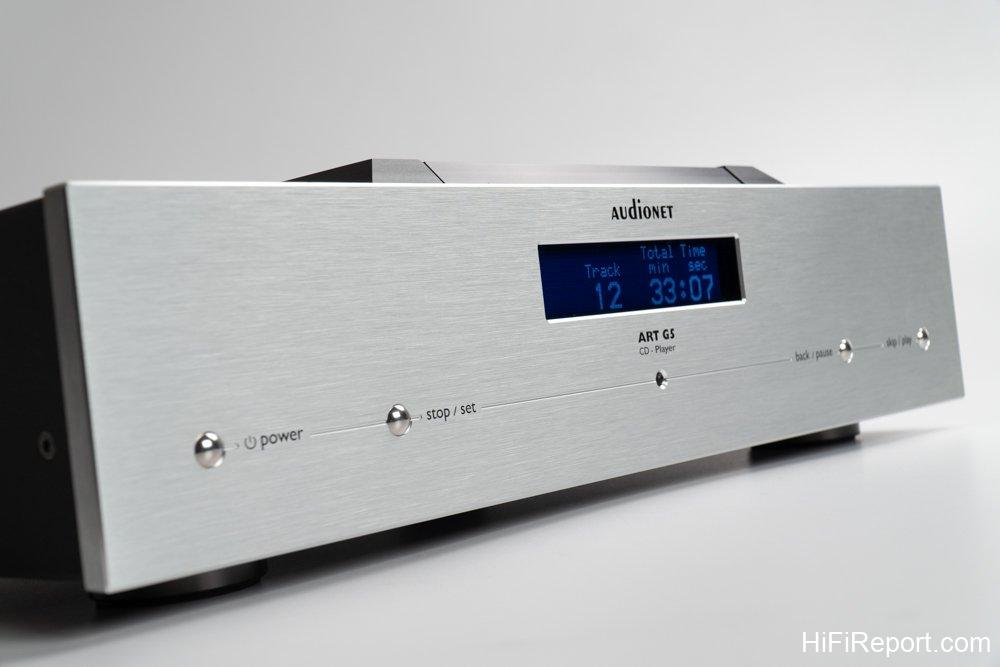
Over its twenty-year evolution, the ART G5 is the fourth generation of Audionet CD players. Yet, its external appearance remains largely unchanged. The front panel retains its minimalist design with four buttons: power, stop/setup, fast forward, and play/reverse. These four buttons, in combination, access the ART G5’s setup menu. This enduring industrial design language is akin to the Porsche 911 – decades later, a 911 is still unmistakably a 911, but the technology within has constantly evolved. The ART G5 follows the same philosophy – unchanged, yet continuously evolving and innovating technology, maintaining its classic status.
Richness, Transparency, Spaciousness, and Detail Retrieval
During the ART G5 audition, the loudspeakers were consistently the Wilson Audio Alexia 2, but two amplifier setups were used: the EAR 868P preamplifier and 590 MK II power amplifier, and the mbl Noble C11 preamplifier and N21 power amplifier. The ART G5 paired well with both. With the EAR combination, the warmth of the tube amplifier, coupled with the ART G5’s transparency and sweetness, created a very relaxed and enjoyable listening experience. With the mbl pairing, the increased power output solidified the Alexia 2’s bass performance at high volumes. Ultimately, the listening notes were finalized based primarily on the C11/N21 pairing.
The ART G5 exhibits exceptional musical detail retrieval and possesses excellent thickness and density in the midrange, resulting in beautiful imaging and a healthy fullness of sonic shapes. Images are spacious yet proportionally accurate. Musical notes are full-bodied, not diffuse. In combination with the C11/N21, the Alexia 2 produced solid bass and naturally disappeared into the soundstage, creating a transparent and expansive sound field.
Guitar Fingerstyle Nuances Rendered with Clarity and Finesse
I want to highlight Katja Werker’s “Contact Myself 2.0,” released by Stockfisch Records. If you appreciate fingerstyle guitar, you’ll undoubtedly love this CD. Listening to the opening track, “Yes,” the warm strumming of the steel-string guitar reveals the recording’s subtleties with remarkable clarity through the ART G5. As the guitar is fingerpicked, the thumb plays the root notes with a warmer, fleshier tone, contrasting with the brighter tone of the fingerpicked arpeggios played with nails. The ART G5 distinctly captures these tonal nuances of the right-hand technique.
According to the CD liner notes, Katja Werker’s album was recorded “live in the studio,” capturing two guitars, solo vocals, and the studio’s ambience using capacitor microphones. The guitar and vocal tracks were then mixed in post-production using a simple and direct approach to preserve the raw authenticity of the live recording. Listening through the ART G5 is an absolute joy. Looking at the photos in the CD booklet, I noticed Katja Werker was barefoot in the studio, standing on a carpet to avoid any noise from shoes. The studio is filled with guitars. Katja Werker sings and plays, accompanied by another guitar and a fretless bass. The other guitar is played with a pick, creating a crisper tone. The ART G5 clearly differentiates the timbral nuances of the two guitars, transporting me to the recording studio, feeling as if Katja Werker was performing right in front of me.
A Pristine Transparency, Like a Recording Washed Clean
The ART G5’s synergy with mbl was surprisingly excellent. Previously, I always assumed mbl systems sounded best when paired with their own components. However, the ART G5 and mbl proved to be a superb match. The musical background is exceptionally quiet. Listening to “Ella & Louis,” despite being an analog recording from over half a century ago, the ART G5 presents a remarkably silent backdrop. Of course, the inherent noise from older master tapes converted to digital is still audible, but the ART G5 seems to have “washed” the recording clean. The image focus and presentation are cleaner and sharper, yet the sonic texture retains an analog richness. Ella Fitzgerald’s voice is sweet and nuanced, Louis Armstrong’s vocals are gravelly and charismatic. Contrasting with the bright trumpet solos, the overall sound possesses a warm, rounded character – rich yet transparent, a truly captivating listening experience.
Switching to another classic analog recording, Pink Floyd’s “Dark Side of the Moon,” “Money” is a quintessential example of analog mixing. The sounds of cash registers pan from left to right, and percussive sounds are created by striking objects, transforming them into unconventional percussion instruments. Electric guitars with tremolo effects and psychedelic synthesizer textures in the background. In that era, digital delay didn’t exist; tape echo was used, resulting in a distinctly analog flavor. Listening through the ART G5, the midrange warmth and healthy image fullness, combined with the imaginative placement of instruments in the mix, create a psychedelic atmosphere. Hearing these 1970s recordings on modern high-end equipment reveals the ingenuity and creativity within these classic albums.
Iron Fist in a Velvet Glove
In terms of delicacy, the ART G5 is an “iron fist in a velvet glove.” The “iron fist” refers to its ability to convey instrumental power, while the “velvet glove” describes the natural shimmer and extension of upper-midrange and high-frequency harmonics. Listening to the Brahms Piano Trio No. 1 performed by Pires, Dumay, and Wang Jian, the first movement opens with a piano solo, followed by the cello in a call-and-response pattern, establishing the first musical theme. The cello’s rich and flowing lines interweave with the piano to create a warm tonal tapestry. As the violin enters, the music becomes more passionate, with the soaring violin adding fervor, enriching the texture of the three instruments. The ART G5 clearly delineates the spatial positioning of the instruments, presenting a dense yet transparent sonic picture – seeing both the trees and the forest. After the passionate climax, the music subsides. The ART G5’s refined timbre and quiet background allow the listener to relax, preparing for the next musical surge. In the interplay of musical dynamics, the ART G5 demonstrates a comprehensive balance of both strength and delicacy.
This balance of power and finesse creates contrast and emotional variation. Switching to Van Cliburn’s iconic recording of Tchaikovsky’s Piano Concerto No. 1, conducted by Kondrashin, listening to the energetic third movement, the opening timpani rolls, the ART G5 establishes a powerful prelude and defines the soundstage depth. The orchestral tutti unfolds the soundstage width. When the piano solo begins, it is precisely focused at the center, creating a clear 3D stage image.
Tchaikovsky’s Piano Concerto No. 1 is arguably Van Cliburn’s signature piece and his most popular recording. His piano technique is masterful, with clear and beautiful note articulation. Combined with Kondrashin’s brisk and decisive conducting style, it’s a timeless performance. Listening to it on the ART G5, even as a familiar piece, I discovered many fresh details. For example, in the ascending arpeggio passages, the clarity of Van Cliburn’s fingerwork brings out a sparkling brilliance, flowing effortlessly. I’ve heard this recording dozens of times, but listening through the ART G5 is still engaging and enjoyable. The wealth of musical detail draws the listener closer to the music.
Mahler’s Layers Masterfully Rendered
What could be a better test for the ART G5 than Mahler? Listening to Bernstein conducting the Vienna Philharmonic in Mahler’s Symphony No. 5, with the N21 power amplifier driving the Alexia 2s, power was not a concern. I set the volume to approximate a seat in the front five rows of a concert hall. The opening trumpet solo, portraying distant horns, isn’t loud, but the Vienna Philharmonic’s brass tone is so warm.
The four-note motif repeats several times, culminating in a powerful orchestral fortissimo. The N21 effortlessly unleashes the Alexia 2’s surging low-frequency waves, while the ART G5 methodically layers the instrumental sections, maintaining composure even in the most explosive passages.
The brass leads the orchestra, gradually building to a peak, then suddenly receding, giving way to the lush, flowing strings. Contrasting with the opening’s cataclysmic power, the strings sound even sweeter. However, the four-note motif relentlessly pursues, once again unleashing a torrent of sound, drowning out the strings’ tenderness. Through the ART G5’s clearly delineated instrumental layers, the listening experience resembles sitting in the front rows of a concert hall. Mahler! Was your life’s suffering truly so arduous? And your happiness so romantic?
Regret of a Missed Opportunity
The more I listened to the ART G5, the more reluctant I became to return it. However, our editorial department already has a digital source component, and there’s no room for another ART G5. I can only lament this missed opportunity. Nevertheless, after twenty years of development, Audionet’s latest generation ART G5 delivers exceptional sonic performance. It’s certainly capable of punching above its weight class, and even million-dollar CD players might not easily surpass it. I wholeheartedly and strongly recommend that anyone considering a digital source in this price range must audition the ART G5 before making a decision, to avoid regrets like mine.
Specifications
* **Type:** CD Player
* **Frequency Response:** 0 – 90 kHz (-3 dB)
* **Total Harmonic Distortion (THD):** < -103 dB (A-weighted) -60 dBFs
* **Signal-to-Noise Ratio (SNR):** > 110 dB
* **Channel Separation:** > 130 dB @ 10 kHz
* **Output Impedance:** 33 ohms
* **Analog Outputs:** RCA × 1, XLR × 2
* **Digital Outputs:** RCA × 2, AES/EBU × 1, Optical Toslink × 1
* **Digital Inputs:** USB × 1, Optical Toslink × 1
* **Dimensions (W×H×D):** 430 × 120 × 360 mm
* **Weight:** 22 kg