
Stein Music InLine Demagnetizing Terminals Review
What exactly are these? Are they adapters? Not quite. The InLine series from German brand Stein Music are audio tuning devices incorporating their patented demagnetization technology. Available in both XLR and RCA versions, they cater to virtually all analog input terminals.
A User Myself
Stein Music, originating as a tuning accessory manufacturer in Germany, has experienced rapid growth over the years. Their product line has expanded beyond audio peripherals to include amplifiers and speakers. I’ve reviewed quite a few Stein Music products and feel a certain affinity for the brand. In fact, I still use their Pi record mat and CD mat personally. Once, while reviewing a CD player, my clumsy handling resulted in the machine “eating” my paper CD mat along with a paper CD. I had to get the player surgically opened to retrieve the deformed CD mat trapped inside. This anecdote illustrates that I genuinely use these tuning accessories regularly. Thankfully, the paper CD mat, after being pressed flat, was still usable.
Speaking of tuning accessories and devices, some audiophiles are skeptical, often dismissing them as voodoo science. I too have been puzzled by these seemingly mysterious techniques. However, each time I actually listen, I consistently discern new nuances and improvements. If high-fidelity audio is a grown-up’s playground, then having more interesting toys to play with is undeniably appealing, isn’t it?
Exclusive Demagnetization Technology
From a “new toy” perspective, the InLine demagnetizing terminals are indeed fun to experiment with. Simply inserting an InLine unit into your existing RCA or XLR terminals yields audible effects. The core technology, demagnetization, is Stein Music’s exclusive expertise. The company even provides a diagram illustrating how InLine obstructs magnetic interference during signal transmission, preventing magnetic pollution of the audio signal. The principle appears straightforward from the illustration, yet why is Stein Music uniquely positioned to create such tuning devices? Are others simply unaware? Probably not. Many high-end cables incorporate “black boxes” using passive filtering components to remove impurities from the audio signal. This application likely shares similarities with InLine, possibly even employing similar demagnetization techniques. However, as the saying goes, “the secret is worth nothing once revealed.” Each company has its own proprietary approach, deliberately obscuring the technical details to prevent imitation and protect their hard-earned innovations.
Collaboration with WBT and Neutrik
The InLine product line is comprehensive, encompassing power sockets, speaker terminals, RCA, and XLR connectors – essentially covering every point in the audio signal path where they can be implemented.
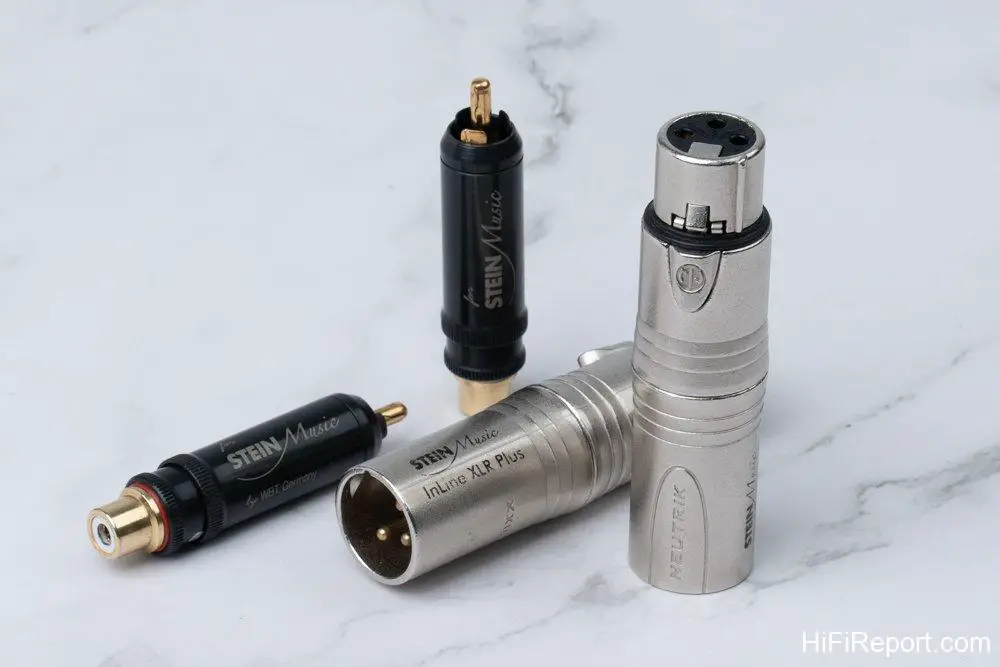
For this review, I tested the InLine RCA Plus and InLine XLR Plus Silver, considered the standard models. There are also higher-tier Plus Gold versions available at a slightly higher price, though not by much. For instance, the InLine XLR Plus Silver is listed on the manufacturer’s website at €548, while the InLine Plus Gold is €598 – a mere €50 difference. Stepping up to the even higher-grade InLine Plus Signature adds another €100, reaching €698. Interestingly, at the InLine Plus Signature level, both Silver and Gold versions are priced at €698, and even the RCA version shares the same price point, eliminating any price difference.
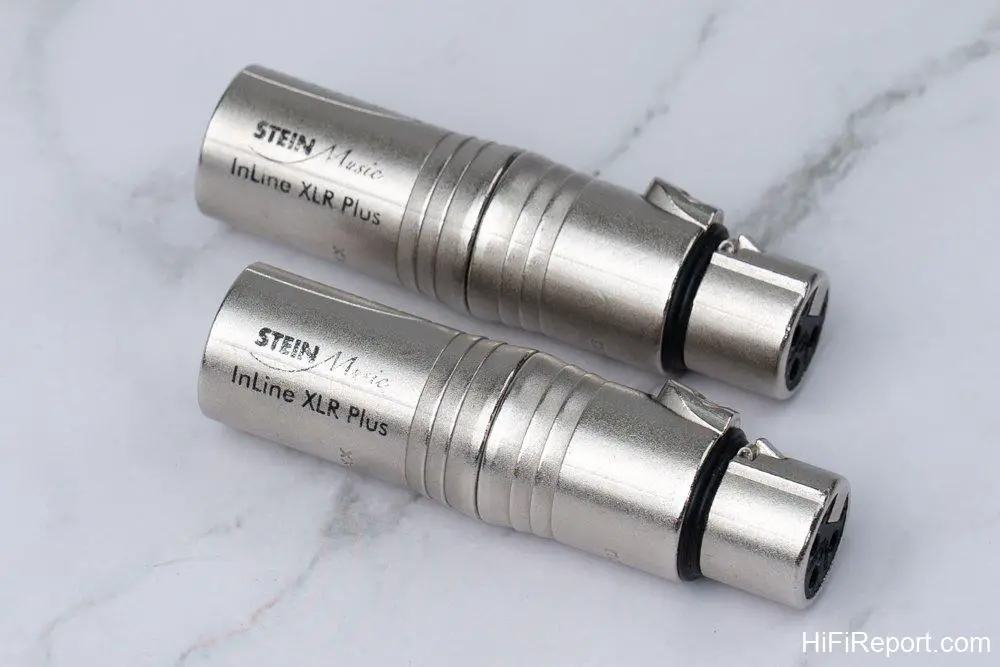
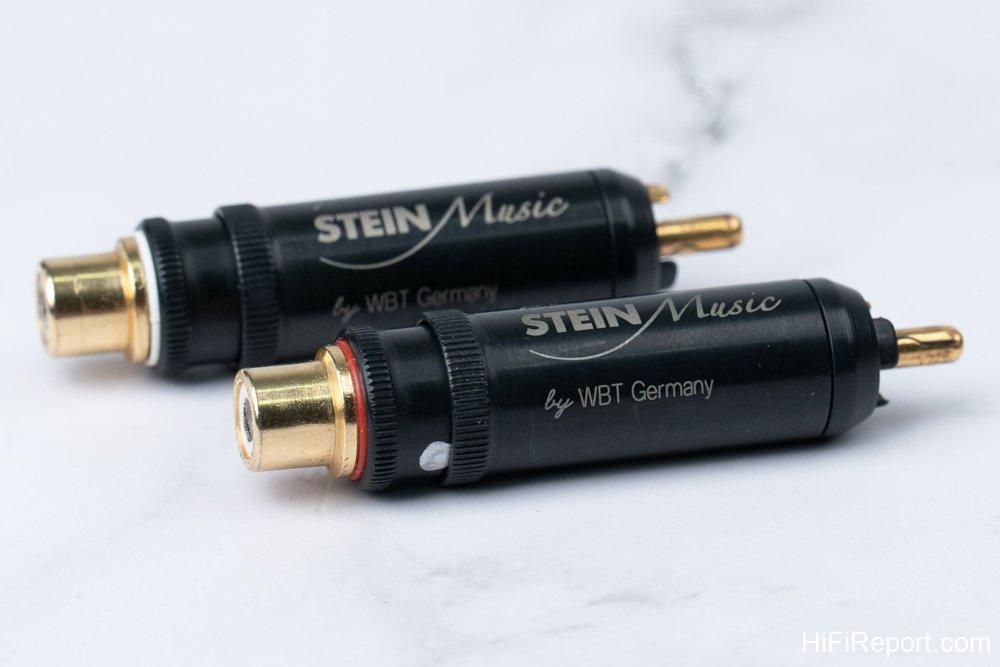
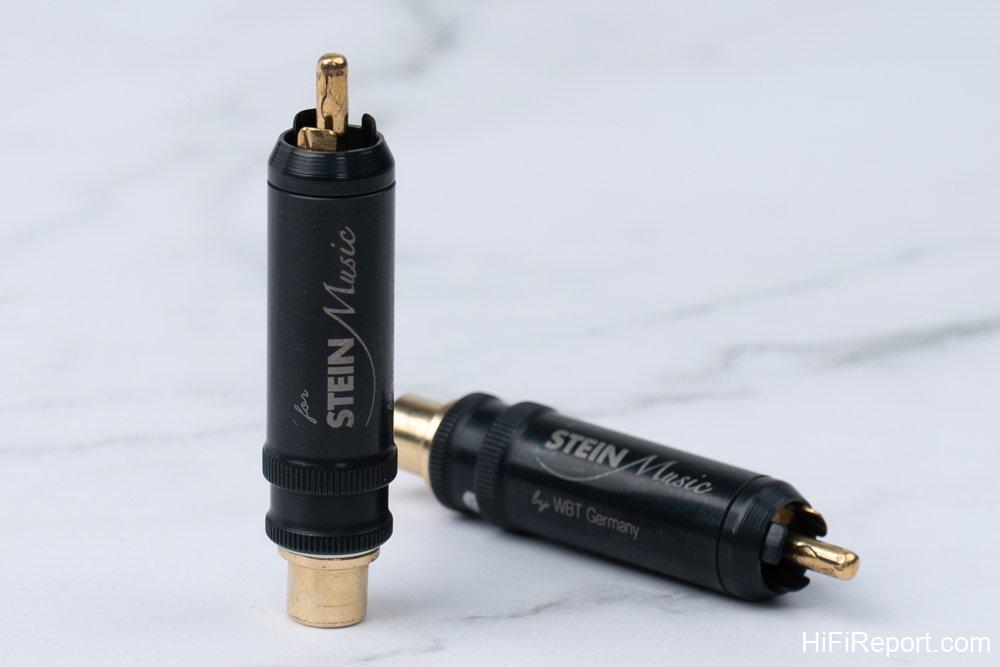
While the crucial demagnetization technology remains somewhat veiled in secrecy, the manufacturing of InLine is transparent. They are not produced by Stein Music themselves but outsourced to leading international manufacturers. The InLine RCA Plus, for example, is manufactured by the renowned German company WBT, evident in the patented locking RCA connectors. The XLR versions are entrusted to the Swiss company Neutrik. Both are industry benchmarks in audio component manufacturing, guaranteeing quality.
Enhancing Musical Flow and Naturalness
Using InLine is straightforward: simply insert them into the RCA or XLR input terminals and then connect your existing RCA or XLR cables to the InLine units.
What are the audible effects of adding InLine? In essence, the music becomes more natural in expression, the flow of sonic contours improves, and the overall musical vitality is enhanced. However, it’s crucial to emphasize that the naturalness and liveliness imparted by InLine are built upon a foundation of proper audio system setup. If you have boomy bass or harsh, strident highs due to speaker placement or room acoustics, InLine cannot magically fix these fundamental issues. It is an “additive” tuning device, enhancing the musicality of an already well-optimized system.
Let’s take the soundtrack of “Million Dollar Baby,” specifically the first two tracks, as an example. “Blue Morgan” is a solo piece featuring steel-string guitar, playing a melody with double stops. The guitar’s sonic focus is beautifully defined, and the music’s backdrop possesses a natural sense of room ambience. Before adding InLine, I already considered the sound to be excellent. However, with InLine in place, the guitar’s dynamic impact improved subtly, the musical background felt quieter, and the melancholic essence of the guitar solo became more pronounced. Subsequently, in “It’s Nice Viewing,” the piano’s key strikes and pedal effects, along with the musical flow, were further refined.
Greater Focus on Musical Engagement
The improvement in musical naturalness and vibrancy offered by InLine isn’t a dramatic transformation, but rather a subtle refinement. It creates a perception of a quieter musical backdrop, enhances the contrast between instruments and the acoustic space, and overall renders a smoother, more fluid listening experience. For discerning audiophiles, this level of refinement can be the key to elevating their system to the next level. During my repeated comparisons with and without InLine, I found that with InLine engaged, I became more easily engrossed in the music, captivated by the ebb and flow of the notes. Without InLine, my attention tended to wander more easily, my thoughts drifting to other things, perhaps even to the article I was planning to write next.
Perhaps this is InLine’s true allure – its ability to make music more captivating, drawing the listener’s focus. The more intently you listen, the more profoundly you can appreciate the beauty of music.
Smoothing Out Older Recordings
Beyond enhancing listening focus, InLine offers another benefit: it smooths out the sonic character of older recordings. Take, for instance, the classic recording of Beethoven’s “Spring Sonata” performed by Zino Francescatti and Arthur Rubinstein. This is a vintage 1958 recording, and I listened to the Japanese edition remastered from the original master tapes at 24-bit/192 kHz. Despite the high-resolution remastering, it inevitably retains a degree of sonic roughness. The violin’s bowing can sound somewhat harsh, and the piano might be a bit dense. However, with InLine in the system, the sonic texture became significantly smoother. InLine’s enhancement of older recordings appears to be more pronounced than with newer recordings.
Does InLine’s effect on older recordings imply the addition of euphonic coloration? I didn’t perceive InLine as particularly coloring the sound. At least, InLine does not seem to noticeably increase the level of highs, mids, or lows across the frequency spectrum. The primary changes introduced by InLine are in the vibrancy of musical expression and the fluidity of musical lines, resulting in a more natural sonic texture and a richer sense of the musical atmosphere.
Heightened Performance Intensity
Listening to Cecilia Bartoli’s “Live in Italy,” a recording captured at the Teatro Olimpico in Italy with excellent spatial ambience, the addition of InLine, with its quieter background, further accentuated the three-dimensional placement of the mezzo-soprano and instruments. Listening to Handel’s “Lascie La Spina,” the strings and harpsichord create a tranquil opening atmosphere. Bartoli’s subtle breaths before she begins singing herald the arrival of beautiful vocals. In her heartfelt singing, the vibrato variations enrich the music’s emotional depth, interwoven with the strings and harpsichord to paint a majestic musical picture.
During the climactic passages, the soprano and cello lines intertwine, and InLine further expands the sense of layering and spatial depth between them.
Removing InLine and listening again, the music remains beautiful, but it feels as if something is missing. With InLine, it’s as if the musicians are performing with greater intensity and richer expression. Without InLine, the musical vitality is somewhat diminished.
Enhancement, Not a Cure-All
Based on the preceding descriptions, some might perceive InLine as merely enhancing the musical atmosphere or subtly improving sonic naturalness and expressiveness. Is this “slight” improvement worth the investment? I would argue that if you are driven by a constant desire to incrementally improve the essence of musical reproduction in your audio system, then InLine is a worthwhile tuning accessory to explore.
However, it is important to reiterate that InLine is not a miracle cure. If your audio system is fundamentally flawed – with poor frequency balance, indistinct soundstaging, or unclear imaging – InLine cannot resolve these issues. But if you have already achieved a certain level of performance in terms of frequency response, soundstage, imaging, and spatial representation, and you seek to elevate your system further, InLine can lend a helping hand. It adds a touch of musical vibrancy, making the musical expression more natural and engaging.
Try it Yourself for the Definitive Answer
Ultimately, despite what the editor-in-chief says, the best way to determine InLine’s value is to experience it firsthand. [Distributor Name] offers in-home audition appointments. Contact them to arrange a trial of InLine in your own system. Hearing the difference directly is the most convincing way to evaluate its impact. If you are not satisfied, you can simply return them. Good products stand up to scrutiny. The only risk is that once you plug them in, you might not want to unplug them.
Reference Equipment
* **Source:** YBA CDT450 CD Transport
* **DAC:** Merging NADAC
* **Amplifier:** EAR 868P Preamplifier, 509 MK II Power Amplifier
* **Speakers:** Wilson Audio Alexia 2
* **Accessories:** Tiglon TMR-2 Audio Rack / MYSTJ Audio CMS Audio Rack
“`