
Audionet ART G5 CD Player Review
What are the perks of being an audio reviewer? It’s the opportunity to experience a world of exquisite sound from various Hi-Fi equipment. But what’s the downside? Falling in love with the sound of gear, only to have to reluctantly return it. This time reviewing the German Audionet ART G5 CD player has been such a bittersweet experience. Its natural and beautiful sound is truly unforgettable. During my time with the ART G5, I almost felt like I was listening to a multi-million dollar CD player. It’s truly hard to part ways with the ART G5.
Reference System Selection
Over the past few years, HiFiReport has been gradually building its reference system. The Wilson Audio Alexia 2 speakers represented the biggest investment, followed by the EAR 868P preamplifier and 509 MK 2 power amplifier. For source components, we chose the YBA CDT-450 and Merging NADAC. While auditioning the ART G5, I wondered why Audionet was missed from our selection shortlist. With the ART G5, we could have potentially reduced the number of source components. It functions not only as a CD player but also as a CD transport and a standalone DAC, which would be incredibly convenient for reviewing equipment pairings. Initially, our focus was on keeping components “separate,” with a dedicated transport and DAC. This led us to overlook the ART G5 simply because it was primarily categorized as a CD player, forgetting its versatility as a CD transport and DAC.
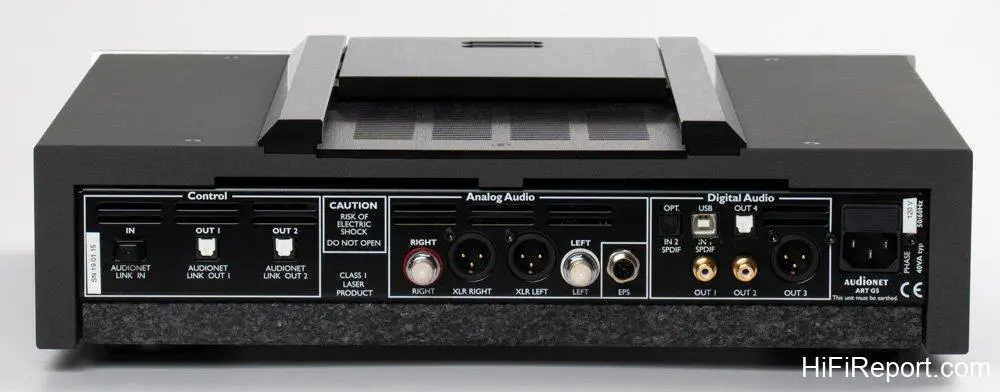
Looking at the input and output terminals, it’s clear that the ART G5 is a mature and highly functional CD player. It features two sets of XLR and one set of RCA analog outputs. For digital inputs, there are three options: USB, SPDIF, and Toslink. Digital outputs are even more comprehensive, including two RCA (75Ω), one AES/EBU (110Ω), and one optical output. It essentially houses a separate high-quality CD transport and DAC within a single chassis. It’s regrettable that we didn’t consider the ART G5 as a reference component option earlier.
ART: Aligned Resonance Technology
Why does Audionet call their CD player ART? While it might subtly allude to “artistic” qualities, the reality is that ART stands for Audionet “Aligned Resonance Technology.” This phrase is somewhat challenging to translate directly, but “Resonance Calibration Technology” might be a suitable interpretation.
Due to the law of conservation of energy, resonances, whether generated internally by the transformer and CD drive mechanism or introduced from the external environment, are forms of energy that are difficult to eliminate. Therefore, the focus shifts to managing and mitigating their influence.
How does Audionet achieve this? Firstly, they physically separate the CD drive mechanism from the control circuit board. This prevents minute vibrations from the control circuitry from affecting the CD reading process. Furthermore, the CD drive mechanism is mounted on a thick aluminum plate, which itself is damped and secured with brass footers.
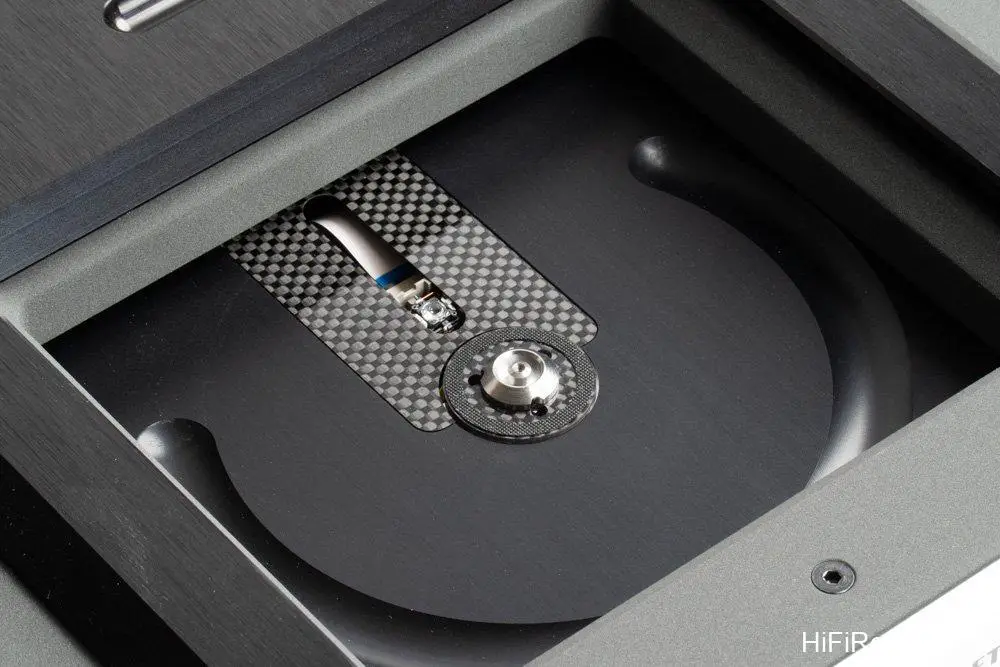
The CD drive mechanism employed in the ART G5 is the top-of-the-line CD-Pro8, arguably the best available today. This represents a significant upgrade from the ART G3, which used the also excellent CD-Pro2 (now discontinued). Currently, almost all high-end CD players on the market opt for the new Austrian-made CD-Pro8.
Precision Craftsmanship
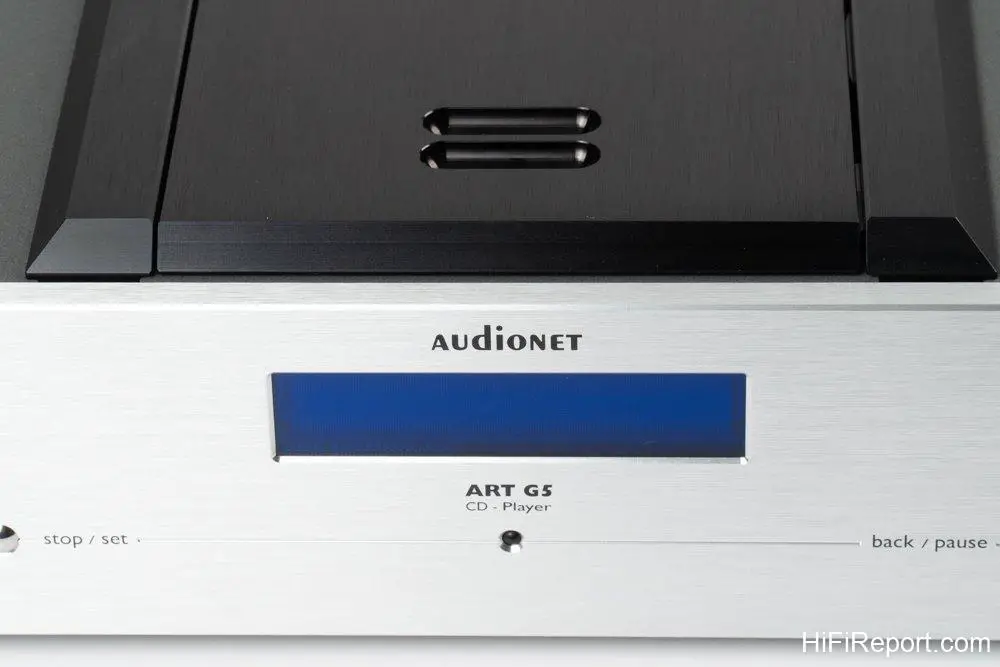
The ART G5 features a top-loading mechanism, necessitating the use of a CD puck. Audionet utilizes POM (polyoxymethylene) plastic steel, incorporating a powerful magnet inside. The magnetic force secures the CD and centers it on the spindle. The challenge in this design lies not in material selection but in the precision of manufacturing. To ensure the CD puck accurately and evenly clamps the CD, a high degree of precision in fit is crucial, and the spindle must be perfectly centered.
Another testament to precision engineering is the sliding mechanism of the CD top cover. If you have the opportunity to examine the ART G5, try sliding the CD top cover (after asking permission to handle it). The feel is exceptional. The movement is neither too loose nor too tight, indicating extremely precise machining of the rolling bearings, which are Teflon-coated.
The CD top cover itself is crafted from 10mm thick aluminum alloy, with an internal layer of MDF (Medium-Density Fiberboard) for added damping and resonance control.
As you can see, even the CD loading mechanism of the ART G5 is meticulously engineered, showcasing the principle that “the devil is in the details.”
Exceptionally Heavy CD Player
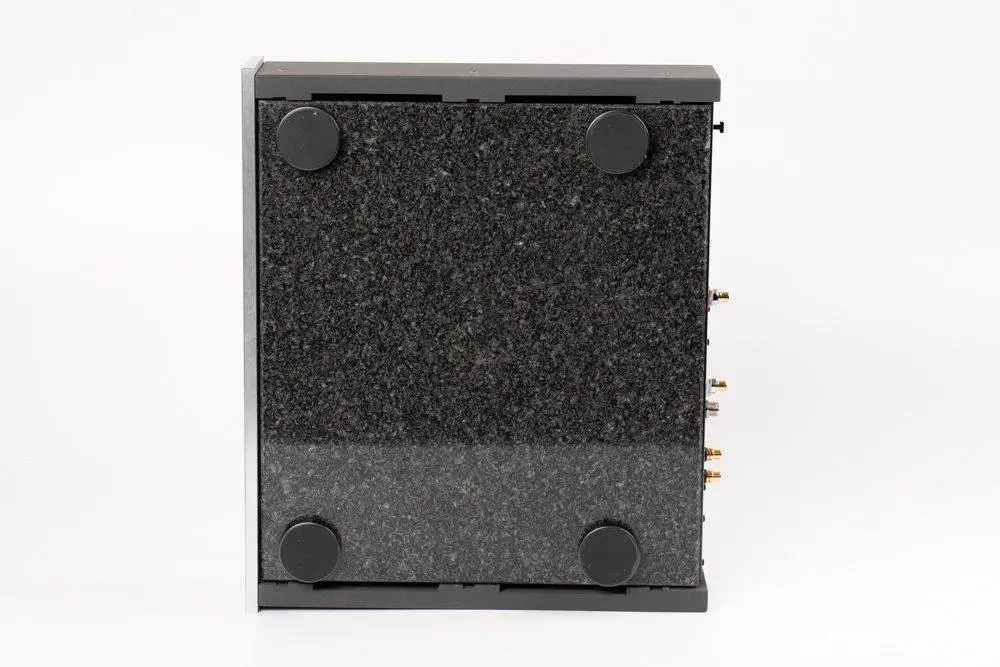
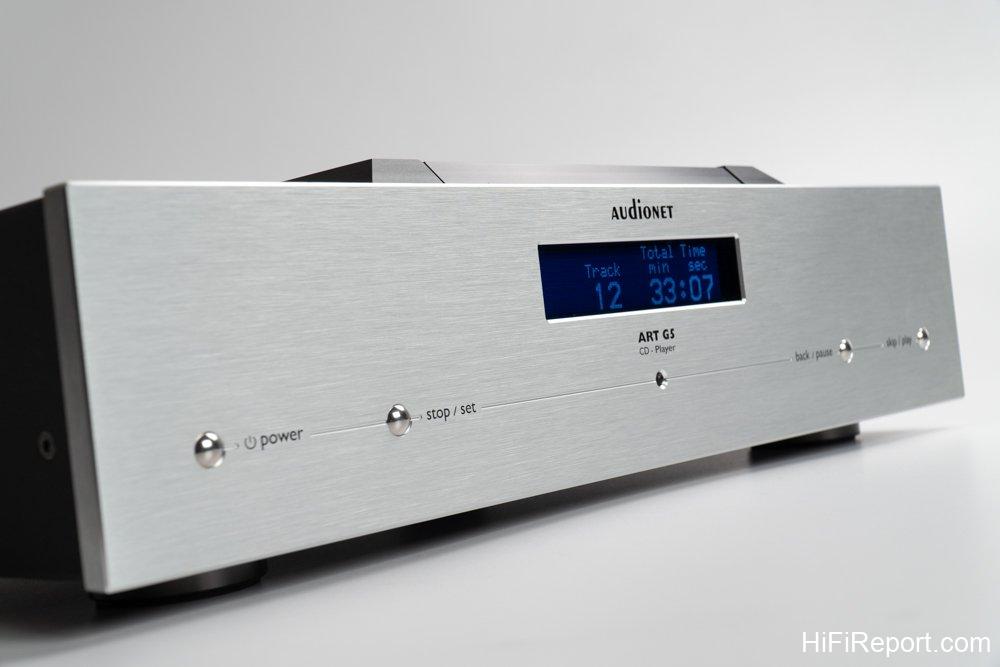
Visually, the ART G5 chassis appears relatively compact, leading one to assume a weight of no more than 10 kg, typical for most CD players. However, actually lifting the unit is a surprising experience. How can a CD player be so heavy? The answer is its substantial 22 kg weight, exceeding that of many integrated amplifiers.
Where does this extra weight come from? It’s again related to Audionet’s ART technology. The ART G5’s chassis base utilizes a composite of granite, aluminum, steel, and MDF – four different materials. This not only effectively increases the mass of the ART G5, contributing to resonance reduction, but the combination of these materials further controls resonance characteristics and lowers the overall center of gravity of the unit. What’s the underlying principle? Think of Porsche, Ferrari, and Lamborghini. What do they have in common? Low chassis designs resulting in a lower center of gravity, enabling sports cars to handle corners with exceptional precision. The ART G5’s low-center-of-gravity chassis aims to achieve similar stability in operation.
Multi-faceted Resonance Control
As mentioned earlier, completely eliminating resonance is difficult due to the law of conservation of energy. However, controlling it is relatively more feasible. The key is to manage resonance in a way that doesn’t negatively impact the sound. This involves shifting the resonance frequencies outside the audible range, thus preventing them from interfering with music reproduction quality. Therefore, the ART G5 employs granite, aluminum, steel, and MDF. Each material possesses unique resonance properties. By combining them, the overall resonance frequency can be altered, pushing it beyond the range of human hearing, preserving the purity of music reproduction.
Even with knowledge of the materials – granite, aluminum, steel, and MDF – replicating this design is not straightforward. The selection and proportions of these materials are at the heart of Audionet’s ART technology. It’s similar to semiconductor companies touting their nanometer fabrication processes. No one can surpass TSMC in this field, even if they acquire identical machinery. Audionet openly discloses their material recipe, confident that imitation is extremely difficult. Beyond material ratios, the precision of German manufacturing is a fundamental skill that’s hard to replicate.
With a robust chassis and enclosure, let’s examine the sound processing technologies within the ART G5. Starting with the power supply, even the smallest details like fuses are meticulously considered. Rhodium and copper hybrid fuses are used instead of conventional lead, antimony, or tin types. A large-capacity filtering network is paired with a push-pull I-core transformer, enhancing stability in the mid and low frequency ranges. Separate power supplies are dedicated to digital and analog circuits. Internal power wiring utilizes custom-made pure silver cables from Audionet. The PCB boards have been upgraded to multi-layer boards, increasing transmission bandwidth and minimizing internal circuit impedance, ensuring unimpeded signal transmission.
Proprietary Upsampling Algorithm
While fundamentally a traditional CD player, the ART G5’s digital processing is decidedly Hi-Res. After PCM signal retrieval, it undergoes dual-stage filtering, followed by DSP upsampling. The upsampling software within the DSP is based on Audionet’s proprietary algorithm, converting 16-bit/44.1 kHz signals to 24-bit/192 kHz before feeding them to dual DACs for decoding.
Why dual DACs? To achieve optimal channel separation through independent decoding for the left and right channels.
Regarding jitter reduction, Audionet claims the ART G5’s jitter is virtually immeasurable. They employ asynchronous clock re-correction technology, reducing jitter to below 60 picoseconds sigma. Furthermore, to prevent circuit operation from affecting the stability of the crystal oscillator, the layout for upsampling and DAC stages is Z-shaped. These subtle details represent countless hours Audionet has spent experimenting to achieve the optimal circuit layout.
In-house Developed Audionet OP Amps
In the analog amplification stage, the ART G5 utilizes Audionet’s latest in-house developed OP Amps. Some might perceive OP Amps as being less high-end. However, Audionet has a 25-year history of developing their own OP Amps. They recognize that commercially available OP Amps are designed for mass production and general purposes, often lacking in performance. Therefore, Audionet has been committed to in-house OP Amp development from the outset, aiming for faithful signal amplification and wide bandwidth performance, increased current output capability, and pairing them with premium audio-grade film capacitors. Audionet OP Amps should not be underestimated.
Because the ART G5 has DSP upsampling capabilities, it offers HighRes and LowRes modes when used as a CD transport. In HighRes mode, S/PDIF outputs 24-bit/192 kHz, AES/EBU outputs 24-bit/88.2 kHz, and optical remains at 16-bit/44.1 kHz. In LowRes mode, all digital outputs are 16-bit/44.1 kHz. The third mode is “Disable,” which turns off digital outputs. If you are using the ART G5 as a CD player with its internal DAC, it’s recommended to disable digital outputs to minimize internal circuit interference.
Optional Screen Off Setting
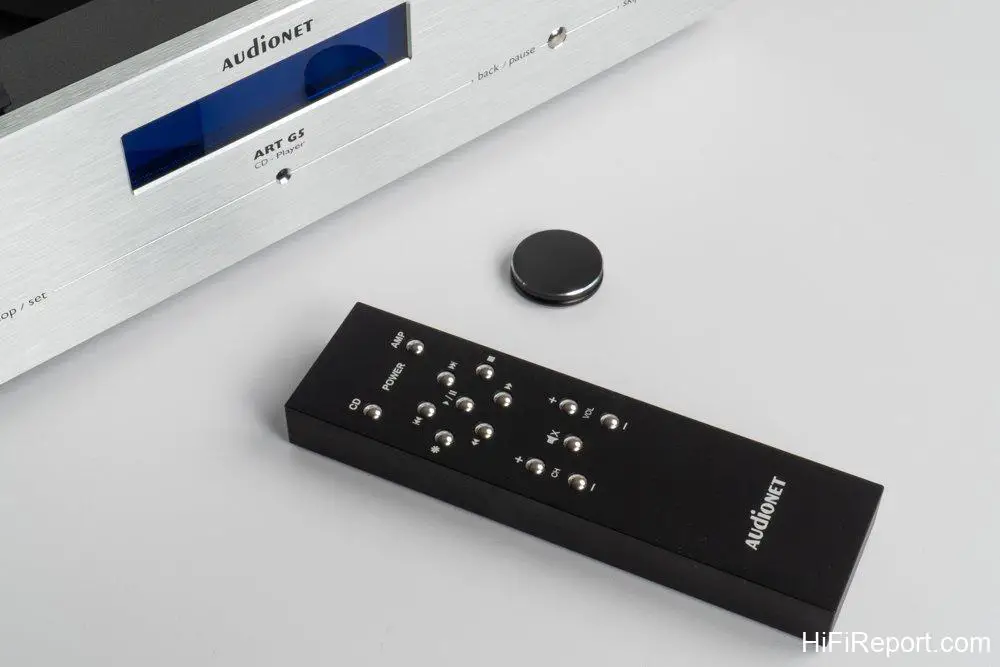
The ART G5’s detailed settings menu can be accessed by pressing the “*” button on the remote control. You can configure the screen display to show CD playback time, enable CD random play, repeat play, customize menus, adjust screen brightness, set auto-standby time, auto-play, etc. However, most users may not frequently use these. Settings most relevant to sound quality are digital output and input configurations, and screen brightness. If you believe the high-frequency noise from the display circuitry might impact sound performance, you can set the screen to “off” mode. In this mode, the screen remains blank during music playback. When you press a button on the CD player’s front panel or the remote control, the ART G5’s display instantly illuminates, showing the operating status. Once music playback resumes, the screen automatically turns off again.
Over two decades of evolution, the ART G5 represents the fourth generation of Audionet CD players. Yet, the external appearance has remained largely unchanged. The front panel retains its minimalist design with four buttons from left to right: power switch, stop/setup, fast forward, and play/rewind. These four buttons, in combination, allow access to the ART G5’s settings menu. This enduring industrial design language is reminiscent of the Porsche 911. Across decades, the 911 remains recognizably a 911, but its technology continuously evolves. The ART G5 embodies a similar philosophy: unchanged in appearance, but internally refined and technologically advanced, maintaining its classic status.
Rich, Transparent, Spacious, Detailed
During the ART G5 listening sessions, the speakers were always Wilson Audio Alexia 2, but two different amplifier pairings were used. One was the EAR 868P preamplifier and 590 MK II power amplifier, and the other was the mbl Noble C11 preamplifier and N21 power amplifier. The ART G5 paired well with both. With the EAR combination, the warmth of the tube amplifier, combined with the ART G5’s transparency and sweetness, created a very relaxed and enjoyable listening experience. Paired with the mbl, the higher output power provided even greater control over the Alexia 2 at higher volumes, resulting in a more solid foundation. Ultimately, the C11/N21 pairing was used for the final sound evaluation.
The ART G5 exhibits exceptional musical detail retrieval and possesses excellent thickness and density in the midrange, creating beautiful and well-defined sonic images. The sonic images are full-bodied but accurately proportioned, and musical notes are solid and not diffuse. Paired with the C11/N21, the Alexia 2 produced a solid low end and naturally disappeared into the soundstage, presenting a transparent and expansive soundfield.
Guitar Fingerstyle Nuances
I’d like to cite Katja Werker’s “Contact Myself 2.0” released by Stockfisch Records. If you appreciate fingerstyle guitar, you’ll undoubtedly enjoy this CD. Listening to the first track, “Yes,” the warm strumming of the steel-string guitar reveals the recording’s nuances clearly through the ART G5. When fingerpicking, the thumb plays the root notes with a warmer tone, as Katja Werker uses her fingers without fingerpicks. This contrasts with the brighter sound of the fingerpicked arpeggios played with fingernails. The ART G5 distinctly reveals these tonal differences in right-hand technique.
According to the CD liner notes, Katja Werker’s album was essentially recorded “live in the studio,” in a single take. Two guitars, one vocalist, captured with studio condenser microphones, blending the vocal and guitar mics in post-production for a pure and direct recording of the live performance. Listening to this on the ART G5 is pure bliss. Looking at the photos in the CD booklet, Katja Werker recorded barefoot on the studio carpet to avoid shoe noise. The studio is filled with guitars. Katja Werker sings and plays, accompanied by another guitar and a fretless bass. The second guitar is played with a pick, resulting in a brighter tone. The ART G5 clearly distinguishes the tonal differences between the two guitars, transporting me to the recording studio, feeling as if Katja Werker is performing right in front of me.
Clean and Transparent Sound
The ART G5’s synergy with mbl was a pleasant surprise, as I had always considered mbl systems best when paired with their own components. However, the ART G5 and mbl combination proved to be exceptionally well-matched. The musical background is incredibly quiet. Listening to “Ella & Louis,” despite being an old analog recording from over half a century ago, the ART G5 presents a remarkably silent backdrop. Of course, the inherent noise from the original master tape is still audible, but the ART G5 seems to have “cleaned” the recording, enhancing image focus and clarity, yet retaining an analog-like warmth in the timbre. Ella Fitzgerald’s voice is sweet and nuanced, Louis Armstrong’s vocals are husky and magnetic, contrasting with the bright trumpet solos, all with a warm and rich aftertaste. It’s truly captivating to listen to.
Moving to another old analog recording, Pink Floyd’s “Dark Side of the Moon.” “Money” is a classic example of analog mixing. The sound of cash registers pans from left to right, and percussive sounds are created from rhythmic machine noises, transformed into unconventional percussion. The electric guitar with tremolo effects and the psychedelic synthesizer sounds in the background, created with tape echo due to the absence of digital delay in that era, all contribute to a rich analog flavor. Listening through the ART G5, the warm midrange and full-bodied sonic images, combined with the imaginative placement of instruments in the mix, create a psychedelic atmosphere. Hearing these 1970s recordings on modern high-end equipment reveals the ingenuity and creativity within these recordings.
Iron Fist in a Velvet Glove
In terms of delicacy, the ART G5 is like an iron fist in a velvet glove. “Iron fist” refers to its ability to convey instrumental power, while “velvet glove” describes the natural sheen of high-frequency harmonics. Listening to the Brahms Piano Trio No. 1 performed by Pires, Dumay, and Wang Jian, the first movement opens with a piano solo, followed by the cello in a call-and-response, laying out the first musical theme. The cello’s rich and flowing lines intertwine with the piano’s warm tone. As the violin joins, the music becomes more animated, the soaring violin adding passion, making the texture of the three instruments denser and the emotions more intense. The ART G5 clearly presents the relative positions of the three instruments. Even in the midst of passionate interplay, there is transparency within the density, revealing both the individual instruments and the ensemble as a whole. After the intensity subsides, the music calms down. The ART G5’s refined timbre and quiet background allow the mood to settle, preparing for the next musical climax. Between musical movement and stillness, the ART G5 demonstrates a comprehensive balance of strength and delicacy.
This balance of strength and delicacy creates contrast and emotional variation. Switching to Van Cliburn’s performance of Tchaikovsky’s Piano Concerto No. 1 with Kondrashin conducting the orchestra, listening to the rousing third movement, the opening timpani sets a powerful stage, also establishing the soundstage depth. The orchestral tutti broadens the soundstage width. When the piano solo enters, it is focused in the center, clearly defining the 3D stage image.
Tchaikovsky’s Piano Concerto No. 1 is Van Cliburn’s signature piece and one of his most popular recordings. His piano technique is superb, with clear and beautiful note articulation. Combined with Kondrashin’s brisk and precise conducting style, it’s a timeless recording. Listening to it on the ART G5, even as a familiar piece, I still discovered new details. For example, in the ascending arpeggio passages, the clarity of Van Cliburn’s fingerwork brings out a sparkling brilliance, like flowing water. I’ve heard this recording dozens of times, but listening on the ART G5 was still full of enjoyment. The rich musical detail brings the listener closer to the music.
Superb Mahler Layering
Finally, how to truly challenge the ART G5? Mahler, of course. Listening to Bernstein conducting the Vienna Philharmonic in Mahler’s Symphony No. 5, with the N21 amplifier driving the Alexia 2, there was no fear of the amplifier struggling. Pushing the volume to roughly the equivalent of sitting in the fifth row of a concert hall, the opening trumpet solo, conveying the image of distant horns, is not loud, but the Vienna Philharmonic’s brass tone is so warm.
The four-note motif repeats several times, ushering in a powerful orchestral fortissimo. The N21 drives the Alexia 2 to produce surging low-frequency waves, while the ART G5 methodically layers the instrumental sections, maintaining composure even in the most explosive passages.
The brass guides the orchestra, gradually building to a peak, before suddenly receding, giving way to the lyrical tenderness of the strings, swaying gracefully. Contrasting with the opening’s devastating grandeur, the strings sound even sweeter. But the four-note motif relentlessly pursues, again unleashing a torrent of sound, engulfing the string’s gentleness. Through the ART G5’s clearly delineated sections, the listening experience is akin to sitting in the front rows of a concert hall. Mahler! Was your earthly suffering truly so arduous? And was your happiness so romantic?
Regret Missing Out
The more I listened to the ART G5, the less I wanted to return it. However, our editorial department already has a digital source, making it impractical to purchase another ART G5. I can only lament missing the opportunity. However, after twenty years of development, Audionet’s latest generation ART G5 demonstrates exceptional sonic performance, definitely worthy of challenging higher-priced competitors. It’s quite possible that even million-dollar-level CD players may not easily outperform the ART G5. I wholeheartedly and strongly recommend that anyone considering digital sources in this price range must audition the ART G5 before making a decision, to avoid regrets like mine.
Specifications
* Type: CD Player
* Frequency Response: 0 – 90 kHz (-3 dB)
* Total Harmonic Distortion: 103 dB (A-weighted) -60 dBFs
* Signal-to-Noise Ratio: > 110 dB
* Channel Separation: > 130 dB @ 10 kHz
* Output Impedance: 33 ohms
* Analog Outputs: RCA × 1, XLR × 2
* Digital Outputs: RCA × 2, AES/EBU × 1, Optical Toslink × 1
* Digital Inputs: USB × 1, Optical Toslink × 1
* Dimensions: 430 × 120 × 360 mm (W×H×D)
* Weight: 22 kg