
Audioplan Faraday U Speaker Cable Review
While audio equipment is rooted in electronics, many products exude a high degree of craftsmanship.
This is true for turntables, speakers, and some tube amplifiers, but perhaps nowhere is the artisan touch more evident than in audio cables.
Beyond the most basic entry-level offerings, which can be machine-molded with pre-set terminals, the majority of audio cables require manual assembly.
Certain high-end cables take this further, with hand-crafted construction encompassing every stage, from conductor structure and stranding to sheathing, insulation, and shielding. A palpable “craft” aesthetic permeates these creations.
Do you appreciate “craft”? Personally, I adore it.
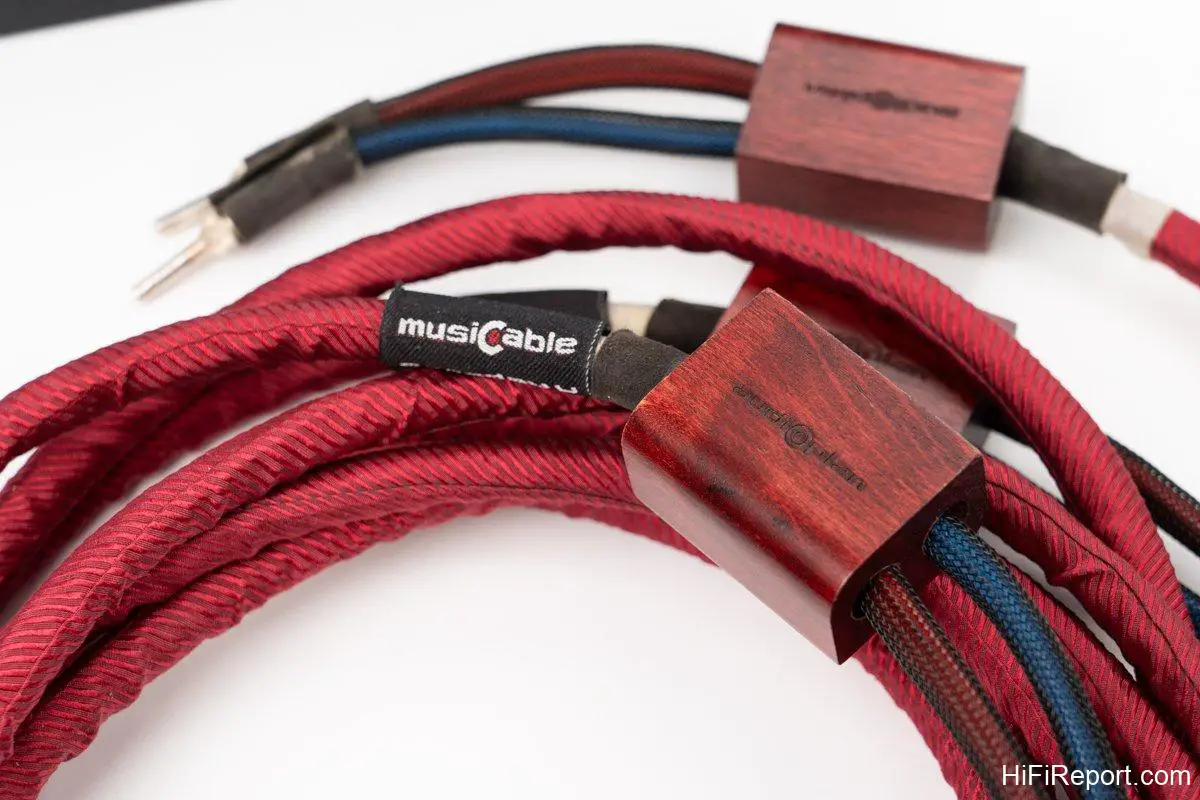
Audioplan cables are prime examples, embodying this very “craft” spirit.
Starting from custom-made conductor cores, each step, from the innermost layer outwards, is meticulously handcrafted. Holding these cables, one senses more than just audio conductors, beyond the internal materials, the sheathing structure, the technical specifications, or the electrical characteristics. What resonates is the warmth of hand-made artistry.
Audio, at its heart, should not be a cold, purely scientific endeavor. It carries the aspiration of humanity to reach musical beauty.
Every creator has a vision, a philosophy.
These viewpoints, this will, are poured into the creation, reborn as a personalized aesthetic interpretation, enriching the vast universe of music appreciation.
We are fortunate that the diversity in audio, in turn, makes the grand world of music even more vibrant.
Since experiencing Audioplan cables, and the sheer joy, fascination, and even awe they have brought to my musical journey, I am struck by both the insignificance and the greatness of humanity.
Insignificance, because our knowledge is perpetually limited; regarding what we think we know, we remain largely ignorant.
Greatness, because humanity constantly strives to materialize ideas, creating new innovations that help us touch the essence of truth.
Journey from S II to U
I received Audioplan’s Faraday S II and Faraday U speaker cables around the same time. The former is a mid-range cable, while the latter is their flagship model.
Heeding the adage “from frugality to luxury is easy, from luxury to frugality is difficult,” I started my listening with the mid-tier Faraday S II.
The Faraday S II’s performance was indeed impressive. Its sound was vibrant and luminous, conveying music naturally and fluidly, with clear textures and abundant detail. I was immediately captivated.
Only after completing my full review of the Faraday S II did I dare to audition the Faraday U.
And upon listening, I was once again stunned.
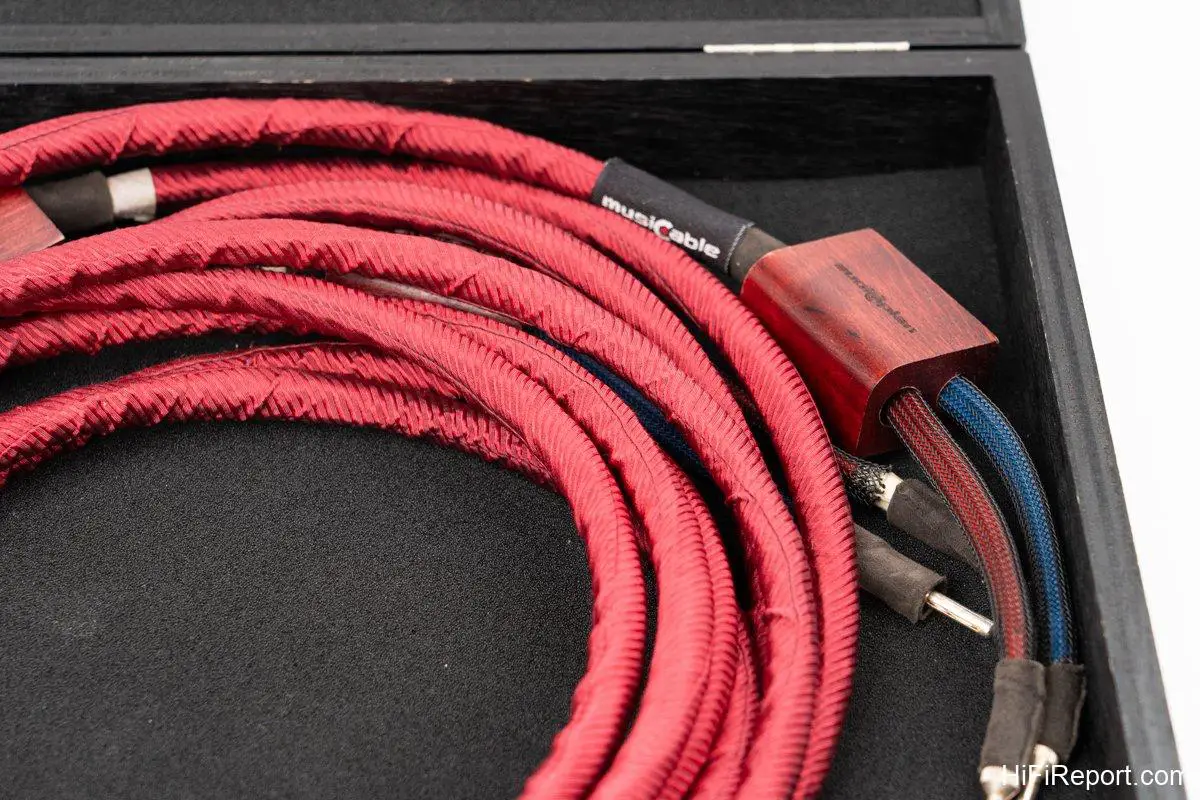
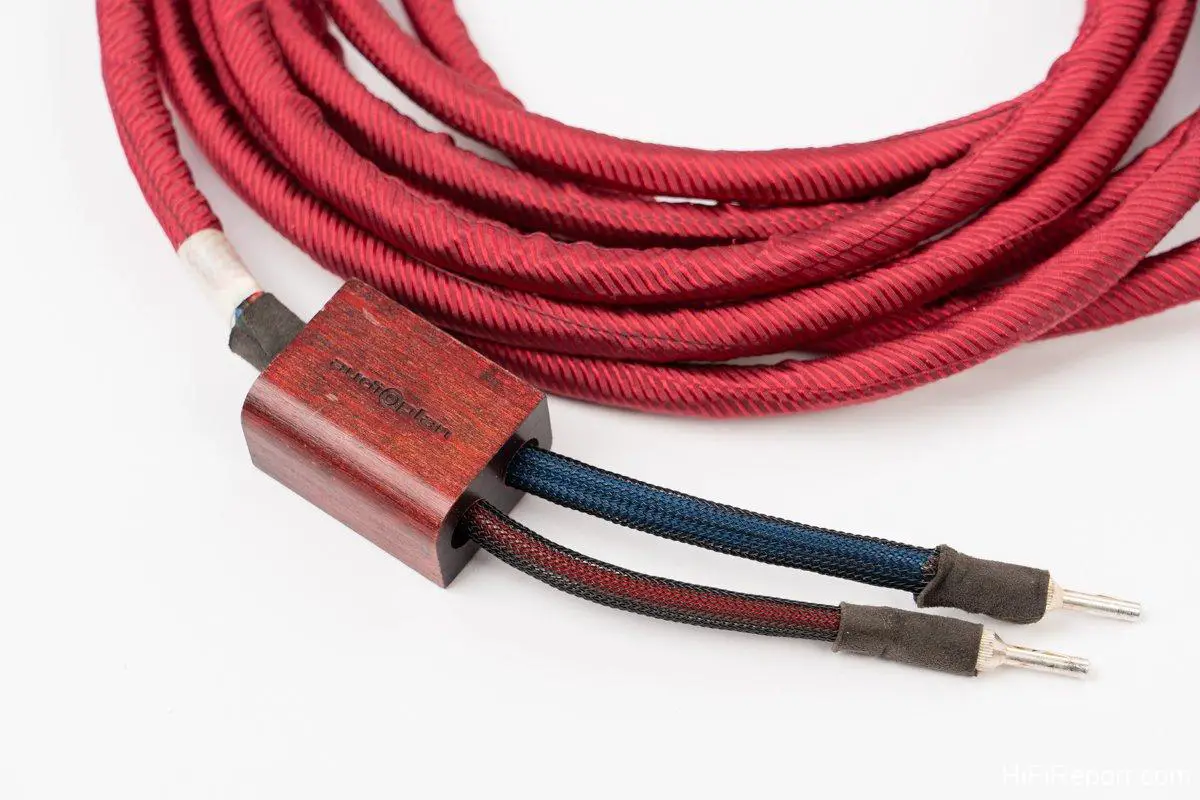
The Faraday U isn’t thicker than the Faraday S II; it also uses four conductors internally, and shares the same wood block damping design and speaker terminal materials. Could it be that merely donning a “grand robe” exterior and “leather jackets” on the terminals transforms the sound so dramatically?
Subtle Visual Differences, Substantial Price Gap
Audioplan’s official information on the Faraday U’s materials, structure, and design is scant. The majority of their description focuses on its sonic performance.
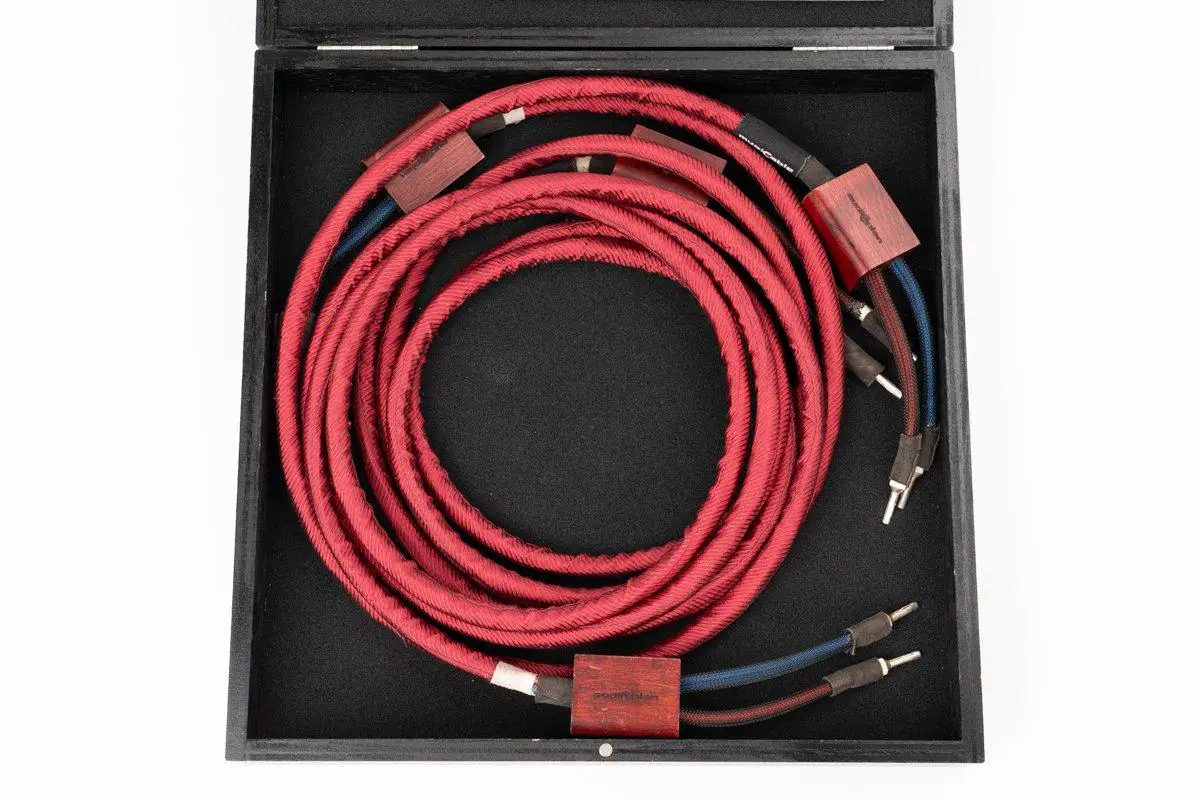
Only a few details are mentioned, things readily apparent upon visual inspection: handcrafted construction, and leather sheathing used for damping on the terminals.
Beyond this, no further information is provided.
How is one to write about this? Are the wood blocks different? Unspecified.
Although the colors differ, this could be achieved through staining.
Are there structural changes? Unspecified.
To the touch, the cable diameters are nearly identical, and the internal conductor stranding feels remarkably similar.
Are the conductors thicker? Unspecified, no numerical data is provided. Comparing the sections near the terminals, tightly wrapped in mesh, they appear to be the same.
This is perplexing.
The Faraday S II is priced at NTD 44,000 per meter pair, with an additional NTD 7,600 for each extra 0.5 meters.
A quick calculation shows a 3-meter pair of speaker cables costing NTD 74,400, which is approximately USD 2480.
The Faraday U’s pricing is significantly higher. It’s listed at NTD 128,000 per meter pair, with an additional NTD 40,000 for each extra 0.5 meters.
A 3-meter pair would then cost NTD 288,000, approximately USD 9600, nearly four times the price difference.
What exactly is Audioplan doing with the Faraday U?
Hearing is Believing, Listening is Captivating
I was curious, and internally questioning its value, even harboring a bit of resentment: How can they justify such a price increase? Then, I played music.
My curiosity was resolved – the sound was indeed on a different level.
My skepticism morphed into bewilderment – how was this achieved? My resentment transformed into greed – I wanted to listen to more music before returning the cables.
It’s astonishing, perplexing, how is this possible? They look so similar, almost like just a change of clothes, yet the difference is so profound? Recall that the Faraday S II had already impressed me greatly, the musical satisfaction it delivered felt like more than enough. (You should be able to sense my delight in my previous review of the S II).
Unexpectedly, the Faraday U ascends to an even higher peak. In the same listening room, with the same system, merely swapping out the speaker cables brought about extraordinary improvement.
Bridging the Gap to Music, Eliminating Barriers
The difference lies in the richness and fullness.
The difference also resides in the fluidity and naturalness.
Further distinctions emerge in dynamic expression and frequency extension at both ends of the spectrum.
The vividness and brilliance of the timbre are also elevated.
The manufacturer used a term I couldn’t have articulated better—”immersive sound.” The Faraday U shortens the distance between listener and music, even transporting you into the musical atmosphere, into the performance space, allowing you to experience the pulse and breadth of the music without any barrier.
Wider Dynamics, Clearer Layers
The album “John Williams in Vienna” perfectly illustrates the elusive quality of “immersive sound,” and also demonstrates the enhanced dynamic range and richer timbral palette of the Faraday U.
“The Flight to Neverland” vividly reveals how the cable unravels complex orchestral textures, clearly delineating layers within the bustling score. It showcases how the interplay of woodwinds, brass, strings, and percussion creates a tapestry of vibrant and dazzling colors.
In “Experts (from Close Encounters of the Third Kind),” the opening section depicting an extraterrestrial visitation, with its Stravinsky-esque suspenseful passages, exhibits distinct layers even within the dissonance. The dynamic range stretches from the faintest whisper to explosive fortissimo, showcasing its expansive capabilities.
Rolling strings, underscored by bassoons, weave a mysterious and eerie atmosphere. Listen to the tremolo of the strings, the clarity is remarkable.
Until the gong strikes, reaching a climax, signaling an imminent shift in musical theme.
After a tonally ambiguous interlude, a warm and intimate theme emerges.
Here, John Williams demonstrates his mastery, inherited from the late Romantic masters, in melody, harmony, and tonal manipulation.
The Faraday U presents a spacious, expansive, and layered soundstage.
The Faraday S II is also capable, but the Faraday U’s soundstage is undeniably wider, more transparent.
Moreover, the sonic texture itself is different.
The Faraday U’s sound is richer, denser, and the colors are more saturated.
I truly admire Audioplan; how did they achieve this?
Stronger Impact, Seamless Integration
Listening to Alice Sara Ott’s performance of Tchaikovsky’s Piano Concerto No. 1, with Thomas Hengelbrock conducting the Munich Philharmonic, not only reveals the expansive and ordered layers of the orchestra, but also the naturally flowing and powerfully impactful piano.
The French horns intone the iconic four-note descending motif, answered by a forceful orchestral response. The piano initially provides chordal accompaniment as the orchestra presents the first theme, then takes over the lead, powerfully driving into the lower registers with forceful chords at the theme’s conclusion.
The orchestra is majestic, the piano is fierce, their interplay is utterly captivating.
During the second orchestral statement of the first theme, orchestra and piano are juxtaposed, fiercely battling, yet this “intertwined yet distinct” interaction remains layered and clear.
Following the majestic first theme, the clarinet introduces the second theme. The warm-toned woodwind timbre softens the first theme’s conflict, and the piano seems to respond with a gentler demeanor.
This is the essence of why Tchaikovsky’s Piano Concerto is revered as a classic.
It encompasses not only virtuosic piano display, and fierce, conflicting drama, but also romantic and lyrical melodies, creating a captivating and emotive beauty.
In this piece, the Faraday U delivers a more intense impact, a heavier weight, a fiercer clash, and a more integrated, intertwined musical fabric compared to the Faraday S II.
I am truly baffled as to what Audioplan did to create such a difference in the Faraday U.
Deeper Bass, Greater Power
With piano music, the Faraday U offered many new experiences and sonic insights, leading me to new understandings of familiar recordings.
Beyond Sara Ott’s Tchaikovsky recording, I want to cite Alfred Brendel’s rendition of Liszt’s Piano Sonata in B minor as another example of how the Faraday U can help us uncover the subtle nuances within piano recordings.
This is a vast, single-movement piano work, still in sonata form, but its scale incorporates even more elements.
After the thematic exposition, numerous transformations occur, not only in thematic form, such as rhythm, harmony, and tonality, but also in the musical emotions evoked. This is precisely Liszt’s “thematic transformation” technique extensively employed in this work.
As tonality shifts and harmonic approaches change, the musical colors evolve accordingly. The Faraday U excels in expressing this richness of color even more than the Faraday S II.
I previously used the term “saturated,” and this does not refer to coloration, but rather to the saturation of the timbre itself.
The Faraday U possesses the ability to render timbres with more saturated, richer, and more distinct hues.
Consequently, the music naturally becomes more colorful.
Another captivating aspect is Liszt’s frequent excursions into the lower registers with the left hand, employing low-pitched chords with pedal sustain to enhance the sense of sonic continuity and a mysterious character.
The Faraday U excels in portraying these low-frequency chords with greater power and depth.
Again, I must exclaim: How did Audioplan achieve this?
More Expression, Livelier Vocals
In my review of the Faraday S II, I noted that Audioplan cables are particularly captivating in their rendering of vocal performances.
My experience with the Faraday U takes this even further.
I won’t dwell on modern recordings, even audiophile recordings, that are inherently well-recorded. Using them as examples would be mere gilding the lily.
Instead, I’d like to cite Warner’s “Pure Callas” compilation released a few years ago, featuring Maria Callas.
This album collects numerous classic aria recordings Callas made for EMI, many of which are monaural.
However, Warner invested effort in digital remastering, resulting in an album that sounds remarkably analog, full-bodied, and vividly lifelike.
Don’t believe me? Let me tell you, with the Faraday U’s assistance, these recordings come even more alive.
In “Vissi d’arte” from *Tosca*, Callas sings what is arguably the most resolute, unwavering, and passionate Tosca ever recorded. The soaring high notes are truly breathtaking.
The mournful “La mamma morta” from *Andrea Chénier* is an intensely emotional and technically demanding aria.
Following a sorrowful melody played by the cello in a minor key, Callas slowly begins “La mamma morta” with profound grief, the solidified and suppressed pain gradually releasing as the aria progresses towards its climactic high notes.
As for “Il dolce suono” from *Lucia di Lammermoor*, the classic “mad scene.”
You may not understand Italian, you may not even know what she is singing about, but if I tell you this is Lucia, driven mad, who has killed her newlywed husband but is unaware of her actions, wandering alone and reminiscing about sweet words exchanged with her husband.
Listening to Callas’s performance, you’ll understand why she is called “La Divina” (the [opera] Goddess).
While her voice may not be flawless, her singing and her dramatic interpretation of the roles are unparalleled.
The Faraday U’s rendering of these challenging arias by Callas is like breathing life into the script, allowing the characters’ souls to rise from the page and inhabit Callas’s performance.
Audioplan, oh Audioplan, what did you do with the Faraday U?
Warmer Atmosphere, Richer Colors
Because of their strong sense of realism, Audioplan cables are especially effective in enhancing live recordings, further highlighting the vibrant atmosphere and capturing the unique brilliance of live performance.
Take Antonio Forcione Quartet’s “AFQ in Concert” album as an example. Antonio Forcione’s guitar naturally becomes the focal point; his playing is so unrestrained, so free-flowing, and so dazzling.
He uses multiple guitars in the album, including steel-string, nylon-string, and even fretless guitars.
While the different guitars contribute to varied timbres, the joyful, imaginative music created by his ensemble is the true highlight of the album.
The inclusion of cello is arguably the most distinctive feature of the AFQ’s instrumentation.
The cello’s rounded, gentle bowing provides restraint and balance amidst the ensemble’s wilder moments, presenting another layer of elegance.
Listening to Forcione’s unrestrained guitar playing, paired with the cello’s peaceful and melodious lines, complemented by the drums’ crisp and lively rhythms, and the bassist doubling on flute, adding folk-infused flute melodies, the music encompasses a diverse range of elements.
The Faraday U, with its vivid, clear, bright, and color-rich presentation, brings AFQ’s multifaceted music to life before me.
It is truly a master of atmosphere creation; Audioplan is remarkably skilled.
Astonishing Musical Immersion
After listening to the Faraday S II, then the Faraday U, the sonic experience was both familiar and astonishing.
Familiar, because their characters and sonic direction are consistent: natural, fluid, lively, and balanced.
What astonished me, and repeatedly prompted exclamations of surprise, was—I truly cannot fathom how Audioplan achieved it—making the seemingly similar Faraday U sound so significantly better than the Faraday S II.
With each piece, each album, I had to ask again: How is this possible? In terms of cost-effectiveness, the Faraday S II undoubtedly wins, no question.
However, in the realm of high-end audio, who still talks about “value for money”? Purchasing decisions are no longer dictated by rationality. The question at this point is merely: Do you seek a listening experience that brings you closer to, even deep into, the core of the music? If you do, then Audioplan Faraday U deserves to be heard.
Specifications
* Model: Audioplan Faraday U
* Type: Speaker Cable
* Conductor: Silver-plated copper
* Capacitance: 290 pF/m
* Inductance: 0.10 µH/m
* Resistance: 10 mOhm/m
* Terminals: Silver-plated hollow banana plugs, pure copper banana plugs, 6/8 mm Y spades