
Audioplan Maxwell S Signal Cable Review
Following my review of the Audioplan Maxwell U signal cable, it has remained in my thoughts. The Maxwell U impressed me with its unparalleled musicality and liveliness, its extremely natural sound, and its unquestionable performance across all aspects of audio reproduction. Its unique charm certainly qualifies it to compete with any ultra-expensive cable. However, even its relatively approachable price was beyond my reach. Therefore, I borrowed the Maxwell S from Mr. Zhang of Shang-Ruei, a cable priced at about one-fifth of the Maxwell U, to see how much DNA of its esteemed sibling the design had inherited in its sonic characteristics.
Four Decades of Technology
Audioplan, a German company, has been established for over 40 years. Throughout these years, they have focused on only three product categories: loudspeakers, isolation transformer-based power conditioners, and cables, along with Sicomin carbon fiber composite vibration damping materials. Their product lines are remarkably streamlined, with infrequent model updates, occurring only when significant technological breakthroughs or upgrades necessitate a generational change.
The current Maxwell series of signal cables was introduced in 2017, replacing a product line that had been in place for many years. Currently, there are four cables in the Maxwell series, launched in the following order: Maxwell A, Maxwell S, Maxwell U, and Maxwell L (introduced in 2021). Ranked by product tier from highest to lowest, they are U, L, S, and A. This order demonstrates that while they share the same series name and are built upon the same technological foundation, they are not simply identical products. Instead, they are tailored and adjusted based on price point and specific characteristics, making them four distinct offerings that could not all be released simultaneously.
Emphasis on Shielding
Audioplan reveals limited information about their cable design, but it is known that the Maxwell series cables primarily use copper conductors. This choice aims to impart a more natural and harmonious sonic foundation. This copper core is then silver-plated to enrich the auditory experience.
The Maxwell series cables also incorporate Audioplan’s proprietary CRC (Conductor Resonance Control) technology. This technology employs specific damping measures to suppress conductor resonance, preventing mechanical vibrations in the conductors from generating interfering signals that could compromise the original music signal.
Furthermore, the Maxwell series places significant emphasis on shielding. With the increasing prevalence of 3C devices and network equipment in homes, audio cables are now exposed to more severe wireless noise interference than ever before. To effectively combat this, cable shielding must be more robust than in the past.
The solution adopted in the Maxwell cables is comprehensive. Beyond the aforementioned CRC, it includes careful consideration of conductor material, stranding methods, conductor arrangement and structure, and the selection of dielectric materials. The goal is to ensure that the signal is transmitted without any addition, subtraction, compensation, or masking, but rather with faithful fidelity.
Like the Maxwell U, the Maxwell S also exhibits “directionality.”
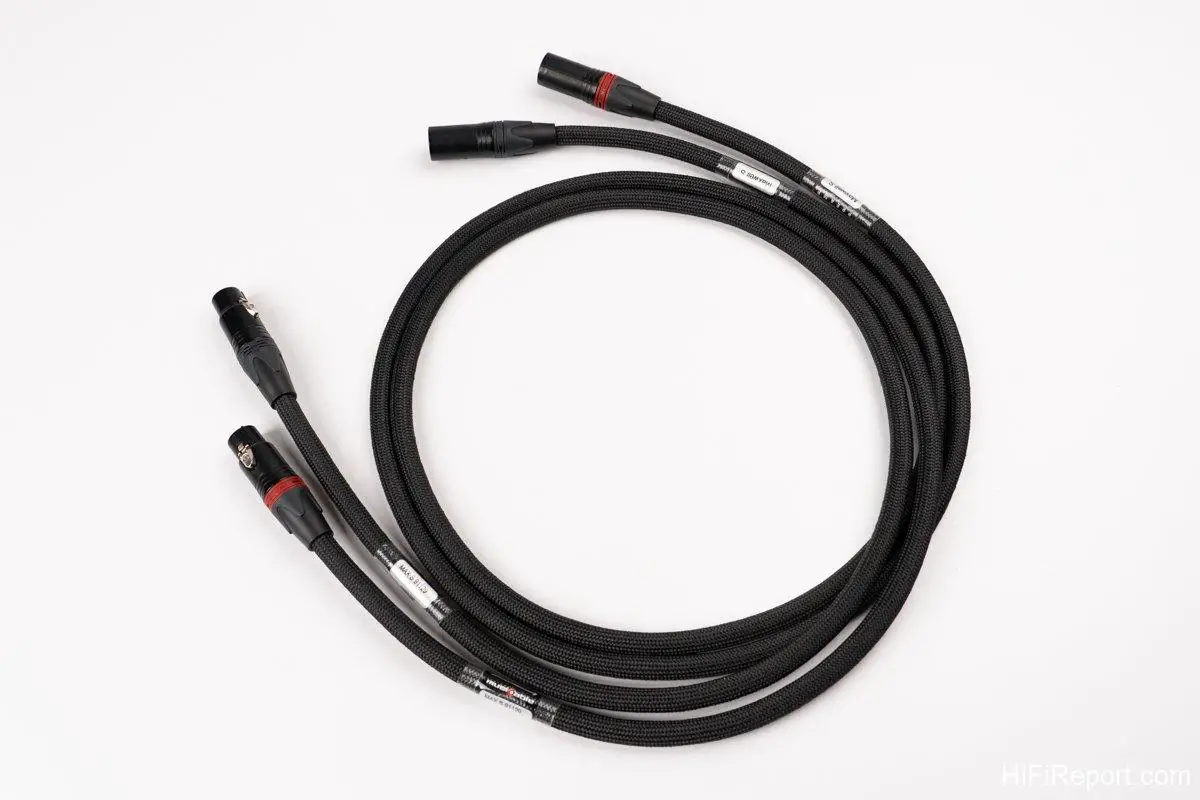
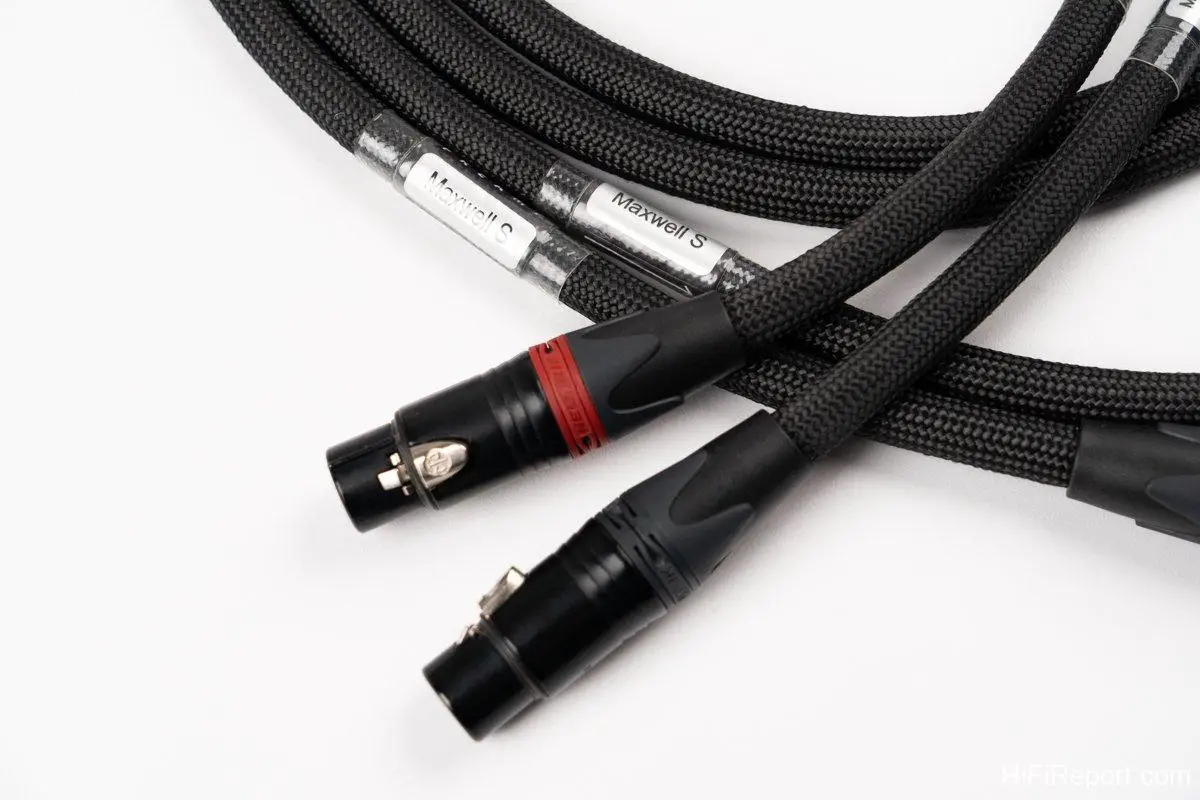
An arrow is marked on the Maxwell S cable label, indicating the direction towards the preamplifier. Whether the cable is used between a source and preamplifier or between a preamplifier and power amplifier, the arrow should always point towards the preamplifier. If you are using an integrated amplifier, simply orient the arrow towards the integrated amplifier.
The Maxwell S is available in both RCA unbalanced and XLR balanced versions. The RCA version can be inserted in either direction, making it suitable for use between a source and preamplifier or between a preamplifier and power amplifier. However, the XLR balanced cable is directional. Therefore, Maxwell S balanced cables are produced in two versions, specifically designed for either source-to-preamplifier or preamplifier-to-power amplifier connections. It is crucial to determine the intended application before purchasing to ensure you specify the correct version.
For connectors, the XLR balanced version uses gold-plated Neutrik connectors. The RCA unbalanced version is offered in both a standard and a luxury variant. The standard version utilizes Audioplan’s own lockable RCA connectors, while the luxury version is equipped with WBT-0152AG connectors.
Regarding length, the base model starts at 1 meter, with length and price increasing in 0.2-meter increments.
Captivating Vividness
The listening evaluation took place in my home listening room.
The Maxwell S XLR balanced source cable I borrowed from Shang-Ruei is designed for use between a source and amplifier. For this review, I connected it between a Holo Audio Spring 3 DAC and a Ray Audio tube preamplifier, paired with a NuPrime EVO One power amplifier and Aurum Cantus Grand Harmony loudspeakers.
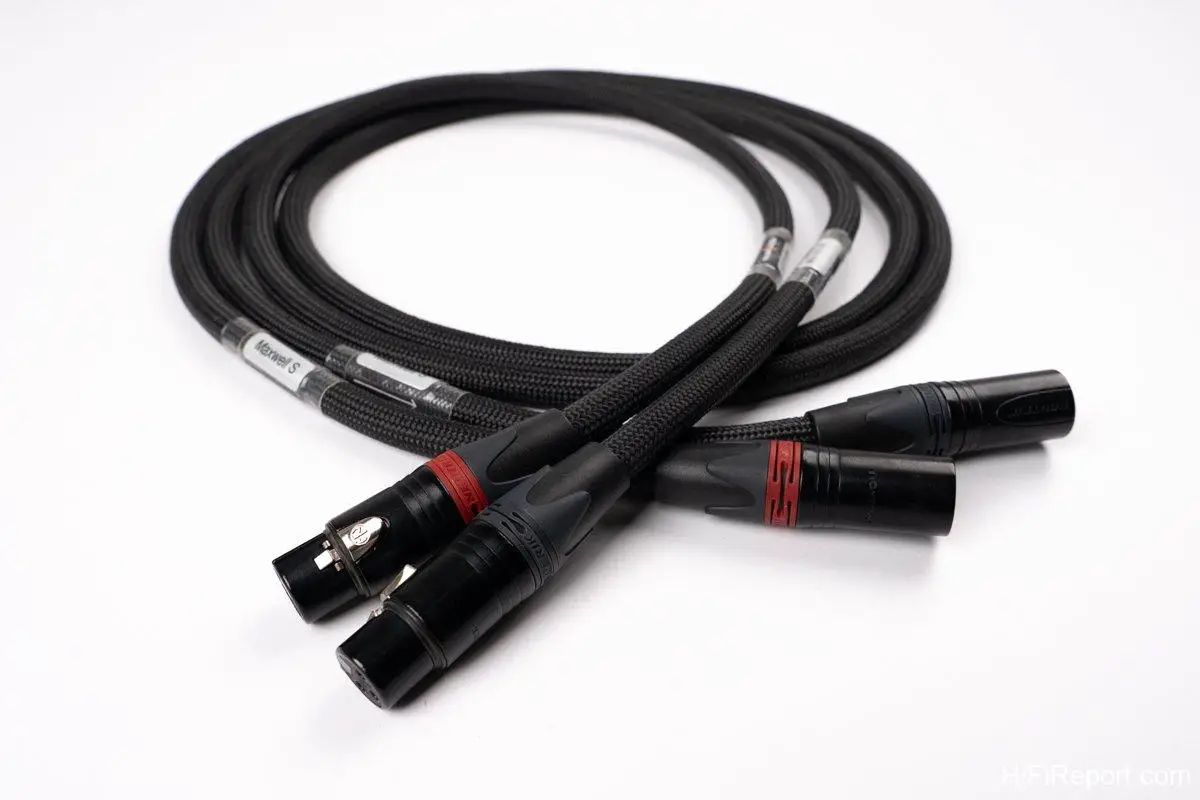
Like its flagship sibling, the Maxwell U, the Maxwell S possesses Audioplan’s most captivating and distinctive characteristic: vividness.
Prior to this, besides reviewing the Maxwell U, I had also written reviews for their PowerPlant 100 S4 and PowerPlant 1500 U3 isolation transformers. All three share a consistent trait: they make the system sound more alive, enhance detail retrieval, and consequently, make the music sound more vibrant and engaging.
I believe this is the sonic goal that Audioplan consistently pursues and embodies their sonic signature. This quality is also distinctly present in the Maxwell S.
In my past experience, even cables significantly more expensive than the Maxwell S, or from more renowned brands, rarely achieve such a level of vividness and naturalness. Once you become accustomed to this sound, switching to another cable immediately creates a sense of separation or a veil, diminishing the atmospheric presence.
This single quality alone made it impossible for me to remove the Maxwell S from my system.
Musical Brilliance
The second notable characteristic of the Maxwell S is its brilliance. Its sound is exceptionally transparent, clean, and polished, effortlessly reproducing the rich colors present in recordings.
Some extremely expensive cables employ precious metals or specialized alloys as conductors to generate a particular luster or opulence, creating an aura of high-end sophistication or a unique sonic flavor. This is often considered a matter of taste or brand identity, but it is essentially a form of sonic tuning.
The brilliance of the Maxwell S, however, feels exceptionally natural and authentic, devoid of any artificial or deliberate coloration. It is achieved through design approaches encompassing structure, shielding, and dielectric materials, all aimed at minimizing the impact or interference during signal transmission. This ensures that the inherent brilliance or luster that should be present in the original signal is not obscured.
Does this natural brilliance lack “flavor” or sound monotonous? Certainly not. It is precisely the tonal quality of instruments themselves. If a recording features a violin with a certain brilliance, the Maxwell S faithfully reproduces that brilliance. As long as the instrument’s sound is rich, the Maxwell S will reveal that richness, making the music vibrant and full of life.
Provided your system is properly configured, the Maxwell S will allow this brilliance to shine through.
Neutral and Balanced
The third defining characteristic of the Maxwell S is its neutrality.
While I previously mentioned its exceptional brilliance, this does not imply a high-frequency emphasis. In fact, the Maxwell S exhibits excellent balance across the entire frequency spectrum, with a remarkably flat frequency response. I perceived no artificial boosting or attenuation in any particular frequency range. This implies that if you intend to use the Maxwell S to sonically “tune” your system or compensate for any imbalances, it may not be the ideal tool.
Furthermore, the midrange and low frequencies of the Maxwell S, like the high frequencies, lean towards a clean, crisp, and articulate presentation.
In the bass region, the proportion is appropriate, not excessively voluminous or thick. The shape and contours are controlled and focused, with clear structure and distinct layers. The scale and weight in the lower registers are well-balanced and the extension, both upwards and downwards, is natural.
Overall, the Maxwell S presents a very well-proportioned sonic profile, with beautiful lines and no unnecessary sonic “fat.” However, if your system inherently suffers from leanness or thinness, it may not be able to rectify those imbalances.
The fourth notable characteristic of the Maxwell S is its exceptional resolution. Combined with its clean and transparent sonic background, musical information emerges effortlessly.
Through the Maxwell S, one can discern not only exceptionally rich and accurate textures but also perceive clear spatial dimensions, soundstage contours, and the authentic reverberation and ambience of the recording venue. This enhances the listening experience and makes it more engaging.
The fifth characteristic is the clear delineation of instrumental outlines, precise imaging, and excellent separation. Coupled with its pristine airiness and absence of background noise, the music possesses a visual quality akin to a high-definition television picture. Crucially, under the condition of a well-optimized system, while the Maxwell S renders every sonic element with remarkable clarity, it avoids any sense of excessive sharpness or tension. The music remains relaxed, light, and allows for effortless listening enjoyment.
Mirror-like Sensitivity
Based on the aforementioned qualities, we can conclude the sixth characteristic of the Maxwell S: it is exceptionally sensitive, like a mirror reflecting every nuance.
This means that any adjustments or changes made upstream of the Maxwell S, such as swapping USB cables, power cords, or even changing the source component’s isolation feet or adding power conditioning devices, are all clearly revealed through the Maxwell S. If there are issues with the upstream components or settings, the Maxwell S will expose them.
Simply put, if the upstream setup is correct, you will hear accurate and pleasing sound. If there are biases or flaws in the upstream setup, the Maxwell S will not conceal them.
Why am I so confident in making this statement? Because I have been listening to the Maxwell S for a considerable period before writing this review. During this time, I have not only reviewed other equipment, cables, and accessories, but I have also been continuously tweaking my own system (as any audiophile would! Always tinkering…). Therefore, through the Maxwell S, I have received a great deal of feedback, and it has served as a valuable tool in my system optimization process.
Redefining Hi-End Cable Value
Who is the ideal user for the Maxwell S? Firstly, I believe it is perfectly suited for audio reviewers. Its sensitivity, neutrality, and comprehensive performance, without adding anything artificial to the recording, make it an invaluable reference tool, enabling reviewers to achieve more with less effort.
Secondly, the Maxwell S is exactly the type of cable that dedicated Hi-Fi enthusiasts or serious listeners need. It clearly conveys the most subtle expressions in music, performance, and recording, while also possessing excellent liveliness and musicality.
Furthermore, if you are budget-conscious but aspire to experience the essence of Hi-End cables, the Maxwell S offers a shortcut. Its price is a fraction of many “so-called” Hi-End cables, yet its performance is not inferior, and may even be superior. It poses a significant threat to many higher-priced cables.
Give it a try! I believe the Maxwell S will redefine your perception of Hi-End cable pricing. Owning excellent cables should not be exorbitantly expensive; it should be attainable for all of us.
I have already made my purchase. How about you?
Specifications
* Type: XLR Balanced Signal Cable
* Conductor: Silver-plated Copper
* Capacitance: 108 pF/m
* Inductance: 0.6 µH/m
* Resistance: 0.08 Ohm/m
* Outer Diameter: 10.5 mm
* Connectors: Neutrik XLR, Audioplan RCA, WBT 0152Ag RCA
Reference System
* Source: NUC i3 Roon ROCK, Auralic Aries G1 Wireless Streaming Player, Diva EX-7 Switch
* DAC: Holo Audio Spring 3
* Preamplifier: Holo Audio Serene / Power Amplifier: NuPrime Evolution One
* Loudspeakers: Aurum Cantus Grand Harmony
* Cables: Harmonic Technology Para-I Balanced Interconnect / Telos QAC Power Cord / Tromba Marina OCC-1 Speaker Cable
* Accessories: MYSTJ Audio CMS Audio Rack / HLJ Maglev-s1 Magnetic Levitation Isolation Platform / ASI Tuning Devices / Asrok PPB-2400 Battery Power Supply