
Audioplan PowerPlant 100 S4 Isolation Transformer Review
Electricity is the lifeblood of any audio system. Everything emanating from your Hi-Fi equipment – signals, voltage, current, and sound waves – originates from your home’s power supply. Therefore, the quality of your power directly impacts the sonic performance of your audio system. Improving power quality fundamentally strengthens the foundation upon which your carefully constructed system can truly shine. The challenge lies in the myriad of power conditioning methods available. Which one offers simplicity and effectiveness? Let us introduce the Audioplan PowerPlant 100 S4 isolation transformer. Employing it with network devices, digital equipment, or source components yields such a noticeable improvement that it is truly astonishing.
Dedicated Power Delivery
In the realm of audio, numerous approaches exist for power conditioning. Isolation transformers are a relatively common method. Their principle is straightforward: leveraging the fundamental relationship between electricity and magnetism. By using a transformer where the primary and secondary windings are physically isolated, the input and output power are not directly connected. A 1:1 voltage ratio is maintained, meaning the voltage remains unchanged. When placed between a wall socket and your equipment, it prevents household power noise from directly entering your audio components, effectively filtering out power line disturbances.
While the basic concept of an isolation transformer is not complex, and many brands offer such products, why choose the PowerPlant 100 S4 (hereafter referred to as PP 100 S4)? What distinguishes it? The difference is significant.
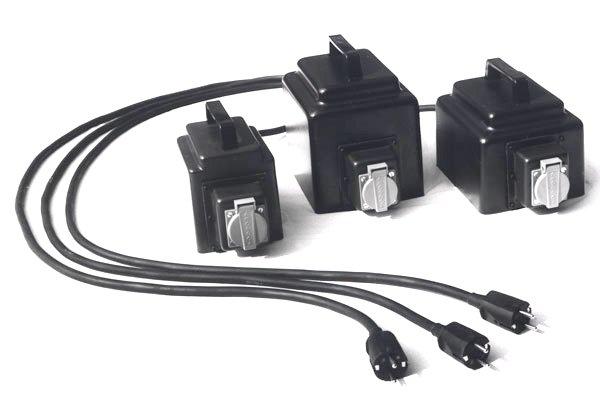
The most distinctive feature of Audioplan isolation transformers is that each unit features only a single output socket. Consequently, each PowerPlant can only power one piece of equipment – a “one-to-one” power supply configuration.
One-to-one? Does this imply that if I have five components needing power isolation, I would need to purchase five PP 100 S4 units? Precisely.
It’s worth noting that the PP 100 S4 has a modest power rating of 100 VA. It is specifically designed for digital devices, source components, and network equipment. For power amplifiers, models with higher power ratings, such as the PowerPlant 1500 U3, are recommended.
Four Decades of Design Philosophy
Why this one-to-one power supply design? Audioplan believes that power noise originates not only from wall sockets but also from all audio-visual equipment itself. These components generate noise that degrades audio and video quality and can mutually contaminate each other through power lines. Only by individually filtering power noise for each component can complete avoidance be achieved. Therefore, Audioplan isolation transformers are invariably designed for one-to-one power delivery, unlike other brands that often use a single isolation transformer to power multiple devices.
Audioplan’s commitment to the one-to-one isolation transformer design is not a recent development, nor is it a marketing gimmick. It is a long-standing principle, dating back to 1982.
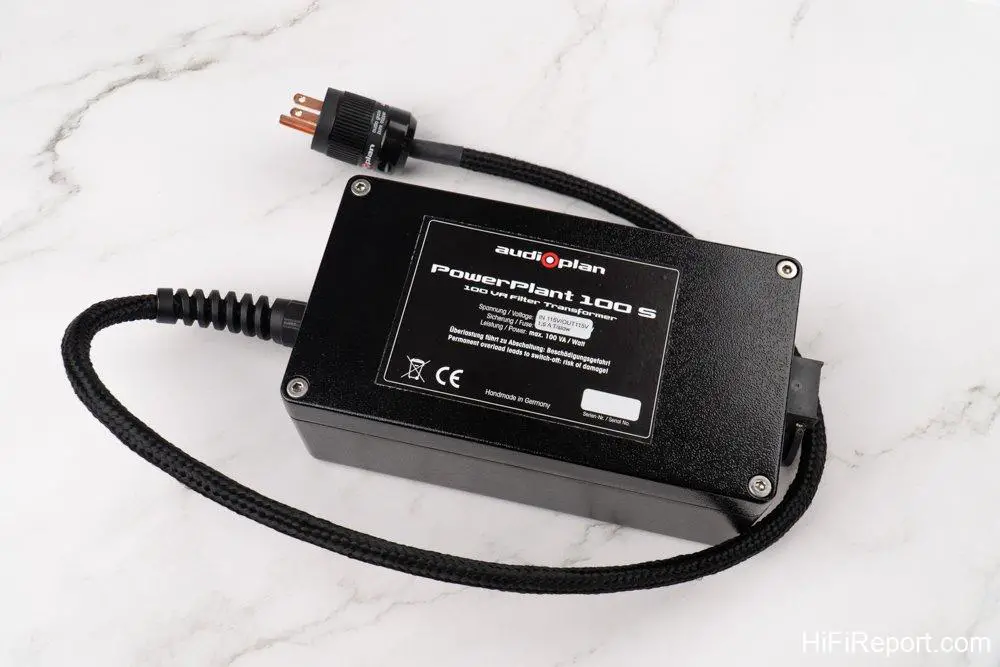
Founded in 1980, Audioplan quickly developed the PowerPlant power filter in 1982. At its core was an isolation transformer, and even then, the fundamental principle of one-to-one power supply was established and has remained unchanged. Furthermore, Audioplan has not ventured into other types of power filtering devices, indicating their conviction from the outset that one-to-one isolation transformers represent the optimal approach to power filtering.
In 1996, the PowerPlant 100 was introduced, followed by the FineFilter S with ground line filtering in 2000. In 2006, the flagship PowerPlant 1500 U, incorporating third-generation technology, was launched, further expanding the product line.
Audioplan has continued to refine and improve upon its foundational designs. The current PowerPlant 100 S4 and PowerPlant 1500 U3 represent the culmination of their latest generation of advancements.
DC Component Elimination
Why is isolating power noise so crucial? According to Audioplan’s research, high-frequency noise is the most detrimental to audio quality. This type of noise is particularly prevalent and problematic from digital sources, switching power supplies, streaming devices, network equipment, and similar sources. Audioplan recommends prioritizing the use of PP 100 S4 for power filtering with these types of components. The PP 100 S4 not only isolates noise from the mains but also possesses a unique high reverse attenuation capability, effectively filtering out high-frequency noise generated by the equipment itself, preventing it from feeding back and contaminating other components.
If budget permits, Audioplan suggests extending the use of PowerPlant isolation transformers to phono preamplifiers, turntables, or preamplifiers, with integrated amplifiers or power amplifiers being addressed last.
Beyond filtering high-frequency noise, the PP 100 S4 also removes DC components from the AC power.
What are DC components? As AC power flows through home electrical circuits, it can pick up some DC components due to magnetic fields or induction. These DC components can cause power transformers to become magnetically biased, leading to interference and unwanted transformer vibration.
The output voltage of the PP 100 S4 is free from DC components, ensuring a more precise AC waveform.
Overload and Overheat Protection
The PP 100 S4 is remarkably user-friendly. Simply connect it between the wall outlet and your equipment, or between a power strip and your equipment.
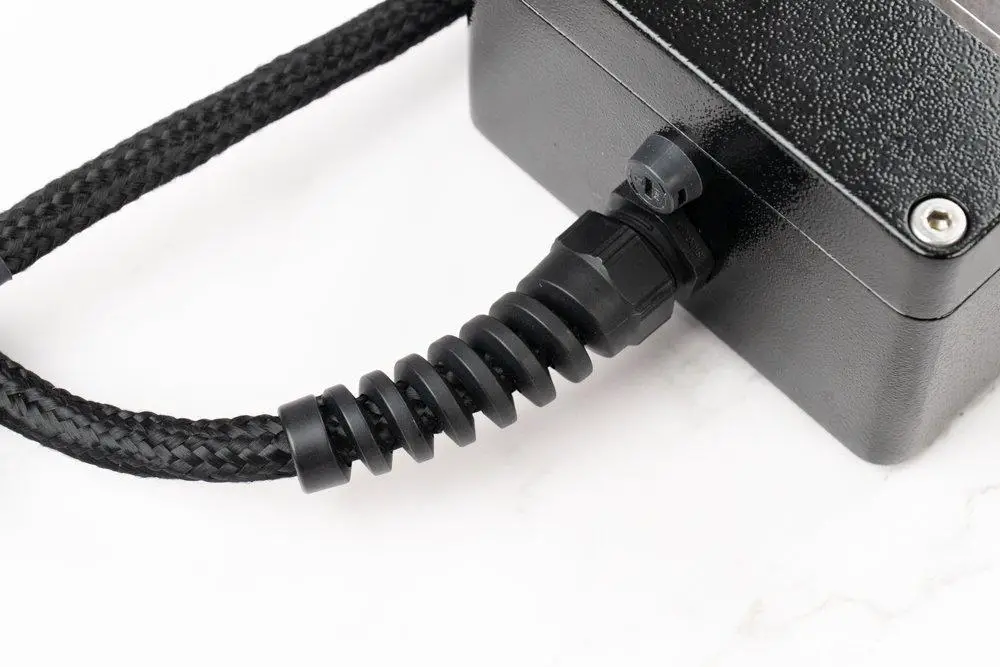
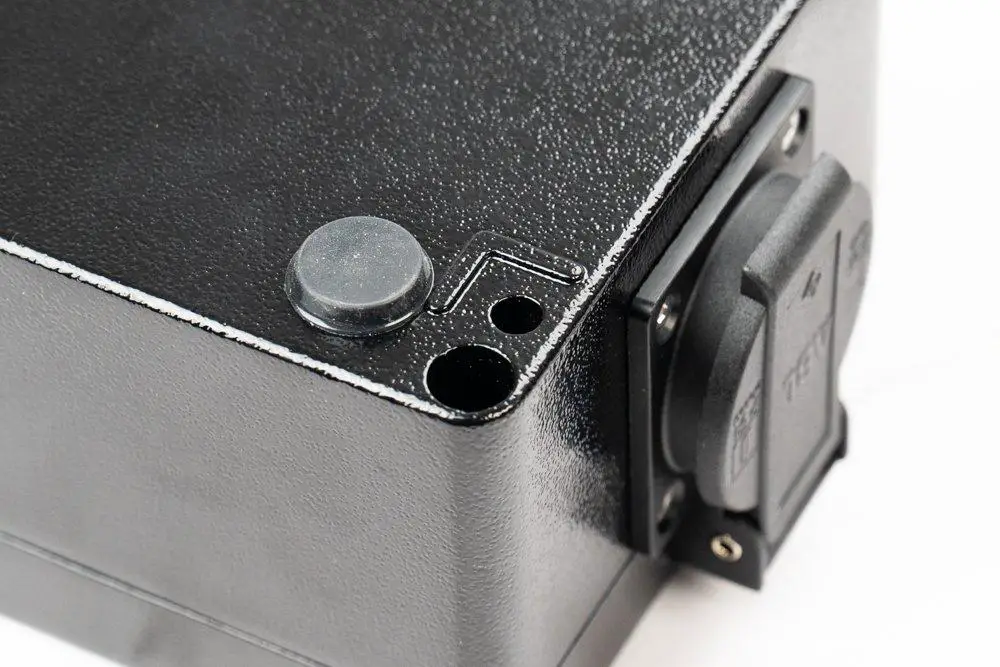
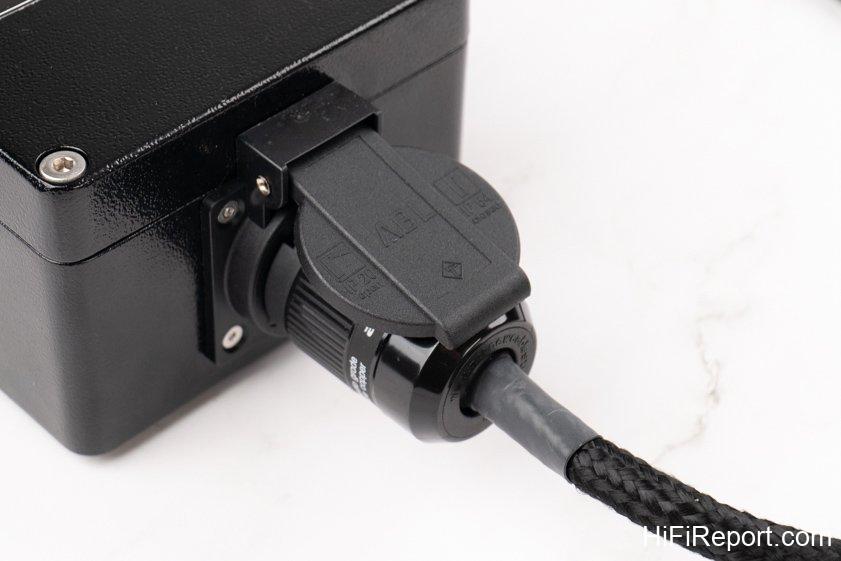
It comes with its own captive Ampere S power cable, 0.9 meters in length. Users need only supply their own power cable from the output of the PP 100 S4 to their equipment. The PP 100 S4 lacks any switches, buttons, or indicator lights. Once plugged in, it requires no further attention.
The sole precaution is that the PP 100 S4 is designed for low-power devices like source components, digital equipment, and phono stages, and is not suitable for integrated amplifiers, power amplifiers, or subwoofers.
However, even if mistakenly used with higher-power equipment, the PP 100 S4 is equipped with overload and overheat protection. In the event of excessive power draw and overheating, the protection circuit will activate, ceasing power delivery. Operation will automatically resume once the temperature returns to normal.
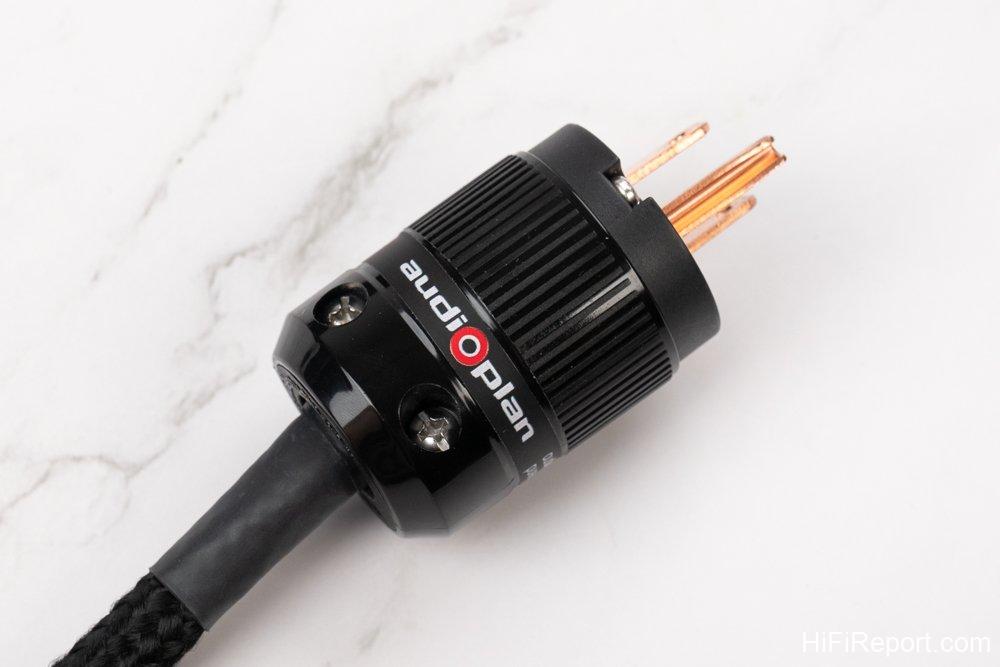
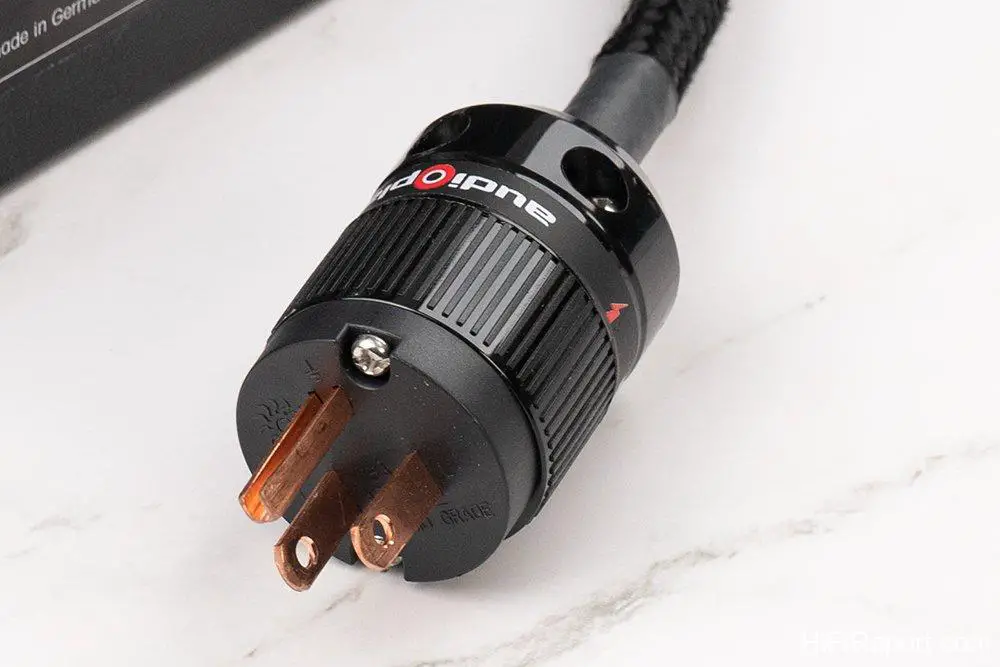
Furthermore, a small red lightning bolt symbol is noticeable on the power plug of the PP 100 S4. What is its purpose? It serves to indicate the Live pin on the plug.
Considering that the positions of Live, Neutral, and Ground are standardized, and a 3-pin plug cannot be inserted incorrectly, why this special marking? Because Audioplan places great emphasis on power polarity. They believe that the plug must be inserted with correct polarity for the PP 100 S4 to perform optimally. However, the polarity of household sockets may not always be correct due to potential wiring errors during installation. Therefore, it is recommended to use a voltage tester or multimeter to identify the correct polarity and insert the plug accordingly to ensure optimal performance of your equipment.
Instantly Enhanced Clarity
The listening evaluation was conducted in my home. Following the manufacturer’s recommendations, I limited the use of the PP 100 S4 to digital equipment, source components, and network devices.
With only one PP 100 S4 available, I could only power one device at a time. However, even a single unit proved to be highly effective.
In the initial phase, I started with network equipment. Before describing the sonic improvements, let me outline my home network setup.
I use cable internet, so I have a cable modem. I connect a wireless router to the modem for Wi-Fi access.
Both the modem and wireless router require 12V power, which I provide using a Daitron 150-watt switching power supply.
For my source component, I use an Auralic Aries G1 wireless streaming player, connected wirelessly. The music control software, Roon Core, is installed on a NAS, which is connected to the wireless router via Ethernet cable.
Since data exchange between the Aries G1 and NAS passes through the wireless router, and the router is powered by a switching power supply, if Audioplan’s assertion that high-frequency noise from switching power supplies significantly impacts system power is accurate, then using the PP 100 S4 with the Daitron switching power supply should reveal its benefits.
I began listening with Kyung-Wha Chung’s performance of the Mendelssohn Violin Concerto. This recording dates back to 1981. Despite its age, it’s part of the DECCA Legendary Performances series, featuring outstanding performance and excellent recording quality.
With the assistance of the PP 100 S4, the sound immediately exhibited enhanced clarity compared to without it. The overall timbre became more transparent, refined, and richly textured. The PP 100 S4 seemed to gently remove a layer of roughness from the sound, making the violin lines smoother, clearer, and more prominent, enhancing realism. Subtle nuances in the sonic texture became more apparent, strengthening dynamic contrast and highlighting the resilience and force of the musical lines, making the musical expression more vivid.
Enhanced Soundstage Dimensions
The PP 100 S4 also contributed to an improved sense of soundstage dimension. The soundstage became more open, with improved vertical and horizontal extension, feeling taller and wider, resulting in a more relaxed listening experience.
Furthermore, with the enhanced detail retrieval in quieter passages and clearer low-frequency articulation, the overall dynamics subjectively felt improved. There is no concern about dynamic compression with the PP 100 S4, as its 100VA capacity is more than sufficient for source components, digital equipment, and network devices.
Continuing with French violinist Olivier Charlier’s rendition of Mozart’s Violin Concerto No. 3 in G major, 1st movement, this 2006 recording already possessed a bright and delicate sonic texture and a clean, transparent sonic background. Combined with appropriate fullness and a healthy frequency balance, it further accentuated Olivier’s precise playing style in this lively piece.
With the PP 100 S4 in the system, the music became even more agile and vibrant, with heightened dynamic impact. The string tone exhibited greater brilliance, and the texture became more refined and crystalline.
I also noticed that the soundstage height increased, and while the low-frequency fullness remained consistent, the articulation, clarity, and elasticity improved, making the music feel more buoyant.
Additionally, the separation between string sections improved, localization became more precise, and the distinct layers of front, middle, and back became more defined, resulting in a clearer sonic image.
Sharper Image Definition
Having confirmed the evident positive impact of the PP 100 S4, I proceeded to the second phase of testing, relocating it and connecting my Holo Audio Spring 3 DAC to it to assess its effect on DAC performance.
Replaying Olivier Charlier’s performance, I observed that the PP 100 S4 seemed to further emphasize image focus. The outlines of the string instruments became more prominent and defined, further enhancing instrument separation, improving localization, and creating a more organized overall orchestral structure.
Furthermore, as in the first phase, the string tone gained even more brilliance, the timbre became sweeter, and sonic artifacts were reduced, resulting in a smoother and more resilient texture.
Again, a clearly positive improvement.
I then quickly moved to the final phase, repositioning the PP 100 S4 for use with the Aries G1 wireless streaming player.
Comparing with and without the PP 100 S4, without it, the soundstage felt more constricted, with instruments clustering towards the center, lacking separation. The timbre was also denser, the texture less transparent, and the background less clear. The sonic images appeared flatter.
Upon connecting the PP 100 S4, the soundstage immediately expanded both horizontally and vertically, and instrument separation instantly improved.
In the low frequencies, structure, elasticity, definition, layering, and extension all benefited from the enhanced clarity, as if the Aries G1 had suddenly undergone an upgrade.
I also noticed that the PP 100 S4 noticeably lowered the noise floor.
Olivier Charlier’s Mozart Violin Concerto No. 3, 1st movement, begins playing at the 5-second mark of the track. The preceding 4 seconds are not completely silent but contain ambient sounds from the recording venue. With the PP 100 S4 in place, this ambient noise became more noticeable, indicating a lower noise floor.
Start with One to Experience the Benefits
Finally, returning to Kyung-Wha Chung’s Mendelssohn Violin Concerto, with the Aries G1 aided by the PP 100 S4, even the opening timpani taps “boom-boom-boom-boom” exhibited clearer shape and localization. The separation between the ensuing violin solo and orchestral accompaniment was dramatically enhanced. The solo instrument gained better focus, the orchestra sounded more expansive, and the layering across the entire frequency range became clearer. The sonic structure became more coherent, lending the music a more majestic and grand quality, as if the entire orchestra had been upgraded.
The positive benefits of the PP 100 S4 are readily apparent. It delivers richer micro-dynamic nuances, expands the overall dynamic range, presents dynamics more naturally, and renders the sound more open, vivid, and refined, with a clearer sonic image. The music becomes more alive and engaging.
Crucially, even a single unit, when strategically applied, yields impressive results. Considering its price point, I believe it offers exceptional value for money.
Once you have experienced the benefits and if your budget allows, consider adding a second or third unit. Smart spending is always the best approach.
Reference Equipment
**Sources:** Auralic Aries G1 Wireless Streaming Player
**DAC:** Holo Audio Spring 3
**Amplifiers:** Electrocompaniet EC 4.8 Preamplifier / NuPrime Evolution One Power Amplifier
**Speakers:** Aurum Cantus Grand Harmony
**Cables:** Harmonic Technology Para-I Balanced Interconnects / Audioplan Maxwell U Balanced Interconnects / Linkomm CAT-8 Network Cable / Neotech NES-3001 Speaker Cables / Telos QAC Power Cables / Gortham 85025 Power Cables
**Accessories:** MYSTJ Audio CMS Equipment Rack / ASI Tuning Devices / Nirvana Audio Chronos Quantum Noise Filter
Specifications
**PowerPlant 100 S4**
* Type: Isolation Transformer
* Rated Power: Continuous 100VA
* Dimensions: 120 × 850 × 220 mm
* Weight: 2.4 kg