
Audiovector QR7 SE Review
Audiovector Makes a Striking Return
Audiovector is a Danish loudspeaker brand that, after a few years of relative quiet, has re-emerged prominently in the market thanks to HiFiReport Audio securing its distribution.
If you attended any audio shows in 2024, you were likely impressed by the Audiovector speakers displayed by HiFiReport (or their partner dealers).
How can I be so sure you were impressed? Because I myself was profoundly impressed.
Let me count the ways: There was a pair sitting on the floor with a retro, trapezoidal shape, featuring built-in tilt and toe-in angles – the Trapeze Reimagined. Does that ring a bell? Such a distinctive speaker is unforgettable once seen.
Then there’s Audiovector’s flagship floorstander, the R8 Arreté, with a cabinet completely devoid of parallel surfaces, exquisitely crafted like a piece of fine luxury goods. Do you remember it? Also, at the December TECA audio show, the R1 Arreté, which alternated playback with the Trapeze Reimagined, left many bewildered. How could such a small speaker produce such immense dynamics and powerful bass? Do you recall it?
R Series Leads, QR Series Fronts
The Trapeze Reimagined speaks to Audiovector’s history and tradition, showcasing the brand’s heritage. The R8 and R1 Arreté, on the other hand, demonstrate the high technical caliber of Audiovector speakers.
Indeed, Audiovector is a loudspeaker manufacturer that successfully blends history and tradition with cutting-edge technology and clever design.
However, the R Series speakers, packed with technology, inevitably come with a higher price tag. As for the commemorative Trapeze Reimagined, its price is also not modest.
Does this mean Audiovector offers no more accessible speakers? Of course not.
That’s where the QR Series comes in. Audiovector’s QR Series is a comprehensive line, now evolved to the SE (Special Edition) version.
The QR Series includes three floorstanding models: QR 7 SE, QR 5 SE, and QR 3 SE, one bookshelf speaker QR 1 SE, as well as a center speaker QR C SE and a wall-mounted speaker QR WALL SE. The series even boasts a subwoofer, the QR SUB SE.
In total, there are seven products, sufficient to meet both two-channel and multi-channel demands, catering to users with different room sizes.
Bass Port Design
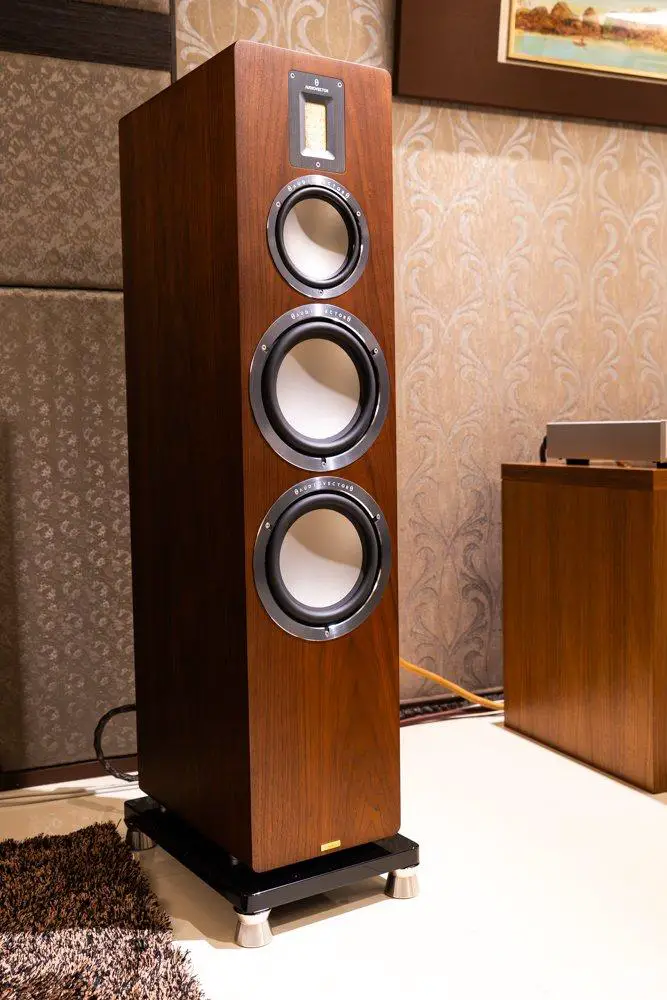
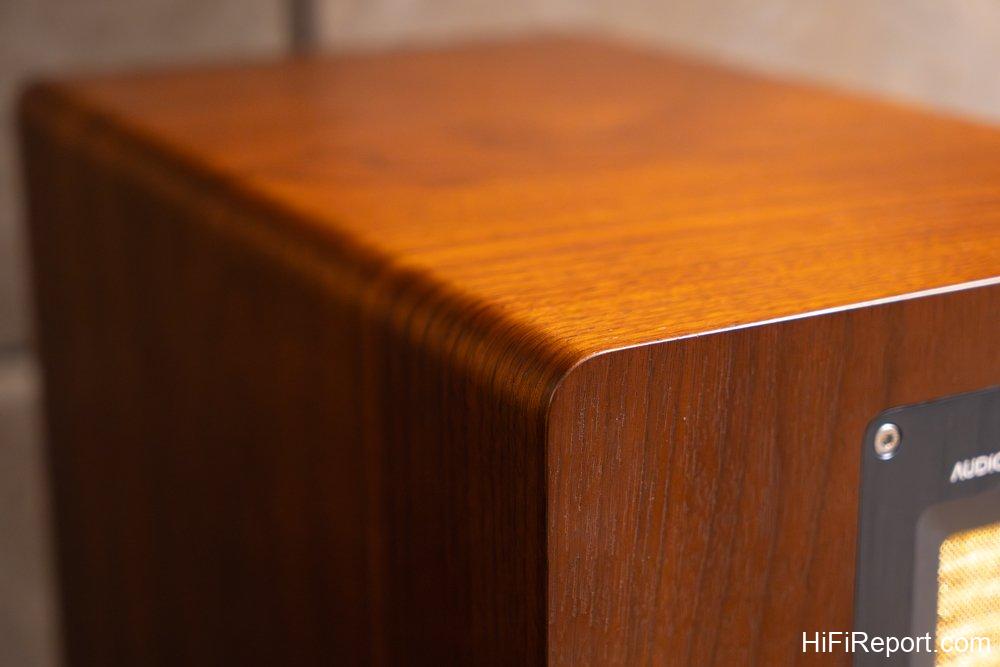
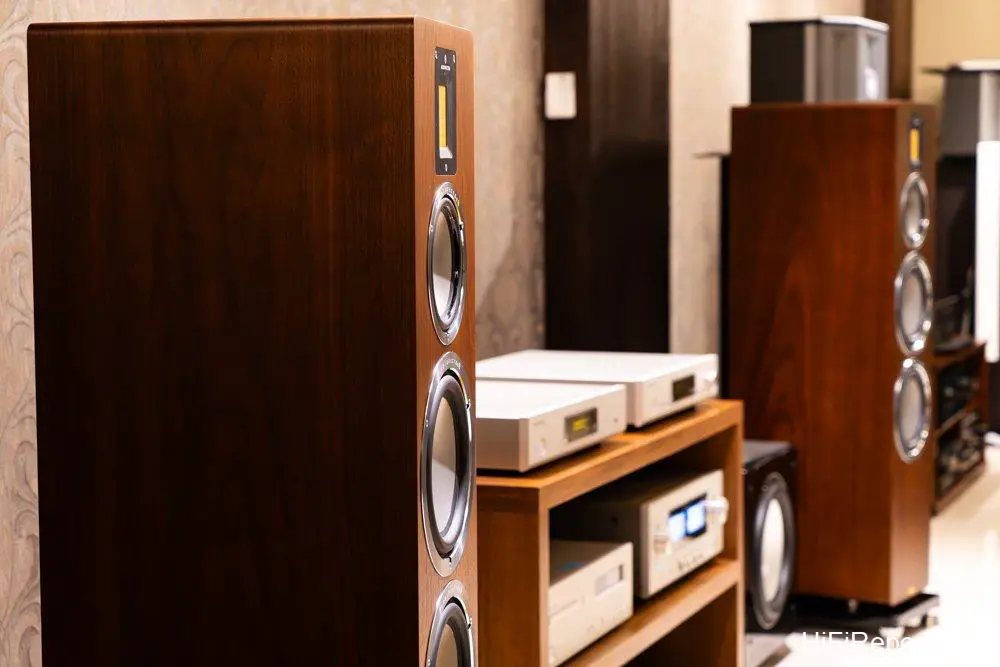
The series flagship, the QR 7 SE, employs a 4-driver, 3-way, bass-reflex design. Unlike the R Series with its curved sides and teardrop-shaped back, the cabinet is a straightforward, traditional rectangular box, albeit with rounded corners on the top front.
You won’t find bass reflex ports on the front or back of the cabinet; they are cleverly hidden underneath, a design Audiovector calls the Q-Port bass reflex.
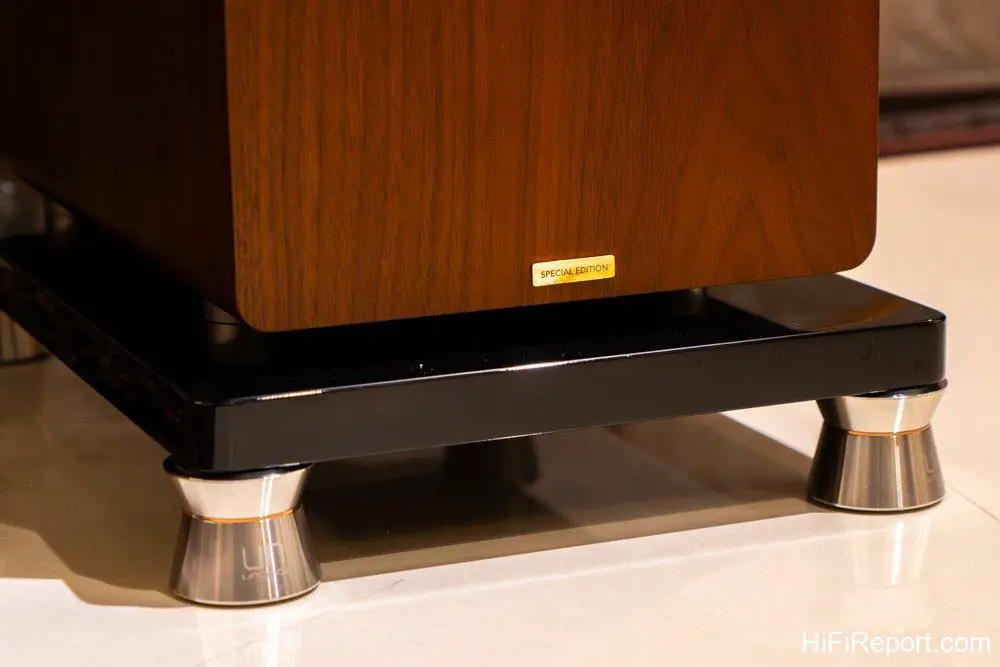
The cabinet rests on four cylindrical feet, creating a space between the bottom and the base plate, allowing the airflow from the port to diffuse outwards. This design not only results in a cleaner appearance but also makes placement easier, as the speakers are less sensitive to proximity to the rear wall.
Spikes can be installed under the base plate. If you have wooden floors you wish to protect, the included plastic pads can be used. Of course, users can also experiment with other M6-compatible footers, which, as I’ll mention later, will also affect the sound.
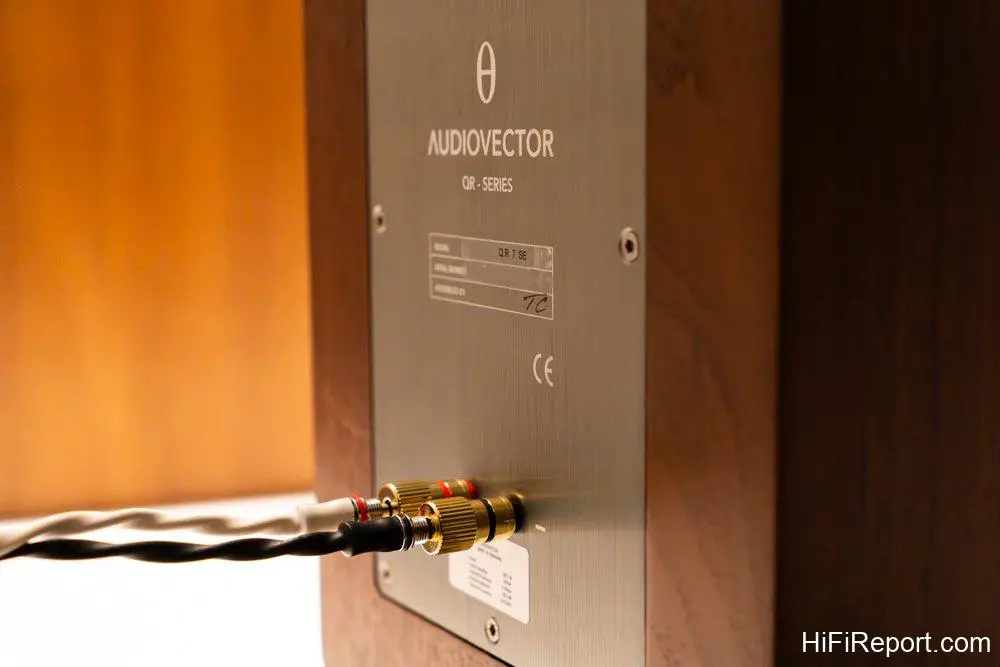
The speaker terminals continue the QR design, featuring a large aluminum panel with only a single pair of binding posts. Users are spared the contemplation of jump wires or bi-wiring dilemmas, as there’s no option for it.
Advanced Tweeter Technology
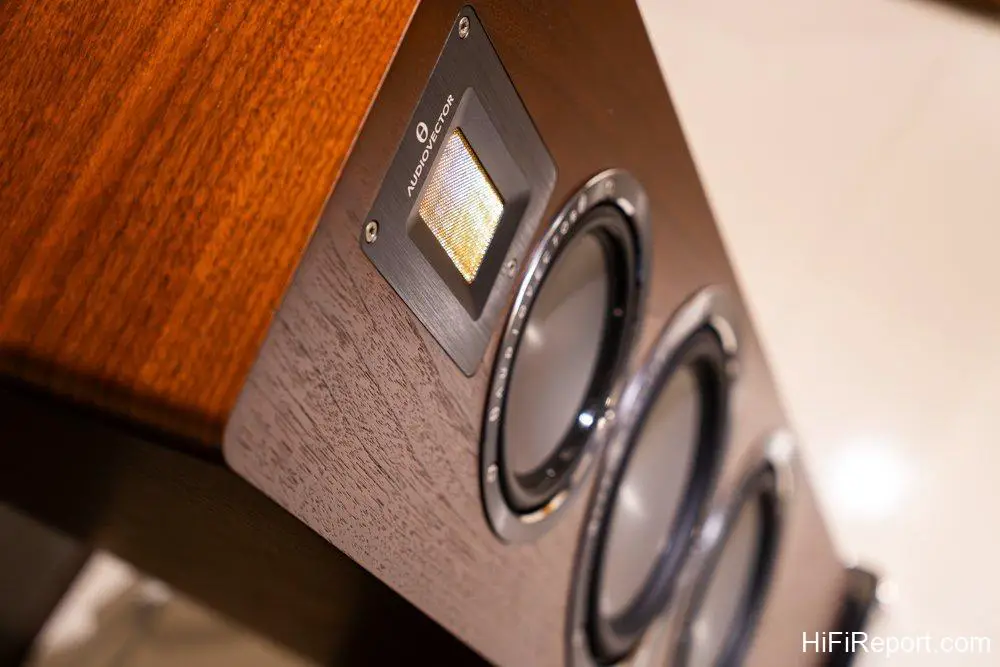
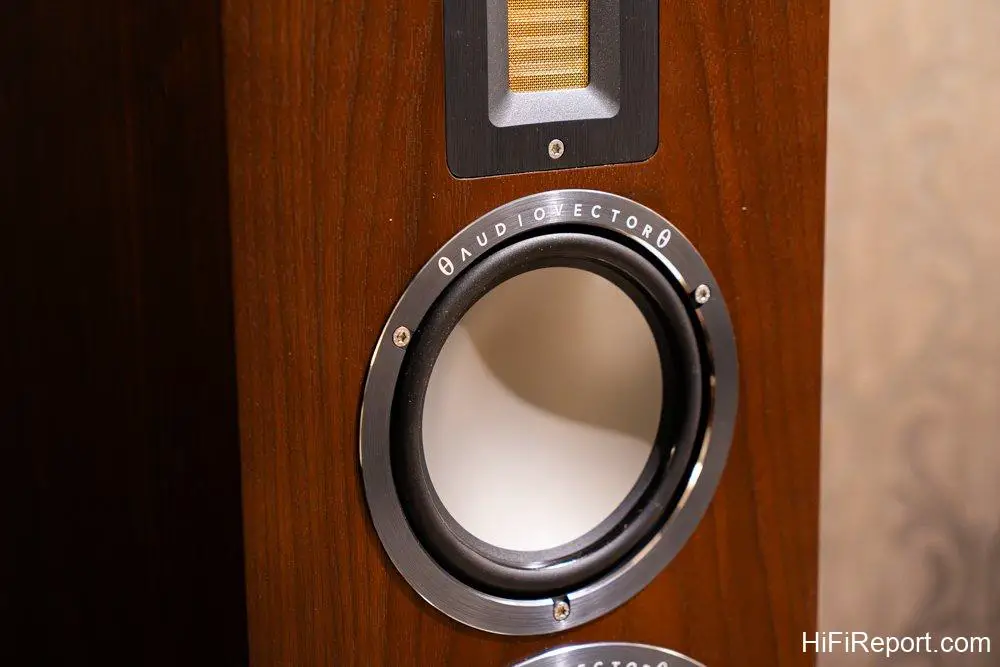
Driver-wise, despite the QR Series being Audiovector’s “entry-level,” even the smallest QR 1 SE bookshelf speaker utilizes an AMT (Air Motion Transformer) tweeter. As the flagship of the series, the QR 7 SE is naturally no exception.
The AMT tweeter is mounted within a frame machined from a single piece of aerospace-grade aluminum, finished with glass bead blasting and brushing, and then plated with a grey resembling tungsten-titanium.
A unique design feature is the rose gold mesh in front of the AMT tweeter, which the manufacturer calls the “S-Stop Filter.” Inspired by the pop filters used on recording microphones, it’s intended to reduce high-frequency harshness and make the highs sound sweeter.
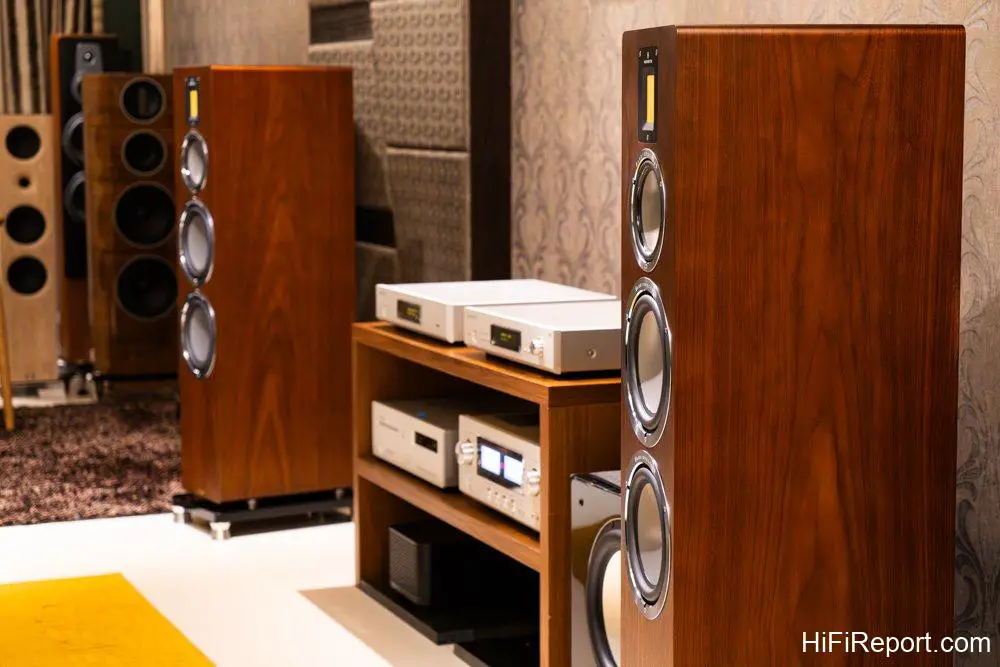
Regarding this AMT tweeter, Audiovector provides impressive specifications, stating a frequency response up to 102kHz, with an effective response range also reaching 52kHz.
Mid/Bass Drivers with Pure Piston Tech
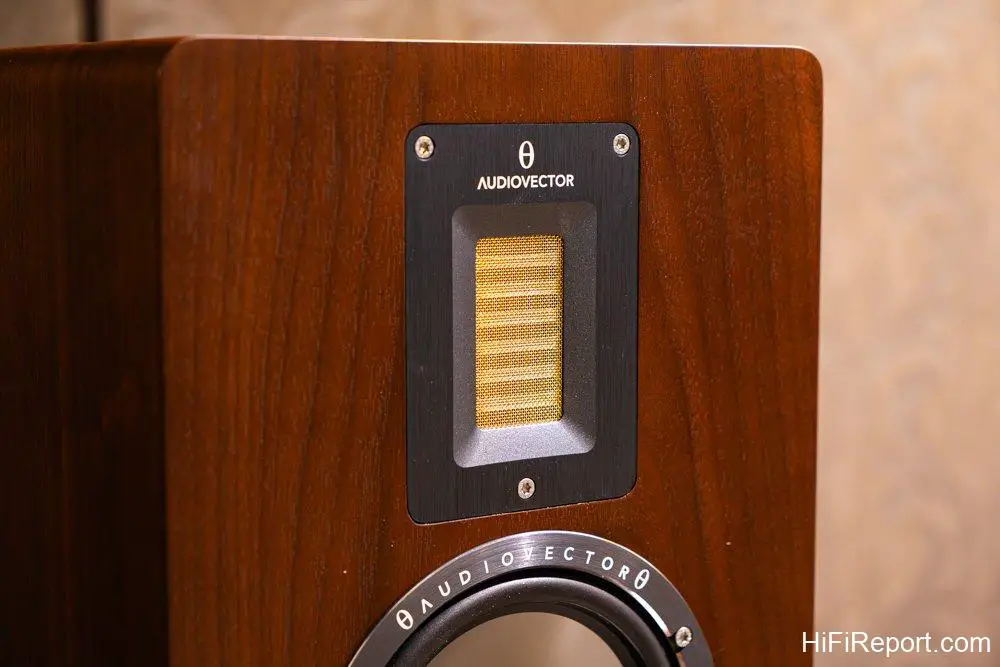
The QR 7 SE is equipped with one 6-inch midrange driver and two 8-inch woofers. The crossover point between the midrange and tweeter is set at 3,000Hz, while the crossover between the midrange and woofers is at 425Hz.
Both the midrange and woofer drivers feature full-dome concave membranes without dust caps or phase plugs in the center. The membranes are based on aerospace-grade aluminum, with a diamond coating applied to the surface to enhance stiffness, and a soft damping layer added to the rear. This combination of three different materials leverages the strengths of each, avoiding the inherent biases of a single material type.
Furthermore, Audiovector has developed a dual-magnet motor driving system for more linear driver movement, which they call Pure Piston driver technology.
SE Version: Six Key Upgrades for Low Distortion
Since this new generation of QR speakers is designated SE (Special Edition), there must be something special about it, differentiating it from previous versions. While the QR SE series looks almost identical to the older QR series from the outside, many aspects have been upgraded.
The manufacturer lists the following points: (1) The QR SE series crossovers use newly developed proprietary capacitors for cleaner highs and improved detail. (2) QR SE series resistors are metal-cased, effectively improving heat dissipation and maintaining precision and stability under demanding operation. (3) Internal wiring is cryogenically treated for better dynamics and detail. (4) Nano-porous damping material is used in specific internal cabinet locations, enhancing midrange openness. (5) The bass reflex port has been optimized for more precise bass. (6) Stainless steel spike accessories now include a nut design for easier height adjustment.
Every single one of these improvements relates to sound quality. Each refinement pushes the QR SE speakers further forward. While I don’t have a “non-SE” version to compare directly, I know Audiovector has a long-standing customer service program where users can upgrade their speakers at the factory, improving performance without replacing the entire speaker. For instance, R Series Signature versions can be upgraded to Avantgarde, or even the higher Arreté version. Comparing the QR Special Edition/SE to the previous QR speakers is essentially like getting the R Series level upgrades. It seems Audiovector is now simply selling the SE version directly.
System Tuning at HiFiReport
Now, let’s talk about the sound and listening experience. The audition took place at HiFiReport Audio. HiFiReport has three listening areas planned on the second floor. Starting from the entrance, you first encounter karaoke and multi-channel systems, followed by mid-priced two-channel systems, and the innermost area houses higher-end audio.
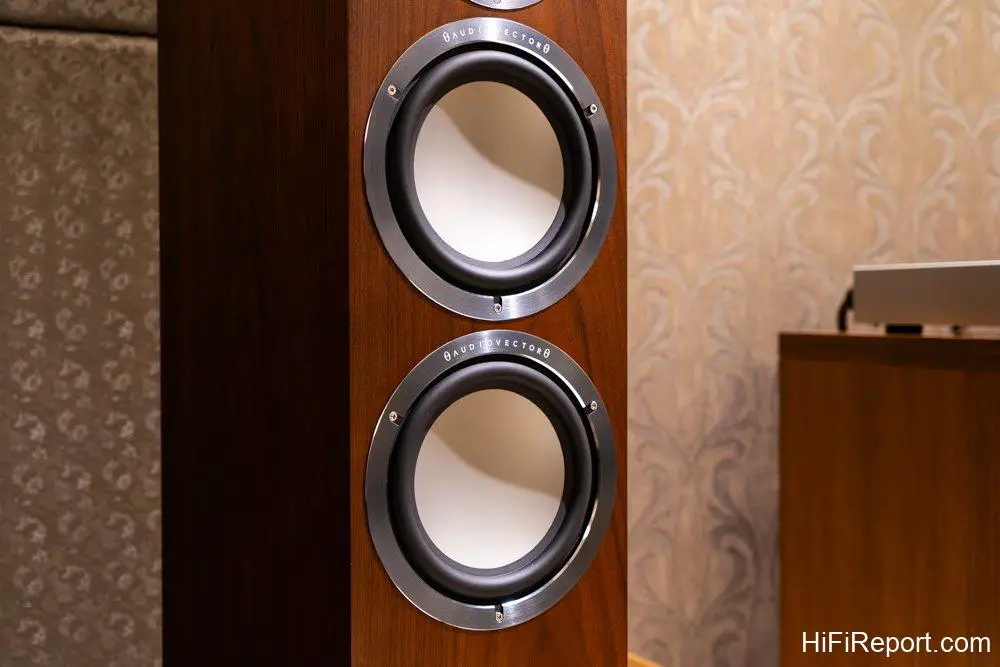
The first two setups are placed along the long wall of the room, with limited seating distance from the speakers and seats positioned close to the back wall. This setup is similar to how systems are often placed in a typical home living room and can largely simulate a semi-open domestic space.
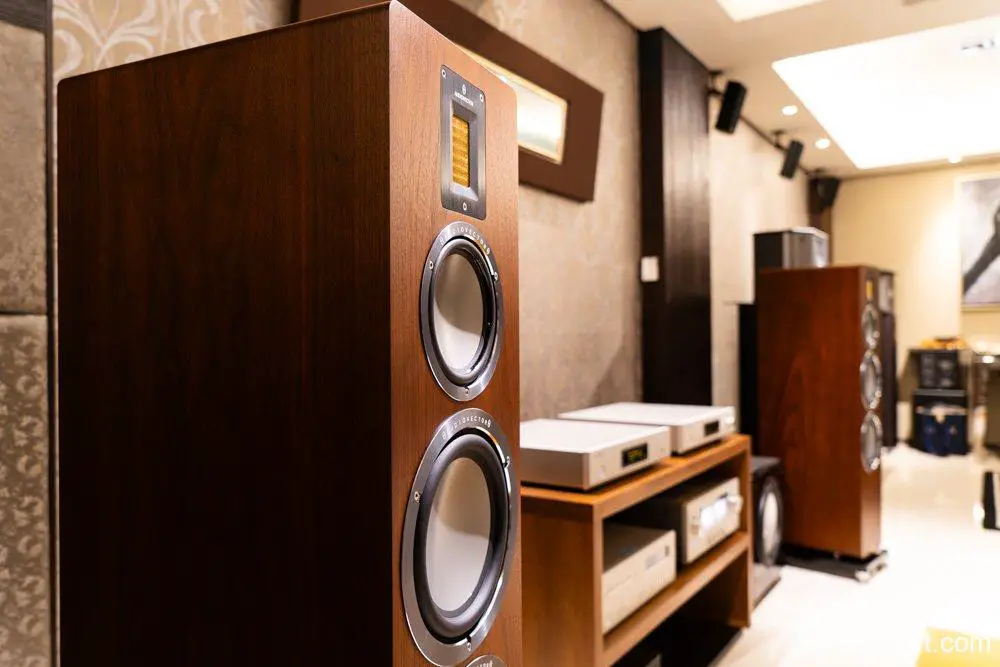
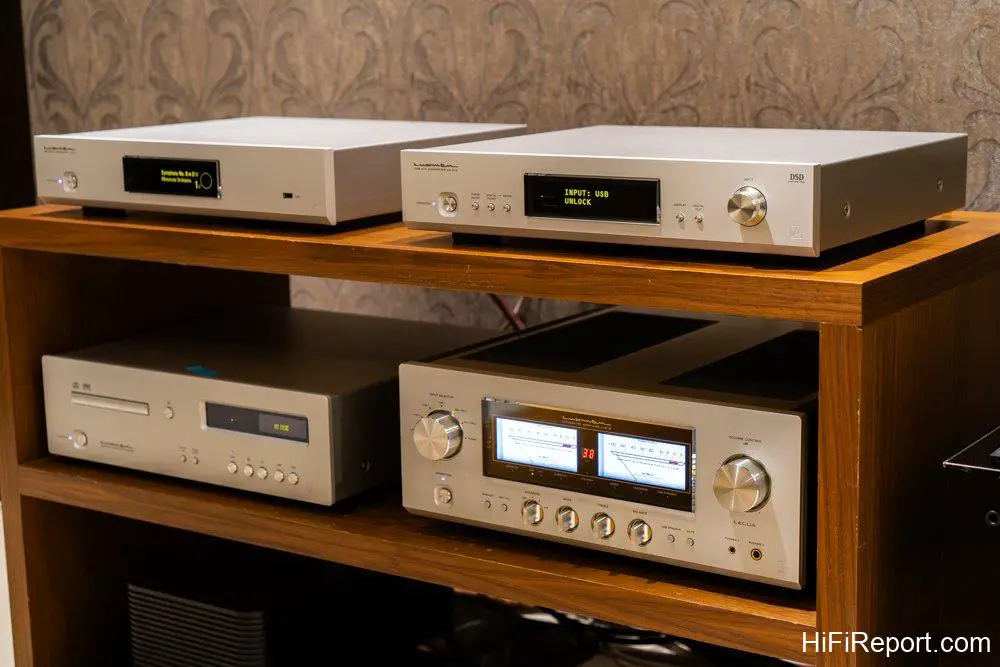
For the Audiovector QR 7 SE, HiFiReport paired a complete Luxman system, including the NT-07 digital streamer/transport, DA-07X digital-to-analog converter, and the L-507Z integrated amplifier (110W per channel into 8 ohms). All three components were plugged into an IsoTek V5 Titan power conditioner. Both signal cables and speaker cables were from inakustik. Even the speaker footers were replaced with Ungnoi Taichi floating isolation footers.
When I listen at HiFiReport’s dedicated listening room, the pairings are always with brands they represent. The combinations seen at audio shows are often similar. However, at a dealership, the landscape changes. Dealers carry multiple brands, allowing for more diverse combinations. The pairing HiFiReport chose today was something I hadn’t anticipated beforehand. Yet, looking at the combination, each component is well-matched to the others, and the resulting performance is comprehensive. Even the Rel S/812 subwoofer statically displayed nearby would pair seamlessly with the QR 7 SE.
I have experienced the Audiovector QR series before, but that was many years ago. The speaker I heard back then was the QR 3, and it wasn’t from the SE generation. This time, I was listening to the flagship of the QR series, and it was the even more capable SE version. As I listened, I flipped through my old reviews and couldn’t help but exclaim how much Audiovector has progressed.
Competing with Store Floor Models
The QR 7 SE’s sound performance absolutely lives up to its status as the flagship of the QR series.
The sound is grand, very open, with effortless dynamic shifts and extended extremes. The highs are bright and sweet, the midrange is clear and solid, and the bass is full and deep. I looked around at the other speakers displayed on HiFiReport’s second floor, many of which have higher price tags (including the familiar Dynaudio Contour 60i), but I am confident that the Audiovector QR 7 SE is capable of challenging any of them in a head-to-head “single combat.”
Sweet Highs, Powerful Bass
Listening to Kari Bremnes’s album “Norwegian Mood,” I thoroughly enjoyed the full yet resolving imaging delivered by the QR 7 SE.
When playing vocal recordings, we always hope to hear a full, solid, and substantial image, preferably with a certain degree of resolution. By “certain degree of resolution,” I mean having detail without excessive sibilance or harshness – that overly aggressive, white-hot emphasis on “s” sounds or mouth noises is simply unaesthetic, unless it’s a flaw in the recording or the audio system. Could a Norwegian KKV recording really be this poor? No. And similarly, Audiovector is not a brand that would disappoint in this way.
I heard Kari Bremnes’s image as large, with a good balance of thickness and clarity. I particularly liked its detail rendition; the information was sufficient, clearly audible, yet completely free of harshness. In the track “Coastal Ship,” the heavy, substantial drum sound was deep yet clear. The QR 7 SE’s dual 8-inch woofers are quite capable. Their surrounds, thicker than those on typical 8-inch drivers, suggest a long excursion capable of moving more air and reproducing deeper bass. Their actual performance? The large drum in “Coastal Ship” fully demonstrates their capability. Hearing this drum sound paired with Bremnes’s voice, all the key points of the track were emphasized.
Impressive Mid/High Detail
The album “Fado” by Bastarda & João de Sousa is a Fado album I’m very fond of.
Listening to it on the QR 7 SE, the vocal image was large and solid. João de Sousa’s neutral voice is quite distinctive, and here it conveyed a sense of subtle melancholy. The accompanying Bastarda Trio’s instrumentation is also unique, featuring a cello paired with a clarinet and a bass clarinet. The two clarinets, covering different registers, were clearly distinguishable. The cello, alternately plucked and bowed, combined with singer de Sousa’s guitar playing, added to the variation and richness of the instrumental accompaniment.
This recording has high gain and close microphone placement, resulting in a particularly full sound. The low frequencies from the guitar, cello, and bass clarinet are especially rich. On the QR 7 SE, there was vocal detail, instrumental detail, and even more commendably, the low-frequency range of the instruments possessed resolution and layering – something not typically achievable by “entry-level” speakers. Although the QR 7 SE is considered part of Audiovector’s “entry-level series,” it vastly surpasses what is commonly understood as “entry-level speakers.”
Double Basses: Clean, Deep, Textured Lows
Since I’ve mentioned its bass, I want to offer another example to illustrate its quality. Let’s take Vivaldi’s Double Cello Concerto from Rick Stotijn’s album “Doppio espressivo.” Vivaldi’s original version was written for two cellos, strings, and harpsichord continuo, but here the cellos are replaced by two double basses, resulting in a rounder, more substantial sound.
The QR 7 SE, much like the Audiovector speakers I’ve come to know, is capable of presenting a highly transparent soundstage, with excellent string texture possessing both density and sheen. The QR 7 SE’s bass is rich, deep, and flavorful, yet entirely free of muddiness. The soundstage created by the chamber ensemble and the two double basses was very clear, and the harpsichord responsible for the continuo was not at all obscured. This made listening to this fine Baroque work genuinely engaging.
I suspect this might be related to the InAkustik LS-804 AIR speaker cables and the Taichi isolation footers. The former are known for their low capacitance, particularly the AIR series cables, which helps reproduce a clean, transparent, and layered sound. The latter utilizes high-hardness ceramic beads for vibration isolation, with contact points made of carbon fiber.
Furthermore, during the audition, I experimented with adjusting the toe-in angle and the distance from the back wall. After pulling the speakers out slightly further, the transparency, liveliness, and brightness of the sound all improved, and the bass also became cleaner. The trade-off was a slightly thinner midrange, but I didn’t mind — the gains were more significant. These are indeed speakers with plenty of room for experimentation; they will reflect every bit of effort you put into tuning them.
Turning Up the Volume
In the soundtrack for the movie “A Star Is Born,” at the beginning, Bradley Cooper as Jack performs at an outdoor concert. In the track “Black Eyes,” the powerful and impactful drum sounds hit with a palpable force directly to the chest. The raw, distorted electric guitar tone, combined with the thick foundation laid by the electric bass, and the clear, bright notes from the keyboard, created a vivid tapestry of sound. Although these instruments are mostly electric, their timbre and color were distinctly reproduced. Jack’s slightly hoarse, magnetic voice further demonstrated the QR 7 SE’s ability to render texture.
Later, Lady Gaga as Ally performs “La vie en rose” in a bar. Her strong, full voice had tremendous projection. While not adhering to the typical “chanson” style, it was a captivating performance in its own right. Especially at the end, as she powerfully sang “La vie… en rose,” the resonance earned not just applause in the movie but also reached me, seated in front of the QR 7 SE.
Listening to “Out of Time” and “Alibi” consecutively, the former began with bright, crisp drumstick hits, followed by full and colorful electric guitar tones, and then the addition of the kick drum. The musical content and weight built gradually. I could turn up the QR 7 SE to high volumes, fully expressing Jack’s unrestrained wildness. I measured the sound pressure from my seat with a phone app, reaching a maximum of 94dB and averaging 91dB at a distance of just over two meters from the speakers, yet it didn’t feel harsh or uncomfortable. The gold “filter,” the S-Stop Filter, placed in front of the AMT tweeter by the manufacturer, truly seems effective. I mentioned earlier that vocals were free of harshness, and even listening to rock music this loudly, I still didn’t feel any listener fatigue.
Soundstage Openness and Transparency
Perhaps benefiting from the AMT tweeter, the QR 7 SE’s sound possesses excellent openness, capable of constructing an expansive stage. Coupled with the AMT tweeter’s detail portrayal and fast response, when playing orchestral music, it can convey both the grand scale of the orchestra and simultaneously reveal the details of individual sections. Take, for example, Jiří Bělohlávek conducting the Czech Philharmonic in Smetana’s symphonic poem “Má vlast,” specifically “Vltava” (The Moldau).
The piece begins with flutes accompanied by string pizzicato – first one flute, then two – foreshadowing the confluence of small streams. The resolution is evident here. The transition from one flute to two, plus the string pizzicato, these details, this scene, the QR 7 SE delivers without omission. And listening to this passage is truly lively! Truly transparent! As the strings replace the woodwinds and play the main theme of the Moldau, raising the pitch and increasing the volume upon repetition signifies the swelling waters forming a great river flowing through mountains and plains.
In the village wedding section, powerful low strings dominate, playing a lively polka. The strength and thickness of the strings are present, without sounding muddy. The Moldau after nightfall sees the violins playing high-pitched, silky smooth notes, accompanied by harp arpeggios and the woodwinds conveying the sense of flow. Listening to the dance of the water nymphs in this section, the QR 7 SE’s mid-high clarity and sheen are truly “not entry-level.” As the sun rises from the east, the theme reappears, and the great river flows through gorges. Amidst the crashing waves, high woodwinds pierce through with striking intensity, backed by the tumultuous waves depicted by low strings and timpani. Subsequently, the theme returns in a grand expansion, progressing with robust march-like strides, incorporating the Vyšehrad theme. The layers within are clear throughout. I am very familiar with this version of “The Moldau,” and I know what constitutes good reproduction versus less satisfactory reproduction. The QR 7 SE’s performance warrants these many words to describe it.
HiFiReport’s Tuning Insights
Regarding understanding the personality of equipment, an external audition never quite matches the experience of borrowing for home use. I wanted to learn more about the Audiovector QR 7 SE. After listening, I chatted with the staff at HiFiReport about their experience tuning these speakers.
They mentioned that the QR 7 SE’s bass is very abundant and requires careful tuning. Initially, they tried driving them with an AVR (Audio/Video Receiver), but the effect wasn’t ideal; the bass felt somewhat uncontrolled. That’s why they placed a subwoofer nearby, intending to use the AVR for bass management. When paired with a stereo amplifier, they initially used an Accuphase E-800. That combination certainly sounded excellent, but to better match the price point of the amplifier with the speakers, they switched to the Luxman L-507Z I heard today, a combination they felt was more persuasive.
Based on the information provided by HiFiReport and my afternoon of listening, I believe the QR 7 SE indeed has great potential and can absolutely be tuned to deliver excellent sound. Regarding HiFiReport’s comment about the abundant bass tendency, during my audition, through the store’s choice of cables, footers, and my slightly pulling the speakers away from the back wall, the sound felt well-balanced, without any issues of bass imbalance. If such an issue were to arise in usage, one could choose an amplifier with a higher damping factor, which would help tighten the bass a bit. (The Luxman L-507Z has a damping factor of 300.)
A Promising Component, Like Fine Ingredients
Audio is like cooking, and equipment is like ingredients. How the ingredients are transformed into a dish depends on the chef’s skill. Audio in your hands, or in mine, will always yield different results based on our listening habits and preferences. However, the goal of achieving a sound that is listenable, enjoyable, and capable of reproducing the brilliant content within the music remains constant. Yet, without good ingredients, everything is in vain. How good the Audiovector QR 7 SE can sound depends on your skill as the “chef.”
Specifications
* **Type:** 4-driver, 3-way, bass-reflex floorstanding speaker
* **Drivers:** 1 x Gold Leaf AMT 2 tweeter, 1 x 6-inch midrange, 2 x 8-inch woofers
* **Crossover Points:** 425Hz, 3,000Hz
* **Frequency Response:** 23Hz – 52kHz
* **High-Frequency Cutoff:** 102kHz
* **Sensitivity:** 90.5 dB
* **Impedance:** 6 ohms
* **Maximum Power Handling:** 330W
* **Dimensions:** 1140 x 250 x 40 mm (HxWxD)