
Trapeze Reimagined FloorStanding Speaker Review
Retro styling has become a highly popular design trend in recent years. The audio world, too, has been swept up in this vintage wave for some time now.
There’s another word closely related to retro, similarly aiming to evoke the design spirit of the past, but doing so more thoroughly: Reprint.
While “retro” might focus on recreating certain design elements from bygone eras, perhaps emphasizing the external look, “reprint” stresses the complete recreation of the entire product. This includes not just elements or style, but a holistic reproduction.
The term “reprint” I emphasize here does not refer to counterfeit goods that plagiarize intellectual property. A search for “reprint” online often brings up pirated “knock-offs” or “replicas.” Using the name “reprint” seems to lend them a veneer of legitimacy, providing a flimsy basis for self-deception.
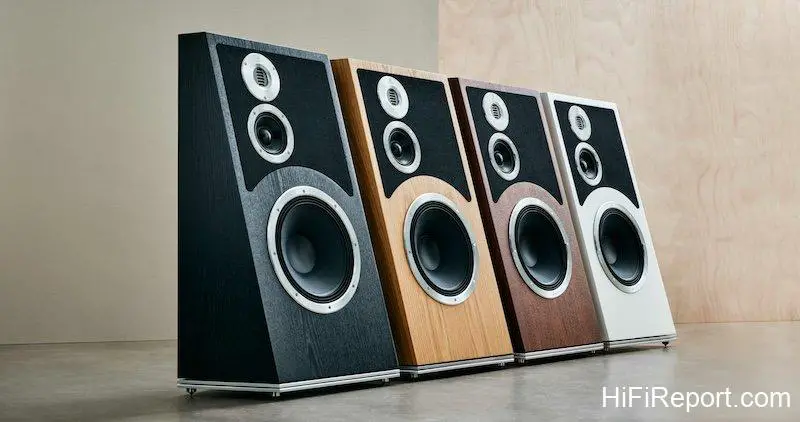
What I’m referring to here is the result of the original manufacturer or brand revitalizing classic, previously discontinued products by injecting them with new spirit and reimagining them.
Born from the Founder’s Stroke of Genius in 1979
Audiovector, based in Copenhagen, Denmark, launched the Trapeze Reimagined speakers in 2024, offering the perfect embodiment of a true “reprint.”
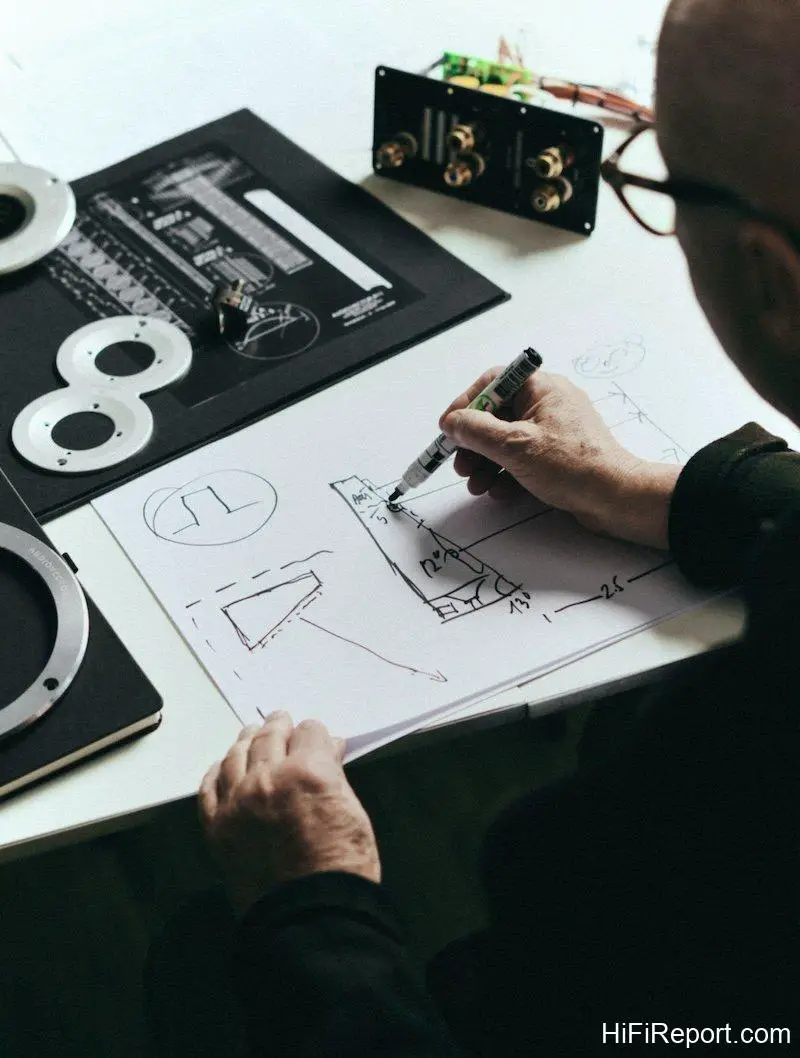
It recreates the very first model, the Trapeze, designed by founder Ole Kilfoth in 1979 when the company was first established. While maintaining a high degree of visual fidelity, it incorporates the very latest technology, making this resurrected Trapeze even more potent.
Ole was originally an audio dealer. After years of exposure to audio products, he still couldn’t find the ideal speaker he envisioned. In his view, the perfect speaker should possess characteristics of linear dynamics, linear phase, and low compression. Based on these three principles, he designed a speaker suitable for home use: the three-driver, three-way Trapeze.
Beyond Core Principles: Two Unique Designs
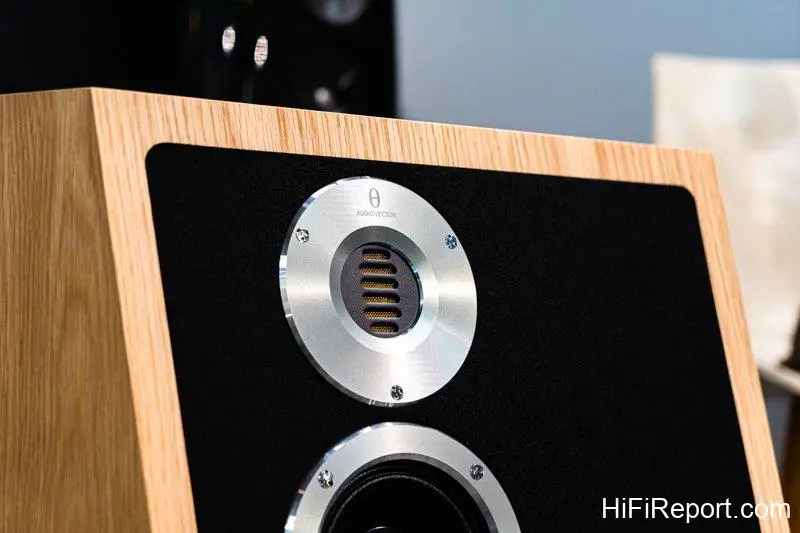
The Trapeze enclosure is quite distinctive. Firstly, it features a slanted design that is wider at the bottom and narrower at the top, appearing trapezoidal when viewed from the side.
Secondly, it’s narrower on the inside and wider on the outside. If the speakers are placed close to a wall, they naturally angle inwards. Looking down from above, they also form a trapezoid. Named after the “aerial cable,” this speaker, appearing trapezoidal from both side and top views, features a fascinating design.
Furthermore, its midrange and bass drivers share the same internal cabinet volume, operating in a bass-reflex configuration with the port located below the bass driver. The tweeter, however, is particularly noteworthy. The original Trapeze used a soft dome tweeter mounted on an open baffle, where the front panel wasn’t sealed but left largely open.
Such unique design choices made the Trapeze stand out in the market. Looking back 45 years later, it remains a highly creative product.
Modern Reimagining: Inheriting the Past, Updating Technology, Featuring Signature AMT Tweeter
Naturally, the Trapeze Reimagined inherits the appearance and philosophy of the original design, but the technology and materials are entirely modern. On one hand, it’s a classic rebuilt since 1979; on the other, it possesses a completely new soul.
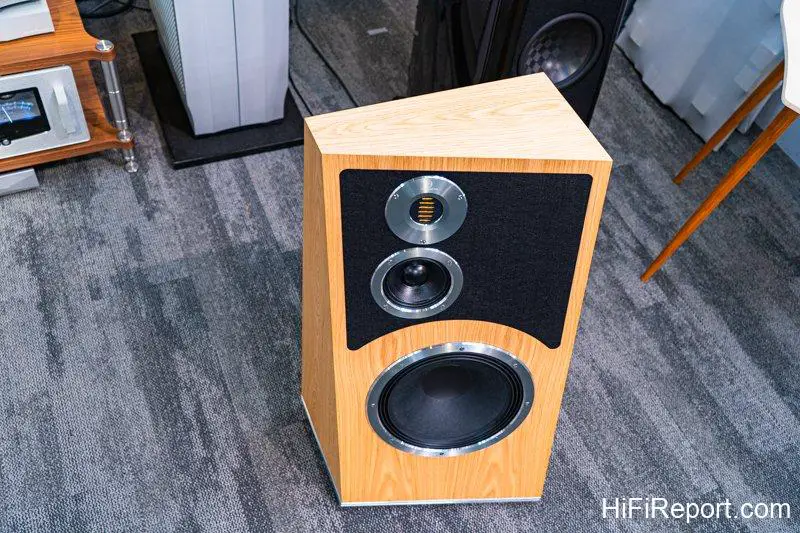
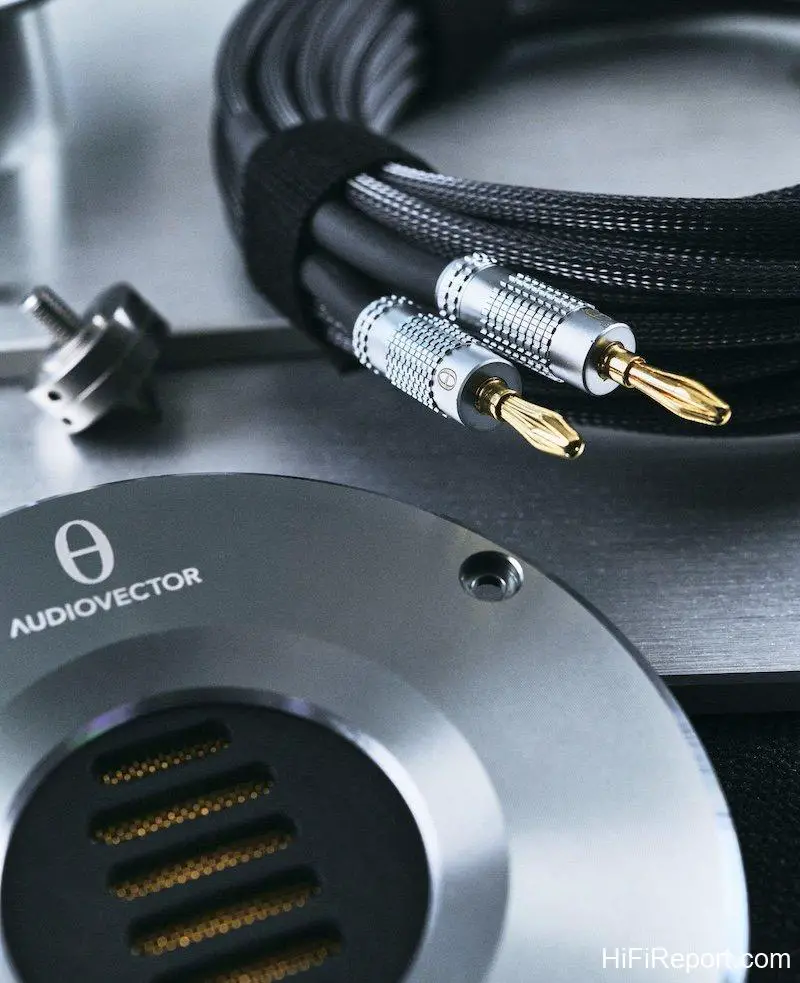
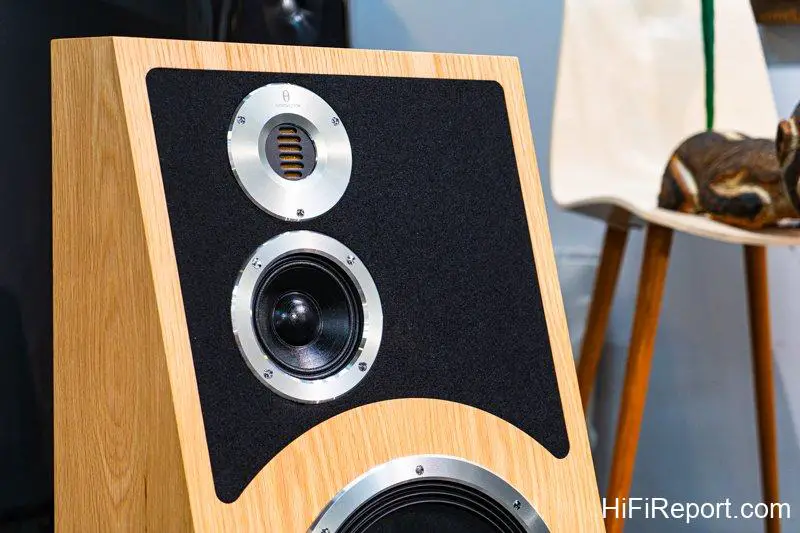
The tweeter has changed. Previously, it used a soft dome tweeter; now, it features Audiovector’s top-of-the-line SEC AMT (Air Motion Transformer) tweeter. AMT diaphragms are lightweight, have a large radiating surface area, provide better high-frequency extension, and high efficiency – making them Audiovector’s preferred tweeter type, especially for their high-end models.
They have also incorporated “SEC” technology into the tweeter to enhance high-frequency dispersion. This not only results in rich, clear details but also creates a wide, expansive 3D soundstage.
Five-Inch Paper Cone Midrange with Magnetic Motor Expertise
Below the tweeter is a 5-inch paper cone midrange driver. The diaphragm itself is lightweight, and the surround uses a pleated design. Compared to traditional semi-circular rubber surrounds, pleated surrounds allow the driver to react faster. Original content from hifireport.com.
The magnetic system is also specifically enhanced for linearity. It not only features a neodymium magnet “motor” but also includes design elements to resist hysteresis in the voice coil, along with a copper Faraday ring at the bottom. This ensures faster reaction and more complete excursion during the driver’s back-and-forth piston motion.
12″+8″ Double Bass Isobarik Collaboration
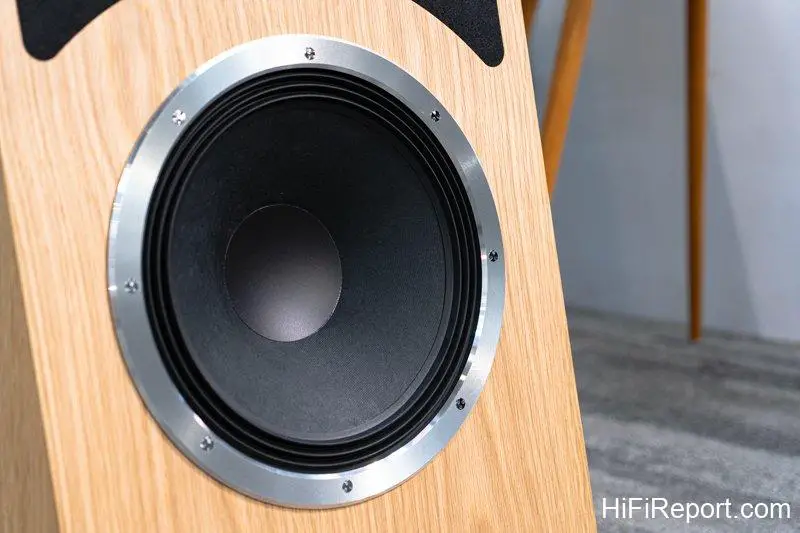
The bass driver is a large 12-inch unit with a long-fiber paper diaphragm that is lightweight yet rigid. It’s driven by a 4-inch voice coil. The voice coil former has ventilation holes, and the frame is made of aluminum-magnesium alloy, providing good damping, vibration isolation, and stable support.
Similarly, the bass driver uses a pleated surround, designed for faster response and better bass articulation. Modern speaker drivers often use semi-circular rubber surrounds, and even the 1979 Trapeze version used a semi-circular surround. However, the Trapeze Reimagined’s midrange and bass both use pleated surrounds because designer Ole aimed for more precise sound reproduction.
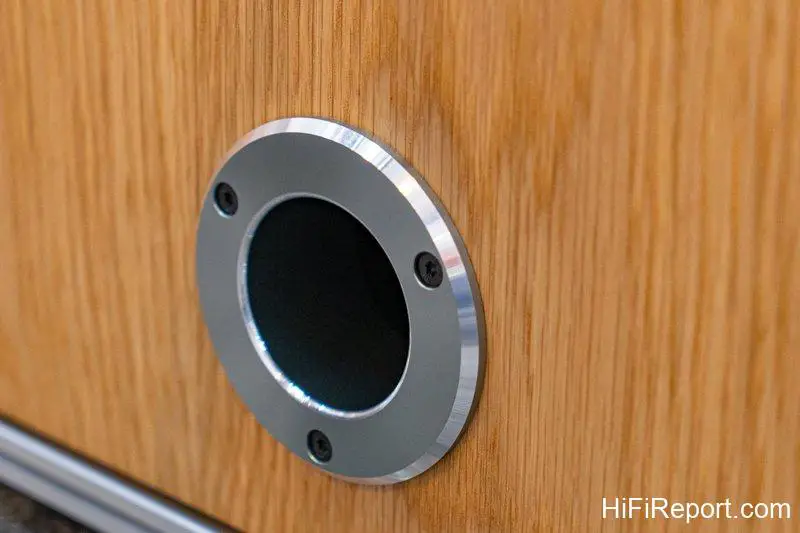
The Trapeze Reimagined actually conceals an 8-inch bass driver inside the cabinet, working in conjunction with the external 12-inch driver. This can be seen as an Isobarik push-pull design. What’s the benefit? The manufacturer states that having two bass drivers working together enhances the speed of bass movement and delivers a more substantial low-frequency presence.
Crossover with Select Components for Full High-Frequency Signal Integrity
Turning to the crossover, Audiovector has carefully selected high-quality components for the Trapeze. For optimal musicality, it incorporates PP capacitors that have undergone two deep cryogenic treatments. Tin-plated copper foil is used, and the capacitance values are strictly controlled to within +/- 0.3% tolerance. The inductors used in the crossover also undergo a rigorous and consistent manufacturing process to ensure they introduce no distortion.
Furthermore, a particularly unique design feature is the use of a thin-film resistor array in the crossover, instead of the wire-wound resistors commonly found in most speakers. Not only that, but they have also added capacitors developed in collaboration between Audiovector and Duelund. All of this is aimed at preserving a more complete high-frequency response. “Even if our ears cannot directly perceive it, it is still part of the musical signal.”
DFA Amplifier Damping Factor Adjustment: Works with Any Amp
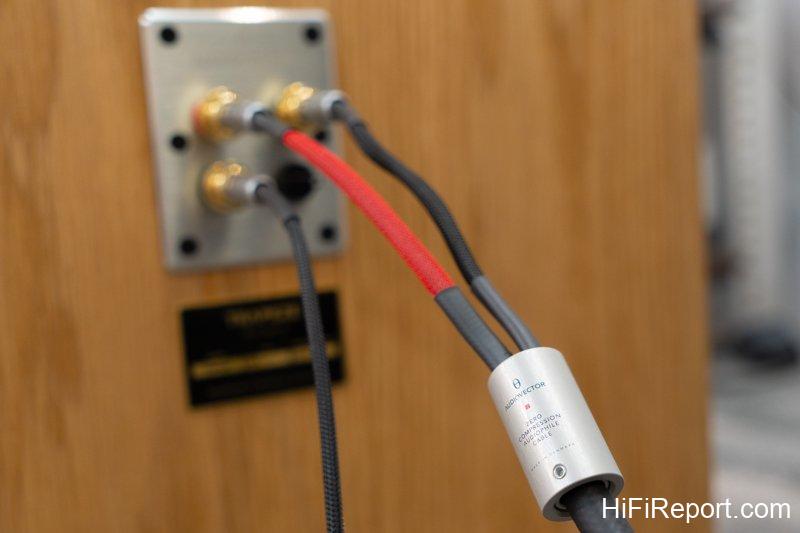
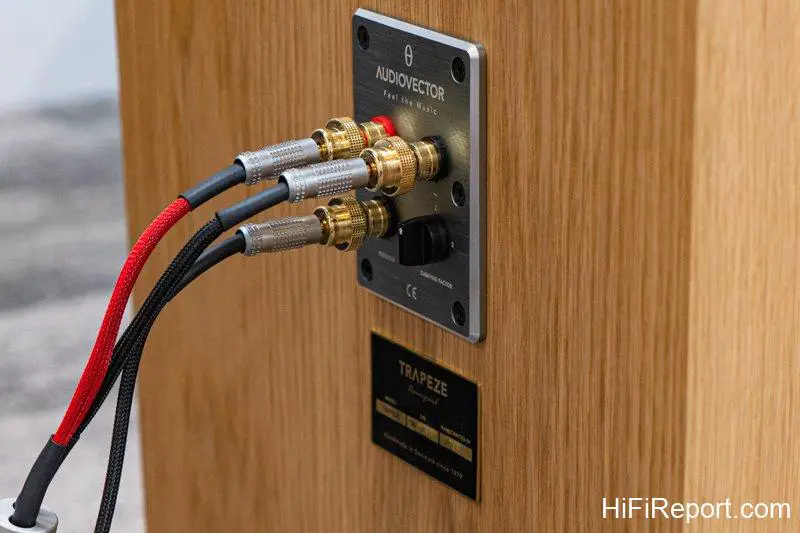
Another special feature of the Trapeze Reimagined’s crossover is the inclusion of a switch for amplifier damping factor adjustment, abbreviated as DFA (Damping Factor Adjustment). It offers three settings: one for solid-state amplifiers with medium damping factors, one for solid-state amps with high damping factors, and one for tube amplifiers with low damping factors.
This means that no matter what kind of amplifier is used at the front end, the Trapeze Reimagined can be well-matched, eliminating worries about switching amplifiers later. However, the manufacturer also advises that this is not absolute, and users should listen carefully and compare to find the sound they personally prefer.
FGC Driver Frame Grounding Technology: Reduces Distortion and Noise
Aside from the positive and negative speaker terminals and the damping factor adjustment switch, the Trapeze Reimagined’s terminal plate also includes a grounding terminal. The manufacturer calls this Audiovector Freedom (which sounds a bit like a political slogan: Freedom! Freedom!).
The explanation in the white paper isn’t entirely clear, but in short, it’s designed to dissipate static electricity generated by driver movement, and even electromagnetic accumulation on the metal frames. By grounding this weak current that can affect driver performance, the goal is to reduce noise floor and distortion.
For this purpose, the manufacturer has designed an optional grounding cable. Left and right speakers can share one, with two grounding wires connecting to a single male power plug. It just needs to be plugged into a grounded power outlet. Of course, if the user has a better grounding box available, they can connect to that as well.
Counting it all up, compared to the original version from 1979, truly only the “visual resemblance” remains. From head to toe, inside and out, everything is different.
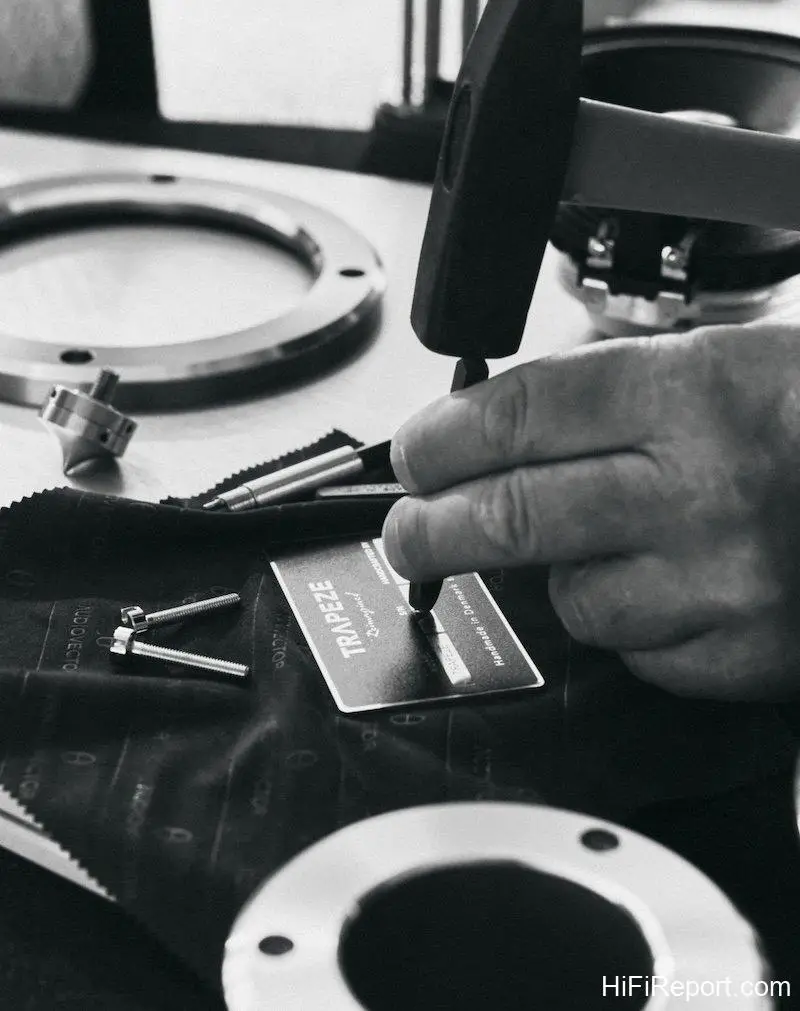
DMD Double Mechanical Decoupling: Dual Aluminum Plates with Steel Balls
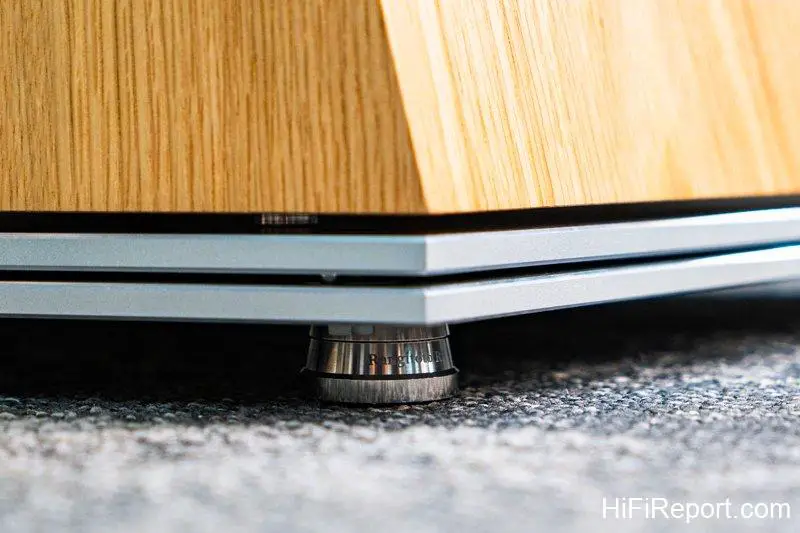
The base of the speaker cabinet doesn’t feature overly elaborate isolation structures, but there’s still clever engineering in its simplicity. Through two layers of aluminum alloy base plates with carbon steel balls sandwiched in between, combined with CNC-machined spikes, vibration transmission is blocked, and resonances are eliminated. This is the DMD (Double Mechanical Decoupling) technology.
The result is a clear and expansive soundstage, possessing both width, depth, and height. Is this the case? We’ll find out by listening.
HiFiReport Deploys Flagship Front-End Gear
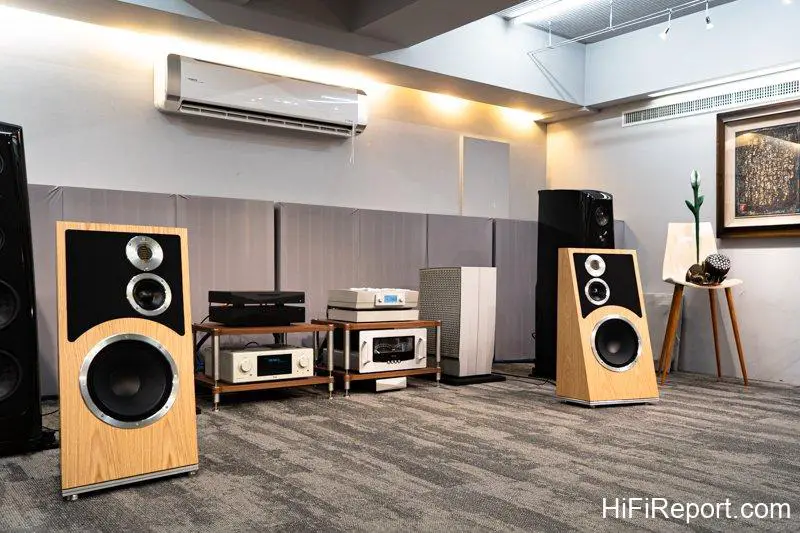
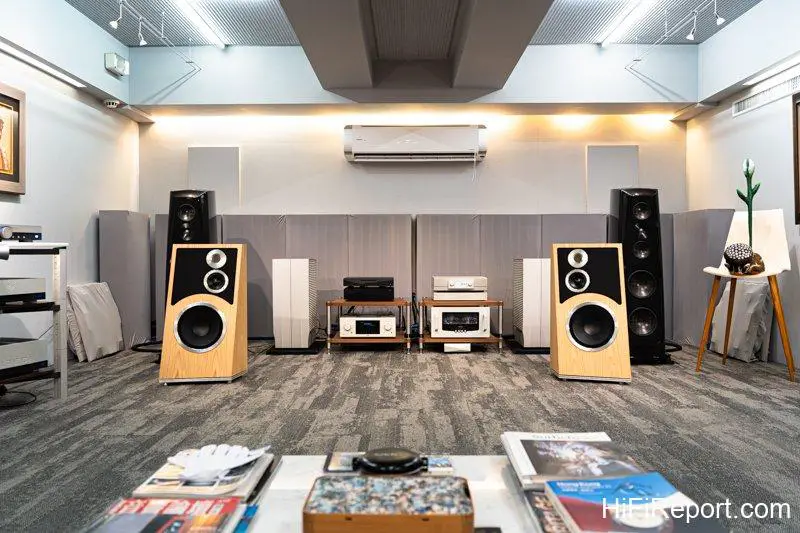
The listening session took place in HiFiReport Audio’s large listening room. The spacious environment is perfect for allowing large speakers to breathe and unleash their energy, and the Trapeze Reimagined felt right at home.
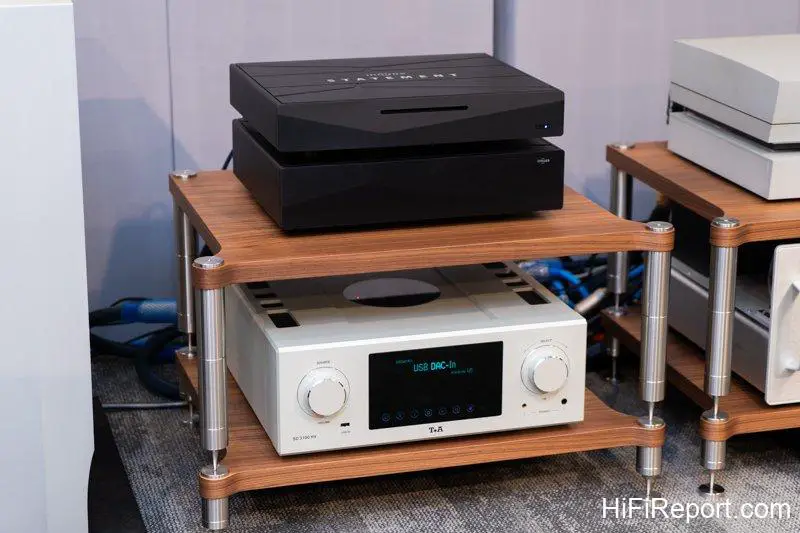
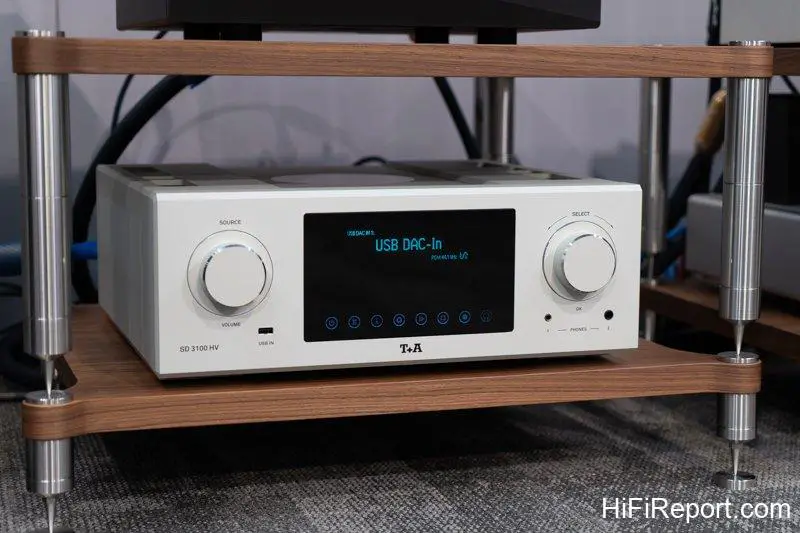
The source was an Innuos Statement paired with a T+A SD 3100 HV. The former is Innuos’ flagship music server with an independent power supply; the latter is a streaming DAC from T+A’s top-tier series, offering a more minimalist option by omitting the SACD/CD transport of the MP 3100 HV.
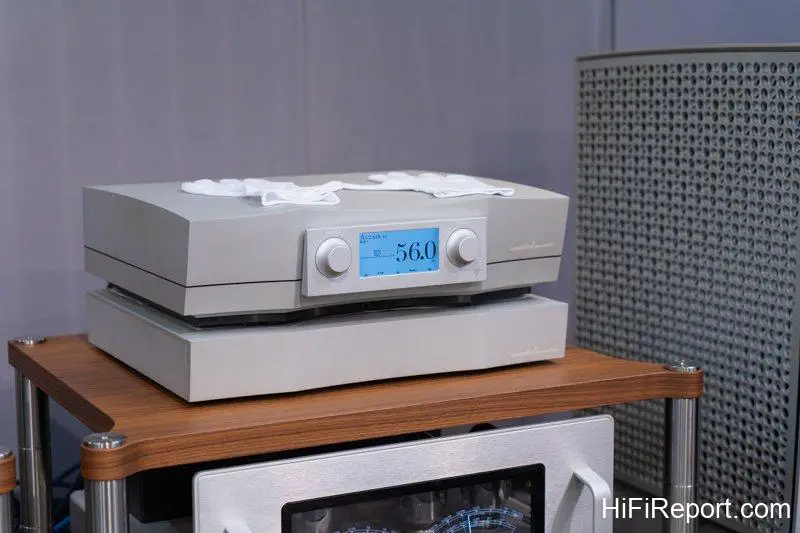
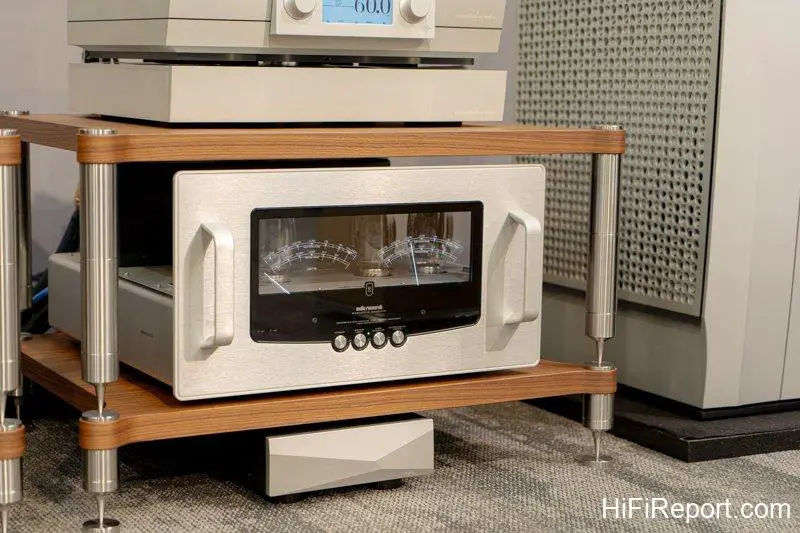
The amplifier primarily driving the Trapeze Reimagined was an Audio Research Reference 80S, a stereo power amplifier producing 70W per channel using 2 KT150 tubes, featuring transparent glass GhostMeters on the front. Since a power amplifier was used, a preamplifier was also needed. HiFiReport generously used the Constellation Altair III, a flagship preamplifier normally reserved for their Lyra setup, to complete the system with the Reference 80S. Lucky me to be listening to the Trapeze!
Clear, Crisp Sound with Surprising Bass Power
The sound of the Trapeze Reimagined is clear and crisp, yet the bass is full and deep. Those who appreciate a clean, articulate midrange with high resolution will be deeply captivated. It can conjure up a clear sonic image with sharp, distinct outlines. I believe Ole must have spent a great deal of effort pairing this AMT tweeter with the 4-inch midrange.
The transparency of the Trapeze is thoroughly modern. Although its appearance is styled after the 70s and 80s, its inherent character is completely contemporary, even avant-garde. It harbors an ambition to unearth every piece of information for you, irresistibly drawing you into the deepest recesses of the music to explore every textural detail.
Clean, Transparent, Fast: No “Old Sound” Here
Take, for example, Ernest Ansermet conducting the Suisse Romande Orchestra in Falla’s “The Three-Cornered Hat.” In the overture, the timpani and brass appear with spirit and clear rhythm. The drums are solid and incredibly dense.
I had originally expected a speaker like the Trapeze Reimagined, whether called “reprint” or “retro,” to carry a certain “old flavor” – perhaps sounding a bit richer, thicker, warmer, and fuller. However, it was completely different from my expectation.
The Trapeze Reimagined’s sound is crisp, clean, and transparent, with a fast pace and absolutely no lingering delays. The drum sound tells you just how fast it is; the brass reveals exactly how bright it is. The crisp castanet clicks scatter like raindrops, sharp and energetic. Beyond the drums and brass, the castanets are also exceptional. When Teresa Berganza’s voice enters, the vocal line is clear, full of energy, and presented with a sense of space. The male response of “Hey!” is powerful and robust, accompanied by clapping and foot-stamping, truly vigorous and spirited. A short overture was enough for the Trapeze Reimagined to fully showcase its charm. Original content from hifireport.com.
Combining Small Speaker Resolution and Transparency with Large Speaker Effortlessness and Scale
The Trapeze effortlessly expands into a wide and spacious stage. The soundstage is large and open, by no means confined. Consider the first movement of Beethoven’s Triple Concerto performed by Yo-Yo Ma, Anne-Sophie Mutter, and Daniel Barenboim. The opening is a spirited tutti, with powerful string playing. The low strings have sufficient thickness.
The first solo instrument to appear is the cello. Yo-Yo Ma plays with his characteristic lyrical tone, contrasting with Mutter’s bright and robust violin, and Barenboim’s neutral and gentle piano. Three people, three different flavors, three personalities, yet they blend together harmoniously.
I really like the power and energy that the Trapeze releases – that effortless posture and open sound are quite different from typical “tower” or “column” speakers. The sense of ease brought by the 12-inch bass, combined with the wide baffle, exhibits a composed demeanor usually found only in large speakers, particularly in its ability to convey the scale of the bass. When the strings (especially the low strings) swell, that solid, dense, weighted sound is incredibly satisfying.
Its impressive resolving power is also evident in this piece. I can clearly grasp the texture of the string instruments – whether cello or violin – the frictional texture produced by the bow meeting the strings during playing is clearly revealed. I also appreciate how its excellent resolution effortlessly sorts out the layers and structure of the music. Whether it’s the ensemble of sections or the composition of harmonies, I especially like how it portrays the wonderful counterpoint written by Beethoven. As a serious classical music listener, the rich information resolved by the Trapeze makes it easy for me to grasp the essence of the music. This deserves high praise!
Unimpeded, Direct Openness: A Thrilling Listen
Don’t be fooled by its relatively shallow cabinet depth into thinking the bass is merely “okay.” The Trapeze’s bass can plumb the depths and achieve satisfying fullness. In the track “So What” from Miles Davis’s “Kind of Blue” album, the opening bass plucks are both full and round. What surprised me most was how clear and textured the bass was.
The drum kit and piano then enter, followed by the saxophone. The sonic signatures of each instrument are full of detail. The Trapeze’s sound is bright and crisp, clean and transparent. I believe the Audio Research Reference 80S also contributed significantly. Audio Research’s modern tube amplifiers always have a charming sheen and warm brightness, never sounding murky or indistinct. This truly allowed the Trapeze to perform optimally. Listening to Miles’s trumpet, Coltrane’s tenor sax, and Cannonball’s alto sax afterward – these different “brass” instruments each have distinctly defined sonic textures.
I truly love the unimpressed energy of the Trapeze’s sound – abundant, direct, open, and clear. There’s no obstruction, no veil; the music comes straight at you. That feeling of being “thrilled” isn’t something every speaker can deliver.
Live Sound That’s More Live Than Life Itself
The Trapeze makes old recordings from 1959 sound as vibrant and energetic as new ones. Let’s switch to another classic recording from 1959: “Belafonte at Carnegie Hall.”
The Trapeze presents a broad soundstage. That “busy” stage is truly alive! Whether it’s Belafonte’s singing or the band’s accompaniment, the picture is vivid, getting the blood pumping. The Trapeze is fast enough and resolving enough to clearly render every subtle variation in Belafonte’s singing – his articulation, vibrato, and vocal nuances are all crystal clear. As for the accompanying mandolin, guitar, bass, etc., in the background, they are also heard clearly and distinctly. On many systems, the accompaniment is often faded into the background, but here I heard extremely clear and correctly proportioned accompaniment.
Whether it’s “Darlin’ Cora” or “Sylvie,” you can witness the impressive clarity and vivid performance I’ve described. If I were to say that the Trapeze transported me to the Carnegie Hall stage from sixty years ago, experiencing that atmosphere and those emotions, it would be no exaggeration. Even in “Matilda,” while you can still hear the age of the recording, the lively atmosphere of the stage that day remains fresh. Listening to Belafonte’s whistling and vocalizations, the laughter, applause, and singing from the audience, and the accompaniment of the conga drums, guitar, and flute – oh, the liveliness of “Matilda” played by the Trapeze is truly more live than life itself.
The Satisfaction of Grasping All the Stacked Layers
If a system has sufficient resolution and the tone is direct and natural enough, listening to Hans Zimmer’s film scores makes it easy to grasp the multiple layers stacked within, and also appreciate the texture of many of the unique instruments used.
In the first track “Dream of Arrakis” from the “Dune” soundtrack, the opening percussion is sharp and energetic. The subsequent rhythmic sounds are difficult to identify, but what should be deep is deep, and what should be firm is firm. When vocals blend in, simultaneously layering wind sounds, musical notes, and rhythm, it seems chaotic, yet the layers are discernible. This is the Trapeze’s capability.
The custom-made horn sounds at the beginning of “Herald of the Change” are unique. Behind the repeating, monotonous notes, the harmonies gradually build up, adding to the mystery and suspense after the powerful, deep bass enters. Listening to the texture of the double bass playing and the peculiar sounds of the vocal mixing here, the origin of these sonic components seems clear when reproduced by the Trapeze. Here, I must emphasize again: this layered, resolving, and deep bass is incredibly satisfying to hear!
Faithful, Evocative, and Emotional
Listening to Jeff Buckley’s “Hallelujah,” the guitar arpeggios sound crisp and clean. The clear fingerpicking is so vivid it’s like watching it. The plucking of the steel strings, captured by the pickup and amplified through the sound system, results in a clear difference between the sound of the electric guitar, even when played clean, and that of an acoustic guitar. Listening to the decay of the guitar notes is truly beautiful.
The sheen and character presented by this AMT tweeter are superior to those of a silk dome tweeter. Just as I mentioned earlier with instruments like trumpet and saxophone, instruments made of brass, the perceived sound has an added layer of metallic texture that is difficult for soft domes to reproduce.
As for Jeff Buckley’s voice, as the emotion builds and stacks, with his skillful control and release, it is full of infectious power. As I said before, expressing details like articulation, pronunciation, and vocal technique is not difficult for the Trapeze; its resolution is already excellent. However, it has something even more impressive: the instant, ever-present sense of energy. When Buckley’s voice reaches its peak and energy bursts forth, the Trapeze always delivers the song’s rich emotion with unrestrained, uncompressed volume. Isn’t this where music truly moves us? Without this, how could it still be considered captivating?
Was Ole Kilfoth a Rock Fan?
Listening to AC/DC’s “Back in Black” album, AC/DC’s wildness is fully revealed. The Trapeze presents an expansive soundstage unrestricted by the speakers’ separation. I usually don’t talk about “soundstage” in rock music, but the “stage” I heard here was truly large.
The opening bell in “Hells Bells” sounds full and substantial, yet retains the vitality of the note’s upward decay. Subsequently, the electric guitar and drum kit enter in order, and the sound gradually becomes richer. Lead singer Brian Johnson’s strained and piercing vocals appear, and everything weaves together without becoming messy or chaotic. Listening to the impact of the drums, paired with the guitar’s roar, is truly tense and powerful.
In the album’s title track, “Back in Black,” the electric guitar has tremendous thickness, combined with full, robust drums. They hit you head-on, leaving you defenseless, only able to nod your head along. The Trapeze’s 12-inch bass is truly, truly, truly not just for show. Its pleated surround creates a fast response that makes rock music sound this ferocious. The hidden 8-inch bass working isobarically certainly makes sense; it undoubtedly contributes to this speed and fierceness. I suspect Ole is probably a rock fan, otherwise, how could the Trapeze play AC/DC with such fervor?
Carrying the Aesthetic Essence of an Era
Finally, I want to share my thoughts on the Trapeze Reimagined speakers, inspired by a particular album. In 1979, the same year the original Trapeze was born, Michael Jackson released “Off the Wall.” This album, combining funk, disco, and R&B, can be said to have summarized an era. Upon its release, it was widely acclaimed, immediately garnering top ratings from almost all music magazines. Unexpectedly, it didn’t win a Grammy the following year.
Despite this, “Off the Wall” was ranked 36th on Rolling Stone’s list of “The 500 Greatest Albums of All Time,” included in The Independent’s “40 Albums You Must Hear Before You Die,” and listed as the 23rd of The Guardian’s “50 Key Events in the History of Pop Music.” “Off the Wall” still sounds impressive today. Regardless of Michael’s exquisite singing and beautiful voice, its arrangement, harmonies, accompaniment, and recording are all magnificent. So, winning awards is not important. Being remembered, being cherished, and being appreciated – that is the value that truly endures forever.
The Trapeze Reimagined is the same. Elevating the cultural perspective, we can see that the Trapeze reflects the aesthetic of the 70s and 80s. Reappearing 45 years later, its summarized essence is even richer. However, if Audiovector hadn’t released this reprint, many people would have forgotten its existence, and I certainly wouldn’t have known that Audiovector once made such a speaker. Just as I can hear the sum of the popular music elements of an era in “Off the Wall,” I can also understand what Ole Kilfoth truly wanted to convey in the Trapeze Reimagined.
Specifications
* **Type:** 3-driver, 3-way floorstanding speaker
* **Frequency Response:** 23Hz~53kHz
* **Sensitivity:** 88dB
* **Impedance:** 8 ohms nominal, 6.5 ohms minimum @ 20kHz
* **Distortion:** <0.2% THD @ 90 dB SPL * **Crossover Frequencies:** 500Hz, 3,000Hz * **Power Handling:** 450W * **Dimensions (HxWxD):** 875 x 420 x 435 mm *