
AURALiC ARIES Wireless Streaming Bridge Review
Previously, we provided an in-depth introduction to the AURALiC VEGA DAC, highlighting its impressive hardware specifications and decoding capabilities, especially considering its competitive price point. This time, we are focusing on the ARIES Wireless Streaming Bridge. Why “bridge”? Because through network connectivity, the ARIES can access and play various music files stored on your network, subsequently outputting a digital signal to an external DAC for decoding.
In today’s high-end audio market, alongside vinyl and CD/SACD systems, high-resolution audio file playback has become a mainstream trend. Therefore, the emergence of products like the ARIES is hardly surprising. Similar products exist, such as those from the Korean brand Aurender, and the more familiar digital streaming devices from Lumin. However, Lumin products typically include a built-in DAC, unlike AURALiC or Aurender, which necessitate pairing with a separate DAC.
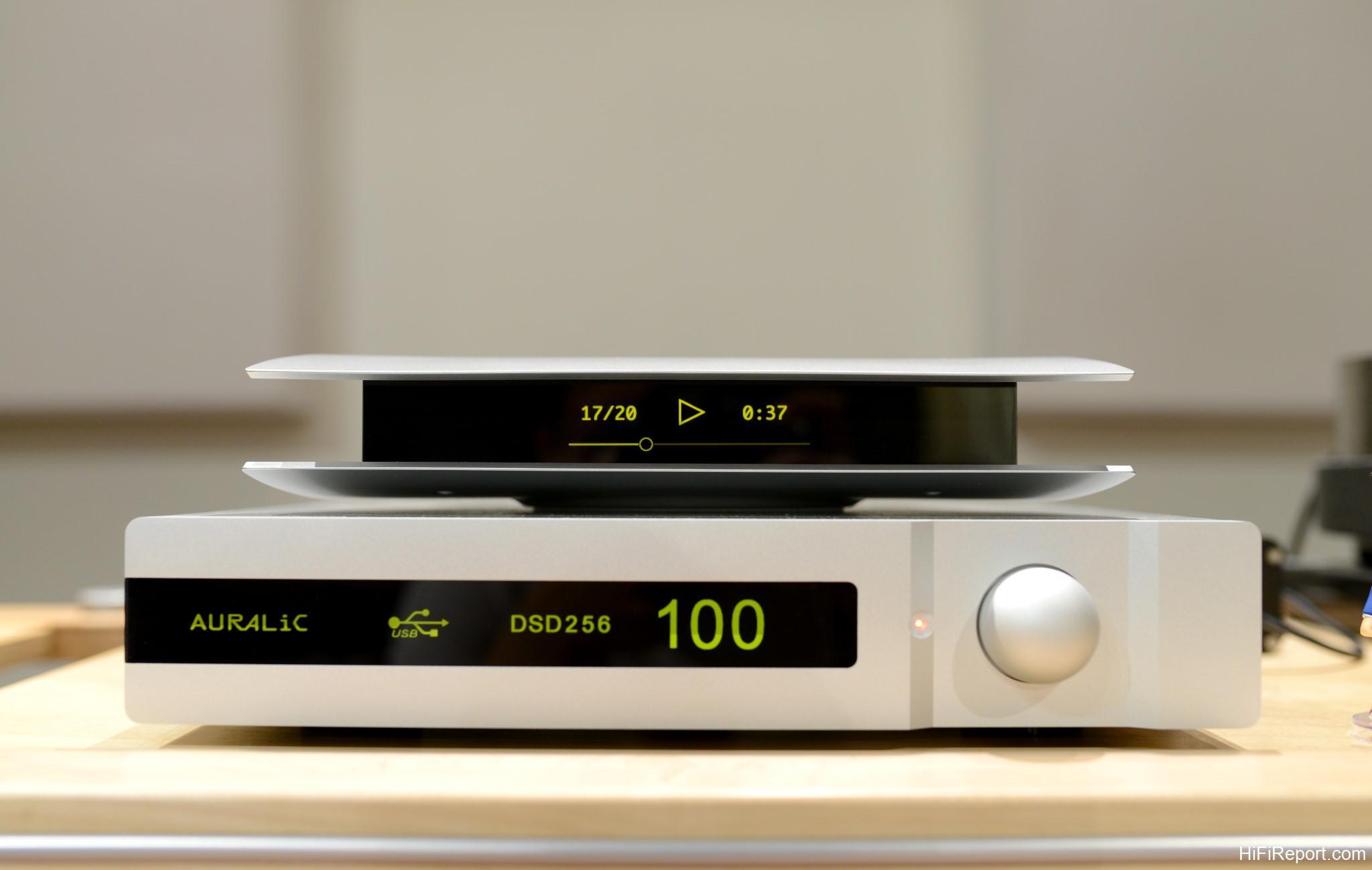
In essence, the ARIES and VEGA combination from HiFiReport resembles the traditional CD Transport and DAC setup, with the ARIES acting as a CD Transport, but reading music files from network streams instead.
If you’ve encountered AURALiC products before, you’ll recognize the dedication of this company. Not only are their products mature and well-engineered, but their sales and service systems are also comprehensive. AURALiC was founded by two accomplished individuals of Chinese origin. One is Mr. Xuanqian Wang, the chief designer of AURALiC, who is not only an electronic engineering designer and professional recording engineer but also a concert pianist.
The other is Mr. Yuan Wang, who owns a precision instrument design and manufacturing enterprise. Driven by a fervent passion for music and audio, they met at a Berlin forest concert and, finding common ground, established AURALiC.
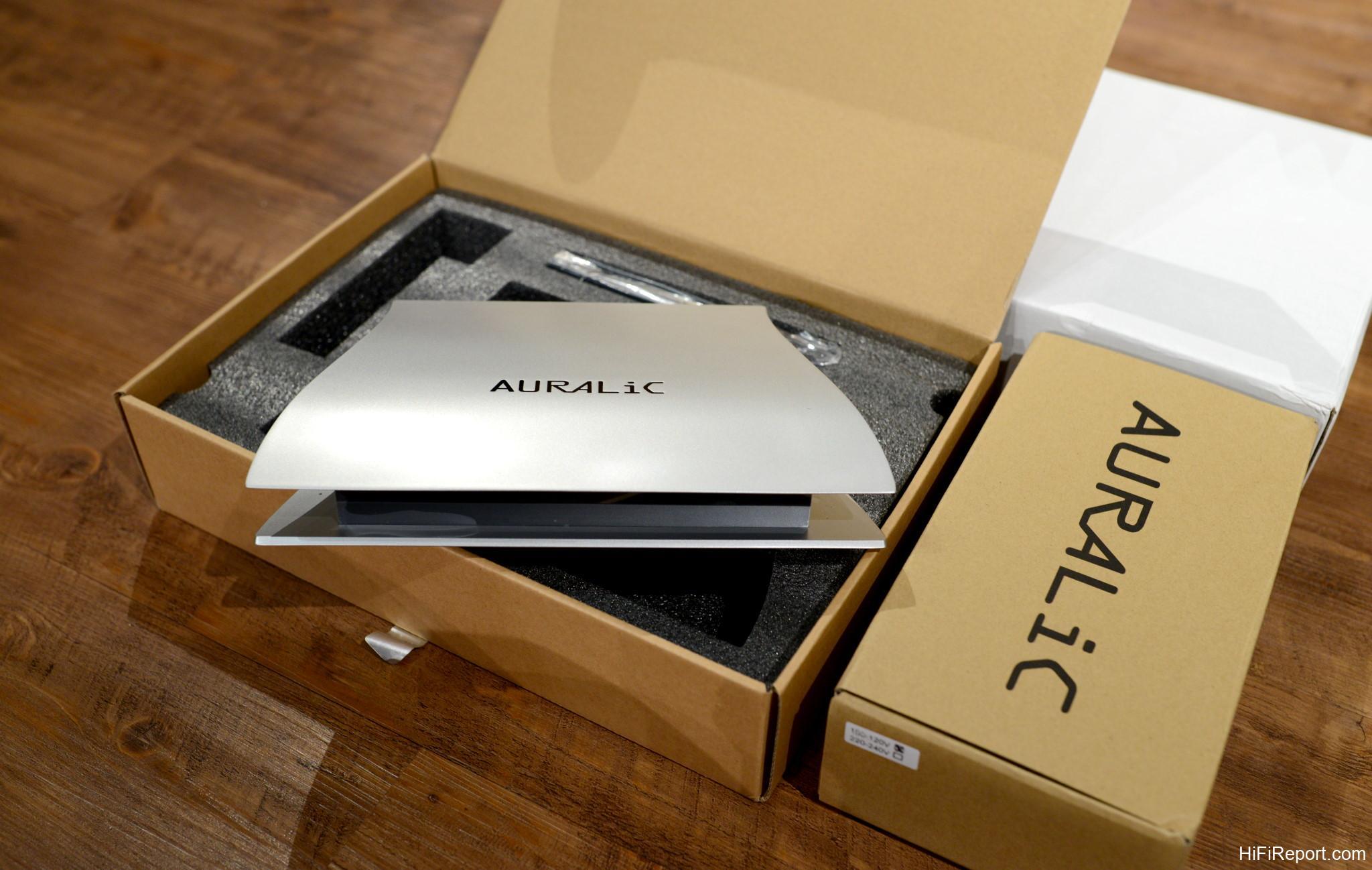
The ARIES arrives in two boxes. One contains the ARIES unit itself, while the smaller box houses the ARIES’s independent linear power supply. The larger white box is the outer shipping container.
Upon opening, you’ll find a quick start guide, also available for download in its latest version from the official website.
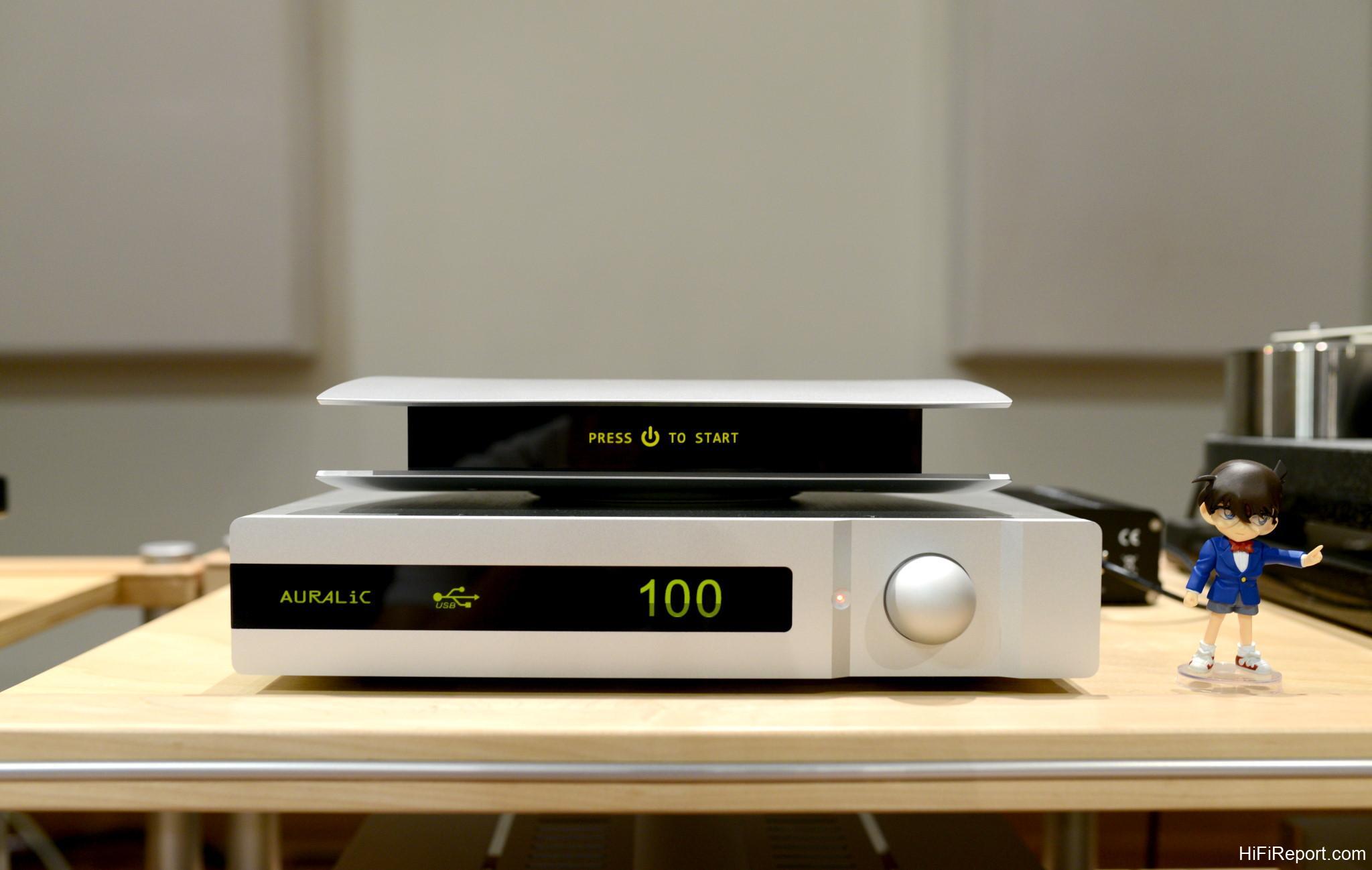
The ARIES boasts a very modern and stylish aesthetic. The carefully designed, flowing lines exhibit a Nordic design influence, making it an attractive addition to any home. The main unit itself is remarkably light, partly due to the weighty linear power supply being housed externally. It’s worth noting that the ARIES enclosure is made of plastic, unlike the aluminum used in other AURALiC products. Why not aluminum for the ARIES? The reason lies in the ARIES’s built-in WIFI capability.
A metal enclosure would shield the WIFI signal, and external antennas would compromise the intended design aesthetics. Therefore, the manufacturer opted for a plastic enclosure. To maintain visual consistency with their other products, they invested considerable effort in processing the plastic to achieve a texture closely resembling aluminum.
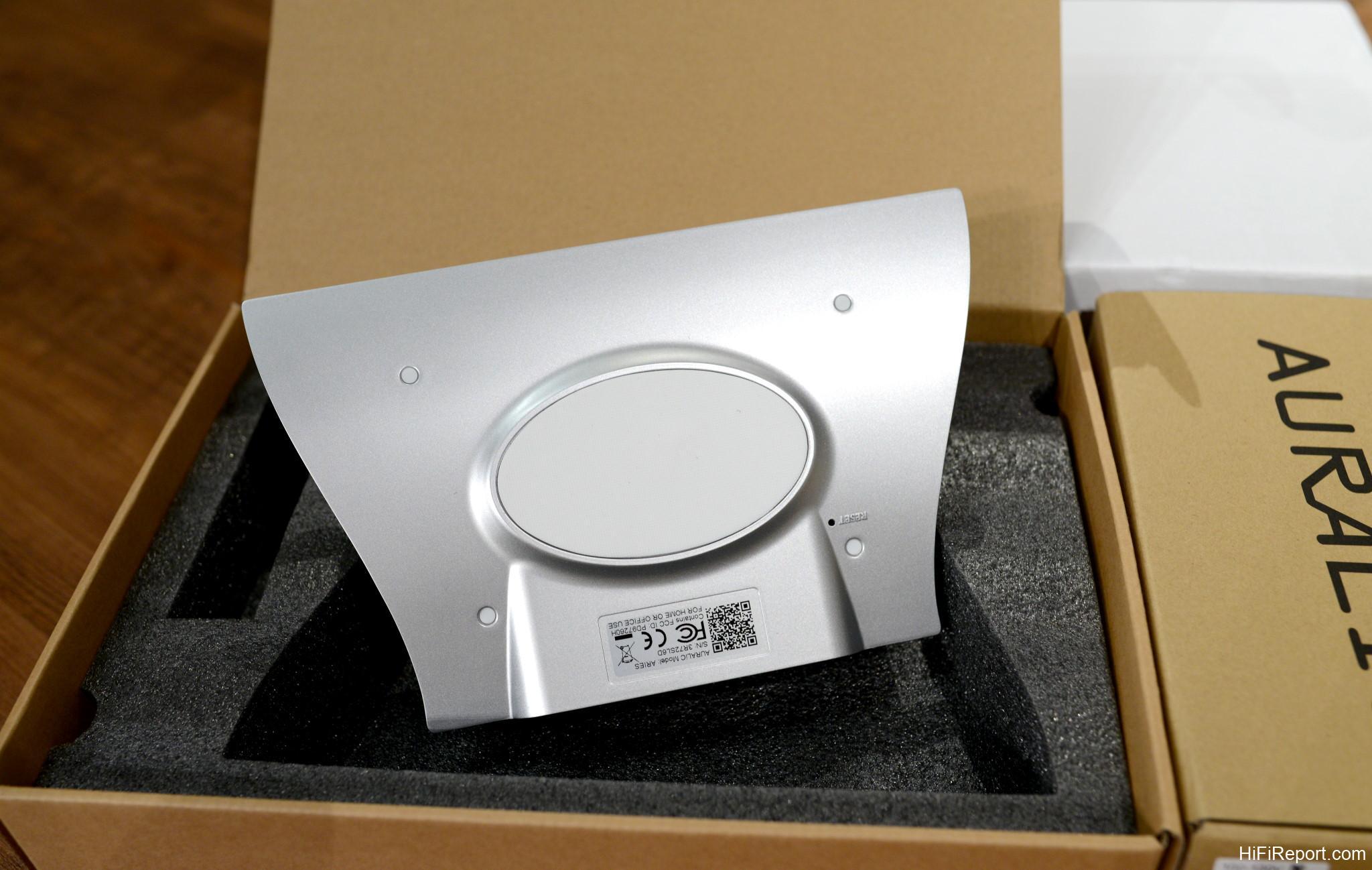
AURALiC states that the molds for this plastic enclosure are exceptionally complex, resulting in a low yield rate and a production cost exceeding that of aluminum enclosures. This detail further underscores the meticulousness of the manufacturer, with every aspect carefully considered.
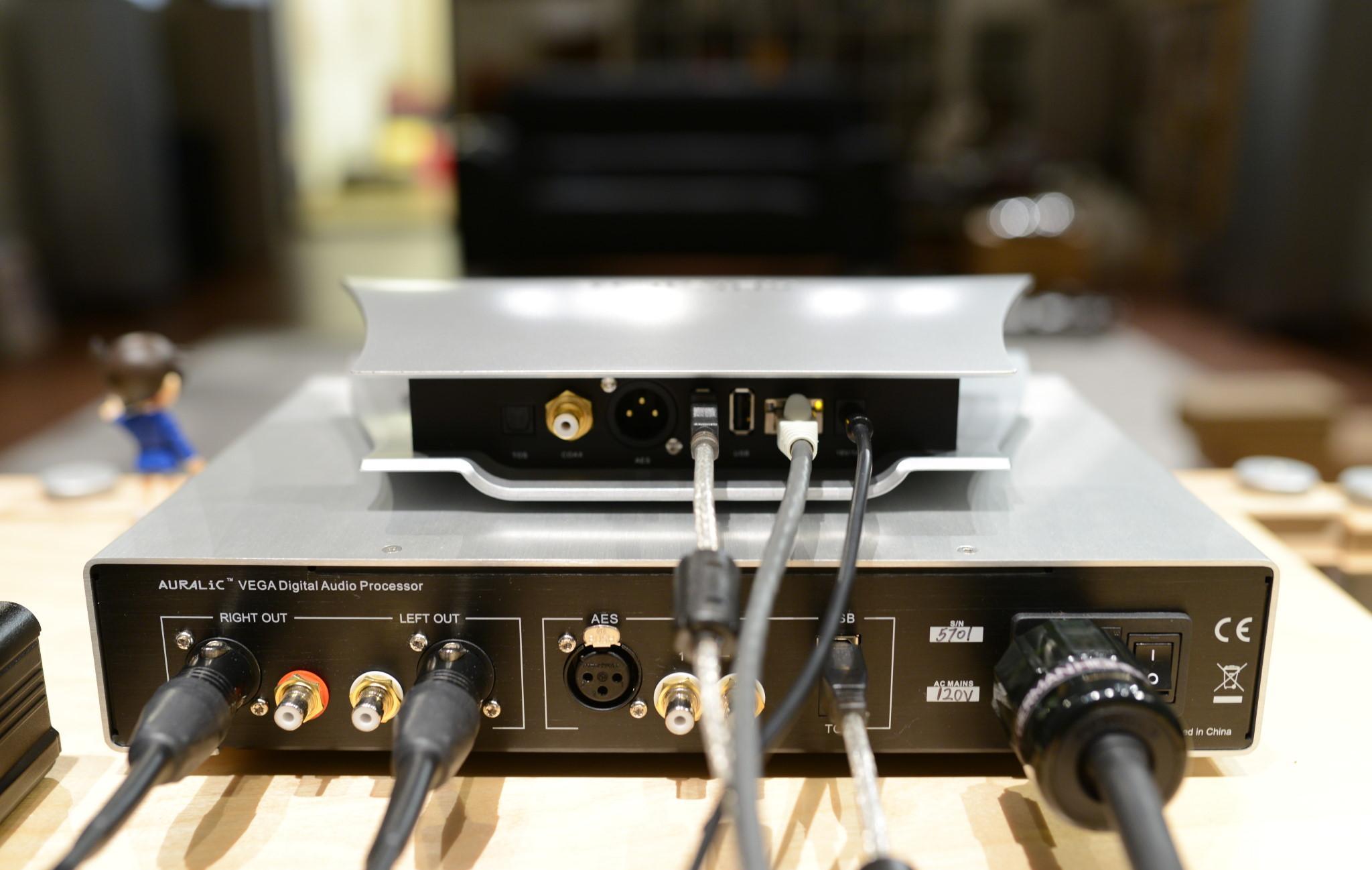
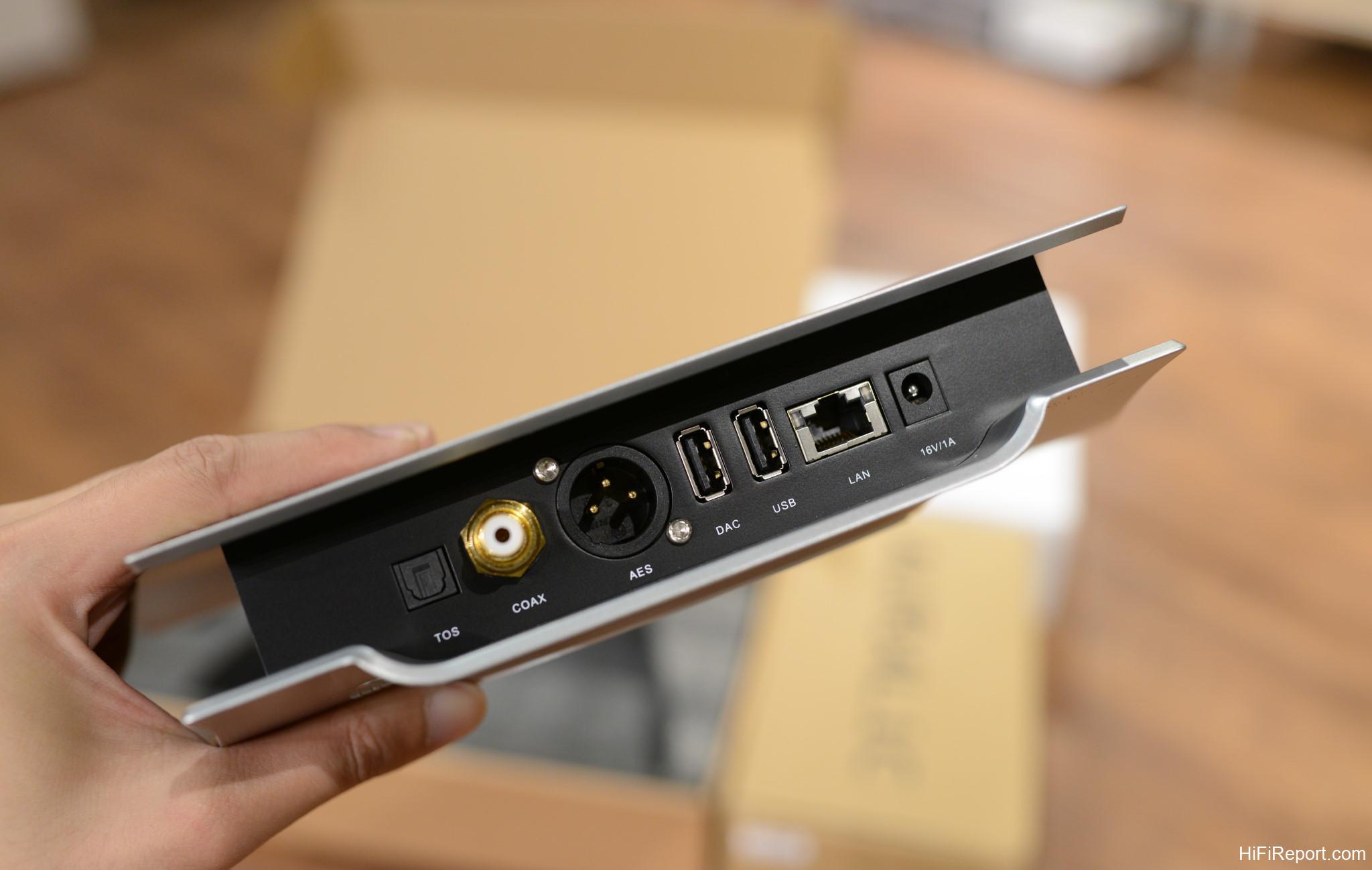
The ARIES is equipped with a comprehensive array of digital output interfaces, ensuring compatibility with various DACs. Naturally, USB supports the highest decoding capabilities.
The bottom of the unit features non-slip feet and a RESET button. This reset function can be useful if you encounter network environment changes or configuration issues.
The remote control is the same model used for the VEGA, allowing a single remote to operate both devices.
The independent linear power supply is voltage-specific. Ensure you have the 110V version for compatible regions.
A DC power cable is included to connect to the ARIES unit.
Peeking inside the power supply, you can vaguely discern a well-protected, substantial transformer.
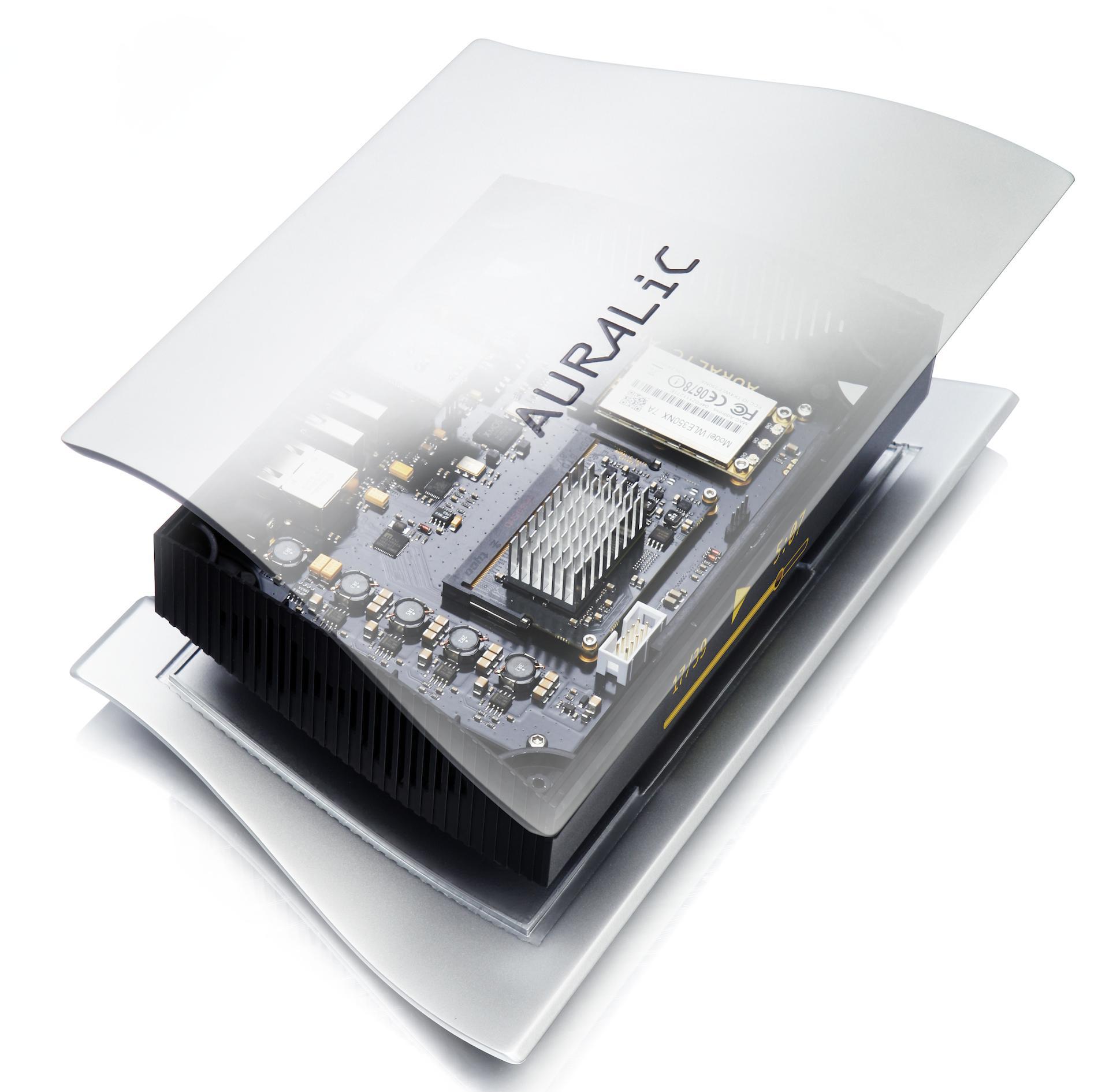
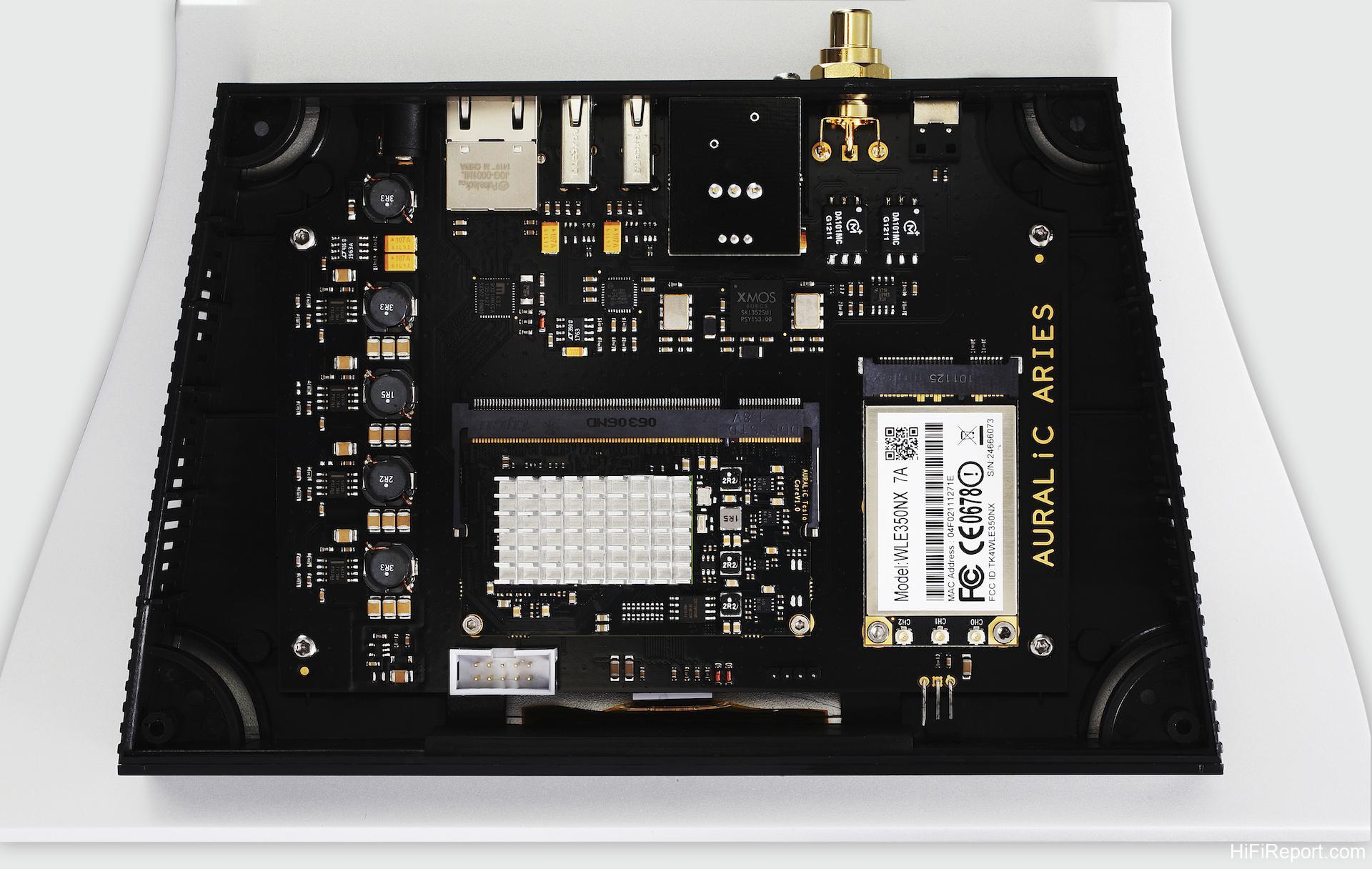
As the ARIES unit lacks external screws, and I refrained from disassembling it myself, I sourced an internal image online. The ARIES incorporates four proprietary core technologies:
Tesla Platform by AURALiC
This is the core processing engine of the ARIES, utilizing a powerful Quad-Core ARM Cortex-A9 processor (1GHz), 1GB of DDR3 memory, and 4GB of internal storage. Its processing power reaches an impressive 25,000 MIPS, more than sufficient for handling diverse music file formats. Furthermore, AURALiC is considering leveraging this robust platform for future features like DSD upsampling, room correction, or other DSP functionalities.
Gapless Multi-Room
The specially developed Lightning DS APP interface offers extensive functionalities, including support for multi-room audio systems.
Dual Femto Clocks
The ARIES incorporates dual Femto clocks, one dedicated to the USB output and another for the remaining digital outputs, aiming to minimize jitter to the lowest possible levels.
Low Noise Linear Power Supply
The low-noise independent linear power supply employs AURALiC’s Purer‐Power™ technology. Actual measurements reveal an exceptionally low noise level of only 10uV (20Hz-20KHz).
Setting up the ARIES is straightforward. Beyond power and network connections, I opted for a USB connection to the VEGA DAC. The next step involves installing the dedicated Lightning DS APP.
Lightning DS APP: Intuitive Setup & Operation
The first step is to search for and install the Lightning DS APP from the Apple App Store. Once installed, launch the app and follow the on-screen instructions step by step. The process is remarkably user-friendly.
After completing the setup as instructed, you’re ready to start playing music. Naturally, the first thing I eagerly tested was DSD 256 (11.2MHz) playback, the highest supported format, which worked flawlessly.
The Lightning DS APP is feature-rich. We’ll explore its functionalities as we delve into listening tests. For example, the file format-based categorization feature is highly appreciated by audiophiles.
Let’s examine some screenshots of the Lightning DS interface. A well-designed APP should be feature-rich yet intuitive to use and, crucially, responsive. Otherwise, it defeats the purpose of navigating vast music libraries in the network streaming era. It’s truly commendable how Auralic has invested significant effort not only in hardware but also in software development, making it exceptionally easy to get started.
AirPlay Support
This means that Apple devices can stream music to the ARIES via AirPlay. For instance, you can stream audio from YouTube viewed on an iPad.
This is a view of the feature list within the settings menu. It’s clear and organized, allowing you to customize settings according to your preferences and usage habits.
Internet Radio
Access countless internet radio stations worldwide for free, perfect for randomly discovering new music. I sampled several 320kbps high-resolution stations and was surprised by their impressive sound quality!
NAS Music Library Streaming
This displays the music files stored on my NAS. Upon the initial launch, Lightning DS will scan and build an index, ensuring exceptionally smooth browsing speeds. For subsequent additions or deletions, a simple update will refresh the index.
The playback screen offers a clean and informative interface. In the digital streaming era, the iPad becomes your ultimate remote control.
You can easily add tracks to your favorites or create playlists.
The right-hand panel displays the current playback queue, providing a clear overview of the tracks currently playing. You can also create and save various frequently used playlists for convenient access.
Music libraries can be browsed using different categorization methods.
You can directly log in to major online music streaming providers, including Tidal, Qobuz, WiMP, and more.
The online database support is incredibly robust. Auralic’s dedication is truly evident.
ARIES Specifications
* **Streaming Services**
* Local uPnP/DLNA library content
* TIDAL, Qobuz and WiMP online streaming
* Internet Radio
* AirPlay and Songcast
* USB hard drive files
* **Supported File Types**
* AAC, AIFF, ALAC, APE, DIFF, DSF, FLAC, MP3, OGG, WAV, WV and WMA
* **Sampling Rates**
* PCM in 44.1Khz – 384Khz at 16 – 32bits
* DSD64, DSD128, DSD256
* **Control Software**
* AURALiC Lightning DS
* AURALiC RC-1 remote control
* OpenHome compatible software
* uPnP AV compatible software
* **Media Server Compatibility**
* Minimserver, Twonky, Asset UPnP, JRiver
* DLNA/uPNP compatible server software
* **On-Device Display**
* 3” 256*64px OLED
* **Inputs**
* RJ45 Gigabit Ethernet
* Dual-Band WiFi connection
* USB 2.0 High-Speed for external disk
* **Outputs**
* USB 2.0 High-Speed for compatible DAC**
* AES/EBU, Coaxial, TOSLINK***
* **Power Consumption**
* Standby: <2W
* Playback: 15W at max.
* **Dimensions**
* Appox. 9.8″W x 7.8″D x 2.7″H (25cm x 20cm x 7cm)
* **Weight Specifications**