
Auralic Aries G2.2 Review
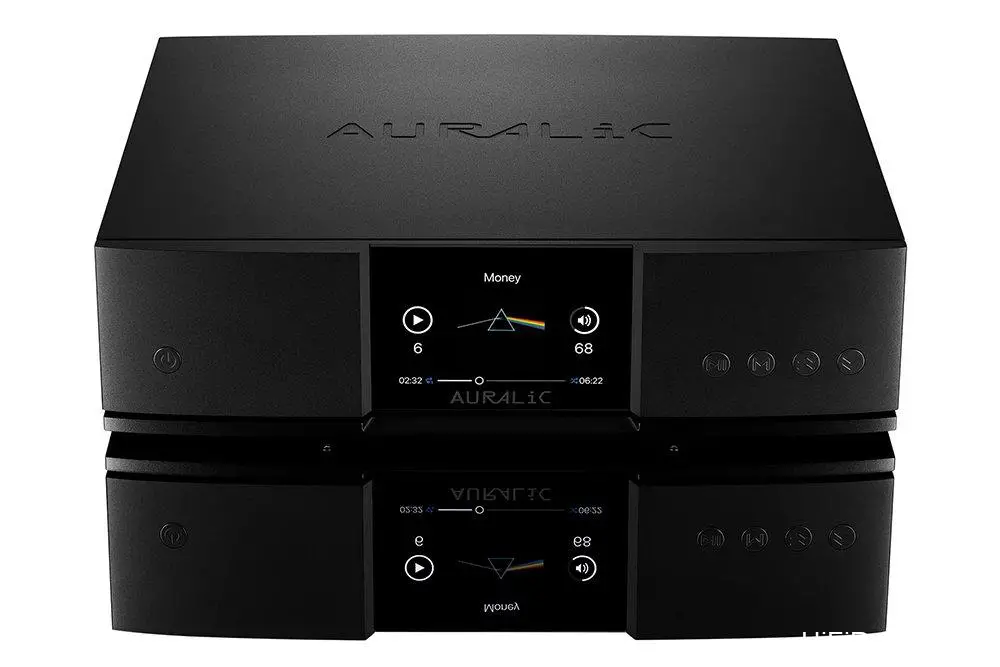
Having experienced many Auralic products, the Aries G2.2 is the one that has impressed me the most.
I even told my colleagues that this is the best-sounding Auralic streaming transport I have ever heard.
Focusing solely on Auralic’s Aries series of pure digital streaming transports, I have used the Aries Mini, Aries G1, Aries G2, and Aries G1.1. Including other models and those I’ve encountered informally, I have come into contact with the vast majority of Auralic’s machines.
In fact, when friends ask me for streaming device recommendations, I also suggest Auralic as a reference (one friend later bought an Altair).
Having listened to so many, in terms of streaming transports alone, the Aries G2.2 is the best sounding one from their stable that I have experienced.
I am aware that there is an even higher-end model, the Aries G3, about to be launched. Until then, the Aries G2.2 reigns supreme.
Lightning DS Software: Stable, Intuitive, and Natural
Is the Aries G2.2 really that good? Yes, it truly is.
When evaluating streaming players, I rely on an analytical framework built upon four key elements: “Software,” “Analog,” “Power Supply,” and “Mechanical Design.”
Since the Aries G2.2 is a digital transport, the “Analog” aspect is not applicable.
In terms of software, Auralic has the Lightning DS App. This system is very stable, the interface is intuitive, all function settings are within it, and importantly, the sound is natural.
If you don’t use Roon, the native Lightning DS is more than sufficient.
(Image Credit: Auralic)
Tesla G3 Core: 8x Performance Boost
Regarding power supply and mechanical design, we will discuss those later. Here, I want to first mention Auralic’s processing core, which can be considered a fifth key element.
“Core” refers to the “processor” or “computing platform.”
A streaming player, as a music playback server, is essentially an “audio-purpose computer.” It must have a processor and a corresponding computing platform as its working core.
Auralic players use their proprietary Tesla platform.
The Aries G2.2 specifically employs the latest Tesla G3 (third-generation) streaming platform. At its foundation is a 64-bit architecture, 4-core processor, with a processing speed 8 times faster than the previous Tesla platform, designed to cope with the ever-increasing demands of digital audio data in the future.
It also incorporates “Direct Memory Access” (DMA) technology.
This allows audio input and output paths to directly connect to the processor core and access memory. This reduces latency and jitter by 90%, significantly improving data accuracy. Furthermore, the memory speed of the Aries G2.2 is 10 times faster than its predecessor, the Aries G2.1.
System memory has also been expanded to 4GB, ensuring smooth handling of even the most data-intensive high-resolution files.
In addition, there is a Proteus X1 co-processing platform based on a Xilinx XC7A200T FPGA chip. This platform optimizes the quality of digital audio, particularly recordings that initially sound harsh, resulting in improved sound quality and enhanced dynamics.
Among numerous audio manufacturers, few emphasize the computing core of their streaming players as much as Auralic does.
(Image Credit: Auralic)
Dual Femtosecond Clocks
Beyond the DMA technology, the master clock is also crucial for reducing jitter.
The Aries G2.2 is equipped with two sets of 60 femtosecond clock modules, one dedicated to 44.1X kHz sampling rates, and the other for 48X kHz sampling rates.

Corrected by these dual femtosecond clocks, the audio output of the Aries G2.2 exhibits extremely low phase noise.
This precision, down to one quadrillionth of a second, provides a more stable and accurate sound.
In terms of built-in clocks, the Auralic Aries G2.2 is an industry leader.
Dual Purer Power: Enhanced Linear Power
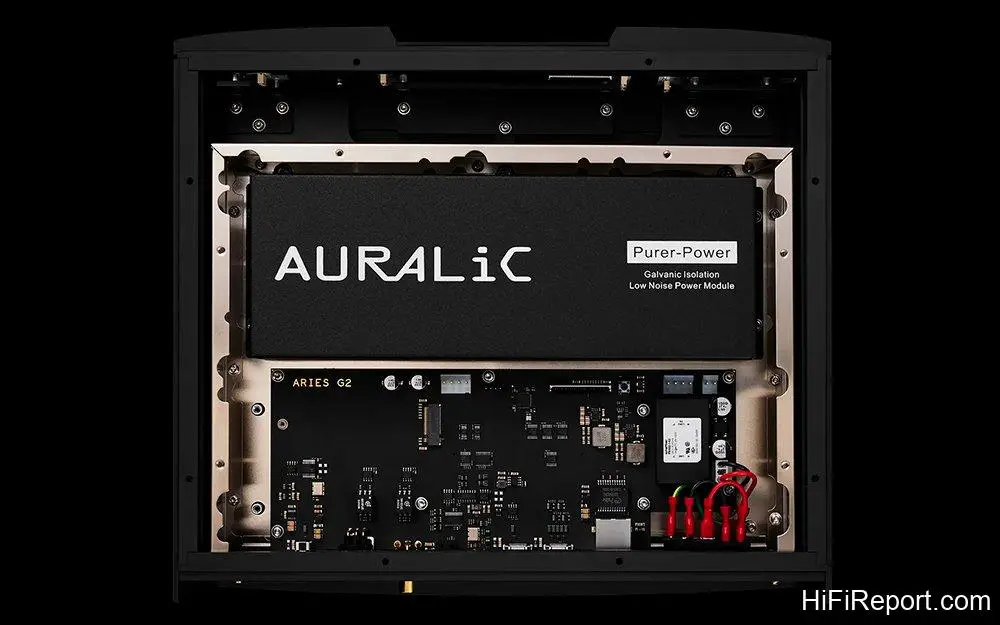
In terms of power supply, the Aries G2.2 utilizes Auralic’s signature Purer Power low-noise linear power supply. Compared to the previous G2.1, the power supply capacity has been doubled, resulting in a more stable and cleaner power delivery, and consequently, a lower noise floor in playback.
Two Purer Power units are employed: one supplies power to the processor circuit, LCD screen, and storage devices (including built-in or external hard drives), while the other powers more sensitive circuits, including the dual femtosecond clocks and USB output.
By separating the power supply for these sections, each circuit group essentially receives independent power, effectively eliminating interference between components.
How much of an improvement is this power supply? The manufacturer states that the noise level of all digital audio-related circuits is only 0.8 mV, an 80% reduction compared to the previous generation Aries G2.1.
As for the power supply for processor operations, the noise floor is only 27 mV, a remarkable 50-fold improvement over the Aries G2.1.
Even though they are producing source components like streaming transports and DACs, Auralic invests heavily in power supply design.
They understand deeply that to reduce noise and achieve full dynamics, significant effort in power supply design is indispensable.
(Image Credit: Auralic)
Isolated Digital Inputs: Reduced Distortion
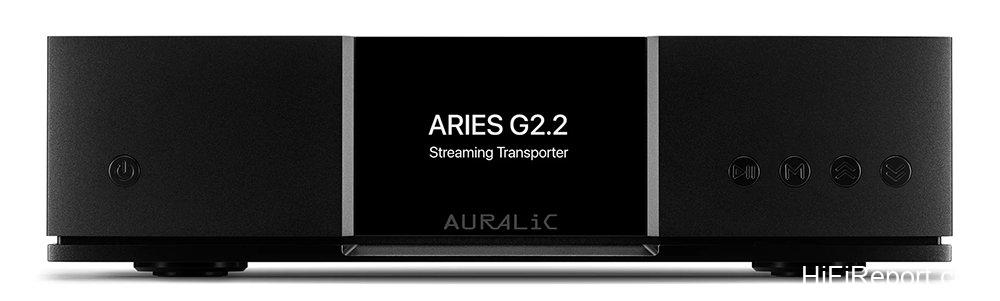
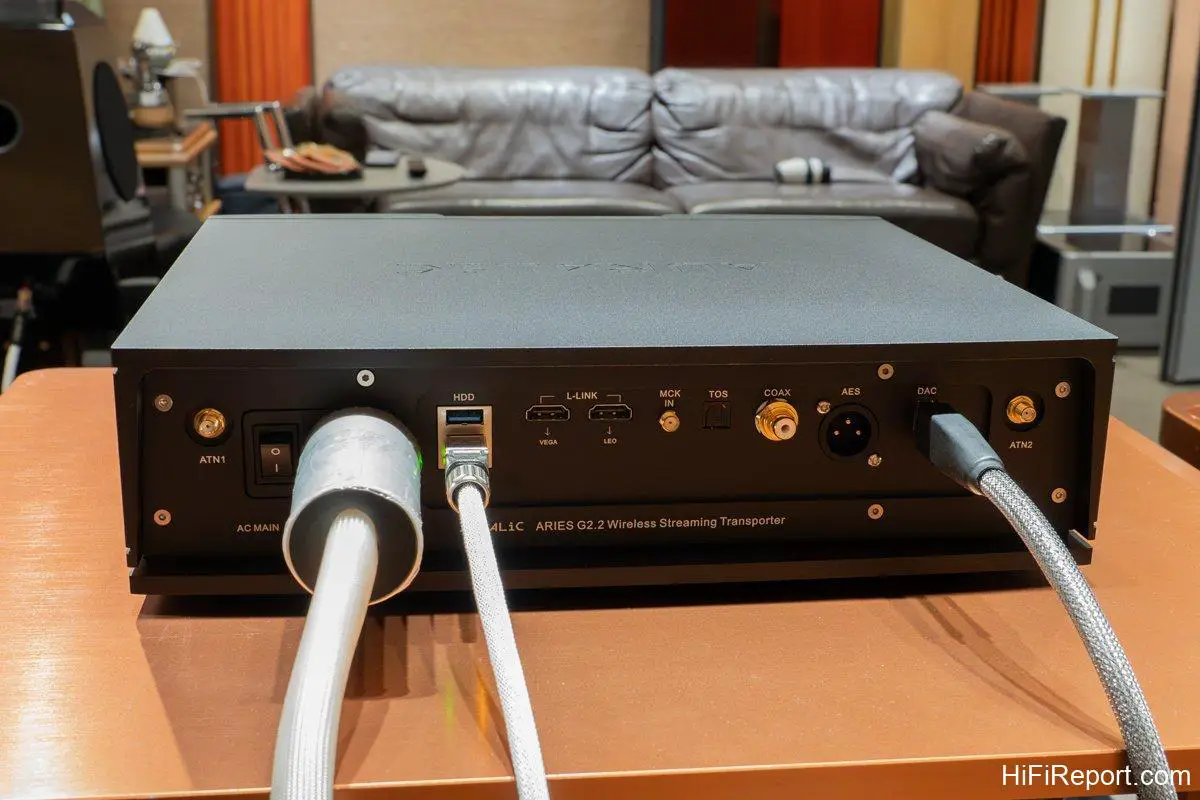
The Aries G2.2 is equipped with a comprehensive set of digital interfaces, including AES/EBU, RCA coaxial, optical, and USB.
Moreover, Auralic emphasizes galvanic isolation in its circuits. Isolation is not only implemented in key signal paths, but also on each digital output terminal.
Particularly, the USB port utilizes the latest second-generation galvanic isolation technology. It bypasses the USB’s own power supply and isolates EMI, ensuring that the digital signal clock is free from interference, resulting in lower jitter and more accurate signal transmission.
Currently, this technology is only implemented in the latest Aries G2.2 and the upcoming flagship Aries G3.
If users are using a DAC from Auralic’s Vega G2 series or above, they can utilize Auralic’s proprietary Lightning Link connection via HDMI interface for bidirectional transmission at speeds up to 18Gbps.
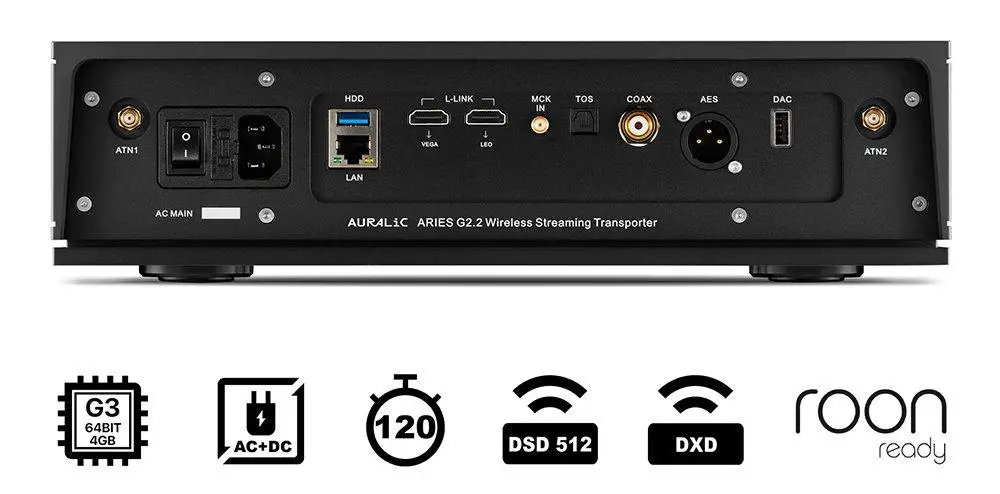
According to the manufacturer, this is currently the only truly jitter-free transmission interface in high-end audio.
The Aries G2.2 has two HDMI ports on the rear panel, clearly labeled. One is for Vega DACs, and the other is for the Leo GX.1 external clock (connecting to the Leo GX.1 clock also requires a MCK in clock cable).
Independent Power for Storage & USB CD Ripping
The Aries G2.2 follows Aries’ consistent design philosophy, allowing for internal hard drive installation. Users who require a built-in hard drive can opt for the version equipped with a 4TB NVMe solid-state drive.
If purchasing the bare unit, external hard drives can be connected via the USB 3.0 port on the rear panel.
As mentioned earlier, the power supply for storage devices in the Aries G2.2, whether internal or external, is independent, enhancing the performance of hard drive playback.
Furthermore, the USB 3.0 port on the Aries G2.2 provides a 1.5A power supply, triple that of the Aries G2.1. This ample power supply ensures compatibility even with power-hungry hard drives.
Additionally, this USB 3.0 input can also connect to a USB optical disc drive, enabling CD ripping through the Aries G2.2.
When designing the CD ripping process, Auralic adopted a similar procedure to Lightning Link file transmission. After reading CD data, the data is temporarily stored in memory and then compared multiple times to ensure data accuracy.

This approach eliminates potential jitter during transmission and avoids potential read errors from lower-quality disc drives.
While this feature might exist in other streaming products, few emphasize their access procedures like Auralic.
Versatile Connectivity: Wired & Wireless
In terms of network connectivity, the Aries G2.2, like other Auralic devices, offers both Ethernet and WiFi, providing both wired and wireless options.
Wireless networking supports 802.11b/g/n/ac tri-band WiFi. If your home router specifications allow, it is advisable to use higher frequency WiFi transmission.
Compared to potential interference from wired networks, Auralic encourages users to utilize WiFi.
While WiFi on other streaming devices might be a convenience for situations where running network cables is difficult, Auralic more strongly advocates for wireless transmission.
Dual-Layer Chassis & Suspension Feet: Noise & Vibration Isolation
Auralic has always paid meticulous attention to chassis construction. As a flagship product, the Aries G2.2 is no exception.
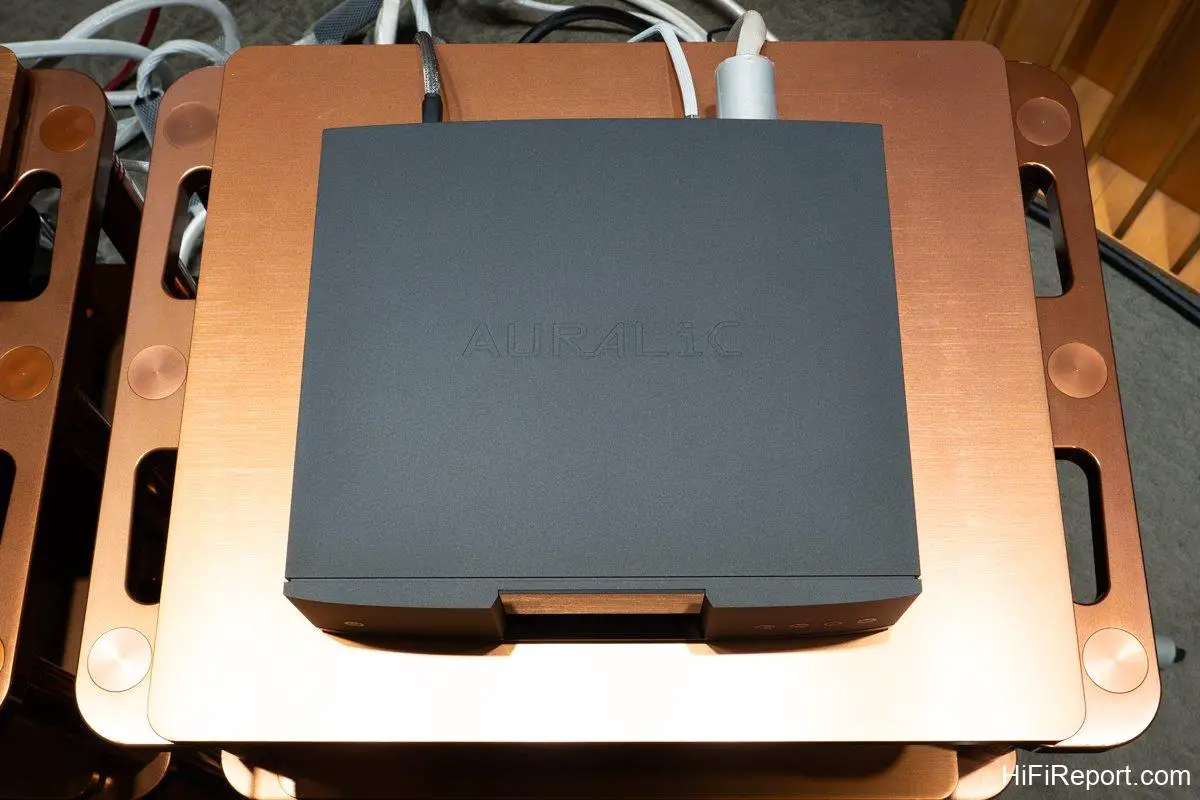
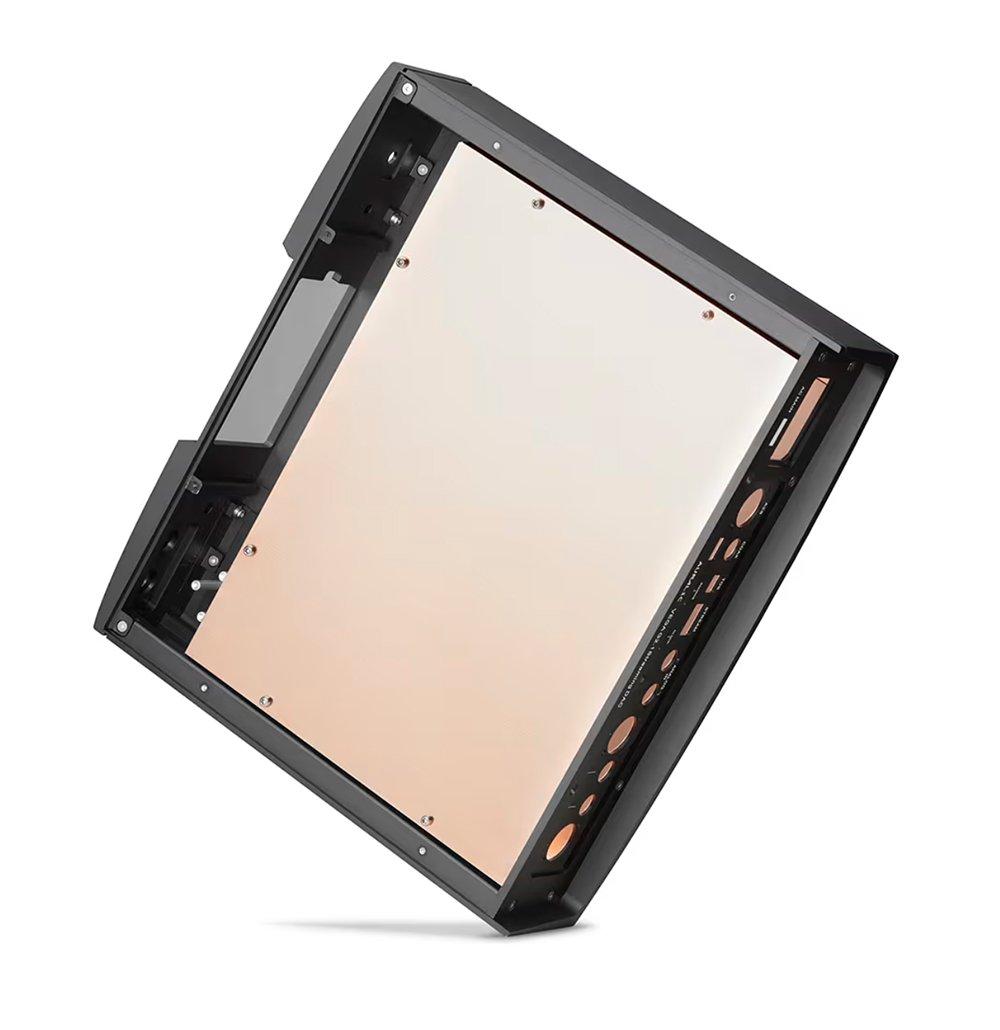
The Aries G2.2 employs a dual-layer chassis design. The outer layer is constructed from thick aluminum plates, while the inner layer is made of nickel-plated copper. This design not only shields against all electromagnetic interference but also provides a solid structure. This design, termed Unity Chassis II by the manufacturer, is a further advancement over the previous Aries G2.1.

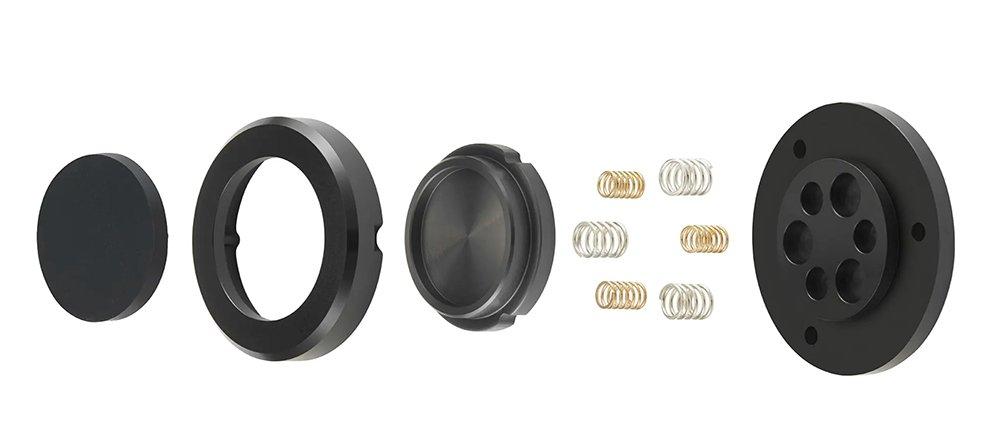
The four feet at the bottom are also newly designed, employing a composite structure with six springs of two different sizes inside, providing suspension-based vibration isolation – a sophisticated design indeed.
(Image Credit: Auralic) (Image Credit: Auralic)
Sonic Qualities: Clean, Transparent, and Natural
With meticulous attention to every detail, what is the result? Excellent sound, of course.
I praised it at the beginning of this article, stating that it is the best digital transport I have heard from Auralic.
What makes it so good? Cleanliness, transparency, clarity, and a sound devoid of digital artifacts. Instead, it offers both three-dimensionality and layering, with musical dynamics presented with composure and nuanced progression.
These characteristics alone speak volumes about the merits of the Tesla G3 in the Auralic Aries G2.2, the uniqueness of its DMA technology, the effectiveness of its dual femtosecond clocks and second-generation galvanic isolation technology, and the efficacy of Auralic’s pride – the Purer Power.
It is these advancements that make this latest generation Aries even better.
Musical Color and Soundstage Definition
Take Wagner’s orchestral music collection conducted by Herbert von Karajan with the Vienna Philharmonic as an example.
Wagner’s music inherits the Romantic style, while incorporating his personal understanding of tonality and harmony, creating the unique character of Wagnerian music.
Tonality and harmony, these two elements, when embodied in musical performance, translate into musical color.
Playing orchestral music certainly tests equipment dynamics. If the speakers are not large enough, the amplifier power is insufficient, or the system noise floor is not low enough, dynamic reproduction will be limited.
Dynamic range fluctuations evoke emotions, but expressing the beauty of artistic conception relies heavily on color.
The Aries G2.2 certainly has no issues with reproducing musical dynamics, but I believe the truly remarkable aspect of the Aries G2.2 is its ability to fully showcase musical color.
In the Tannhäuser Overture, the brass section, led by the French horns, first plays a chorale-like melody, solemn and sacred.
This is followed by a restatement by the strings, progressing from lower-pitched strings to higher-pitched strings, gradually increasing in intensity.
Through step-like staccato notes, the music is propelled forward step by step.
Reaching a climax, the brass chorale and the surging string accompaniment, along with the timpani rolls, release pent-up energy. Afterwards, the music gradually fades away like pilgrims departing.
Immediately following, the music shifts, from triple meter to duple meter. Rapid scale passages and tremolos in the high register of the violins evoke a fantastical atmosphere.
Subsequently, led by the violins, another orchestral tutti, guided by the solo violin, bursts forth, passionate and fervent – this is the Venus’s Song.
From this point onwards, the violin, in different guises, displays its gorgeous timbre, showcasing myriad expressions, especially in the seductive calls, the coquettish intonation is truly enchanting.
String Texture and Luster: Delicate & Dense
In the Prelude to Tristan und Isolde, the Tristan chord, presented at a slow tempo, slowly emerges, right from the outset.
This is followed by the yearning motif – yearning for what? The music later reveals – love.
Throughout this prelude, musical motifs appear one after another, outlining the narrative of the story stroke by stroke.
The cello, with its rich tone, leads the strings to present the love potion motif, unfolding the lingering desires.
Ah, Wagner’s music is truly “rated 18+” material.
The incredibly dense strings, the exceptionally radiant timbre, not only draw Tristan into desire and longing, but also pull the listener, like myself, into it.
The sound of the Aries G2.2 is incredibly delicate.
You might ask, what does a digital transport have to do with delicacy? Isn’t that a characteristic of analog equipment? No, once you’ve heard and compared, you’ll understand.
In the reproduction of delicate musical nuances, the digital source plays a crucial gatekeeping role.
Switching to a different digital streaming device, and that luster, that texture, that density, that refinement, will diminish.
(Image Credit: Auralic)
Vocal Sweetness and Richness Defined
Jessye Norman, with her imposing physique and skin tone that might seem incongruous with the role, requires some imagination from the audience when she portrays Isolde.
However, Norman’s rich voice, with its dignified and majestic air, grand and noble, when she sings Wagner’s songs, displays an unmatched stature. I wholeheartedly admire her performances.
Here, the “Liebestod” (Love-Death), sung with her near-perfect voice, truly demonstrates to listeners, in every phrase, what the color, sweetness, richness, and power of the human voice truly are.
Different from the common orchestral versions, the addition of the soprano voice makes the atonal characteristics of the music less pronounced.
But when the orchestral accompaniment swells, that gentle power is capable of stirring the depths of one’s heart.
I may not have said much about the “sound” of the Aries G2.2, but it made me repeatedly contemplate this album, discovering more nuances with each listen.
Timbral Layers: Key to Musical Aesthetics
In terms of timbral complexity and dynamic range, the piano, as the king of instruments, is no less rich in musical expression than an orchestra.
Take, for example, Arturo Benedetti Michelangeli’s Chopin recital album. Michelangeli has always been renowned for his rich timbral palette, and the Mazurkas included in this album serve as ample evidence.
The first piece, Op. 67, No. 2, although simple in structure, has a subtle melancholy floating within its charming melody.
Michelangeli skillfully controls the balance between tempo and dynamics. The left-hand accompaniment, with its gentle sustain, washes a faint wash of color, setting off the melodic subject played by the right hand.
Similarly, the dreamy Op. 67, No. 4, frequently shifts from the original A minor to major keys. With the aid of semitones and ornaments, the music’s color and rhythm become not only rich but also captivating.
I believe these beauties can be discerned on any system; however, through the Auralic Aries G2.2, I distinctly heard even richer and clearer layers of color.
When the layers are clearly separated and differentiated, the musical aesthetics are further enhanced.
Poetry, Emotion, and Grandeur in Music
The last two pieces of the album, the Ballade No. 1 and Scherzo No. 2, fully demonstrate the power and grandeur of Chopin’s piano works.
The introductory section of Ballade No. 1 is full of dramatic tension, like presenting the conclusion first in a flashback narrative.
It then continues to develop the first theme in G minor, carrying a hint of dance character, yet full of lyricism and poetry. The sorrowful emotions gradually develop and become increasingly passionate, stirring up a wave, before transitioning to the second theme.
The lyrical and sweet second theme unfolds in E-flat major. However, Chopin’s lyricism is not always gentle; it eventually develops into a surging and magnificent emotional outpouring.
The Aries G2.2 brilliantly portrays the rich timbres that Michelangeli evokes through his touch, tempo, dynamics, and pedal technique.
Especially the interlude before the recapitulation, and the interlude in the coda, carry a touch of improvisation, exquisitely ornate.
As for Scherzo No. 2, the forceful and powerful questioning and answering at the beginning are the genesis of the intense emotions that follow.
The sense of impact from that questioning is strong and direct. The Aries G2.2’s interpretation of music is always clear and decisive, without any ambiguous gray areas.
Listening to the decisive and resolute fortissimo notes of the piano, the impact force is valiant and fierce, imbuing the music from the outset with drama.
In the middle section, the music slows down, also the moment for the pianist to showcase their skill.
Michelangeli interprets the haziness that Chopin wrote here with a profound sense of distance.
That is an inner monologue, the wavering and elusive quality, the difficulty of discerning, all projections of a deeply internal realm.
What Michelangeli excavates is more than just sound; it is more than music; it also carries Chopin’s complex emotions and profound thoughts.
Music that Touches the Heart
The experience the Aries G2.2 provided when playing classical music was exceptionally beautiful, a result of a high demand for refined aesthetics.
Audio equipment is inanimate; electronic components are inanimate; the test results after powering up are also inanimate.
The only time audio equipment comes alive is when it is playing music, in the moment of dialogue with the listener’s heart.
Under the Aries G2.2’s rendition, I encountered Tannhäuser, met Isolde, and encountered Chopin, tasting the bittersweetness of love.
As I said earlier, on any system, I can listen to music, but not necessarily on every system can I derive the same emotional resonance from the music.
The Aries G2.2 not only reproduces music, but also connects people and music; it is the most remarkable Auralic transport I have ever heard.
Explore the Musical Universe
This is not the endpoint, because I know that Auralic has even more comprehensive solutions, including pairing with the Vega G2.2, adding the Leo GX.1 master clock, and also the higher-tier Aries G3, as well as the Vega G3 to match.
However, everything has a beginning. Aries, the Ram constellation, is the first sign of the zodiac, and also the first door leading you into musical (Kando – a Japanese word for the emotion felt when one is deeply moved). From here, you can gaze upon the entire musical universe.
(Image Credit: Auralic) (Image Credit: Auralic)
Specifications
* Type: Digital Streaming Transport
* Inputs: 802.11b/g/n/ac Tri-Band WiFi, RJ-45 Network Cable, USB Type A for External Storage, Bluetooth, AirPlay 2
* Outputs: USB 2.0 for DAC x1, Coaxial x1, Toslink x1, AES/EBU x1
* Supported File Formats: AIFF, ALAC, APE, DIFF, DSF, FLAC, OGG, WAV, WV lossless formats; AAC, MP3, MQA, WMA lossy formats
* Streaming Features: UPnP/DLNA, Roon Ready, Tidal, Qobuz, Internet Radio
* Maximum Sampling Rate Support: DSD512, PCM 32bit/384kHz
* Power Consumption: Standby <10W; Maximum 50W * Dimensions: 340 x 320 x 96mm (WxDxH) * Weight: 10.2 kg