
Auralic Vega G1 Streaming DAC Review
The introduction of the G1 series clearly outlines Auralic’s meticulously planned product roadmap. These three distinct series cater comprehensively to the varying needs of consumers across different market segments.
For general consumers who prioritize the convenience of wireless streaming, dislike multi-component systems, yet refuse to compromise on sound quality while operating within a tighter budget, options like the Altair Wireless Streaming DAC or the Polaris Wireless Streaming Amplifier are ideal. These classic models initially established Auralic’s solid foundation.
For top-tier consumers with unlimited budgets who simply demand ultimate Hi-End performance, the four-component G2 series is available. This series incorporates numerous innovative technologies, setting Auralic apart from other brands.
Bridging the gap between these two groups are discerning audiophiles and dedicated HiFiReport enthusiasts with limited financial means – the target audience for the G1 series. The Vega G1, for example, inherits many design features from the flagship G2 series. It combines streaming, DAC, and pre-amplifier functionalities, delivering exceptional sound performance that is hard to rival in its price range.
Premium Build Quality and Craftsmanship
Currently, Auralic’s G1 series comprises two models: the Aries G1 and the Vega G1. Our colleague, editor Tian Kai, has previously reviewed the Aries G1. Readers interested in avoiding a four-component source system can refer to his article: “Don’t Want a Four-Piece Source? Then Buy This—AURALiC Aries G1 Wireless Streaming Transporter.”
The Aries G1 and Vega G1 serve different purposes. The Aries G1 is a wireless streaming transporter designed for users who already possess a high-quality DAC and wish to enjoy music via network streaming. Consequently, the Aries G1 only provides digital outputs.
The Vega G1, on the other hand, is a streaming player that integrates DAC and pre-amplifier outputs, allowing direct connection to a power amplifier for playback. It does not offer digital outputs.
Another distinction between the Aries G1 and Vega G1 is that only the Aries G1 includes Wi-Fi wireless transmission. The Vega G1 streams exclusively through a wired network connection.
The Vega G1 incorporates both network streaming and DAC functionalities.
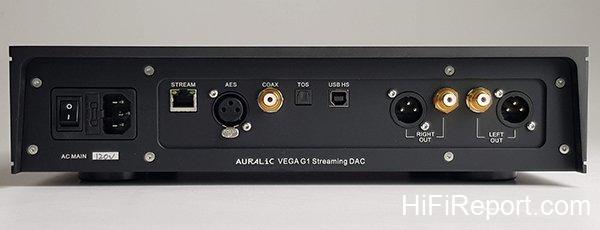
Notice that its input and output terminals are aligned along the top edge? This is because the Vega G1’s circuit board is inverted and mounted to the top panel, requiring removal of the bottom panel for access.
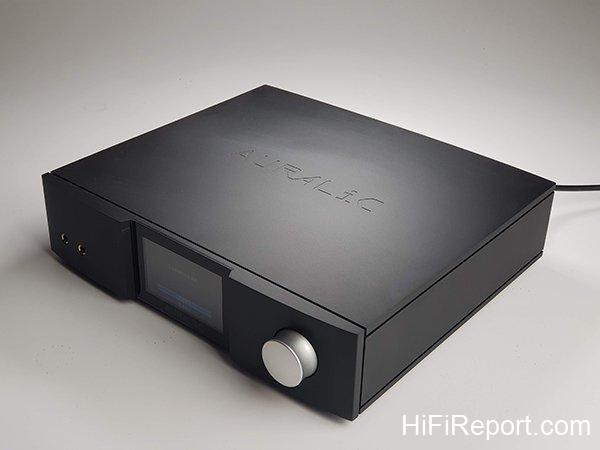
Although the Vega G1 is positioned as a step below the flagship model, its external build quality remains outstandingly refined. The chassis is constructed from thick, aircraft-grade aluminum alloy, and the front panel is CNC-machined. Tapping it produces a solid “knock” rather than a hollow “thud,” indicating a highly dense structure with excellent resonance suppression, forming a solid foundation for superior sound.
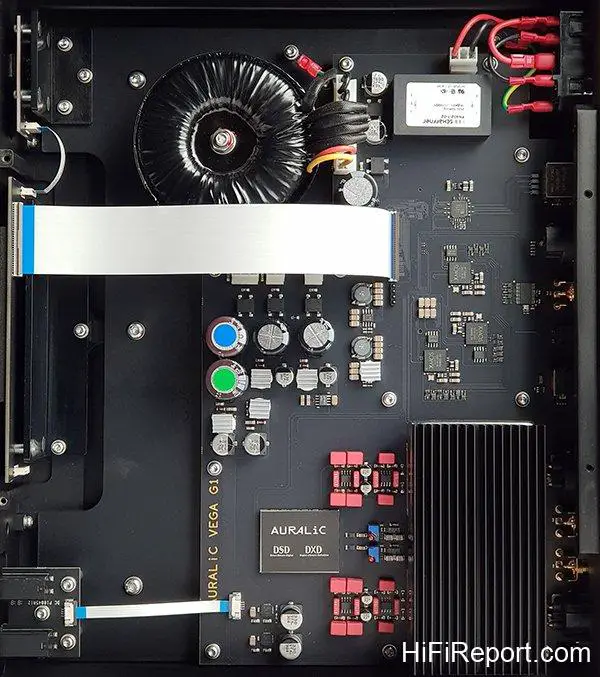
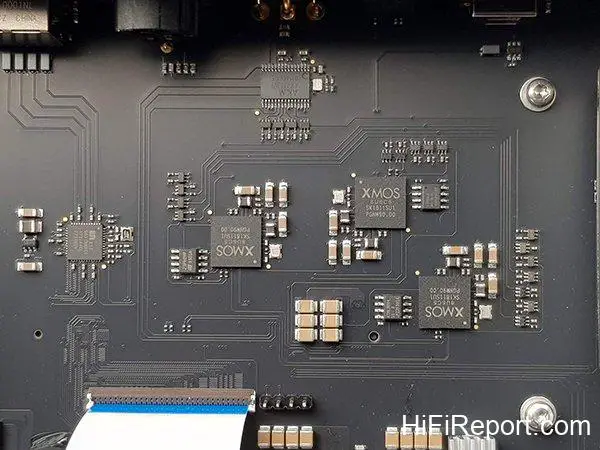
Opening the chassis reveals an even more impressive interior. The jet-black circuit board exudes understated elegance, and the meticulously organized circuit layout blends aesthetics with technology. This demonstrates Auralic’s dedication to design and attention to detail.
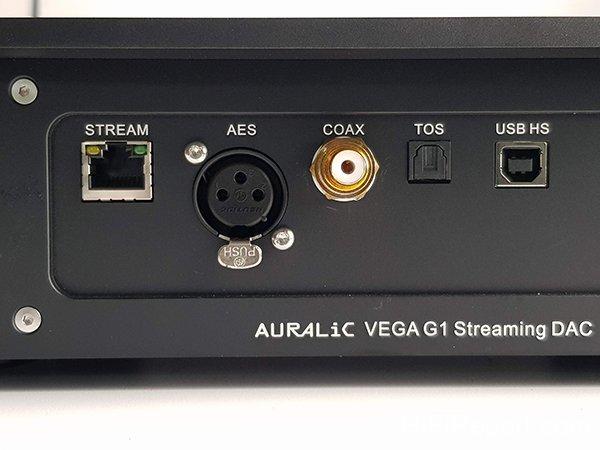
The Vega G1 streaming supports up to PCM 32bit/384kHz and DSD512 formats, and provides AES/EBU, Coaxial RCA, optical, and USB DAC inputs.
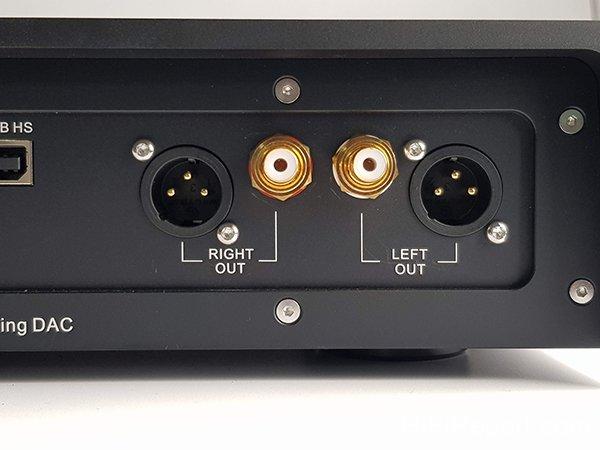
The Vega G1 offers XLR and RCA analog outputs.
The output can be configured for fixed or variable volume, enabling its use as either a DAC or a pre-amplifier.
Vega G2-Grade Femto Clocks
At the heart of the Vega G1’s processing power is the Tesla G1 platform, shared with the G2 series. It features a 1GHz Cortex-A9 quad-core processor, along with 1GB of DDR3 memory and 4GB of storage.
Crucially, the master clock also matches the Vega G2, employing dual 72 femtosecond clocks, dedicated to multiples of 44.1kHz and 48kHz respectively.

These clocks are powered by a specially designed low-noise 3uV power supply, minimizing phase noise for maximum precision and quiet operation, thus reducing jitter to an absolute minimum.
The clock system also features temperature control, maintaining a constant temperature for the femtosecond clocks to ensure stable and accurate performance.
The DAC section utilizes a custom Sabre DAC chip, supporting sample rates up to 32bit/384kHz PCM and DSD512.
The Vega G1’s circuit board is exceptionally well-organized, almost to the point of being visually delightful. It’s evident that even the “internal beauty” has been meticulously designed.
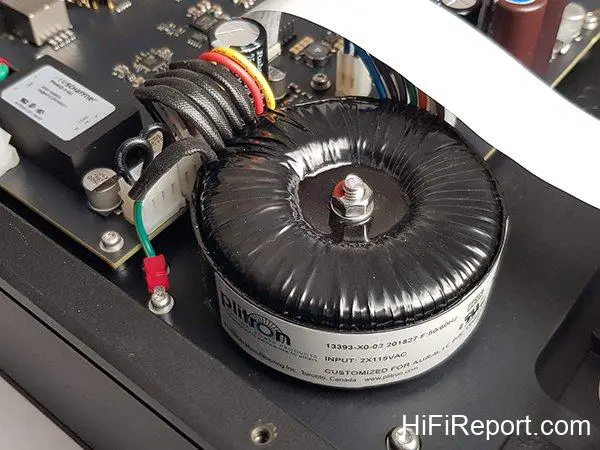
In the critical power supply section, the Vega G1 also adopts the Dual Purer-Power linear power supply from the Vega G2. Its toroidal transformer is specially designed with a unique winding method, reducing vibration and minimizing noise within the audio frequency range. This power purification module is claimed to reduce DC noise by up to 90dB.
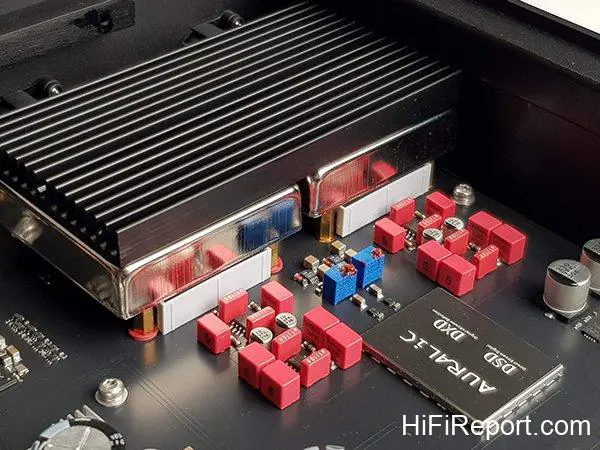
The analog output stage employs Auralic’s proprietary ORFEO Class-A amplifier modules.
ORFEO is an amplifier circuit developed by Auralic, inspired by classic analog designs. It’s modularized for easy integration into different models. Inside the Vega G1, near the analog outputs, you can see two small, silver boxes – these are the ORFEO modules. They are characterized by strong driving capability, easily matching various downstream loads, and even capable of driving 600-ohm loads, offering broad compatibility.
Furthermore, the Vega G1 incorporates volume control, allowing it to function not only as a player or DAC but also as a pre-amplifier, directly connecting to a power amplifier. However, the Vega G1 has only one set of output terminals, requiring users to configure it as fixed or variable output in the settings menu.
The two small silver boxes visible here are the ORFEO modules, known for their ability to drive a wide range of loads, including high impedance headphones up to 600 ohms.
The Vega G1 uses a Dual Purer-Power linear power supply with a specially designed toroidal transformer and winding technique to minimize vibration and audio-band noise. This purification module reduces DC noise by up to 90dB.
Intuitive Lightning DS App and Comprehensive Features
The user experience of a streaming player heavily relies on its control interface and streaming service integration. In this regard, the Vega G1 offers multiple options.
Using Auralic’s proprietary Lightning DS app is highly recommended. It is arguably one of the best control apps available, boasting a visually appealing interface, intuitive operation, and highly responsive and smooth performance. All Vega G1 settings can also be accessed and configured through the Lightning DS app.
Currently, the Lightning DS app is only compatible with iOS devices. Android users can utilize DLNA-compatible control apps like BubbleUPnP.
What about hardware settings for Android users? No problem. You can also access hardware settings via a web interface. Simply enter the Vega G1’s IP address (displayed on the screen after startup) into your browser’s address bar.
Additionally, the Vega G1 is Roon Ready, ensuring seamless playback through Roon. Services like AirPlay, Spotify Connect, Tidal, Qobuz Sublime+ streaming are also supported, along with internet radio, providing comprehensive functionality.
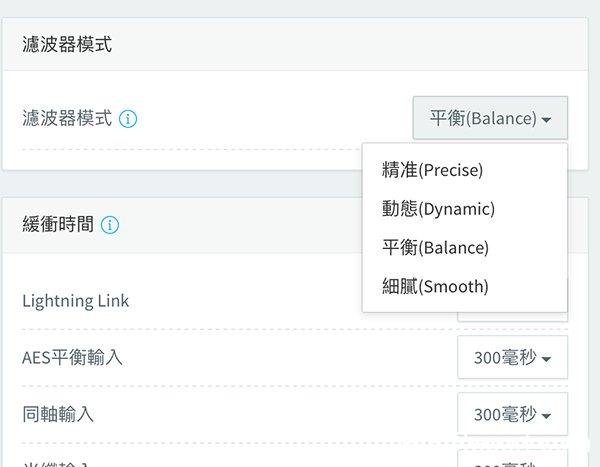
Notably, the Vega G1 features four built-in filter modes.
To enhance user-friendliness, Auralic has named these filter modes based on their sonic characteristics: Precise, Dynamic, Balance, and Smooth, rather than using numbers, letters, or algorithm names.
The advantage? Simply choose the mode that corresponds to your desired sound.
This feature is not merely a gimmick; it is genuinely useful. The sonic differences between modes are quite noticeable. Users can tailor the sound to complement their system’s inherent characteristics or personal preferences, offering both complementary and enhancing effects, increasing both playability and convenience.
For instance, if you desire tighter bass, clearer vocal outlines, a more assertive texture, and heightened excitement, select “Precise.” If you listen to a lot of string music and prefer a softer, rounder, and smoother tone, “Smooth” will likely meet your needs. For diverse music genres or if you prefer a set-and-forget approach, “Balance” provides overall sonic equilibrium.
I strongly recommend Vega G1 owners to experiment with the filter modes to discover their preferred sound signature.
The Vega G1 offers four filter modes: Precise, Dynamic, Balance, and Smooth, named for their sonic characteristics rather than technical jargon.
The benefit is clear: choose the mode that aligns with your desired sound.
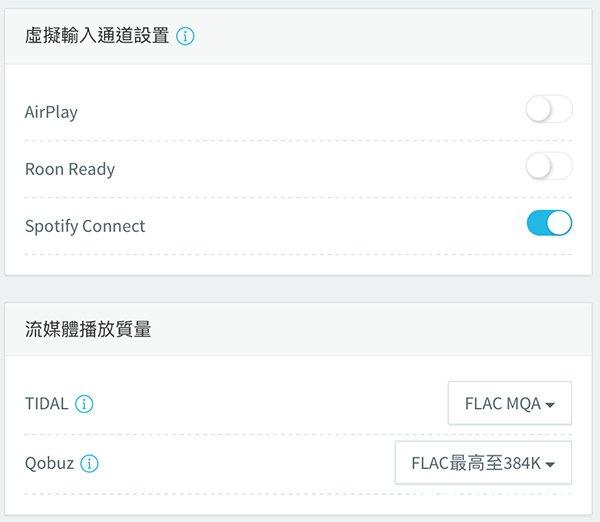
The Vega G1 supports AirPlay, Roon Ready, and Spotify Connect, all of which can be enabled or disabled in the settings menu.
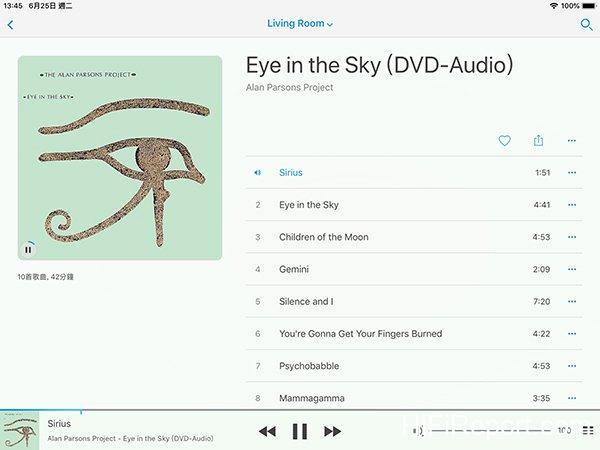
This screenshot shows the Lightning DS app in playback mode, featuring a clean design and responsive operation.
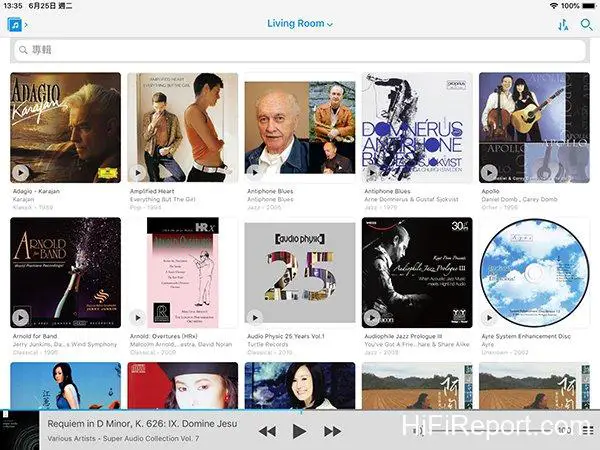
The Lightning DS app displays albums in a visually appealing manner.
Excellent Detail Retrieval
During listening tests, I paired the Vega G1 with the Linear Acoustic LAV-60 MKII integrated amplifier and Wilson Audio Alexia 2 floor-standing speakers. Music files were played from a NAS, with the filter mode set to “Balance.”
The Alexia 2 speakers, known for their revealing nature across the entire frequency range, laid bare the Vega G1’s strengths with remarkable clarity.
Firstly, I noted the Vega G1’s exceptional detail retrieval. I attribute this to three key factors: advancements in Auralic’s digital circuitry and jitter control technology, improving the signal-to-noise ratio; effective power supply design, reducing power supply noise; and the robust, heavy, and rigid aluminum alloy chassis, suppressing cabinet resonance.
These elements synergistically contribute to the Vega G1’s remarkably quiet and black sonic background, making details effortlessly perceptible.
For example, when playing “The E.S.E Sessions,” a compilation album from Blue Coast Records, primarily featuring guitar and vocals, I typically focus on the vocalist’s vocal nuances, timbre, sibilance, and the guitar’s plucking texture, string vibrations against the fretboard, etc. However, with the Vega G1, I noticed subtle details in the recording, such as the lingering reverberation after singing or playing, and even the sense of air movement in the recording space. This conveyed the music’s delicate nuances and breathing, adding emotional depth.
Secondly, I discovered the Vega G1’s proficiency in rendering soundstage, imaging, and localization – making it a soundstage virtuoso.
This characteristic was easily discernible in numerous recordings, such as “Jazz at the Pawnshop,” Marten’s “Supreme Sessions” test disc, Naim’s “True Stereo” demonstration disc, and “Cantate Domino” (often referred to as “” or “Black Church”). Whether it was the outlines of vocals and instruments, the solidity of images, the positioning and relative placement of different sections, the separation between sounds, or the shape and scope of the soundstage, the Vega G1 delivered impressive performance. In short, it was “precise” – not only in accurately conveying sounds but also in precisely processing digital signals and (huányuán – restore/reproduce) their original form, faithfully reproducing the essence of the recording.
Revealing Recording Quality
The Vega G1’s precision brings another advantage: exceptional discernment. It accentuates the differences between recordings, highlighting the quality variations, making good recordings sound even more audiophile-grade, dynamic, energetic, and layered, enhancing the enjoyment of high-fidelity audio.
In terms of sonic character, the Vega G1 leans towards a neutral and composed presentation, maintaining a balance between restraint and liveliness, possessing rationality without sacrificing emotionality or human warmth, and avoiding artificial coloration or embellishment.
Furthermore, the Vega G1 exhibits excellent frequency balance. The high, mid, and low frequencies are not only clearly structured and well-defined but, more importantly, each frequency range is equally well-rendered and detailed. This balanced excellence becomes even more apparent in larger systems.
Although the Vega G2 sits above it in the product hierarchy, suggesting the Vega G1 might be a simplified “compromise” model, this is not the case. Upon closer examination, the Vega G1 retains Auralic’s core technologies, including the Tesla G1 platform, ORFEO Class-A amplifier modules, dual 72 femtosecond clocks, custom DAC chip, and Dual Purer-Power linear power supply – all present in the Vega G1.
The features omitted in the Vega G1, such as pure analog volume control, Lightning Link interface, external clock input, Galvanic Isolation, and CNC-machined unibody chassis, are either relevant only when directly connecting to a power amplifier (analog volume control) or intended for future upgrades (Lightning Link and external clock). If you seek a practical and sonically excellent streaming player, the primary differences between the Vega G1 and Vega G2 boil down to Galvanic Isolation and the CNC chassis.
Regardless, the Vega G1 stands out as a high-quality streaming player in all aspects, capable of meeting your digital playback needs for many years to come, and is definitely worth considering.
Specifications
* Type: Streaming DAC
* Inputs: RJ45, USB Audio, AES/EBU, Coaxial, Optical
* Streaming Features: DLNA, Tidal, Qobuz Sublime+ streaming, AirPlay, Spotify Connect, Internet Radio, Roon Ready
* Supported Sample Rates: Up to PCM 32bit/384kHz, DSD512
* Analog Outputs: RCA, XLR, Headphone 6.3mm
* Frequency Response: 20 – 20KHz, +/- 0.1dB
* Total Harmonic Distortion: < 0.00015% (XLR), < 0.00016% (RCA); 20Hz-20KHz at 0dBFS
* Dynamic Range: 130dB, 20Hz-20KHz, A-weighted
* Dimensions: 34×8×32 cm (W×H×D)
* Weight: 7 kg