
Aurender A30 Music Server Player Review
Streaming music has become a mainstream trend in recent years, widely embraced by music enthusiasts and audiophiles. This popularity stems from its ability to satisfy two crucial needs: user-friendliness, allowing playback with a simple swipe on a smartphone without leaving your seat, and high sound quality that rivals, if not surpasses, that of CDs.
However, for some seasoned audiophiles, setting up a streaming system can seem dauntingly complex. The sheer volume of terminology, such as servers, players, cloud, streaming services, remote apps, CD ripping, sampling rates, MQA, and so on, can be confusing. Building a complete streaming system independently, without external help, can feel like an uphill task.
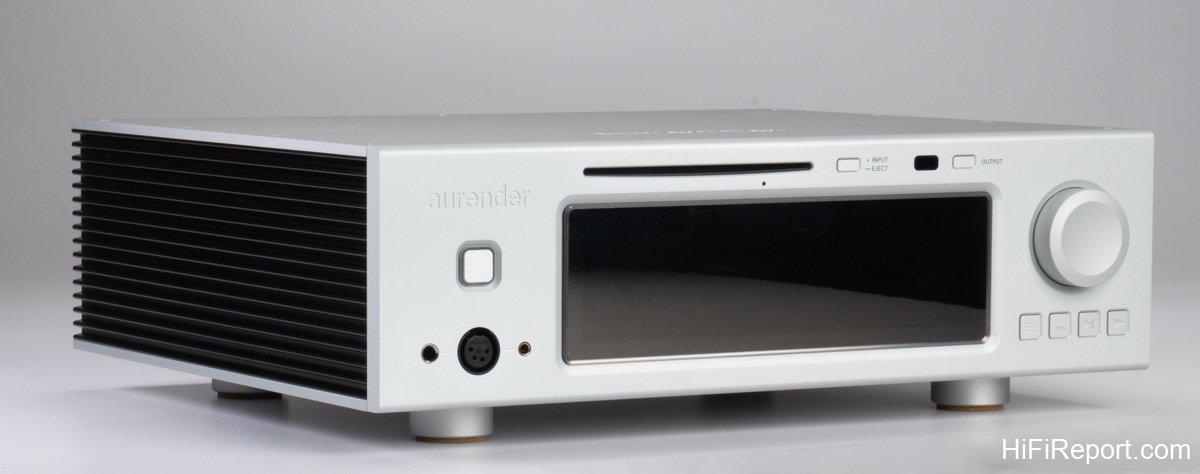
If you find navigating this complexity overwhelming, the Aurender A30 music server player is a compelling option. It integrates all essential functionalities into a single unit. Essentially, you can start listening simply by connecting an Ethernet cable. It also plays and rips CDs, and delivers a high level of sonic performance, firmly establishing itself as a Hi-End grade source component.
All-in-One Functionality
Aurender currently offers over ten models of music servers, primarily categorized into the N series and the A series. The N series represents the flagship line, focused on achieving the ultimate in sound quality. Emphasizing simplicity, N series models offer only digital or USB outputs and do not include CD ripping capabilities.
The A series also comprises high-end products, but in addition to USB output, they provide analog outputs and digital inputs, balancing sonic excellence with operational convenience.
Furthermore, the ACS series, including the ACS10 and ACS100, are equipped with CD ripping functionality, allowing users to easily convert their CD collections into digital files.
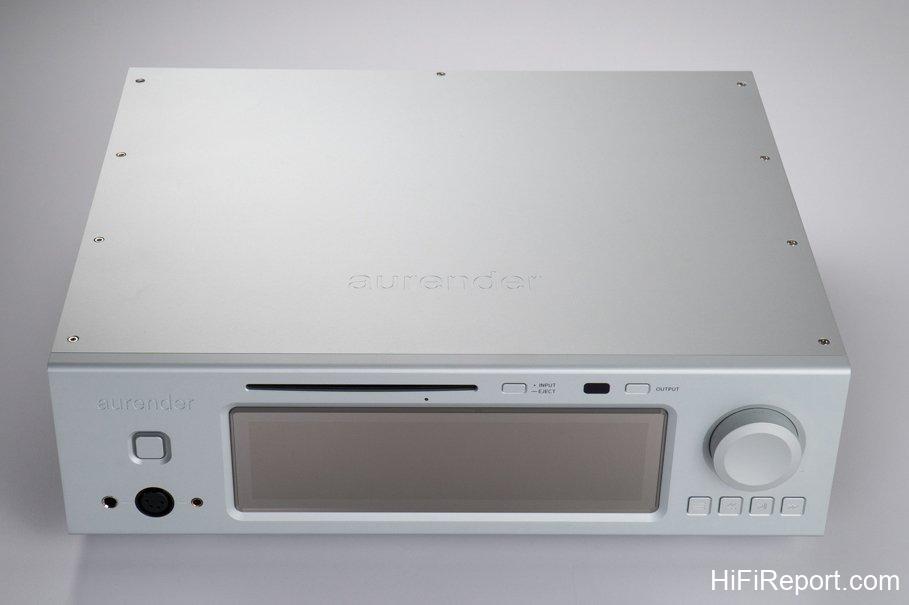
Within the A series, the A30 stands as the top-tier model and Aurender’s most feature-rich all-in-one player. It integrates music server, file storage and management, streaming playback, fully balanced analog output, CD playback and ripping, DAC decoding, USB output, and a high-quality headphone amplifier, among other functions. This single device handles virtually every aspect of digital audio playback.
Despite its comprehensive functionality, the A30’s design is far from compromised. Aurender has invested significant effort into its circuitry and power supply to minimize interference between different sections, ensuring superior sound quality.
Linear Power and Isolated Design
To minimize interference between different sections and to efficiently utilize the limited space within the chassis, the A30 adopts a “two-story villa” internal structure. This design effectively divides the chassis into upper and lower levels. The power supply and server components are located on the lower level, resembling a separate power supply design. The upper level is further partitioned into six “rooms” to house the storage hard drive, CD drive, headphone amplifier, digital audio circuitry, and separate left and right channel analog amplification circuits. This meticulously planned architecture is a hallmark of Aurender’s design philosophy.
The A30 places a strong emphasis on power purity, utilizing exclusively linear power supplies across all sections. This choice effectively prevents the high-frequency noise associated with switching power supplies from interfering with the sensitive DAC circuitry.
To achieve this, the A30 incorporates no fewer than five toroidal transformers in the lower chassis. Each transformer forms an independent linear power supply circuit, dedicated to powering specific sections of the unit.
Additionally, the A30 employs supercapacitors to create a UPS (Uninterruptible Power Supply) system. In the event of a power outage, this system ensures stable operation of the A30.
For file storage, the A30 utilizes Aurender’s customary approach, separating storage space into a high-capacity HDD (Hard Disk Drive) and a fast SSD (Solid State Drive) cache. All music files are typically stored on the 3.5-inch HDD located on the upper level, offering a substantial 10TB capacity.
When a track is selected for playback, it is first loaded from the HDD to the SSD cache on the lower level and then played from the SSD. This design allows the HDD to remain idle during SSD playback, effectively eliminating vibration and electrical noise generated by the mechanical drive’s rotation and head movement. This approach minimizes interference and extends the lifespan of the mechanical hard drive.
Due to this design, when playing a newly added track on the A30, there is a brief delay after pressing play as the track is loaded into the cache. Subsequent replays of the same track will start instantly.
Sophisticated DAC and Analog Stages
The audio section of the A30 is as meticulously engineered as its server components. Nearly two-thirds of the upper chassis space is dedicated to digital audio processing and analog amplification circuitry.
The A30’s clock system employs an FPGA (Field-Programmable Gate Array) and a high-precision OCXO (Oven-Controlled Crystal Oscillator), achieving extremely low jitter levels below 100fs, ensuring highly accurate data transmission.
The DAC circuitry in the A30 is located at the rear sides of the upper chassis, clearly demonstrating a dual-mono architecture with separate left and right channel implementations.
Each channel is equipped with a single AKM AK4497 DAC chip, powered by independent power supplies to minimize crosstalk and maximize channel separation.
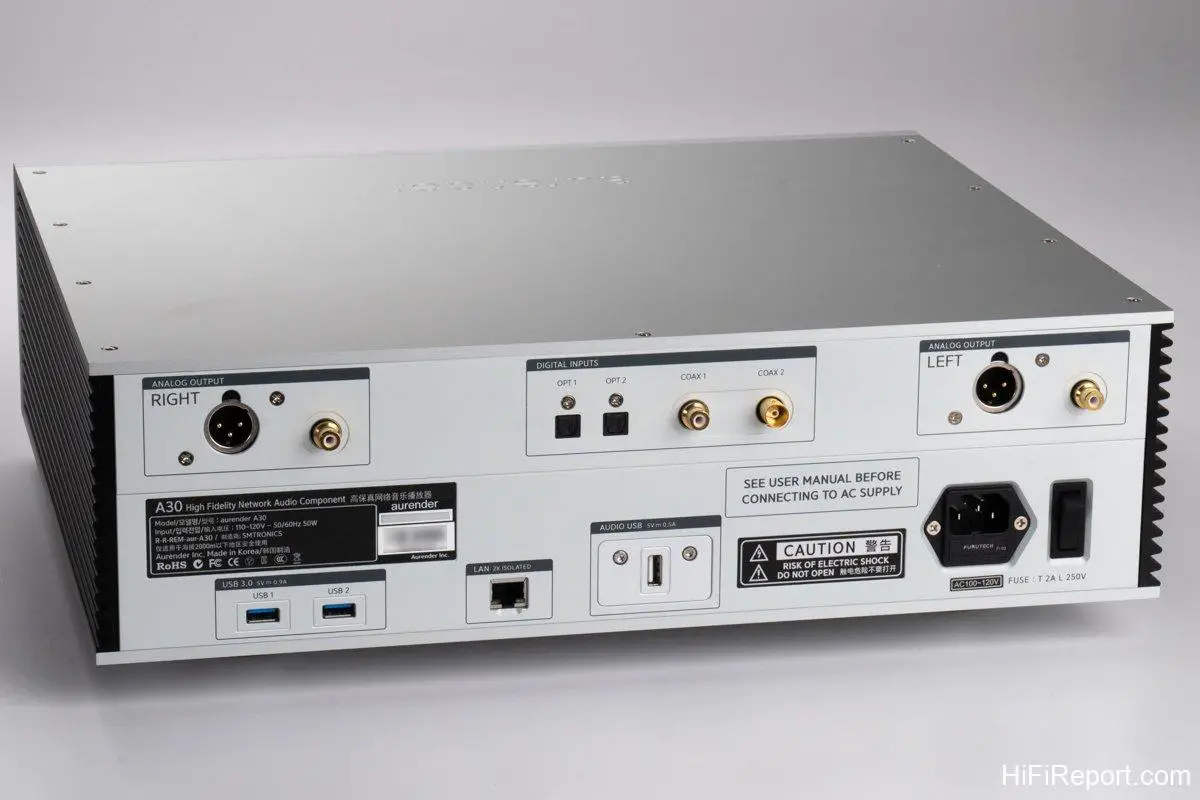
Analog output options include both RCA single-ended and XLR balanced connections. Users can select fixed or variable volume output, enhancing the A30’s versatility in system integration. For direct connection to a power amplifier, the A30 offers two gain settings to optimize sensitivity matching with various power amps.
The A30 supports playback of PCM files up to 32bit / 768kHz and Native DSD 512. It also offers PCM upsampling capabilities, allowing users to upsample PCM signals to a maximum of 705.6 / 768kHz before decoding. This feature, adjustable via the app, provides options for different sonic flavors.
MQA decoding is also supported, enabling full playback of MQA streams or files at their highest sampling rates.
Furthermore, the A30 provides four digital input interfaces, including one RCA coaxial, one BNC, and two optical inputs. This allows users to connect other digital sources such as set-top boxes, multimedia players, or gaming consoles and benefit from the A30’s high-quality DAC output.
Automated CD Ripping
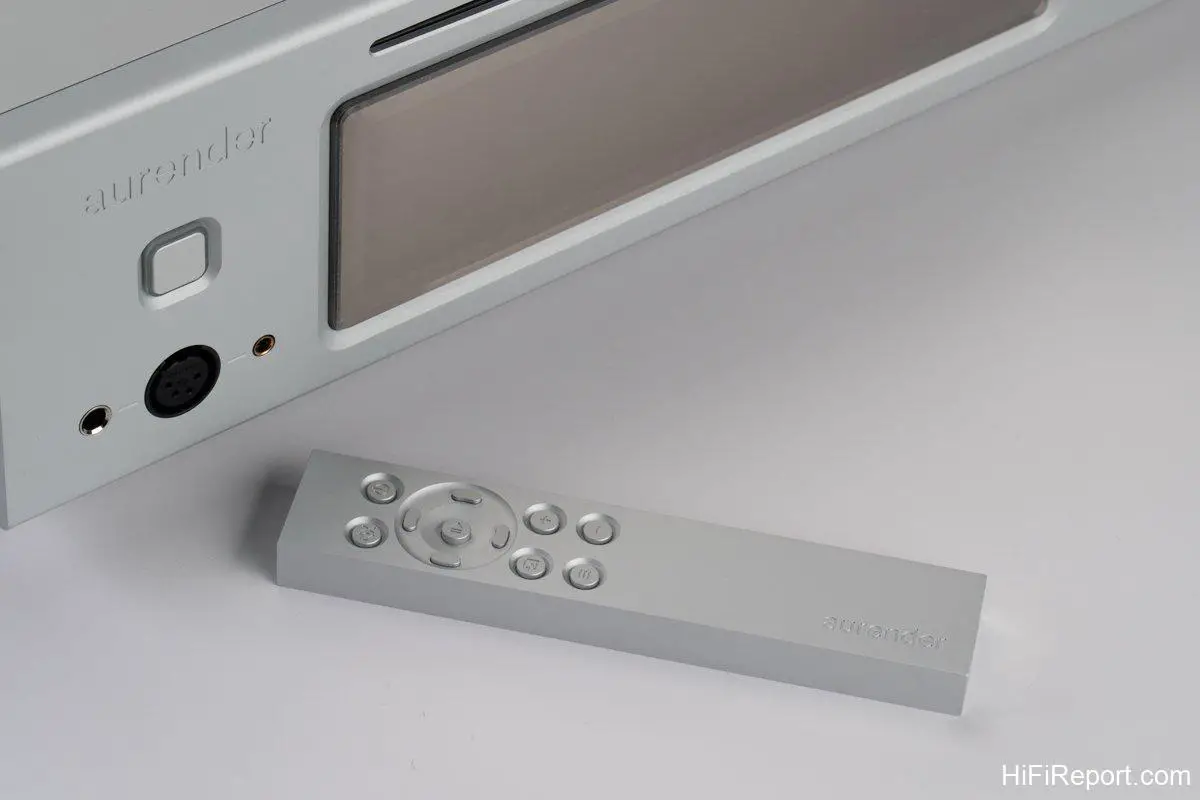
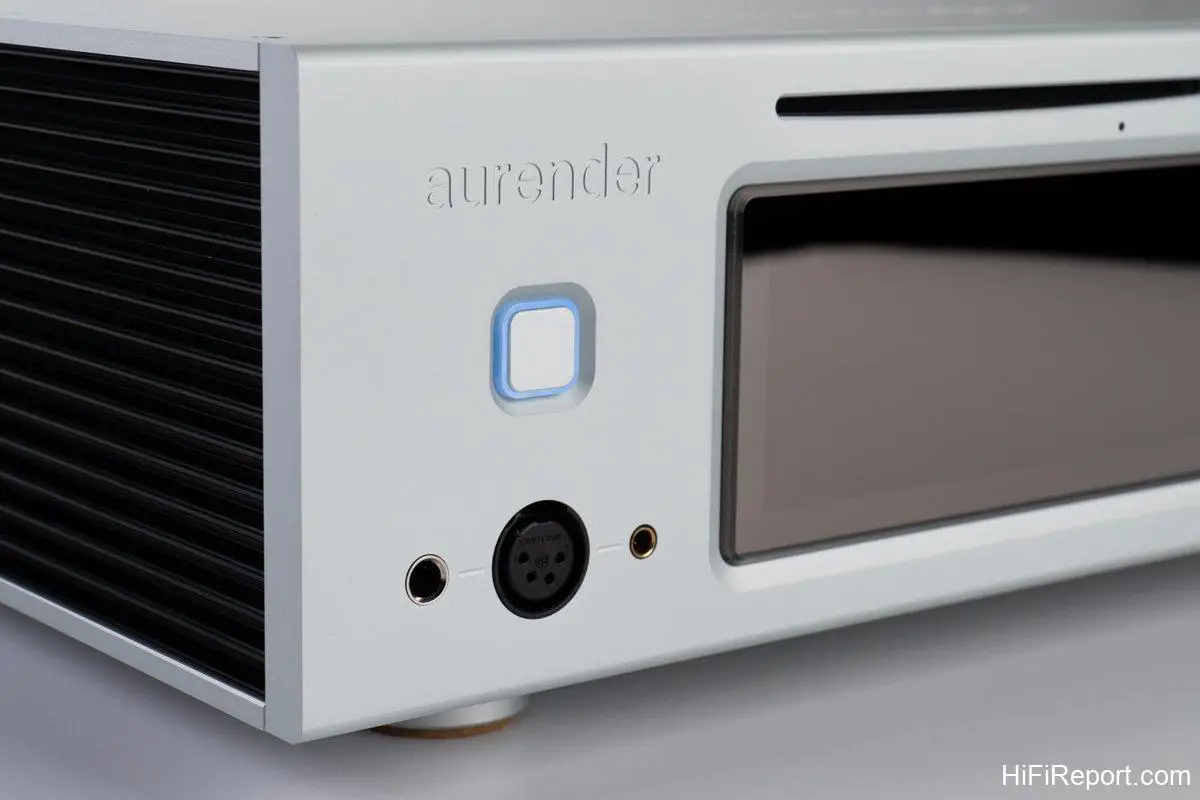
The A30’s front panel features three headphone outputs on the left side: 3.5mm, 6.3mm, and 4-pin XLR. Each output is backed by a dedicated driver circuit, representing three genuine headphone amplifiers rather than simply token provisions.
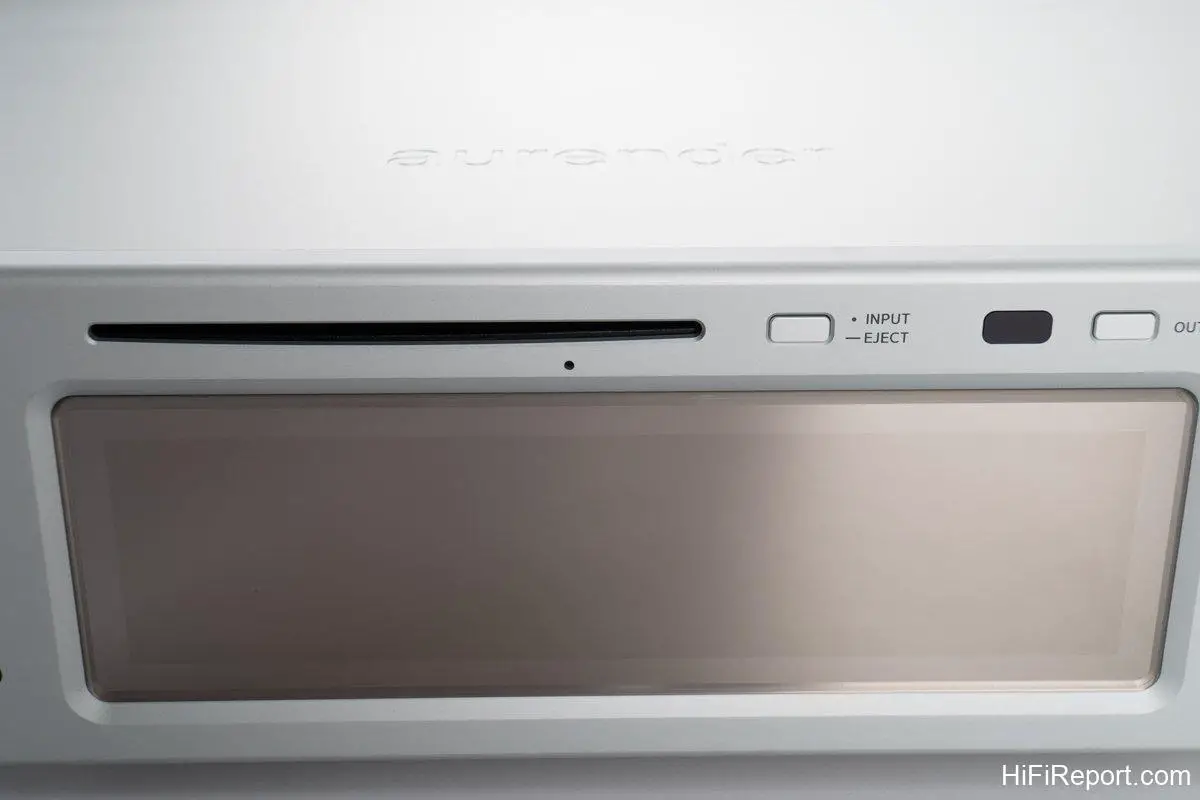
The slot above the front panel houses a Teac slot-loading CD drive for both CD playback and ripping.
The A30 incorporates a precisely configured and optimized ripping program with error detection and correction capabilities, ensuring accurate audio track extraction. Users can select the output file format as WAV, FLAC, or AIFF.
Conveniently, the ripping process is fully automated. Simply insert a CD, and the process begins. The A30 automatically retrieves track metadata and album art online and saves the ripped files to a designated internal folder. Once completed, the CD is automatically ejected, requiring no user intervention.
During testing, ripping a CD on the A30 took approximately 5x speed. Ripping a 60-minute CD took around 12 minutes, which isn’t particularly fast. However, streaming or playing music files remains seamless during the ripping process.
Control of all playback and function settings is managed through Aurender’s proprietary Aurender Conductor app, which also facilitates effortless management of music file collections.
For details on the app’s interface and user-friendliness, refer to a previous review of the Aurender N30. This review will focus on illustrating some key A30 settings using app screenshots.
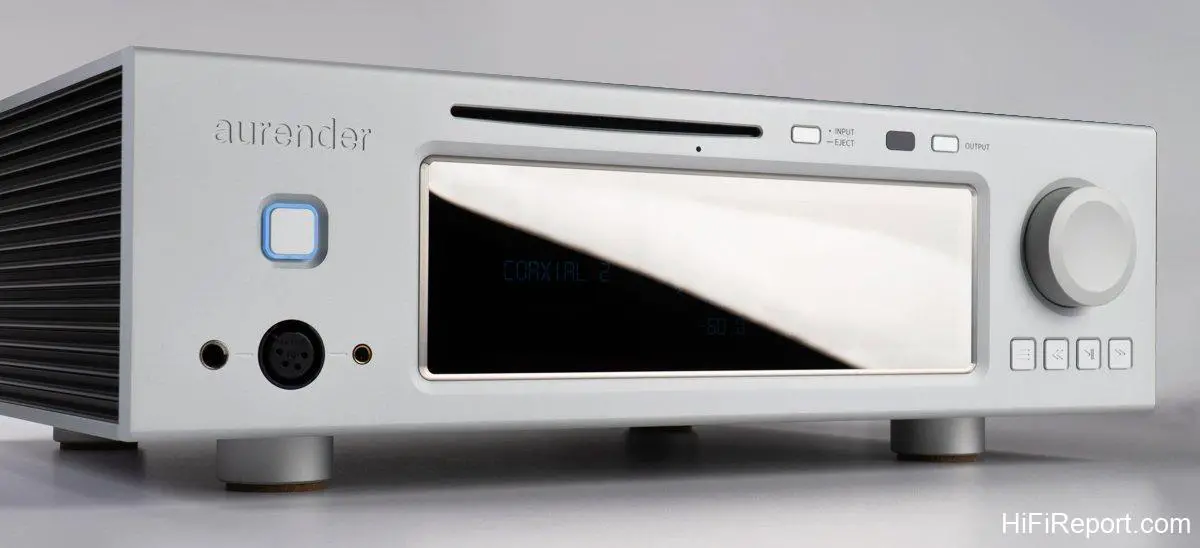
The brightness of the A30’s front panel display can be adjusted via the app, and users can also choose to automatically turn it off during playback.
The A30 also features an “Extreme Mode.” When activated, this mode disables all functions that might potentially interfere with sound quality, aiming for the highest possible sonic performance. In this mode, the display will be turned off.
The A30 can also access music files from other servers on the network, such as NAS devices, expanding the music library.
The A30’s analog output offers two gain settings to match amplifiers with different sensitivity levels.
The upsampling function, located in the center of the screen, allows users to upsample incoming PCM signals before DAC decoding, up to a maximum of 705.6 / 786kHz.
Upsampling processing can enhance dynamic range and reduce distortion, offering a different listening experience.
In the A30’s advanced settings, a crucial function is the filter selection. It includes both analog and digital filters, offering a wide range of sonic tailoring options.
If the current sound signature is not to your liking, experimenting with these filter settings is highly recommended to achieve your desired sound.
If you happen to misconfigure the settings, simply restore the factory default filter settings and start again.
The seven albums shown in the screenshot are CDs that were ripped using the A30.
The Aurender Conductor app has a convenient feature: the blue icon with the number “3” in the upper right corner. This allows the app to list music added to the library within the last three days, in this case, these seven albums. This makes it easy to audition newly ripped albums without having to search through a large library.
The album “Across the Stars” by Anne-Sophie Mutter is also a CD ripped using the A30. The track titles, artists, orchestra, and other metadata are complete, demonstrating the comprehensive track database accessed by the A30, simplifying music collection management.
A Technologically Advanced Sound
The listening tests were conducted in the HiFiReport listening room.
Although the A30 has volume control and can be directly connected to a power amplifier, utilizing a preamplifier can still refine the sound. Therefore, for the listening session, the A30 was used as a source component, set to fixed volume output with low gain, and connected to a SoulNote P-3 preamplifier.
The power amplifier was an EAR 509 MKII vacuum tube monoblock, and the speakers were Wilson Audio Alexia 2.
Notably, both the A30 and P-3 were connected to a GigaWatt PC-3 SE EVO+ power conditioner. The PC-3 SE EVO+ contributes to a cleaner sonic background and improved image solidity and layering.
After listening to a few tracks, the sonic signature of the Aurender N30 split-type music server transport previously auditioned came to mind. It was a similar technologically advanced sound profile: controlled, composed, clear, without exaggeration, and with exceptional resolution. Everything seemed well-managed, precise, and organized.
This meticulously detailed sound was undeniably accurate, but a desire for a warmer, smoother presentation emerged. Just as I considered adjusting cable pairings or speaker positioning, I noticed the filter settings function in the remote app. Intriguingly, the A30 offered not only common digital filters but also analog filter options, a unique feature. I began experimenting with these settings.
Aurender’s filter adjustment is available only on models with analog outputs, specifically the A series A30, A10, and A100. The analog filter section offers three adjustable parameters: Current Mode, High Sound (On and Off), and Heavy Load (On and Off). Current Mode adjusts the output current level, offering four options: Max, Less, Medium, and Min.
High Sound and Heavy Load are simple On/Off switches. High Sound and Heavy Load appear to be new features on the A30, as their effects were not yet described in the official manual.
The digital filter section provides seven options, broadly including Sharp Roll-off, Slow Roll-off, Short Delay & Sharp Roll-off, Short Delay & Slow Roll-off, Super Slow Roll-off, etc.
Experimenting with a few of these, it became apparent that even subtle adjustments yielded audible differences, particularly in the analog filter section, which significantly impacted the tonal character. The filter adjustments offered a playful and engaging sonic exploration.
Ultimately, the settings chosen were: Current Mode: Medium, High Sound: OFF, Heavy Load: OFF, and Digital Filter: Short Delay & Slow Roll-off. These settings provided a warmer, more mellow sound, less aggressive and more comfortable to listen to, aligning better with personal preferences.
The combination of analog and digital filters on the A30 offers over a hundred possible permutations, providing extensive sonic customization. Users are encouraged to explore these settings to find the filter combinations that best suit their preferences or system synergy.
Feel free to experiment; if you become lost, simply revert to the factory default filter settings and start anew.
Revealing Performance Details
The most captivating aspect of the A30 is its exceptional resolution, bringing the nuanced techniques of performers vividly to the forefront.
Take, for example, the album “Meet Me In London,” a collaboration between guitar virtuoso Antonio Forcione and Latin vocalist Sabina Sciubba. Antonio’s guitar playing, reproduced through the A30, presented each note with a distinct outline within the soundstage. The image definition was highly tangible, with precise scale, neither exaggerated nor overwhelming, but controlled and realistic. Separation was excellent, maintaining composure even during rapid passages.
Furthermore, the A30 allowed for complete appreciation of Antonio’s astonishing guitar techniques. Within a single piece, he constantly varied his playing styles, employing plucking, strumming, tapping, and striking, with dynamic variations and rhythmic precision. Every note was rendered with exceptional clarity. Simply listening to his playing was a delight, even before considering Sabina’s vocals.
In terms of tonal presentation, the A30 adopted a realistic approach, without overt coloration. In a remarkably clear sonic atmosphere, the guitar’s texture was pure and clean, with solid note definition and lively response, yet retaining warmth and body. The A30 faithfully reproduced rich and authentic resonance from the guitar body, resulting in a sound that was both truthful and beautiful.
Low frequencies are another area where the A30 excels. Not only were contours, trails, and image outlines clear, but the layers of bass information were also richly detailed, fully unleashing the low-frequency capabilities of the Wilson Audio Alexia 2 speakers.
Playing Jane Monheit’s “Taking the Chance On Love” album, the opening of track 1, “Honeysuckle Rose,” was immediately captivating. The plucked notes of the double bass possessed exceptional “stringy” tautness, with bouncy fullness, fast and distinct articulation, and excellent weight and depth. The bass performance instantly conveyed the lively, vibrant, and rhythmically engaging atmosphere of the song.
Thanks to the A30’s outstanding low-frequency performance and inherent sonic foundation, the entire soundstage’s lower register remained tightly controlled rather than bloated. It provided a solid and precisely structured foundation. The more energetic the music became, the more organized and coherent the presentation remained.
In addition, the A30’s well-defined vertical soundstage also contributed to a more expansive vertical dimension, further enhancing the clarity of the musical picture.
However, in the more sentimental track 2, “In The Still of The Night,” it became apparent that the A30’s rendering of strings was not of the overly lush type. The string texture was relatively firm, with clear and precise lines, lacking some of the sentimental softness.
The Joy of Detail Resolution
In the renowned RR recording’s orchestral demonstration collection “Tutti!”, the A30 revealed its formidable capabilities in spatial reproduction and soundstage presentation.
The A30’s soundstage combined openness with focus, accurately portraying the spatial characteristics of the recording venue. Having listened to this album many times before, I had not previously experienced such clarity. Crucially, the A30’s expansive soundstage did not compromise thematic focus, resulting in a presentation that was both spacious and retained the musical core.
The A30’s soundstage was not only wide and tall but also remarkably deep, easily separating the front, middle, and rear layers with distinct clarity. In track 5, Stravinsky’s “Firebird” finale, the opening woodwinds seemed to emanate from a distance, conveying a sense of remoteness with precise localization. Similarly, near the end of the track, the timpani strikes were almost visually tangible, with focused images and clearly defined outlines.
Simultaneously, the bass drum strikes possessed excellent extension, but unlike previous experiences where the decay lingered, the A30’s bass drum notes decayed quickly, almost abruptly. This aspect might be further refined using the analog and digital filter adjustments.
An all-in-one server player capable of delivering the precision, clarity, and detail retrieval of a separate component system is a rare achievement, and the A30 arguably accomplishes this. It offers comprehensive functionality, user-friendly operation, and powerful customization through filter adjustments to suit diverse systems. Most importantly, it allows you to fully appreciate the joy of dissecting sonic details, revealing the musical texture and recording nuances for in-depth exploration, mirroring Aurender’s own dedication to technological refinement.
Specifications
* Type: Music Server Player
* Bit Rate and Sample Rate: Up to 768kHz / 32bit PCM, DSD DoP 256, Native DSD 512 (internal file playback)
* Hard Drive Space: Storage / 3.5 inch 10TB HDD, System & Cache / 480GB M.2 NVMe
* DAC Chip: AKM AK4497
* Power Supply: Linear Power Supply
* Display: 8.8 inch 1920 × 480 Color IPS LCD
* Digital Inputs: SPDIF RCA, SPDIF BNC, Toslink, USB Audio 2.0, USB 3.0 for data
* Network: RJ45
* Analog Outputs: RCA, XLR, 6.3mm Headphone
* CD Drive (CD ripping): Teac Slot-loading Drive
* Dimensions: 430 × 141 × 355 mm
* Weight: 17 kg