
Avantgarde Uno SD Horn Loudspeaker Review
Avantgarde Acoustic made significant updates to their product generations last year, introducing the G3 versions.
Just a few months ago, I visited HiFiReport to listen to the flagship Trio G3, equipped with two sets of SpeceHorn active horn subwoofers.
The Trio G3 is not only more refined in appearance but also improved in performance. In terms of sound, it has pushed Avantgarde Acoustic to new heights.
This time, I was invited for another audition. Would it be the Duo? There are two models in the G3 Duo series. Would I be listening to the Duo GT with dual 12-inch woofers, or the Duo SD with a single woofer? Two days before departure, Mr. Su from HiFiReport sent me a message listing the equipment and attaching a photo. Oops, wrong guess. This time, it’s the Uno SD.
Uno SD: Gateway to Avantgarde Horns
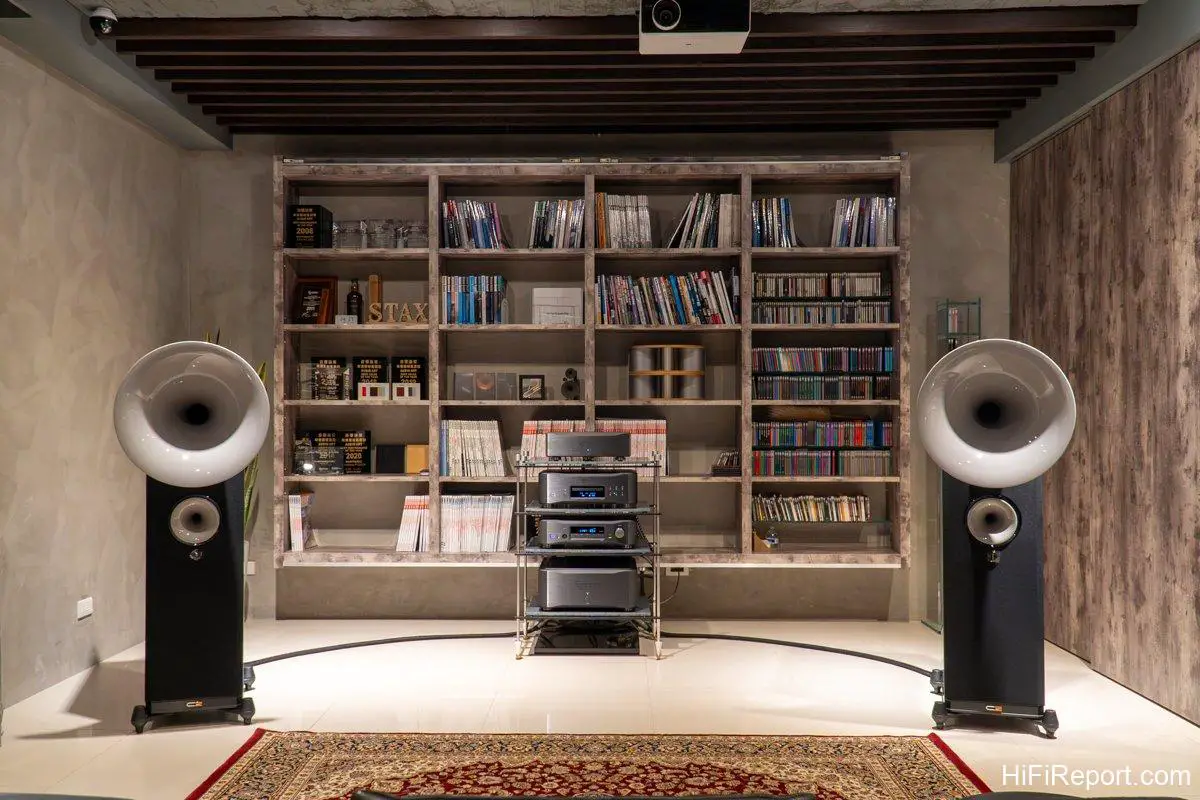
The G3 generation Uno SD looks very similar to the Duo (both Duo GT and Duo SD). Aesthetically, it is even more refined than the previous Uno XD, with more attention to detail. It has shed its industrial feel and gained an artistic flair.
To truly appreciate how beautiful the new generation of Avantgarde Acoustic loudspeakers has become, and how attractive the Uno SD is, you have to see it for yourself.
The Uno SD starts at a price of NTD 1,350,000 in Taiwan (base price, excluding any options), which is not inexpensive, but it is the entry point to the world of Avantgarde horns.
(This is how I define the Uno in the product line. Compared to the previous Zero and the current Colibre C2, these entry-level Avantgarde products, the Uno should be considered the true starting point for Avantgarde horns.) From here, you truly begin to appreciate the beauty of horns, understand the sonic aesthetics pursued by Avantgarde Acoustic, and savor the many benefits brought by these spherical horns.
Why Choose Uno SD? The Spherical Horn
If you are in the market for loudspeakers and have a budget of USD 40,500 or more, why should you choose the Avantgarde Uno SD? What are its advantages? First and foremost, it is the horn design.
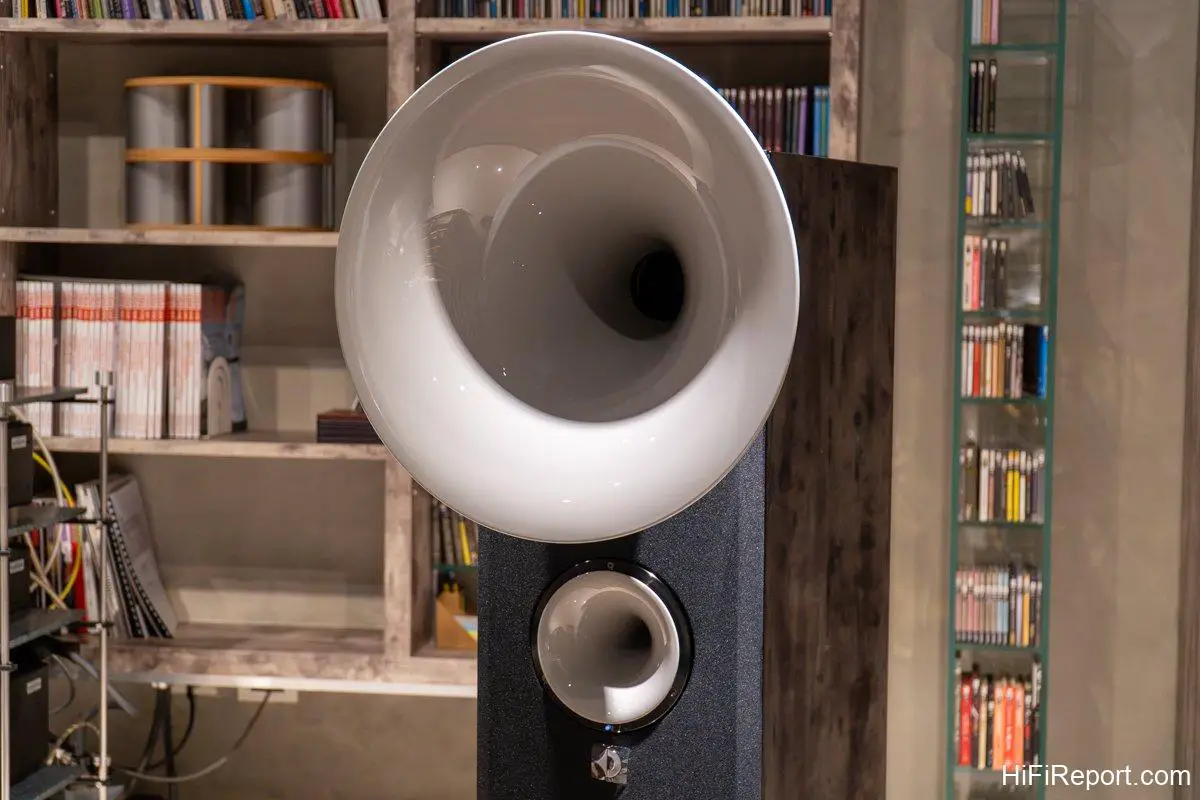
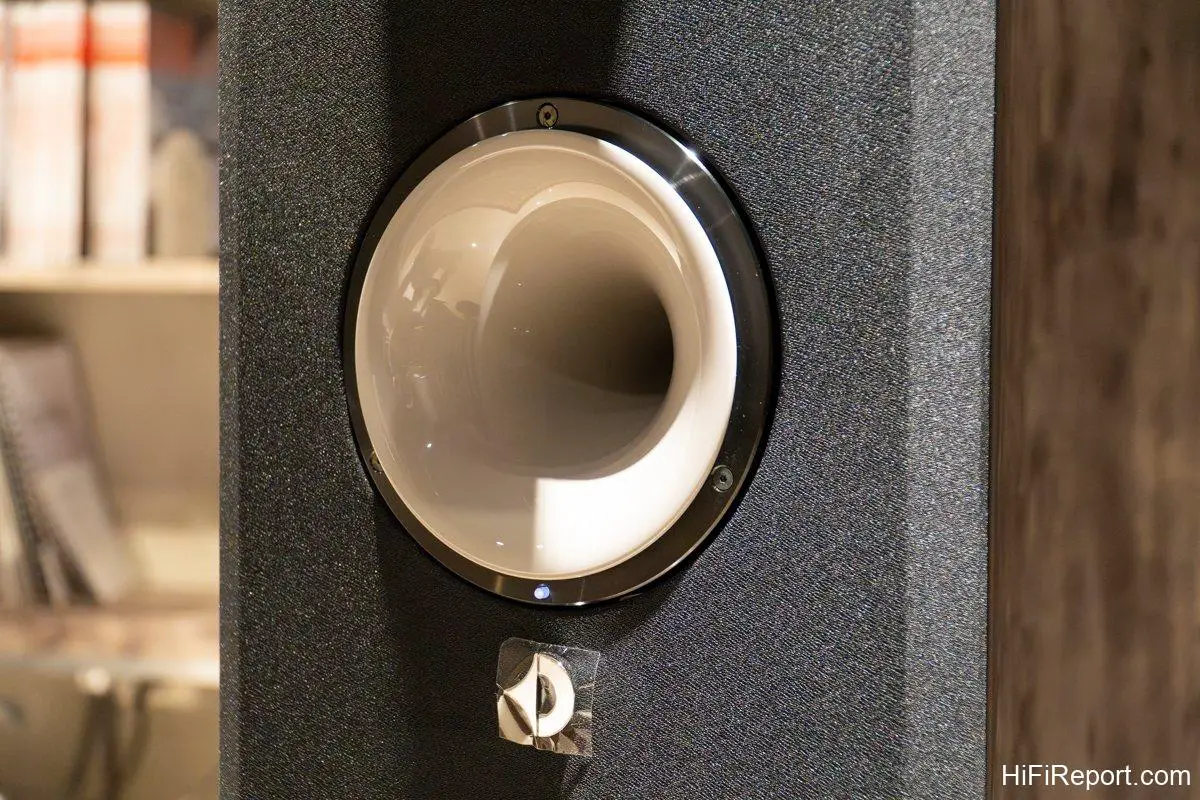
Avantgarde Acoustic’s spherical horn is their most recognizable signature, deeply embedded in their product identity.
These horns are die-cast from ABS, ensuring material uniformity. They are manufactured with high-precision machinery under pressures up to 2,500 tons, ensuring consistency between left and right channel horns in each pair of loudspeakers.
Avantgarde utilizes horns not only to enhance efficiency, improve dispersion, and extend projection distance, but also to achieve frequency response shaping through the horn’s curvature.
Consequently, their midrange drivers operate without any crossover components; both low-pass and high-pass cutoffs are achieved through horn attenuation. This is a major characteristic of their loudspeakers.
Why Choose Uno SD? Unique Omega Midrange
The second major feature is its midrange driver.
Avantgarde Acoustic’s Omega midrange is not only highly efficient and low in distortion but also boasts a near-zero compression ratio. In other words, the midrange frequencies you hear are uncompressed.
How is this achieved? The key lies in the “Omega” technology.
Their so-called Omega voice coil technology uses extremely fine wire to wind the voice coil, making it exceptionally lightweight. Furthermore, the gap between the voice coil and the magnet is extremely narrow, which helps to enhance the control of the magnetic motor.
Taking the Uno SD’s midrange as an example, the new generation Evolution AA XM1 midrange driver has an impedance of 17 ohms and a sensitivity as high as 107dB.
This Evolution AA XM1 driver employs a three-layer composite hemispherical diaphragm, and its surround material is also optimized to provide more linear motion, thereby reducing distortion.
The newly designed SingleFrame basket, made of cast material, encloses the magnet and provides excellent mechanical support.
Particularly noteworthy is that the geometry of the hemispherical diaphragm in the new generation Evolution AA drivers is designed to precisely match the horn, reproducing more perfect sound wave radiation and ensuring phase coherence.
Why Choose Uno SD? Refined Crossover
The third notable feature is its crossover design.
Avantgarde proudly states that their in-house designed crossover is the most perfect design for their loudspeakers.
What makes them so confident? Firstly, as mentioned earlier, the horn used for the midrange acts as a natural “crossover.” They call this SphericLowCut Technology, where the horn’s geometry achieves the high-pass roll-off for the midrange.
Secondly, their AirGate technology achieves the low-pass cutoff.
These two crossover techniques ensure that the midrange in Avantgarde loudspeakers operates completely without a traditional crossover in its path.
Thirdly, the capacitor used for tweeter protection is a custom-made component from a German capacitor manufacturer, using solid aluminum foil as electrodes and a bio-oil impregnated cellulose fiber composite as the dielectric.
This capacitor, named NatureCap, is not only complex to manufacture and costly but also sonically superior.
Finally, to maintain the polarity of the NatureCap constant and stable, they have added a DC bias circuit next to the capacitor. This protection circuit is called PolarisationPlus.
Why Choose Uno SD? Active Subwoofer with DSP
The fourth distinguishing feature lies in its active subwoofer design, a consistent approach for Avantgarde Acoustic.
To achieve deep bass extension, a large woofer diameter is essential. However, properly driving and controlling a large diameter woofer with an amplifier presents a challenge in system matching.
Rather than leaving this problem to the consumer, Avantgarde focuses on perfecting the midrange and high-frequency sections, making them easy to drive and optimize for sound quality, while taking responsibility for the bass.
Therefore, they consistently use active subwoofers.
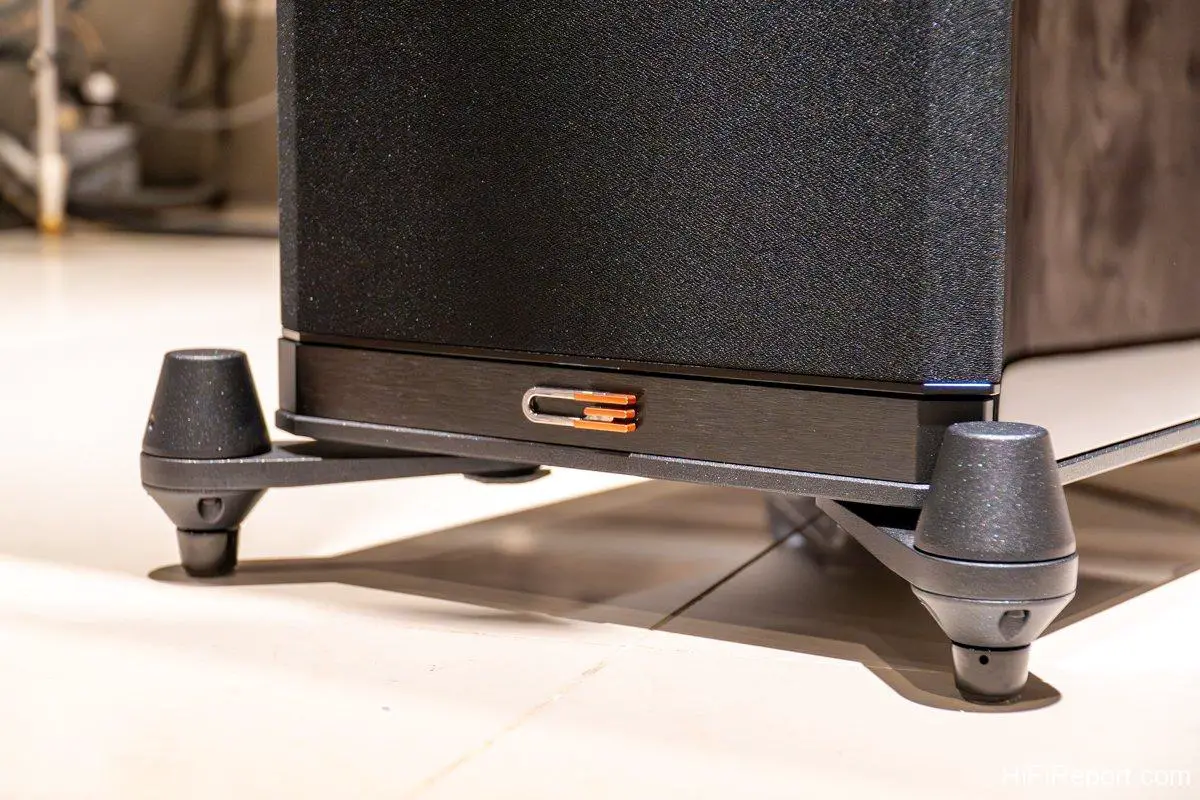
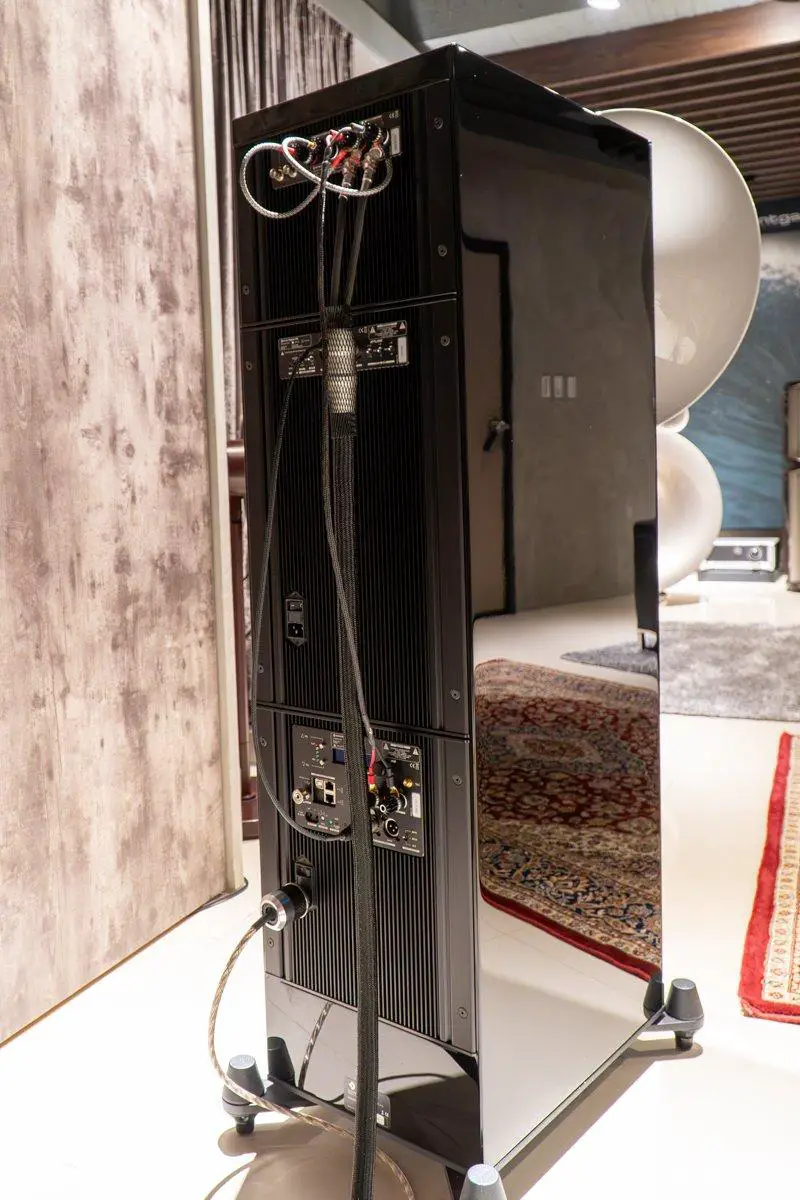
The G3-500 power module used in the Uno SD delivers a full 500W to drive the 10-inch XB10 woofer.
This newly developed XB10 woofer features a large 153mm voice coil, significantly larger than the 100mm coil of its predecessor, thus enhancing bass control.
The impressive 480mm long voice coil is capable of providing a magnetic force of 1.15 Tesla. Overall performance is improved by more than 50% compared to the previous generation.
The diaphragm, made of paper fiber and carbon fiber composite, offers excellent rigidity, while the surround uses low-loss NBR rubber.
Furthermore, the Uno SD inherits Avantgarde Acoustic’s renowned low-frequency management DSP. By connecting to a computer via network cable (through LAN) or USB, digital low-frequency adjustments can be made. The adjustable parameters are extensive, giving Avantgarde loudspeakers the confidence to perform in any room. Regardless of which low-frequency band is distorted by the room acoustics, users can rectify it through Avantgarde Control’s DSP low-frequency management.
Why Choose Uno SD? Optional iTRONE Active Module
The fifth distinctive feature is not exclusive to the Uno SD but applies to the entire Avantgarde Acoustic G3 series: the iTRONE active module.
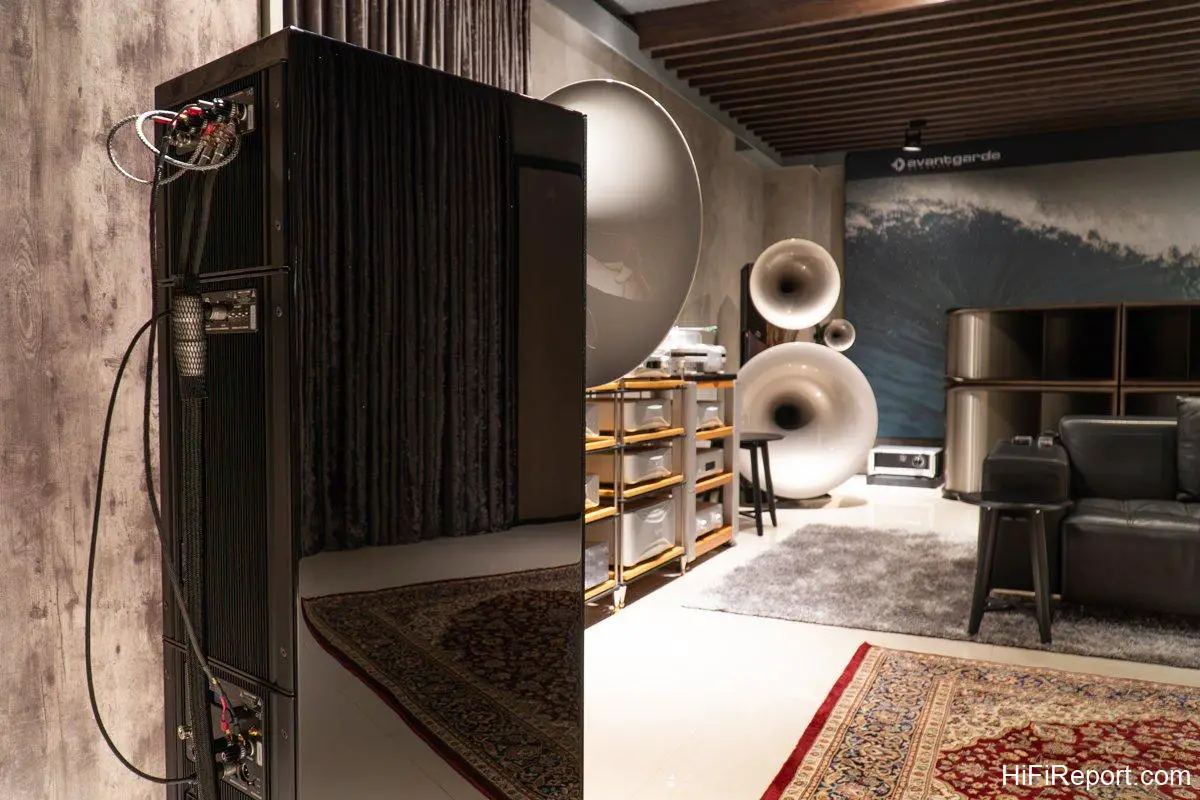
(For details on the iTRONE design features, please refer to my Trio G3 review.) The Uno SD’s iTRONE active module delivers 100W of power, specifically for driving the midrange and tweeter, which is more than sufficient.
Moreover, Avantgarde claims that the “voltage-current conversion” technology used in iTRONE offers better amplification performance than traditional amplifiers and is a perfect match for their loudspeakers.
Therefore, those interested in the Uno SD can choose either the passive version or the active version equipped with the iTRONE module.
With the former, you need to select your own amplifier, while with the latter, you don’t have to worry about amplifier matching; just connect your source directly.
These five major features—spherical horn, uncompressed midrange, special crossover design, active (DSP-equipped) subwoofer, and the optional iTRONE active module—are the competitive strengths of the Uno SD.
These are precisely the five reasons why consumers with this budget should consider the Avantgarde Uno SD.
Passive Mode with Full Esoteric 5 Series System
What did I listen to? HiFiReport, aiming to provide consumers with the most comprehensive selection options, presented a “limited edition” system that incorporated both active and passive capabilities. This allows them to demonstrate to clients with different needs.
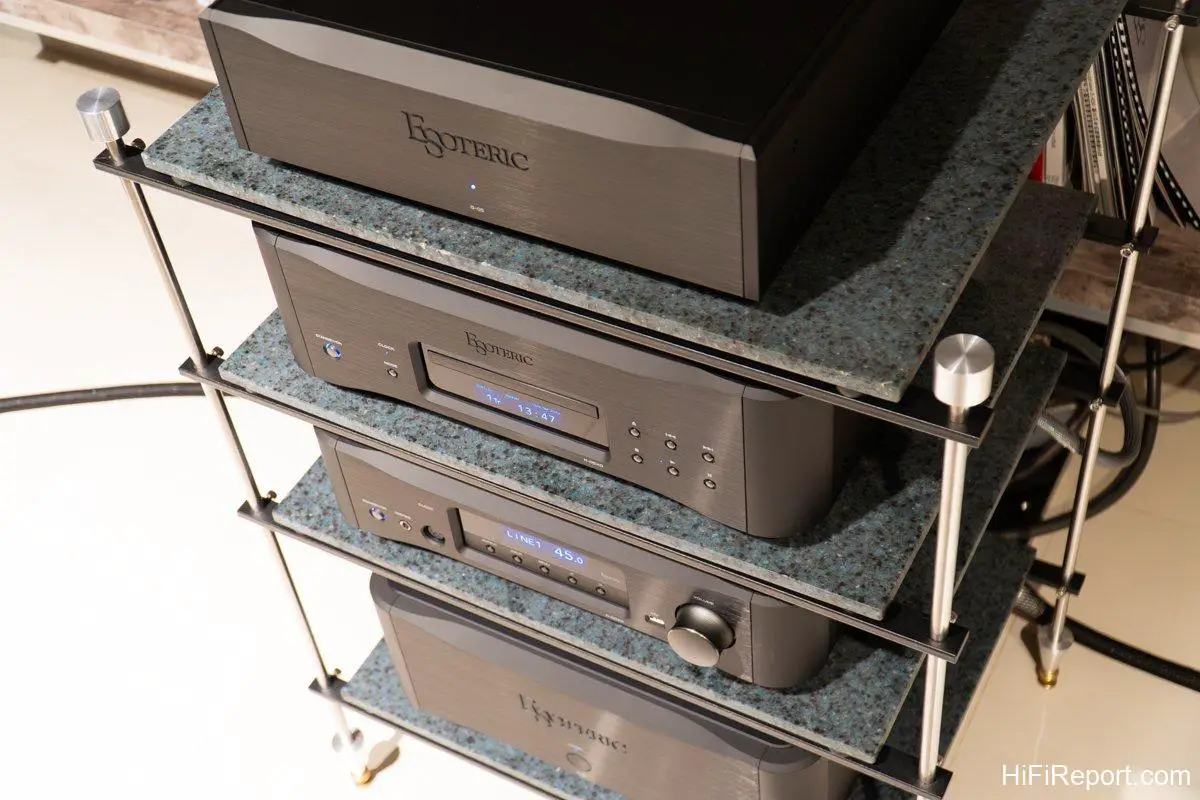
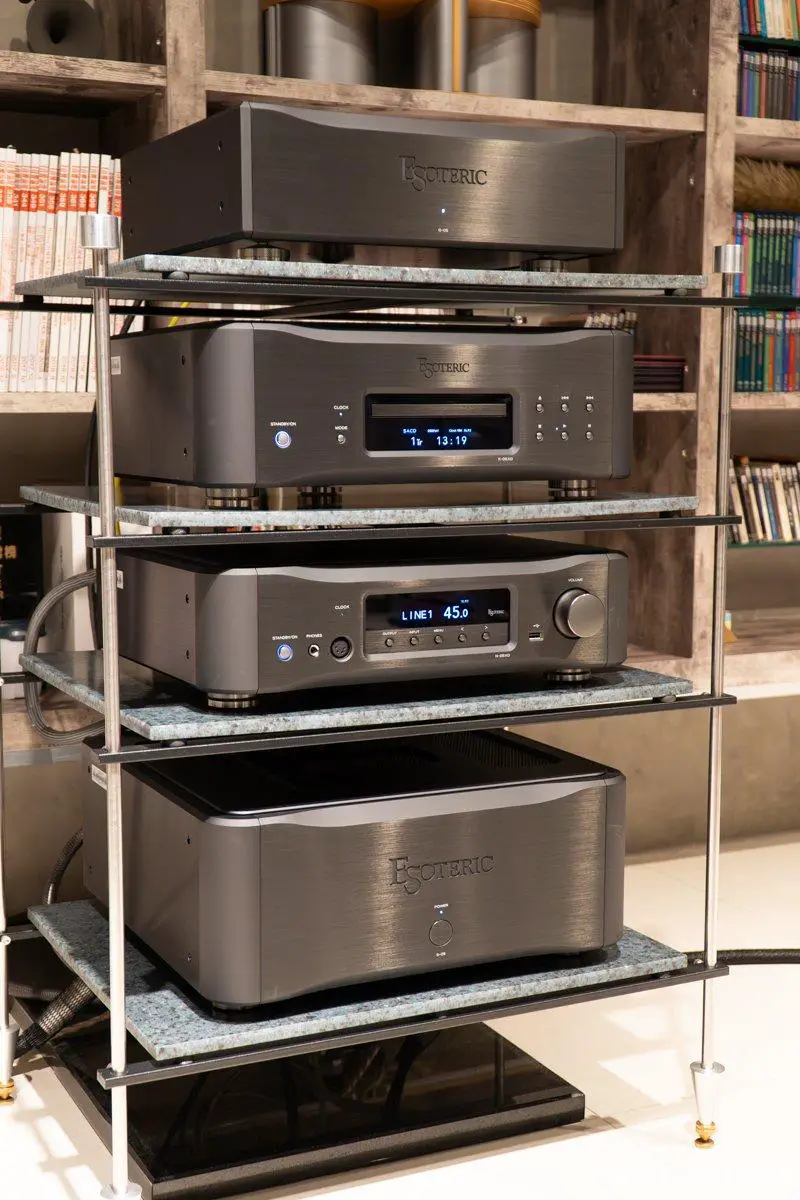
HiFiReport let me listen to the passive version of the Uno SD, using an Esoteric N-05XD as a preamplifier and streamer, and an S-05 stereo power amplifier for driving the loudspeakers.
A K-05XD CD/SACD player was also available as a source, and both the K-05XD and N-05XD were connected to an external clock generator, the G-05.
Detail and Dynamics: The Biggest Differences
After a brief introduction from Mr. Su of HiFiReport, I followed my usual routine and took photos before the formal listening session.
I found an Esoteric SACD on the rack, Mahler’s Symphony No. 1, a live recording by Klaus Tennstedt conducting the Chicago Symphony Orchestra. Compared to his complete set with the London Philharmonic, this version is more vibrant and dramatic.
I own this CD and have listened to it often before.
But this time, it sounded different.
The biggest differences were in two areas: detail and dynamics.
I must admit, I cannot definitively say whether it was the superior remastering of the Esoteric SACD, the prowess of the Esoteric system, or the capabilities of the Avantgarde Acoustic horns.
However, I am certain that all three elements contributed to the “Mahler 1” I heard.
Because the detail was rich and clear, I could distinctly discern the texture of the woodwinds in the first movement, filled with the breath of spring.
The clear and transparent soundstage revealed the composer’s meticulous orchestration.
While the first movement already has strong dynamic contrasts, I was even more impressed by the section starting from the third movement, where the timpani’s gentle taps lead into the “Frère Jacques” nursery rhyme melody played by the double basses, developing all the way to the breathtakingly explosive fortissimo in the fourth movement.
The storm-like, overwhelming power of the fortissimo, contrasted sharply with the peaceful and folk-like third movement.
The fourth movement’s powerful and aggressive tutti sections struck the chest and penetrated deep within.
Then, as the serene, heavenly, and lyrical theme returned, it elevated the spirit, seemingly even transcending the physical realm.
Was Mahler writing music here, or philosophical contemplation? At this point, I had already put down my camera and sat down to listen.
Even while moving around the room during photography, I could still perceive an orderly and layered soundstage.
The soft whispers of solo instruments were also captured without any loss.
I must add a point about the bass.
The Uno SD is not particularly large in size, but it is equipped with their latest 10-inch XB10 woofer, driven independently by an active module. The bass performance was quite remarkable.
Listening to the gentle pizzicato of the double basses before the end of the third movement, and the soft taps of the bass drum before the heavenly theme enters in the fourth movement.
That deep, weighty, yet gentle and almost imperceptible bass, was reproduced while maintaining its tactile quality and elasticity.
In my opinion, this is even more impressive than loud booming bass.
Textures, Instrumental Qualities: Details Vividly Rendered
I then found Ernest Ansermet conducting the Orchestre de la Suisse Romande in Falla’s “The Three-Cornered Hat,” also an Esoteric SACD.
The overture begins with continuous timpani rolls, followed by Teresa Berganza’s vocals emerging from a distance, accompanied by brass and castanets.
“The Three-Cornered Hat” is a ballet. The vocalist, not participating in the performance, naturally stands in the background, singing in a narrative manner.
Listening to this overture, whether it was the timpani, castanets, or brass, the sounds, organized with rich detail, formed a vivid picture.
Distance, stereo width, stage layout—all were clear, and instrument localization was precise.
In “Dance of the Neighbours,” the strings displayed both delicate and robust qualities.
The interplay between trumpets and woodwinds created a tune full of Spanish flavor.
A simple theme, through repetition and layering, became vibrant and colorful.
The same was true for “Miller’s Dance.” Listening to the bowing texture of the strings here was truly vivid.
This is what Avantgarde horns excel at: reproducing details without any loss.
The details, magnified by the horn, are particularly clear, and the textures are especially distinct.
What is Unparalleled Clarity? Listen to Avantgarde to Know
Meticulous detail reproduction is the forte of Avantgarde loudspeakers. They not only deliver detail but also express the original essence of various sounds with a natural timbre. This is the High Fidelity pursued by modern audio.
I could observe this in large-scale orchestral music, and it was even more evident when listening to chamber music.
Take the Emerson String Quartet playing Mozart’s String Quartet No. 17 “The Hunt,” for example. The clear two themes of the first movement, in 6/8 time, evoke the galloping rhythm of horseback riding. The first theme’s descending scale in groups of two, “da-da, da-da, da-da,” depicts the sound of horse hooves.
The second theme, with rapid legato notes, exhibits playfulness and light movement—is it the prey? The composer doesn’t say; it’s left to your imagination.
However, the positions of the four instruments were clearly audible. The first and second violins were on the left, the cello was to the right of the center line, and the viola was further to the right.
The two violins’ melodies were similar yet different. At times, the second violin’s melody was closer to the viola’s. This interplay, harmonious yet varied, balanced and layered.
The Uno SD reproduced the sonic textures of the four string instruments with unparalleled clarity, like a super high-resolution image.
Interlude—Do External Clocks Help?
I also toggled the setting on the N-05XD menu to switch between using and not using the external clock.
I know the effect of Esoteric’s external clock generators. I had just experienced it at the G-05 launch event not long ago, not to mention previous experiences.
But I was still curious and operated it for a while.
Well, leave your theoretical criticisms aside for now; try it first and then comment.
My choice: to use it.
What’s the difference? Clearer outlines, sharper lines, more focused imaging, more distinct layers, and clearer details.
During an audition session, time is limited. I didn’t want to waste time on a system without the G-05. I quickly turned it on and continued listening.
Sharpness? Nonsense, Texture is Key
I keep saying the Uno SD’s sound is “clear” and “detailed.” Are you worried about sharpness? Actually, sharpness is subjective.
Listening to music at home, my wife and I have different perceptions. Listening to music at the office, my colleagues and I have different interpretations as well. Sound is ultimately something you judge for yourself.
But I must say, if details cannot be revealed, they cannot be revealed. If the information is in the music, isn’t it a pity not to bring it out? Take Rossini’s Duo for Cello and Double Bass, performed by Jörg Baumann and Klaus Stoll, for example.
This piece is absolutely charming and suits audiophiles’ taste. You must get to know this piece.
Two low-pitched string instruments, echoing and responding to each other.
The cello, melodious, carries the main melodic responsibility, while the double bass is not just a rhythmic foundation provider. Rossini wants to let the double bass break free from the basso continuo role and showcase its ability to handle melodies.
The thick, heavy, and rich tones, carrying a hint of roughness, are imbued with elasticity and “Q-ness” by the rich body resonance.
In the second movement, the double bass pizzicato, paired with the cello’s lyrical singing, the timbre is truly sweet and beautiful.
Then, the double bass’s virtuoso-like triplets come in rapid succession. The bass quality is truly excellent.
As for the few soft pizzicato notes played by the cello at the end of the movement, is it an exaggeration to praise this detail reproduction? Do you still think the Uno SD’s sound is sharp or harsh if you truly hear it? I don’t think so.
Whatever is in the music is what is delivered. What Avantgarde horns aim to provide is not harshness but richer information.
Wouldn’t you want more information if it’s available?
Rich Tonal Colors, Complete Sound Production Process
Another piece that captivated me was Trio SR9’s marimba performance. Take their rendition of Borodin’s “Polovtsian Dances” from “Prince Igor,” for example.
The soundboards of the marimba are wooden bars, with metal resonator pipes underneath. The sound possesses both the warmth of wood and the rich colors brought by the metal pipe resonance. The decay of the notes is long, and the reverberation time is extended. Before the previous notes have finished, the next notes overlap, making the sound even richer and more varied in timbre.
Trio SR9 consists of three performers, with three marimbas playing in ensemble. Each performer can hold four mallets. You can imagine how rich the sonic effect is.
The Uno SD allows the composition of the marimba’s sound, from the tactile sensation of the initial strike to the subsequent resonant sound production, and then the overtones of the instrument gradually spreading and diminishing at both ends, layering into a multi-layered soundscape. This process is audible and imaginable.
This Bass is Truly Impressive!
I praised the Uno SD’s bass earlier, but I was referring to its ability to perform well even at low volumes and its excellent texture.
What about the quantity? What about the depth of extension? I put on Markusphilippe’s “Saxnbass” album. This album is recorded with fullness and grandeur. If played in an audio show room, rooms above the second floor might tremble.
However, Avantgarde Acoustic’s active subwoofer is adjustable. If users have this kind of issue in their space, they can adjust the low frequencies through Avantgarde’s proprietary low-frequency management software.
HiFiReport didn’t adjust it much, mainly relying on placement.
In actual listening, the bass was deep enough, full enough, yet very clean.
HiFiReport’s listening room does not have a suspended ceiling. The concrete beam structure is directly exposed, with only partial longitudinal wooden slat panels concealing the air conditioning.
Here, I did not hear any resonance from the beams. The double bass pizzicato notes were full and substantial, which was truly enjoyable.
The sensation of fingers plucking the strings and the vibrations upon release were felt within the resonating notes, making it seem as if one could see the physical action.
As for the baritone saxophone, the texture was exceptionally distinct.
This is not to say that Avantgarde Acoustic’s horns exaggerated the sonic information, but rather that it was so clear that it felt real, like being there live.
This “exceptional” clarity must be emphasized.
HiFiReport Staff Explains DSP Adjustment
In a blink, it was past five o’clock. It was the company’s quitting time, and I couldn’t keep people overtime—because I had questions to ask.
I quickly opened the door and looked for Mr. Su, asking him about the DSP adjustments made to the Uno SD’s bass.
I frankly stated that I felt the bass had been adjusted, as it was very taut and elastic, deep enough, but very clean.
Indeed, HiFiReport’s engineer brought over a computer. They had discovered a peak around 40Hz in the room’s response, so they tried to reduce it slightly.
They also lowered the low-pass frequency of the subwoofer slightly. The factory default setting was 300Hz, and they adjusted it to 270Hz to reduce the overlapping frequency range, which also helps to make the sound more transparent.
I had played with this bass adjustment before with the XD generation. It changes with every adjustment. Adjustments are made on the computer, and the loudspeakers respond immediately, which is quite convenient.
Finally, I asked HiFiReport to send me a screenshot of the subwoofer EQ settings. Such a useful tool should certainly be shared with everyone.
Fully Meets Modern Audio Demands
What is your perception of horn loudspeakers? Do you still think of them as something from the past, products of a bygone era? No, no, no. Once you have seen and heard Avantgarde Acoustic’s horn loudspeakers, you will no longer think that way.
Their horns are completely modern, even avant-garde. (Hence the name Avantgarde!) Their sound fully meets the demands of contemporary high fidelity, achieving high standards in detail, dynamics, timbre, and tonal accuracy. Moreover, with the assistance of active subwoofers and DSP, you can easily achieve balanced bass.
The exceptional WAF (Wife Acceptance Factor) is another major advantage of Avantgarde loudspeakers.
What you need to consider is your personal budget and room size, and then choose the Avantgarde loudspeaker that best suits you.
Please remember—the Uno SD is the true starting point for experiencing Avantgarde Acoustic horns.
Specifications
* Type: Semi-active horn loudspeaker
* Drivers: 25mm Mylar diaphragm tweeter x1 / 160mm horn, 127mm Omega midrange x1 / 500mm horn, 10-inch XB10 woofer x1
* Built-in subwoofer amplifier power: 500W
* Subwoofer DSP equalizer: 8-band EQ
* Frequency response: Midrange/tweeter / 290Hz-22,000Hz; Subwoofer / 18-350Hz
* Efficiency: 107 dB
* Impedance: 18 ohms
* Crossover frequencies: 290/2,800 Hz
* Maximum power handling: 50W
* Recommended amplifier power: > 10 Watts
* Recommended room size: > 16 square meters
* Dimensions: 500 x 615 x 1,355 mm (WxDxH)
* Weight: 81.5 kg