
Avantgarde Zero iTRON Active Horn Loudspeakers Review
Stepping into Winkey Audio (HiFiReport) for this listening session felt like a case of déjà vu.
However, this wasn’t a phenomenon requiring cognitive science to explain, nor was it related to time travel. It was simply because I had visited Winkey Audio in March 2022 to audition a system that was remarkably similar.
On that previous occasion, I listened to the Avantgarde Zero TA XD, which was the semi-active version of the Zero 1 XD. The original Zero 1 XD was a fully active loudspeaker. To allow customers to utilize their existing amplifiers or fine-tune the sound signature by swapping amplification, Avantgarde introduced the semi-active Zero TA XD. In this configuration, an external amplifier was required to drive the midrange and tweeter, with only the bass amplifier module retained internally.
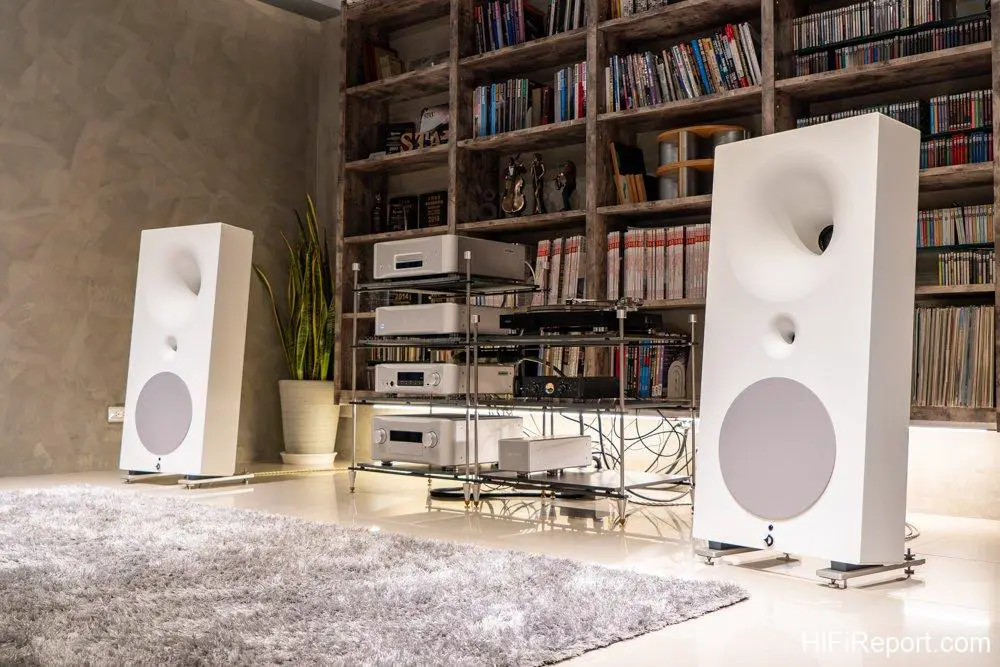
This time, I was here to experience the latest generation: the Zero iTRON. Avantgarde has reverted the Zero model back to a fully active design. More significantly, they have replaced the amplification module driving the midrange and tweeter with their internally developed iTRON module.
iTRON is an amplification module designed to drive the speakers, yet it differs from conventional amplifiers. Avantgarde even states, “iTRON is not an amplifier.” So, if it’s not an amplifier, what is it? Avantgarde describes iTRON as a “voltage/current converter,” essentially the engine that directly controls the drivers.
What is iTRON?
Why wouldn’t Avantgarde simply use traditional amplifiers? They argue that conventional amplifiers rely on voltage amplification, but the movement of a voice coil is caused by the electromagnetic force generated by current flowing through it. According to Ohm’s Law (V = I x R), current is inversely proportional to resistance; higher resistance means lower current. A speaker driver’s impedance, however, fluctuates with frequency and is not constant. This variability leads to non-linear driver operation as frequency response changes, which is a form of distortion.
Given this, wouldn’t switching to current amplification solve the problem? It’s not that straightforward. Firstly, current amplification is not effective at driving bass drivers – so what about the speaker’s low frequencies? Secondly, current drive requires precise electronic crossovers. Furthermore, every driver has certain resonant frequencies. If we want to avoid amplifying these resonances, we need to filter out those frequency bands. However, current drive tends to ignore the filtering effects of crossovers.
iTRON: Five Years in Development
While current drive is conceptually sound, implementing it successfully is far from easy. The three issues mentioned above needed to be overcome. Avantgarde remained steadfast in their belief, spending five years developing a current amplification circuit specifically tailored for Avantgarde speakers – the iTRON circuit.
The manufacturer states that this is a symmetrical, single-ended, zero-feedback circuit capable of overcoming the inductance issues inherent in voice coil movement. The midrange and tweeter of the Zero iTRON are driven by the built-in iTRON circuit. Naturally, their performance differs from the Zero 1, which used traditional amplification circuitry, and also from the semi-active Zero TA XD, which required external amplification.
Didn’t Avantgarde encounter the problems mentioned earlier? They actually didn’t. Firstly, Avantgarde speakers have used a semi-active design for many years, incorporating dedicated amplifiers to drive the bass. This resolves the issue of current amplification being unsuitable for bass. Secondly, Avantgarde’s electronic crossovers are highly precise, so this is also not a problem. Thirdly, thanks to the gain provided by the horn design, their drivers achieve higher efficiency, allowing them to operate within a range far from distortion and resonance. Based on these unique advantages, Avantgarde encountered no issues in adopting the iTRON current amplification circuit.
All-New, Upgraded Drivers
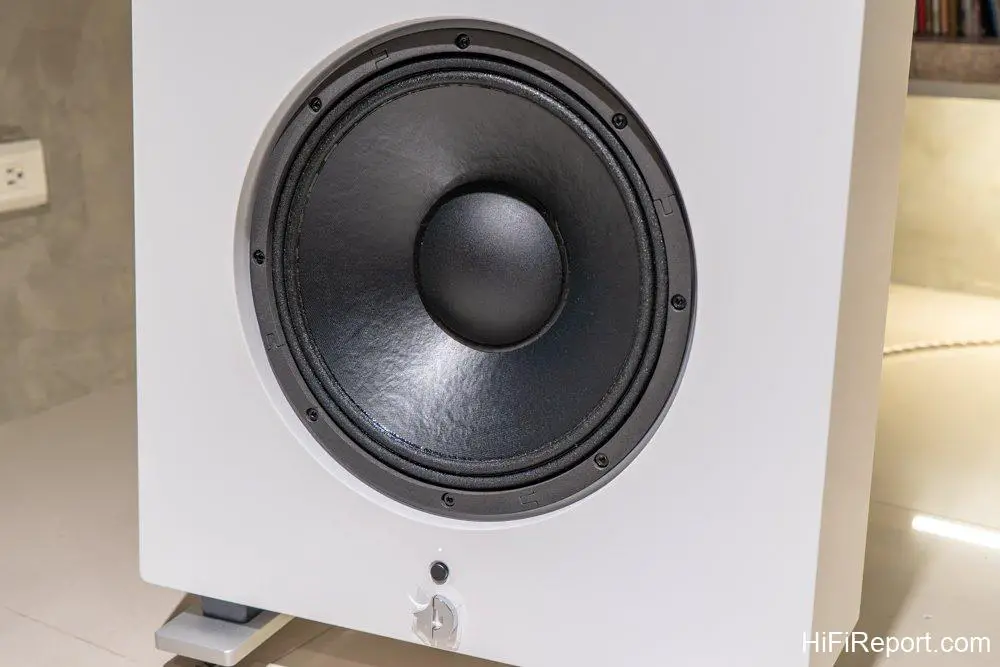
Did the Zero iTRON only upgrade the built-in amplifiers? Certainly not; Avantgarde made numerous improvements. On the driver side, both the midrange and bass drivers have been replaced. The previous Zero 1 used a 4-inch paper cone midrange. The Zero iTRON, however, features a new 5-inch Evolution XM1 midrange driver with a dual-magnet motor, resulting in improved driver efficiency, linearity, and dynamics. The 1-inch soft dome tweeter has also been structurally reinforced to reduce vibrations. The 12-inch paper cone bass driver utilizes a W-shaped double surround, and its diaphragm geometry has been carefully considered to minimize distortion. The voice coil size has also been increased from the previous 2.5 inches to 3 inches.
Proud DSP Bass Management Program
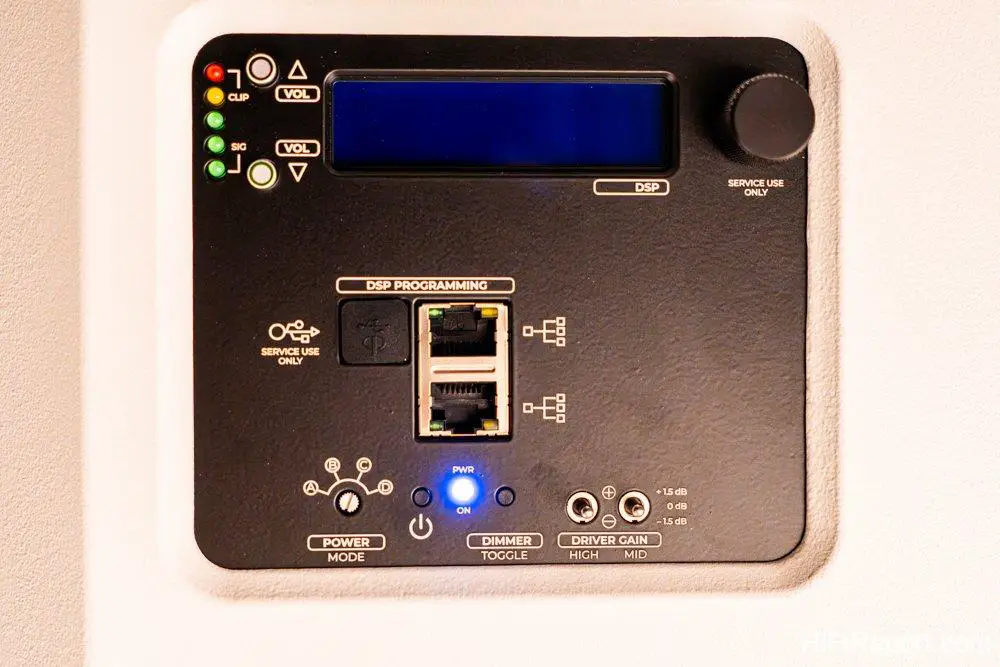
While the amplifier used in the previous Zero 1 was Class D, the iTRON operates in Class A/AB. Furthermore, the previous crossover used an FPGA chip programmed for the crossover topology and active filtering. This has now been replaced by a pure analog active crossover network, utilizing custom-designed capacitors. The DSP software for bass management has also been adjusted. The Zero 1’s DSP allowed adjustment across 10 frequency bands. The Zero iTRON reduces this to 8 EQ bands, fixed at 30Hz, 40Hz, 60Hz, 80Hz, 110Hz, 160Hz, 220Hz, and 320Hz, allowing for a maximum adjustment of +/- 6dB. It can also be adjusted using other DSP parameters such as Bass Gain (overall bass volume increase), Bass Boost (specific bass frequency band emphasis), LPF Range (integration with the midrange driver), and two Filter settings (to address room modes).
Eliminating the DAC, Now Fully Active with Pure Analog Input
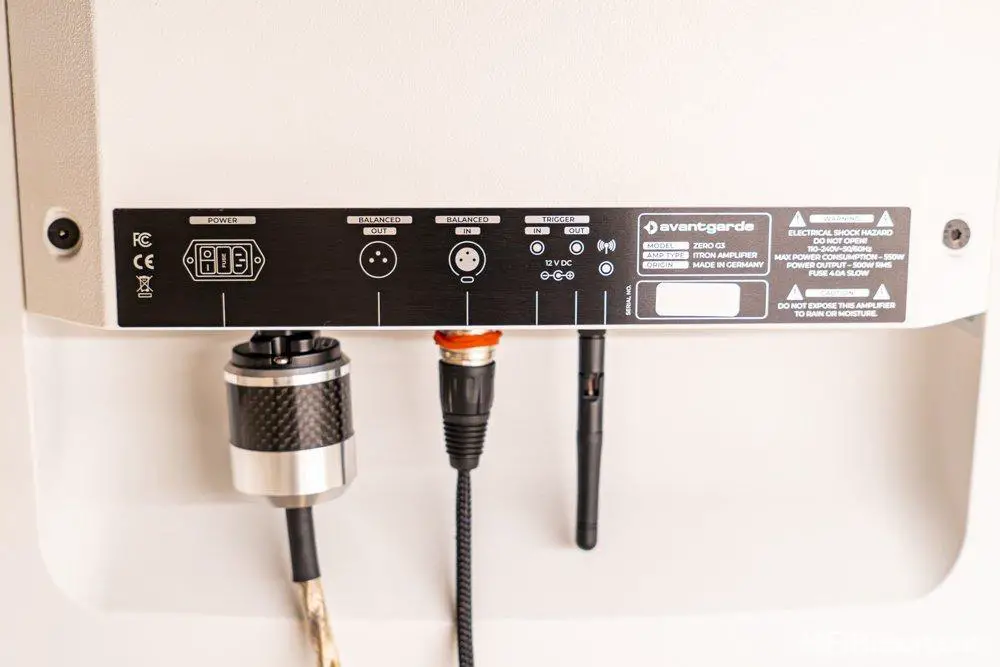
Previously, the Zero 1 had a built-in DAC, allowing for the simplest setup with just a source component, whether analog or digital. This was because the Zero 1 offered digital inputs (including USB, coaxial, optical, and AES/EBU) in addition to its XLR analog input. However, Avantgarde has transitioned in recent years, abandoning digital inputs and entrusting the digital decoding to the user’s chosen components. Consequently, the Zero iTRON only has one set of XLR inputs. Moreover, the Zero 1’s inputs were concentrated on one “Master” speaker, which then transmitted the signal wirelessly or via cable (network cable) to the other “Slave” speaker. This introduced latency issues, up to 220ms. With the Zero iTRON, the analog signal is directly distributed to both left and right channels, eliminating the master-slave transmission problem. The overall latency is virtually negligible (less than 1ms).
Four Convenient Power-On Modes
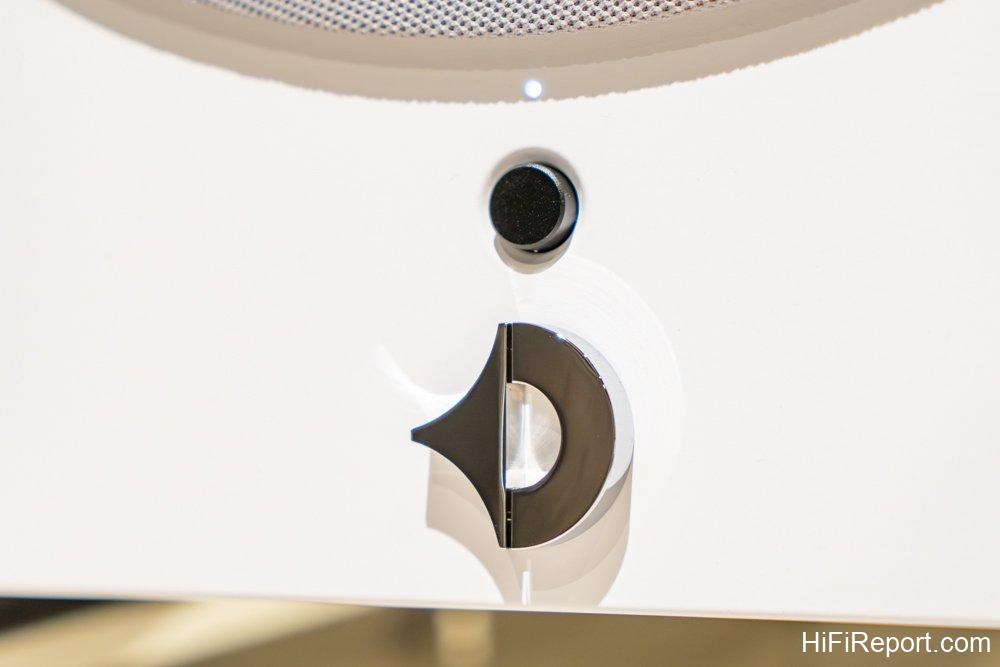
The Zero iTRON also incorporates new design features in its operation and functionality, enhancing overall ease of use. For instance, the power switch on the Zero 1 was located on the rear panel, requiring users to reach around to turn it on or off. The Zero iTRON adds a switch below the front baffle, eliminating the need to go behind the speaker. Additionally, there’s a selector switch on the rear panel to choose between different power-on modes, including front switch activation, 12V trigger terminal activation, input signal detection activation, and overall power activation – offering four modes of operation. Such personalized power-on settings are truly rare in the audio world.
Adjustable Midrange and Treble Gain
Furthermore, the Zero iTRON includes a few additional features. One is an extra set of XLR analog outputs. You might wonder why a loudspeaker, being the final component in the system, would have analog outputs. The answer is that it’s designed for users who wish to connect external subwoofers in the future. The Zero iTRON is a fully active speaker. If a user connects their source directly or if their preamp only has one analog output, it’s inconvenient to add an external subwoofer. The addition of this analog output provides users with another application option. Another feature is the presence of two toggle switches on the rear control panel, allowing for adjustment of the high frequency and midrange drive gain, each offering +/-1.5dB of adjustment space. This means that the Zero iTRON not only has adjustable bass but also allows for fine-tuning of the midrange and high frequencies, providing greater flexibility in use.
New Base Design for Adjustable Tilt
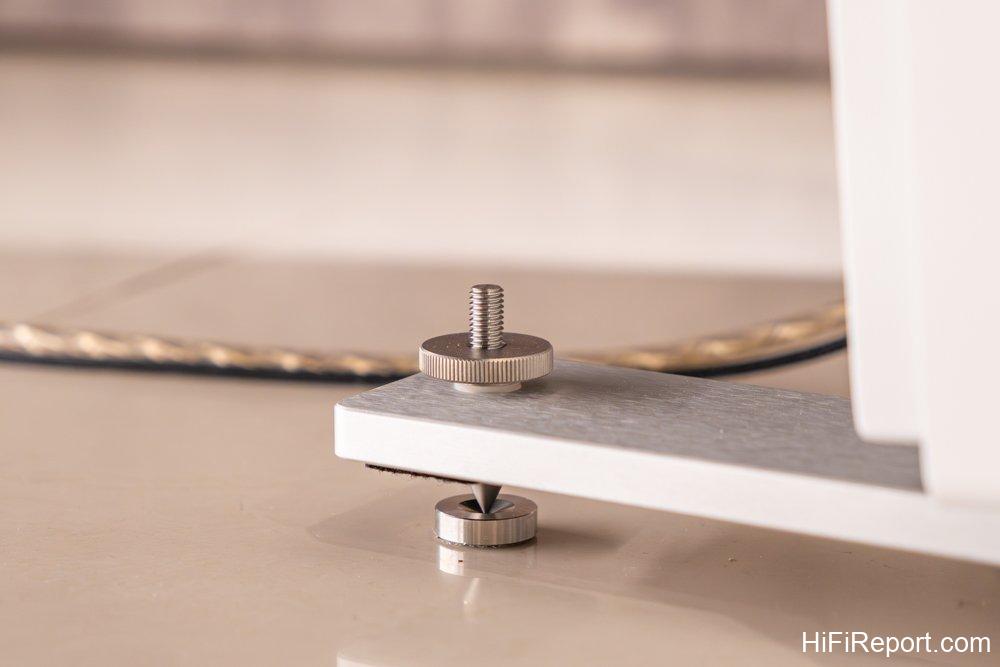
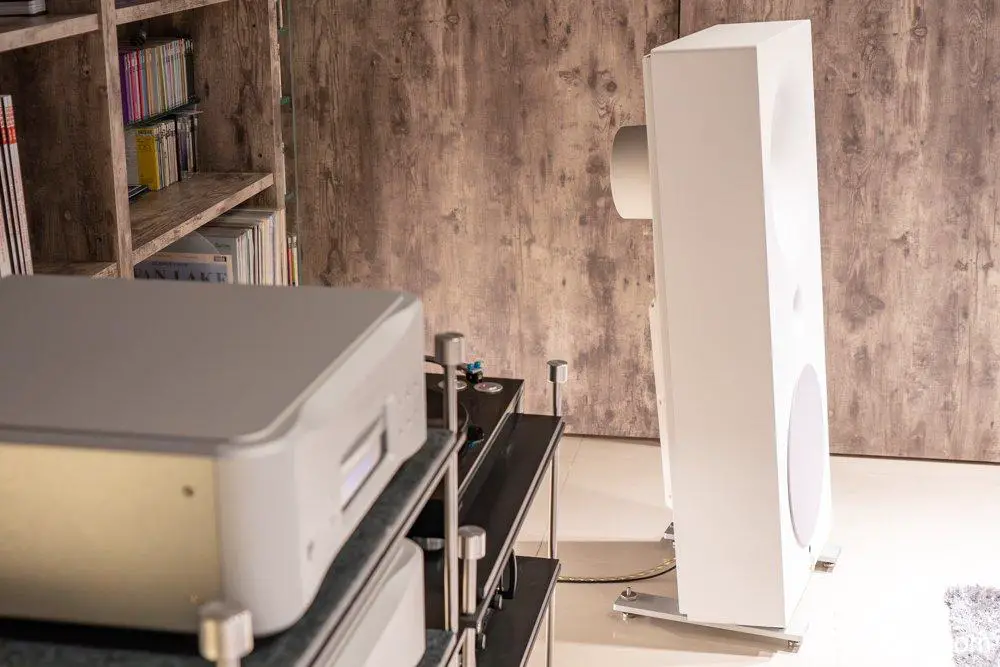
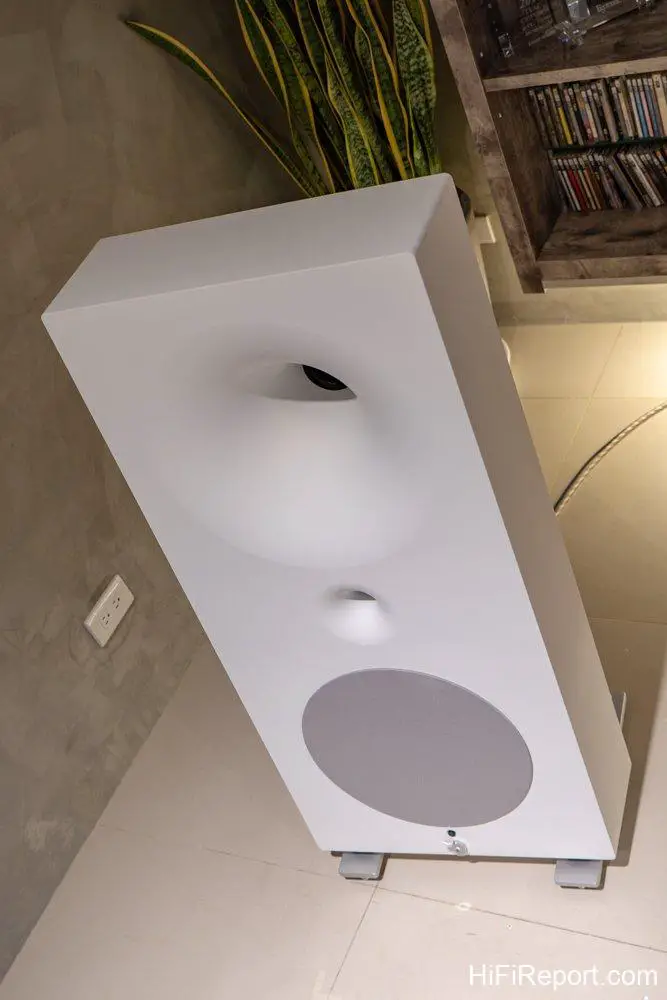
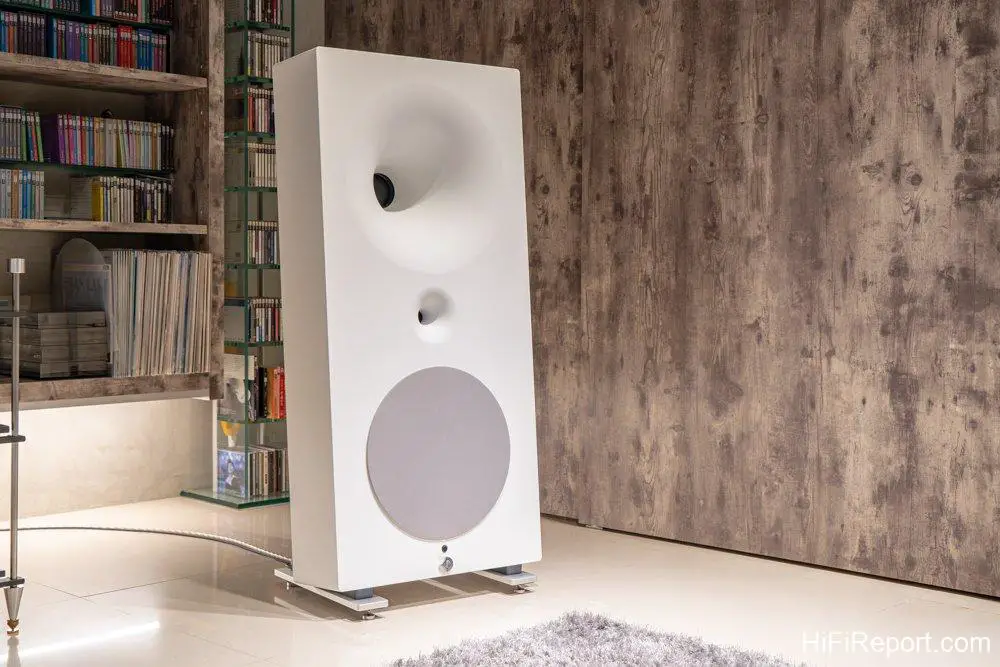
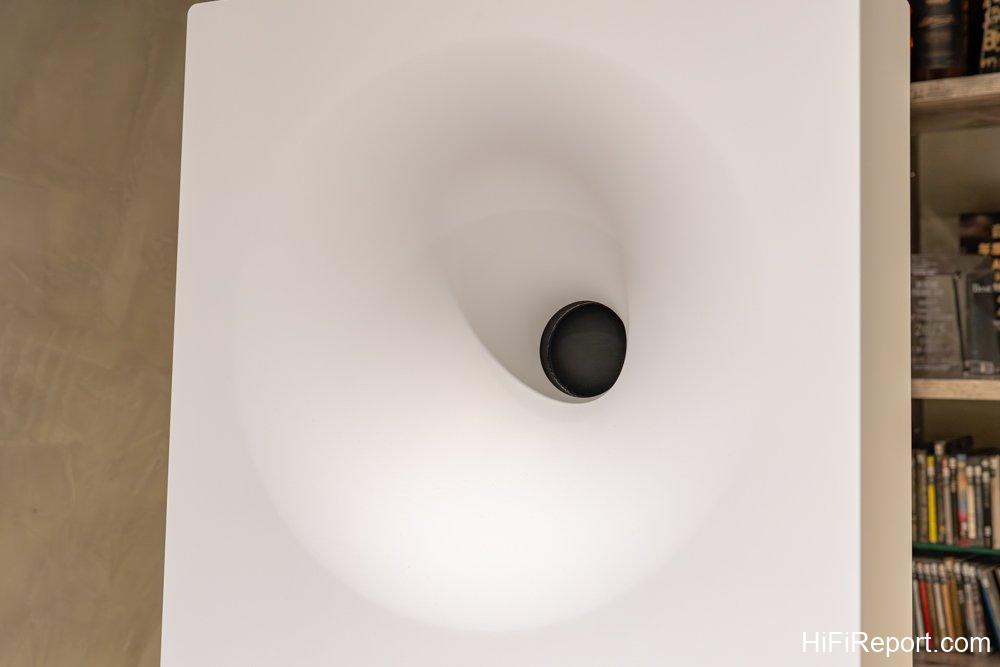
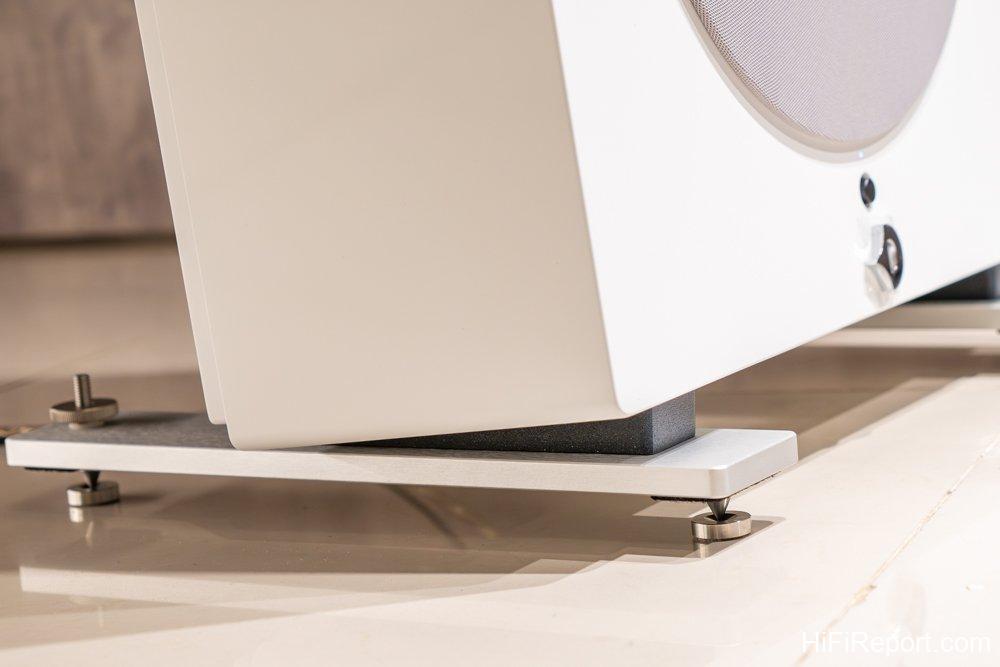
Unlike Avantgarde’s higher-end Uno, Duo, and Trio models, which utilize cast-formed, trumpet-shaped circular horns, the Zero model features an integrated design. The three-way drivers and bass module are all housed within a single enclosure. This cabinet, cast from PUR polyurethane, incorporates integrated horn openings for the tweeter and midrange. The Zero iTRON speakers come with a built-in tilt angle. While the tilt angle of the previous Zero 1 was fixed, the Zero iTRON’s rear spikes are height-adjustable. By changing the height of the rear spikes, the tilt angle of the Zero iTRON can be adjusted. This tilt adjustment relates to our seating distance and how much detail we wish to hear clearly.
Confidence to See Through the Stage at a Glance
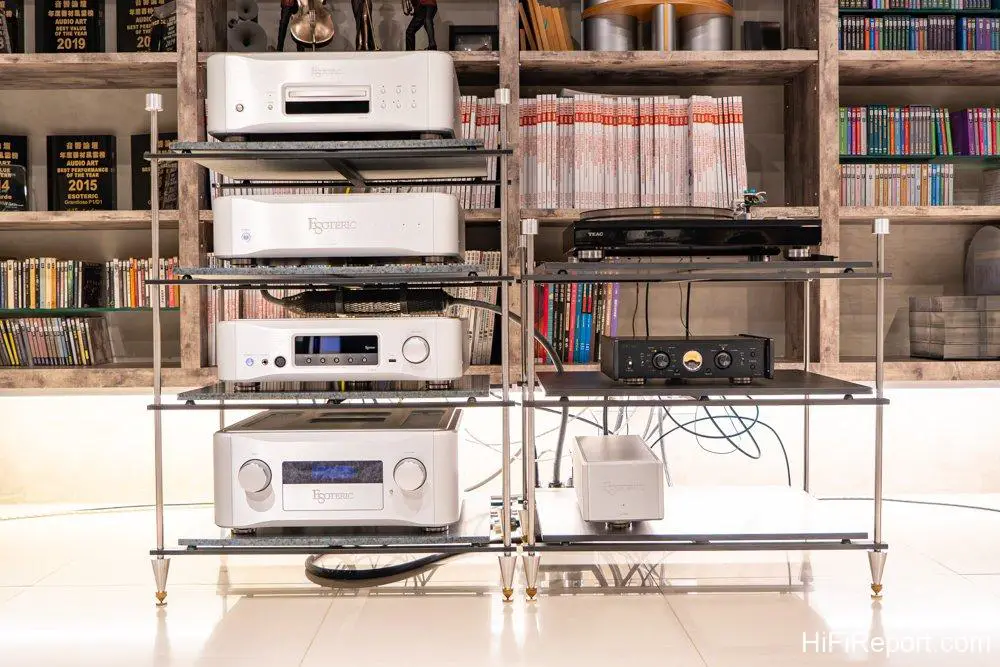
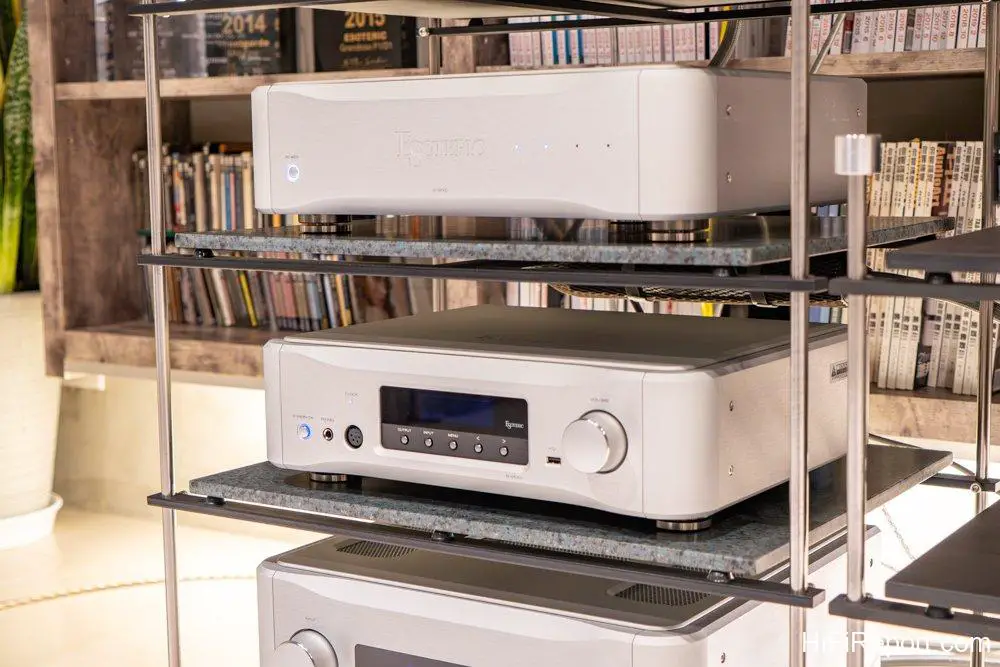
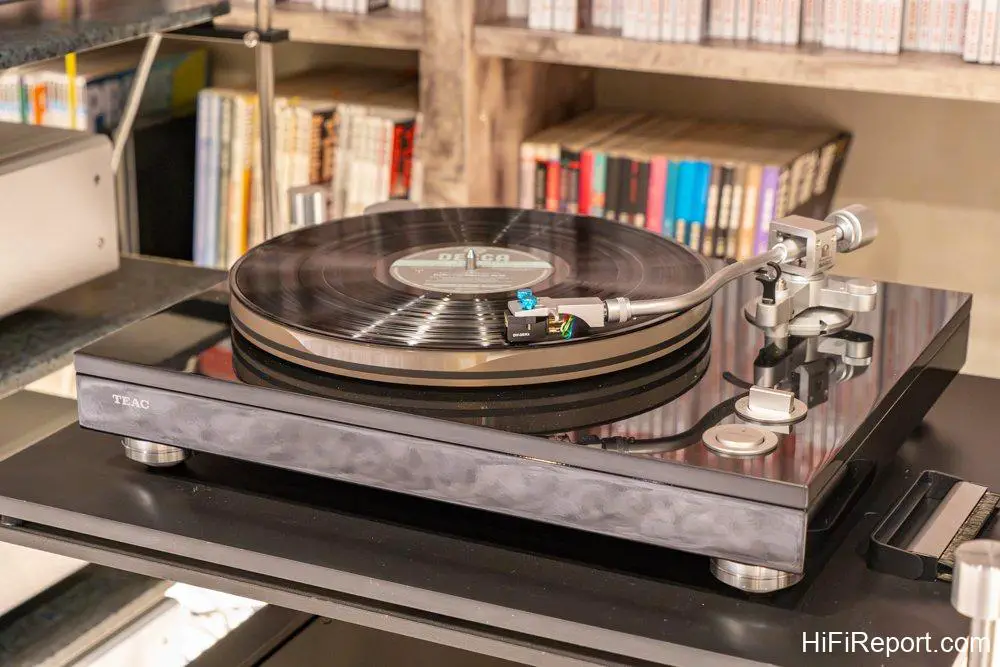
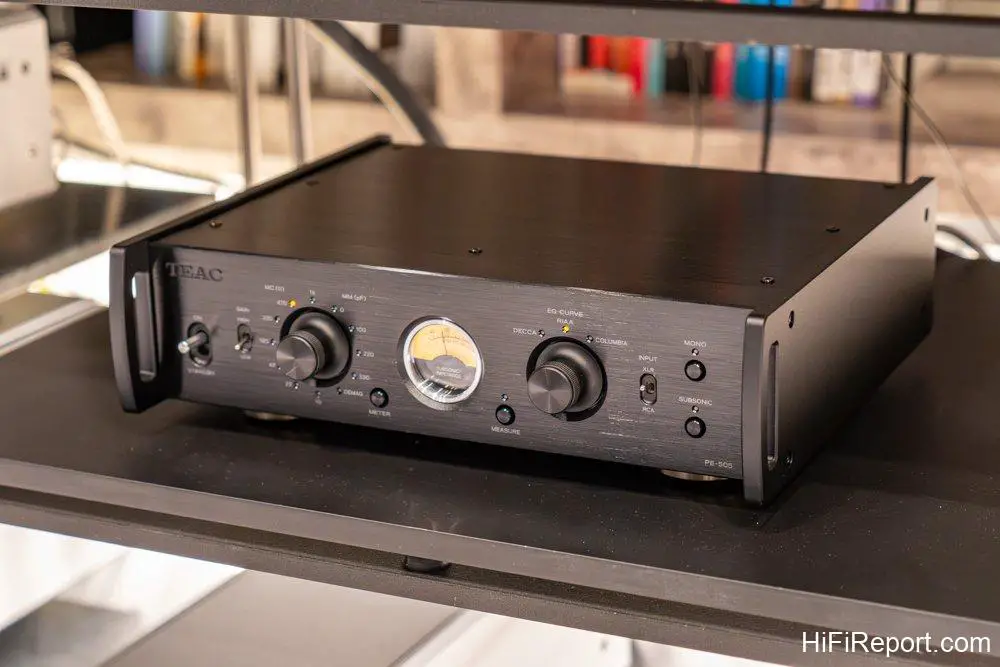
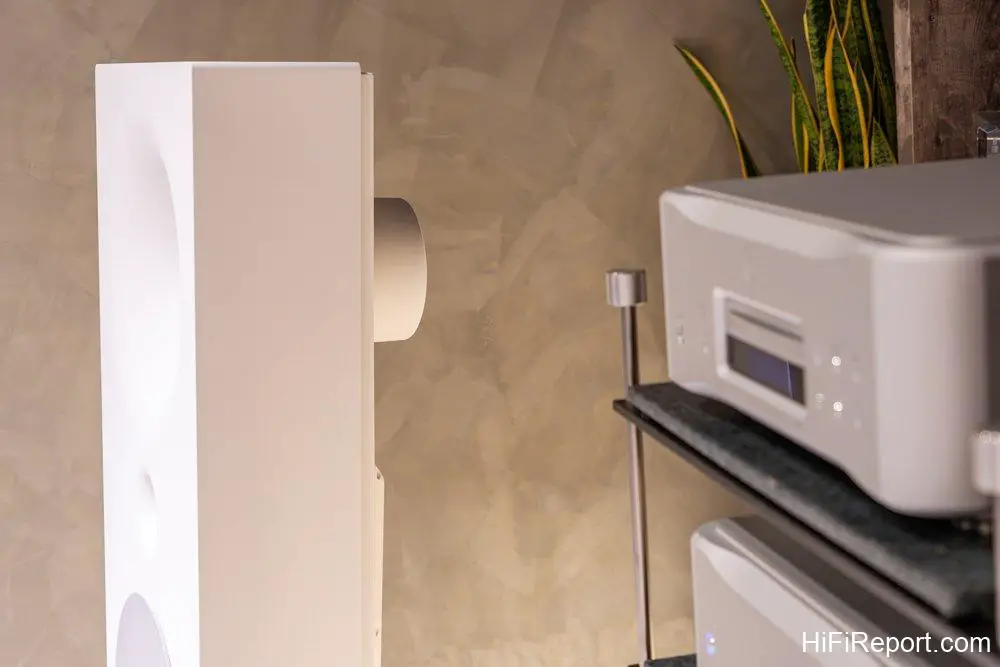
Winkey Audio prepared three source options: the highly cost-effective streaming DAC preamplifier N-05 XD from Esoteric, the top-tier SACD/CD player K-01 XD (from their “non-Grandioso” range), and a vinyl system comprising a Teac TN-5BB turntable and PE-505 phono stage. Since the Zero iTRON is an active speaker and doesn’t require external amplification, the Class A integrated amplifier F-01 on the rack remained unused, with only the N-05 XD controlling the volume.
Without a direct side-by-side comparison, and with nearly three years having passed since I last listened to the Zero TA XD, I cannot definitively pinpoint the differences between the Zero TA XD and the Zero iTRON. However, reviewing my original listening notes and comparing them to my current impressions of the Zero iTRON, it seems the Zero iTRON exhibits a more balanced and fluid overall amplification and drive, with better control over the low frequencies.
The Zero iTRON’s sound is transparent, possessing a confidence that allows one to see through the stage at a glance. It is precisely this transparent, clean sonic foundation that enables it to effortlessly reveal the detailed information within various musical genres. Unearthing details within music has always been a forte of Avantgarde speakers. Benefiting from their horn design and Omega midrange, the details heard through Avantgarde speakers are always exceptionally clear and precise, as if viewed through a magnifying glass. This characteristic is fully evident in the Zero iTRON, and perhaps due to the iTRON module’s drive, the sound appears even more transparent, lively, and natural. The last time I listened to an iTRON version of an Avantgarde active horn was in 2023 with the Trio G3 iTRON active version. Hearing the entry-level Zero iTRON this time, that unobstructed, penetrating vision has returned. This generation change from Avantgarde is indeed substantial.
Painting Each Contour with Bright Tones
Taking Shelby Lynne’s “Just a Little Lovin'” as an example, the nearly 50-second intro alone reveals a lot. The drum kit includes not just drum sounds but also the delicate, crisp, and fragmented sounds of the hi-hat cymbals. This rhythm runs throughout the entire piece and can be considered its backbone. I always feel that listening to the drummer’s rhythmic sounds on the Zero iTRON is particularly clear; the texture and shape of the cymbal sounds are vividly portrayed. Coupled with the rich, deep rolling notes of the bass, the amount of low-frequency energy is truly abundant. One cymbal, one bass, one harmonic rising, one bass note sinking – the Zero iTRON handles both extremes effortlessly. As for Shelby Lynne’s vocals, as the song progresses, a clear and distinct vocal line is drawn. Not a single detail of articulation or pronunciation is missed, effortlessly reproducing a three-dimensional image precisely positioned in the center between the two speakers. The Zero iTRON possesses a high level of resolution, outlining every contour with a bright palette, whether it’s the accompaniment or the vocals, creating a layered and three-dimensional sonic picture.
Listening to the Heavy Drumming Here Reveals Its Bass Prowess
Listening to Adele’s album “25,” in the opening of the hit song “Hello,” after a few piano chords, Adele sings in a calm tone until the chorus, where her emotions surge, and her voice becomes soaring and passionate. The drumming is full and heavy, and the accompanying melody in the background is a blend of electric guitar and keyboard harmonies. Although this is the result of mixing, the layers are remarkably clear. Every time I listen to Avantgarde speakers, I have a similar experience – they always manage to articulate things clearly. If something is already clear, they make it even clearer.
In the fast-paced “Send My Love (To Your New Lover),” the opening captures Adele’s spoken word, “Just the guitar, ok, cool,” faint and slightly to the left. This seemingly unintentional remark, less than a second long, was the clearest I had ever heard it on the Zero iTRON. Then follows the acoustic guitar and percussion similar to conga drums, progressing with a clear and lively rhythm. When reproducing this rhythmic section, the Zero iTRON displays its speed and excellent resolution, making the drum beats particularly distinct. As for “I Miss You,” one can again hear heavy and full drumming. The Zero iTRON renders this drumming with not only depth but also speed; the low frequencies are clean and clear, not sounding muddy.
DSP Bass Management: Its Greatest Tool for Overcoming Room Limitations
I praised the Avantgarde Zero iTRON’s excellent bass. When playing several of Adele’s rhythmically strong songs, the drum performance was outstanding – so outstanding it nearly stole the show. This isn’t just the capability of its 12-inch woofer; it’s primarily because its bass is actively driven, with a built-in 400W amplifier pushing the bass, effectively working like a tailor-made subwoofer integrated with the main speaker. How could such bass not be good? Not only that, it also features DSP bass management, following a standard operating procedure – measurements are taken using the factory microphone and then adjusted via a dedicated application – to overcome room acoustics, eliminating concerns about bass modes. The excellent drumming that earned my continuous praise is largely thanks to Avantgarde’s active bass and DSP bass management.
A Special Vocal Charm: Rich Detail and Clear Texture
Avantgarde speakers possess a unique charm when reproducing vocals. This is largely due to their horn design, which yields particularly rich detail and exceptionally clear texture. Listening to Boz Scaggs’ “Thanks to You,” his warm, rich voice, using his signature blues and soul inflection, sings slowly. Scaggs’ vocals are solid and three-dimensional, with clear details in every aspect of his delivery. Whether it’s the articulation of consonants, the phrasing at the end of a line, or the use of nasal resonance, it’s all easily discernible. In the accompaniment, the powerful drums and full bass, along with the melody woven in by the electric guitar, create a hazy atmosphere – truly captivating!
Sara Bareilles’ album “Brave Enough: Live at the Variety Playhouse” is excellent for demonstrating the Zero iTRON’s ability to reproduce liveliness and a sense of being there. Sara Bareilles often plays the piano while singing during her performances, and the electric piano accompaniment blends harmoniously with her vocals, allowing for greater emotional expression. Her voice is soaring, and in the chorus, it often has a penetrating power, easily drawing listeners into the mood she creates. She also generously interacts with the audience during her performance, adding to the music’s vibrancy and energy. The Zero iTRON is very adept at conveying the atmosphere of this album. Listening to the lively and realistic sound, whether it’s Sara Bareilles’ voice or the enthusiastic cheering and applause from the live audience, everything feels warm and present. As I mentioned earlier, the Zero iTRON’s sound is very transparent, its essence is pure, and its foundation is lively – this album serves as proof. I want to specifically emphasize one point: the details reproduced by Avantgarde horn speakers are richer compared to typical non-horn speakers.
If the Information is in the Recording, the Zero iTRON Will Unearth It
This information is indeed within the recording, and the source equipment has already extracted it. In near-field or even ultra-near-field listening, these details might be discernible. However, once the listening distance increases, the inevitable energy decay makes those details sound less vivid and clear. This is what I mean when I say Avantgarde speakers help one examine every detail within the musical “can” as if with a magnifying glass. The Zero iTRON, with the added factor of the iTRON amplifier module’s drive, makes the sound even purer and more limpid.
Listening to the album “Duo” by Hélène Grimaud and Sol Gabetta, the Zero iTRON provided clear contours for the piano and cello. Chamber music emphasizes harmony and synergy, and a duo is no different. There is no clear principal or subordinate relationship between the piano and strings; they complement each other, playing in harmony. A balanced system always reflects this harmonious atmosphere. While I’ve mentioned the Avantgarde speaker’s excellent resolution, clean sound, and abundant details multiple times, the Zero iTRON equally demonstrates these characteristics, yet it doesn’t detract from its ability to portray the harmony, balance, and fluidity of a duo. Many people perceive horn speakers as being either overly analytical and fatiguing or colored and unbalanced. However, Avantgarde is different. The details I heard actually comprehensively built the form and texture of the piano and cello. The decay of the piano notes was also beautiful, bright, and colorful. Furthermore, I couldn’t detect any coloration; both the piano and cello conveyed a sense of transparency and naturalness. Is this credit due to the drivers, horns, cabinet, etc.? Or is the iTRON amplifier module formidable? I believe both are contributing factors.
Esoteric’s Remastered Albums: Each One is Spectacular
The listening impressions from the albums mentioned earlier were primarily from Tidal, streamed via Roon through the N-05 XD. However, one thing I always look forward to when visiting Winkey Audio for a listening session is the opportunity to hear Esoteric’s SACDs. To showcase the excellent performance of their SACD players and to benefit audio enthusiasts, Esoteric sources original master tapes of classic recordings, processes them using their proprietary Esoteric Mastering remastering technology, and produces SACDs with exceptional sound quality. These SACDs are released in limited quantities, so if you want to purchase one, you need to pre-order quickly as soon as the manufacturer announces a new release. If you miss out, they may not be available again. More than half of the SACDs released by Esoteric to date have sold out and are out of print. In recent years, they have also introduced limited-edition vinyl records, which are also remastered using Esoteric Mastering and entrusted to JVC Mastering Center for cutting. Since Winkey Audio also had the K-01XD SE and Teac TN-5BB turntable available, I naturally didn’t want to miss the opportunity to experience these excellent recordings.
Spacious Soundstage, Clear Layers, Precise Placement of Sections
Listening to the SACD of Wagner’s orchestral works performed by the Berlin Philharmonic conducted by Herbert von Karajan, remastered by Esoteric. The first track is the magnificent Prelude to “Die Meistersinger von Nürnberg.” The soundstage is spacious, the layers are clear, and the placement of the orchestral sections is precise and well-defined. Although the Zero iTRON is not large in size, the scale of the reproduction is considerable. The string texture here is vivid. Wagner often uses bright and dense strings as the lyrical and narrative core of his music, augmenting them with brass to add grandeur and passion, and employing woodwinds for transitions during musical shifts. Listening to the strings and brass here, their texture is so vivid they seem to leap out – truly clear. I also noticed the low strings in this piece. The Zero iTRON handles the low strings here very pleasingly, without excessive prominence causing muddy bass, yet clearly conveying a layer of low frequencies underpinning the music. Even in the final tutti section, one can still perceive the low strings supporting the sound from below.
As for the Prelude to “Tannhäuser,” the initial French horn call is a highly iconic opening. The harmony of the four French horns is distinctly audible, clearly presenting the theme of the Pilgrim’s Chorus. Subsequently, silken, dense strings with a mournful expression enter. The Zero iTRON renders the texture of these strings in a natural, balanced, and transparent manner, without overly emphasizing their thickness, instead highlighting their silky, warm sheen. Upon entering the allegro section, the music’s mood shifts – this is the dance within Venusberg, with woodwinds paired with the high notes of the violins, displaying an elegant charm. With the aid of the horns, the Zero iTRON portrays these delicate, sensuous musical notes just right. Following this is the majestic “Venusberg” motif. Listening to the music full of desire here, it’s not just the violins weaving in the high registers but also the golden shimmer of the cymbals. The Zero iTRON’s rendition of the texture of those high violin notes, their clarity and vividness, is something not everyone can achieve. I own the CD version of this recording, but the Esoteric SACD version is distinctly superior in terms of resolution, layering, transparency, sound density, dynamics, and extension at both ends.
Esoteric’s Vinyl is Also Excellent, with a Flavor Distinct from SACD
Having listened this far, the audition of the Zero iTRON could actually conclude. However, there were several Esoteric SACDs and LPs of the same recordings on the rack, and I couldn’t help but be curious – with the same recording, the same production team, and the same Mastering technology, what different sounds would emerge from different media? I chose Dvořák’s Symphony No. 9 conducted by István Kertész with the Vienna Philharmonic, which was also one of the selections when Esoteric first released its own vinyl records in 2023. Between vinyl and SACD, which one wins? In terms of resolution, if one seeks to clearly delineate the well-defined, orderly layers of the soundstage, the SACD is undoubtedly superior. However, if the goal is not just clearly defined layers but also a sense of three-dimensionality in the sound image, then vinyl has the edge.
However, Esoteric’s vinyl records are indeed impressive; the music sounds incredibly fluid, and the dynamic fluctuations are relaxed and natural. In the introduction to the first movement, after the slow unfolding by the strings and woodwinds, the timpani suddenly strike, producing powerful triplets. The drum sound on the SACD version is fast, forceful, and crisp, while the drum sound on the LP version, in addition to its power, has a touch more fullness and roundness. Then comes the hymn-like first theme. Once the theme unfolds, it’s Dvořák’s moment to display his skillful art of repetition. This back-and-forth thematic interplay washes over like waves. Despite its “design-oriented” appearance, the Zero iTRON’s music reproduction capabilities are far from ordinary. Moreover, whatever you feed it, it will reproduce faithfully for you to see and hear. This is Avantgarde; this is the capability of the iTRON version.
Appears Simple, But Is Anything But
Compared to Avantgarde’s own Uno, Duo, and Trio models, the Zero iTRON indeed offers a smaller and fully equipped option. Incorporating the iTRON, Avantgarde’s proprietary current amplification solution, it best represents Avantgarde’s design philosophy in terms of speaker drive and sound performance. The Zero iTRON has a minimalist appearance, available only in matte white or black finishes, a stark contrast to the luxurious feel of their other higher-end speakers.
With a budget under approximately $30,625, there are not many options for German-made horn speakers. If you further specify fully active with built-in DSP bass management, the choices are even fewer. If you then demand full-range sound capabilities from 18Hz to 22kHz, it would be impossible to make the speaker this small. Furthermore, when it comes to amplification circuitry, the Zero iTRON is truly unique in featuring a Class A/AB current amplification circuit. There are many speaker options around $30,625, but the Avantgarde Zero iTRON is undoubtedly a truly special presence in the market. While it appears simple, it is anything but.
Specifications
* **Type:** 3-driver, 3-way active horn loudspeaker
* **Drivers:** 1-inch XT2 tweeter + 130mm spherical horn, 5-inch XM1 midrange driver + 400mm spherical horn, 12-inch Z12 paper cone bass driver
* **Bass Amplifier Module:** 400 watts × 1
* **Zero iTron Power Module:** Class A/AB, 10 watts × 2
* **Frequency Response:** 18Hz – 22kHz
* **Efficiency:** Greater than 107dB
* **Crossover Points:** 250Hz, 2.8kHz
* **Dimensions:** 1,090 × 490 × 400 mm (Height × Width × Depth)
* **Weight:** 40.5 kg