
Avantgarde Duo GT G3 Review
Avantgarde embarked on the development of their third generation, the G3 series, back in 2021. By the 2022 Munich High End Show, they proudly unveiled the Trio G3, Duo G3, and Uno G3. In essence, the G3 series completely replaces the previous XD generation.
Following years of market evolution, Avantgarde’s current product lineup consists of the Trio G3, Duo GT (Grand Twin, featuring two woofers), Duo SD (Single Drive), Uno SD, and the Colibri, which was just introduced at the 2023 Munich High End Show.
Previous models like the Zero or other XD series are now discontinued. One wonders if there were any special clearance sales on these discontinued lines? If so, I believe they would still be well worth considering, as the previous generation speakers also sounded excellent. Most people tend to have the mindset that “newer is better,” and even if the latest models are significantly more expensive than their predecessors, they ultimately make the purchase.
G3 Series Technology and Philosophy
In developing the G3 series, Avantgarde essentially undertook a complete overhaul. Notably, the tweeter and midrange drivers used in the flagship Trio G3 were trickled down for use in the Duo and Uno models. Furthermore, the development of the G3 coincided with the creation of the Spacehorn, whose 12-inch woofer is also employed in the Duo and Uno. Thus, whether it’s the smallest Uno, the mid-sized Duo, or the largest Trio, they all utilize the exact same driver and amplifier technologies.
Theoretically, their performance capabilities are unified, with the primary difference being which model is best suited for a given room size. I reviewed the Trio G3 a few months ago, and this time, the spotlight is on the slightly smaller Duo GT G3.
Design and Driver Differences from Previous Models
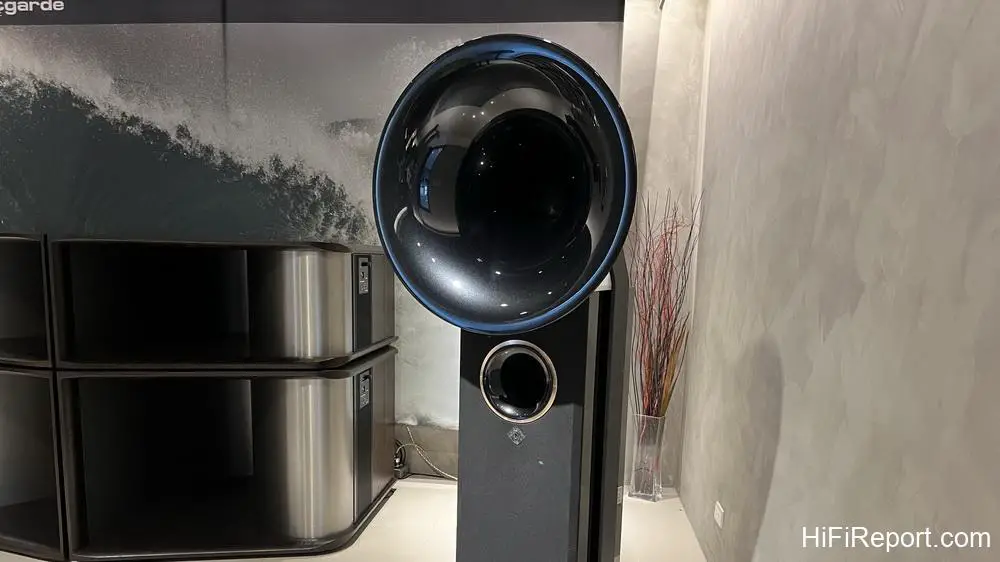
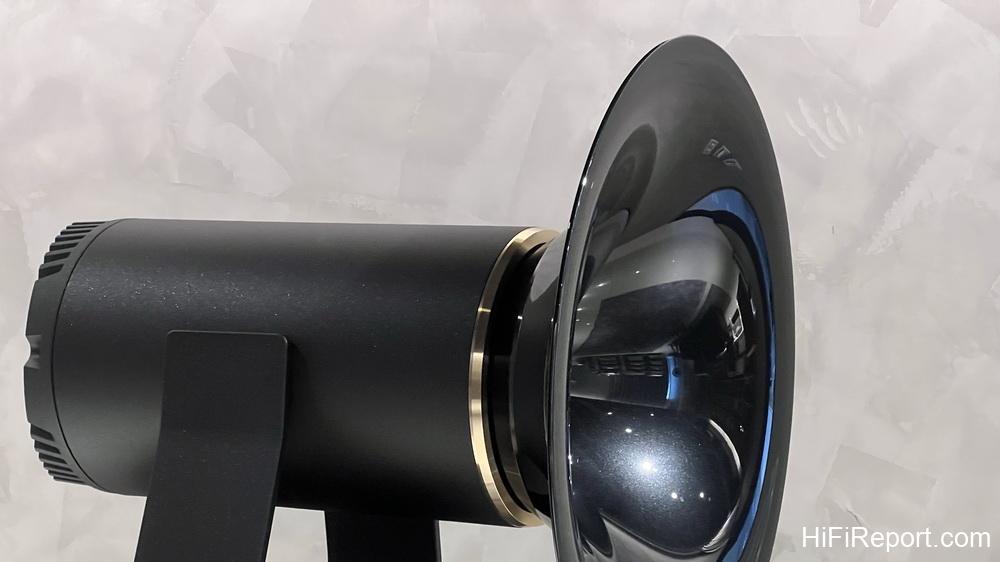
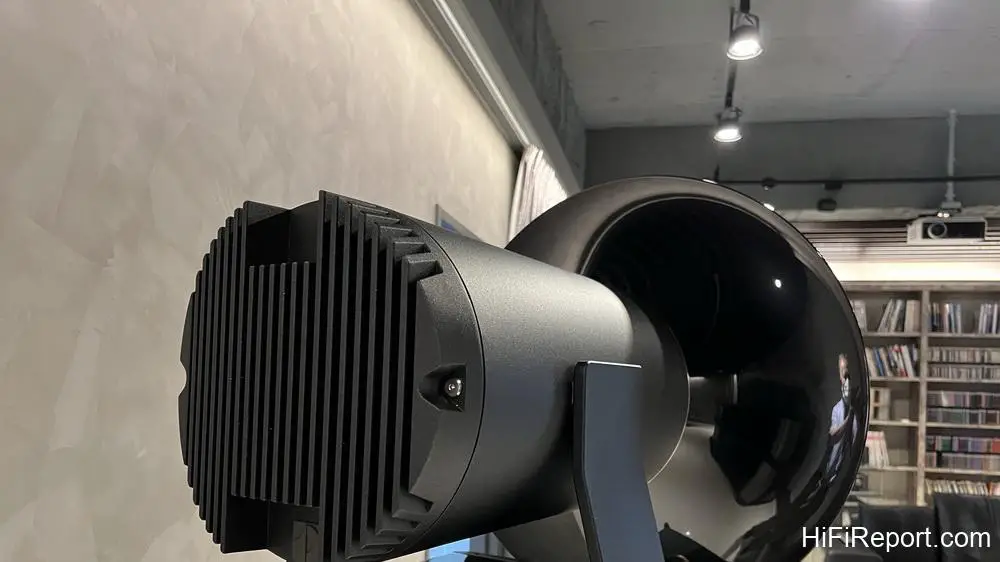
Comparing the Duo GT G3 to the Duo G2, while both feature a midrange horn and a tweeter horn, the frame design is entirely different. Previous G2 models used a “steel tube” frame, whereas the Duo GT G3 features a “steel plate” frame. Flat steel plates on either side support the midrange horn and extend downwards to the cast aluminum base. There’s a significant visual distinction between the two designs.
Naturally, the Duo GT G3’s frame appears more integrated, boasts a stronger sense of design, and is undeniably more robust.
Beyond the aesthetic differences, the drivers and active amplifiers in the Duo GT G3 are completely different from the G2 or XD series. To be more precise, the Duo GT G3 is an entirely revamped product, inside and out.
Detailed Look at the Duo GT G3 Components
The Duo GT G3’s midrange driver, the XM2, is derived from the Trio G3. It features a cylindrical housing with a 170mm diameter, houses a powerful neodymium magnet, and utilizes Avantgarde’s proprietary Soft Mesh Compound material for the diaphragm in a long-throw design.
This diaphragm material is what we often refer to as a soft dome material. Under magnification, you’ll see it’s a fine mesh structure that requires a soft, sticky, and elastic liquid coating to seal the mesh gaps, forming the sound-producing diaphragm. The Duo GT G3’s XT3 tweeter also comes from the G3 series, extending its frequency range up to 28kHz. Reaching 28kHz isn’t particularly unusual; most high-end tweeters can do this.
However, the XT3 can produce 107dB of sound pressure at 28kHz, which is truly remarkable.
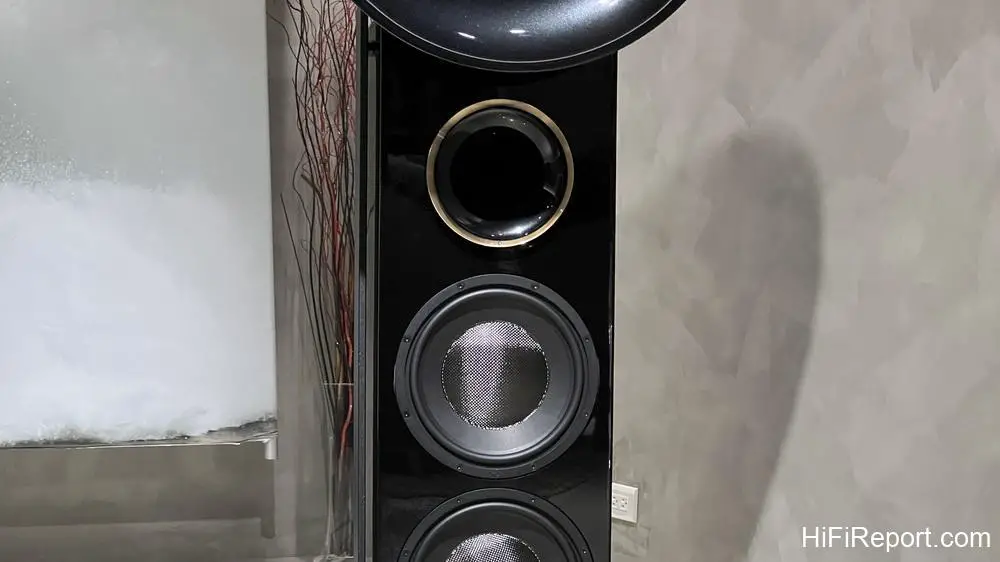
The Duo GT G3’s XB12 woofer originates from the new Spacehorn. Its voice coil diameter has increased from the previous 100mm to 153mm, wound with a 48cm-long copper wire. The magnet diameter is 6 inches, roughly equivalent to the voice coil size, and comprises two stacked magnets. These are magnetized using Europe’s most powerful 200,000-volt magnetizing machine, achieving a magnetic flux density of 1.15 Tesla. The diaphragm is a blend of long paper fibers and carbon fibers.
The dynamic range compression due to heat generated by this woofer during operation is significantly reduced compared to previous designs. The pole piece is made from low-carbon steel, ensuring linearity even during the diaphragm’s long-throw excursions. The surround utilizes low-loss NBR (Acrylonitrile Butadiene Rubber) material for faster, cleaner motion. The frame is a flat, cast aluminum design, providing strong support without obstructing the dispersion of the diaphragm’s back wave.
The Duo GT G3 features a third-generation crossover network called PolarisationPlus Circuitry, with crossover points set at 170Hz and 3.5kHz. It incorporates Avantgarde’s proprietary NatureCap capacitors, which are 25 times larger than capacitors used in previous models. Furthermore, the crossover network utilizes natural mechanical filtering aided by the SphericLowCut Filter and Airgate Technology, allowing the Duo GT G3’s crossover network to achieve minimal phase distortion.
Active, Passive, and Onboard Adjustments
Whether it’s the Duo GT G3 or the Duo SD, the bass section is standardly active. The two XB12 woofers in the GT model are driven by the built-in G3-1000 amplifier, rated at 1,000 watts and featuring DSP. This allows users to flexibly adjust the frequency range below 170Hz via computer software. The Duo SD, conversely, has a built-in 600-watt amplifier driving a single XB12 woofer.
Regarding the horns, the tweeter is coupled to a long-throat horn with a 200mm diameter, while the midrange uses a horn with a 670mm diameter. By the way, the SD is the entry-level Duo G3 variant, featuring only one woofer and being slightly smaller than the GT version. The tweeter, midrange driver, and horns are the same, but the height is reduced to 155cm and the weight to 94kg.
The Duo GT G3 is available in both passive and Itron active versions. The passive version has a sensitivity of 109dB and a nominal impedance of 27 Ohms. The active version has a sensitivity of 107dB and a nominal impedance of 18 Ohms. The “passive” version only refers to the passive high and midrange sections, requiring an external amplifier to drive them, while the woofers are always active.
The Itron active version features the same 2×100-watt current-driven amplifiers as the G3 series (most amplifiers are voltage-driven). This Itron active amplifier is modular, allowing for easy repair or upgrades if issues arise or technology advances in the future. I provided a detailed analysis of the Itron amplifier when I previously reviewed the G3; I’ll omit that detail here, but interested readers can refer back to that review.
The Itron active module on the Duo GT G3 itself allows for ±3dB volume adjustment for the high and midrange frequencies. Additionally, the overall volume can be adjusted in three steps, the largest being ±6dB. However, these adjustments only affect the high and midrange; the bass is adjusted via computer software downloadable from the official website, offering 8 bands of equalization, each adjustable by up to ±4dB.
Furthermore, there are Filter 1 and Filter 2, specifically designed to address sharp low-frequency peaks, allowing reductions of -3dB or -6dB.
Additionally, the bass amplifier module itself allows for external enhancement of frequencies below 45Hz, which is a thoughtful provision. Although the Duo GT G3’s bass crossover point is set at 170Hz, the frequency range of the two woofers extends from 18Hz to 350Hz. This means there’s a reasonable overlap with the midrange frequencies built in.
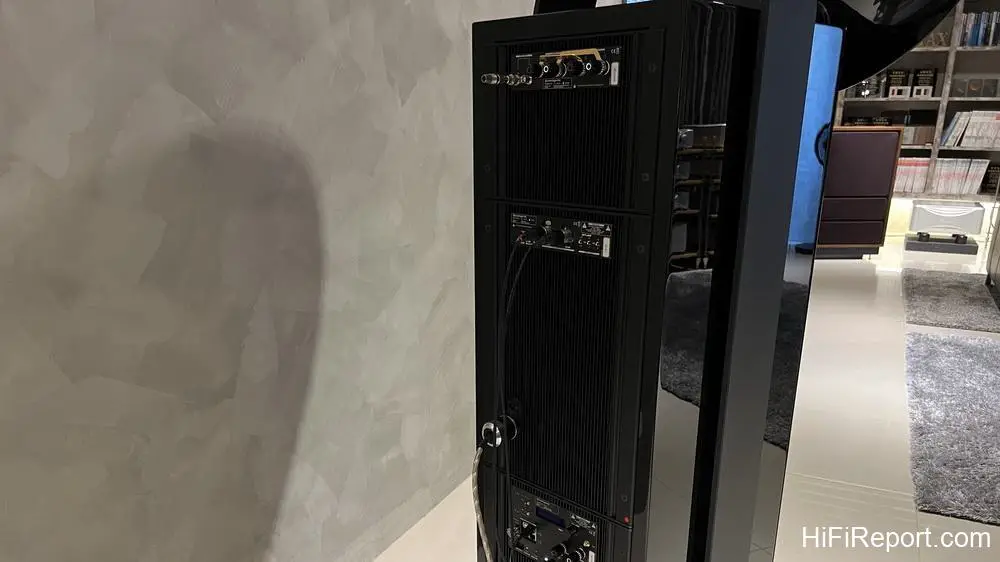
In reality, the volume of the Duo GT G3’s midrange and treble can only be adjusted simply, while the use of DSP for bass adjustment is the core strength of Avantgarde speakers and sets them apart from others, making it well worth describing in detail. Here, I’ll provide a complete rundown of the Duo GT G3’s rear panel!
Rear Panel Layout and Adjustment Details
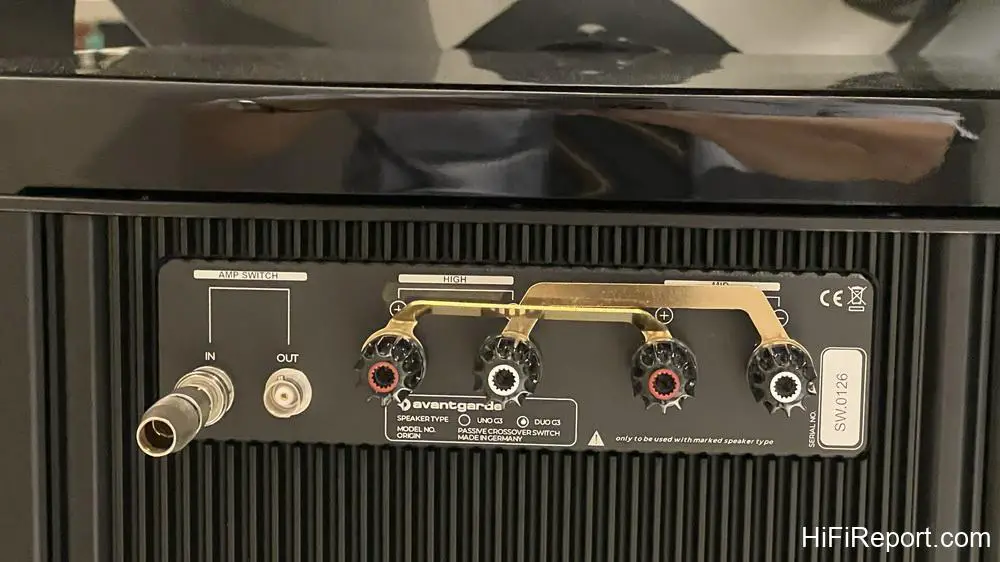
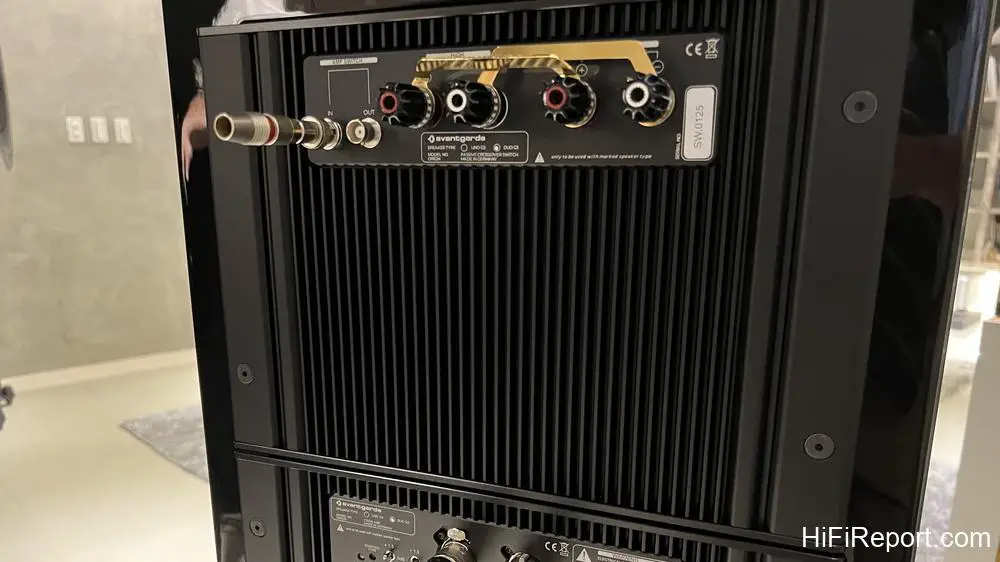
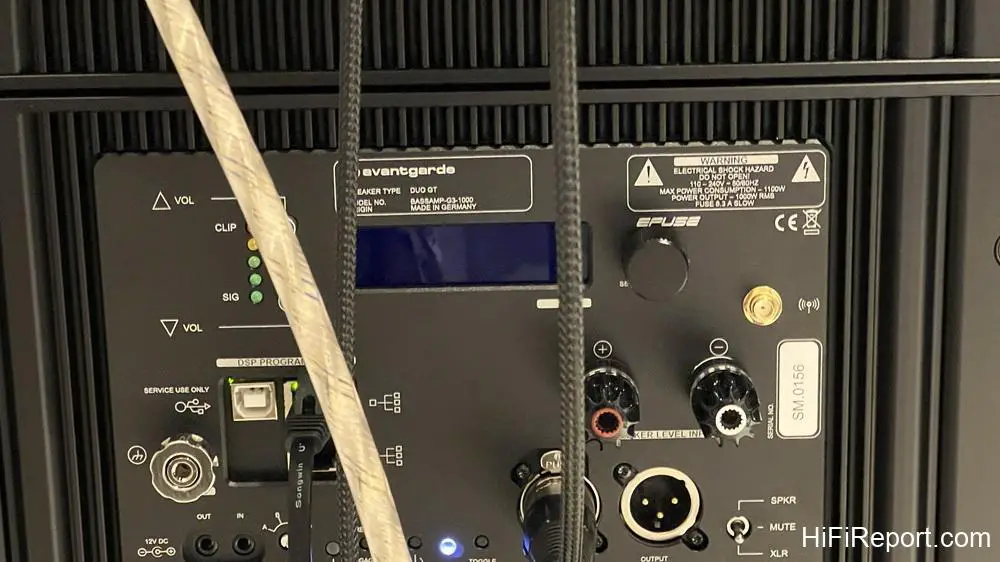
The Duo GT G3’s rear panel is divided into three main sections. The top section is for the passive version, where external power amplifiers or integrated amplifiers are connected. The middle section houses the Itron active amplifier board; this section is absent in the passive version. Conversely, if it’s the active version, the top section will be absent. However, the distributor I visited had a unit wired to demonstrate both active and passive configurations, so both sections were present.
As for the bottom section, it contains the bass amplifier circuit board, which is present in both active and passive versions.
I won’t detail the passive circuit board in the top section; it simply consists of amplifier inputs and speaker terminals. On the Itron active circuit board, you can see gain adjustments for both Mid and High frequencies: -1.5dB, 0dB, and +1.5dB. This means both the tweeter and midrange can be individually adjusted by ±1.5dB. However, the maximum difference between the tweeter and midrange can be 3dB. Why?
If you set the tweeter gain to -1.5dB and the midrange gain to +1.5dB, isn’t the difference between them 3dB?
On the Itron board, there’s also a Total Gain adjustment with three steps: the first is ±1.5dB, the second is ±3dB, and the third is ±6dB. This Total Gain adjustment is provided to match the volume control steps of the preamplifier. For instance, some preamplifiers increase the volume significantly with just a slight turn of the knob.
In such cases, to prevent the music signal entering the Itron from suddenly becoming too strong, you must appropriately reduce the Itron’s own gain to prevent distortion from excessive input.
By combining these three adjustment knobs, the Itron’s minimum gain variation is ±1.5dB, and the maximum variation can reach ±10.5dB. For example, if you set the first switch to +1.5dB and the other two switches to 0dB, isn’t that a +1.5dB gain? Or, if you set the first switch to +1.5dB, the second switch to +3dB, and the third switch to +6dB, doesn’t that add up to a +10.5dB gain?
Through the ±1.5dB high/midrange adjustments on the Itron amplifier board and the Total Gain adjustment, you can achieve the most appropriate balance between the volume of the Duo GT G3’s high/midrange and the bass. This is a mechanism meticulously designed by Avantgarde to compensate for spatial distortions, and it’s something you won’t find from other speaker manufacturers. Users must utilize this effectively.
Now, let’s discuss the built-in bass amplifier circuit at the very bottom, also known as the Subwoofer DSP Amp. If you have the passive version, the speaker cable terminals from your external amplifier should be connected here. If you have the active version, the XLR output from your external preamplifier should be connected here.
The Subwoofer DSP Amp has simple Volume + and Volume – controls to increase or decrease bass volume. However, the true power of the Subwoofer DSP Amp lies in using computer software to adjust dips or peaks in the frequency range below 170Hz, which is another feature not found in other speaker brands. Users can connect a computer, download the EQ adjustment software, and calibrate the frequency response curve below 170Hz based on their room conditions.
Mastering the DSP Software: Standard and Professional Modes
How exactly do you make these adjustments? It’s not overly complicated. The Duo GT G3 provides two bass adjustment mechanisms. After downloading the bass adjustment software from the official website, the initial display is the standard mode. The other mode, the professional mode, requires a password to unlock. The standard mode offers six adjustment tools. The first is Bass Gain, used to increase overall bass volume. The second is Bass Boost, which boosts the volume below 45Hz.
The third is Low Pass Filter Range (LPF), which determines the cutoff frequency below which frequencies are allowed to pass. For example, setting it to 200Hz filters out everything above 200Hz, only allowing frequencies below 200Hz to pass.
The fourth is Filter 1, and the fifth is Filter 2. Both of these are used to attenuate very narrow bass peaks, with reduction levels of -3dB or -6dB. But how do you know where these narrow bass peaks are? Use a smartphone app with frequency response measurement capabilities! You absolutely must know precisely where the bass peaks are to effectively treat them. A typical room might have one, two, or three bass peaks; these tools are provided to handle two, hence Filter 1 and Filter 2.
The sixth adjustment tool is EQ, divided into eight bands: 30Hz, 40Hz, 60Hz, 80Hz, 110Hz, 160Hz, 220Hz, and 320Hz. Each band has an adjustment range of ±4dB. Didn’t I mention earlier that the bass crossover point is set at 170Hz? How can the EQ operate up to 320Hz? The Duo GT G3’s two woofers can handle frequencies up to 350Hz, or even 500Hz, without issue. The 170Hz crossover point isn’t a sudden cutoff but gradually rolls off into the higher frequencies, which is why 320Hz is included.
If you can effectively use this eight-band EQ, you can definitely adjust the bass frequencies to a level that satisfies you. But don’t forget, you absolutely need an app capable of measuring the room’s frequency response to diagnose the issues accurately.
The above describes the standard bass management features. What about the professional mode? The professional mode uses Parametric EQ (PEQ) adjustments. Parametric EQ allows you to define the frequency point you want to adjust, the Q value (bandwidth or range of effect), and the amount of gain change. Even more powerful, it provides eight different “surgical tools” (types of filters) for shaping the curve. This approach allows for more precise correction of the low-frequency response curve.
When adjusting, you first decide which frequency to adjust, let’s say 100Hz. Then you decide which of the eight cutting and filling tools to use. These eight are: Bell, Notch, All Pass, Low Shelf, High Shelf, Band Pass, Low Pass, High Pass.
Bell is a bell shape, Notch is a narrow dip, All Pass allows all frequencies through but alters phase, Low Shelf affects all frequencies below a certain point, High Shelf affects all frequencies above a certain point, Band Pass affects a range of frequencies between two points, Low Pass filters out frequencies above a certain point, and High Pass filters out frequencies below a certain point. The range of effect (for Bell, Notch, Shelf filters) is determined by the Q value.
A larger Q value means a narrower range of effect; a smaller Q value means a wider range of effect. A Q value of 1.4 represents an effect spanning one octave. So, values less than 1.4 affect more than one octave, and values greater than 1.4 affect less than one octave. Band Pass cuts off both ends, only allowing the middle range to pass. Low Pass allows all frequencies below a certain point without filtering. High Pass allows all frequencies above a certain point without filtering.
Once you understand these eight surgical tools, you can perform surgery on the frequency range below your set frequency (e.g., 200Hz), filling in what needs filling (increasing Gain) and cutting what needs cutting (decreasing Gain).
The Q value and Gain are not unlimited. When you set the frequency point you want to process, the software automatically limits the Q value and Gain for that point. Typically, Gain is limited to within ±4dB, while the Q value might vary.
Once you fully understand the terminology and meaning of the PEQ adjustments described above, combined with a frequency response measurement app on your phone and a pink noise signal from 20Hz-20kHz, you can measure the speaker’s frequency response curve in your room. Observe the peaks and dips in the curve below 200Hz, start by using the PEQ tools to refine it, then listen with various music tracks, and repeatedly measure the frequency response curve.
This process should allow you to find the optimal result.
Please note, it’s very difficult to achieve a perfectly “flat” frequency response curve. It’s sufficient as long as you address the major issues effectively. Also, when adjusting the bass frequencies, the frequency response curves of the midrange and treble are not affected. However, the listening experience will be influenced by the changes in bass volume, consequently affecting the perception of the midrange and treble.
At this point, you can use the high/midrange adjustments and Total Gain adjustment on the Itron active board as auxiliary tools.
The Critical Role of Room Acoustics and Speaker Placement
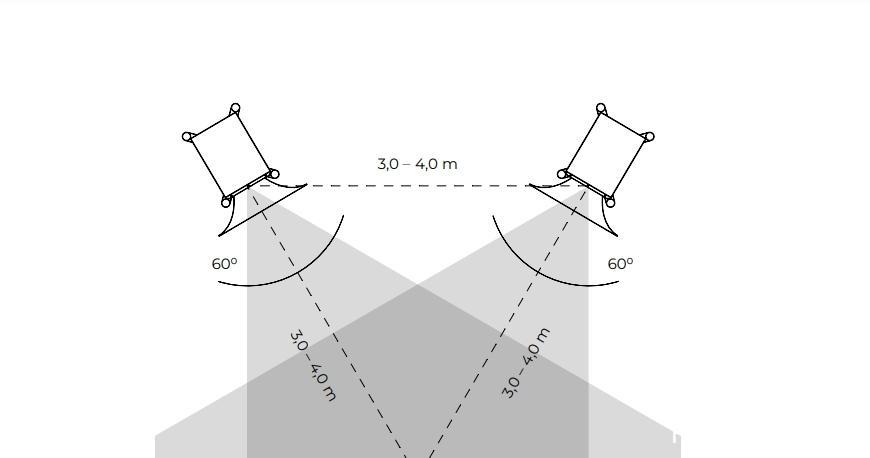
One more thing I need to remind users about: the manufacturer’s manual emphasizes the relationship between the speakers and the listening position should form an equilateral triangle, ideally with sides of 3-4 meters. Furthermore, the midrange horns should be toed-in towards the listening position. Some people might misunderstand, thinking horn speakers are designed to increase sound dispersion. In fact, the opposite is true.
Horns, on the one hand, increase sensitivity, and on the other hand, they are designed to control the directionality of the sound wave, concentrating the sound projection onto a specific area. Therefore, if you want to achieve the best focus for vocals and instruments, with the most condensed and prominent image, you must angle the midrange horns directly towards the listener, i.e., toe them inwards.
Setting Up and Identifying Room Issues
I’ve covered everything that needs to be said about the Avantgarde Duo GT G3. Next are my listening impressions from this visit to the distributor’s listening room. As with my previous visit to hear the Trio G3, upon arrival, I first asked the staff to play their familiar music. After my ears had adjusted to the listening space and equipment, I began making adjustments myself. Since I was listening to the active version, only a preamplifier and source were needed.
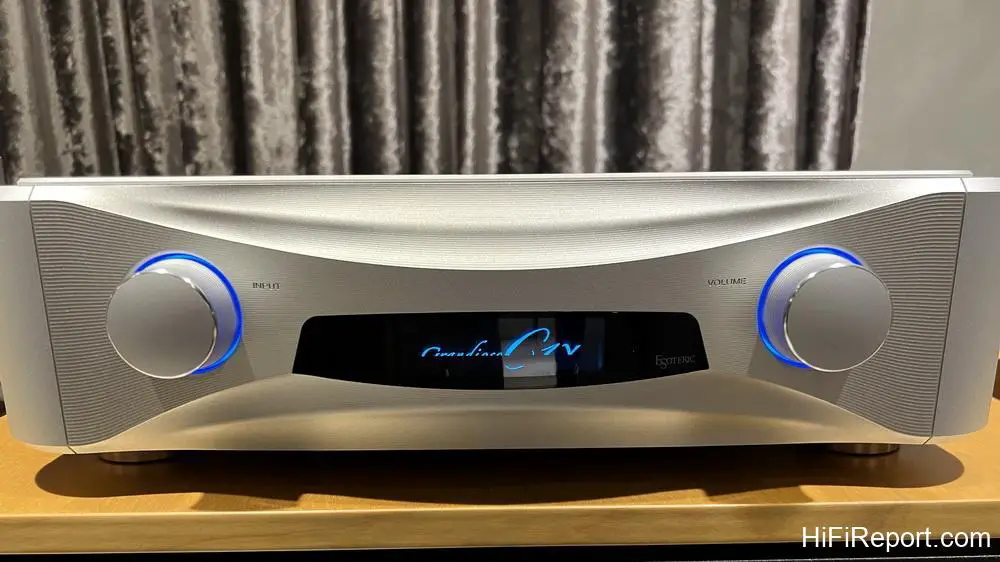
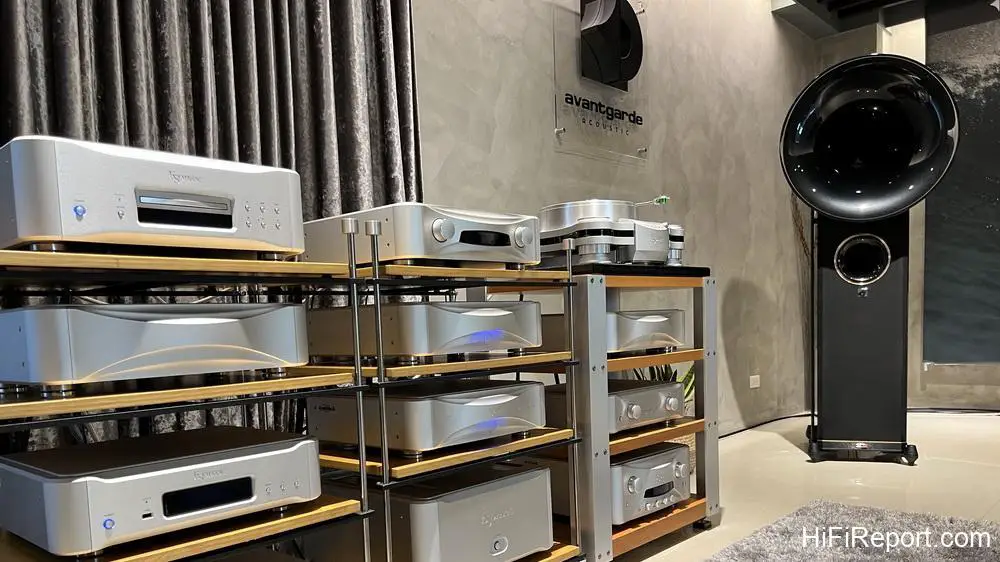
The preamplifier used that day was the Esoteric Grandioso C1X, and the streamer was the Esoteric N-01XD. I used Tidal as the music source.
We opened the parametric equalization software and, in conjunction with the Itron’s midrange and treble adjustments, made multiple adjustments. However, we still couldn’t resolve the issue of a significant drop-off starting around 50Hz and continuing downwards. Finally, I asked the staff to measure the distance from the front of the speakers to the rear wall, and the answer was 2 meters. That’s it! That’s what?
The Science Behind Bass Problems and Their Solution
Because if the front of the speaker is 2 meters from the rear wall, a 180-degree out-of-phase reflection will occur around 40+Hz, causing cancellation in this frequency range (theoretically complete cancellation, though some residue remains in practice). No wonder adding volume in this range had no effect.
How is this calculated? Sound waves cancel each other out when they are 180 degrees out of phase. This is the principle behind active noise cancellation headphones. When a speaker emits a sound wave forward, it’s a positive phase wave. This wave also travels backward, hits the rear wall, and reflects. The reflected wave traveling back is exactly 180 degrees out of phase with the forward-traveling wave at that frequency, which corresponds to half a wavelength.
Therefore, if we measure the distance from the front of the speaker to the rear wall and multiply it by 4, we get the wavelength of a specific frequency. Knowing the wavelength, we can, of course, calculate the frequency.
Taking the distributor’s room as an example, the distance from the speaker front to the rear wall was 2 meters. 2 meters × 4 = 8 meters. The speed of sound in air is approximately 344 meters per second. 344 meters ÷ 8 meters = 43Hz. This means there will be a significant dip around 43Hz. Our measurement (the chart showing 80.7dB) confirms this, showing a steep dip starting from approximately 50Hz, indicating a speaker placement issue.
Consequently, we moved the speakers forward by 50cm, resulting in a distance of 2.5 meters from the speaker front to the rear wall. 2.5 meters × 4 = 10 meters. 344 meters ÷ 10 meters = 34Hz. Looking at the chart for 80.8dB, the significant roll-off now starts from approximately 30+Hz, perfectly validating the theory with practice.
And because the speakers were moved forward by 50cm, the frequency range between 40+Hz and 125Hz is now essentially full, which completely transformed the listening experience.
The human ear is very sensitive. Even small changes in speaker position or angle can be perceived, leading us to believe the sound has improved or worsened. However, the improvement or worsening from a slight placement change is often just a brief “fresh sensation” and doesn’t actually solve the real problem (like a major bass dip in this case). To more thoroughly solve major issues, you must significantly change speaker or listening position.
Once major problems are resolved, all kinds of music and recordings will sound good.
Listening Impressions Across Diverse Genres
After finding the sound I wanted, I felt comfortable settling in to listen to music. To be honest, I’ve listened to most Avantgarde speakers, various models from past to present. Over the years, the fundamental sound character of Avantgarde horn speakers has remained largely unchanged. What has changed is better sound quality, improved high, mid, and low-frequency balance, overall more refined performance, easier adjustability, and more beautiful aesthetics.
What is the distinctive sound character of Avantgarde speakers? It’s their ability to handle large dynamics with ease, their directness and transparency, rapid response, full detail retrieval, and a certain beauty rooted in rigidity and precision. Without these sonic characteristics, is there a need to buy horn speakers? Honestly, this is a major reason why Avantgarde has remained standing strong for 30 years.
This time, in the distributor’s listening room, I once again experienced these sonic traits, the same feeling I had a few months ago (April 2023 issue, No. 415) when listening to the Avantgarde Trio G3 here. The difference is that the Duo GT G3’s bass frequencies were easier to adjust; I got it right the first time. The Trio G3’s Spacehorn was indeed a bit more challenging to tune.
How did I evaluate the Duo GT G3’s performance? Simple. I typically cycle through various genres: violin, cello, piano, trios, quartets, small and large orchestras, jazz, and pop music. The report card is clear from this. When I listened to Beatrice Berrut’s piano transcription of the second movement of Mahler’s Fifth Symphony, I could clearly hear the natural extension of the low keys on the Duo GT G3, the full body of the mid keys, and the ringing clarity of the high keys.
The notes were prominent, with excellent weight, and the piano’s harmonics were rich. Hearing such a balanced and realistic piano sound performance – that is the correct sound.
When I listened to Till Fellner playing Beethoven’s Fifth Piano Concerto (with Kent Nagano conducting the Orchestre symphonique de Montréal), the first thing I felt was the beautiful blend of the orchestral strings. From the low strings to the violin sections, the overall sound was so harmonious and possessed the elasticity of the string section – something rarely heard from horn speakers.
When the piano entered, each crystal-clear note seemed to float in the air, and the touch on the keys had a realistic, ringing quality. At this point, the physical presence of the speakers vanished, and all I perceived was the beauty of the music.
Listening to Liya Petrova’s performance of Beethoven’s Violin Concerto (with Sinfonia Varsovia), the violin sounded lustrous and smooth, yet still revealed the texture of the bow on the strings. The sound was sweet, completely free of harshness or roughness – this is how a violin should sound. However, I must also say that if you adjust improperly, the violin can sound sharp and hard. This is not the inherent nature of horn speakers, but rather a result of your maladjustment. Truly!
Listening to this violin concerto with the Duo GT G3, you can also hear the very nuanced transitions in the high register.
When I listened to “Violin Concerto No. 5” from Christoph Koncz’s complete Mozart Violin Concertos (with Les Musiciens du Louvre), the elasticity displayed by the violin would make you think this wasn’t a horn speaker, but one using conventional cone drivers. The ability of the violin and string sections to exhibit elasticity and also provide detailed resolution, thread by thread, is, I believe, what most audiophiles desire, and the Duo GT G3 can deliver that sound.
Can the Duo GT G3 reproduce the ‘nasal’ quality of the cello and its warm, woody resonance? Absolutely! When I listened to Sheku Kanneh-Mason’s album of Elgar’s works, his cello presented a warm, beautiful sound with rich bowing texture. It wasn’t hard or rough in the least, completely overturning any negative past impressions you might have of horn speakers.
Then, listening to Starker’s performance of Tchaikovsky’s “Variations on a Rococo Theme” (Mercury), not only were the French horns warm, gentle, and full, but the cello was also soft and graceful. The music sounded clear and transparent without being aggressive. Frankly, before proper adjustment, the Duo GT G3 could not produce such a beautiful cello sound. This beauty only emerges after achieving the right balance across the high, mid, and low frequencies.
Listening to Beethoven’s Piano Trio No. 1 (with Barenboim, his son, and Kian Soltani), the Duo GT G3 produced beautiful harmony. The piano, violin, and cello were perfectly integrated, yet each instrument fully displayed its authentic playing texture, without sounding muddy, boomy, or sharp. Frankly, if a system can reproduce a piano trio this well, its performance with a large orchestra won’t be far off.
How does the Duo GT G3 sound with a string quartet? Absolutely no problem. A string quartet is an excellent touchstone for tuning an audio system. You must achieve a harmonious sound, and the four string instruments should create moving harmony. If the balance between the high, mid, and low frequencies is off, it will destroy the balance painstakingly crafted by the four musicians, and beautiful harmony will not emerge.
Listening to the Emerson String Quartet’s performance of Mendelssohn’s String Quartet No. 1, the four instruments played with a seemingly elastic quality, and their sheen and sweetness were delightful. I have only one word: Perfect!
Time for orchestral music. I used Lorin Maazel conducting the Cleveland Orchestra in Brahms’ “Academic Festival Overture” to test the Duo GT G3. Shortly after the music begins, the drum rolls from the back of the orchestra. What I’m listening for is whether the bass drum has elasticity, whether it has a soft quality, if the volume is sufficient, and if its form can emerge distinctly. The Duo GT G3 met all four requirements.
Subsequently, the overall orchestral bass foundation was sufficiently solid, and the string sections’ intricate textures were like fine, black hair. The brass was full and warm, yet retained its metallic texture. Again, I must say: Perfect!
Next, I pulled out my frequently used test track: Shostakovich’s Symphony No. 4 conducted by Myung-Whun Chung with the Philadelphia Orchestra. This symphony starts with immense power, thundering drums, and all instruments giving their utmost. If the audio system cannot achieve balance across the high, mid, and low frequencies, the sound becomes a chaotic mess. Conversely, if the balance is right, it can reveal a wide and deep soundstage, along with clear layering and instrument resolution.
The Duo GT G3 falls into the latter category, and its sound is solid, showing no signs of collapse or weakness even when played at high volumes.
If classical music sounds this satisfying, then jazz and pop music shouldn’t be far behind. I started with “You Look Good To Me” from Oscar Peterson’s album “We Get Requests.” Hmm! The piano notes weren’t recessed or muted, the plucked acoustic bass had a very realistic texture, the sound lacked any sudden shifts in thickness or thinness, and it could dig deep. These two requirements were met.
Plus, the ‘poof-poof’ sound of the kick drum decayed quickly, and the overall music felt lively and rhythmic, making you want to sway your body. This was also spot on!
Then I listened to “Trouble’s What You’re In” from Fink’s album “Wheels Turn Beneath My Feet.” Although it’s blues, the solid electric guitar, impactful bass effects, clear electric bass notes, and Fink’s rugged voice truly unleashed the power of the horn speakers. Next was Mayumi Itsuwa’s “Koibito yo” (Lover). I was listening for her voice and the ‘poof-poof’ sound of the kick drum.
The voice shouldn’t be too thin or too recessed, and the kick drum’s ‘poof-poof’ shouldn’t be too boomy, nor too hard. It should be full, solid, and elastic. The Duo GT G3 did not disappoint, delivering the “Koibito yo” I wanted to hear, from the full ‘poof-poof’ of the kick drum at the bottom, to the sweet voice in the middle, and the accompanying string section intertwining to create a balanced and powerful popular music beauty.
Finally, I listened to “Fast Car” from Tracy Chapman’s self-titled album. What I was listening for was whether the initial bass and kick drum ‘poof-poof’ could be clearly distinguished, and if the volume was rich enough. That bass should also be pliant, capable of being thrown around like mochi. At the same time, Tracy Chapman’s voice should be sufficiently round, with good breath support, and not recessed. The Duo GT G3, of course, did not disappoint.
It completely reproduced the captivating sonic effects of this song. You would absolutely not imagine that the bass frequencies from a horn speaker could be this soft, supple, and elastic.
Conclusion: Same Great Sound, Easier Setup
Frankly, the Avantgarde Duo GT G3’s outstanding sound performance was already within my expectations. Having adjusted and listened to the Trio G3 here just a few months ago, I deeply understood the G3’s wide adjustability, capable of overcoming adverse listening room issues. If the Trio could do it, the Duo GT G3 certainly could too, and what’s more, the Duo GT G3 is even easier to adjust than the Trio.
Perhaps I could say: use the Trio G3 for large spaces, the Duo GT G3 for medium spaces, and the Uno G3 for small spaces. With proper adjustment, they can all produce the same level of exquisite sound. My point is: the Duo GT G3 can produce the same level of beautiful sound as the Trio G3, and it’s even easier to adjust. If your listening space isn’t very large, you can’t go wrong choosing the Duo GT G3!
Specifications
* Product Type: Active Horn Loudspeaker
* Release Date: 2022
* Driver Complement: 1 x Tweeter Horn, 1 x Midrange Horn, 2 x 12-inch Cone Woofers
* Amplifier Power: High Frequency 100W, Mid Frequency 100W, Low Frequency 1,000W
* Frequency Response: Mid-High Frequency 170Hz – 28kHz, Low Frequency 18Hz – 350Hz
* Crossover Points: 170Hz, 3.5kHz
* Sensitivity: 107dB
* Nominal Impedance: 18 Ohms
* Dimensions (WHD): 670 × 1,732 × 696 mm
* Weight: 108.5 kg
* Reference Price: Active Version approx.
Key Features
1. Completely new third-generation drivers and technology trickled down from the Trio.
2. Choice of Itron active or passive high/midrange sections.
3. Bass frequencies are always actively adjusted via DSP.
4. Sound performance is wide-ranging and dynamic, direct and transparent, with rich detail.