
AVM Ovation MP 8.2 Source Review
HiFiReport’s reference CD setup, a North Star Design Model 192 transport feeding their USB DAC 32, had been a faithful servant for over a decade. However, like an aging veteran, it recently succumbed to a “cold,” refusing to read discs. While Jade Sound kindly arranged repairs, an editorial department cannot be without a reference source. Thus, we requested a temporary CD player from Jade Sound, and the AVM MP 8.2 was promptly delivered to our office.
AVM’s Turning Point: 2009
AVM, a German company, was founded in 1986 by Gunther Mania, who continues to oversee the design and research & development of AVM products. In Taiwan, AVM was introduced by the late Mr. Cao Yongkun, former chairman of Jade Sound, who remains their distributor to this day. Over the years, AVM has changed ownership twice. In 2001, external investment arrived, but instead of growth, the company faltered under inexperienced management, losing market direction. It wasn’t until 2009, with the investment and leadership of Udo Besser, that AVM decisively returned to its Hi-End audio roots.
Udo Besser is a seasoned veteran of the Hi-End audio industry, having spent many years at Burmester. In 2009, a timely opportunity arose, and he invested to become AVM’s new owner, injecting fresh Hi-End perspectives and revitalizing the company.
Under Udo’s decade of stewardship, AVM’s product range has blossomed far beyond its initial offerings of “plug-in” audio components. They now boast a comprehensive “one-stop-shop” lineup, encompassing everything from turntables and digital sources to preamplifiers, power amplifiers, integrated amplifiers, and even loudspeakers – all with an unwavering commitment to Hi-End quality.
German Town, French Border
In 2014, I had the opportunity to visit AVM’s factory in Malsh, a town in southern Germany bordering France. This region, historically contested between Prussia and France in the 19th century, evokes memories of “The Last Lesson” (La Dernière Classe), a story from my (certainly different from my children’s) elementary school textbook. This poignant tale by French novelist Alphonse Daudet, published in 1873, recounts Prussia’s occupation of Alsace-Lorraine, forcing schools to replace French with German. The story culminates in a teacher’s final French lesson, urging his students to never forget the elegant and precise French language, as German would be taught from the next day.
This short story powerfully illustrates the emotional impact of nationalism.
While 19th-century nationalism artificially carved the Franco-Prussian border, AVM’s birthplace is truly a melting pot of French and German influences. Just a short drive from Malsh, across a valley, lies France. In the borderless EU, traversing between the two countries is a mere ten-minute drive. This geographical proximity has fostered a bilingual community in Malsh, fluent in both German and French. It’s not surprising then that AVM’s sonic character reflects this cultural blend: the precision of German engineering fused with the romantic flair of French sensibilities, together defining the essence of AVM.
Shared Chassis, Reduced Costs
AVM’s current product lineup is broadly categorized into three tiers: the entry-level Inspiration series, the mid-range Evolution series, and the flagship Ovation series. The Ovation MP 8.2 delivered to HiFiReport belongs to the top Ovation range, yet its appearance bears a striking resemblance to the mid-tier Evolution MP 5.2.
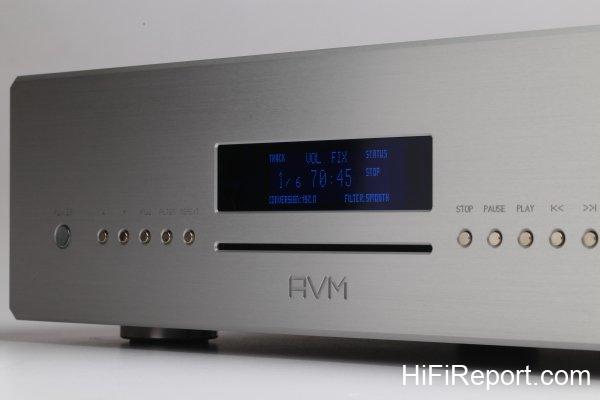
Reflecting German pragmatism, AVM employs a shared chassis strategy. By mass-producing standardized aluminum chassis, they leverage economies of scale, effectively controlling production costs. This approach allows AVM to offer a diverse product range while maintaining competitive pricing in the market.
However, this approach might confuse consumers, who may struggle to differentiate between product tiers. How can flagship components look identical to mid-range models? Consider the Mercedes-Benz S500 and S350 – their exteriors are virtually indistinguishable, yet a significant price gap exists. This reflects a distinctly German product pricing philosophy.
Call for Electrical Safety Deregulation
Despite the shared chassis, distinctions within the Ovation MP range exist. AVM refers to the series as the Ovation MP & CD Player, and within this visually uniform lineup, there are four distinct models. The key difference between the MP 8.2 and MP 6.2 lies in their amplification stages: the MP 8.2 features a tube stage, while the MP 6.2 employs solid-state amplification. Further differentiation comes from the choice of a pure CD transport or a CD player with integrated digital streaming capabilities. Combining tube/solid-state and streaming/non-streaming options results in four distinct Ovation MP & CD configurations.
This presents a challenge due to mandatory electrical safety inspections. While the high-end Ovation MP 8.2 might qualify for exemption, importing all four variants entails a burdensome application process. We sincerely urge the government to reconsider physical electrical inspections for audio equipment, advocating for a streamlined documentary review process. Accepting safety certifications from two of either Europe, America, or Japan would expedite imports, reduce costs, and bring the latest audio innovations to consumers sooner. This would also pave the way for price parity with international markets, offering consumers fairer prices and eliminating complaints about inflated local pricing.
Ovation MP 8.2: The Tube Version
But enough of these peripheral matters; let’s now focus on the Ovation MP 8.2 itself.
The unit we received is the flagship model, equipped with both CD playback and digital streaming capabilities, and crucially, a vacuum tube output stage.
AVM is renowned for its modular design philosophy, allowing many components to be upgraded via plug-in modules. However, despite sharing a chassis, the Ovation MP 6.2 and MP 8.2 cannot be converted from solid-state to tube output simply by swapping modules. The Ovation MP 8.2 features a distinctive transparent glass top, showcasing its vacuum tubes. Moreover, the underlying circuit boards differ significantly. Therefore, upgrading a more affordable Ovation MP 6.2 to a tube output version at a later date is not possible. When selecting a model, you must decide upfront between the tube-equipped Ovation MP 8.2 or the solid-state Ovation MP 6.2. These outwardly similar units are not module-upgradeable between their core amplification topologies.
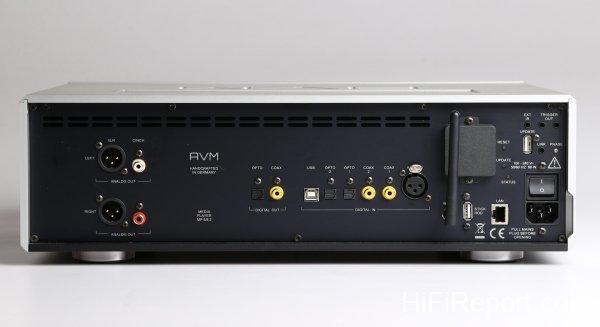
The question of whether tube or solid-state output sounds “better” is subjective, lacking a definitive answer. AVM avoids imposing a preference, offering both options. However, the tube variant is priced slightly higher due to increased production costs.
AVM’s choice of vacuum tubes is not based on readily available, mass-produced types. The Ovation MP 8.2 employs Ovation 803T tubes, custom-designed and manufactured for AVM by a Czech tube factory to their exacting specifications. Each tube proudly bears the AVM logo.
Custom-Made AVM Ovation 803T Tubes
Upon encountering “custom-made” vacuum tubes, some might dismiss it as mere marketing hype, suggesting it’s simply a standard tube with an AVM logo printed on it, with no real difference in specifications. While the custom-made tubes share electrical specifications with standard 803Ts, their sonic characteristics diverge. Vacuum tubes, being analog amplification devices, are inherently sensitive to internal structural variations, which can subtly alter the sound. Furthermore, even within mass-produced tubes, batch-to-batch sonic variances exist – a key reason why tube amplifiers are so engaging and tunable.
The vast market of diverse vacuum tube brands and models underscores this very point – swapping tubes can audibly alter the sonic character, fueling the desire for experimentation and customization among enthusiasts. Since Udo Besser’s acquisition of AVM, he has instilled Hi-End brand management principles, and the “custom-made” tube initiative is a prime example. Previously, AVM sourced off-the-shelf tubes from Eastern European factories. However, Udo believed this approach offered insufficient control over sonic consistency, as batch variations could lead to unpredictable sound differences. Consequently, he partnered with Czech manufacturer JJ Tesla to produce the 803T to AVM’s precise design. This development process involved extensive prototyping and listening sessions to achieve the desired “AVM sound” embodied in the 803T.
Commissioning JJ Tesla to produce AVM-branded tubes presented two key challenges. Firstly, defining and achieving the precise sonic characteristics AVM sought was paramount. Secondly, a minimum order quantity of several thousand tubes was required. As you can imagine, the inventory costs associated with custom-designed tubes alone are substantial.
Custom TEAC Pure CD Transport
The bespoke Ovation 803T tubes, a hard-won achievement, necessitate AVM maintaining a substantial inventory of tens of thousands of tubes to meet several years of production demands. Another critical component requiring similar stockpiling is the CD transport mechanism.
The Ovation MP 8.2 employs a slot-loading CD transport, visually reminiscent of those found in car audio systems. However, beneath the surface lies a dedicated “pure CD” transport mechanism.
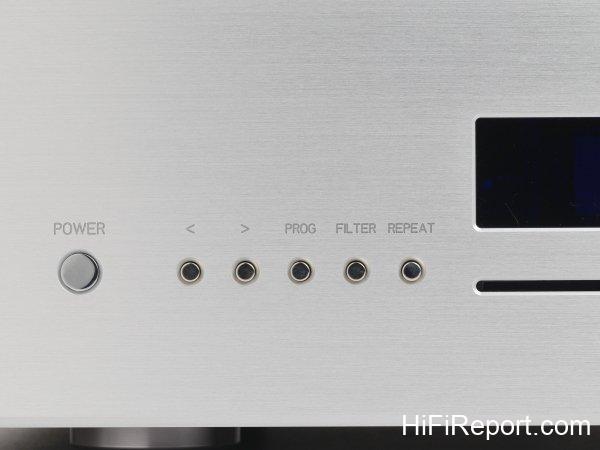
As CD player production dwindles annually, many manufacturers have transitioned to using DVD transports as replacements for pure CD mechanisms. However, AVM firmly believes that traditional CD transports still offer superior sonic performance compared to DVD-based alternatives.
To secure sufficient transports for both production and future servicing needs, AVM placed a substantial custom order with TEAC of Japan for a large quantity of pure CD transports.
During my 2014 visit to AVM, I privately inquired with Udo about the order quantity. He chuckled, deeming it a “state secret,” but hinted it was sufficient for roughly a decade of AVM’s needs. Questioning the necessity of such a large TEAC order, Udo explained with a touch of resignation, “Unfortunately, custom orders require significant volumes. Smaller quantities wouldn’t justify production line setup. However, this ensures AVM’s long-term production and service capabilities, safeguarding our customers’ audio investments.”
Digital Music Versatility
Given its dual role as both a CD player and a streamer, the Ovation MP 8.2’s front panel features a slightly denser array of buttons. However, the neatly arranged rows of small, circular control buttons, separated left and right, maintain a clean and uncluttered aesthetic.
Upon powering up, the AVM logo prominently displays on the screen. After a brief moment, the Ovation 803T tubes awaken. Due to the integrated streamer functionality, startup is slightly slower compared to a conventional CD player.
As a truly “all-encompassing” digital source, the Ovation MP 8.2 is equipped to handle virtually any form of “digital music.”
Traditional CDs? No problem at all. It employs that custom-ordered TEAC pure CD transport, after all.
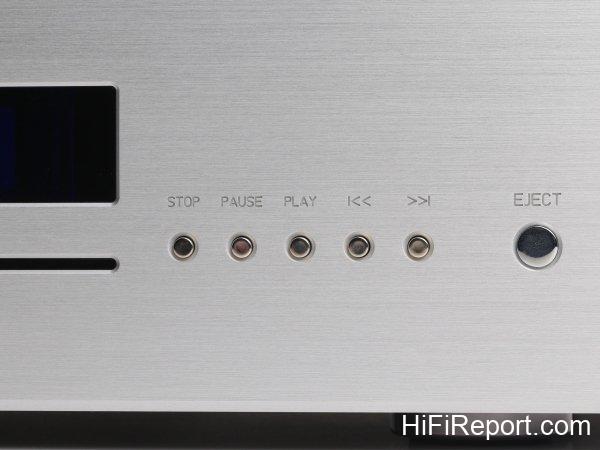
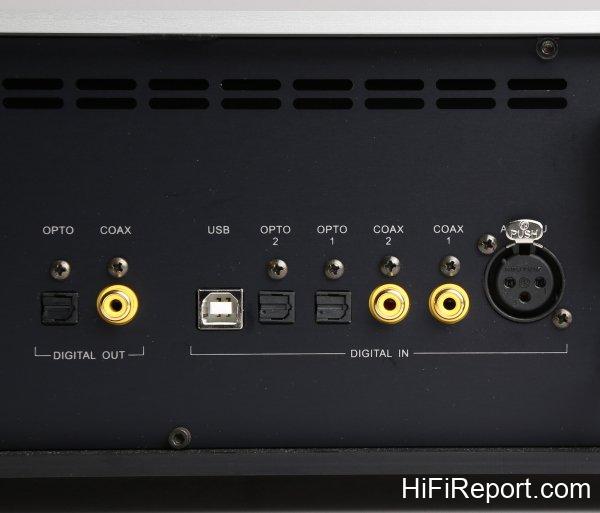
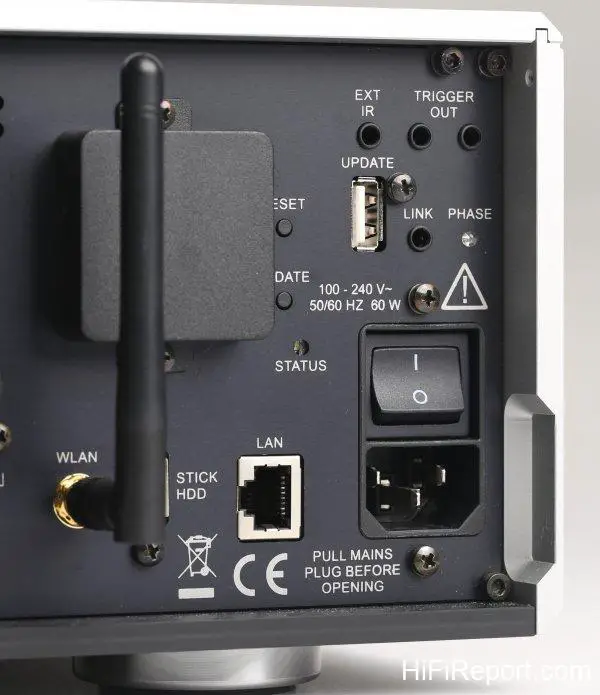
USB DAC functionality? Effortless. The rear USB port offers plug-and-play connectivity, and even supports direct hard drive access. Traditional S/PDIF and AES/EBU inputs are also comprehensively provided.
An RJ45 port facilitates network cable connection, enabling access to NAS devices or network switches. LAN and UPnP protocols are supported, and internet radio is readily accessible.
For smartphone users, Wi-Fi connectivity is also provided, making streaming from Apple Music, Spotify, and KK Box convenient and seamless.
For those seeking high-resolution streaming from services like Qobuz and TIDAL, AVM planned a firmware update in 2020 to enable online Hi-Res streaming support. When connected to your home network, the Ovation MP 8.2 automatically checks for firmware updates, eliminating the need for manual installation.
While AVM provides the dedicated RC 3 remote for the Ovation MP 8.2, you may find it redundant. AVM’s proprietary App, “AVM RC S” (available on both iOS and Android App Stores), offers comprehensive control. With the app, the traditional remote becomes largely superfluous – smartphone control is at your fingertips.
PCM & DSD Playback, Dual Digital Filters
To truly qualify as a versatile digital source, both PCM and DSD playback are essential. The Ovation MP 8.2 delivers on this front, supporting PCM up to 24-bit/192kHz and DSD up to DSD64 (2.8MHz). While not pushing the absolute pinnacle of current specifications, it offers comprehensive format compatibility.
Digital filtering is implemented with a two-stage design: “Steep” and “Smooth.” These settings control the filter’s roll-off slope, offering a choice between a sharper or gentler filter characteristic.
For analytical listening demanding maximum precision, select “Steep.” For a more relaxed and comfortable sonic presentation, “Smooth” is the preferred option. Similar to a car’s Comfort and Sports modes, “Smooth” in audio translates to a warmer, more relaxed tonal character.
Thanks to its 803T vacuum tube output stage, the Ovation MP 8.2 benefits from a brief warm-up period after power-on. While immediate playback is possible, allowing a few minutes for the tubes to reach their optimal operating temperature will reward you with a richer, more refined sonic character. Analogous to a car engine needing to reach operating temperature for peak performance, the 803T tubes similarly require a short warm-up for their full sonic potential to emerge.
Patience is a virtue when enjoying tube amplification. Thankfully, the 803T is a signal tube, not a power tube, meaning operating temperatures aren’t excessively high. A few minutes of playback after power-on is sufficient for the tubes to reach stable operating temperature. In practical terms, let the Ovation MP 8.2 play for a couple of tracks, and the 803T signal tubes will be sufficiently warmed up.
Increasingly Engaging Sound
For my listening evaluation of the Ovation MP 8.2, I connected it directly to a Lindemann Musicbook Power 1000 amplifier, driving Wilson Audio Alexia 2 loudspeakers.
Once warmed up, the Ovation MP 8.2 exhibited a neutral yet invitingly warm sonic signature. Detail retrieval was excellent, with a transparent and open soundstage. A rich, warm midrange imbued the sound with pleasing fullness. Initially, the Ovation MP 8.2 might seem understated, lacking overt coloration, but its charm grows increasingly captivating with extended listening.
Listening to Irina Mejiueva’s live recording of “Chopin’s 21 Nocturnes,” the gentle opening notes of the Nocturne in C-sharp minor, Op. posth, immediately revealed the Ovation MP 8.2’s ability to convey the nocturne’s tranquil mood. The weighty chords in the left hand were rendered with appropriate gravitas, patiently setting the stage for the crystalline, bright notes of the right hand. This interplay of high and low registers unveiled the nocturne’s inherent musicality. Despite Chopin’s use of bright treble notes, a melancholic undertone pervades the melody. Only in the second theme does the music transition to a hushed, songlike melody, yet even this “singing” piano retains a melancholic air. The notes descend gradually, reaching a point of resolution, before Chopin executes a flourish, concluding the piece with an ascending melodic phrase.
But it’s not quite over. Mejiueva delivers a beautiful coda, followed by a deliberate eight-second pause, before the nocturne’s theme returns, using silence to accentuate the underlying melancholy within the otherwise ornate notes.
The Ovation MP 8.2’s remarkably deep and silent background was instrumental in conveying this dramatic pause. The pianist’s deliberate eight-second silence between the nocturne’s restatement is intended to heighten the piece’s atmosphere through contrast. The Ovation MP 8.2’s inky black sonic backdrop effectively emphasized the nocturne’s chiaroscuro, creating a compelling and musically evocative performance.
I’m not suggesting the Ovation MP 8.2 imparts overt tube coloration to the piano’s timbre. Rather, its strength lies in its ability to present the piano against a profoundly silent background, which serves to accentuate the richness of the lower registers and the brilliance of the upper frequencies. This contrast in tonal registers, amplified by the silent backdrop, effectively conveys the emotional depth of Chopin’s Nocturnes.
Piano Benchmarking in Design
Such impressive piano reproduction isn’t achieved by chance. During my AVM factory visit, on the drive from Stuttgart to Malsch, I opted out of the tour bus and instead rode with Udo in his BMW 120, engaging in over an hour of conversation. I asked Udo about the final tuning process, and he explained that he personally takes every AVM prototype home for final listening tests. Udo mentioned owning an older piano, whose warm and mellow tone he deeply admired. While lacking the outright brilliance of a new piano, its sound possesses a unique (gentle and beautiful) quality. He consistently benchmarks AVM components against his piano, striving for a sonic character that approaches its warmth and refinement. I’m confident the Ovation MP 8.2 underwent this piano-based sonic evaluation by Udo, which explains its remarkably nuanced and lifelike piano reproduction.
Beyond piano, the Ovation MP 8.2 also excels at conveying the grandeur of large-scale orchestral works, revealing both the intricate details and the overall musical architecture. Listening to Bernstein’s Vienna Philharmonic recording of Brahms’ Symphony No. 3, the Adagio third movement, which I believe is the most immediately captivating movement for Brahms novices, showcased its strengths. The slow, deliberate opening of the cello section, with its subtly accented rhythm, creates a sudden sense of musical momentum. A breath is taken, then exhaled, leading into a romantic, extended musical phrase. During this cello-dominated passage, the Ovation MP 8.2 rendered a richly textured cello tone, contrasting beautifully with the repeated violin figures. While the melody remains consistent, the violins take on a more urgent and passionate tone, while the accompanying cellos seem to sigh in the background. The Ovation MP 8.2 masterfully captured this interplay between the violins’ passion and the cellos’ melancholic undertones, creating a compelling musical contrast.
Sonic Chameleon
The Ovation MP 8.2 certainly possesses the hallmark of a truly versatile component: the ability to “sound like what you listen to.” While my previous examples focused on classical music, the Ovation MP 8.2 proves equally engaging with rock music, delivering an equally (exciting) experience.
Take, for example, Dire Straits’ iconic album “Brothers in Arms” and their chart-topping hit “Money for Nothing.” The track’s intro, building gradually from quiet to loud, and the subtle shifts in electric guitar timbre, were rendered with remarkable vibrancy and realism through the Ovation MP 8.2.
While Dire Straits’ frontman Mark Knopfler might not be primarily celebrated for his vocal prowess, his guitar mastery is undeniable. His exceptional control over guitar tone, coupled with the interplay of fingerpicking and plectrum strumming, allows his guitar to shift from wild abandon to hushed intimacy. These subtle shifts in electric guitar timbre, crafted by fingertip and pick, were clearly audible when listening to Dire Straits through the Ovation MP 8.2, significantly enhancing the listening experience.
Rationality and Emotion Combined
In the Ovation MP 8.2’s price bracket, a plethora of options exist. However, its strength lies in its comprehensive feature set – functioning as a preamplifier, DAC, and streamer, while also offering CD playback. PCM and DSD compatibility, App-based remote control, and both wired and wireless connectivity further enhance its versatility. Of course, AVM’s brand appeal likely stems from its fusion of German precision and French romanticism. Seek out an audition of the Ovation MP 8.2 to experience firsthand how this balance of rationality and emotion translates sonically. Only by listening can you truly appreciate its unique character.
Specifications
* Type: CD, DAC & Music Server
* Transport: TEAC Pure CD Transport
* Digital Inputs: S/PDIF Coaxial x2, AES/EBU, Optical x2, USB, WLAN, LAN
* Digital Outputs: Coaxial, Optical
* Analog Outputs: RCA x1, XLR x1
* Digital DSD Support: DSD64 (2.8MHz, USB B)
* Network Support: LAN, UPnP, WiFi
* Network Music Streaming Support: QOBUZ (CD Quality), TIDAL (CD Quality), HiRes Streaming (Upgradeable in 2020)
* Internet Radio: Webradio via Airable Internet Radio Station Database (Automatic online update)
* Dimensions: 430 x 130 x 355 mm (W x H x D)
* Weight: 11 kg