
Bluesound Node Icon Review
Does the TAS review influence my listening judgment? Yes, it does. Because, from its specifications, industrial design, and build quality, the NODE ICON is impressively well-executed. Sound performance, however, remains the subjective evaluation of the audio reviewer. TAS stated that while you might find functionally similar equipment, anything significantly better sounding would easily cost two, three, or even more times the price. Judging purely on sound quality relative to cost, TAS directly called it the best under $1,000, essentially crowning the NODE ICON as the champion in its price segment.
While I felt TAS was being quite emphatic, having listened to the NODE ICON myself, I honestly couldn’t find much reason to disagree. The NODE ICON isn’t just attractively priced and fully featured; its sound performance is remarkably high standard. It’s genuinely hard to pick faults.
2024’s Three NODE Musketeers
In 2024, Bluesound launched three digital streamers simultaneously, a three-pronged attack. They updated their long-selling flagship product, the NODE, launched the higher-end NODE ICON, and introduced the smaller, simpler, and more affordable NODE NANO at the entry level. This created a high, mid, and low-tier product line.

Alternatively, you could say the NODE ICON, NODE, and NODE NANO complete a “Good, Better, Best” product strategy. This makes it easy for consumers to weigh options based on budget, features, and quality, simplifying the choice of the right NODE for their needs. This simultaneous launch also instantly boosted Bluesound’s presence and reputation in the digital streamer market.
Universal Adoption of ESS SABRE 9039Q2M DAC
The biggest highlight of the 2024 NODE updates is the widespread adoption of the ESS SABRE 9039Q2M DAC. From the entry-level NODE NANO to the flagship NODE ICON, all models feature the 9039Q2M decoding chip.
This new DAC from ESS boasts impressive specifications: a dynamic range of up to 130 dB, total harmonic distortion of -126 dB, and THD+N of -120 dB. It also features ESS’s latest generation Hyperstream IV module and SABRE DAC architecture. This chip’s significant performance improvement looks set to trigger a wave of DAC and streamer upgrades in 2025.

Higher-End Features: Dual DAC and XLR Output
Wait, if the entry-level, mid-range, and high-end streamers all use the same 9039Q2M DAC, what’s the difference? With the NODE ICON, the difference is quite significant: it uses two 9039Q2M chips, providing a dual-mono DAC architecture to further reduce noise.
Furthermore, the NODE ICON’s analog output terminals include not just RCA, but also XLR balanced outputs. For enthusiasts who prioritize balanced transmission, this is highly appealing. Balanced outputs are relatively uncommon in streamers at this price point, which adds to the NODE ICON’s appeal for higher-end users.
New Generation DSD Decoding
The 9039Q2M not only has impressive official specifications but also enhanced functionality, giving the NODE ICON new decoding capabilities. Firstly, it adds DSD decoding. Previously, only PCM was supported, and DSD had to be converted to PCM for decoding. Now, the NODE ICON can natively decode both PCM and DSD.
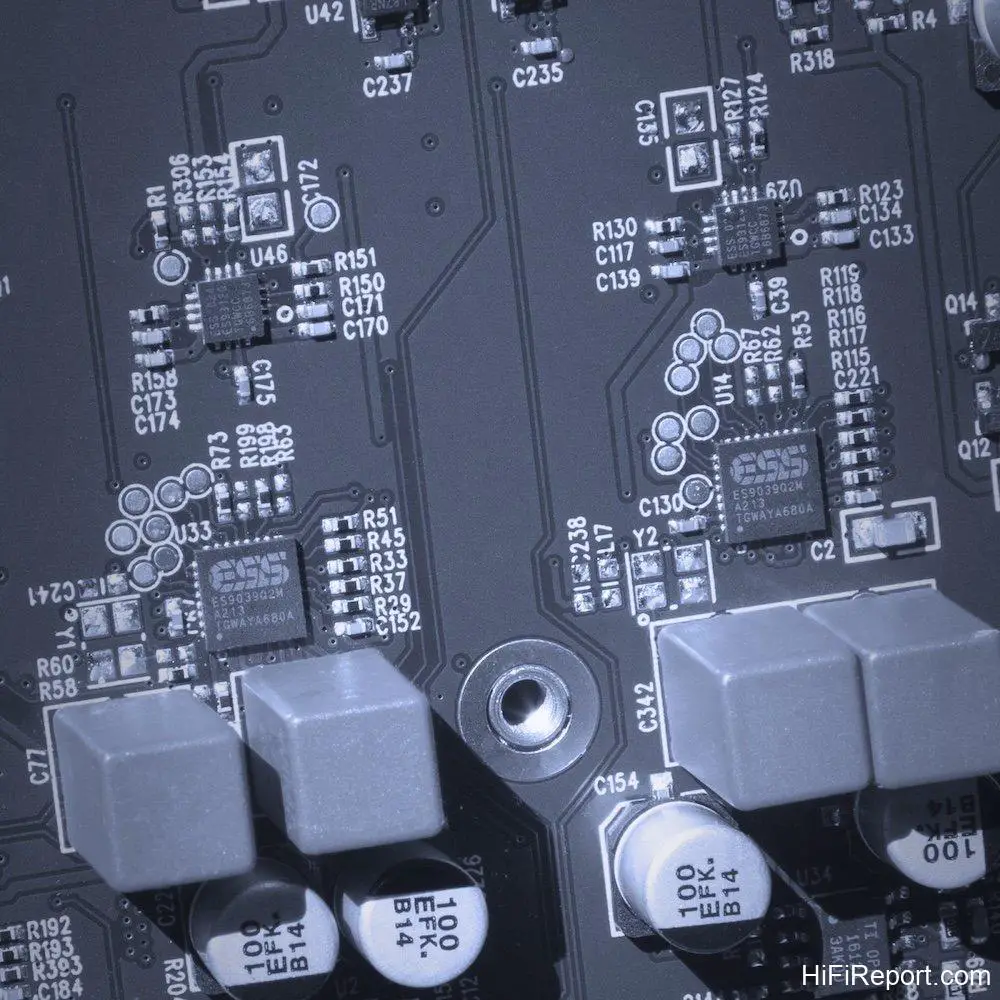
Interestingly, while the 9039Q2M DAC chip specifications are 32 bit/768 kHz and DSD 1024, Bluesound specifies PCM 192 kHz and DSD256. This suggests Bluesound isn’t simply dropping the 9039Q2M into the NODE ICON; there’s proprietary technology involved.
Additionally, according to the 9039Q2M specifications, it has 8 built-in digital filters with options for manufacturers to define their own. However, while using the NODE ICON, I couldn’t find any digital filter options. It seems Bluesound’s design philosophy is to implement a single, fixed digital filter, saving users the headache of choosing different sonic characteristics.
Reinforced Aluminum Base and 5-Inch Color Screen
The inclusion of the new 9039Q2M DAC chip and the dual-mono DAC architecture are the core technological highlights of the NODE ICON’s evolution. Other design aspects are simply more refined than the standard NODE.
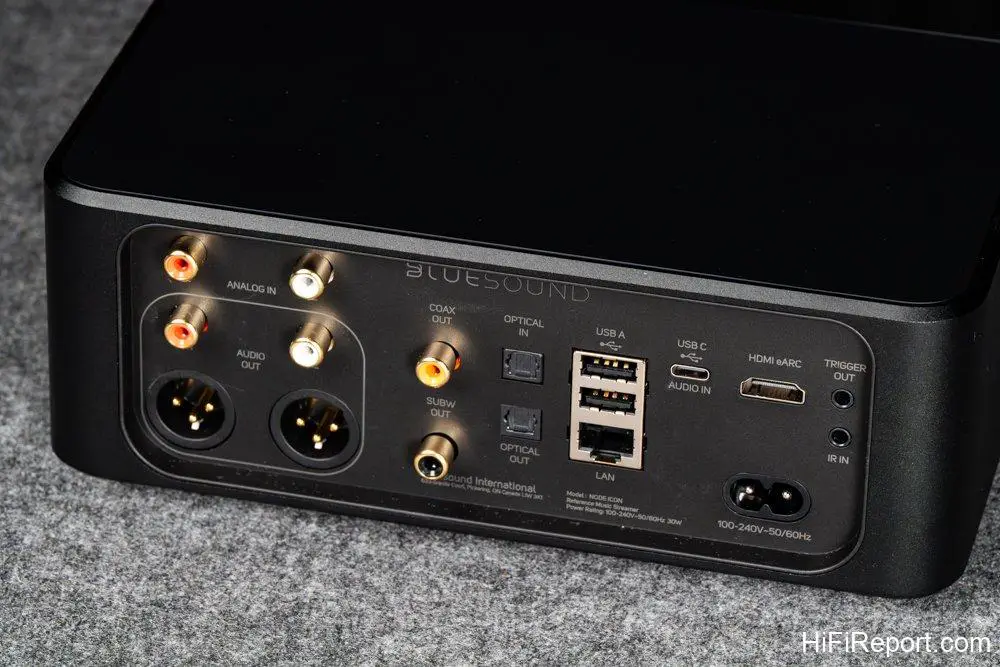
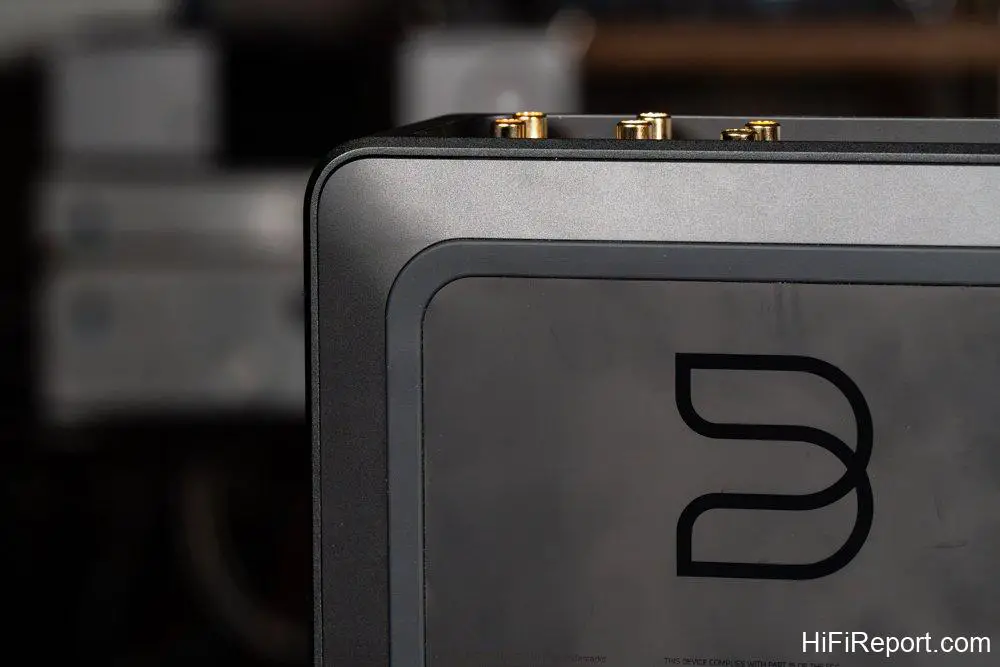
As a flagship NODE, the NODE ICON features an aluminum base instead of a plastic one, and its size is larger than the NODE.
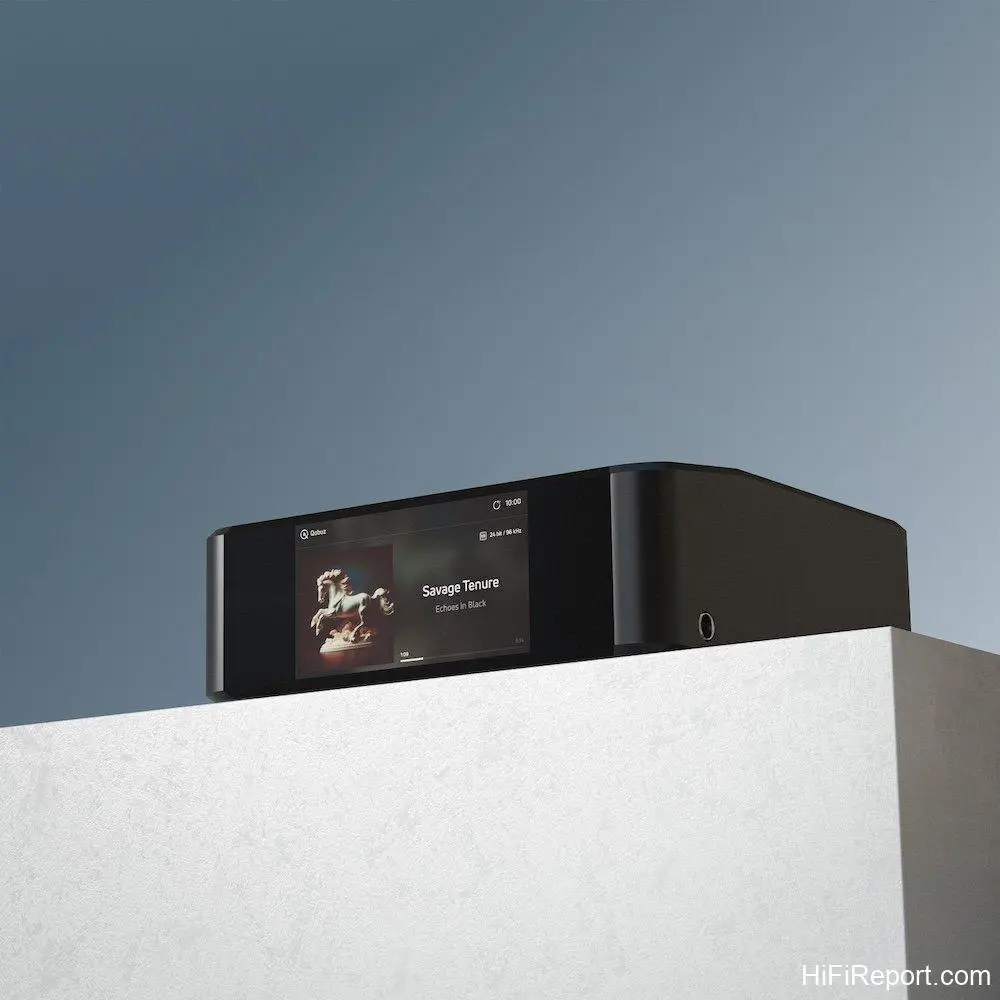
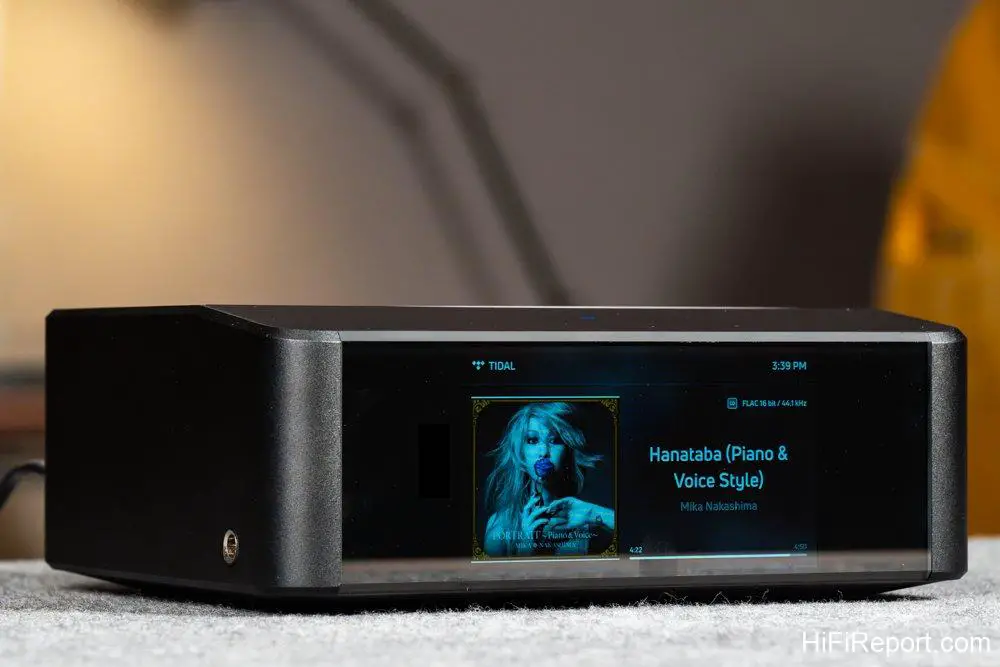
The primary reason for the NODE ICON’s larger chassis is the addition of a beautiful new 5-inch color screen. Note that this is not a touchscreen, but rather a display for various information like time, album art, track details, and so on. Visually, it makes the NODE ICON look more sophisticated, unlike the NODE, which is purely functional and requires an iPad or tablet app for all information.
Dual THX AAA Ultra-Low Distortion Headphone Amps
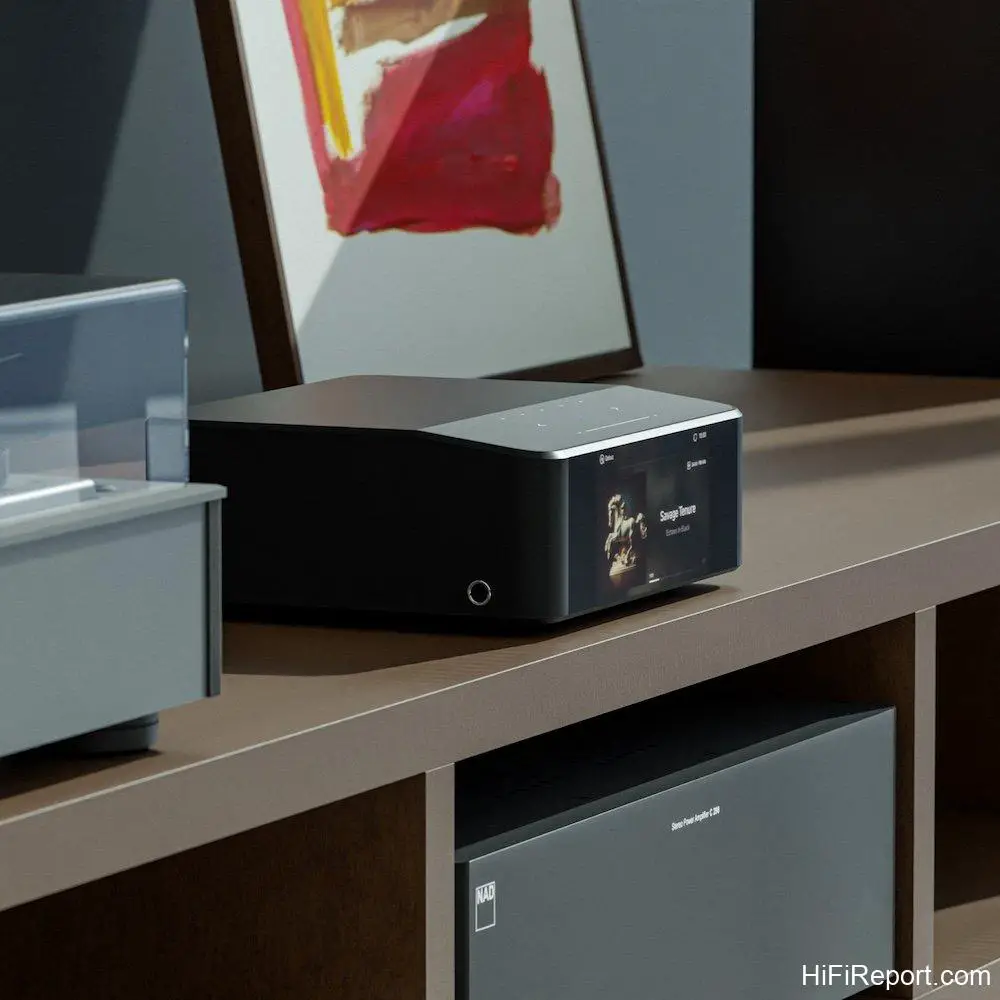
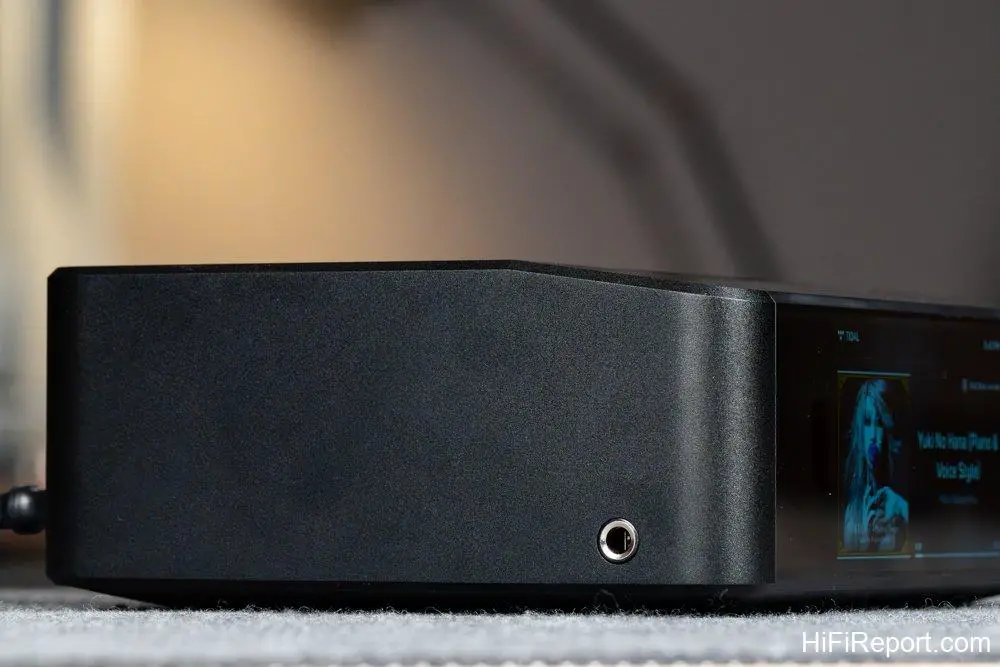
Another area of refinement is the headphone amplifier. The NODE ICON is equipped with THX AAA headphone outputs. There are two 6.3 mm headphone jacks on either side of the unit, allowing two people to enjoy the NODE ICON’s headphone output simultaneously.
THX AAA is a headphone amplifier module provided by THX, offering ample power but, more importantly, ultra-low distortion. THX specifies a total harmonic distortion of just 0.0004%, an astonishingly low figure in testing.
During my listening tests with final D8000 planar headphones, the NODE ICON’s driving power was certainly sufficient. Its ability to reproduce recording details and spatial presence was also quite impressive. For headphone users, this could eliminate the need to purchase a separate headphone amplifier.
Digital and Analog Versatility
Regarding inputs and outputs, as a flagship streamer, Bluesound ensures the NODE ICON handles both digital and analog sources. On the digital side, the NODE ICON includes S/PDIF, USB Type-A, USB Type-C, and RJ45 Ethernet – standard fare. It also adds HDMI eARC, meaning the NODE ICON can support video sources. When watching Netflix or Disney+, the NODE ICON can enhance Dolby-decoded audio.
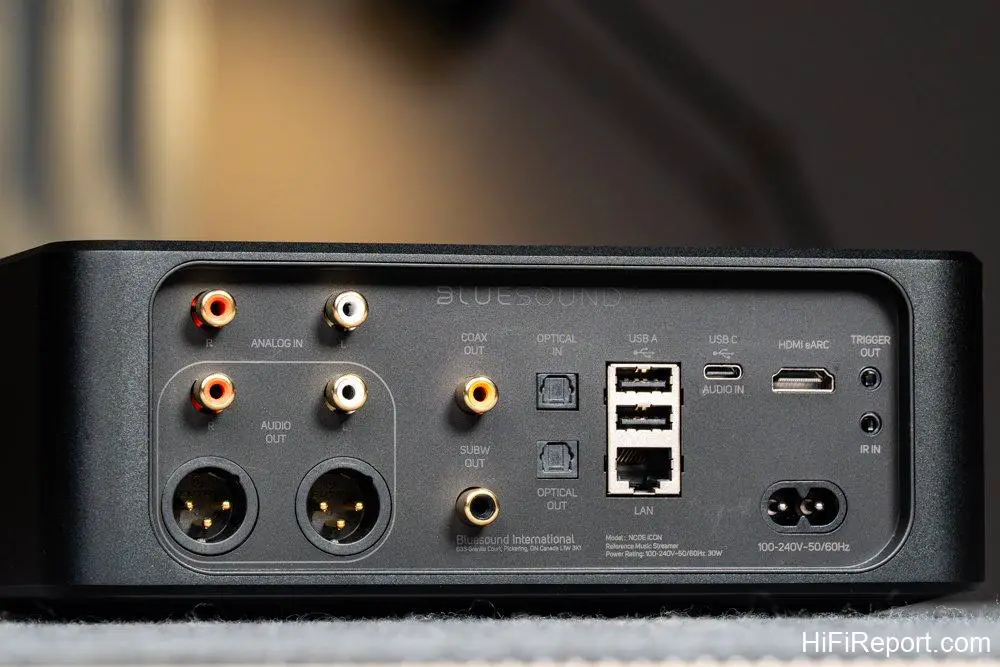
For digital output, the NODE ICON offers RCA, Optical, Coaxial, and USB. If you own a higher-end DAC, you can use the NODE ICON as a digital transport, outputting the digital signal to another DAC, providing upgrade potential.
Furthermore, on the analog side, the NODE ICON includes one set of RCA analog inputs. If you have a turntable or want to pair it with a traditional CD player, this RCA analog input comes in handy. However, this RCA input, along with the USB input, shares an ESS 9026 chip for handling analog-to-digital encoding and asynchronous digital audio transmission before routing the signal to the dual 9039Q2M DAC heart for digital-to-analog conversion.
Dirac Ready for Room Correction
The final technical highlight of the NODE ICON is its “Dirac Live Ready” status. This means the NODE ICON can be upgraded with spatial room correction functionality, addressing problematic low-frequency room modes and enhancing the acoustic effect of the listening experience.
Note that the NODE ICON also has a Sub-Out analog output for easily connecting a subwoofer. With the addition of Dirac Live room correction software, the NODE ICON can effectively manage low frequencies, adding another layer of functionality.
Dirac Live is part of the Canadian Lenbrook Group, to which Bluesound, NAD, and PSB also belong. The NODE ICON shares this technology, with built-in hardware support. You simply need to purchase the Dirac Live license online and use a measurement microphone to allow the NODE ICON to tackle your room’s acoustic challenges.
Start with the BluOS App
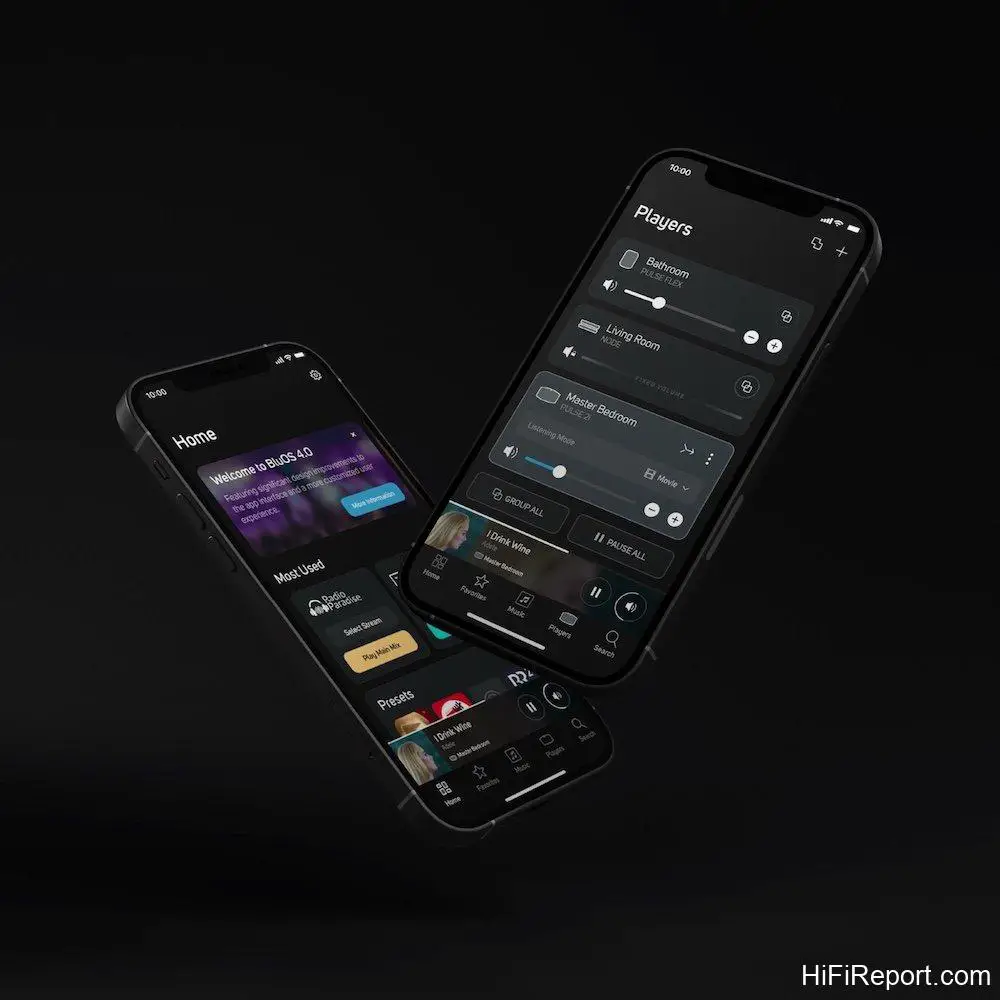
Speaking of Dirac Live, we must mention BluOS. Bluesound’s original goal was to build an ecosystem of software and hardware that would allow digital streaming functions to evolve over time. Therefore, the first message displayed on the NODE ICON’s screen when you power it on is a request to download BluOS. The screen includes QR codes for both iOS and Android. You must download the BluOS App to start using the NODE ICON.
BluOS has been developed over many years and boasts a very user-friendly interface. Whether you’re a beginner or an experienced user, navigating the BluOS App should be simple. In terms of hardware, the ARM Cortex A53 processor provides relatively fast response times. When using BluOS, control responsiveness is smooth without lag. I did notice during testing that wired control felt faster than Wi-Fi, which might be due to my aging home Wi-Fi router needing an upgrade, causing the wired network to feel quicker.
Supports Over 23 Digital Streaming Services
Having covered the technical features of the NODE ICON, it’s time for the listening test. In terms of digital file formats, the NODE ICON is almost all-encompassing, though most modern digital streamers are similar in this regard.
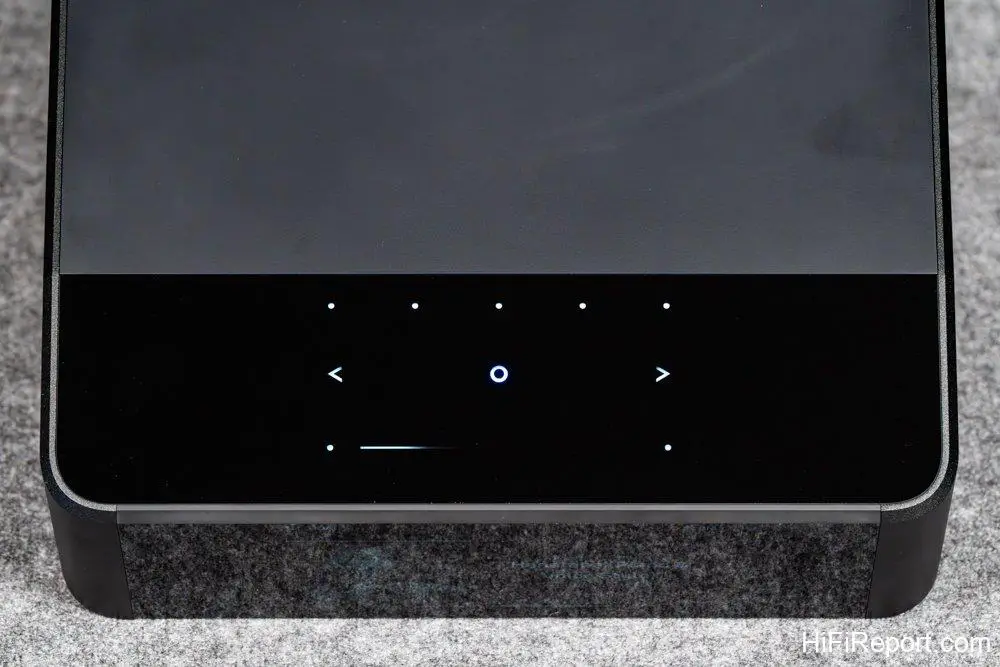
What stands out is the NODE ICON’s support for over 23 network streaming service connections. You only need to log in once, and BluOS can quickly connect to these cloud music libraries. This includes Airplay2, Spotify Connect, Tidal Connect, and Roon Ready, plus internet radio. You can also set quick keys on the touchpoints on the top of the unit, allowing control directly from the device without always needing a phone or tablet – offering dual control methods.
XLR Output Significantly Louder than RCA
For the listening test, I paired the NODE ICON with an EAR 868P preamplifier/509 MK II power amplifier driving Wilson Audio Alexia V speakers. I connected both the NODE ICON’s RCA and XLR outputs to the 868P preamplifier simultaneously to compare them. Bluesound doesn’t specify the output level difference between RCA and XLR, but in practice, I found the XLR volume was noticeably higher than RCA. When switching between RCA and XLR inputs on the 868P preamplifier, the XLR initially sounded better due to the volume difference.
Trying to compensate for the RCA volume difference and then comparing RCA and XLR again, listening to “” by EggPlantEgg, the bass drum attack in the intro was clearly much weaker via the RCA output without volume compensation, while the XLR sounded significantly more solid and full. However, even after adjusting the RCA volume to match, the XLR still won out. When driving the RCA output louder, the background quietness of the music wasn’t as good as the XLR. Comparing the two, XLR clearly had the edge. If your system allows, definitely choose the XLR balanced output.
Sound Quality Can Challenge Higher Tiers
Staying with EggPlantEgg on Tidal, I continued listening to the single “.” The acoustic guitar intro, the arpeggios played beautifully, revealed that the NODE ICON doesn’t just offer transparency but also presents the guitar’s resonant body thickness and tactile quality. Abin’s voice, slightly hoarse, conveyed deep emotion through subtle vocal changes.
Even with simple guitar and vocal tracks, the NODE ICON reproduced rich recording details, and the foundational sound had sufficient thickness and weight. This level of sound performance truly exceeded my expectations for a digital streamer priced under $1,000, seemingly capable of challenging equipment costing three, five, or even ten times more.
Of course, I was pairing the NODE ICON with some excellent equipment – the preamplifier, power amplifier, and speakers cost roughly a hundred times the price of the NODE ICON. This is an unreasonable pairing in practice. However, using such high-end backend equipment to listen means that if the NODE ICON had any background noise, it would immediately become apparent. But listening to “,” the acoustic guitar’s balance of transparency and thickness was superb. Later, the electric guitar’s power chords were thick and full, supporting the rock vibe alongside the electric bass and drums. If someone told me this was a source unit costing tens of thousands of dollars (equivalent to over $3,000 USD), I wouldn’t be surprised. Yet, the NODE ICON sells for around $999 USD, which is truly exceptional value.
Jazz Live Recording Atmosphere Beautifully Rendered
Switching to jazz, I listened to the classic “Waltz For Debby,” specifically “My Foolish Heart” from the 1961 Village Vanguard live recording. This old analog recording transferred to digital was reproduced by the NODE ICON with a strong sense of analog warmth. Or rather, for an affordable digital streamer, the NODE ICON achieved a richer analog flavor, completely devoid of digital coldness, offering instead a softer texture.
Listening to “My Foolish Heart,” with the piano and bass opening, followed by the gentle brush strokes on the jazz drum, the NODE ICON conveyed the dense yet soft subtle sounds. The piano meandered lazily across the keys, with occasional sounds of cups and plates from the recording venue in the background, bringing the live atmosphere to life. Having listened to “My Foolish Heart” many times, these details were expected, but the digital front-end equipment I usually listen with costs far more than the NODE ICON, which only highlights its exceptional value.
Didn’t Beat High-End, But Shows Incredible Value
Is the NODE ICON really that good? I connected the NODE ICON via coaxial digital output to a Merging NADAC, while also feeding the NODE ICON’s analog XLR output to the 868P preamplifier. I switched between the two inputs repeatedly while listening to “My Foolish Heart.”
I must say the NADAC didn’t lose. Especially in terms of sound thickness and the 3D spaciousness of the soundstage, the NADAC was still clearly superior. However, it wasn’t a monumental victory, considering it costs over ten times more than the NODE ICON. Its analog output stage after DAC decoding should outperform the NODE ICON. But the NODE ICON genuinely gave the high-end DAC a scare. Even before direct comparison, listening to the NODE ICON on its own, its soundstage depth, image focus, and presentation of recording details were remarkably accomplished. I believe the key lies in two factors: first, the significant performance improvement of the new 9039Q2M DAC, and second, Bluesound’s deep understanding of how to achieve great sound.
Proprietary Digital Filter Creates Great Sound
What do I mean by understanding how to achieve great sound? The 9039Q2M isn’t hard to get; you can buy the chip and build a machine. But how to configure its parameters – that requires the “ears that understand sound.”
Regarding digital filters alone, Bluesound chose not to use the 8 default filters provided by ESS but defined its own, shaping the sonic character of the NODE ICON. That’s Bluesound’s unique expertise.
Soundstage Layering and Spatiality Uncommon at This Price
Switching to classical music, I listened to “Across the Stars” featuring Anne-Sophie Mutter solo, conducted by John Williams with the Recording Arts Orchestra of Los Angeles. Specifically, the theme from the movie “Harry Potter and the Sorcerer’s Stone.” The opening celesta part was rendered by the NODE ICON with a light, airy sound, echoing within the soundstage and creating a sense of deep space. The solo violin was focused in the center, with the string section providing accompaniment in the background. The harp arpeggios rippled, leading into the orchestra. When the brass section played the theme, the NODE ICON presented better thickness than expected, moving into the tense middle section of the theme.
This layering of the soundstage and the detailed musical textures of the instruments aren’t things I’m hearing for the first time. But for a digital streamer as affordable as the NODE ICON to reproduce such excellent sound is truly a pleasant surprise.
Still doubting, I cross-referenced with the NADAC again. Okay, the NADAC’s thickness and sonic density, or perhaps its warmer, smoother analog processing, still held an edge. However, considering the NODE ICON’s price, I have to echo the American TAS review: this is the best digital streamer under $1,000.
Must you choose the NODE ICON at this price? Not necessarily. Because there are also the less expensive NODE and NODE NANO. The NODE ICON’s hardware advantages are the dual-mono DAC, the 5-inch color screen, and the analog input. If you don’t need these features, you can opt for the NODE or NODE NANO.
Specifications
* **Type:** Digital Streaming Player (including DAC)
* **Digital Inputs:** Coaxial, Optical, HDMI eARC, USB type A, USB type C, Bluetooth, RJ45 Ethernet
* **Analog Outputs:** RCA x1, XLR x1
* **Digital Outputs:** Coaxial, Optical, USB
* **Headphone Outputs:** 150mW, 16Ω / 235mW, 32Ω / 56mW, 250Ω / 23mW, 600Ω
* **Subwoofer Output:** RCA, Wireless connection to Pulse SUB+
* **Bluetooth:** Bluetooth 5.2, AptX Adaptive
* **Wired Network:** Ethernet RJ45, Gigabit 1000 Mbps
* **Wireless Network:** 802.11ac Dual Band
* **Signal-to-Noise Ratio:** -129dB (XLR), -121dB (RCA)
* **Distortion:** 0.0004%
* **Built-in DAC:** ESS ES9039Q2M x2
* **Supported Audio Formats:** MP3, AAC, WMA, WMA-L, OGG, ALAC, OPUS, FLAC, MQA, WAV, AIFF, MPEG-4 SLS
* **Supported Sample Rates:** Up to PCM 24bit/ 192kHz, DSD256
* **Dimensions:** 220 x 84 x 193 mm (W x H x D)
* **Weight:** 2.23 kg