
Bluesound Node Nano Review
Since the original Node series first launched in 2015, it has undergone numerous revisions and functional upgrades. Last year, Bluesound specifically re-evaluated its product strategy for different consumer segments, deciding to categorize the original Node streaming DAC into three distinct models. Ranging from entry-level to high-end, these are the Node Nano, Node, and Node Icon.
As you ascend the tiers, the features become more comprehensive and the internal components more refined, allowing enthusiasts to easily pinpoint the product that best suits their needs. While we’ve previously covered the two higher-tier models in detail, this review focuses on the Node Nano. Not only is it the most accessible in terms of price, but considering the current streaming audio market, it is arguably the most suitable streaming device for newcomers.
Compact Design and Modern Aesthetics
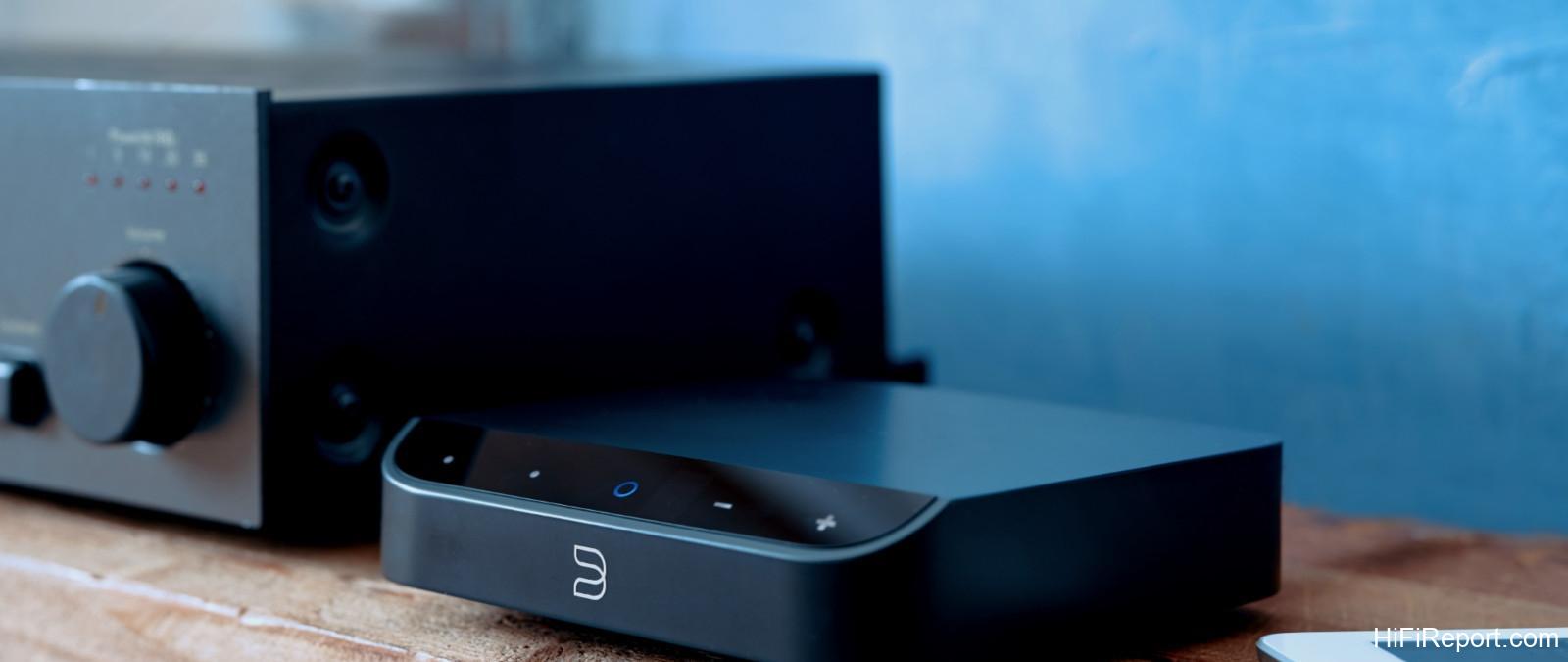
Bluesound streaming audio products have always impressed me with their compact size and rich feature set, offering a single-unit solution for various listening needs, making them ideal for entry-level users. The Node Nano takes this philosophy of convenience and ease-of-use to its extreme! Roughly the size of your palm, it resembles a small set-top box and even features wall-mounting holes on its base, allowing for flexible, space-saving installation.

This latest Node series was designed in collaboration with renowned industrial design firms in London and New York. The smallest Node Nano boasts a flat, square profile, with only the front edge featuring essential touch controls for playback/pause and track selection. The top panel has a sleek, mirrored finish, devoid of any display or knobs, maintaining a maximally minimalist and clean aesthetic.
This design approach gives it a more modern feel than previous Node models, perfectly capturing the aesthetic preferences of younger enthusiasts.
Connectivity Options
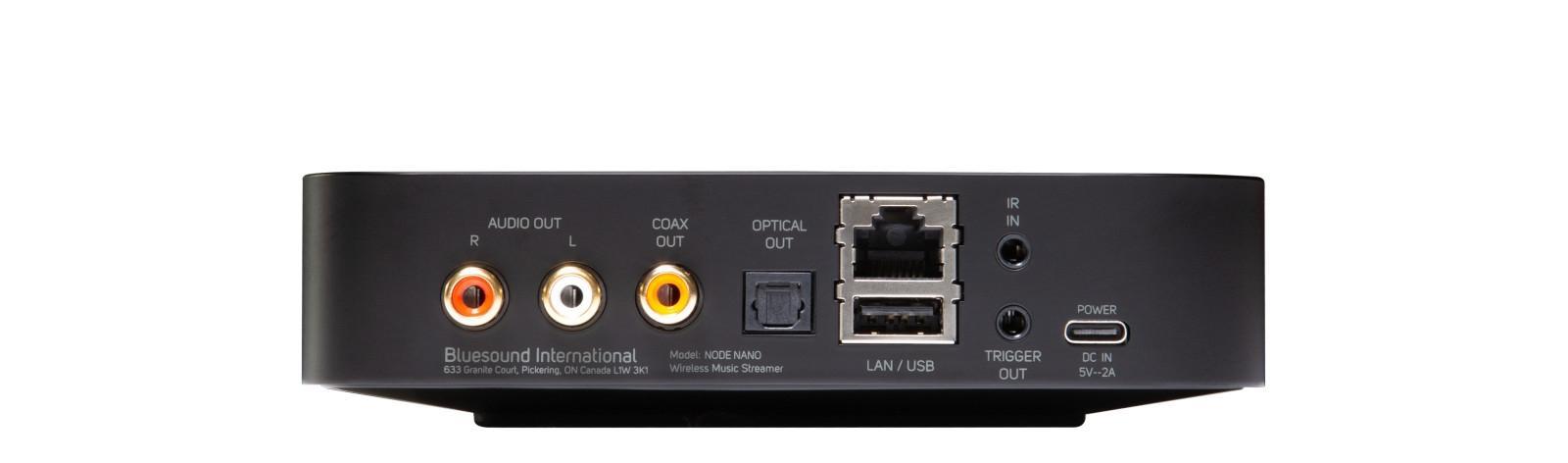
Due to its compact dimensions, the Node Nano’s features are somewhat streamlined compared to its two siblings. It notably omits HDMI ARC and subwoofer outputs, meaning it won’t integrate with a TV setup. However, it still offers full-fledged streaming and decoding capabilities. Besides the RJ45 digital input on the rear panel, it also provides digital outputs including optical, coaxial, and USB.
This means the unit can also function as a “streamer without a DAC,” a handy feature should you decide to upgrade to a higher-end DAC in the future. Of course, it also includes a set of RCA analog outputs and features digital volume control, allowing direct pairing with a stereo power amplifier or active loudspeakers. Power is supplied via the ubiquitous USB Type-C connection, which further contributes to the Node Nano’s significantly reduced size.
Core Technology & BluOS
Beyond its rich feature set, the Node Nano’s internal components are meticulously chosen. At its core lies the ESS ES9039Q2M DAC chip, ESS SABRE’s latest flagship two-channel decoding chip. This chip boasts an impressive dynamic range of up to 130dB and an excellent signal-to-noise ratio of 124dB. It also integrates Hyperstream IV technology, which effectively reduces power consumption and digital noise generation. The Node Nano supports high-resolution music playback up to 24-bit/192kHz.
It also fully integrates into the BluOS ecosystem, allowing users to access a wide range of popular music streaming services via the proprietary app, including Amazon Music, Qobuz, Tidal, and more. Furthermore, the BluOS system enables seamless multi-room music sharing by linking with other compatible wireless audio products (wireless speakers, streaming DACs) within your home.

Versatile Playback
Should you prefer not to use the BluOS App, the Node Nano also supports AirPlay 2, allowing you to stream music directly from your Apple devices. Additionally, it features the practical Spotify Connect and Tidal Connect functionalities, enabling direct discovery of the Node Nano from within these streaming platform apps. It also supports two-way Bluetooth 5.2 with aptX Adaptive high-quality audio coding, allowing you to stream music from your mobile device to the Node Nano for playback.
For late-night listening, it can even transmit audio signals to wireless headphones. Finally, it is a Roon Ready device, offering an even smoother user experience if you have a Roon account.

Listening Impressions: Setup
The Node Nano’s truly compact size means it can theoretically fit into any nook or cranny, especially on cramped desktops or TV cabinets. For this review, however, I opted for our main listening room (Listening Room No. 1) and used the Node Nano as a digital preamplifier. It was paired with the Audiolab 9000P power amplifier, also reviewed in this issue, driving a pair of KEF LS50 bookshelf speakers.
Compared to previous Bluesound models, the Node Nano exhibited a noticeable improvement in sound quality. My initial impression was of a round, warm character, entirely devoid of the rough sound often associated with budget-friendly devices. After a period of warm-up, the sound became even softer and more refined.
Sound Quality: Classical
Playing Haydn’s “Piano Trio No. 14” performed by Trio Wanderer, the Node Nano rendered the violin with a smooth, sweet quality. Its lines felt warm and full, with highs that seemed subtly rounded, preventing any hint of harshness. Bowing details were presented gracefully rather than overtly emphasized, leaning towards a soft, flowing presentation. The cello’s resonant body tone sounded warm and weighty, lending a sense of stability and gravitas to the chamber music.
For affordable audio sources of this type, I personally prefer this tuning style. In my experience, if a component’s circuit design or vibration damping isn’t perfectly executed, an unyielding pursuit of resolution can often lead to a lean, dry, and fatiguing sound. In contrast, the Node Nano allows you to comfortably enjoy the music.
Sound Quality: Jazz & Rock
When I played “Glamour Profession” from Steely Dan’s “Gaucho” album, the Node Nano’s strengths truly became apparent. Musical images were distinctly three-dimensional and realistic, with sharp outlines and no annoying edginess to the sound. Its precise soundstage and pinpoint imaging are remarkably rare for a source in this price range, creating clearly defined musical layers between the vocalist and accompanying instruments.
It masterfully interpreted the textbook-quality recording details of Steely Dan. Vocals sounded direct and intimate, while the electric guitar plucks exhibited excellent dynamics, with a round and sweet attack to each note. The unit’s stable low-end prowess also ensured that the electric bass and jazz drums provided a springy, energetic accompaniment. It offers a level of musicality that is quite uncommon among digital sources at this price point.
Verdict
After thoroughly listening to the Node Nano, it’s clear that the new Node series represents a significant evolution in sound quality. Even the most entry-level model achieves such a high standard of musicality, further cementing my belief that it’s a true gift from Bluesound to beginners.
In a market saturated with streaming DACs, finding a product that combines extensive compatibility, a user-friendly compact size, excellent sound quality, and a price tag around $340 USD is practically unheard of. From every perspective, the Node Nano is, without a doubt, the king of value for money!
Specifications
* **Product Type:** Streaming DAC
* **Input/Output Interfaces:** RCA Analog Output, Coaxial Digital Output, Optical Digital Output, Trigger Out, IR In, USB Type-A, Ethernet Port, Wi-Fi, Bluetooth (Two-Way)
* **Supported High-Resolution Audio Formats:** FLAC, MQA, WAV, AIFF, MPEG-4 SLS
* **Supported PCM Audio:** Up to 192kHz/24bit
* **Supported DSD Audio:** Up to DSD256
* **Signal-to-Noise Ratio (SNR):** -118dB
* **Total Harmonic Distortion + Noise (THD+N):** 0.0007%