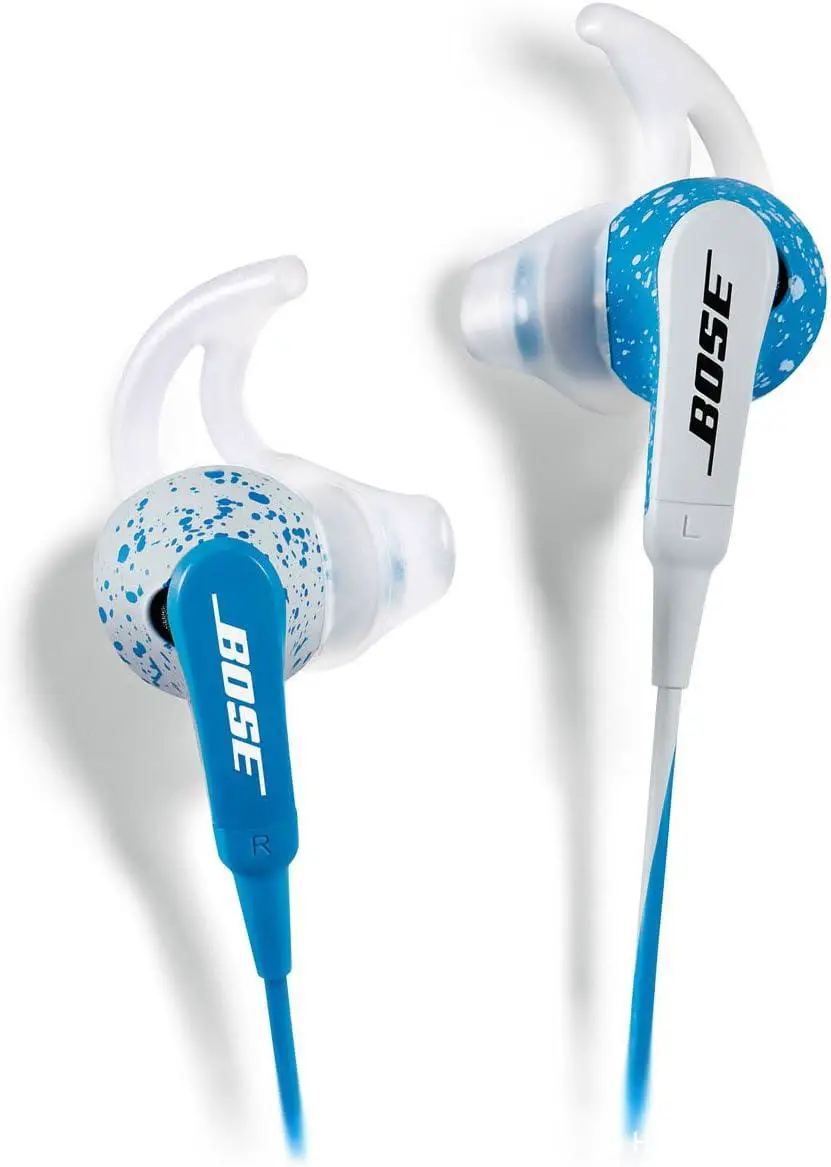
Bose Freestyle Earbuds Review
Most wired sports earbuds sacrifice one of two things: either the fit slips out the moment you start moving, or the sound gets pumped into a bass-heavy, hyped-up signature that distorts what the artist actually recorded. The Bose Freestyle sidesteps both traps. It is a simple wired in-ear monitor with a secure mechanical lock into the ear canal, a natural frequency response, and an inline mic and remote on the cord. That simplicity is its defining character. No battery to charge, no pairing to fumble with, no active noise-cancellation chip to heat up inside the driver housing. You plug it into a phone, a laptop, or a gym console and it works.
The Freestyle earned a 4.2-out-of-5 aggregate rating across 673 Amazon reviews, a strong showing for a wired model in a market that has largely migrated to wireless. Buyers who chose it came for the fit and the sound, and most of the long-term feedback confirms that those two promises held up. The trade-offs are real, though: passive isolation is the ceiling, the inline controls are the weakest link in the build, and the color options, while bright, polarize users.
Design, Materials and Feel
The driver housings are molded plastic, and one long-term owner called them the nicest plastic work he had encountered in a wired earbud. The silicone ear tips come in three sizes, labeled S, M, and L, and each tip locks into the housing with a slight click that gives the whole assembly a solid, snap-together feel. A clip attaches to the cord so you can hook it to a shirt front or a race vest, keeping the cable off your back while you move. The carrying case that ships in the box is a hard-shell pouch sized for the earbuds and cord; one reviewer noted it is comfortable for a small MP3 player but too small to fit a phone alongside the buds.
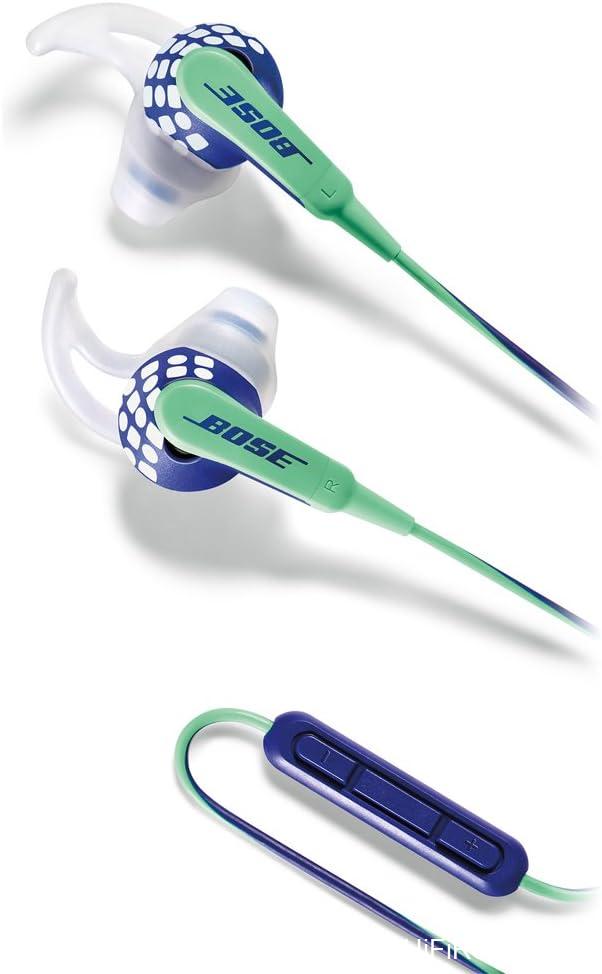
The inline control pod sits on the cord roughly at chest height when the earbuds are in. It carries a volume roller, play/pause and track-skip buttons, and a microphone. One user described the buttons as “easily distinguishable” but the pod itself as slightly bulky. The cord length runs to about the right proportion for a six-foot-two user, which most people will find generous. Colorways for the Freestyle include the Ice Blue of this listing, a red-white-blue mix, and a purple-green. Two separate reviewers called the palette “goofy” and “lame,” while others said the bright Ice Blue with a touch of red made the buds easy to spot in a bag.
The build is marketed as “heavy-duty to stand up to your active life,” and the plastic-to-silicone junction points show no fraying or tearing after months of gym use in most accounts. The one area where the construction breaks down over time is the inline pod, discussed in more detail below.
Wearing Comfort
Fit is the Freestyle’s strongest asset, and the reviews make that point over and over. The silicone tips press the driver housing into the ear canal while a small wing or hook on the tip catches the outer edge of the ear, creating two points of contact. Runners, cyclists, and mountain bikers in the review set report the buds holding through sprints, descents, and lateral head movements without needing a readjustment. One owner who had struggled for years with in-ear buds falling out or causing pressure after two hours said the Freestyle changed that; he kept them in for entire work shifts and even fell asleep on a flight with them still seated.
Getting them in takes a moment to learn. The tips need to be seated gently with minimal pressing, more like balancing them on the outer ear than jamming them in. A few reviewers mentioned a short adjustment period, particularly if you are moving from a different tip geometry. After that, the sit is stable and low-pressure. The total weight inside the canal is modest, and no reviewer flagged hot spots, canal irritation, or aching at the jaw after extended wear. The main comfort note is the cord: it adds a small tug on the skin of the neck when you turn your head, something over-ear or wireless designs avoid entirely.
One user who works in a machine shop wears them for full shifts and reports they stay comfortable and the seal holds despite continuous head movement. The same user noted the passive isolation keeps the ambient machine rumble at a level where music remains audible without cranking the volume.

How They Sound
The Freestyle produces a clear, natural signature with controlled lows, present mids, and crisp highs, and it does not rely on artificial bass boost to compensate for the lack of a tight ear seal.
Bass
With the stock silicone tips, bass is full and defined without being boomy or masking the midrange. One long-term owner compared the low end directly to Sony and SkullCandy sports buds and found the Bose bass noticeably cleaner, free of the “overpowered” mud he associated with those brands. Upgrading to Bose StayHear Plus tips tightens the seal and, per the same reviewer, deepens the bass further while keeping the tops from turning harsh. Drums and low guitar tones land with impact rather than smear.
© hifireport.com – Original review content by hifireport.com. Reprinting without written permission is not allowed.
Midrange
Voices sit forward and stay clear. A listener who uses the buds for both music and gaming noted that details audible at low volume on the Freestyle required higher volume on competing earbuds to surface. The mids are present without being pushed to the front at the expense of the rest of the band. One Italian reviewer, using the buds on an iPhone with Siri integration, confirmed that phone-call voice through the inline mic came through clearly, which speaks to the flatness of the midrange response rather than a voice-frequency boost.
Treble
Highs are crisp and well-articulated across most genres. No reviewer described sibilance, harshness, or a rolled-off top end. The overall impression in the reviews is a signature that sounds the way the artist mixed the record, without the hyped smiley curve common in consumer sports buds. The cord and driver do not tangle, and the jack end shows no wear, so the signal path stays consistent over time.
The combined effect is a listen that rewards detail without fatigue. It is a good match for anyone who equalizes music before playback and wants the earbuds to be transparent rather than colored.
Keeping the World Out
The Bose Freestyle has no active noise cancellation; it is a passive, wired in-ear with no processing electronics between the driver and your ear. Isolation comes entirely from the physical seal of the silicone tip in the ear canal.
With the stock tips, one detailed reviewer measured ambient noise reduction at roughly 20 to 30 percent, which is enough to block a quiet office hum but not a loud gym floor. Swapping to Bose StayHear Plus tips raises that figure to the 60 to 90 percent range, a meaningful jump that lets one user mow a lawn and run a loud edger while still hearing music at a moderate volume. In a completely silent room the difference is small, but in a machine shop or on a road the upgrade makes the buds genuinely usable.
On the downside, the passive seal is the ceiling. One frustrated reviewer took the buds to a commercial gym and could hear the neighboring guy’s breathing, the rack of weights clanking, and the overhead speaker system more clearly than his own music, even with the volume near maximum. If your primary listening environment is that loud, the Freestyle will let too much in unless you add the StayHear Plus tips. For cycling or running on a road, the ambient bleed is a feature: you hear traffic and pedestrians without pulling the bud out, which is the same reason one reviewer liked keeping one ear free during a video call.
Battery Life
The Bose Freestyle is a wired earbud, so it carries no battery and requires no charging cycle. Power arrives through the standard audio jack from whatever device you connect it to: a phone, a laptop, a dedicated MP3 player, or a gym console. There is no battery health to monitor, no charge case to keep topped up, and no mid-session shutdown risk.
This means the only power consideration is that of the connected source. A phone running the buds for several hours will drain its battery the same way any wired output would. For the earbuds themselves, the only “maintenance” is keeping the cord and jack clean and stored in the included case so the plug end does not get kinked. The lack of a battery also means the Freestyle will keep working years after wireless competitors of the same vintage have retired to e-waste.
Customer Feedback Highlights
The praise clusters around three themes. First, fit and comfort: nearly every positive review mentions the buds staying securely in during running, cycling, mountain biking, or long desk sessions, and several owners contrast that stability with years of falling-out experiences from Apple, SkullCandy, and JVC in-ears. Second, sound: reviewers describe the output as clear, well-rounded, and natural, with bass that is loud without being muddy and highs that stay crisp. Third, the physical package: the included hard-shell case, the three tip sizes, the cord clip, and the inline controls are all called out as thoughtful touches that make the daily carry convenient.
The complaints focus on two areas. Durability of the inline pod is the recurring concern. One owner, after a year of at least twice-daily gym use with careful storage in a waterproof pouch, found the mic and button housing had developed internal gaps where sweat worked in, rendering the volume control and microphone dead. He called the failure disappointing given the “heavy-duty” marketing. The second complaint is isolation: users in loud environments, particularly commercial gyms, found the passive seal insufficient and the lack of any noise cancellation limiting. A smaller thread of criticism targets the color palette, with two reviewers wishing Bose offered a subdued black or gunmetal option instead of the bright, skatepark-style finishes.
What We Like / What We Don’t
- Secure two-point fit that stays through running, cycling, and head-shaking without readjustment
- Natural, uncolored sound signature with controlled bass and crisp treble that suits equalized playback
- Included hard-shell carrying case and three sizes of silicone tips for a quick fit match
- No battery or pairing to manage; plug in and go
- Inline mic and volume control that work cleanly with iPhone and other wired sources
- Passive isolation tops out around 20 to 30 percent with stock tips, which falls short in loud gyms
- Inline control pod is the build weak point; sweat ingress can kill the mic and buttons within a year of heavy use
- No active noise cancellation, so quieting a busy office or transport cabin is out of reach
- Color options are bright and polarizing; there is no neutral black or grey finish
- Wired design means a cord to route and a jack to plug in, which some users find a step back from wireless convenience
The Verdict
The Bose Freestyle is a wired sports earbud built around two ideas: the bud should not move, and the sound should not lie. If you run, cycle, or do lateral gym work and you want an in-ear that locks in and stays there for the entire session, the two-point silicone-tip fit delivers on that promise repeatedly across the review base. The sound, flat and detailed, suits listeners who equalize their files and want the driver to reproduce the mix rather than color it. The absence of a battery and the included case make it a simple, durable piece of kit for daily carry.
Weigh the passive-isolation ceiling if your primary use is a loud environment; the stock tips will not block a gym’s free-weight area, and even the StayHear Plus upgrade keeps you in the “you can hear the music over the clank” territory rather than true silence. If you also want the inline controls to survive several years of sweat, handle the pod gently and keep it dry. Best for runners, cyclists, and long-wear desktop listeners who value fit and a natural sound; look elsewhere if you need active noise cancellation, a truly sealed isolation, or a wireless, cord-free experience.
Key Specs
- Type: Wired in-ear / sports earbud
- Connectivity: Wired (audio jack)
- Ear tips: 3 sizes included (S, M, L)
- Inline controls: Mic, volume roller, track skip
- Carrying case: Included
- Color (this variant): Ice Blue
- Sweat resistance: Yes
- Active noise cancellation: No
- Compatibility noted in reviews: iPhone, MP3 players
- Aggregate Amazon rating: 4.2 out of 5 (673 ratings)
Frequently Asked Questions
Do the Freestyle earbuds stay in while running or cycling?
Yes. The silicone tip uses a two-point contact system: the driver housing seals in the canal and a small wing catches the outer ear edge. Multiple owners report the buds holding through sprints, descents, and full gym sessions without needing a readjustment.
Are these noise-cancelling earbuds?
No. The Freestyle has no active noise cancellation and no processing electronics in the bud. Isolation is passive, coming from the physical seal of the silicone tip. Stock tips reduce ambient noise by roughly 20 to 30 percent; the optional Bose StayHear Plus tips raise that to the 60 to 90 percent range.
How long can you wear them comfortably?
Several reviewers report wearing the Freestyle for entire work shifts, long flights, and multi-hour running sessions without earache or pressure points. One owner said he has fallen asleep with them still in. The main comfort adjustment is learning to seat the tips gently rather than pressing them in.
What comes in the box and do I need any add-ons?
The box includes the earbuds, three sizes of silicone ear tips (S, M, L), an inline mic/remote on the cord, a cord clip, and a hard-shell carrying case. The one recommended add-on is the Bose StayHear Plus tip set, which tightens the seal and deepens the bass; it is a separate purchase.
© hifireport.com – Original review content by hifireport.com. Reprinting without written permission is not allowed.

- Colorful designs to suit your style.Connectivity Technology: Wired
- Deep, clear sound, so you'll love the music you love even more
- Comfortable fit no matter how long your playlist is