
B&W 603 S3 Review
Since its debut in 1995, the B&W 600 series has reached its eighth generation. How has it steadily progressed towards higher-end loudspeaker performance? To focus on recent history, I believe the critical turning point was the sixth generation 600 series, launched in 2018. Everyone knows that “neutral, uncolored midrange” has always been B&W speakers’ unique strength.
Technological Evolution
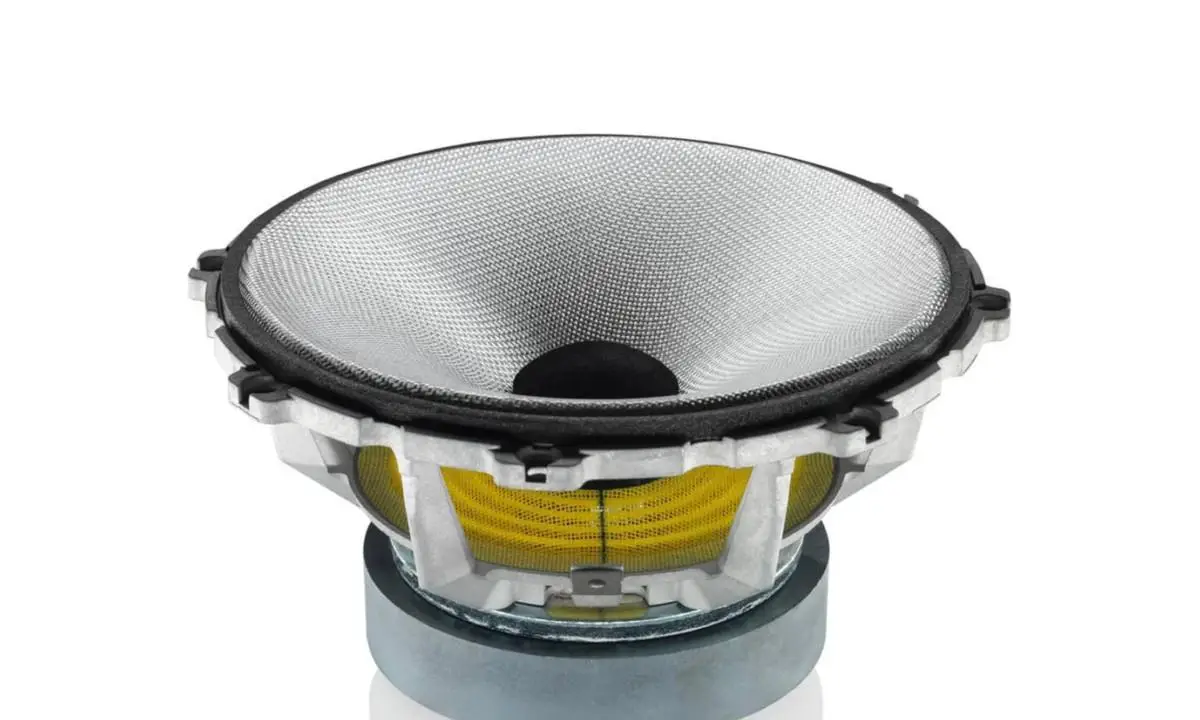
This was the first time the 600 series inherited technology directly from the flagship models, adopting the Continuum FST midrange driver. This silver composite woven cone with fixed surround design significantly elevated the transient response of the midrange.
Unexpectedly, in 2020, to celebrate the 25th anniversary of the 600 series, the manufacturer upgraded the speakers again after just two years. They incorporated a newly designed “Decoupled Double Dome” aluminum tweeter and adopted the “Nautilus Tube Loading” tweeter tube design from the 700 series. This pushed the cone breakup distortion point up to 38kHz, well beyond the range of human hearing.
They also upgraded crossover components to reduce phase distortion, resulting in a more natural flow to the 600 series sound. However, the advancements in previous generations pale in comparison to the B&W 600 S3 series. The subject of this review, the 603 S3 floorstanding speaker, not only retains the classic Continuum FST midrange but also inherits numerous key design elements directly from the 700 series.
It’s a complete transformation from top to bottom, arguably the closest the 600 series has ever come to the 700 series.
Series Evolution
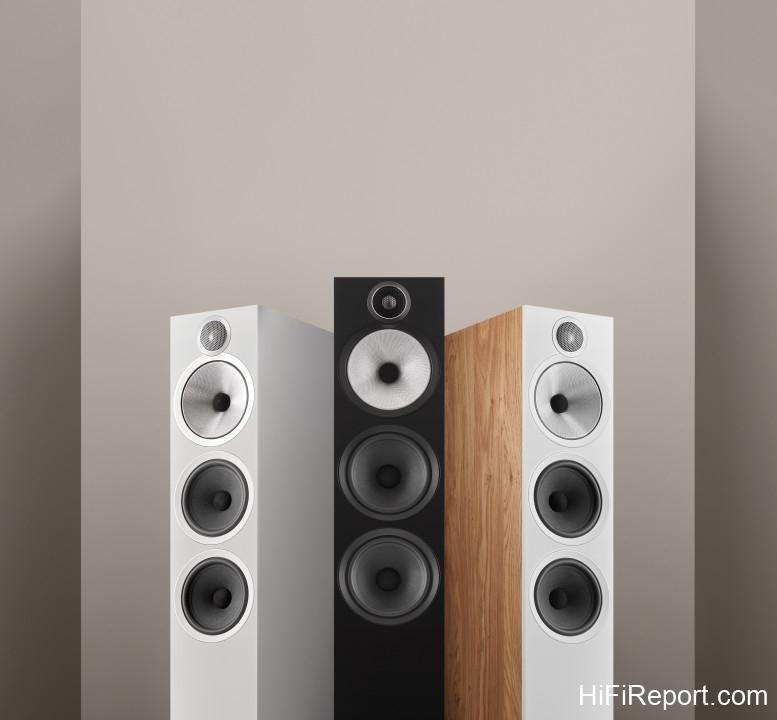
The eighth-generation B&W 603 S3 inherits the styling of the previous generation, with build quality noticeably simpler than the higher-tiered 703 S3. The baffle lacks rounded curves, and there’s no distinct bullet-shaped housing for the tweeter. The cabinet utilizes a traditional box structure and is available in matte black, matte white, and oak wood finishes.
Personally, I have a strong preference for the matte finish; while it may not have the exquisite refinement of piano lacquer, it looks more modern and integrates better with contemporary furniture and decor. The 603 S3’s straightforward box cabinet design may seem simple, but it incorporates several features for improved sound.
Firstly, the midrange and bass drivers are nearly flush with the baffle, which helps reduce diffraction interference from sound waves, leading to a more expansive soundstage and more precise image localization.
Secondly, although the speaker baffle isn’t wide, looking at the side reveals a deliberate cabinet depth of 34 cm. The purpose, of course, is to increase the internal volume, allowing it to deliver better low-frequency extension than speakers of a similar footprint. Thus, while the 603 S3 appears tall and slender from the front, its actual volume is much larger, and its weight reaches 27.5 kg (compared to 24.1 kg for the previous generation).
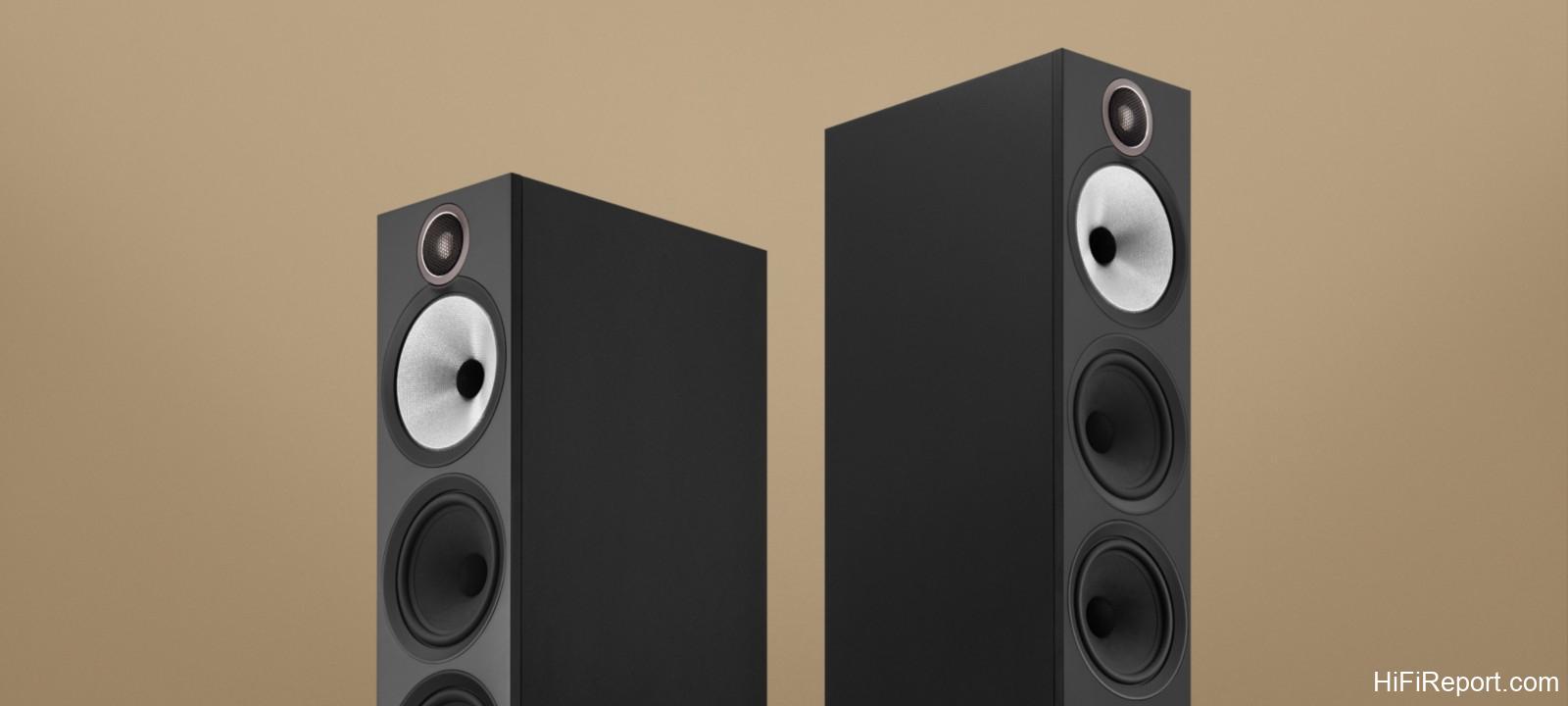
Tapping the cabinet produces a solid, dead thud, confirming its robust construction. Furthermore, to ensure greater stability, the manufacturer has added a large plinth at the base of the speaker, which also helps reduce vibration transmission from the floor into the cabinet.
Cabinet Design
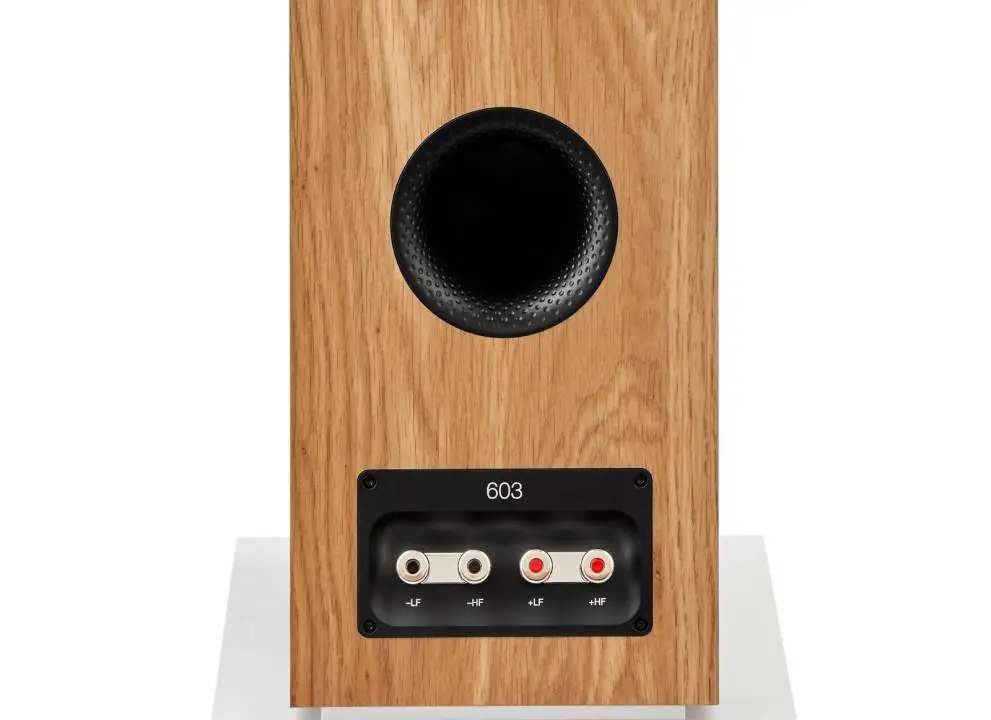
Turning to the rear panel of the 603 S3 reveals two upgrades for this generation. The first is the Flowport bass reflex port, featuring the same structure as the 700 series, with a special array of dimples inside that more effectively smooth the airflow exiting the cabinet. However, unlike the downward-firing port design of the 700 series, the 603 S3 requires placement away from the rear wall to achieve optimal bass quality.
Rear Panel & Terminals
The second upgrade is the new speaker terminals, also ported from the 700 S3 series. They maintain a bi-wire configuration but are arranged side-by-side instead of vertically. The advantage is a shorter signal path through the jumper plates, reducing signal degradation, and making it more convenient for users to swap speaker cables or jumpers.
Driver Overview
Regarding the drivers, the 603 S3 maintains a 3-way, 4-driver configuration. The tweeter section is a highlight of the 603 S3, featuring a new 1-inch titanium dome tweeter. It inherits the “Decoupled Double Dome” structure from the past, consisting of a single layer of titanium diaphragm overlaid with a thinner titanium dome, and bonded with a titanium ring on the outer edge at the rear, creating a sandwich structure.
Tweeter Technology
This not only increases diaphragm rigidity but also reduces distortion caused by ‘ringing’. Titanium is known for its extreme rigidity, low mass, and excellent heat dissipation properties, which results in improved precision compared to previous drivers.
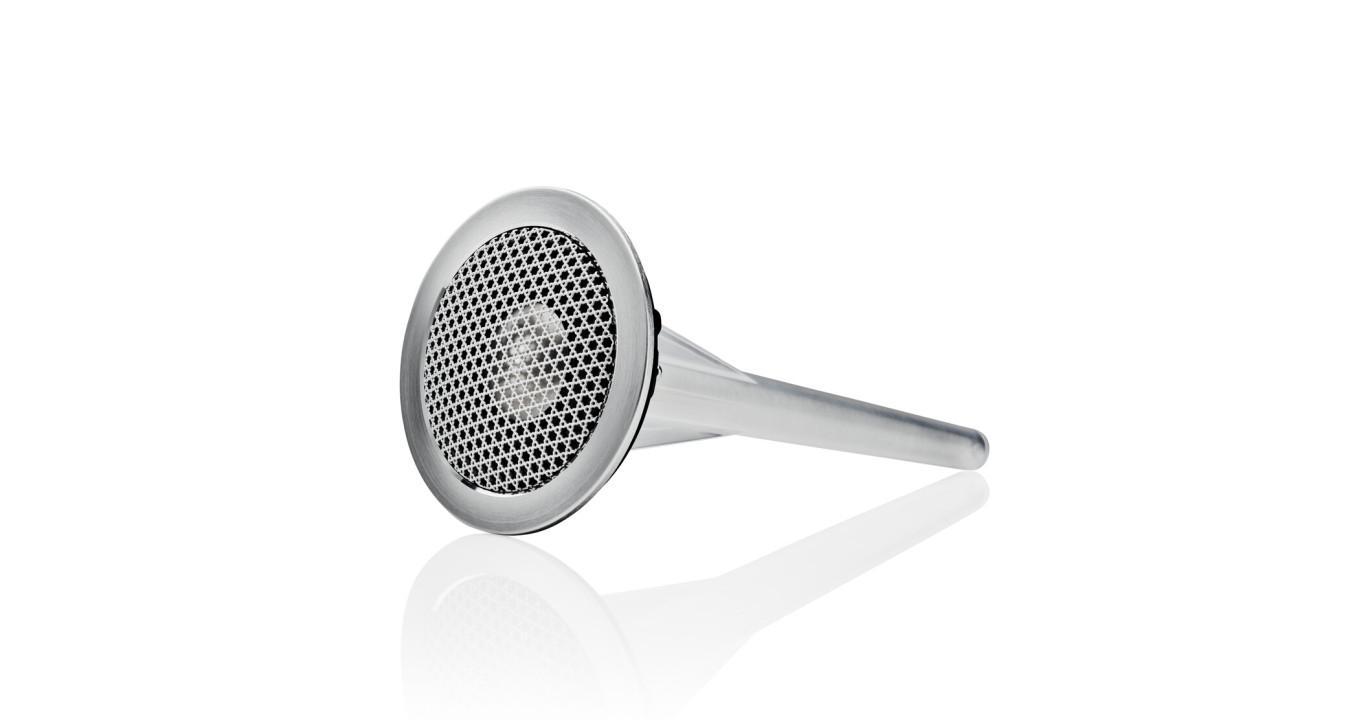
Behind the tweeter, the speaker inherits a longer “Nautilus Tube Loading” sound guide from the 700 S3 series. This technology is inspired by the classic “Nautilus” speaker and effectively guides backward-traveling sound waves away from the driver, reducing driver resonance and enhancing high-frequency purity. On the front of the tweeter, you can also see the lattice grille pattern borrowed from the 800 series.

This design improves dispersion and acoustic transparency, contributing to a wider soundstage.
Midrange Driver
In the midrange, since the 600 series replaced the original Kevlar diaphragm with the silver Continuum FST composite material, it boasts lower mass and better resilience, significantly reducing cone breakup distortion. It also employs B&W’s proprietary FST (Fixed Suspension Transducer) fixed surround structure, allowing the driver to operate with minimal excursion, resulting in a more responsive midrange.
Bass Drivers
The bass section is equipped with two 6.5-inch paper cone bass drivers. Due to paper’s highly moldable nature, the manufacturer used precise computer simulations of the driver’s actual performance to increase thickness in areas prone to resonance, allowing the driver to deliver deeper, fuller bass.
Crossover & Refinements
Finally, keen observers will notice that the tweeter in this generation is positioned closer to the midrange driver, which aids in the seamless integration of high and mid frequencies. Furthermore, the 603 S3’s crossover also inherits the configuration of the 700 S3. The main high-frequency and mid-frequency crossover circuits have been redesigned, incorporating a bypass capacitor structure.
This is estimated to significantly reduce phase distortion, suggesting that the gap in transparency and fidelity between the 603 S3 and the 700 S3 series will be smaller.
Listening Setup & Initial Impressions
The listening session for this review took place in our company’s Room 2 listening room. The source was a COS D2 streaming player, and the amplification setup included a Hi-Fi Rose RA280 and a Linear Acoustic LA-V120 integrated amplifier. These two amplifiers have completely different characteristics: the former is delicate and transparent, while the latter is warm and relaxed.
When paired with the RA280, the expansive soundstage and elastic bass quality better highlighted the sonic strengths of the 603 S3, so this combination was chosen for the final evaluation. During the listening process, there was a minor interlude: when the new 603 S3 speakers were first used, the high frequencies felt slightly aggressive.
Initially, I thought this was the character of this generation of speakers, but unexpectedly, after a period of run-in, they displayed a completely different character! The forwardness in the upper midrange disappeared.
Now, whether it was string instruments or piano, both were filled with gloss and sweetness. The midrange retained B&W’s characteristic tightness and transparency. While it felt slightly less rich than previous generations, the bass control was much better, and the dynamic performance was sharper.

String Performance
Listening to Haydn’s “The Seven Last Words of Christ on the Cross” by the Casals Quartet, right from the start, you could feel the incredibly expansive soundstage of the 603 S3. It drew the four violins further apart, and their forms were solid, providing a precise sense of orchestral positioning. Furthermore, the 603 S3 rendered the strings with a full and powerful texture. From quiet whispers to unison passages, you could feel the instantaneous release of intense energy.
The performers played with great force, yet there was no hint of coarseness. The violin was sweet, with a lingering, glossy decay, while the cello sounded vivid and solid, with clear wooden resonance and a hint of warmth, completely free from any bloated or blurred sensation. I believe this is attributable to the excellent transient response of the 603 S3’s midrange.
Vocal Presentation
This midrange character also made vocals sound captivating. For example, in the track “My Favorite Things” from Korean jazz vocalist Youn Sun Nah’s album “Same Girl,” the opening vibraphone shimmered with metallic brilliance in the darkness, the individual notes transparent enough to be moving! Then, a massive vocal presence stood center stage, the texture feeling very real and intimate.
You could perceive the delicate nuances of her lips and mouth shape while singing, and every lyric contained abundant energy. Even quiet whispers sounded realistic and substantial. You could feel the seamless integration of the midrange and treble in this generation, as if the speakers vanished into the space, creating an incredibly lifelike vocal texture.
Piano & Bass
Finally, playing “Flashback” from Japanese jazz pianist Hiromi Uehara’s album “Voice,” the piano had high density, with notes that were round and elastic. The strikes on the high keys sounded crystalline and bright, and despite Uehara’s lightning-fast fingerwork, you could still hear the distinct texture of each note. When encountering heavy chord strikes in the lower register, the 603 S3 could also display a substantial weightiness.
The resonance of the piano cabinet was both transparent and elastic, yet it sounded effortlessly relaxed, without any sense of pressure. From this, you could also discern the impressive dynamics of the 603 S3! Each drum hit delivered a clean, impactful punch. The electric bass on this album is particularly potent; speakers with poor control can easily sound blurred and boomy, but the 603 S3 reproduced it with great tautness and springiness.
The dynamics of the plucked strings expanded and contracted freely, and the bass consistently exhibited a relaxed and natural beauty.
Conclusion
I recall that the last time I auditioned B&W speakers before the 603 S3 was the 703 S3, and its sound remains fresh in my memory. Frankly, the sound quality of this 603 S3 is remarkably close, and in terms of value for money, it significantly surpasses the 703 S3. I believe it is not only the most worthwhile generation of the 600 series to own to date, but it also has few rivals among speakers in its price range.
If your budget doesn’t quite stretch to the 700 series, then buying this 603 S3 is definitely more than sufficient!
Specifications
* Format: 3-way, 4-driver bass reflex loudspeaker
* Drivers: 1 x 25mm Titanium tweeter, 1 x 6″ Continuum FST woven midrange driver, 2 x 6.5″ Paper cone bass drivers
* Nominal Impedance: 8 Ohms (minimum 3.0 Ohms)
* Frequency Response: 46Hz – 28kHz ±3dB
* Sensitivity: 90dB/2.83V/1m
* Recommended Amplifier Power: 30 to 200 Watts
* Harmonic Distortion (2nd and 3rd harmonics, 90dB/1m): <1% from 100Hz-22kHz, <0.5% from 350Hz-12kHz * External Dimensions (HWD): 1020 x 260 x 402mm (including plinth) * Weight: 27.5 kg