
B&W Panorama 3 Review
Bowers & Wilkins (B&W), the renowned Hi-Fi speaker brand from the UK, is not only a top choice among seasoned audiophiles but has also captured the hearts of younger enthusiasts in recent years. Interestingly, younger players often discover the brand not through classic models like the Nautilus or Diamond series, but through B&W’s wireless audio products. Indeed, while B&W boasts a long history in traditional Hi-End audio, they were also pioneers in wireless audio.
As early as 2007, B&W launched the first-generation Zeppelin all-in-one system designed for use with the iPod. More recently, they’ve introduced the Formation wireless streaming speakers and the PX series of wireless noise-cancelling headphones, with each new product release drawing significant market attention.
B&W’s Wireless Audio Evolution
In recent years, with the explosion of streaming video content, soundbars have become an essential audio product for many households. They offer a simple setup to connect with your TV, significantly enhancing the audio experience for binge-watching series or enjoying movies. As a pioneering brand in wireless audio, B&W also launched their first soundbar, the Panorama, back in 2009.
Unlike typical products, it featured a more compact, all-in-one design that delivered ample bass without needing a separate subwoofer, making it incredibly practical for users with limited space. This evolved into the second-generation “Panorama 2” in 2013, which featured improved drivers and added HDMI input/output terminals. The product we’re reviewing today is the newly released third-generation “Panorama 3.”
It maintains the integrated design, eliminating the need for an additional subwoofer, and is B&W’s first Dolby Atmos soundbar, fully supporting the audio specifications of streaming video platforms.
Design & Connectivity
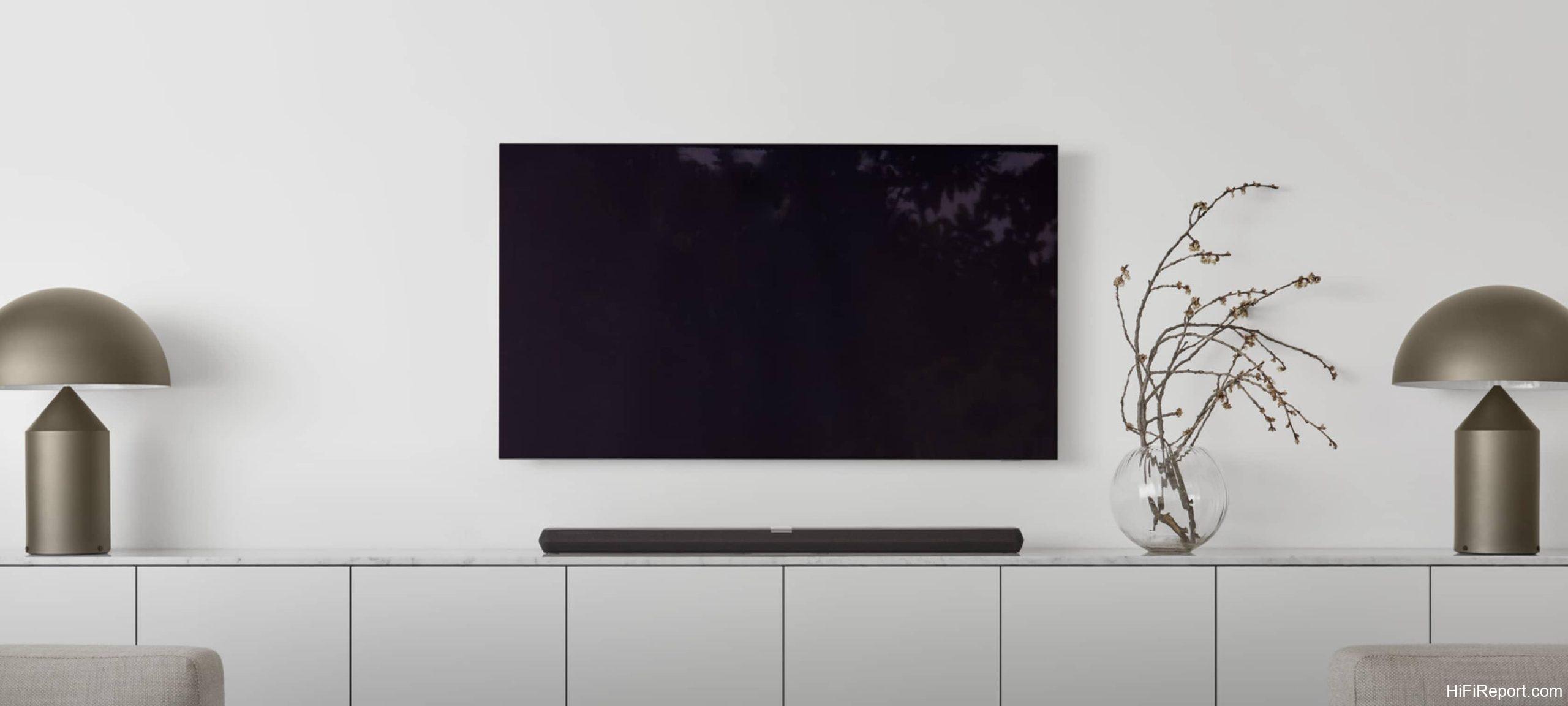
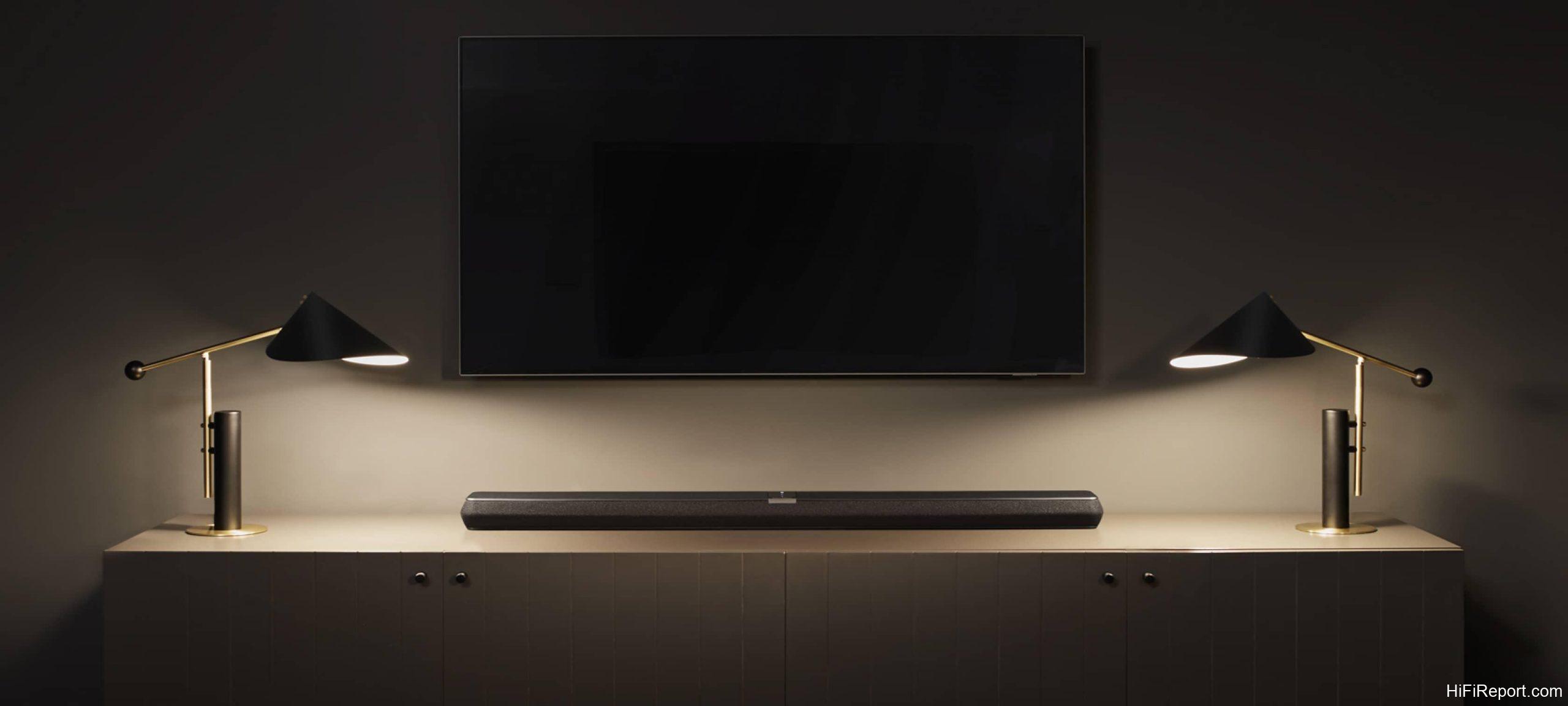
The Panorama 3 boasts a sleeker profile than its predecessors, measuring 1210mm in length, making it well-suited for pairing with 55-inch or larger televisions. The flattened chassis stands just 65mm tall, and while it lacks the curved cabinet design of earlier models, it sits perfectly flush on a surface, ensuring it won’t obstruct your TV’s view when placed underneath. A custom wall-mount bracket is also included, allowing it to be mounted on the wall alongside your television.
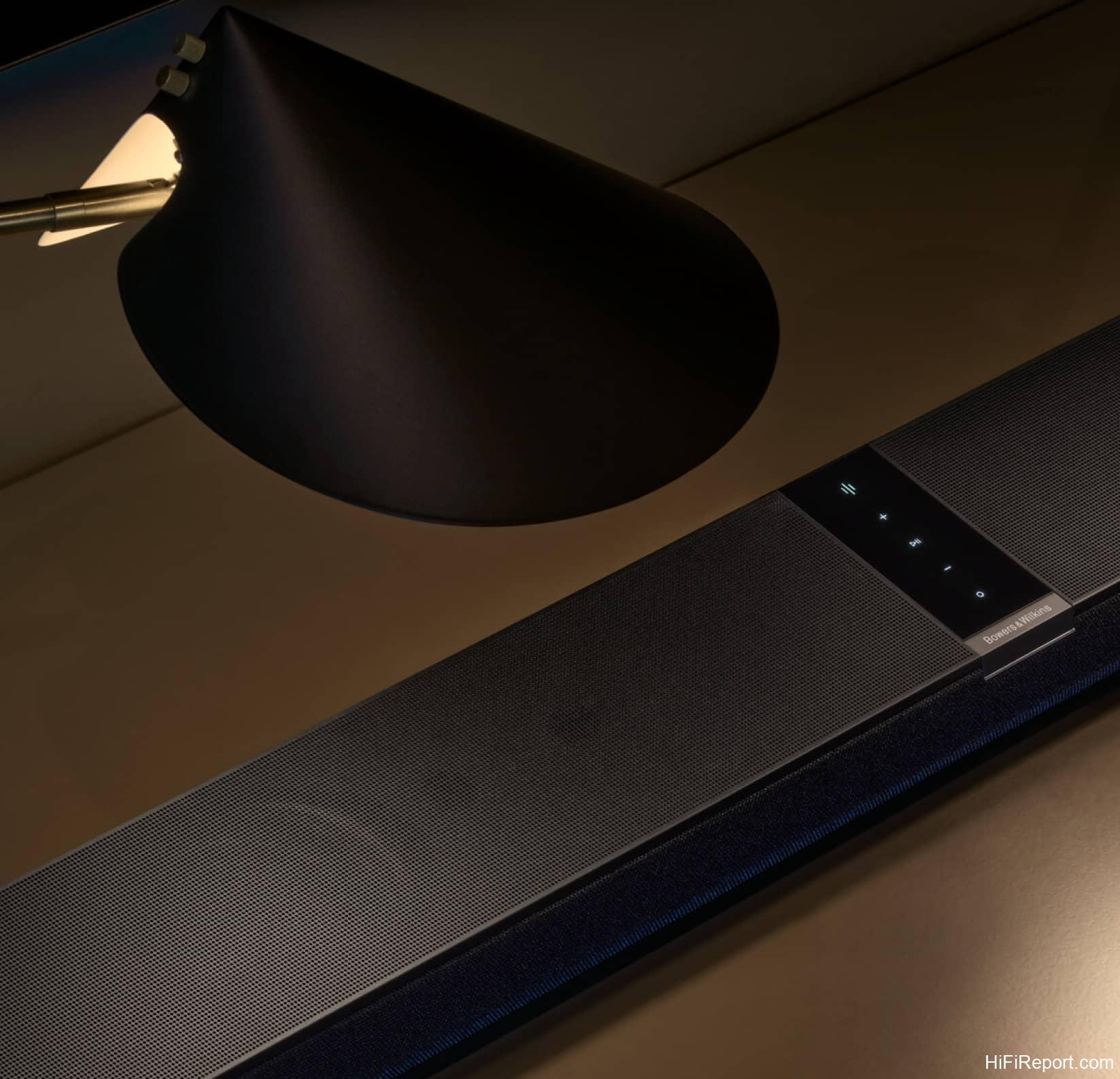
The touch controls on the soundbar’s top panel feature a hidden design, illuminating automatically as your hand approaches, offering controls for connection, volume, and source selection.
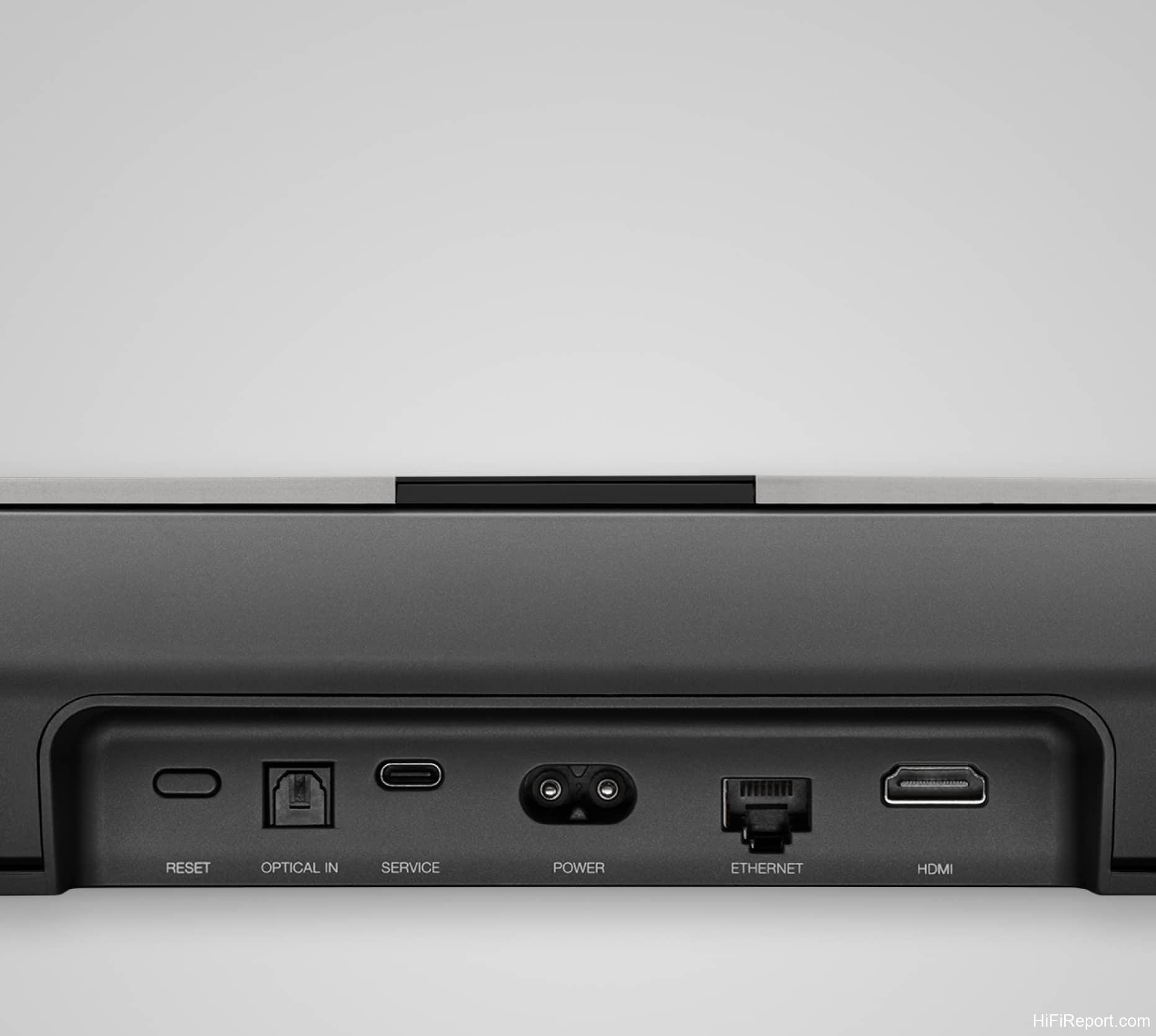
Turning to the rear of the Panorama 3, a significant upgrade is the inclusion of HDMI with eARC (Enhanced Audio Return Channel) support. This is crucial for fully supporting Dolby Atmos audio from streaming platforms like Netflix and Disney+, allowing the soundbar to replace your TV’s built-in speakers for high-quality audio. The unit also features a digital optical input, an RJ45 network port, and a USB Type-C port for firmware updates. Power is supplied via a standard figure-8 connector.
At first glance, the Panorama 3 might seem similar to other soundbars. However, a closer look reveals its true strengths lie beneath the surface. As a B&W product, driver design is paramount. This unit is packed with a total of 13 drivers, powered by a 400-watt amplifier. The previous generation, the Panorama 2, featured 9 drivers and a 175-watt amplifier. It’s clear that without delving into its design, one wouldn’t realize the significant evolution in this generation!
Driver Configuration
Removing the grille of the Panorama 3 reveals its impressive 13-driver array, configured to deliver a 3.1.2-channel experience. The front presents three distinct channels: left, center, and right, each utilizing an identical 2-way, 3-driver setup. Each channel features a 19mm titanium dome tweeter, and notably, the tweeters incorporate B&W’s signature Nautilus Tube loading structure behind them.
This design effectively dissipates rearward energy from the driver, significantly reducing high-frequency distortion. Complementing the tweeters are two 50mm midrange drivers in each front channel, crucial for delivering solid and full-bodied vocal dialogue when watching movies.
For the “.1” channel, two 100mm bass drivers are positioned on the top panel, responsible for generating deep, impactful low frequencies. This is the secret behind the Panorama 3’s ability to produce powerful bass without needing a separate subwoofer.
Finally, two 50mm full-range drivers are angled upwards at 45 degrees on the top panel. Their purpose is to reflect sound off the ceiling, achieving the “.2” channel effect for Dolby Atmos height information. This not only enhances the vertical dimension of the soundstage but also provides a more solid and enveloping surround sound effect compared to the virtual sound processing often employed by many other soundbars when playing movie soundtracks.
Usability & Streaming
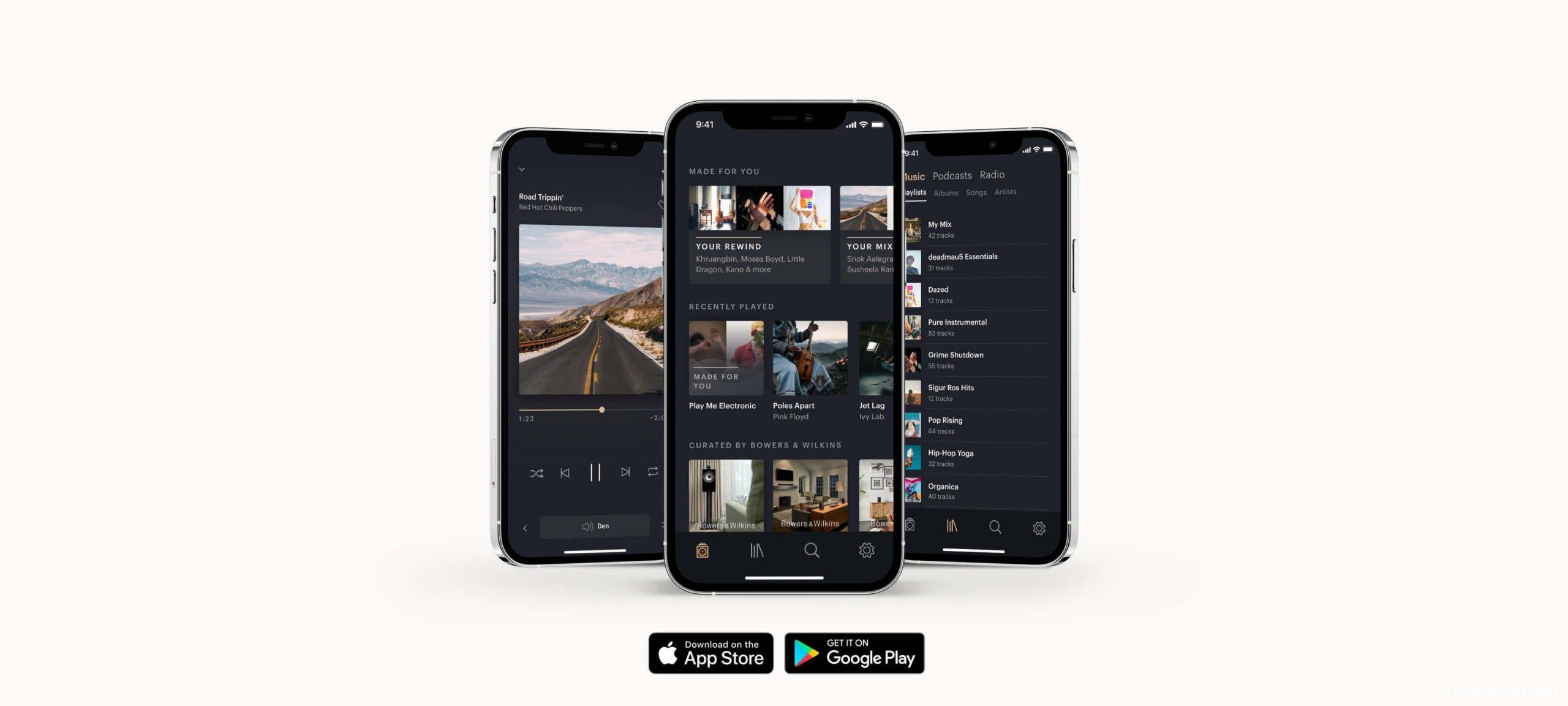
In terms of usability, the Panorama 3 inherits the rich streaming capabilities of the Zeppelin wireless speaker. It integrates seamlessly with B&W’s own Bowers & Wilkins Music App, allowing you to log in to your Tidal streaming account or access various internet radio stations.
It also supports the popular Spotify Connect feature, meaning you can directly select the Panorama 3 for playback within the Spotify app on your phone, without needing to create separate streaming playlists – a significant boost in user convenience.
Furthermore, it supports AirPlay 2, enabling Apple users to stream music from their iPhones or MacBooks using mirroring. AirPlay 2’s multi-room audio sharing feature also allows you to link the Panorama 3 with other AirPlay 2-compatible devices to build a multi-room audio system, bringing music to every corner of your home.
Even in environments without a network connection, the Panorama 3 remains versatile with its Bluetooth 4.0 wireless capability, functioning as a high-quality Bluetooth speaker. It supports the aptX Adaptive Bluetooth codec, which uniquely adjusts the data flow automatically based on the stability of the transmission, ensuring a consistently stable connection.
In a strong signal environment, it automatically prioritizes “sound quality,” capable of supporting high-resolution music playback up to 24bit/96kHz. It also boasts low latency, ensuring a respectable level of audio quality even when listening via Bluetooth.
Setting up the Panorama 3 is also straightforward. I connected it to the HDMI eARC port of our in-house Sony 65-inch A80J 4K OLED TV. Opening the Bowers & Wilkins Music App, the system automatically detected the Panorama 3. A simple long press on the connection button completed the setup. The app offers basic EQ adjustments for treble and bass, allowing for +/- 6dB changes. Setting up streaming music, internet radio, or voice assistants also happens within the app.
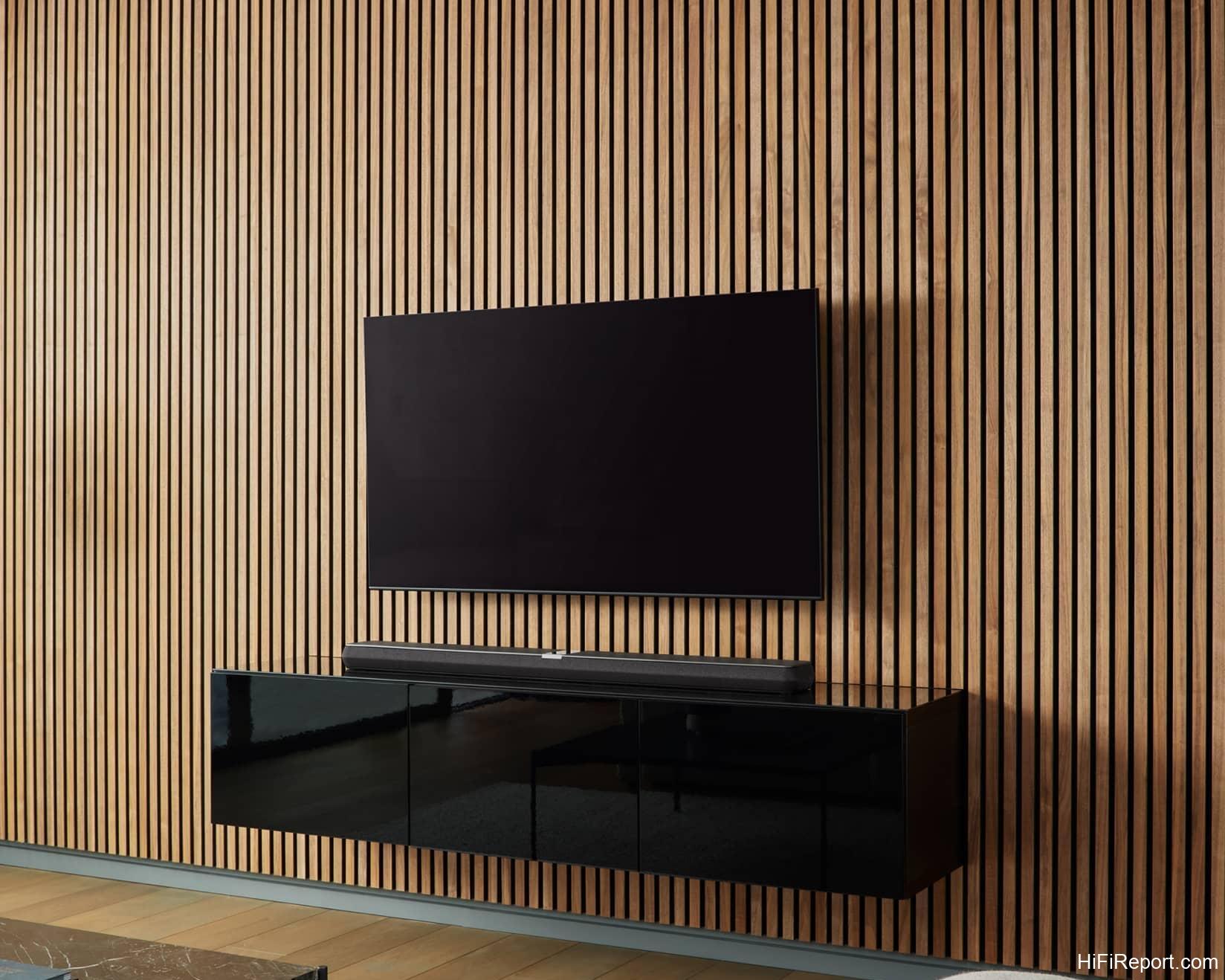
A note to users: when playing streaming video content from your TV through the Panorama 3, ensure your TV’s audio output is set to “Original” or “Passthrough.” This allows the soundbar to decode the audio, unleashing its full Dolby Atmos potential.
Performance
I started by playing the live performance of “John Mayer – Wild Blue” from Youtube. The Panorama 3 produced a very smooth and gentle sound. John Mayer’s vocals were full-bodied and substantial, with the nuances of his singing and articulation rendered softly and listenably, completely avoiding the thin, sterile quality often found in soundbars.
The electric guitar had a sweet, rounded texture, and you could distinctly hear the natural reverb of the performance hall, creating a transparent and spacious soundstage. Thanks to the unit’s front three-channel driver configuration, while the imaging might not be as sharply delineated as a dedicated two-channel system, the vocal presence had a clear outline, giving music playback a sense of dimensionality that traditional two-channel setups sometimes lack.
Switching to the Netflix movie “6 Underground,” I immediately felt the Panorama 3 deliver incredibly energetic sound during movie playback, with excellent audio detail. Critically, its mid and low frequencies were significantly more robust than what is typically heard from common all-in-one soundbars. If you have a smaller space, the Panorama 3 can deliver explosive audio effects even without a separate subwoofer.
During the opening car chase sequence, vehicles had a distinct and full-bodied presence, the engine sounds were deep and powerful, and gunshot impacts felt tight and impactful, entirely devoid of the weak, insubstantial feeling common in more budget-friendly products.
Furthermore, the Dolby Atmos effect from the upward-firing speakers was superb, significantly enhancing the vertical depth of the soundstage and highlighting the three-dimensionality of the front effects. Vehicles seamlessly transitioned as they darted around and swept past, maintaining smooth panning. It’s worth noting that these upward-firing Atmos speakers rely on sound reflection, so they work best with a hard, reflective ceiling structure to fully realize their potential.
Conclusion
The Panorama 3 boasts a minimalist, unobtrusive design and practical features, making it an ideal central listening device for medium to smaller living rooms. Sonically, it impressively captures B&W’s characteristic full and substantial low-end alongside excellent resolution, delivering great results for both movies and music.
If you’re seeking a simple, practical, and acoustically impressive all-in-one home theater system, this soundbar is an absolute contender at its price point, around $1120 USD.
Specifications
* Type: All-in-one Home Theater System
* Drivers: 19mm Titanium Dome Tweeter ×3, 50mm Woven Glass Fibre Midrange Driver ×6, 50mm Woven Glass Fibre Atmos Driver ×2, 100mm Subwoofer Driver ×1
* Frequency Response: 43Hz-48kHz
* Video Pass-through: HDMI eARC
* Audio Formats: Discrete Dolby Atmos 3.1.2, Dolby True HD
* Wireless Connectivity: Bluetooth 5.2 (supports aptX Adaptive, AAC, SBC), Wi-Fi (2.4 GHz/5.0 GHz)
* Wireless Streaming Services: Bowers & Wilkins Music App (supports Deezer, Qobuz, and TIDAL), AirPlay 2, Spotify Connect
* Dimensions (W×H×D): 65mm×1210mm×140mm
* Weight: 6.5kg