
CAD GC3.1 Grounding Box Review
Seeing the CAD Ground Controls GC3.1, the movie “The Secret Life of Walter Mitty” immediately came to mind, specifically the scene where the female lead plays guitar and sings “Ground Control to Major Tom,” encouraging the male lead to hop on a helicopter and embark on an adventure. However, this GC3.1 has nothing to do with air traffic control; it’s a grounding box specifically designed for audio systems.
Addictive Sound Improvement
Talking about grounding in audio systems is similar to discussing demagnetization or static elimination – concepts with scientific basis, yet implemented differently by various manufacturers. When I received the GC3.1, I was a bit apprehensive before listening. What if the GC3.1 had little to no effect? Would I have to return it? But then again, what if the GC3.1 was very effective? Would I be tempted to keep it for my reference system? This concern wasn’t unfounded. Renowned American audio reviewer Michael Fremer, after experiencing Ground Controls, purchased them and wrote in his review, “There’s no going back!” So, I was also worried that I might become similarly hooked.
CAD: American Roots, British Design
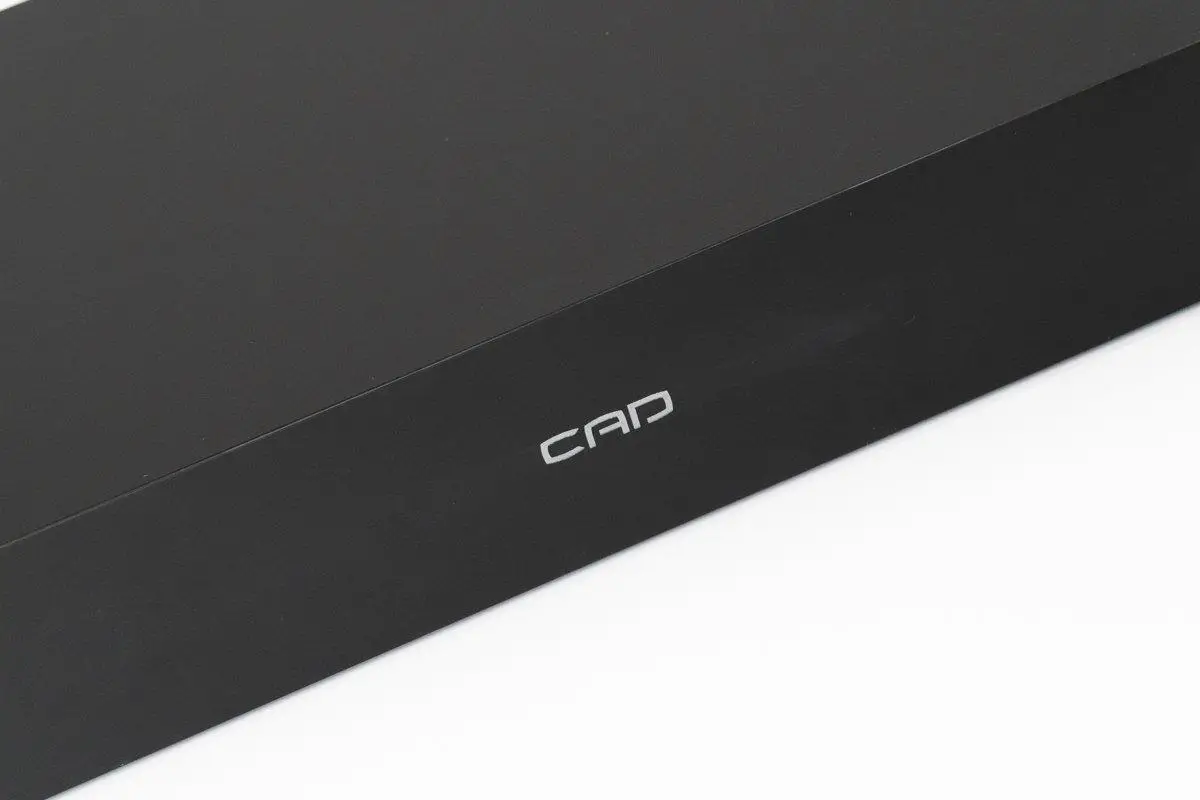
Regarding CAD, short for Computer Audio Design, it was founded by Scott Berry, an American design engineer living in England. Yes, CAD is a British company, and the GC3.1 clearly states “Handmade in England” on the back panel.
Scott Berry studied electrical engineering and worked at Tektronix and Xerox in the US, accumulating knowledge and know-how in digital design. Listening to music and playing with audio equipment were his hobbies, and he dedicated significant effort to researching “computer-based music playback.” In 2011, he decided to establish CAD, aiming to provide the best computer music solutions. Their CAT (Computer As Transport) has indeed become a well-known product in the audio market.
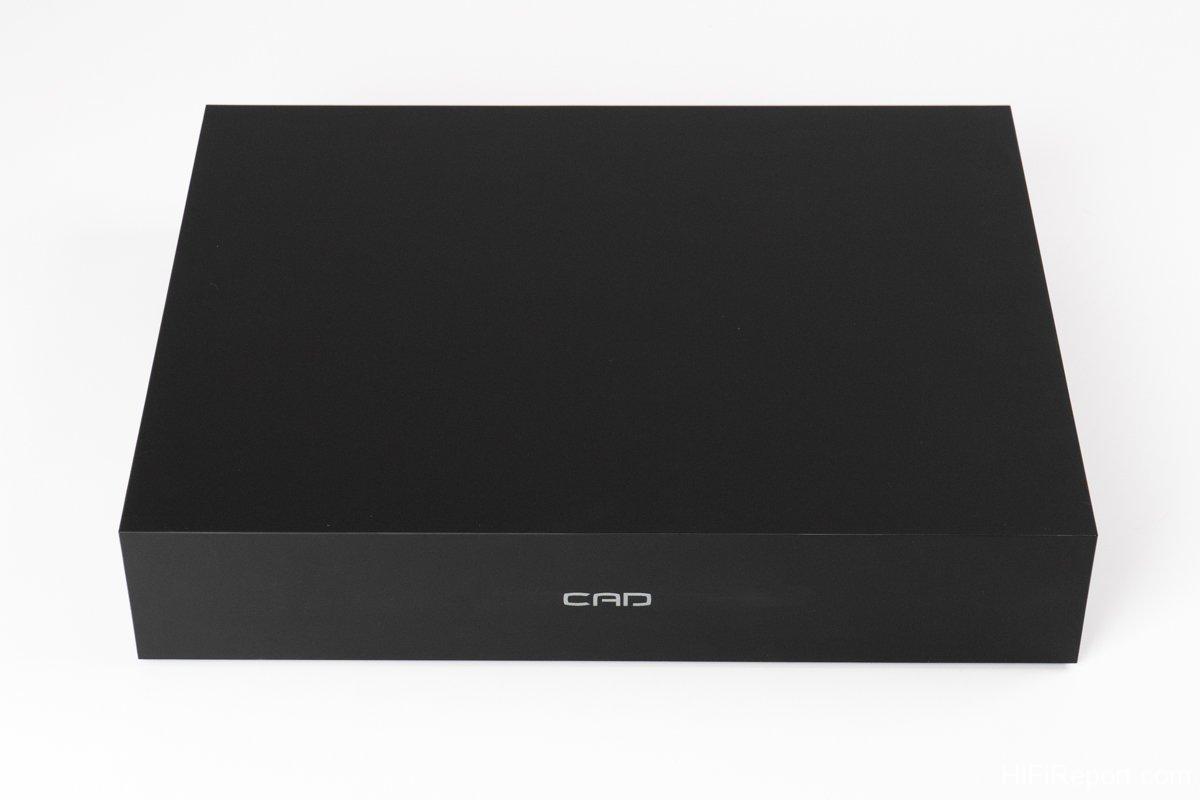
Why would CAD, a company focused on digital audio sources, venture into grounding boxes? Actually, they had already considered grounding issues in the design of their CAT, 1543 MKII DAC, and USB cables. The Ground Controls series of grounding boxes is simply an extension of their design philosophy.
Eliminating High-Frequency Noise
What design philosophy, you ask? It’s about eliminating high-frequency noise in audio systems.
CAD believes that much of the unpleasantness in digital music playback stems from these high-frequency noises lurking in the background.
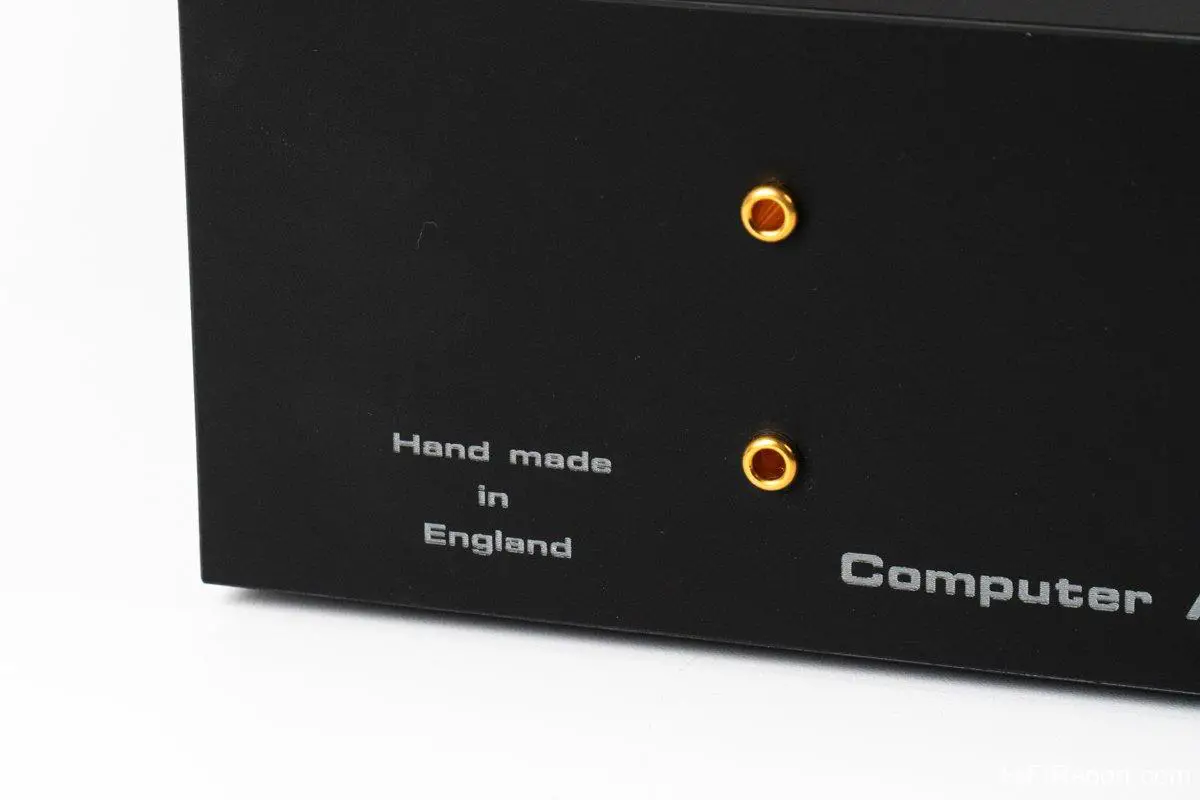
How does GC3.1 eliminate high-frequency noise? Grounding! It directs unwanted high-frequency noise from the electrical circuits to the GC3.1, utilizing internal filling materials to act as a ground, converting the high-frequency noise into heat and dissipating it.
Targeting Ultra-High Frequencies
The principle is explained, but questions remain. Don’t audio devices already have grounding? Can’t audio equipment ground internal noise through the third pin (ground) of their power cords? I believe the built-in grounding of audio equipment is still effective. However, the GC3.1’s focus on noise processing within the 1 MHz to 10 GHz range sets it apart.
The 1 MHz to 10 GHz specification comes from CAD’s official website. However, while researching CAD’s website and various reviews of Ground Controls, I encountered discrepancies, with some mentioning 500 Hz to ?? GHz, and others 700 kHz to 10 GHz. This made it confusing to determine the accurate specification. Regardless of whether it starts at 500 kHz, 700 kHz, or 1 MHz, extending to 10 GHz, the key takeaway remains the same: the starting frequency for high-frequency noise grounding is significantly higher than the 20 kHz limit of human hearing.
Analog and Digital Signal Grounding
This is the core design concept of the GC3.1. CAD argues that within audio equipment, five types of voltages coexist, including DC+/-, AC, AC signal, and digital signals. Traditional audio equipment grounding primarily addresses power supply grounding, with less attention to signal grounding. Consequently, AC and digital signals are susceptible to high-frequency noise interference, leading to degraded sound quality.
The Ground Controls series debuted at the 2016 Munich High End Show, sparking considerable debate. Opinions were polarized, with believers hailing it as a savior and skeptics dismissing it as another money-grabbing gimmick. However, over the years, Ground Controls has garnered an increasing number of positive reviews, with several prominent audio reviewers purchasing units for personal use. The product line has even evolved into the “.1” new generation, indicating that Ground Controls has passed market scrutiny and established itself as a mature and effective audio accessory.
Unexpected Weight
I couldn’t disassemble the GC3.1 to examine its internals, but its surprisingly heavy weight (15 kg) suggests the presence of mineral-based materials acting as a simulated earth ground.
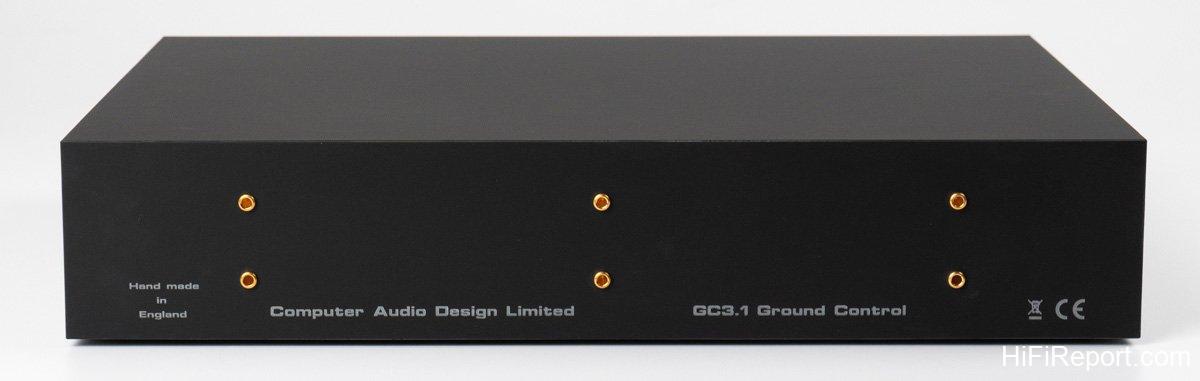
The Ground Controls series comprises three models: GC1.1, GC3.1, and GC-R. The differences lie in the number of grounding terminals and the weight of the grounding box. GC1.1 has two terminals, GC3.1 has six, and the flagship GC-R boasts eight. In terms of weight, GC1.1 is 4.65 kg, GC3.1 is 15 kg, and GC-R dramatically increases to 50 kg. This clearly indicates a correlation between grounding effectiveness and the mass of the grounding box.
My summary of Ground Controls’ grounding theory and noise processing bandwidth range is based on theoretical understanding. Many audio manufacturers designing grounding boxes share similar theoretical explanations, but their implementation methods vary significantly. For instance, Telos employs active grounding, which has been successful in the international market. GC3.1, on the other hand, uses passive grounding. Compared to other grounding boxes, the GC3.1 is relatively heavy. Grounding relies on mass to simulate earth ground, so simply lifting the GC3.1 makes CAD’s grounding approach seem quite logical.
Grounding from Negative Terminals
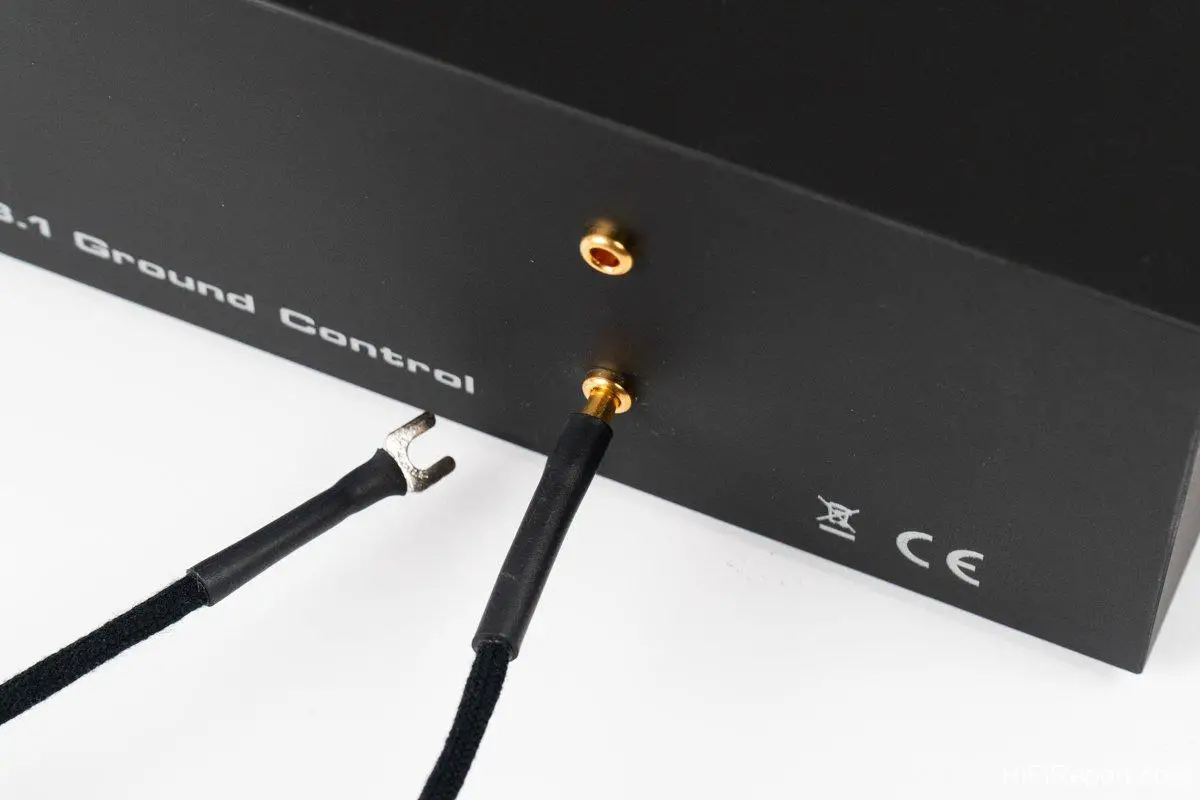
How do you connect audio equipment to the GC3.1? CAD provides six types of connectors: RCA, XLR, 4 mm banana plug, 4 mm spade, BNC, and USB. I received three types: RCA, 4 mm banana plug, and USB. These connectors all terminate in 4 mm banana plugs on the other end, which directly connect to the six banana sockets on the back of the GC3.1, completing the grounding connection. The connectors that attach to the audio equipment are all connected to the negative terminals. Except for power amplifiers, which are not recommended for use, other components can be connected to the GC3.1.
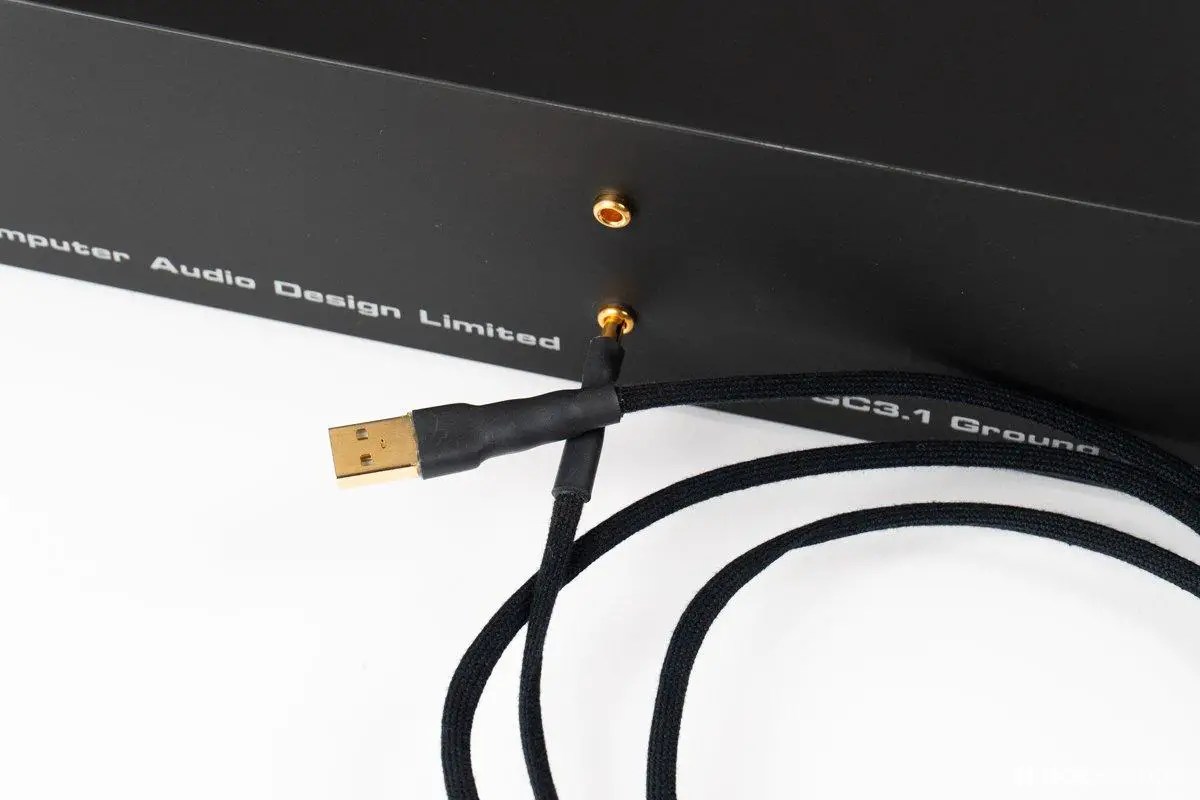
It’s crucial to note: power amplifiers are not recommended for use. This isn’t about effectiveness, but rather the potential to damage the amplifier. Remember this warning.
Digital Sources Show Most Improvement
At HiFiReport, I tested the GC3.1 with the following equipment: Linn LP-12 Klimax, Macbook Pro 13 (USB), Moon HA230 DAC, Naim NSS 333 streamer (USB), and EAR 868P preamplifier. I rotated them for connections to the GC3.1. As per the manufacturer’s recommendation, I didn’t connect the EAR 509 MK II power amplifier. Speakers were Wilson Audio Alexia 2. For the listening sequence, I started with grounding a single component. A USB output from the Macbook Pro connected to the Moon HA230 DAC, and another USB output from the Macbook Pro connected to the GC3.1 for grounding. Then, I switched to grounding the LP-12 Klimax using a 4.4 mm connector to the GC3.1. Finally, I grounded the 868P preamplifier. Note that I used the GC3.1 as if it were a GC1.1, grounding only one component at a time.
Digital, vinyl, and preamplifier took turns in the spotlight, and the verdict is in: GC3.1 is effective! I selected three tracks that I had in both digital and vinyl formats. First, “Dave’s True Story,” listening to “Marisa.” Next, Mutter and John Williams’ collaboration, “Across the Stars,” listening to “Rey’s Theme.” Finally, Du Pré and Barenboim’s “Haydn Cello Concerto No. 1,” listening to the first movement, Allegro moderato.
Quieter, Wider, and More Natural
What are the effects of the GC3.1? The music background becomes quieter, the soundstage expands in height, width, and depth, and image focus improves, enhancing musical contrast. The timbre also becomes smoother and more natural. All improvements are positive, but the degree of improvement varied slightly among the three components. The Macbook Pro showed the most significant improvement, followed by the LP-12 Klimax, and then the 868P preamplifier.
Why the difference in effectiveness across components? I’m not sure. My speculation is that it depends on which component generates the most high-frequency noise. The Macbook Pro, being a computer with a high clock speed, undoubtedly generates more GHz-level digital high-frequency noise than vinyl or a preamplifier. Thus, the grounding effect of the GC3.1 is more pronounced. Adding the GC3.1 to digital equipment seems to offer a higher return on investment compared to analog equipment.
Noticeable Improvement in Musicality
For example, listening to “Marisa” by Dave’s True Story, starting with the electric guitar arpeggios, the guitar image becomes more defined with the GC3.1. The nuances of the guitarist’s fingerpicking become more apparent. The electric bass’s rhythmic pulse in the background interacts with Kelly Flint’s sweet vocals. I don’t think the GC3.1 beautifies the timbre or alters it, but the sense of space in the soundstage and the image focus are noticeably improved. It also enhances the overall musical atmosphere, making the sonic contours smoother and improving the musical liveliness.
I know these are all subjective descriptions, making it difficult to quantify exactly how much the GC3.1 improves things. But I want to emphasize that the GC3.1 is genuinely effective and not just a placebo effect.
Polished Violin Timbre
Similarly, with “Rey’s Theme” from “Across The Stars,” the solo violin opens the piece, focused centrally. The repeating phrases are answered by the string section, double basses, and percussion. As a crossover classical piece, the recording has slightly enhanced low frequencies. With the GC3.1 added, the quieter background seemed to increase the purity of the instruments. The harmonics of the violin shimmered more brightly, yet this brightness had a gentle quality, as if the high-frequency decay had been polished, resulting in smoother transitions.
Finally, with the first movement of “Haydn Cello Concerto No. 1,” the LP-12 Klimax outperformed in this single-component comparison. The effect with the GC3.1 was most pronounced. I suspect this is because the analog-to-digital conversion process of older recordings removes some of the original noise floor, which inadvertently reduces the music’s vitality. This is not entirely due to the GC3.1’s influence.
Using the LP-12 Klimax with the GC3.1, the musicality became more intense. During the cello solo passages, I could almost visualize Du Pré on stage, swaying dramatically as she played with large movements. The subtle sounds of her fingers tapping the fingerboard further enhanced the vividness of the recording. During the ensemble sections, the broad sonic tapestry of the string section became more dynamic. When the cello solo reappeared, the contrast between loud and soft passages was enhanced. With the GC3.1, the performers’ expressive playing felt even more compelling.
Diminishing Returns with Multiple Connections
Lastly, I connected all three grounding cables to the Klimax, 868P, and Macbook Pro simultaneously. As you can see, I could still only use two at a time. So, if you’re interested in trying the GC3.1 but find the price a bit high, you might consider starting with the GC1.1. With only two grounding terminals, it might seem insufficient, but since power amplifiers are not recommended for connection, a single GC1.1 could suffice. If it’s truly not enough, then consider the GC3.1.
Is there a difference when connecting two components to the GC3.1? Yes, there is, but I also sensed diminishing returns. The improvement wasn’t as significant as grounding a single component. This is why I suggest starting with the GC1.1 if you’re interested in Ground Controls. If it’s insufficient, adding another GC1.1 is also an option. If you truly need more than 4 grounding points, then consider the GC3.1.
Enhancement, Not Creation
Finally, I must remind audio enthusiasts that Ground Controls are definitely “advanced” accessories. You must first establish a solid foundation with your basic system before considering audio grounding. If your speakers lack performance, your amplifier lacks control, or your digital source has poor timbre, Ground Controls cannot solve these problems. The GC3.1 is a “cherry on top” grounding and noise reduction device; it cannot “create something from nothing.” You must first optimize your audio system to fully realize its inherent potential, addressing soundstage and imaging. When you believe you’ve reached a reasonably high level of performance, then consider the GC3.1 to further enhance your audio system.
As for whether I ultimately kept the GC3.1, the answer is no. It’s not because the GC3.1 isn’t good enough, but rather because the editorial team is currently saving up to upgrade our speakers, which will likely be a significant expense, impacting our budget. Therefore, I didn’t keep the GC3.1. However, once we upgrade the speakers, if budget allows, I will borrow the GC3.1 again to audition with my colleagues and decide whether to incorporate the GC3.1 into our system.
To reiterate, the GC3.1’s function is to eliminate unnecessary high-frequency noise and optimize power supply and signal circuits. It’s a helpful tool for refinement. If you’ve thoroughly explored your equipment and are still seeking improvement, you can try Ground Controls. Its effect might be surprisingly good.
Specifications
* Type: Passive Grounding Box
* Grounding Terminals: 6
* Dimensions: 458 × 89 × 356 mm (W×H×D)
* Weight: 16 kg