
Nordost QRT Power System Review
Power processing is paramount for any high-fidelity audio system. Electricity serves as the lifeblood of all signals, yet it traverses a public grid and home circuits rife with potential contaminants. Ensuring a clean and stable power supply right before it reaches your equipment is therefore critically important. Nordost’s QRT series is specifically engineered for audio applications, taking a high-end audiophile approach grounded in scientific principles to achieve optimal power delivery.
Comprehensive Care from the Ground Up
American brand Nordost enjoys widespread renown in the audiophile world, primarily for its exceptional audio cables. Their technology is uniquely sophisticated, and their cables are instantly recognizable. Audio cables are the conduits for signals between audio components, whether digital or analog. Current flow is essential for this signal journey.
Well-designed cables minimize transmission losses, reduce distortion, and shield against external radio frequency interference, ultimately allowing the music to reach its full potential.

Nordost QRT takes this a step further by addressing the very source of power for your equipment. It aims to purify the incoming electricity and provide a more stable voltage. Positioned between your household circuit and your audio system, QRT components work to eliminate noise and instability just before the power reaches your valuable audio gear.
For this review, Alpha Audio provided four QRT products: the QBase Mark II AC Distribution Block, the QKore1 Ground Unit, the Qk1 AC Line Enhancer, and the Qv2 AC Line Harmonizer. Used together as a complete system, they promise to provide comprehensive power care for your audio setup.

Building from the Power Distribution Block
The QBase Mark II power distribution block comes in two models. The QB8, which we received, offers 8 output sockets, sufficient for most audio systems. The QB4 provides 4 output sockets, suitable for smaller or desktop systems. However, with potential future upgrades or additions of digital sources, the 4-output version might become limiting. Opting for the QB8 is a more future-proof approach.
Another option is to use two distribution blocks, dedicating one to digital components and the other to analog components, a true audiophile configuration.
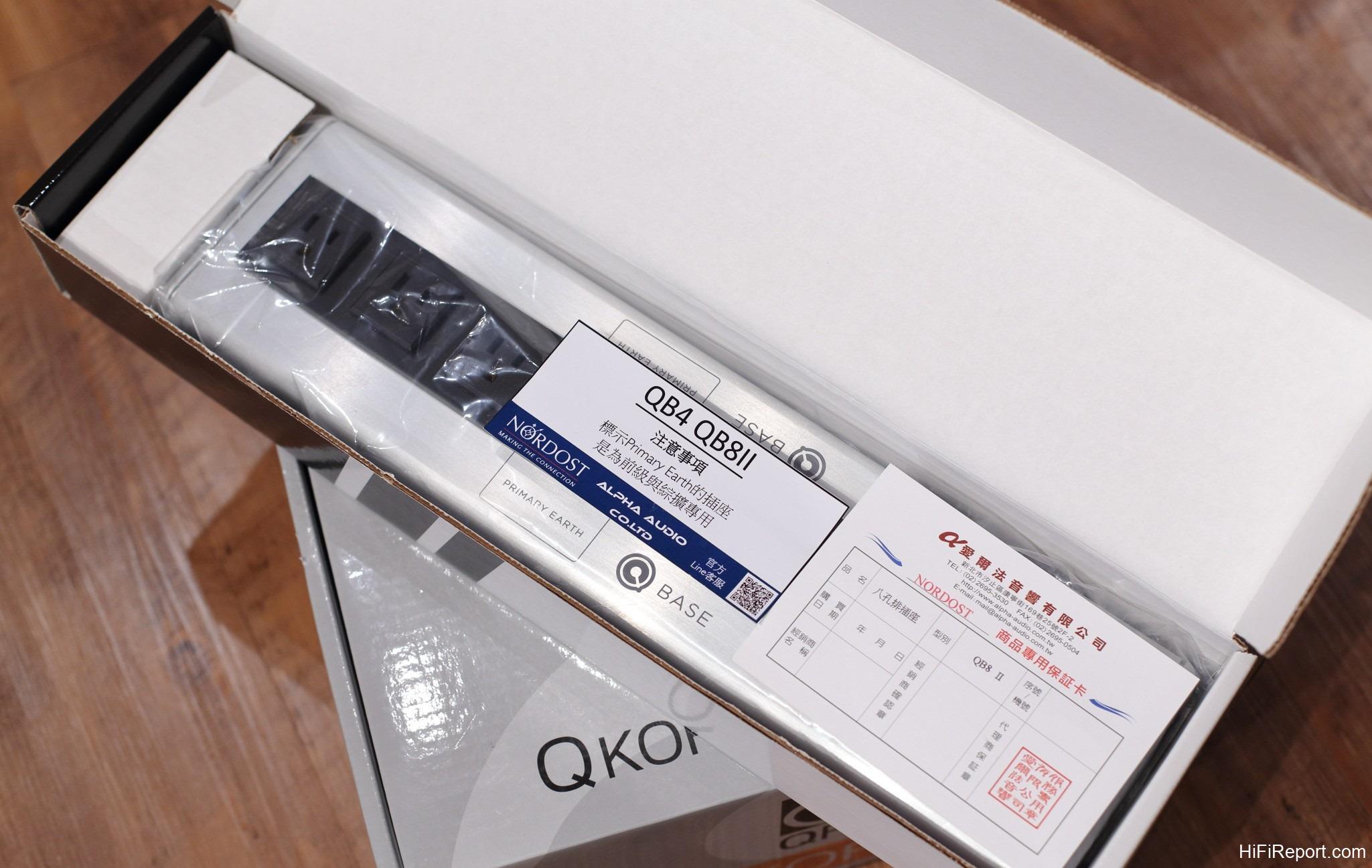
Nordost, distributed by Alpha Audio, includes a Chinese warranty card and product information within each product package. Ensure you receive this card and that the retailer fills it out correctly to guarantee your rights.
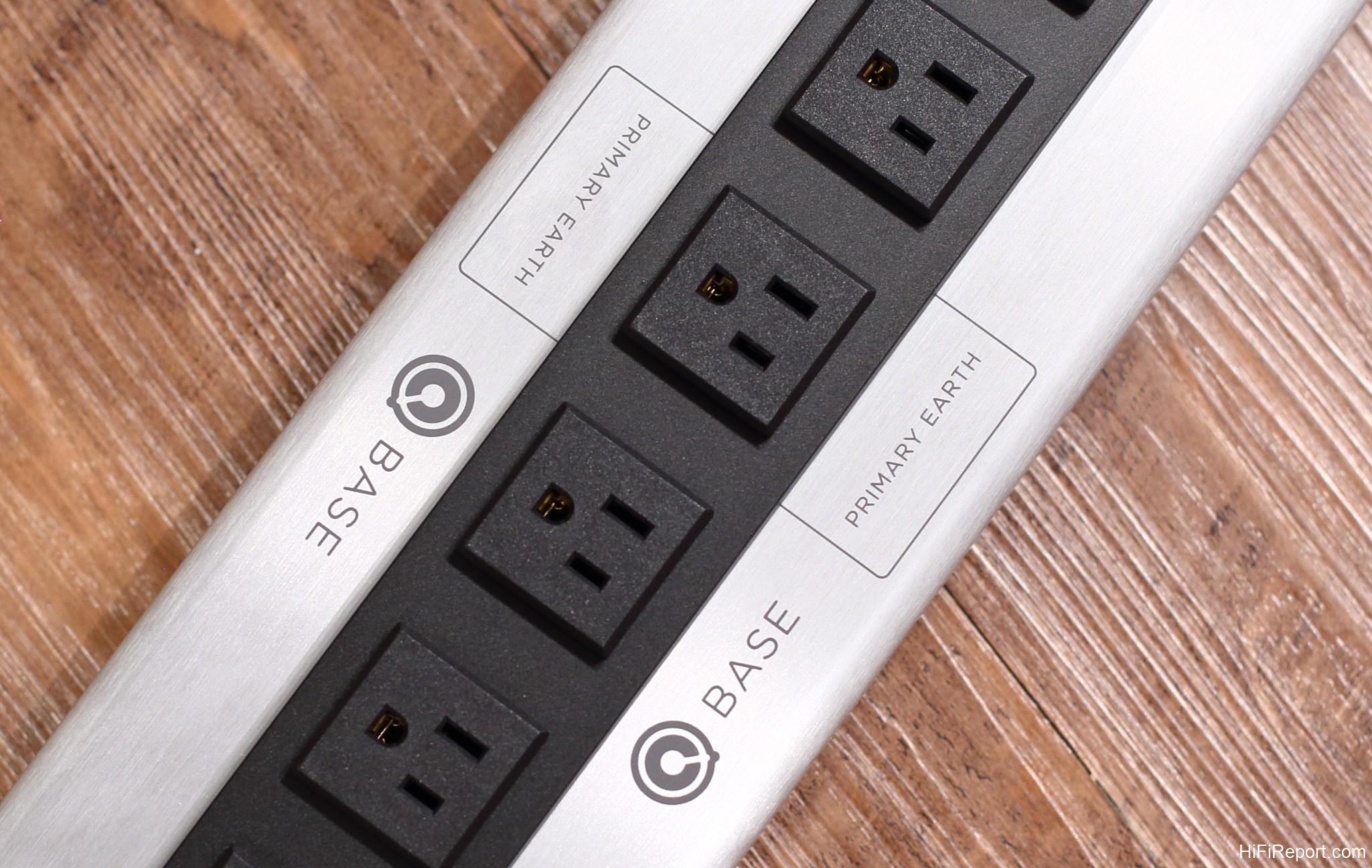
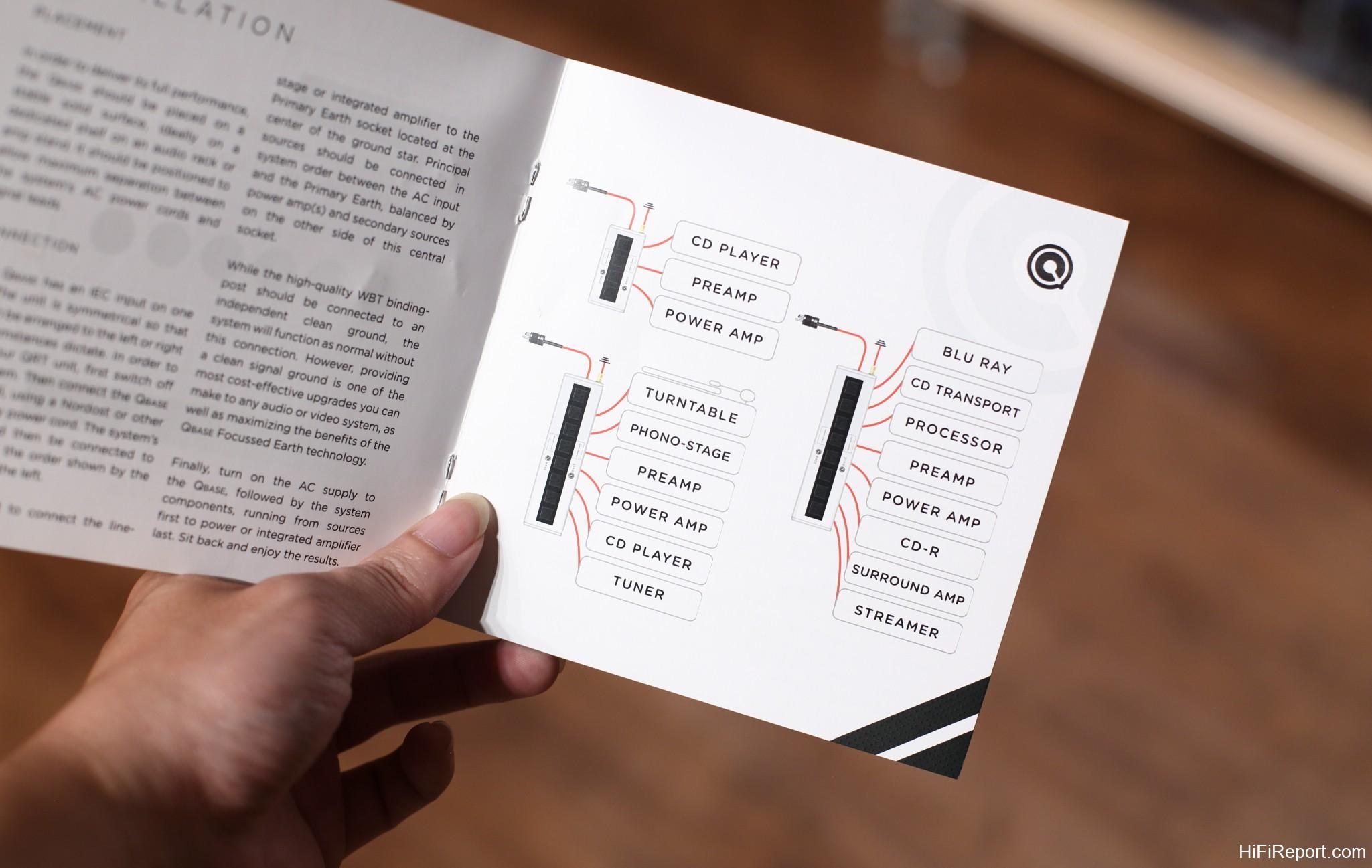
The QB8 features eight sockets. Is there an optimal way to plug in different components? Yes, there is. The QB8 employs star grounding internally, with the center as the reference point. Therefore, the most sensitive analog components should be plugged into the central sockets. The manufacturer even labels the center position on the block as “Preamplifier.” Following the diagram, analog devices should ideally be placed in the central sockets.
The QBase QB8 Mark II unit features an aluminum chassis with a brushed finish. Internally, it uses a straight-line power distribution path with star grounding. It avoids using filters or active circuits to prevent impedance increases. Each socket is mounted on a custom frame and covered with a top plate. The aluminum chassis and internal PCB form a unified structure to enhance performance. Each socket also has a dedicated fuse for overcurrent protection.
The central “Primary Earth” is the grounding reference point for all eight sockets, intended for use with a preamplifier. If you are using an integrated amplifier, as we are in this review, you should also plug it into this position. The other sockets have slightly increased resistance to direct ground signals to the “Primary Earth” and the grounding terminal.
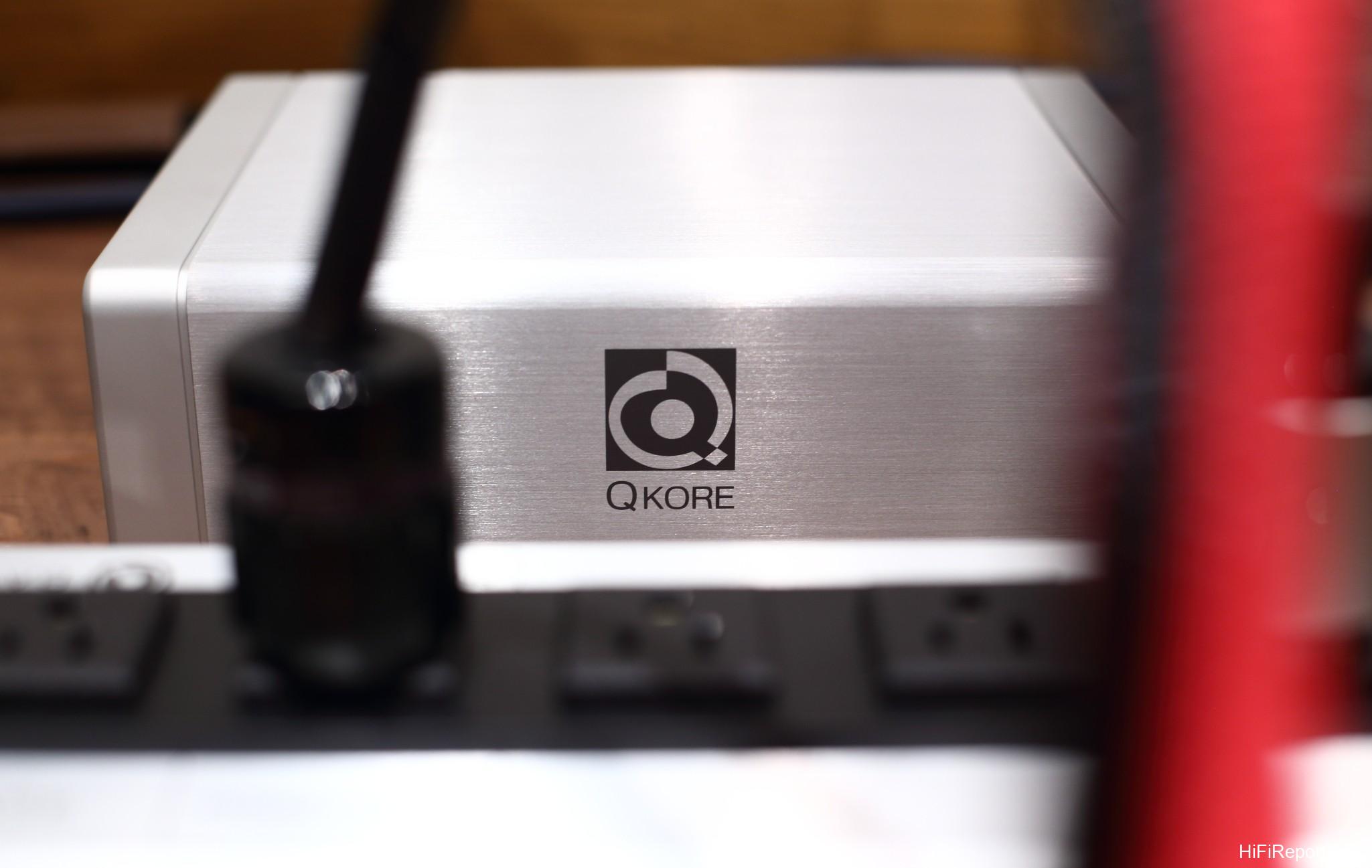
Nordost QRT distribution blocks feature gold-plated grounding terminals, which are crucial for connecting to the QKore grounding unit. Internal grounding ultimately directs ground signals here for absorption by the grounding box.
Don’t Overlook the Importance of Grounding
A proper grounding system needs a dedicated device to receive ground signals and effectively manage noise and interference. This is where the QKore comes in. The QKore is available in three models: QKore1, QKore3, and QKore6. The QKore1, with a single input grounding terminal, is specifically designed to pair with the QBase distribution block. Using them together maximizes grounding effectiveness.
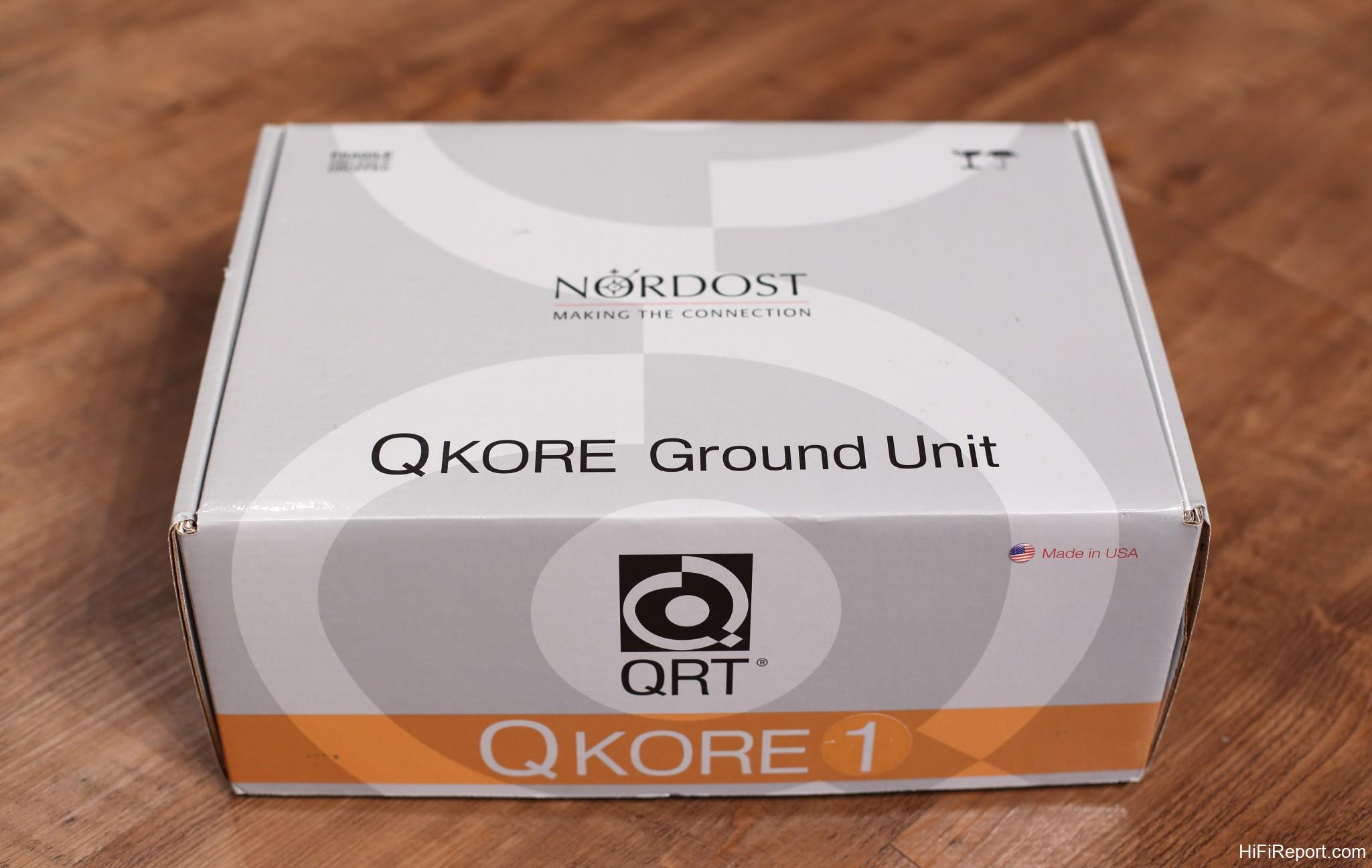
The three models are QKore1, QKore3, and QKore6.
Providing a Simple and Clean Grounding Endpoint
In audio systems, different sockets often have varying ground potentials, which can be a primary source of system noise and hum. Connecting components to a single socket can mitigate this, but a dedicated, clean artificial ground is still needed to absorb and eliminate contaminated ground signals. Furthermore, ambient radio waves can also interfere with the power supply and introduce signal pollution.

Using a QKore grounding unit is a straightforward solution. Its internal electrical and mechanical design provides a clean artificial ground. Nordost’s Mono-Filament technology and Low-Voltage Attractor Plates (LVAPs), combined with WBT gold-plated grounding terminals, are used to absorb stray high-frequency noise and voltage-induced magnetic fields. LVAPs are composed of unique metal alloys and passive electronic circuits.
Never underestimate the impact of grounding on an audio system. The QKore1 is designed specifically for use with QBase distribution blocks and serves as the ultimate grounding point for all connected audio components.
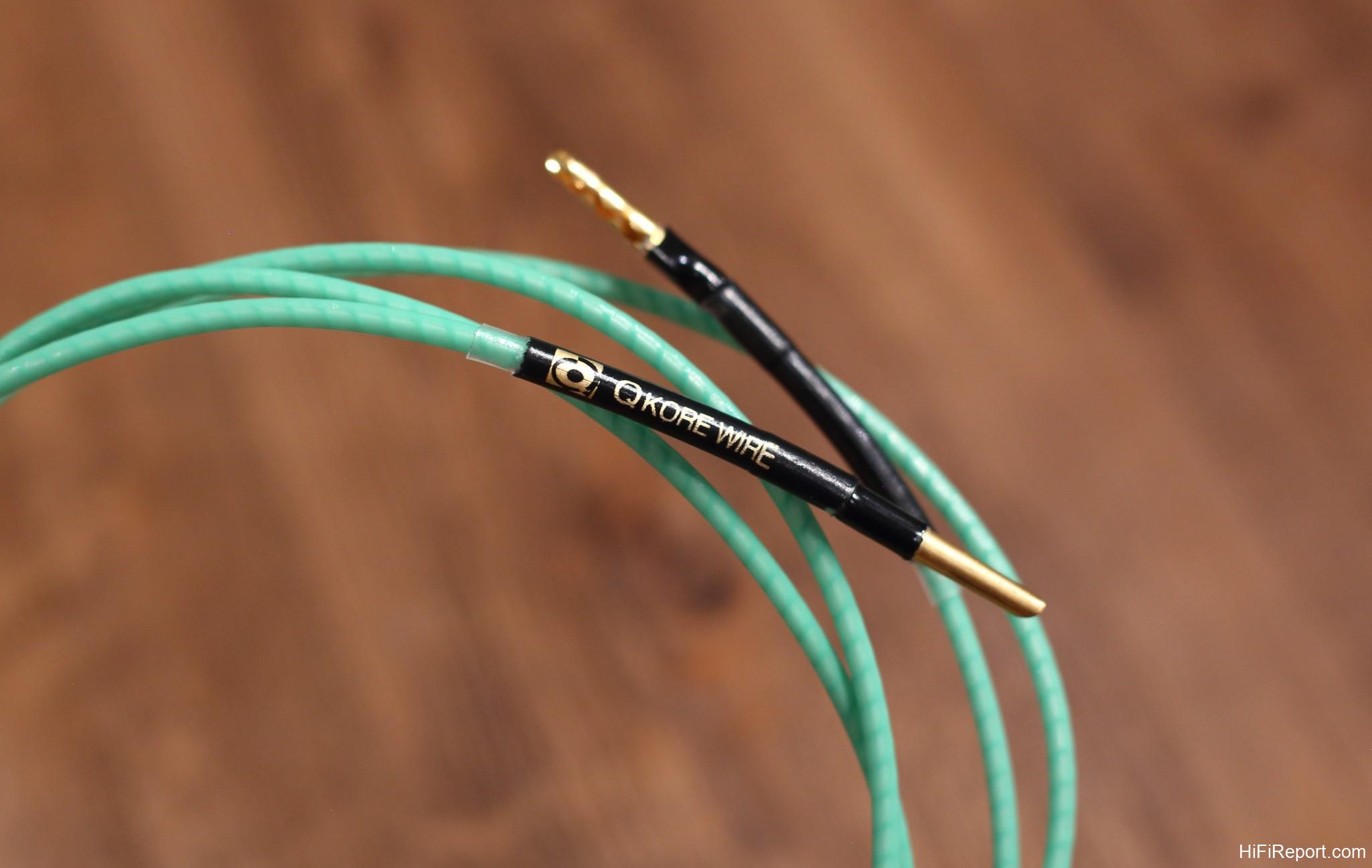
Each QKore unit comes with a Nordost grounding wire. This cable is designed to provide the lowest possible ground impedance. These mechanically tuned grounding wires feature Nordost’s proprietary Micro Mono-Filament technology, FEP insulation, and silver-plated 16AWG OFC solid-core conductors. The quality of the grounding wire directly affects the final performance.
Small Tools for Further Enhancement
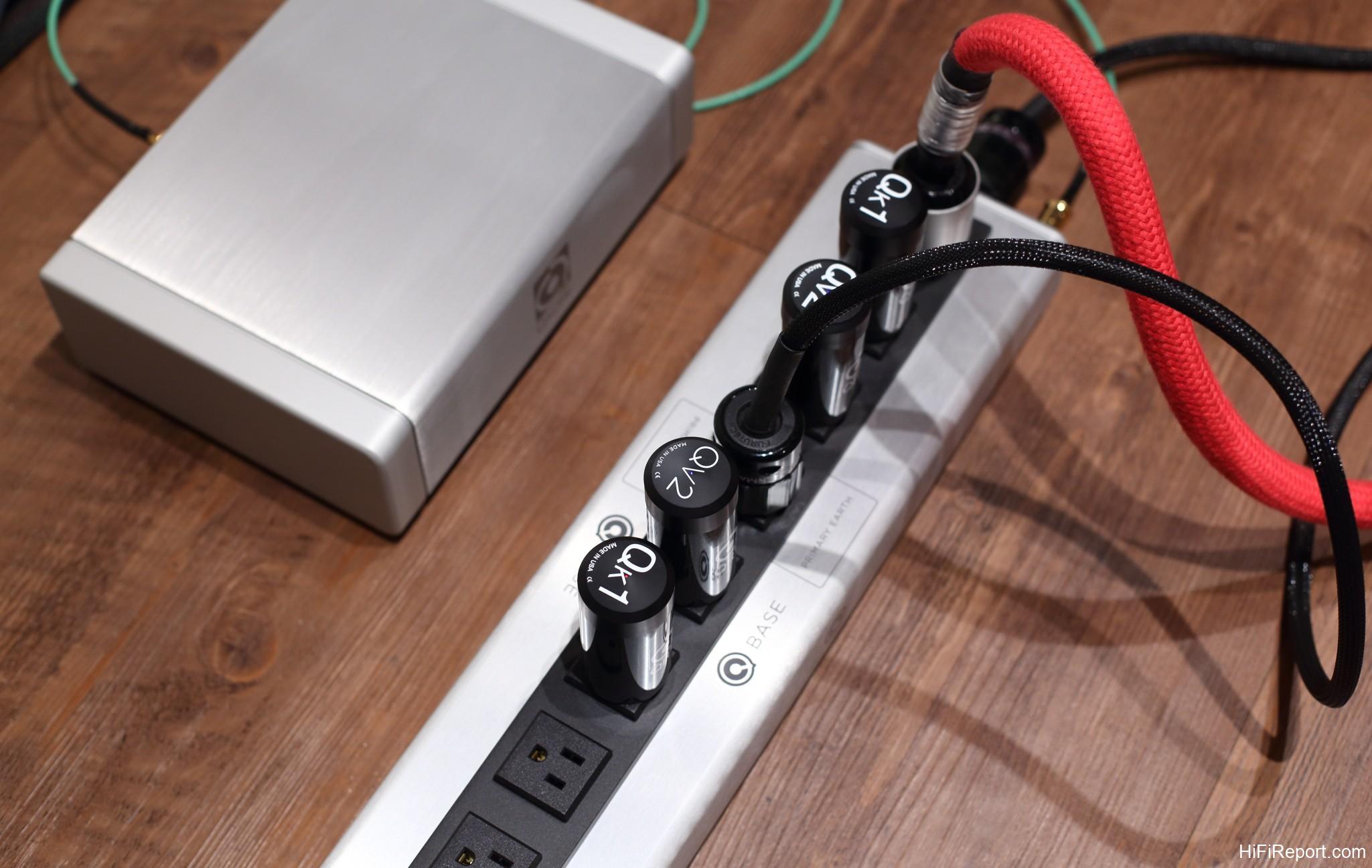
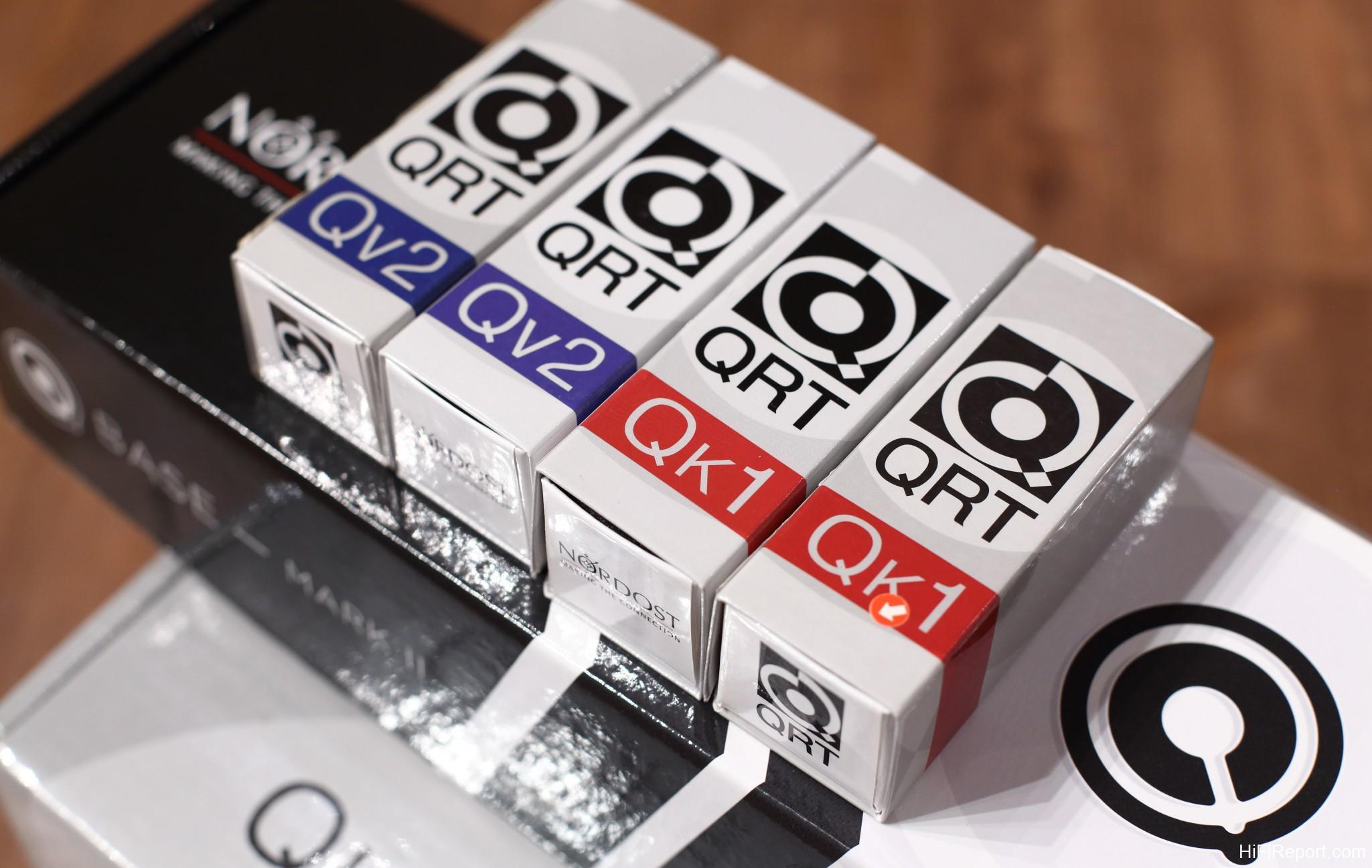
The other two products are the Qk1 AC Line Enhancer and the Qv2 AC Line Harmonizer. To use them, simply plug them into empty sockets on the power distribution block.
The Qk1 AC Line Enhancer works directly on the AC power line. It actively injects a precise pulse frequency (50Hz/60Hz) to refine the AC frequency, aiming to lower the noise floor and enhance stereo imaging and soundstage rendering.
The Qv2 AC Line Harmonizer, with an identical appearance, contains an LRC (Load Resonating Coil). This coil, constructed using Nordost’s Micro Mono-Filament technology, minimizes time delays and signal distortion. It also generates a passive electric field that benefits the AC power. Audibly, this deepens the soundstage and improves image focus and clarity.

Both products share a similar carbon fiber body and gold-plated terminals, but their internal designs are different. When in use, an indicator light illuminates on the top: blue for Qv2 and red for Qk1.
Setting up the complete Nordost QRT system step by step.

The QKore grounding unit.
Finally, adding the Qk1 and Qv2. The integrated amplifier’s power cord is connected to the central “Primary Earth” socket on the distribution block, while the digital source is plugged into the outermost socket. Qk1 and Qv2 are placed in the sockets in between.
Music Emerges with Depth and Clarity, Fostering Immersion
Implementing this Nordost power processing system yields a substantial and immediately noticeable improvement, particularly for the integrated amplifier. The most significant impact was felt the moment the integrated amplifier was plugged into the complete system during the listening tests. For instance, listening to Kat Edmonson’s “A Voice,” both piano and vocals were exceptionally clean, transparent, and bright.
The sonic outlines are now sharper, and returning to the original sound felt slightly blurred and less vibrant. Kat’s vocal range is wide and powerful, with intricate dynamic and pitch variations that showcase her impressive vocal skills. Her voice is clear and sweet, almost like a sweet songbird. The song features simple piano and subtle cello accompaniment, yet it still presents a well-defined soundstage with excellent depth and positioning.
Clear and Resilient Bass Resolution
Listening to Marian Hill’s “Go Quietly,” the clarity and elasticity in the bass frequencies become even more pronounced. The brightness and speed of electronic effects are amplified, and the extreme low-end is clearer, without being muddy or lagging, with just the right amount of presence. Thanks to the electronic effects, the sonic imaging is richer than in the previous track, with excellent clarity and separation for each sound element. The 3D stereo effect is outstanding.
The overall presentation is reminiscent of the system setup at HiFiReport’s listening room, which, I recall, also uses a significant amount of Nordost products, including power distribution blocks and grounding units. I believe these two components, at least, contribute significantly to sound separation, clarity, imaging, and sonic outlines. This album is also highly recommended by friends as excellent test material, and I suggest you add it to your collection.
Natural Luster and Brilliance
Listening to Nils Lofgren’s live performance of “Bass and Drum Intro” with his band, the entire performance is vivid and lively. Crucially, the sense of order and control is remarkable. Despite the fast pace, it never feels chaotic. The bass is not only elastic and precise in its attack and decay but also possesses a luminous and transparent quality. Similarly, the drum hits are accurate and tight, and you can even perceive the resilience of the drumhead and subtle resonances underneath.
The audience’s cheers are realistic and natural. With the Nordost power enhancement system in place, it’s truly captivating and makes you want to revisit familiar music.
Doubled Clarity and Image Focus
Listening to the first movement of , is not unfamiliar to me. Besides studying it in my student days, I recently heard it live at Ray Chen’s “The Four Seasons” concert on October 4th. This time, with the Nordost distribution system, I revisited it for a deeper appreciation. The listening experience with and without the Nordost system was strikingly different.
Initially, listening with standard power, the reverberation was more pronounced, and the soundstage height seemed elevated. If I were to use a concert hall analogy, the listening experience was akin to sitting in the upper balcony. This wasn’t necessarily bad; in fact, the scale of the music felt grander. However, switching to the Nordost system significantly reduced the sense of reverberation, and the clarity of the sound increased dramatically. The image became more focused.
Using the concert hall analogy again, the listening position felt closer, somewhere in the middle of the second or third floor. Both the orchestra and the soloist’s bowing were clearly discernible. I recall Ray Chen mentioning in a masterclass that merely outlining the contours of a piece isn’t enough; you need to add your own understanding and interpretation of its background.
My appreciation for his performance stems from his meticulous handling of sonic nuances, layering them to not only showcase Mozart’s style but also subtly reveal the music’s tender side.

QBase QB8 Mark II 8-Outlet Power Distribution Block:
* Comprehensive star grounding, no filtering or active circuitry.
* Integrated metal chassis and internal circuit structure.
* Central “Primary Earth” reference socket for sensitive analog components.
* WBT gold-plated grounding terminal for connecting to a clean external ground box.
* Dimensions: 460 x 67 x 120 mm
* Price: Approximately $1968 USD (Check with retailer for latest pricing).
QKore1 Ground Unit:
* Single-terminal dedicated grounding unit for QBase distribution blocks.
* Provides a clean artificial ground through electrical and mechanical design.
* Absorbs contaminated ground signals from equipment.
* Employs Mono-Filament technology and Low-Voltage Attractor Plates (LVAPs).
* WBT gold-plated grounding terminal.
* Exclusive Micro Mono-Filament design silver-plated OFC grounding wire.
* Dimensions: 270 x 80 x 200 mm
* Weight: Approximately 6 kg